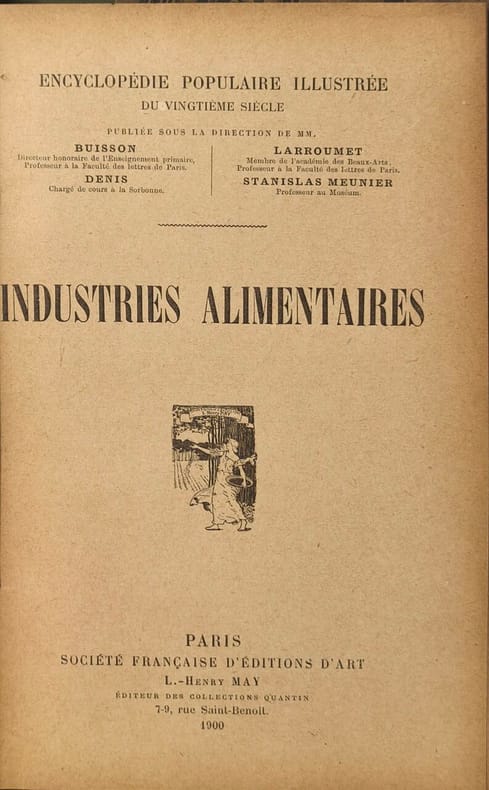
Buisson Larroumet Denis Stanislas MeunierLivre Rare Book
18 résultats
19004038Société Française d'Éditions d'Art L.-Henry May 1900 132 pages in8. 1900. demi toile. 132 pages. Le panorama des industries agroalimentaires 2024 publié par le ministère français de l'Agriculture dresse un état des lieux du secteur en France. Il présente les chiffres clés (plus de 19 000 entreprises près de 465 000 salariés) et propose une analyse de ce secteur économique majeur
183211887Bourg, Imprimerie Frédéric Dufour, 1832 ; in-8, broché ; 31 pp., (1 bl.), couverture muette brique.
190030577Ernest Flammarion, sans date (vers 1900). Edition originale. In-8 relié (20,8 x 14 cm), reliure demi-basane fauve, dos à nerfs sans titre au dos, 312 pages. Ouvrage illustré de 685 croquis en noir in et hors-texte par Alfred Keller. Ouvrage exhaustif sur la culture et la création de compositions florales avec des fleurs fraiches, que l'on soit particulier ou FLEURISTE. Table des matières: Sommaire analytique, Emploi des éléments floraux, L'ornement et ses origines, La plante son étude scientifique, Nutrition de la plante, Ramifications, Bourgeons, Feuilles, Tiges, Fleurs, inflorescences, Enveloppes florales, Organes de la fécondation, Le fruit, Reproduction de la plante, Le décor, La Nature et la géométrie, Le décor appliqué, Règles de la composition, La symétrie, Le rayonnement, La répétition et l'alternance, Contraste et coloration, Le style, L'ornementation dans les styles, Listes des familles, genres, espèces, mots techniques.- 180g.- Quelques rousseurs claires, reliure solide.
1870262319London: printed for George Edward Eyre and William Spottiswoode 1870. First Edition. Softcover. Poor copy in the original stiff-card wrappers; wear and tear as with age. Text remains in fine condition and without blemish. Provenance; from the libary of Eward Stanhope and the Library of the University College of Leicester with their bookplates. Physical description; 348 pages. Subjects; Reports. Commission of Children. 19th century reports. Great Britain. London: printed for George Edward Eyre and William Spottiswoode paperback
18666182Le Puy, Typographie et Lithographie Marchessou, 1866 ; Paris, Nouvelle Librairie Scientifique et Littéraire, 1883 ; in-12, reliure en demi-basanne vert sapin, dos lisse à pointillés dorés, auteur et titre dorés ; 207 pp. , (2) pp. ; (la pagination reprend à 0) (2) pp. , 166 pp.
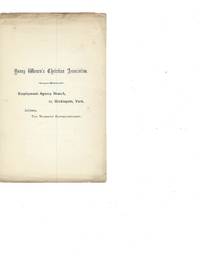
1890164641890. Young Women's Christian Association. Employment Agency Branch. York: Young Women's Christian Association 1890s. This pamphlet In self wrappers details the policies for the Employment Agency Department issued by the Young Women's Christian Association. The World Young Women's Christian Association World YWCA is a movement working for the empowerment leadership and rights of women. Very good. unknown
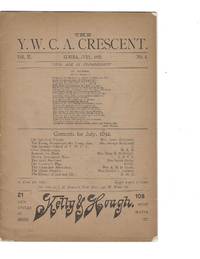
1892164651892. The Y.W.C.A. Crescent. July 1892. Vol. 2 no. 4. Young Women's Christian Association 1892. Newsletter with the slogan "Our Aim is Progress" published by the Young Women's Christian Association. Covers are loose or separated from body of the newsletter. Very good. unknown
18831151581883 A Paris, Guimmaumin & Cie, éditeurs / Auguste Ghio, éditeur - 1883 - In-8, broché - 127 p.
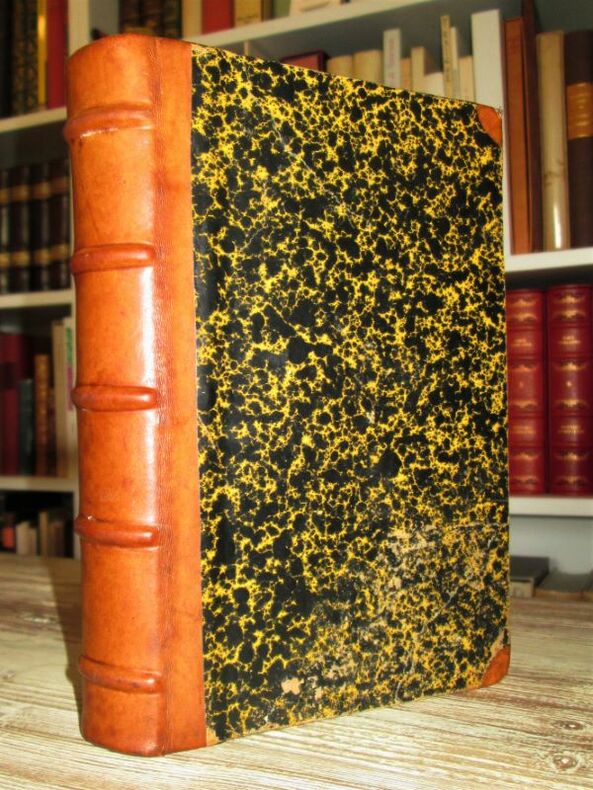
1843003795London: W. Clowes and Sons for H.M.S.O. 1843. 3 iv-xiv 2 2-378pp 2. Modern half calf and marbled paper over boards raised bands spine in six panels title label to second panel double rules in copper to either side of bands date to foot remaining panels with repeated small volute tool in blind. Externally very good. Internally lightly browned throughout a few corners creased small tear to top corner of M6 and M7. The reports of Alfred Austin Mr. Vaughan Mr. Stephen Denison and Sir Francis Doyle to Sir James Graham. Goldsmith's 33401. First Edition. Half Calf and Boards. Good. 8vo. W. Clowes and Sons for H.M.S.O. Hardcover
18831151591883 A Paris, Guimmaumin & Cie, éditeurs / Auguste Ghio, éditeur - 1883 - In-8, broché - 568 p. - Un frontispice + 1 planche dépliante
1833490551833 Tome I et Tome II - 1833 et 1834 - 1ère et 2ème années - Paris. Aux bureaux du Comité Central d'Agriculture. Rue Choiseul, n° 2 bis - douze numéros dans chaque volume - journal mensuel illustré - in-8 broché
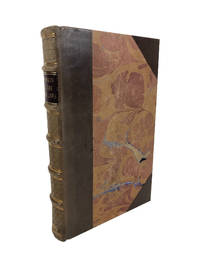
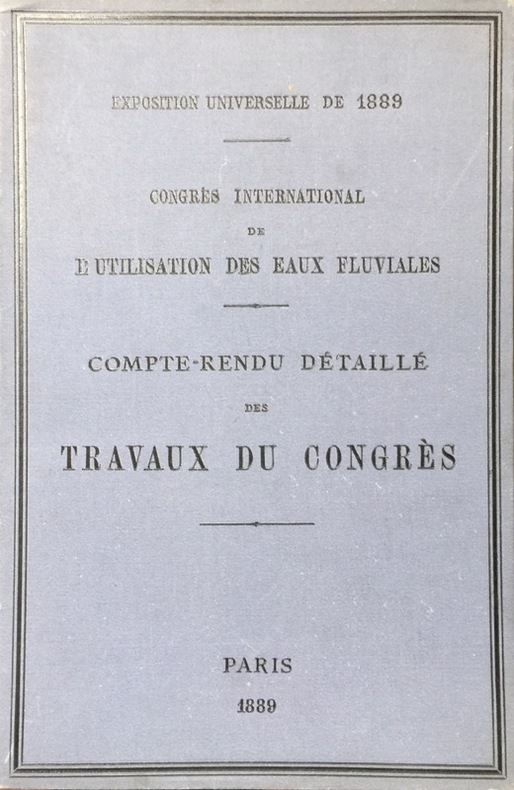
188910732Paris, Lahure, 1889 ; in-8 ; cartonnage d'éditeur de percaline bleu-pétrole, titrage noir et doré ; (4), XXI, (3), 556 pp., nombreuses figures, 6 planches hors-texte dont 4 dépliantes, grande carte dépliante en couleurs de navigation entre Paris et Rouen.
1887174331887. Women's Employment MABEL Robert F. Our Working Women and Their Earnings. United States 1887. First Edition. 13 pages measuring approximately 6" x 10" inches. At the time that this description is being written no copies are recorded in American institutions. OCLC search results are at best an estimate and can vary over time. The article begins "We as a nation have made no effort to teach our redundant female population to support itself although our position as a mother of colonies leaves us with a steadily increasing proportion of women who through the emigration of their male relatives are forces to provide for themselves." and concludes that "a woman's technical training will have still done her a good service in quickening her intelligence and in thus making her a wiser mother to her children and a more sympathetic companion to her husband above all in banishing much care by ensuring to her a means of livelihood in case of need." A compassionate thoughtful appraisal of the state of women's labor and financial prospects in the United States backed up by employment and pay statistics from the end of the 19th century. Cleanly disbound. Chipped along top edge. Toning. Pages clean and uncreased. Overall in good condition. unknown
1900182761900. Imperial size albumen portraits of faculty and graduates from the medical class at Iowa State University. 1900. Large photo measures 18 x 22 inches. 36 subjects. 27 wear graduation caps and gowns. Only one graduate is female a Mrs. M. L Nell all the others white and male. Throughout the 19th century women left the country in order to pursue medical degrees and fulfill residency requirements. Fierce advocacy by educational activists led to the integration of some colleges by the turn of the century. Female students like this one would have come in at a significant disadvantage proving her qualifications against skepticism in a field notorious for gender discrimination. The value of female doctors for female patients in particular has been profound. One corner of photographer's board bumped does not affect images or text. Photo of the school's medical building set between student portraits in center. Overall very good condition. unknown
1878189841878. Watherston Edward J. The Industrial Employment of Women in France Compared with England. London: Spottiswoods and Co. 1878. French Silk Manufactures and the Industrial Employment of Women. London: Dryden Pres - J Davy and Sons 1879. Both measure 8.5" x 5.25". 16 and 23 pages respectively. The 1878 pamphlet "The Industrial Employment of Women in France." is a comparative analysis of the labor participation rate of women in France and in England. French women were much more integrated into the labor market this study finds even despite the fact that England had a disproportionate demographic surplus of women and an even more developed industrial sector. At the conclusion of the pamphlet Watherston proposes three major steps spur female employment in England based off the French example which are the: "1. Establishment of special training schools for certain trades following a preliminary general education. 2. These training schools. must be made self-supporting within a short time. All pupils must pay a moderate fee for being taught. 3. There should be union of the managers of training schools with all manufacturers wishing to employ female labour. The union must aim both to give employment to women and to advise as to the directions in which it may be sought and into which it may be extended." Watherston lays blame for the poor labor participation rate of English women at the fact that they are barred from major employment sectors such as the railways as well as a private sector which demonstrated no inclination to hire them. He concludes that English women need organization first and foremost and should establish a "Society for the Industrial Employment of Women". <br /> <br /> The second pamphlet focuses on first the history of the French silk industry and later women's employment within it noting the unique advances that the French female silk workers enjoyed. Watherston notes that "Other countries before France made use of female labour but the French were the first who employed not only as we do the hands but also the brains of women. The technical education of female workers took place simultaneously with that of the men and it is to the results of this that not a little of the excellence of the French silk manufactures of the present day is due." Watherston goes on to examine the silk manufacture at Jujurieux which took in young women from a rural underdeveloped region and lodged fed and rigorously trained them in silk production. In both of these pamphlets he highlights and endorses enterprises that transform women into workers often through a process that includes living and training amongst fellow apprentices for years at a time. There is a prevailing belief that women must be engineered into working class subjects through this total immersion but with a confidence that they are technically and intellectually skilled enough should they be properly acclimated. Some minor chipping to left edge 3/4 in. tear on top edge of one pamphlet overall in very good condition. unknown
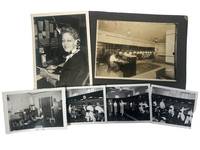
1900200911900. Telephone operator photo archive circa 1900 to 1958 documents women's labor within telephone exchange systems showing how urban communications depended on trained female operators seated at switchboards connecting calls handling information and maintaining the human infrastructure behind early and mid twentieth century telephone service. The material documents telephone communication labor through photographs of switchboard rooms operators wearing headsets plug boards supervisory presence and grouped clerical activity revealing how connection work operated in practice before automated dialing fully displaced manual exchange work. The archive supports research into women's wage labor communications history gendered office work New York telephone service and the disciplined workplace culture that positioned young women as the public voice and operational center of the telephone network.<br /> The archive consists of six black-and-white photographs including five silver gelatin photographs and one early albumen photograph with images measuring from approximately 3.5 x 4.25 inches to 7 x 9 inches. The date range appears to extend from the early twentieth century to 1958 based on the later dated images. Several photographs show women seated in tight rows facing large switchboards wearing heavy headsets with horn mouthpieces and working among dense arrangements of cords and plugs. The early albumen photograph shows a row of women facing the switchboards while a female supervisor watches over the room indicating both the gendered hierarchy and procedural discipline of the exchange floor. One image shows an operator turning toward the camera with a plug in hand smiling while gesturing toward the board. Four smaller photographs dated 1958 show teams of women moving between boards and a small group with paperwork behind the operating area; pencil inscriptions on the versos identify the location as New York.<br /> The photographs are valuable because they make visible the labor system behind telephone service: rows of operators standardized equipment supervisors paperwork and the coordinated manual routing of calls. They also record the gendered character of communications work in which women's voices posture speed and manner were made part of the service itself. Light handling wear minor edge wear and expected age toning; images remain crisp with equipment and personnel details clearly visible; overall very good. Strong women's labor and communications history archive documenting the human operation of telephone exchange systems across the first half of the twentieth century and into the postwar period. unknown
18936644St. Louis: A. R. Fleming & Co 1893. First edition. Very Good. Original publisher's cloth binding with gilt to spine and front board. Brown coated endpapers. Some wear to corners and head and tail of spine. Some staining to covers and corresponding dampstaining to corners of endpapers. A very good copy internally clean and unmarked. Collating viii 9-220: complete including frontis. The first book published by a policewoman in America.<br /> <br /> Despite assumptions to the contrary "women have served in organized law enforcement in the U.S. almost from the beginning. The first police departments in America were established in the 19th century and in 1845 women began working as matrons in New York City jails" Smith. The practice rapidly spread across the country where police forces needed assistance in supervising female prisoners and dealing with the specific challenges faced by this population. Women's clubs -- particularly the American Female Moral Reform Society and the Women's Christian Temperance Union -- urged recognition for the widespread violence perpetrated on female prisoners and called for meaningful change. "It was these women's groups that fought for these distinctly female positions demanding there was a need for women to take care of women.and they provided police departments with funds for paid matron positions until the government could be convinced of the necessity of having women in the police force" Maiorano.<br /> <br /> Louisa Harris having served in the prisons and courts of Missouri for nearly a decade became the first of these women to publish about her experience. The resulting narrative reflects an awareness of the social forces that put women at a disadvantage driving them toward arrests or recidivism. Domestic violence poverty and the stigma placed on sex work all do damage to women; and according to Harris these women should not be treated as or placed with violent offenders when they could with proper assistance find safety or build more secure lives. This is the motivation for Harris' memoir. In the introduction she explains that while she hesitated to publish the book which might in some readers awaken a "morbid curiosity" she ultimately moved ahead because "I reasoned that if the world knew more about the unfortunate and their revolting experiences together with the causes that promote misfortune there might be more true sympathy exhibited.While I have from personal observation become familiar with so-called criminals I have had the opportunity to learn many of the causes of the committal of crimes. The law seldom recognizes the palliating influences but humanity should." Harris calls for reforming the handling of juvenile offenders advocates for therapeutic programs for young women and taps into a number of other systemic issues of concern within policing today. Very Good. A. R. Fleming & Co unknown
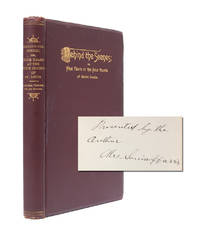
18934179St. Louis: A. R. Fleming & Co 1893. First edition. Near Fine. Original publisher's cloth binding with gilt to spine and front board. Brown coated endpapers. A square tight copy with just a bit of rubbing to extremities and light shelfwear to bottom edges of boards. Some cracking to hinges but both holding firm. Internally clean and unmarked collating viii 9-220: complete including frontis. Inscribed on the front endpaper: "Presented by the Author Mrs. Louisa Harris." The first book published by a policewoman in America it is scarce both institutionally and in trade. OCLC reports 23 copies and the modern auction record shows only three; of these only one was signed. <br /><br />Despite assumptions to the contrary "women have served in organized law enforcement in the U.S. almost from the beginning. The first police departments in America were established in the 19th century and in 1845 women began working as matrons in New York City jails" Smith. The practice rapidly spread across the country where police forces needed assistance in supervising female prisoners and dealing with the specific challenges faced by this population. Women's clubs -- particularly the American Female Moral Reform Society and the Women's Christian Temperance Union -- urged recognition for the widespread violence perpetrated on female prisoners and called for meaningful change. "It was these women's groups that fought for these distinctly female positions demanding there was a need for women to take care of women.and they provided police departments with funds for paid matron positions until the government could be convinced of the necessity of having women in the police force" Maiorano.<br /><br />Louisa Harris having served in the prisons and courts of Missouri for nearly a decade became the first of these women to publish about her experience. The resulting narrative reflects an awareness of the social forces that often put women at a disadvantage driving them toward arrests or recidivism. Domestic violence poverty and the stigma placed on sex work all do damage to women; and according to Harris these women should not be treated as or placed with violent offenders when they could with proper assistance find safety or build more secure lives. This is the motivation for Harris' memoir. In the introduction she explains that while she hesitated to publish the book which might in some readers awaken a "morbid curiosity" she ultimately moved ahead because "I reasoned that if the world knew more about the unfortunate and their revolting experiences together with the causes that promote misfortune there might be more true sympathy exhibited.While I have from personal observation become familiar with so-called criminals I have had the opportunity to learn many of the causes of the committal of crimes. The law seldom recognizes the palliating influences but humanity should." Harris calls for reforming the handling of juvenile offenders advocates for therapeutic programs for young women and taps into a number of other systemic issues of concern within policing today. Near Fine. A. R. Fleming & Co books