Livre Rare Book
353 résultats
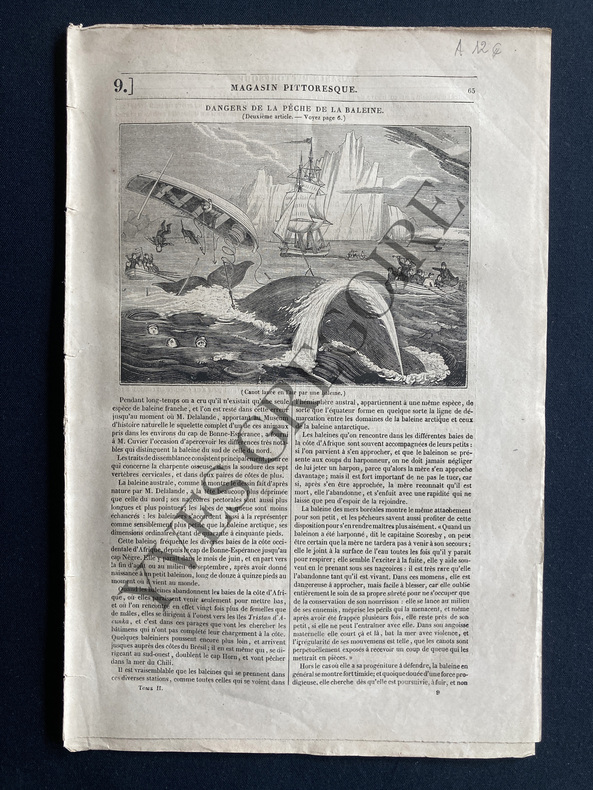
1834ABE-17747001318 PAGES-SANS COUVERTURE-DANGERS DE LA PECHE DE LA BALEINE-VOYAGEURS FRANCAIS/RUBRUQUIS EN 1253-CATHEDRALE DE STRASBOURG/3P/2 GRAVURES-IMPOTS EN FRANCE-FEUX DE LA SAINT JEAN EN BRETAGNE-STATUE COLOSSALE DE SAINT CHARLES BORROMEE
1744361836Torino, Stamparia Reale, (1744). Folio. 2 Bl. Moderner Pappband (teilw. verblaßt).
25594No place (Paris), no date (ca 1750). 15, (1 blank) pp. 4to. Disbound. Not in Kress; not in Goldsmiths. Gives detailed instructions as to how to declare, how to handle, and how to settle the debts of communities including instructions with regards to the drafting of contracts concerning loans.
1795490138Hamburg, Fauche, 1795. XXVIII S. Moderner Umschlag.
M14902Couverture rigide Paris , Pault , 1738 , in8 plein veau , 417 - 30 pp . Coiffe supérieure frottée , manque pièce de titre . Langue: Français
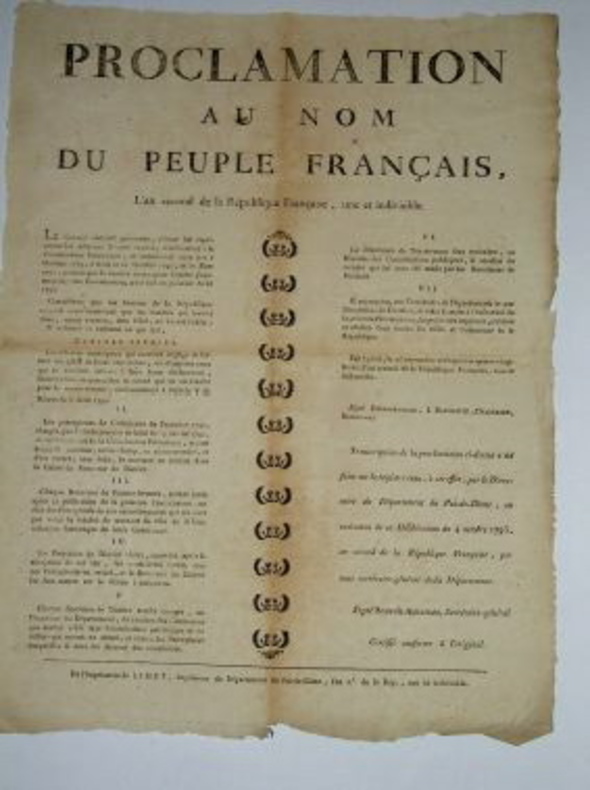
1793aff-rev-91793 49X37
24695A Paris, De l'Imprimerie Royale, 1785. With three folding tables. (2), 106 pp. 4to. Modern boards. Conlon 85:615; not in Kress; not in Goldsmiths. First edition. Signed at end by Le Roy, Tillet and Desmarest.The contents can be best summarized by giving the drop-head title on page one: Rapport fait à l'Académie, Relativement à l'advis que le Parlement a demandé à cette Académie, par arrêt du 6 Septembre 1793. Sur la contestation qui s'est élevée à Rochefort, au sujet de la taxe du Pain; sur les Expériences qui ont été faites dans cette Ville à ce même sujet, en exécution d'un arrêt du Parlement du 7 Juin 1781; & sur les moyens d'établir le prix juste du Pain, proportionnément à celui du Blé, suivant la quantité de Farines différentes qu'une quantité de livres de Blé peut rendre, & suivant la quantité de Pain que ses Farines doivent donner. - Small brown spot in inner blank margin of title-page, else a fine copy.
16800A Paris, Chez la veuve Saugrain & P. Prault, 1714. 5 parts in 1. 184 pp.; 192 pp.; 140 pp.; 168 pp.; 32, (20) pp. 4to. Contemporary calf, spine gilt with raised bands, label with gilt lettering, somewhat damaged at foot of spine, lightly rubbed. Not in Kress; not in Goldsmiths; not in Gavet. - Copy from the library of Balincourt-Cabrières, with engraved bookplate, and with many contemporary marginal annotations on a number of leaves.
83927A Montpellier, Chez la Veuve d'Honoré Pech, 1716, 1 volume de 165x215x35 mm environ, 1 recueil et 37 pièces sur le Languedoc, pleine basane fauve tachetée, dos à 5 nerfs portant titres et dates dorés sur pièce de titre bordeaux, orné de caissons à motifs dorés, tranches rouges. Années 1710, 1697, 1698, 1699, partie manuscrite en milieu de volume (année 1698). Des rousseurs, des pages brunies, quelques notes anciennes à l'encre, frottements sur le cuir, manque de papier sur la première page de titre, ex-libris découpé sur la deuxième garde blanche, bon état pour le reste.
18463117161Paris, 1846. 40; 36 S. OBroschur (Stempel auf Titel, Einbände und Papier etwas fleckig, Rücken leicht lädiert, ungeschnitten).
2731Gironde, 1818 - in-fol., 1 pp. - doc. manus d'ép. - in-fol.
17043A Londres, 1775. With 1 folding map and 4 folding tables. viii, 293, (1) pp. 8vo. Contemporary marbled calf, spine gilt in compartments, red morocco label with gilt lettering, gilt triple fillets on sides, red edges. Kress 7170; Goldsmiths 11330; Einaudi 5517; INED 4798; Higgs 6403; Peignot, Livres Condamnés, i, p. 141. First edition. Severely prosecuted attack on the Fermiers-Généraux, forbidden already in 1776. 'Diatribe sanglante contre les fermiers généraux et les abus scandaleux de leurs agents. L'auteur met en scene un malheureux dont les 'suppôts de la ferme' ont ruiné la famille et fait périr le père de chagrin' (INED). According to a manuscript note in the Kress copy: '..... l'on croit que cette sanglante diatribe des fermiers généraux a été composée, imprimée et répandue sous les auspices du ministère actuel (celui de Turgot & Malesherbes).'This, in fact, is the first edition of a work which became better known under the title "L'Ami du Peuple François, ou Mémoire adressée à Mr. Turgot, ....." published at Limoges one year later (1776). Even the motto in both works is identical: "Ni Ferme ni regie: l'une et l'autre font la perte des Etats." The present work contains the same text as the "L'Ami du Peuple" (upto page 84, and then the pages 256-269) and contains in addition much detailed information about the taxes. It was probably deemed to complex or technical and was published again in 1776 as "L'Ami du Peuple François" this time omitting the detailed information about the taxes. The work suggests Turgot to abolish the tax system in use as it is injust and odious, of relatively little profit to the king but very profitable for the taxfarmers and hard-pressing on the population. The work describes in detail the various taxes in existence, their effects, the cruel practises of the taxfarmers, the uneven division of the taxes and the disastrous effects.It is told in the form of a story: the anonymous author recounts the story of his father and his family and how they were, little by little, driven to complete ruin. His father, responsible for the collecting of taxes in his village, is thrown in jail and his possessions confiscated by the taxfarmers because of his inability to raise the requested taxes from the other taxable inhabitants of his village.
055346Pars Bureau du Journal des Douanes Nationales de France 1791 in 8 (19,5x12) 1 volume reliure basane foncée de l'époque, dos lisse orné, tranches teintées rouge, XXIV et 180 pages, cachet du Bureau du Journal des Douanes Nationales de France, fente sur le plat supérieur. Bon exemplaire
18043303390Rostock, Müller, 1804. 1 gefalteter Bogen, zusammen 8 S.
13370No place, (1787) (Paris, EDHIS, 1976). 31, (1) pp. 8vo. Boards. Not in INED; not in Goldsmiths; not in Kress; Conlon 87:1288. Reprint of this very rare and important little work, editon limited to 150 numbered copies and 30 not destined for the trade, and since long out-of-print. The unknown author of this tract brings up the question of the defense of the interests of the lower classes of the population, those who have no property nor any other wealth, no status, no rights and who ask only this: to have work to do, the certainty that this work will enable them to live and not to be robbed by the taxes.
27210A Bruxelles, 1779. xiv, 776, (2, errata, blank), 10 pp. 4to. Contemporary calf, spine gilt with raised bands, red label with gilt lettering, marbled edges, some minor blemishes to binding. Kress B.175; Goldsmiths 11860; Einaudi 207; INED 137; Quérard, La France Littéraire, i, p. 126; Dupin/Camus 954bis, pointing to the fact that this work is only complete with the 10 pages supplement, as is the case here; Le Bucher bibliographique, 114. Very rare only edition and suppressed by the Cour des Aides in February 1779 because it was considered contrary to the authority of the Court, it lacked respect for its decisions and it violated the confidentiality of the decisions. This precious and scarce volume, which was not available on the market and which was suppressed in 1779, contains the work of Malesherbes during his tenure in office at the Cour des Aides, that is, the work of 25 years: the reports of the sessions of the Cour des Aides and the remonstrances. It was published with tacit permission and did not contain, in the first instance, those pleas in which Malerherbes addressed the king in quite frank language. These withheld texts were shortly thereafter nevertheless printed and inserted and they form the indispensible 10 page supplement at the end of the volume.The Court des Aides was suppressed, together with the Parliaments, by Maupeou in his attempt at reform; it played, under Malesherbes, a significient role of opposition to what the Court considered to be "royal arbitrariness" and basically shared the "constitutionalist" ideology common to most members of the Grande Robe. The Court was suppressed in 1771 and re-instated in 1774: Malesherbes was recalled to Paris with the reconstituted Cour des Aides on the accession of Louis XVI; it was at this point that he spearheaded the famous 1775 Remontrances of the cour des aides, which detailed the problems facing the regime and envisioned a total overhaul of fiscal policy. Louis XVI was so impressed with the plan -and fearful for the future of his government- that Malesherbes was appointed minister of the maison du roi in 1775. He held office as a royal minister only nine months; the Court proved intransigent in its opposition to his proposals for fiscal restraint and other reforms, including curtailing the arbitrary issuance of lettres de cachet, and he soon found himself bereft of political support. He resigned together with Turgot in 1776.- Pages 71-72 bound between pages 66-67, and with the pages 71-72 bis present, 457-8 omitted in numbering, numbers 465-66 used twice, but text complete.
18836Londres, 1775. 2 volumes in 1. (1), 155, (1) pp.; 275, (3) pp. 8vo. Contemporary marbled calf, spine gilt with raised bands, red morocco label with gilt lettering, small damage to joint at the foot of the volume. First work: Kress 7193; not in Goldsmiths; not in Einaudi; this edition not in INED; cf: Camus 1566; Peinot, Livres Condamnés, i, p. 43 (with wrong date). Third edition, published in the same year as the first edition, first edition with this title. Pierre-François Boncerf, French writer on agrarian subjects. While a clerk in the ministry of finance under Turgot he published a pamphlet, Les inconvénients des droits féodaux. According to Palgrave the work was published with the consent of Turgot. In it he attacked the contemporary system of feudal dues as ruinous to those who pay them, of little advantage to its benificiaries and contrary to the principles of freedom. The solemn condemnation of the pamphlet by the parlement of Paris, which the king vetoed, and the ensuing controversy in the press, in which Voltaire took a prominent part, established Boncerf's reputation and resulted in the translation of the work into many European languages. The pages 70-end contain the relevant texts by Montesquieu. The first edition was published anonymously, the second edition under the assumed name M. Francaleu. Second work: Higgs 6537; INED 3188 (1831 edition); Martin & Walter 24430; not in Goldsmiths (see 11518 for the second edition).First edition. Philosophical and political study on despotism and its effects it pretents to refute the theories of Rousseau while the author in reality attacks straight forward the government. Of actual value seems again his remark 'La nation finit toujours par être plus puissante que le tyran lorsque le pouvoir arbitraire parvenu à son dernier délire a dissous tous les liens de l'opinion et épuisé les ressources que la terre offre à ceux qui la cultivent en liberté. Ainsi les hommes se vengent tôt ou tard.' 'Dans cet insolent libelle, intitulé Essai sur le Despotisme, sous couleur de réfuter les théories de Jean-Jacques sur la bonté naturelle de l'homme, l'auteur s'attaquait de front aux pouvoirs' (Duc de Castries, Mirabeau, p. 105). Important work proclaiming democratic ideas and openly attacking despotism: 'Après cette vue philosophique générale, l'ouvrage s'attaquait seulement au 'despotisme d'un seul'' (Duc de Castries, op.cit)
17894A Paris, 1776. (2), 155, (1) pp. 8vo. Contemporary marbled calf, spine gilt in compartments, gilt lettering. Kress 7193; not in Goldsmiths; not in Einaudi; this edition not in INED; Camus 1566; Peinot, Livres Condamnés, i, p. 43 (with wrong date). Third edition, published in the same year as the first edition, the other two having only 48 and 72 pages respectively. Pierre-François Boncerf, French writer on agrarian subjects. While a clerk in the ministry of finance under Turgot he published a pamphlet, Les inconvénients des droits féodaux. According to Palgrave the work was published with the consent of Turgot. In it he attacked the contemporary system of feudal dues as ruinous to those who pay them, of little advantage to its benificiaries and contrary to the principles of freedom. The solemn condemnation of the pamphlet by the parlement of Paris, which the king vetoed, and the ensuing controversy in the press, in which Voltaire took a prominent part, established Boncerf's reputation and resulted in the translation of the work into many European languages. The pages 70-end contain the relevant texts by Montesquieu. The work was first published anonymously, a second edition was published with the pseudonym M. Francaleu.
17155Londres (Paris?), 1751. 3 parts in 1 volume. (6), 112 pp.; 175 pp.; 171 pp. 12mo. Contemporary marbled calf, spine gilt in compartments, gilt fillet on sides, marbled edges, spine somewhat rubbed, slightly damaged at head and foot. Stourm 81; Conlon 51:499; INED 1094 (one part only); not in Kress; not in Goldsmiths; not in Einaudi. First edition. Legal and historical work dealing with Machault's plans to tax the ecclesiastical properties. The clergy maintained that they were exempt from tax and that whatever they paid was a voluntary gift. Chauvelin maintains that the clergy can not be exempt from taxes if the king thinks he ought to ask a contribution from them. The issue was hotly debated at the time, as the long list of works cited by Stourm shows. The work was condamned, Machault's plans failed and the exempt position of the clergy was maintained upto the revolution.
LFA-126738549Un document format 380 x 355 mm, s.d. (XVIIIe siècle), bon état
16499A Londres et se vend à Paris, Chez la veuve Delormel & Fils, 1757. Together 4 works bound in 1 volume. (4), 60, 107, (1) pp.; xxiv, 224 pp.; 109, (1) pp.; 67, (1) pp. and 1 table. 8vo. Contemporary polished calf, spine richly gilt, raised bands, gilt triple fillets on sides, red label with gilt lettering, a very nice copy. First work: Kress 6086-7; Goldsmiths 9873; INED 1276; Higgs 3017. First issue of the first edition. In this vehemently written work, the fermiers-généraux were accused of corruption. It caused the author's imprisonment in the Bastille. The volume was printed by Lambert and distributed by Ormancy, who also were arrested. Four years after its publication the book was still sold secretly at high prices.Second work: Not in Kress; Conlon 75:640 (claiming two volumes).First edition.Of importance for the history of the years preceding the Revolution.Third work: Conlon 82:401.First edition.Fourth work: INED 620; Conlon 57:547.First edition.
16498A La Haye, 1764. Together 3 volumes in 1. (4), 60, 107, (1) pp.; (2), 26 pp.; 24 pp. 8vo. Contemporary marbled calf, spine gilt in compartments, red label with gilt lettering, red edges, lightly worn, some spots. First work: Kress 6086; Goldsmiths 9873; INED 1276; Higgs 3017; Conlon 63:751. First issue of the first edition. In this vehemently written work, the fermiers-généraux were accused of corruption. It caused the author's imprisonment in the Bastille. The volume was printed by Lambert and distributed by Ormancy, who also were arrested. Four years after its publication the book was still sold secretly at high prices. Second work: Not in Kress; Goldsmiths 10025; Higgs 3018; INED 4797; Conlon 63:752.First edition.According to Goldsmiths this is not by Darigrand, but a reply to Darigrand's work, INED also believes this work to be written by another, anonymous, author, Conlon lists it under Darigrand.Third work: Not in Kress; Goldsmiths 10020; Higgs 3268; INED 4778; Conlon 64:441.First edition.Loosely inserted: ARRET de la cour du parlement de Rouen, qui ordonne que la brochure intitulée: Réponse à l'auteur de l'anti-financier, fera lacerée & brulé par l'exécuteur de la Haute-Justice, au pied du grand escalier de palais; enjoint à ceux qui en auroient des exemplaires, de les apporter au Greffe de la Cour, pour y être pareillement lacérés & brulés, &c. Du 9 Avril 1764. (Drop-head title). A Rouen, Chez J.J. le Boullenger, (1764).Not in Kress; Goldsmiths 10017; Higgs 3252.
18071Grenoble 1708. 49 x 36 cm. Auréole claire sur la partie centrale du document. Tampon "Extraordinaire Dauphiné". Mentions manuscrites des sommes à recouvrer signatures de Nicolas Prosper Bauyn seigneur d'Angvilliers Vial . Document fixant le montant de l'impôt montant manuscrit les dates de recouvrement. contraintes et contraventions en cas de non-paiement. unknown
18071Grenoble, 1708. 49 x 36 cm. Auréole claire sur la partie centrale du document. Tampon "Extraordinaire Dauphiné". Mentions manuscrites des sommes à recouvrer, signatures de Nicolas Prosper Bauyn seigneur d'Angvilliers, Vial, ...Document fixant le montant de l'impôt (montant manuscrit), les dates de recouvrement., contraintes et contraventions en cas de non-paiement.
911TMS. Atkinson was an American industrialist and economist. He wrote "Cheap Cotton by Free Labor" "The Collection of Revenue" and "Argument for the Conditional Reform of the Legal-Tender Act". TMS. 7pg. 8 " x 11". Dec. 29 1899. Boston. A typewritten manuscript signed "Edward Atkinson" and accompanied by a slew of handwritten notes between lines and in margins. The manuscript is entitled "A Single Tax Parable. A very simple story" and reads in part: ". Away down to the West of the Indian Territory there lies a bit of land of exceedingly uniform and fertile character named 'No Man's Land' belonging to the United States. It was set apart when opened to settlement for an experiment in collecting the entire revenue due from settlers for any purpose by a 'single tax'. John Doe and Richard Roe were two New England mechanics. without the possibility of accumulating gain. They concluded to better their conditions by accepting under the Government grant each a quarter section in 'No Man's Land' on a single tax or ground rent at an assessment of two 2 per cent. making the single tax. on the whole parcel eighty dollars $80.; a seemingly high valuation but a low rate. John Doe and Richard Roe each had a thousand dollars $1000 in capital. Each built a small house putting the rest of their money into tools. Each put into wheat one hundred 100 acres. land of uniform fertility. Each kept a set of books valuing their own time. At the beginning of the second year John Doe bought a piano for the use of his daughter and bought a trotting horse and buggy for himself. Richard Roe was satisfied with a parlor organ. and put the rest of his profits into some good dairy stock. ". The manuscript continues along these lines and ends with the less frugal Doe working as an employee of the smarter Roe. There are over a handwritten hundred words and his signature appears at the end. The manuscript is in excellent condition with horizontal folds and a paper clip mark throughout unknown