170 résultats
43693Paris Editions de la Gazette des Tribunaux 1926 in 8 (22,5x14) 1 volume broché, 298 pages [1]. Bon exemplaire ( Photographies sur demande / We can send pictures of this book on simple request )
27210A Bruxelles, 1779. xiv, 776, (2, errata, blank), 10 pp. 4to. Contemporary calf, spine gilt with raised bands, red label with gilt lettering, marbled edges, some minor blemishes to binding. Kress B.175; Goldsmiths 11860; Einaudi 207; INED 137; Quérard, La France Littéraire, i, p. 126; Dupin/Camus 954bis, pointing to the fact that this work is only complete with the 10 pages supplement, as is the case here; Le Bucher bibliographique, 114. Very rare only edition and suppressed by the Cour des Aides in February 1779 because it was considered contrary to the authority of the Court, it lacked respect for its decisions and it violated the confidentiality of the decisions. This precious and scarce volume, which was not available on the market and which was suppressed in 1779, contains the work of Malesherbes during his tenure in office at the Cour des Aides, that is, the work of 25 years: the reports of the sessions of the Cour des Aides and the remonstrances. It was published with tacit permission and did not contain, in the first instance, those pleas in which Malerherbes addressed the king in quite frank language. These withheld texts were shortly thereafter nevertheless printed and inserted and they form the indispensible 10 page supplement at the end of the volume.The Court des Aides was suppressed, together with the Parliaments, by Maupeou in his attempt at reform; it played, under Malesherbes, a significient role of opposition to what the Court considered to be "royal arbitrariness" and basically shared the "constitutionalist" ideology common to most members of the Grande Robe. The Court was suppressed in 1771 and re-instated in 1774: Malesherbes was recalled to Paris with the reconstituted Cour des Aides on the accession of Louis XVI; it was at this point that he spearheaded the famous 1775 Remontrances of the cour des aides, which detailed the problems facing the regime and envisioned a total overhaul of fiscal policy. Louis XVI was so impressed with the plan -and fearful for the future of his government- that Malesherbes was appointed minister of the maison du roi in 1775. He held office as a royal minister only nine months; the Court proved intransigent in its opposition to his proposals for fiscal restraint and other reforms, including curtailing the arbitrary issuance of lettres de cachet, and he soon found himself bereft of political support. He resigned together with Turgot in 1776.- Pages 71-72 bound between pages 66-67, and with the pages 71-72 bis present, 457-8 omitted in numbering, numbers 465-66 used twice, but text complete.
14680S.l 1789 in 8 (21,5x14) 1 volume broché sous couverture muette d'attente de l'époque (papier gris), titre, 187 pages et XXIII, non rogné. Bon exemplaire ( Photographies sur demande / We can send pictures of this book on simple request )
4571A Soissons, et se trouve à Paris, Chez P.G. Simon, 1764. With woodcut device on title. (2), 76 pp. 8vo. Modern marbled boards, red label with gilt lettering (Laurenchet). Kress 6201; Einaudi 3362; Higgs 3306; Mattioli 1971; INED 2877 (edition 1765); Weulersse, i, xxvii; not in Goldsmiths; Granier, Bibliographie Charitable, 1330; not in Dada. Very rare first edition. Guillaume François Le Trosne (1728-1780) joined the physiocrats in 1764, contributing articles to their journals, and writing works defending their ideas. 'He became one of the most lucid exponents of the physiocratic doctrine; his views express most clearly the evolution of the school. At first an enthusiastic, inflexible adept of the abstract physiocratic system, he nevertheless evidenced a preference for practical questions, as reflected in his La liberté du commerce des grains, toujours utile et jamais nuisible (Paris, 1765).In this work, Le Trosne condemns the vagabond as a parasite on, and an enemy of, society. 'Only in politics did he remain absolutely faithful to absolutism ..... and hostile to democracy, that 'bizarre and monstrous' government which he doubtless pictured in the form of the violent popular demonstrations against the dealer in wheat or as personified by the vagabonds who had set fire to one of the farms of the magistrate' (ESS). Discusses the current situation in France, measures, legal and otherwise, taken to combat or remedy the situation, discusses the distinction to be made between vagabonds and beggars, and discusses possible solutions, one of which is condamning vagabonds to the galleys, and ends with a project for beggars and ways to combat mendicity. 'Ils provoquent le renchérissement de la main-d'oeuvre, car leur oisiveté diminue le nombre des travailleurs; ils favorisent encore l'augmentation des tailles' (INED: They cause the increase of cost of manpower, of labour, as their idleness reduces the number of workers; they rather favor the increase of the "tailles" (a tax)" (our translation)).
17689853S.l., s.n., s.d. (circa 1768) ; in-4 ; demi-veau havane (reliure moderne) ; 13 pp.
18596A Caen, Chez Gilles le Roi, 1765. (2), 57, (1) pp. 4to. Modern marbled boards. INED 2728; not in Kress; not in Goldsmiths; not in Einaudi; not in Conlon. First edition. 'Mémoire historique et économique exprimant la misère des curés 'portionnaires' et les moyens d'y remédier' (INED). - Two small holes in inner margin of title-page.
M10597Orléans, Sallou , 1840 , in12 1/2 toile, dos muet, 108pp , 4 tableaux dépliants. Langue: Français
26200A Aix, Chez André Adibert, Imprimeur du Roi, vis-à-vis le College, 1782. Five works on one volume. 46 pp.; 46 pp.; 31, (1) pp.; 24 pp.; 9, (1) pp. Small folio. Modern boards. None of these items in Conlon. Each work has a very nice engraved head-piece, and the place, name of printer and date are printed in these head-pieces. The head-piece of the fourth work depicts a castle and a house. Deals with the right of tax collecting (tax-farming) by Chabert and the predicted amounts of money to be collected. Chabert won the right to collect the taxes among the members of the guild, and for which right he paid the guild of cobblers, but revenues fell far behind what was predicted/expected. At least one of the reasons was the emigration of vast numbers of "garçons" as a response to measures taken by the guild itself, another the departure of many cobblers after a large fleet had left Marseille. The question here is if Chabert is entitled to discounts or refunds of money he already paid to the guild and if he is to be held accountable for failing to collect the predicted/expected sums of money.The first text is preceded by a handwritten summary of the entire matter of two pages, the second piece has handwritten annotations at the end stating the Chambre de Tournelle affirmed the verdict by arret of 16 july 1782: the second piece finds the guild (the Maîtres Cordonniers) guilty.
25594No place (Paris), no date (ca 1750). 15, (1 blank) pp. 4to. Disbound. Not in Kress; not in Goldsmiths. Gives detailed instructions as to how to declare, how to handle, and how to settle the debts of communities including instructions with regards to the drafting of contracts concerning loans.
191199919664Poitiers Librairie Administrative P Poitiers Librairie Administrative P. Oudin 1911, fort In-8 cartonnage de l'éditeur, 1023 pages + errata et addenda. Bon état.
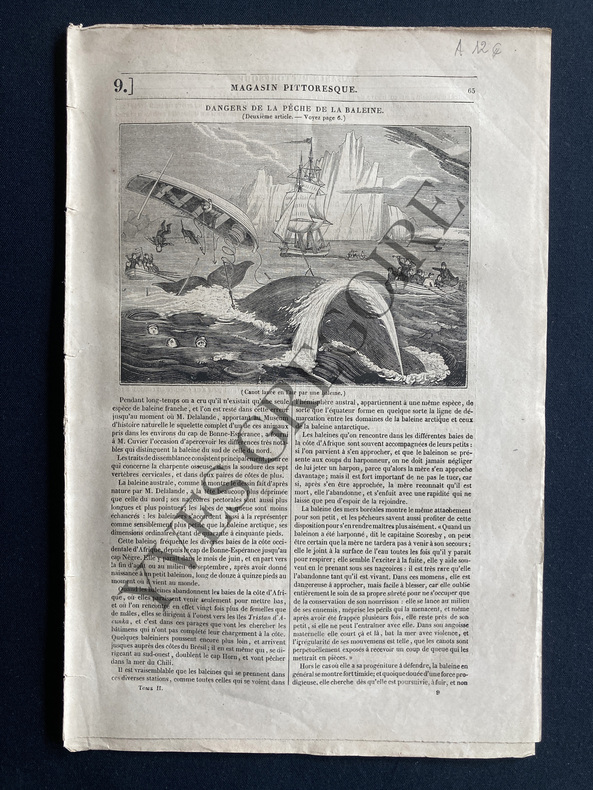
1834ABE-17747001318 PAGES-SANS COUVERTURE-DANGERS DE LA PECHE DE LA BALEINE-VOYAGEURS FRANCAIS/RUBRUQUIS EN 1253-CATHEDRALE DE STRASBOURG/3P/2 GRAVURES-IMPOTS EN FRANCE-FEUX DE LA SAINT JEAN EN BRETAGNE-STATUE COLOSSALE DE SAINT CHARLES BORROMEE
25544A Paris, Chez la veuve Saugrain et Pierre Prault, 1730. (4) pp. 4to. Folded leaf. Conlon 30:140. Original edition. Alphabetical list with addresses of the officers.
22875En France, 1751. 70, (2) pp. 8vo. Modern boards. Conlon S51:11; not in Kress; not in Goldsmiths; not in INED (see 1094 for the work by Chauvelin). The 'Avis de l'Editeur', printed verso title-page states the first manuscript was lost and that it had been necessary to ask the author for another copy of the manuscript. The author did indeed supply another copy of the manuscript but only after he had made considerable changes in the text. This suggests that this is the first printing of the text. The Examen Impartial was written by the Abbé Louis-Philippe Chauvelin in which he argued that, although the clergy was entitled to its special prerogatives, it could not use these to claim total exemption from taxation.According to Conlon a second volume was published in 1753 entitled 'Suite des Lettres Critiques ....'. Conlon also knows of no other edition but the present one as the first publication of this text.
24323No place, no date (1763). 15, (1) pp. 8vo. Modern marbled boards. Stourm, p. 106; not in Kress; not in INED; not in Conlon; not in Higgs; not in Goldsmiths. First editon. One of the many replies provoked by Roussel de la Tour's Richesse de l'État in which the author proposed principles of taxation which were wholly contrary to the principles of the Tableau Oeconomique.
13187Lettre patente du Prince de Chimay donnée à Paris le 12 mai 1722 par laquelle il confère ses pouvoirs et la perception des ses droits au chevalier de Lisogne dans ses terres seigneuriales de Révins et Fumay. Document de 4 pages entièrement manuscrit sur vélin 495 x 360mm . Signature du Prince CHIMAY (sans le sceau) .
1848UUI-11120Brochure de format in-12 sous couverture de relais, Imprimerie de C.-P. Baratier, Grenoble, 1848, 12 pp. Déchirures avec manques sur le bas des pages, sans perte de texte, bon état par ailleurs, bon exemplaire de cette très rare brochure. Poids 20 g. Envoi lettre verte. Frais d'envoi 1,94 euro sur la France, 2,80 euros pour l’étranger (tarifs de base hors envois suivis).
23537A Londres, 1787. 24 pp. 8vo. Modern boards, original blind covers preserved. Kress B.1261; Stourm, p. 137; not in Goldsmiths. First edition. On French government finances and especially the taxes on the eve of the revolution. The author also sharply rejects the privileges of the clergy, the class that does not pay taxes, has accumulated an enormous wealth and is yet again exempted from paying taxes. The nobility also has priviliges but the author intelligently observes that the nobility is used to sacrifice and serving the state in various capacities, and, contrary to the clergy, it's position in the state is closely tied to the state itself, in other words, a collapse of the state will have immediate impact on the nobility and their status. It discusses the position of Calonne and the possibilities of reform and the various forms of opposition any reform will provoke from various groups.
GF269794 pages in8 - bon état -
186127430Paris Didron 1861 In-8 In-8, IV + 404 + 6 ffnch. Relié dos chagrin. 16 fac-simile de très anciens compoix et d'un leu ou rôle de 1440, tirés principalement des archives de la mairie d'Albi.
1975126785Couverture souple. Broché. 128 pages.
1979133077Couverture souple. Broché. 128 pages.
199699926563Paris Guillaumin et Cie Paris Guillaumin et Cie 1996, In-8 broché, 260 pages. Conférences faites a l'Ecole des Sciences Politiques. Tome I seul. Bon état.
177521886Amsterdam 1775 In-8 13 Volumes in-8, 11 en plein veau, 2 brochés (4) -392 pp + IV - 320 pp + (2) - 316 pp + (3) 356 pp + (3) -275 + 400 + (2) - 380 (2 ff tables + (2) -380 + (2) 588 + (2) 372- (2) + (3) - 392 + (2) -288 + (2) - 226 pp, les tomes 5 et 13 sont brochés Ex-Libris, hors mis quelques coins émoussés les volumes sont en bon état. certains volumes sont à la date de 1774.
30389Paris, Librairie Larousse, 1990. 15 x 21, 163 pp., reliure dos toilé, bon état.
1993144264Couverture souple. Broché. 670 pages.