263 résultats
185100MV630France. Fine. 1851. Very fresh superb Napoleon III document signed in print by the Louis-Napoleon Bonaparte. Very fine with only the hint of age spots. This bulletin is dedicated to the rules of whaling and as such VERY SCARCE. ; Manuscript; 12mo - over 6¾" - 7¾" tall; HANDWRITTEN MANUSCRIPT DOCUMENT LETTER AUTOGRAPH WRITER HAND WRITTEN DOCUMENTS SIGNED LETTERS MANUSCRIPTS HISTORICAL HOLOGRAPH WRITERS DIARIES JOURNALS LOGS AUTOGRAPHS PERSONAL MEMOIR MEMORIAL PERSONAL HISTORY WHALING WHALES BALEEN SPERM NAPOLEON FRANCE SAILING SEAFARING SEAFARERS VOYAGE HUNTING NAPOLEONIC DECREE BULLETINS . unknown
18980008091CENTRAL FALLS RHODE ISLAND PAWTUCKET PROVIDENCE. Fair. 1898. On offer are 2 well-worn records of a French Canadian who became police chief of a city in Rhode Island USA. Daily events are noted in the undated pages often with just a simple line entry. Many other records are kept such as lists of family members dates of death arrests and convictions etc. The first book measures 6 1/2 inches by 4 inches. The page cover is worn. Some pages are loose and some pages have been torn out. With 199 pages it is approximately 90% complete. The second book is 7 1/2 inches by 5 inches and has 40 pages. This too is about 90% complete. Entries in both appear to be in two different handwriting styles. Napoleon Lambert was born in Marieville Quebec in 1862. He moved with his family to Taunton MA when he was 10. He moved back to Canada in 1875 but returned to live in Central Falls RI in 1883. He worked as a carpenter until 1895 when he was appointed to the newly established Central Falls Police Department on April 15th 1895. Four and a half years later he was appointed Chief of Police. He served as Chief until August 1907. He died in Dec 1919 at the age of 57. His entries in the first book are a combination of events that occurred some biographical data and gossip: "Lucien Lafrance left his wife to go out west" Oct 17 1900; "I had the picture of my four children taken at Prince's Studio on Broad St./also has the boy taken alone" May 16 1902 "Julia McHenry alias Flemming sent a tall woman to offer me $100 get her off the ". Not accepted. Time 1:30 PM Oct 22 1903. The second part of the volume is a long poem/prose piece that may or may not have been written by him. It is in English and French which reflects his bilingual background but the 'hand' is quite different. The second volume is an address book that has been used as a journal. A third of it 46 pages is an alphabetical listing of individuals and their offences many repeated: "Joe Burns: o sentenced by Judge Wilber to serve 18 months in Prov County Jail for the larceny of one lot brass worth $100.00 from the Electroletic Copper Co". Aug 12 1904 o "Larceny 30 days Oct 31 1906 Richard O'Neil; o arrested for drunkenness released" Nov 12 1896 o "Committed to the State Farm for 6 months Charge: Vagrant" Nov 27 1897 "Committed to Jail for 90 days on a charge of larceny of a dog" Dec 8 1898; "Terry Nika o arrested on a charge of assault with a stone upon Stanislaw Prasccrinski on Jan 18-05 Waived examination and was bound over to State Farm. Mar 05 Placed on probation and paid the costs" Jan 26 1905 "o Fined $2 & costs for an assault upon George Belisle on April 15-05 Paid" April 19 1905. The remaining section has had a number of pages torn out. On the 25 or so pages again is a prose piece mostly in French and again in another 'hand'. The volume contains a fair amount of genealogical information about his extended family. For a social historian especially on focusing on life in the Providence-Pawtucket part of Rhode Island this is an excellent reference to crime and punishment at the turn of the last century. Lambert joined the police force right at its inception rose to be Chief and served for a total of 12 years. His journal offers a unique look into an aspect of community life that is often not very visible.; Manuscript; 16mo - over 5¾" - 6¾" tall; KEYWORDS: HISTORY OF UNITED STATES PROVIDENCE COUNTY NAPOLEON LAMBERT CENTRAL FALLS RI PROVIDENCE RI RHODE ISLAND LATE 19TH CENTURY 1890s PROGRESSIVE ERA POLICEMEN POLICING IN THE LATE 1800'S COMMON CRIMES IN A SMALL COMMUNITY URBAN HISTORY CENTRAL FALLS POLICE DEPARTMENT CANADIAN AMERICANS FRENCH CANADIANS IN THE U.S. CENTRAL FALLS CHIEF OF POLICE URBAN POLICE CRIME IN 19TH CENTURY NEW ENGLAND CRIME AND PUNISHMENT IN RHODE ISLAND LAW ENFORCEMENT IN LATE 19TH CENTURY 19TH CENTURY CRIMINAL JUSTICE IN NEW ENGLAND RHODE ISLAND GENEALOGY AMERICANA HANDWRITTEN MANUSCRIPT DOCUMENT LETTER AUTOGRAPH WRITER HAND WRITTEN DOCUMENTS SIGNED LETTERS MANUSCRIPTS DIARY DIARIES JOURNALS PERSONAL HISTORY SOCIAL HISTORY HISTORICAL HOLOGRAPH WRITERS AUTOGRAPHS PERSONAL MEMOIR MEMORIAL ANTIQUITÉ CONTRAT VÉLIN DOCUMENT MANUSCRIT PAPIER ANTIKE BRIEF PERGAMENT DOKUMENT MANUSKRIPT PAPIER OGGETTO D'ANTIQUARIATO ATTO VELINA DOCUMENTO MANOSCRITTO CARTA ANTIGÜEDAD HECHO VITELA DOCUMENTO MANUSCRITO PAPEL . unknown
1802256431Philadelphia: John Morgan 1802. 172 lvii 2 pp. 8vo. Three quarter modern calf on black and white marble boards. Minor rubbing at joints else fine. 172 lvii 2 pp. 8vo. A contentious British pamphleteer William Cobbett wrote under the pseudonym Peter Porcupine producing the short-lived newspaper "The Porcupine" from which these published extracts were taken. John Morgan unknown
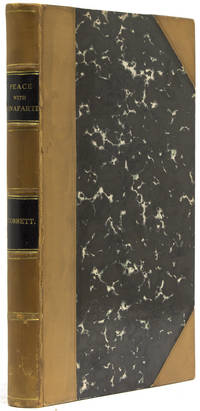
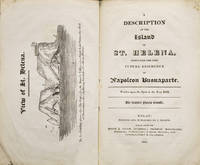
1815302741Wigan: J. Brown 1815. First edition. Woodcut frontispiece. 24 pp. 8vo. Later marbled boards with red morocco label to upper board original wrappers bound in. First edition. Woodcut frontispiece. 24 pp. 8vo. With the defeat of the French at Waterloo England once again prepared to confine Napoleon. Looking for somewhere more than remote than Elba this time he was bound for St. Helena a tiny windswept island in the South Atlantic that was first discovered by the Portuguese and previously in control of the East India Company. <br /> <br /> In the wake of this decision there was much interest in the island and printers scrambled to meet demand. This little pamphlet commences with a history of the island followed by an account of its inhabitants food live stock climate and the all-important garrison. The woodcut includes a key to landmarks on the island. Of additional interest are the "Remarks on Ascension Island" being another British possession in the Atlantic.<br /> <br /> Not in OCLC not in COPAC. This copy only on ABPC. J. Brown unknown
1815192029London: Printed for J. and E. Wallis; J. Wallis Sidmouth 17 August 1815. Published two months before Napoleon landed on the island Second edition published nine days after the first. Its publication was likely spurred by Napoleon's defeat at Waterloo on 18 June; he arrived in Jamestown on 15 October 1815. We have traced only three institutional copies: the first edition at the State Library Darmstadt and Yale University the second edition at the University of Oxford. At the head of this broadside is an engraving of St Helena viewed from the north-west captioned with 12 locations of interest such as fortifications and the government house. The text details pertinent information about the island such as its longitude and latitude defensive formations climate and weather population and endemic diseases. It is painted in a picturesque manner: "St. Helena is gifted with considerable attractions and advantages both local and natural. The climate seems to be peculiarly adapted to the constitution of Europeans of whom many have resided here for a long series of years without suffering any malady". Napoleon remained on the island until his death on 5 May 1821. The engraving is slightly different to other examples dated 8 August 1815 with ships in different positions. Broadside 502 x 364 mm black letterpress on one side only. Hand-coloured engraved illustration at head. Edges a little dust soiled nicked and creased a few tidemarks on verso: a very good copy. unknown
181448997Boston: Henry Channing 1814. 1 vols. 8vo. Modern brown buckram bright crimson morocco title label on upper cover original wrappers bound in. Bookplate of Henry Cabot Lodge. Some fading to covers some foxing else very good. 1 vols. 8vo. This William Ellery Channing 1782-1842 was the uncle of the more famous American Transcendentalist poet William Ellery Channing II 1817-1901. The elder Channing graduated with distinction from Harvard at the ripe age of 18. His first and only pastoral settlement was a small church on Federal Street in Boston June 1803. Shortly thereafter Channing became closely identified with the intellectual movement that ultimately spawned the North American Review and a number of other journals. Channing gradually grew into a significant opponent of slavery without ever joining forces with the abolitionists or approving of what he deemed their "extremist" tactics. Channing's writings on Bonaparte such as the present title and other political figures earned him a solid literary and critical reputation in Europe as well as America. <br/><br/> Henry Channing hardcover
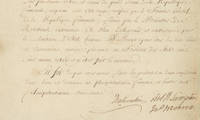
18033595823/05/1803. <blockquote><p>James Monroe and Robert Livingston receive the Treaty signed by Napoleon notification of French ratification and instructions from the French: Deliver this ""to the President of the United States without delay to do what must be done"" and secure American ratification</p><p> </p><p>This doubled the size of the United States and is one of the most significant moments in American history; In 2019 this document was saved from a fire at the Karpeles Manuscript Library and survived</p></blockquote><blockquote><p>This document central to the Louisiana Purchase is among the most important we have ever carried</p><p> </p></blockquote><p>https://vimeo.com/1180578110share=copy&fl=sv&fe=ci</p><p> </p><blockquote><p>Hear more on <a href=""https://www.raabcollection.com/tags/podcast"">Inspired by History</a>:</p><p> </p><p><iframe style=""width: 100%; max-width: 660px; overflow: hidden; border-radius: 10px;"" src=""https://embed.podcasts.apple.com/us/podcast/a-historic-manuscript-central-to-the-louisiana-purchase/id1796821278i=1000761089641"" height=""175"" frameborder=""0"" sandbox=""allow-forms allow-popups allow-same-origin allow-scripts allow-storage-access-by-user-activation allow-top-navigation-by-user-activation""></iframe></p></blockquote><p>The Louisiana Purchase stands as one of the most transformative acts in American history instantly doubling the size of the young republic and securing U.S. control of the Mississippi River and the vital port of New Orleans. Negotiated at a moment of shifting global power—amid Napoleon’s imperial ambitions the threat of imminent renewed war with Great Britain and the collapse of French plans in the Caribbean—the agreement reshaped the geopolitical balance of North America and set the United States on a path toward continental expansion and emergence as a major world power.</p><p>As the United States had spread across the Appalachians the Mississippi River became an increasingly important conduit for the produce of America’s West which at that time referred to the land between the Appalachians and the Mississippi. Since 1762 Spain had owned the territory of Louisiana which included 828000 square miles. The territory made up all or part of fifteen modern U.S. states between the Mississippi River and the Rocky Mountains. The Pinckney Treaty of 1795 had resolved friction between Spain and the United States over the right to navigate the Mississippi and the right for Americans to transfer their goods to ocean-going vessels at New Orleans. With the Pinckney treaty in place and the weak Spanish empire in control of Louisiana American statesmen felt comfortable that the United States’ westward expansion would not be restricted in the future.</p><p>This situation was threatened by Napoleon Bonaparte’s plans to revive the French empire in the New World. He planned to recapture the valuable sugar colony of Haiti from a slave rebellion and then use Louisiana as the granary for his empire. France acquired Louisiana from Spain in 1800 and took possession in 1802 sending a large French army to St. Domingue and preparing to send another to New Orleans. Americans became very apprehensive about having the more-powerful French in control of the Mississippi and New Orleans. President Thomas Jefferson noted “There is on the globe one single spot the possessor of which is our natural and habitual enemy. It is New Orleans.†He determined to do something to change this situation.</p><p>In addition to making military preparations for a conflict in the Mississippi Valley in April 1803 Jefferson sent former Minister to France James Monroe to join present Minister to France Robert Livingston to try to purchase New Orleans and West Florida for as much as $10 million. Failing that they were to attempt to create a military alliance with England. Meanwhile the French Army in St. Domingue was being decimated by yellow fever and war between France and England was on the horizon. Napoleon decided to give up his plans for Louisiana and offered a surprised Monroe and Livingston the entire territory of Louisiana - all 828000 square miles of it - for $15 million. That was three cents per acre. Although buying all of Louisiana far exceeded their instructions from President Jefferson Monroe and Livingston saw the golden opportunity and agreed. The treaty was signed on April 30 1803.</p><p>The treaty itself actually consisted of three linked agreements: the Treaty of Cession by which France transferred the Louisiana territory to the United States and guaranteed rights of property religion and eventual citizenship to its inhabitants; a first convention establishing that the United States would pay 60 million francs about $11.25 million to France through government bonds as the purchase price; and a second convention by which the United States assumed 20 million francs about $3.75 million in claims owed to American citizens for prior French seizures and commercial losses. Together these three instruments formed the full legal structure of the purchase bringing the total cost to 80 million francs or roughly $15 million.</p><p>The French ratification of the Louisiana treaty and conventions was dated May 22nd and signed by Bonaparte Foreign Minister Talleyrand Minister of the Treasury Barbé de Marbois and Hugues Bernard Maret who as the secretary of state was responsible for promulgating laws and decrees. It was delivered to the representatives of the United States Robert R. Livingston and James Monroe who here sign to acknowledge receipt of the treaty to be sent to President Thomas Jefferson ""without delay.""</p><p>Historic <strong>manuscript</strong> DS <strong>signed</strong> <em>""Jas. Monroe""</em> <em>""Rob. R. Livingston""</em> and ""Barbé Marbois"" in French Paris May 23 1803 being the monumental document recording France's sale to the US of Louisiana just approved by Napoleon Bonaparte and the French government.</p><p><em>""Today May 23 1803 we Barbé-Marbois Minister of the Public Treasury named by the French People as Minister Plenipotentiary and Robert R. Livingston Minister Plenipotentiary of the United States of America and James Monroe Minister Plenipotentiary and envoy extraordinaire of the said States at a meeting in one of the rooms of the Hotel du Public Treasury in Paris Citizen Barbé-Marbois transmitted to us Robert Livingston and James Monroe: 1. The treaty concluded and signed by us on 10 Floreal an 11 30 April 1803 and the two conventions concluded and signed by us on the same date. Said treaty and conventions in three separate instruments written on vellum parchment and bearing the grand seal of the French Republic imprinted in red wax ratified by the First Consul Napoleon of the French Republic signed by the Minister of Foreign Affairs Ch. Mau. Talleyrand and countersigned by the Secretary of State Hugues B. Maret; therefore the said treaty and conventions are to be sent by us to the President of the United States without delay and for him to take the necessary steps. For which we have signed the present document in two copies one for the French ambassador and one for the American ambassadors.""</em> With loss to one letter of Monroe's signature.</p><p>It is interesting to note that Barbé Marbois who played a key role in negotiating the Louisiana Purchase Treaty and delivered the signed ratification was former ambassador to the United States and had lived in the U.S. for years spoke English and married an American. He was well connected in the U.S. and was elected a Foreign Honorary Member to both the American Academy of Arts and Sciences John Hancock and John Adams were also members and the American Philosophical Society Thomas Jefferson was also a member and the two dealt extensively. He was a logical choice to negotiate the treaty.</p><p>There was some delay in getting the ratified treaty to the United States and Jefferson did not see the treaty until early July 1803. When news of the sale reached the United States people were incredulous and mostly elated. President Jefferson however was in a quandary. He had always advocated strict adherence to the letter of the Constitution yet there was no provision empowering him to purchase territory. Given the public support for the purchase and the obvious value of Louisiana to the future growth of the United States however Jefferson decided to ignore the legalistic interpretation of the Constitution and forgo the passage of a Constitutional amendment to validate the purchase. This decision contributed to the principle of implied powers of the federal government.</p><p>Because the treaty stipulated that the American ratification must be concluded by October 30 Jefferson hurriedly convened a special session of Congress on October 17. The United States Senate consented to ratification of the treaty with a vote of 24 to 7 on October 20. On the following day October 21 1803 the Senate authorized Jefferson to exchange the ratification document with France take possession of the territory and establish a temporary government.</p><p>In very good condition with repaired loss to the right edge truncating the final letter of Monroe's signature.</p><p>This document central to one of the most significant moments in American history is one of the most important we have ever carried. It is from the famed collection of The Karpeles Manuscript Library from which it was rescued during a fire in 2019.</p><p><img class=""alignnone wp-image-25018 size-post-window"" src=""https://cdn.raabcollection.com/wp-content/uploads/20231204144051/Folder-site-11-1600x1327.jpg"" alt="""" width=""1600"" height=""1327"" /></p> hardcover
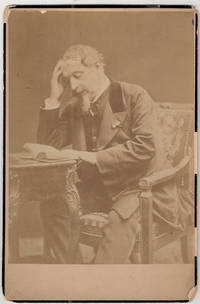
187229532Chiselhurst 1872. The photograph would have been taken at the same time as the photograph called "the last photograph of Napoleon III" taken while in exile in Chiselhurst England. 6.5 by 4.25 inches original Carte de Visite mounted photograph. A well preserved image that shows very handsomely. There is a bit of wear at the edges of the mounting board. AN ORIGINAL CARTE DE VISITE PHOTOGRAPH OF CHARLES-LOUIS BONAPARTE EMPEROR NAPOLEON III. This is a photograph of him taken while living in exile in England about six months prior to his death. It is likely that it was taken during the same sitting as the "last photograph" as he is wearing the same clothing with accouterments as in that well known photograph.<br> The nephew and heir of Napoleon Bonaparte Napoleon III was the Emperor of the French from 1852 to 1870 and as Louis-Napoléon Bonaparte the President of France from 1848 to 1852. He was the only president of the French Second Republic and the founder of the Second French Empire. He was the first head of state of France to hold the title of President. He would die an exile in England where he was considered a guest of Queen Victoria and became a fixture of English high-society. hardcover
18552008270008Paris : C. Meyrueis 1855. Hardcover. Acceptable. Hardcover. Poor binding. One plate detached. Lacking part of spine. Pages unmarked. 214 p. plates 18 cm. Paris : C. Meyrueis hardcover
188960184London: Bickers & Son Leicester Square 1889. 8vo. 10 408 pp. Black & white mounted Woodbury-type photo nine mounted Woodbury-type photos 1 folding colour map. Full calf publisher’s prize binding from St. Peter’s College Radley raised bands gilt decorated spine gilt outer dentelles Radley College’s lozenge medal in gilt on both covers marbled endpapers minor rubbing slight scuffing still VG bright copy awarded to J.F. Elwes in 1892 for honors in history and from the collection of Christian A. von Hassell. First edition thus of this concise abridgement of Napier’s classic history of the famed campaigns in Spain Portugal and the south of France during the Napoleonic Wars augmented with Woodbury-type photographs taken from painting of the battles. This rousing eyewitness account is dedicated to Wellington and provides one of the best specimens of military history in any language detailing the long series of campaigns and battles with the imagination of a great romantic writer. Napier 1785-1860 entered the Royal Irish Artillery in 1800 later transferred to the 43rd and then the 42nd Infantry where he was wounded a number of times and fought at the retreat to Corunna marched to Talavera in the famous forced march and aided in the pursuit of Massena. Bickers & Son, Leicester Square, hardcover
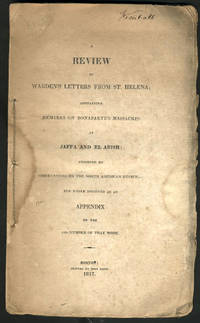
181723281Boston: Printed by John Eliot 1817. Wraps. Good overall. An extremely caustic review of Dr. William Warden's 'Letters written on board His Majesty's ship the Northumberland and at St. Helena'.<br /> <br /> William Warden 1777-1849 was a British surgeon in the Royal Navy who was appointed to HMS 'Northumberland' when she was ordered to transport Napoleon to exile on St Helena. <br /> <br /> Warden published the Letters in 1816 with the title 'Letters written on board His Majesty's ship Northumberland and St Helena in which the conduct and conversations of Napoleon Bonaparte and his suite.are faithfully described'. It went through 5 editions but was soon found to be of little value. Warden spoke little French and had to rely on a somewhat untrustworthy interpreter; Napoleon himself later disavowed much of the content. <br /> <br /> The Letters gave a favorable view of Napoleon causing an uproar in England which resulted in Warden being found in breach of discipline and removed from the Admiralty's list of surgeons.<br /> <br /> 8vo 32pp. String binding; the rear blue wrapper present chipped at edges. Contemporary owner name at top of title page "Kimball". Pages slightly chipped at edges tide marks to later pages not affecting legibility of text scattered fox spotting. Shaw & Shoemaker 40880. OCLC 36147438 locates 7 copies. Printed by John Eliot paperback
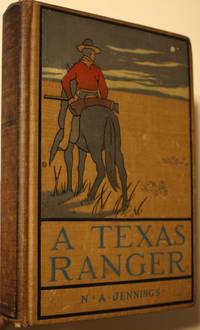
1899022312<p>N.Y.: Charles Scribners Sons 1899. Book. Good. Hardcover. First Edition. Original pictorial cover 321 pages spine darkened inner hinges starting owner stamp on title page erased overall a good reading or research copy of an item that is scarce in the first printing. Basic Texas Books 107"Jennings was a reporter who served under L. H. McNelly in Texas from 1874 to 1878. This is one of the most interesting accounts of the life of the Texas Rangers in the late 1870's. " Rader 2086 Howes J100aa Graff 2208 " Jennings' book is a readable account of his life as a Ranger in the late 1870's." Six-Guns 1173 "Book contains much material on Texas gunmen such as John Wesley Hardin and King Fisher and the Taylor-Sutton feud and other border troubles. Exceedingly scarce." The Adams One-Fifty 85. .</p> Charles Scribners Sons hardcover
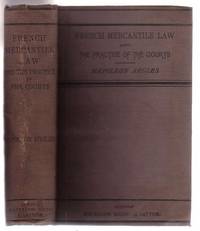
18828902London: Waterlow Bros & Layton. Good with no dust jacket. 1882. First Edition. Hardcover. Owner's signature. Ex-Libris bookplate pasted to front pastedown. Front hinge broken. Some marking and fading to boards. ; xxiv 576 cxxi pages advertisements. Brown cloth boards. Title continues "With Forms Of Proceedings And Practical Instructions To English Suitors Accompanied By A New Translation Of The Entire Code Of Commerce And Special Mercantile Laws In Force In France At The Present Time." ; 8vo . Waterlow Bros & Layton hardcover
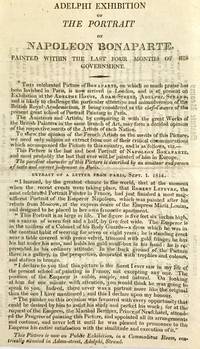
1814102285London The Adelphi Exhibtion c. 1814. Handbill 190 x 100 mm imprint trimmed from the foot. Printed both sides.<br /><br />"This celebrated picture of Bonaparte on which so much praise has been lavished in Paris is now arrived in London. it being considered as the chef-d'oeuvre of the present great school of portrait painting in Paris." Lefevre painted a number of portraits of Napoleon the most likely candidate is the one now in the Wellington Collection at Apsley House dated to 1812. The reverse of the handbill has an advert for a letting agency and an advert for an early form of employment agency for servants.
184579496Prag: J. G. Calve'schen 1845. Hardcover. Very Good. 16 tables 2 copper plate engravings. xvi 327p. Contemporary original 1/4 leather marbled boards looking like tree calf with leather backstrip and tiny corners. 22 cm. Extremities rubbed. Some browning. German text. Die Gahrungschemie wissenschaftlich begrundet und ihrer Anwendung aud die Weinbereitung Bierbrauerei Branntweinbrennerei und Hefenerzeugung practischs dargestellt band 1. Three additional volumes were published 1845-1847. J. G. Calve'schen hardcover
18814499D Lothrop and Company. 1881. First Edition. Hardcover. The product is a hardcover book titled "An Indian Princess and Other Stories" by Napoleon Cheney published in 1881 by D Lothrop and Company in Boston. This first edition book is illustrated and written in English making it a valuable collectible for literature enthusiasts. The story collection includes tales revolving around an Indian princess offering readers a unique and immersive literary experience set in the United States.; 10.00 x 8.00 x 4.00 . D Lothrop and Company hardcover
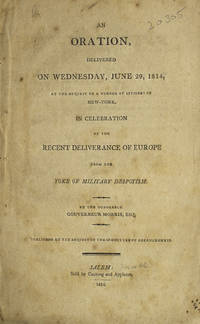
1814217110Salem Mass.: Sold by Cushing and Appleton 1814. Two editions in 1814 the other presumably the first was published in NYC. 16 pp. 1 vols. 8vo. Removed. Very good. Two editions in 1814 the other presumably the first was published in NYC. 16 pp. 1 vols. 8vo. Shaw and Shoemaker 32172. Shaw and Shoemaker 32172 <br/><br/> Sold by Cushing and Appleton unknown
18092158723/09/1809. <blockquote><p>A rare full signed order by Bonaparte</p></blockquote><p>In 1809 a formation known as the Reserve Corps of the Army of Germany was assembled. This later became a new VIII Corps that served in Spain in 1810. The Reserve Corps was under the command of Marshal François Christophe de Kellermann. Its three divisions were led by Generals Olivier Rivaud de la Raffinière Eloi Laurent Despeaux and Joseph Lagrange.</p><p>The siege of Astorga was an attempt by French forces to capture that town as part of a campaign of the Peninsular War. Astorga was located on the flank of the French invasion path to Spain and Portugal and was meant to be used as a headquarters during the campaign. The French overpowered the Spanish garrison inside and took the city on April 20 1810 with a loss of 160 men. It took however the arrival of ammunition and weapons for the attack to begin.</p><p>The 8th corps was ordered to march to Spain and its first units reached Burgos.</p><p><strong>Order signed</strong> Schonbrunn September 23 1809.</p><p><em>""His Majesty Orders:</em></p><p><em>1 The 22nd regiment of line infantry and the 65th of the line which are part of the 8th corps of the army will each have their 8 stores of ammunition for infantry and 8 for their military transports. The quartermaster general will take the necessary measures to ensure that those regiments that do not have proper munitions and have not exhausted the funds allowed to each regiment for this object that he will contact them without delay and procure the munitions necessary. The quartermaster general of the artillery will take responsibility for those measures that relate to the artillery.</em></p><p><em>2 The 8 4th battalions that form the Rivaud division will each have their own infantry and military transport munitions supplies. The necessary funds for the creation of these will be placed at the disposition of the authorized officer of the 8th corps to be made at Nuremberg Bareuth or Wurtsbourg. The horses will be furnished by the administration as we order below.</em></p><p><em>3 The artillery of the 8th corps will be composed of 4 pieces of 12; 16 pieces of 6; 6 pieces of 3 and 6 howitzers having a double approvisionnement harness. The Saxon artillery of General St. Cyr's division will have its cannon piece including 4 of 12 which forms for the 8th Corps 60 pieces of cannon independently of the regimental pieces.</em></p><p><em>4 The engineers will have after the 8th corps at least 1500 tools which will be carried on harnessed carriages as well as the ropes and tools necessary for the prompt repair of a bridge.</em></p><p><em>5 Three hundred horses shall be raised in the land of Bareuth a hundred in the land of Erfurth and a hundred in the land of Hanau in all five hundred which will be distributed in the 8th corps as follows namely: for the artillery 300 for the transports of the 8 battalions of the Rivaud 50 division for the transports of the engineers 50 for the three provisional regiments of dragoons 100. The price of these horses will be set from the inhabitants according to the tariff which will be regulated by the general steward.</em></p><p><em>6 An advance of two thousand francs will be made to each of the squadrons which form part of the six provisional regiments of dragoons. These 2000 francs will be taken from the regiment's casks by the Minister of War Administration. The distribution between the different mannes will be made by General Fouler for the 1st 5th and 4th. One and the other of these generals will assure the Minister of War Administration of the distribution they have made between the mannes. The squadron leaders and captains commanding the squadrons of the six provisional regiments will immediately use this fund to prepare their squadron.""</em></p><p>Complete orders of Napoleon are very uncommon.</p> unknown
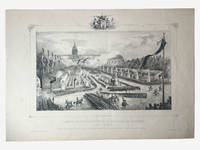
1840003897Jeannin. BONAPARTE Napoleon ADAM Victor. Arrivee du Cortege Funebre de Napoleon aux Invalides a Paris le 15 Decembre 1840. Paris Jeannin 1840. Large folio lithograph 510 x 355 mm. Blind-stamped. Dessine d'apres nature et lithographie par V. Adam. Printed by Lemercier Bernard et Cie. Occasional light spotting with faint central fold; a very good well-margined example overall. A dramatic panoramic view of the funeral cortege of Napoleon approaching Les Invalides during the Retour des Cendres ceremonies of December 1840. Victor Adam depicts the immense scale of the state procession as the Emperor's funeral car advances between lines of troops veterans and vast assembled crowds towards the dome of the Invalides illuminated by ceremonial fires and military salutes. The plate forms part of Victor Adam's Retour en France des Depouilles Mortelles de Napoleon a suite of twenty lithographs documenting the exhumation return and state funeral of Napoleon in 1840. . Very Good. Soft cover. 1st Edition. 1st Printing. 1840. Jeannin paperback
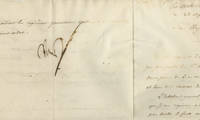
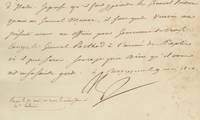
18103642009/05/1810. <blockquote><p>""I approve the slate of officers you propose to use for the Army of Italy. I think you should add General Bissonin. Regarding General Menou the Vice Roy must first present to me an officer for Governor of Venice. Send General Pacthod to the Army of Naples where he can serve.""</p></blockquote><p>In May 1810 Napoleon was at the high-water mark of his empire strengthening and intensifying his Continental System against Britain. Napoleon focused then on restricting British commerce and enhancing his alliance with Austria. His mind was also much on the Netherlands. On May 13 1810 it was announced that the Netherlands were formally annexed to France further consolidating Napoleon’s control over Europe. Bergen op Zoom a fortified city in the Netherlands was a key stronghold for French forces during Napoleon’s empire.</p><p>By 1810 Napoleon controlled most of the Italian peninsula acting as King of Italy crowned 1805 with his stepson Eugène de Beauharnais as viceroy. The region was restructured into the Kingdom of Italy in the north and the Kingdom of Naples in the south introducing modern law abolishing feudal rights and improving infrastructure while by 1810 the Italian army achieved parity with French units.</p><p>The War of the Fifth Coalition was Austria’s final attempt to challenge Napoleon Bonaparte after earlier defeats but it ended decisively with French victories at Battle of Wagram and the Treaty of Schönbrunn which stripped Austria of further territory and influence in northern Italy and the Adriatic. In the aftermath Napoleon moved to tighten and rationalize his control over the region reinforcing the authority of his Italian client state under Eugène de Beauharnais and integrating Venice more fully into a centralized military-administrative system. Though already under French rule Venice’s strategic importance—as a fortified lagoon city naval arsenal and forward position facing Austria—meant that after 1809 it became a focus of consolidation rather than conquest with garrisons reviewed command structures regularized and trusted officers installed to ensure the city’s security and readiness in anticipation of future conflict.</p><p>Napoleon was at Bergen op Zoom in May 1810. The Duc de Feltre was an officer diplomat and statesman who served as Minister of War under Napoleon.</p><p><strong>Letter signed</strong> Bergen-op-Zoom May 9 1810 to the Duc de Feltre assigning officers to the army and government of Italy. <em>""I approve the slate of officers you propose to use for the Army of Italy. I think you should add General Bisson. Regarding General Menou the Vice Roy must first present to me an officer for Governor of Venice. Send General Pacthod to the Army of Naples where he can serve.""</em></p><p>In 1810 General Baptiste-Pierre-François Bisson was given a command at Verona where he remained until his death in 1811. General Jacques-François de Menou served as the administrator and Governor of Venice in the Kingdom of Italy. After a notable career including commanding the Egyptian campaign he died on August 13 1810. In 1810 General Michel-Marie Pacthod was rewarded as a Knight of the Iron Crown and then given a division in the Army of Naples.</p><p>Here we see Napoleon exercising control over his occupied territories.</p><p><img class=""alignnone wp-image-25018 size-post-window"" src=""https://cdn.raabcollection.com/wp-content/uploads/20231204144051/Folder-site-11-1600x1327.jpg"" alt=""historical memorabilia dealer"" width=""1600"" height=""1327"" /></p> unknown
184014477Paris: C. Motte 1840. C. Motte unknown
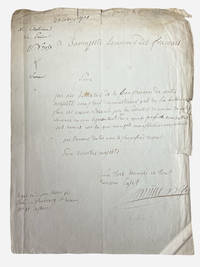
1804003843original letter. NAPOLEON I; MULLER Francois 1764-1808. Autograph letter signed to Napoleon I undated but post-1804. 1 sheet written in brown ink. Addressed to "Sa Majeste l'Empereur des Francais". Contemporary or near-contemporary note at foot identifying the writer as "le gal. de division Muller" with Paris address rue du faubourg St Honore. Creased from folding edges chipped with small losses and light soiling but text clear and fully legible. About good. A petition from General Francois Muller seeking appointment as "administrateur general de la loterie" noting that the post remains vacant and renewing an earlier request. Muller frames his appeal in terms of loyalty and usefulness adding that he would prefer to return to active military service stating that he would rather fight the Emperor's enemies than remain inactive. Muller was implicated in the circle of General Moreau suppressed in 1804 as part of opposition to Napoleon. He was subsequently placed under house arrest at Orleans where he remained until his death in 1808. The present letter is an attempt by a compromised officer to secure reinstatement through patronage while affirming continued allegiance. . Good. Soft cover. 1st Edition. 1st Printing. 1804. original letter paperback
180817452Paris 1808. Autograph Letter signed " Jospehine" and addressed to " MON COUSIN LE CARDINAL ERSKINE". 1 page in French signed and dated in Paris January 10 1808. Translated: TO MY COUSIN CARDINAL ERSKINE Dear cousin nothing could make me happier than once again receiving proof of your feelings for me at the occasion of the New Year. I do not doubt your sincerity for a minute and I can assure you of my ever-present desire to find occasion to prove my goodwill to you. I pray that God shall help you my cousin in granting you health and well being. Written in Paris January 10th 1808. Josephine". The letter includes the original letter seal with " Imperatrice" embossed on it as well as the original mat with lot number and description from when the previous buyer purchased it: 483. JOSEPHINE Document Signed 1 p. folio Paris Jan.10 1808 with seal. To her cousin in reply to his felicitations on the New Year. The letter is actually loose measuring 15 x 9 inches. At one point it was matted but the mat has become very brittle and loose and is chipped in different places broken off in parts. Two small bits of the upper edges are torn off maybe 1/2 half an inch. Letter is complete intact very attractive with a signature of Josephine at the end of the seven-line paragraph. Her signature is connected by a long wiggled line extending over the entire blank area of the letter to a second signature that reads J.M.Debeauharnais. Scans available of letter seal and signatures. Very Good. unknown
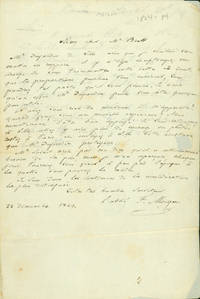
1849407841849. Very Good. <p>Moigno François Napoléon Marie 1804-84. A.L.s. to John Brett 1805-63 addressed to "Monsieur Brett Esq. inventeur du télégraph imprémant" Mr. Brett Esq. inventor of the printing telegraph with Brett's autograph reply on the recto of the address leaf. N.p. "22 dimanche" 1849. Brett's reply dated Paris April 30 1849. 2pp. 210 x 135 mm. Small hole where seal was broken light soiling along folds. Provenance: Latimer Clark.</p> <p>The Abbé Moigno an eminent mathematician physicist and science writer authored several works on telegraphy. His correspondent John Brett laid the first submarine telegraph cable between England and France in 1850 and was one of the founders of the Atlantic Telegraph Company. Moigno's letter to Brett written the year before Brett laid his first submarine cable asks Brett for news of his current researches "N'avez-vous rien de nouveau à m'apprendre Quand ferez-vous une nouvelle expérience" and asks Brett to supply him with an electric battery for a M. Soleil "M. Soleil n'ose pas me dire qu'il a absolument besoin de la pile mais je m'en aperçois chaque jour. Pourriez vous fixer à peu près l'époque à laquelle vous pourrez la rendre". Brett's response written on the blank recto of the address leaf says that he will be in Lille shortly and will meet with Moigno in person. Origins of Cyberspace 177.</p> . unknown
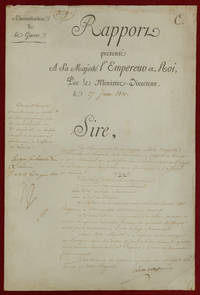
1810247547St. Cloud 1810. On a one-page document "Rapport présenté à sa Majesté l'Empereur et Roi" signed by the "Ministre-Directeur" Paris 27 juin 1810. 1 vols. Folo. Some very slight soiling otherwise very good. Handsomely mounted and framed. On a one-page document "Rapport présenté à sa Majesté l'Empereur et Roi" signed by the "Ministre-Directeur" Paris 27 juin 1810. 1 vols. Folo. On this document requesting among other surgical supplies for the army in Spain "3 caisses d'instruments à - amputation" Napoleon has penned this brief order:<br /> <br /> "Envoyez seulement deux 2 caisses.<br /> <br /> "St. Cloud le 30 juin 1810". unknown