3 186 résultats
53564a volume of over 600 illustrations of the life of the Emperor from his birth to the return of his ashes and apotheosis embracing paintings sketches caricatures curiosities documents medals arms clothing popular scenes his family his marshals and his battle scenes with excellent descriptions and comments not afraid to point out the weaknesses in some of the most 'theatrical' pictures it would be hard to parallel such an engrossing collection in one volume 160 sides 10½" x 13½" boards repeating the decorative title Librairie Hachette & Cie Paris no date circa light marks of damp on upper cover continuing to early pages endpapers slightly creased and other signs of use but otherwise in attractive condition on good photographic paper The volume gives due weight to each period and is especially interesting for the early years. Wherever possible contemporary sources and objects are reproduced the majority from private collections and several previously unpublished. hardcover
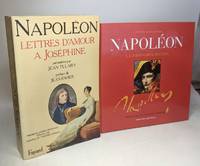
100115119JCL / L'encre / Albin Michel. bon état de l'ensemble bords un peu frottés sur certaines livres couvertures et intérieurs globalement propres. in8. Sans date. Broché. 11 livres autour et sur Napoléon: - Echec à l'Empereur Waldemar; 1994 roman -L'épopée amoureuse de Napoléon Gordeaux; 1978 -Napoléon Bonaparte comment il a enivré la littérature Noirot; 1999 -Les empires secrets de Napoléon Ravignant; 1979 -Napléon la photographie Dautriat; 1999 -Napoléon Bonaparte Flodrops; 1996 -Lucien Bonaparte Martineau; 1989 -Moi Léon fils de l'Empereur Bricard; 1988 roman -Lettres d'amourà Joséphine Napoléon; 1981 -Napoléon de l'histoiire à la légende colloque 1999 -C'était Napoléon l'épopée la légende exposition Dinard 2005 JCL / L'encre / Albin Michel unknown
19992091502133538923Kikoshobo 1999. Soft Cover. Fine. Number of books: 1 Kikoshobo paperback
9788562409967FARO EDITORIAL. new. "AS 16 LEIS DO SUCESSO � um curso pr�tico que re�ne as 16 poderosas li��es que s�o as bases de toda filosofia de Napoleon Hill o maior g�nio na �rea da realiza��o pessoal e psicologia aplicada de todos os tempos. Incont�veis milion�rios l�deres e grandes personalidades do mundo inteiro atribuem seu sucesso �� aplica��o pr�tica dos princ�pios elaborados por Hill. Agora pela primeira vez na hist�ria o conhecimento e a sabedoria de Hill foram condensados por um dos maiores estudiosos de sua obra com o prop�sito de oferecer um passo a passo simples objetivo e pr�tico de suas li��es. Um legado que se mant�m t�o importante e atual nos dias de hoje quanto na �poca de sua publica��o conforme pode ser observado em algumas de suas m�ximas: ""Quem n�o tem um prop�sito de vida dissipa suas energias dispersa seuspensamentos e jamais chegar� ao triunfo. ""A riqueza quando chega vem t�o rapidamente e com tal abund�ncia que nosperguntamos onde se escondia durante os tempos dif�ceis. ""Sem o poder para transform�-los em a��o os planos de nada servem. ""Quem n�o v� grandes riquezas na imagina��o jamais as ver� em sua conta banc�ria. Nesta edi��o moderna e revisada do cl�ssico original mais conhecido no Brasil como A Lei do Triunfo Jacob Petry um dos principais conhecedores contempor�neos da filosofia de Hill traz de forma clara e objetiva tudo o que voc� precisa saber para entender absorver e empregar as 16 poderosas leis para a cria��o do sucesso e da riqueza em sua vida."" FARO EDITORIAL unknown
185100MV630France. Fine. 1851. Very fresh superb Napoleon III document signed in print by the Louis-Napoleon Bonaparte. Very fine with only the hint of age spots. This bulletin is dedicated to the rules of whaling and as such VERY SCARCE. ; Manuscript; 12mo - over 6¾" - 7¾" tall; HANDWRITTEN MANUSCRIPT DOCUMENT LETTER AUTOGRAPH WRITER HAND WRITTEN DOCUMENTS SIGNED LETTERS MANUSCRIPTS HISTORICAL HOLOGRAPH WRITERS DIARIES JOURNALS LOGS AUTOGRAPHS PERSONAL MEMOIR MEMORIAL PERSONAL HISTORY WHALING WHALES BALEEN SPERM NAPOLEON FRANCE SAILING SEAFARING SEAFARERS VOYAGE HUNTING NAPOLEONIC DECREE BULLETINS . unknown
18980008091CENTRAL FALLS RHODE ISLAND PAWTUCKET PROVIDENCE. Fair. 1898. On offer are 2 well-worn records of a French Canadian who became police chief of a city in Rhode Island USA. Daily events are noted in the undated pages often with just a simple line entry. Many other records are kept such as lists of family members dates of death arrests and convictions etc. The first book measures 6 1/2 inches by 4 inches. The page cover is worn. Some pages are loose and some pages have been torn out. With 199 pages it is approximately 90% complete. The second book is 7 1/2 inches by 5 inches and has 40 pages. This too is about 90% complete. Entries in both appear to be in two different handwriting styles. Napoleon Lambert was born in Marieville Quebec in 1862. He moved with his family to Taunton MA when he was 10. He moved back to Canada in 1875 but returned to live in Central Falls RI in 1883. He worked as a carpenter until 1895 when he was appointed to the newly established Central Falls Police Department on April 15th 1895. Four and a half years later he was appointed Chief of Police. He served as Chief until August 1907. He died in Dec 1919 at the age of 57. His entries in the first book are a combination of events that occurred some biographical data and gossip: "Lucien Lafrance left his wife to go out west" Oct 17 1900; "I had the picture of my four children taken at Prince's Studio on Broad St./also has the boy taken alone" May 16 1902 "Julia McHenry alias Flemming sent a tall woman to offer me $100 get her off the ". Not accepted. Time 1:30 PM Oct 22 1903. The second part of the volume is a long poem/prose piece that may or may not have been written by him. It is in English and French which reflects his bilingual background but the 'hand' is quite different. The second volume is an address book that has been used as a journal. A third of it 46 pages is an alphabetical listing of individuals and their offences many repeated: "Joe Burns: o sentenced by Judge Wilber to serve 18 months in Prov County Jail for the larceny of one lot brass worth $100.00 from the Electroletic Copper Co". Aug 12 1904 o "Larceny 30 days Oct 31 1906 Richard O'Neil; o arrested for drunkenness released" Nov 12 1896 o "Committed to the State Farm for 6 months Charge: Vagrant" Nov 27 1897 "Committed to Jail for 90 days on a charge of larceny of a dog" Dec 8 1898; "Terry Nika o arrested on a charge of assault with a stone upon Stanislaw Prasccrinski on Jan 18-05 Waived examination and was bound over to State Farm. Mar 05 Placed on probation and paid the costs" Jan 26 1905 "o Fined $2 & costs for an assault upon George Belisle on April 15-05 Paid" April 19 1905. The remaining section has had a number of pages torn out. On the 25 or so pages again is a prose piece mostly in French and again in another 'hand'. The volume contains a fair amount of genealogical information about his extended family. For a social historian especially on focusing on life in the Providence-Pawtucket part of Rhode Island this is an excellent reference to crime and punishment at the turn of the last century. Lambert joined the police force right at its inception rose to be Chief and served for a total of 12 years. His journal offers a unique look into an aspect of community life that is often not very visible.; Manuscript; 16mo - over 5¾" - 6¾" tall; KEYWORDS: HISTORY OF UNITED STATES PROVIDENCE COUNTY NAPOLEON LAMBERT CENTRAL FALLS RI PROVIDENCE RI RHODE ISLAND LATE 19TH CENTURY 1890s PROGRESSIVE ERA POLICEMEN POLICING IN THE LATE 1800'S COMMON CRIMES IN A SMALL COMMUNITY URBAN HISTORY CENTRAL FALLS POLICE DEPARTMENT CANADIAN AMERICANS FRENCH CANADIANS IN THE U.S. CENTRAL FALLS CHIEF OF POLICE URBAN POLICE CRIME IN 19TH CENTURY NEW ENGLAND CRIME AND PUNISHMENT IN RHODE ISLAND LAW ENFORCEMENT IN LATE 19TH CENTURY 19TH CENTURY CRIMINAL JUSTICE IN NEW ENGLAND RHODE ISLAND GENEALOGY AMERICANA HANDWRITTEN MANUSCRIPT DOCUMENT LETTER AUTOGRAPH WRITER HAND WRITTEN DOCUMENTS SIGNED LETTERS MANUSCRIPTS DIARY DIARIES JOURNALS PERSONAL HISTORY SOCIAL HISTORY HISTORICAL HOLOGRAPH WRITERS AUTOGRAPHS PERSONAL MEMOIR MEMORIAL ANTIQUITÉ CONTRAT VÉLIN DOCUMENT MANUSCRIT PAPIER ANTIKE BRIEF PERGAMENT DOKUMENT MANUSKRIPT PAPIER OGGETTO D'ANTIQUARIATO ATTO VELINA DOCUMENTO MANOSCRITTO CARTA ANTIGÜEDAD HECHO VITELA DOCUMENTO MANUSCRITO PAPEL . unknown
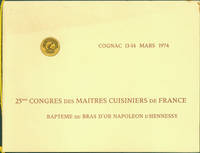
63-7259Cognac France: Napoleon D' Hennessy 1974. 4to. Folded Printed Menu on Light Card Stock Oblong 8 pp. Very Good with sun-toning to cover. Illustrated Cover. En Francais.Provenance: Michelin Archives. Collection Guy Legay. Clermont-Ferrand France. Cognac, France: Napoleon D' Hennessy, 1974. unknown
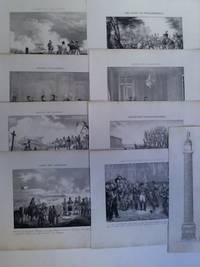
2n16451830. Blattmaße: 305 cm x 25 cm / 1 Blatt: 104 cm x 33 cm Blattränder gering fleckig. - Enthalten: Schlacht bei Ligny / Der Papst zu Fontainebleau / Vertrag von Bayonne / Ertheilung der Decorationen / Gefecht bei Brienne / Lager bey Boulogne / Napoleon's Abdankung / Abschied von Fontaineblau / Colonne de la Armée Ehren Säule der Grossen Armee - unknown
0265310202.Ghardcover. Good. Access codes and supplements are not guaranteed with used items. May be an ex-library book. hardcover
1332499236.Gpaperback. Good. Access codes and supplements are not guaranteed with used items. May be an ex-library book. paperback
43656180-nnew. unknown
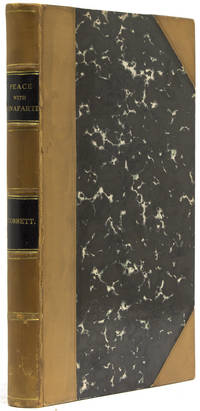
1802256431Philadelphia: John Morgan 1802. 172 lvii 2 pp. 8vo. Three quarter modern calf on black and white marble boards. Minor rubbing at joints else fine. 172 lvii 2 pp. 8vo. A contentious British pamphleteer William Cobbett wrote under the pseudonym Peter Porcupine producing the short-lived newspaper "The Porcupine" from which these published extracts were taken. John Morgan unknown
19791210553PN. New. 1979. Reprint Edition. Soft Cover. Date is copyright date; this is a later reprint edition . PN paperback
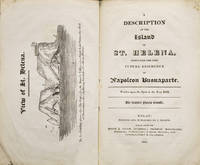
1815302741Wigan: J. Brown 1815. First edition. Woodcut frontispiece. 24 pp. 8vo. Later marbled boards with red morocco label to upper board original wrappers bound in. First edition. Woodcut frontispiece. 24 pp. 8vo. With the defeat of the French at Waterloo England once again prepared to confine Napoleon. Looking for somewhere more than remote than Elba this time he was bound for St. Helena a tiny windswept island in the South Atlantic that was first discovered by the Portuguese and previously in control of the East India Company. <br /> <br /> In the wake of this decision there was much interest in the island and printers scrambled to meet demand. This little pamphlet commences with a history of the island followed by an account of its inhabitants food live stock climate and the all-important garrison. The woodcut includes a key to landmarks on the island. Of additional interest are the "Remarks on Ascension Island" being another British possession in the Atlantic.<br /> <br /> Not in OCLC not in COPAC. This copy only on ABPC. J. Brown unknown
1815192029London: Printed for J. and E. Wallis; J. Wallis Sidmouth 17 August 1815. Published two months before Napoleon landed on the island Second edition published nine days after the first. Its publication was likely spurred by Napoleon's defeat at Waterloo on 18 June; he arrived in Jamestown on 15 October 1815. We have traced only three institutional copies: the first edition at the State Library Darmstadt and Yale University the second edition at the University of Oxford. At the head of this broadside is an engraving of St Helena viewed from the north-west captioned with 12 locations of interest such as fortifications and the government house. The text details pertinent information about the island such as its longitude and latitude defensive formations climate and weather population and endemic diseases. It is painted in a picturesque manner: "St. Helena is gifted with considerable attractions and advantages both local and natural. The climate seems to be peculiarly adapted to the constitution of Europeans of whom many have resided here for a long series of years without suffering any malady". Napoleon remained on the island until his death on 5 May 1821. The engraving is slightly different to other examples dated 8 August 1815 with ships in different positions. Broadside 502 x 364 mm black letterpress on one side only. Hand-coloured engraved illustration at head. Edges a little dust soiled nicked and creased a few tidemarks on verso: a very good copy. unknown
181448997Boston: Henry Channing 1814. 1 vols. 8vo. Modern brown buckram bright crimson morocco title label on upper cover original wrappers bound in. Bookplate of Henry Cabot Lodge. Some fading to covers some foxing else very good. 1 vols. 8vo. This William Ellery Channing 1782-1842 was the uncle of the more famous American Transcendentalist poet William Ellery Channing II 1817-1901. The elder Channing graduated with distinction from Harvard at the ripe age of 18. His first and only pastoral settlement was a small church on Federal Street in Boston June 1803. Shortly thereafter Channing became closely identified with the intellectual movement that ultimately spawned the North American Review and a number of other journals. Channing gradually grew into a significant opponent of slavery without ever joining forces with the abolitionists or approving of what he deemed their "extremist" tactics. Channing's writings on Bonaparte such as the present title and other political figures earned him a solid literary and critical reputation in Europe as well as America. <br/><br/> Henry Channing hardcover
115556Very Good. Folio 314 × 201 mm one page of printed text with manuscript insertions on 'Ministere de l'Instruction publique et des Cultes' letterhead 10 May 1856. The lengthy decree is written in a neat secretarial hand; two folds a few creases and short sealed tears at the top and bottom edges; slight traces of prior mounting on the verso; in very good condition. The decree confirms the appointment of Georges Frédéric Fallot as Lutheran pastor in the parish of Dampierre-les-Bois near Audincourt Doubs. It is countersigned by Hippolyte Fortoul Ministre de l'Instruction publique et des Cultes. The decree was apparently cancelled soon after it was issued; it is crossed out with the word 'annulé' added in ink in the left-hand margin and a pencilled cross through the blank registration stamp. Napoleon III 'the nephew of Napoleon I was the first President of France from 1848 to 1852 and the last French monarch from 1852 to 1870. First elected president of the French Second Republic in 1848 he seized power in 1851 when he could not constitutionally be re-elected and became the Emperor of the French. He founded the Second French Empire and was its only emperor until the defeat of the French army and his capture by Prussia and its allies in the Franco-Prussian War in 1870' Wikipedia. <p>Provenance: Collection of The Hon Barry Jones AC. unknown
43992501-nnew. unknown
19544St. Cloud 7 May 1811. In French. 14 lines on 1 page perfect for display 9 x 7 inches one pinhole with the discreet authentication blindstamp of the Rossignol Napoleon Collection Paris. Napoleon Bonaparte 1769-1821. Henri Jacques Guillaume Clarke duc de Feltre 1765-1818 born of Irish parents Minister of War from 1807 and Marshal of France. Napoleon came to depend on his authority and he was instrumental in organising the administration and building the Grande Armée in 1811-12. unknown
6550472172.Gpaperback. Good. Access codes and supplements are not guaranteed with used items. May be an ex-library book. paperback
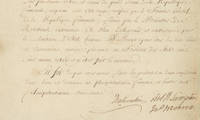
18033595823/05/1803. <blockquote><p>James Monroe and Robert Livingston receive the Treaty signed by Napoleon notification of French ratification and instructions from the French: Deliver this ""to the President of the United States without delay to do what must be done"" and secure American ratification</p><p> </p><p>This doubled the size of the United States and is one of the most significant moments in American history; In 2019 this document was saved from a fire at the Karpeles Manuscript Library and survived</p></blockquote><blockquote><p>This document central to the Louisiana Purchase is among the most important we have ever carried</p><p> </p></blockquote><p>https://vimeo.com/1180578110share=copy&fl=sv&fe=ci</p><p> </p><blockquote><p>Hear more on <a href=""https://www.raabcollection.com/tags/podcast"">Inspired by History</a>:</p><p> </p><p><iframe style=""width: 100%; max-width: 660px; overflow: hidden; border-radius: 10px;"" src=""https://embed.podcasts.apple.com/us/podcast/a-historic-manuscript-central-to-the-louisiana-purchase/id1796821278i=1000761089641"" height=""175"" frameborder=""0"" sandbox=""allow-forms allow-popups allow-same-origin allow-scripts allow-storage-access-by-user-activation allow-top-navigation-by-user-activation""></iframe></p></blockquote><p>The Louisiana Purchase stands as one of the most transformative acts in American history instantly doubling the size of the young republic and securing U.S. control of the Mississippi River and the vital port of New Orleans. Negotiated at a moment of shifting global power—amid Napoleon’s imperial ambitions the threat of imminent renewed war with Great Britain and the collapse of French plans in the Caribbean—the agreement reshaped the geopolitical balance of North America and set the United States on a path toward continental expansion and emergence as a major world power.</p><p>As the United States had spread across the Appalachians the Mississippi River became an increasingly important conduit for the produce of America’s West which at that time referred to the land between the Appalachians and the Mississippi. Since 1762 Spain had owned the territory of Louisiana which included 828000 square miles. The territory made up all or part of fifteen modern U.S. states between the Mississippi River and the Rocky Mountains. The Pinckney Treaty of 1795 had resolved friction between Spain and the United States over the right to navigate the Mississippi and the right for Americans to transfer their goods to ocean-going vessels at New Orleans. With the Pinckney treaty in place and the weak Spanish empire in control of Louisiana American statesmen felt comfortable that the United States’ westward expansion would not be restricted in the future.</p><p>This situation was threatened by Napoleon Bonaparte’s plans to revive the French empire in the New World. He planned to recapture the valuable sugar colony of Haiti from a slave rebellion and then use Louisiana as the granary for his empire. France acquired Louisiana from Spain in 1800 and took possession in 1802 sending a large French army to St. Domingue and preparing to send another to New Orleans. Americans became very apprehensive about having the more-powerful French in control of the Mississippi and New Orleans. President Thomas Jefferson noted “There is on the globe one single spot the possessor of which is our natural and habitual enemy. It is New Orleans.†He determined to do something to change this situation.</p><p>In addition to making military preparations for a conflict in the Mississippi Valley in April 1803 Jefferson sent former Minister to France James Monroe to join present Minister to France Robert Livingston to try to purchase New Orleans and West Florida for as much as $10 million. Failing that they were to attempt to create a military alliance with England. Meanwhile the French Army in St. Domingue was being decimated by yellow fever and war between France and England was on the horizon. Napoleon decided to give up his plans for Louisiana and offered a surprised Monroe and Livingston the entire territory of Louisiana - all 828000 square miles of it - for $15 million. That was three cents per acre. Although buying all of Louisiana far exceeded their instructions from President Jefferson Monroe and Livingston saw the golden opportunity and agreed. The treaty was signed on April 30 1803.</p><p>The treaty itself actually consisted of three linked agreements: the Treaty of Cession by which France transferred the Louisiana territory to the United States and guaranteed rights of property religion and eventual citizenship to its inhabitants; a first convention establishing that the United States would pay 60 million francs about $11.25 million to France through government bonds as the purchase price; and a second convention by which the United States assumed 20 million francs about $3.75 million in claims owed to American citizens for prior French seizures and commercial losses. Together these three instruments formed the full legal structure of the purchase bringing the total cost to 80 million francs or roughly $15 million.</p><p>The French ratification of the Louisiana treaty and conventions was dated May 22nd and signed by Bonaparte Foreign Minister Talleyrand Minister of the Treasury Barbé de Marbois and Hugues Bernard Maret who as the secretary of state was responsible for promulgating laws and decrees. It was delivered to the representatives of the United States Robert R. Livingston and James Monroe who here sign to acknowledge receipt of the treaty to be sent to President Thomas Jefferson ""without delay.""</p><p>Historic <strong>manuscript</strong> DS <strong>signed</strong> <em>""Jas. Monroe""</em> <em>""Rob. R. Livingston""</em> and ""Barbé Marbois"" in French Paris May 23 1803 being the monumental document recording France's sale to the US of Louisiana just approved by Napoleon Bonaparte and the French government.</p><p><em>""Today May 23 1803 we Barbé-Marbois Minister of the Public Treasury named by the French People as Minister Plenipotentiary and Robert R. Livingston Minister Plenipotentiary of the United States of America and James Monroe Minister Plenipotentiary and envoy extraordinaire of the said States at a meeting in one of the rooms of the Hotel du Public Treasury in Paris Citizen Barbé-Marbois transmitted to us Robert Livingston and James Monroe: 1. The treaty concluded and signed by us on 10 Floreal an 11 30 April 1803 and the two conventions concluded and signed by us on the same date. Said treaty and conventions in three separate instruments written on vellum parchment and bearing the grand seal of the French Republic imprinted in red wax ratified by the First Consul Napoleon of the French Republic signed by the Minister of Foreign Affairs Ch. Mau. Talleyrand and countersigned by the Secretary of State Hugues B. Maret; therefore the said treaty and conventions are to be sent by us to the President of the United States without delay and for him to take the necessary steps. For which we have signed the present document in two copies one for the French ambassador and one for the American ambassadors.""</em> With loss to one letter of Monroe's signature.</p><p>It is interesting to note that Barbé Marbois who played a key role in negotiating the Louisiana Purchase Treaty and delivered the signed ratification was former ambassador to the United States and had lived in the U.S. for years spoke English and married an American. He was well connected in the U.S. and was elected a Foreign Honorary Member to both the American Academy of Arts and Sciences John Hancock and John Adams were also members and the American Philosophical Society Thomas Jefferson was also a member and the two dealt extensively. He was a logical choice to negotiate the treaty.</p><p>There was some delay in getting the ratified treaty to the United States and Jefferson did not see the treaty until early July 1803. When news of the sale reached the United States people were incredulous and mostly elated. President Jefferson however was in a quandary. He had always advocated strict adherence to the letter of the Constitution yet there was no provision empowering him to purchase territory. Given the public support for the purchase and the obvious value of Louisiana to the future growth of the United States however Jefferson decided to ignore the legalistic interpretation of the Constitution and forgo the passage of a Constitutional amendment to validate the purchase. This decision contributed to the principle of implied powers of the federal government.</p><p>Because the treaty stipulated that the American ratification must be concluded by October 30 Jefferson hurriedly convened a special session of Congress on October 17. The United States Senate consented to ratification of the treaty with a vote of 24 to 7 on October 20. On the following day October 21 1803 the Senate authorized Jefferson to exchange the ratification document with France take possession of the territory and establish a temporary government.</p><p>In very good condition with repaired loss to the right edge truncating the final letter of Monroe's signature.</p><p>This document central to one of the most significant moments in American history is one of the most important we have ever carried. It is from the famed collection of The Karpeles Manuscript Library from which it was rescued during a fire in 2019.</p><p><img class=""alignnone wp-image-25018 size-post-window"" src=""https://cdn.raabcollection.com/wp-content/uploads/20231204144051/Folder-site-11-1600x1327.jpg"" alt="""" width=""1600"" height=""1327"" /></p> hardcover
1015863833.Ghardcover. Good. Access codes and supplements are not guaranteed with used items. May be an ex-library book. hardcover
1015869106.Gpaperback. Good. Access codes and supplements are not guaranteed with used items. May be an ex-library book. paperback
0331169045.Ghardcover. Good. Access codes and supplements are not guaranteed with used items. May be an ex-library book. hardcover
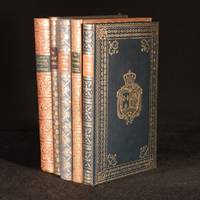
1955963Y37London: The Folio Society 1955-1960. Cloth. Near Fine. 8.5" by 5.5". Not Stated. A beautiful set of Folio Society edition memoirs including the trial of Charles I and the Waterloo Campaign by Napoleon. The Folio Society editions of these important historical memoirs. Comprising five volumes in total. In the original cloth bindings with lovely ornate gilt decorations. With numerous monochrome plates throughout the set. A Journal of the Terror 1955 - Consists of two memoirs. Those of Clery valet-de-chambre to Louis XVI during his imprisonment in the Temple and of Abbe Edgeworth de Firmont who attended the King during his last hours. Edited by Sidney Scott. With a frontispiece and seven plates. The Waterloo Campaign by Napoleon Bonaparte 1957 - Edited and translated by Somerset de Chair. With a frontispiece one further plate and numerous sketched maps. A Memoir of the 'Forty-Five' by The Chevalier de Johnstone 1958 - Edited with an introduction by Brian Rawson. With a frontispiece and seven plates. The Trial of Charles I: A contemporary account taken from the memoirs of Sir Thomas Herbert and John Rushworth 1959 - Edited by Roger Lockyer. With a frontispiece and seven plates. Memoirs of Louis Philippe Comte de Segur 1960 - Edited with an introduction by Eveline Cruickshanks. With a frontispiece and eleven plates.Collated complete. In the original decorative cloth bindings. Externally excellent with minimal signs of shelf wear and slight fading to the spine cloth of 'Louis Philippe' and 'Waterloo Campaign'. Internally firmly bound. Pages are bright and clean with the only exception being offsetting to the endpapers of 'Journal of Terror' and 'Waterloo Campaign'. Near Fine The Folio Society hardcover