Virginia SlaveryBiblio.com
155 résultats
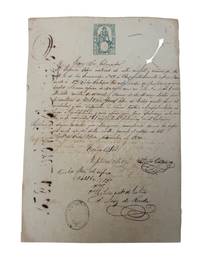
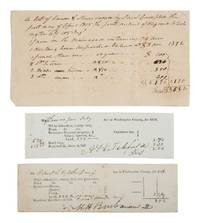
1815201561815. Manuscript fiscal records from antebellum Virginia demonstrate how enslaved people were formally incorporated into legal and economic systems as taxable property. These documents record enslaved individuals not as citizens but as items of assessed value within the personal property systems that structured the slave economy. Such records provide direct evidence of the bureaucratic mechanisms through which slavery functioned in the United States revealing how local governments and property holders catalogued enslaved African Americans alongside land livestock and other assets. The present group of Virginia documents dating from 1815 to 1854 records the ownership and taxation of enslaved people in Washington County during the decades preceding the Civil War.<br /> <br /> Archive of three manuscript fiscal documents from Washington County Virginia dated between 1815 and 1854. The earliest document dated 1 April 1815 records "A list of land & slaves owned by Jacob Campbell the first day of April 1815. The first district of Virginia Washington City." A second associated receipt enumerates eight enslaved persons identified by gender and age categories with assigned monetary values totaling 2170 dollars. A later tax receipt dated 1848 documents revenue obligations for Robert L. Berry and John Berry and includes "Slaves" among taxable property categories alongside horses clocks and land. The third document a tax receipt issued to Miss Francis Jane Irby in 1854 records taxable categories including "Black" titheables in addition to land salary and road levies reflecting the legal classification of enslaved African Americans within Virginia's tax system. Together the documents demonstrate the routine administrative recording of enslaved people as financial assets within county taxation and property accounting.<br /> <br /> Virginia occupied a central role in the history of American slavery. The first documented Africans arrived in the English colony of Virginia in 1619 and by the mid nineteenth century enslaved African Americans constituted a substantial portion of the state's population. By the 1860 census more than one third of Virginia's inhabitants were enslaved people whose labor sustained the agricultural economy of the region. Manuscript tax records such as these provide stark evidence of the legal and economic framework that reduced human beings to taxable property within local government systems. Three manuscript documents measuring approximately 6.75 x 2 inches to standard letter size. Original folds present with minor foxing and a small chip to the lower left corner of one document; docketing on versos; text clear and legible. Overall condition very good. unknown
183094792Circa 1830s. 1830s. Good . - The close of a letter on a 3-1/4 inch high by approximately 6 inch wide piece of note paper is signed "Geo Thompson". The paper is darkened with some staining not affecting the signature. The paper is mounted on a sheet of yellow paper and has been folded twice for mailing. Good. <p>The British antislavery orator and activist George Donisthorpe Thompson 1804-1878 worked toward the abolition of slavery through lecture tours and by introducing legislation while serving as a member of Parliament. An able orator he was hired by the London Anti-Slavery Society in 1831. While in Scotland in 1832 where he became interested in abolishing slavery in the United States as well as other parts of the world he met William Lloyd Garrison and the African-American abolitionist Nathaniel Paul. Invited to visit New England by Garrison he traveled to the US in 1834 where he drew the attention of pro-slavery supporters and was forced to flee for his life. The Hobart Town Courier later printed a letter in which Thompson stated that he had ".left the United Sates to escape the assassins knife." the editor noting that attempts had been made to "burn and murder" him in several US towns. He returned to the US following the passing of the Fugitive Slave Law in 1850. By then the abolitionist movement having substantially grown and gained in influence Thompson found a warmer welcome. Returning to London he and his son founded the London Emancipation Society which supported the Union during the Civil War. Returning to America he allied himself with William Wells Brown and met President Abraham Lincoln. Throughout his life Thompson was a powerful voice for emancipation. He supported East Indian reform free trade Chartism non-resistance and the peace movement often protesting legislation that offered only limited restrictions on slavery.<p>RARE. Circa [1830s]. unknown
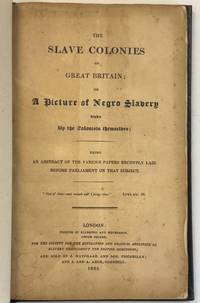
182541192London: Printed by Ellerton and Henderson Gough Square for the Society for the Mitigation and Gradual Abolition of Slavery Throughout the British Dominions; and Sold by J. Hatchard and Son Piccadilly; and J. and A. Arch Cornhill 1825. iv 164 pp. Some foxing to first and last few leaves; title and last page toned. Bound in modern dark boards with gilt-lettered title stamped on front cover. Good plus. <br /> <br /> A second edition issued in 1826. The book reviews developments concerning slavery in each of the British West India colonies: laws for free people of color and for slaves manumissions proposed reforms and objections to reforms trials of alleged rebels and insurgents including the destruction of the Methodist chapel in Barbados and revolts and trials in Jamaica changes in the law punishments inflicted manumissions the slave trade slave unrest.<br /> "The reports were called for in order to learn what had been done in the way of effecting amelioration in the colonies. This work brought out by the Society for the Mitigation and Gradual Abolition of Slavery Throughout the British Dominions. . . showing that nothing substantial has been done" Ragatz. It "presents cases of extreme cruelty" id. to slaves in Berbice. <br /> Authorship and editorship are attributed to Zachary Macaulay founder and organizer of several antislavery societies and a major force in accomplishing the British Emancipation. He focused on providing a picture of Negro Slavery based on reports of "the colonists themselves."<br /> FIRST EDITION. Ragatz 458. Sabin 82063. Not in LCP. Printed by Ellerton and Henderson, Gough Square, for the Society for the Mitigation and Gradual Abolition of Slavery Throughout unknown
180158147<p>ELOQUENT ARGUMENT FOR ABOLITION OF THE SLAVE TRADE BY A WEST INDIES SLAVE OWNER - WITH A DESCRIPTION OF SUGAR PLANTATIONS</p><p>Full title: 'Letters on the Cultivation of the Otaheite Cane; the Manufacture of Sugar and Rum; the Saving of Molasses; the Care and Preservation of Stock; with the Attention and Anxiety which is due to Negroes. To these Topics are added a few other Particulars analogous to the Subject of the Letters; and also Speech on the Slave Trade the most important Feature in West Indian Cultivation.'</p><p>first edition 8vo. xvi 248 248 1 blank 249-290 291-301 prospectus with detailed contents for book on Leeward Islands 1 blankpp large folding table at p.247 modern quarter rich tan calf spine panelled by raised bands with the panels richly gilt tooled red morocco title label marbled sides scattered foxing some light old water staining to lower and fore margins most noticeable in gatherings B and L and never obtrusive else a nice copy in a very handsome binding.</p><p>SABIN 9850 Goldsmiths'-Kress no. 18156.4 Rare Books Hub records none at auction. <br />Clement Caines d. 1817-1822 trained as a barrister in London inherited his family's sugar plantations in St. Kitts around 1778 and became the largest slave owner in the island. In the General Assembly of the Leeward Islands in 1798 he advocated the abolition of the slave trade better treatment for enslaved workers and an end to the slave trade. He wrote extensively on the desirability of humane treatment for plantation slaves and the abolition of the slave trade as well as political topics including his support for the Embargo. <br />The first part of this book effectively a detailed description the workings of a West Indian sugar cane plantation benefits from Caines's first hand experience of the topic. The second part p.249-288 contains his 'Speech on the Slave Trade' delivered to the General Assembly of the Leeward Islands in March 1798 which was discussing a resolution that the abolition of slave trade 'would be oppressive to the British planter destructive to the sugar colonies and consequently to the British Revenue and of no benefit to the Africans themselves'. Caines unambiguously stated "the slave-trade ought to be abolished. It ought to be abolished immediately. It ought immediately to be abolished for the sake and benefit of the planter". Caines argued that the slave trade was injurious not only to the slaves but to their owners. Having observed the death rates from exposure overwork and disease involved in forest clearing he bluntly stated that slave labour "cements with blood the walls of every sugar-work that is raised where forests grew". He stated that his business had "never been delegated to others. The slaves who were committed to my care performed their work under my own eyes. My time was passed with them and my attention devoted to them and their condition. I could not fail then to become acquainted with their wants and sufferings - to remark their sickness disability and premature decay: - the diseases among their men the sterility of their women and the death among their children". He directly challenged his hearers for their calculation "that a hardy African can be purchased for less than a Creole infant can be reared" and their consequent failure to provide adequate housing for mothers and children. He reports that about a quarter of newly arrived slaves on discovering their situation "pine and droop linger rather than live and shortly sink into the grave". Only an end to the importation of new slaves could disrupt the planters' callous calculation that they could "run our Negroes for two or three years" in the certainty that they could be then be replaced. Caines's familiarity with the actuality of slave life and his eloquent and direct illustration of it give this work an especial power.</p><p><br />Interestingly in 1811 Caines wrote to both Thomas Jefferson and James Madison sending copies of his publications vide https://founders.archives.gov/documents/Jefferson/03-03-02-0394 .</p> Printed for Messrs Robinson hardcover
1858660371858. Dividing Prize Money After the Capture of a Slave Ship Slavery. United States. In the Senate of the United States. February 21 1858-Ordered to Be Printed. Mr. Polk Made the Following Adverse Report To Accompany Bill S. C. of C. 108.: The Committee of Claims To Whom was Referred the Opinion of the Court of Claims in the Case of O.H. Berryman and Others Report: The Claimants in this Case are the Officers and Crew of the United States Schooner "On-Ka-Hy-E" drop-head title. Washington DC: S.n. 1858. 13 pp. Octavo 9" x 5-1/2". Disbound light rubbing to extremities some toning and light foxing. $100. 35th Congress 1st Session Senate Rep. Com. No. 33. This speech disputes the distribution of prize money between the Federal government and the crew that captured the slave ship Laurens. unknown
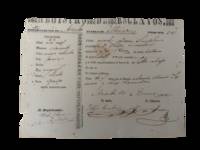
1871231181871. Slavery Black Labor Puerto Rico This official Puerto Rican slave registry document issued in Arecibo in 1871 under Spanish colonial administration represents the bureaucratic infrastructure of slavery in the Caribbean at the precise moment preceding abolition. Titled within the printed form as part of the "Registro de Esclavos - Isla de Puerto Rico" the document records the forced legal identity of an identified enslaved man. <br /> <br /> Single sheet slave registry document "Empadronamiento General de esclavos" from Arecibo Puerto Rico dated 20 de Enero de 1871. Measuring 6.25" x 8.5". This document was registered by a person registering their slave. Document bears official signatures from the local authorities. The enslaved person is listed by their age stature "color" hair color beard eyes nose and mouth. The person is listed as 22 years old and the "color" of this individual is listed as "negro". The physical list of classifications functioned as mechanisms of surveillance control and verification within the colonial slave system. Inclusion of official signatures from both the "dueño" and "comisario" along with a stamped fiscal seal en verso.<br /> <br /> Produced just two years prior to the 1873 abolition of slavery in Puerto Rico the document reflects the transitional legal environment in which enslaved individuals were increasingly catalogued in anticipation of emancipation policies that would in practice impose systems of forced apprenticeship and indemnification to former enslavers.<br /> Some minor wormholes and occasional spotting. Overall good condition. The document stands as evidence of how emancipation in Spanish territories was mediated through administrative control prolonging coercive labor conditions even as slavery was formally dismantled. unknown
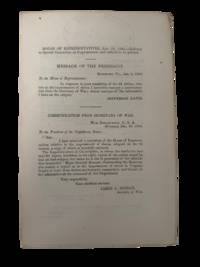
1865231171865. Civil War Black Military Slavery Virginia Confederate government imprint documenting one of the clearest bureaucratic efforts to formalize the use of enslaved labor in direct support of the Confederate war effort at the very moment of institutional collapse. Issued in Richmond Virginia in January 1865 and printed by the Confederate House of Representatives. The document responds to a congressional inquiry into the impressment of enslaved people explicitly acknowledging state-directed seizure of enslaved men for military labor. Within the text the Confederate state attempts to regulate this extraction noting limits such as "no more than one out of five male slaves between the ages specified. from any one owner" while simultaneously confirming large-scale requisitions including "5000 slaves from the State of Virginia for service with the army of Northern Virginia." The language reveals both the administrative reach of the Confederate state and its dependence on enslaved labor as a logistical backbone in the war's final phase.<br /> <br /> Octavo pamphlet measuring 9.5" x 6" 5 pages printed in Richmond Virginia January 1865. The text includes titled sections "Message of the President" "Communication from Secretary of War" "Resolution of House of Representatives" and "Response of Superintendent of Conscription" along with dated correspondence from December 1864 through January 1865. The imprint corresponds to Parrish and Willingham 2298. As a primary source the pamphlet holds substantial institutional value for collections in African American history Civil War studies and the history of slavery particularly for research into the transition from plantation labor systems to militarized coercion and the administrative mechanisms of late Confederate governance.<br /> The pamphlet is especially significant for how it exposes internal contradictions within Confederate ideology. While the Confederacy had long resisted arming or formally incorporating enslaved people in ways that might destabilize slavery this document demonstrates a late-war shift toward coercive mobilization framed as "employment" to "increase the efficiency of the army." Additional correspondence from Brig. Gen. Jno. S. Preston and Major Gen. J. L. Kemper details the mechanics of requisition emphasizing proportional seizure across slaveholders and acknowledging prior errors in impressment including the improper inclusion of enslaved people outside prescribed categories. Condition shows light toning minor spotting and edge wear consistent with age; paper remains stable with clear legible text throughout; faint institutional stamp present on front. Overall very good condition. This document underscores how the Confederate war effort relied on systems of exploitation applied to enslaved African American men. unknown
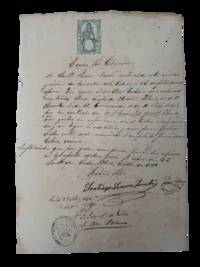
1870231221870. Slavery Cuba Spanish colonial slave sale manuscript recording the transfer of four enslaved individuals in Cuba in 1870. Produced within the official bureaucratic framework of Spanish colonial governance the document reflects the legal normalization of slavery in Cuba even as abolitionist pressures mounted across the Atlantic world. The document records the sale of four enslaved people described as "criollos" and African-born individuals situating the transaction within a labor system that combined locally born and imported enslaved populations. Created at a time when Spain had formally restricted the transatlantic slave trade but continued to permit slavery itself the manuscript demonstrates the persistence of legalized human commodification and the integration of enslaved labor into the island's economic structure sixteen years prior to abolition in 1886.<br /> <br /> Official Cuban slave contract documenting the sale of four enslaved individuals to Don Pedro Catasús by Don Enfemia Ochoa for the sum of 1100 pesos on November 29 1870. Single manuscript leaf written in Spanish cursive in black ink measuring 8.25" x 12". A green "50 cs de escudo" revenue stamp is affixed at the top center with a blind embossed Spanish crest at the upper left and a circular black ink government seal impressed at the lower left. Large vertical docketing appears on the verso. A stylized watermark is visible within the paper. The text organizes the enslaved individuals within a standardized transactional structure while the signatures of Enfemia Ochoa Pedro Catasús and A. Díaz de Rada authenticate the exchange and identify participants within the slaveholding economy.<br /> <br /> By 1870 Cuba remained a central node in the late Atlantic slave system with plantation agriculture especially sugar dependent on enslaved labor despite mounting abolitionist pressure. Although Spain had curtailed official slave imports earlier in the century illegal trafficking persisted into the 1860s and other coerced labor systems including the importation of Chinese indentured workers overlapped with slavery into the 1870s. The presence of both Creole and African individuals in this document reflects the layered composition of the enslaved population during this period. Light toning scattered foxing and edge wear visible. A closed wormhole extends from the upper right margin approximately five inches into the sheet resulting in partial loss of text. Evidence of prior tape reinforcement visible on the verso along with offsetting from previously adjacent material. Overall in very good condition. This document provides named transactional evidence of late-period slavery in Cuba offering concrete material for examining race labor and legal practice within Spanish colonial society. unknown
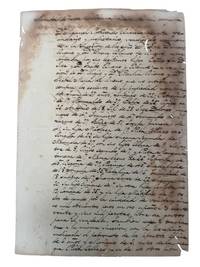
1875231241875. Slavery Cuba Spanish colonial slave sale manuscript recording the transfer of thirty-eight enslaved individuals in Cuba in 1875 materializing the sheer scale and organization of enslaved labor within the island's plantation economy during the final decade before abolition. The document enumerates a large group of enslaved people including multiple family units with young children demonstrating how slavery functioned as both an economic system and a hereditary condition sustained through the sale and reproduction of enslaved populations. Created eleven years prior to the abolition of slavery in Cuba in 1886 the manuscript documents the continued legality and normalization of large-scale slave transactions despite decades of international pressure and earlier prohibitions on the transatlantic trade offering concrete evidence of how internal markets sustained the institution in its final phase.<br /> <br /> Official Cuban slave contract documenting the sale of thirty-eight enslaved individuals for the sum of 126000 pesetas formalized before a public notary or legal authority. Single manuscript leaf written in Spanish cursive in black ink on both recto and verso densely filled with names ages and relational identifiers. Measures 8.5" x 12.25". The text lists individuals sequentially including men women and children with repeated references to kinship structures such as mothers with multiple children indicating the sale of family groupings rather than isolated individuals. The script reflects extended passages detailing ownership exclusions and conditions of transfer. A partial watermark of the official coat of arms of Cuba is visible. <br /> By 1875 Cuba remained one of the last major slave societies in the Atlantic world with sugar production driving demand for large controlled labor forces. Even after Spain curtailed the official slave trade earlier in the century illegal importation persisted into the 1860s and alternative systems of coerced labor including Chinese indenture supplemented plantation workforces. The scale of this transaction demonstrates the consolidation and redistribution of enslaved labor within domestic markets while the inclusion of children underscores the long-term economic logic of slavery as a self-reproducing system. Moderate toning and foxing concentrated along the edges with numerous small closed wormholes a few affecting portions of the text. Light edge wear present. Overall in good condition. This document provides unusually extensive nominal data on a large enslaved population encompassing the roles of kinship valuation and labor organization in late Spanish colonial Cuba. unknown
1870231191870. Slavery Cuba Spanish colonial manuscript documenting the late persistence of slavery in Cuba recording the sale of five enslaved Creole individuals including women and children 1870. Produced within the official bureaucratic framework of Spanish colonial governance the document reflects the legal normalization of slavery in Cuba even as abolitionist pressures mounted across the Atlantic world. The presence of multiple children within the transaction underscores the hereditary nature of enslavement and the commodification of family units offering direct material evidence of how slavery functioned socially and economically in its final decades on the island. Although Spain had formally ended the transatlantic slave trade earlier in the century illegal trafficking and internal slave markets persisted and slavery itself would not be abolished in Cuba until 1886 placing this document within a crucial transitional period marked by reform debates gradual emancipation laws and continued exploitation.<br /> <br /> Official Cuban slave contract recording the sale of five enslaved individuals identified as "criollos" including one adult woman and four children from Santiago Simón Fambi to Don Pedro Catasús for the sum of 1200 pesos on November 21 1870. Single page manuscript leaf measuring 8.25" x 12". The manuscript is written in Spanish cursive hand in black ink. The upper left bears a blind embossed crest of Spain while a circular black ink government seal is impressed at the lower left partially overlapping the text. The text enumerates the enslaved individuals with ages and names embedding human lives within the formulaic language of sale and valuation while the bold signatures of both seller Santiago Simón Fambi and buyer Pedro Catasús anchor the transaction in identifiable actors within the colonial economy.<br /> <br /> By 1870 slavery in Spanish Cuba remained central to the island's plantation economy particularly in sugar production which had expanded rapidly in the mid-19th century with industrialized mills and global demand. Enslaved people were primarily forced into agricultural labor under highly regimented and brutal conditions though others were used in urban domestic service skilled trades or as hired laborers generating income for their owners. This document exhibits light toning edge wear and scattered foxing throughout. A closed wormhole extends approximately two inches from the upper right margin inward not affecting legibility of the text. Minor losses and small tears along the edges. Overall in very good condition. Given that this document records a woman and four children the family was likely intended for a combination of field labor and domestic or auxiliary work with the children gradually incorporated into plantation labor as they aged reflecting the system's reliance on both immediate exploitation and the reproduction of enslaved labor over time. unknown
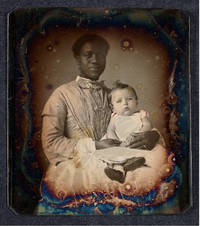
185332820729<p>Two sixth-plate daguerreotypes cased together. Left: nurse and child "Bradford & Ellen Sherwood his nurse" right: parents "Jonathan P. Harrison & his wife Caroline Denny Harrison". White family's cheeks are hand-tinted and the baby's dress is hand-colored. Some spots edges tarnished.</p><p><strong>A tremendous pair.</strong> Jonathan P. Harrison born 23 December 1829 and his wife Caroline Denny Harrison born c. 1834 are in one portrait while their son Bradford born c. 1853 and his black nurse Ellen Sherwood are in the other.</p><p>The Harrison family moved from Talbot County on Maryland's Eastern Shore to Texas in the 1850s to pursue ranching and farming opportunities. According to the U.S. Census in 1860 the family lived in Corpus Christi Texas with Jonathan reported as 29 years old Caroline 26 and Bradford 7 indicating a date of 1853 for this photograph.</p><p>The Harrisons and Dennys were prominent Maryland and Texas families. Jonathan served with the 1st Texas Cavalry during the Civil War. Identified daguerreotype portraits of slaves are rare and linked pairs such as this set are very rare. It is conceivable that Ellen Sherwood was a free black but given the status of the Harrison and Denny families it seems probable that she was a slave.</p><p>This splendid pair of photographs vividly demonstrates the complexity of black-white relationships in the antebellum South.</p><p><strong>Provenance: "Jonathan P. Harrison & his wife Caroline Denny Harrison / Their child Bradford & Ellen Sherwood his nurse" identified in a manuscript note beneath the right daguerreotype in the hand of Jonathan's niece Patty Belle Tilghman 1851-1931.</strong> See Hanson <em>Old Kent: The Eastern Shore of Maryland</em> p. 96.</p>
1817SLAVERY005957W. Alexander York. 1817. First U.K. edition with additions to the Philadelphia printing. 12mo. 156 pages including 4 pages of adverts. Frontispiece. Original boards with paper backstrip and title label. Anthony Benezet 1713-1784 was a leading abolitionist.Early nameplates Thomas Marsh and Robert Langdon on front pastedown. Some foxing to prelims. Cup ring to front cover. Backstrip defective label rubbed. Very good. Scarce in original state. W. Alexander, York. hardcover
18271184001827. First Edition. SLAVERY STROUD George M. A Sketch of the Laws Relating to Slavery in the Several States of the United States of America. Philadelphia: Kimber and Sharpless 1827. Octavo original half tan and light brown paper boards uncut. $1350.First edition of Judge Stroud's groundbreaking 1827 work documenting state slave laws and relevant Constitutional provisions held as a key resource for Harriet Beecher Stowe's Uncle Tom's Cabin a cornerstone volume considered by many the best of the ante-bellum studies"" on slavery uncut in original boards.""The ink was hardly dry on the Constitution when the powers of Congress relative to slavery were called into question"" Dumond 153. The Fugitive Slave Act was passed in 1793 and in 1819 Congress began a bitter debate over slavery in the territories that culminated in the 1820 Missouri Act. At this time Philadelphia Judge George Stroud began work on Sketch of the Laws. ""This work the first substantial legal treatise on American slavery is considered by many the best of the ante-bellum studies"" Cohen 9877. His coverage of state slave codes and Constitutional provisions is a cornerstone of the legal literature. Published well before ""the Dred Scott decision Stroud's book had extensive influence upon national legal thinking on the issue of slavery. For example it is believed by some scholars that Harriet Beecher Stowe gained her knowledge of slave laws from Stroud's work"" Johnson Stroud's Slave Laws vi. In legal literature of antislavery one key group is on ""slave codes and their administration. The purpose of these works was to use slave law as data credible data as to the realities of slavery. The first and in many ways the best of these works was George Stroud A Sketch of the Laws"" Cover Justice Accused 149n. Blockson 9965. Sabin 93097. Work 343. Harvard Law Catalogue II:680. Text generally fresh with scattered foxing mild embrowning mild edge-wear rubbing to spine label. A very good copy of a major early work on slavery. hardcover
18501210761850. First Edition. SLAVERY SMITH Gerrit. Substance of the Speech Made by Gerrit Smith in the Capitol of the State of New York March 11th and 12th 1850. Albany: Jacob T. Hazen 1850. Octavo period-style half calf gilt marbled boards; pp. 1-3 4-25 26-27 28-30. $1500.First edition of the bold abolitionist's Speech proclaiming the Constitution ""does not allow the three million of our colored countrymen to be held in slavery"" a close friend of Frederick Douglass who ""openly embraced Smith's version of an antislavery interpretation of the Constitution"" delivered the same decade as John Brown's Harpers Ferry raid substantially financed by Smith.Smith a wealthy philanthropist was ""among the most outspoken"" of white abolitionists Jackson Force and Freedom 65. Once linked to William Lloyd Garrison's view of the Constitution as a ""covenant with death"" Smith split from Garrison and became a founder of both the Liberty Party and its successor the Radical Abolitionist Party. He was as well key in forging a close interracial alliance between Frederick Douglass Black abolitionist and physician James McCune Smith and John Brown. The four men shared the goal of achieving ""a 'radical change' in government."" By the early 1850s Douglass ""openly embraced Smith's version of an antislavery interpretation of the Constitution"" Blight 213. To Smith Douglass and figures as Alvan Stewart and Lysander Spooner ""the Constitution empoweredeven requiredCongress to abolish slavery in the southern states by direct legislation As an editor Douglass had always engaged with national politics. Now the federal authority at the base of slavery's stranglehold on America became his intensive focus"" Blight 214; emphasis in original.This very scarce first edition captures the force of Smith's groundbreaking 1850 Speech and clearly demonstrates the breadth of his constitutional argument. Declaring ""law is for the protection of rightsnot for the destruction of rights"" emphasis in original he cites passages in the Declaration and Bill of Rights and addresses the pivotal ""three-fifths"" clause. Smith proclaims the Founding Fathers did not intend ""to make this whole land the slaveholder's hunting ground"" and asserts the Constitution ""does not allow the three million of our colored countrymen to be held in slavery."" He would use his wealth to help establish a Black settlement at North Elba N.Y. which was ""John Brown's permanent residence from 1854 until his death"" Stauffer Black Hearts 3. After Harpers Ferry and Brown's execution Smith faced demands that he be tried as an ""accessory after the fact."" While he ""publicly denied it Smith gave warm encouragement and financial assistance"" to Brown and the Harpers Ferry insurrection. Yet ""guilt over the failure of Brown's raid and fear of possible arrest as a co-conspirator caused Smith to commit himself to the Utica State Lunatic Asylum"" ANB. In time he publicly retreated from his Radical Abolitionist stance and died in 1874. Sabin 82670. A fine copy. hardcover
18831255001883. First Edition. Signed. PILLSBURY Parker. Acts of the Anti-Slavery Apostles. Concord N.H.: Clague Wegman Schlicht 1883. Octavo original gilt-lettered brown cloth floral endpapers; pp. 503. $1500.First edition of the fearless abolitionist's memoir a distinctive presentation copy inscribed by Pillsbury to ""To Mr. & Mrs. F. M. C With sincere regards and best wishes of their friend Parker Pillsbury. Concord New Hampshire 1894."" Hailed as a ""fighting book"" it documents the bold tactics of this notorious radical who early warned America was ""hastening to a baptism of blood"" and was praised by Emerson as a ""tough oak stock of a man not to be silenced or insulted or intimidated"" a splendid copy in original cloth.Born in Massachusetts in 1809 the son of a blacksmith Pillsbury became a Congregational minister but was soon famed as one of the era's most radical abolitionists. Having once witnessed a slave auction he recorded its advertisement of: ""'two mules a horse and 27 Negroes' Does any mortal man or woman"" he asked ""comprehend all the tremendous meaning of those words"" Infamous for his apocalyptic style and confrontational tactics Pillsbury early declared the nation was ""hastening to its baptism. It is a baptism of blood."" He was resolute in denying any possible ""union with slave-holders""and also insisted ""women must be given their due rights."" Emerson admired him as a ""tough oak stock of a man not to be silenced or insulted or intimidated by a mob because he is more mob than they. He mobs the mob."" He was ""in Susan B. Anthony's eyes the Jeremiah of the anti-slavery movement"" Filler Parker Pillsbury 315 328-37.Fiercely anticlerical in his writings and in action Pillsbury would dramatically interrupt ""religious services calling on audiences to 'come out' from their proslavery churches."" He linked most clergy to timid politicians and cautious abolitionists proclaiming them a ""brotherhood of thieves"" Robertson Hard Cold Stern Life 189. Pillsbury's 1883 memoir Acts of the Anti-Slavery Apostles was above all ""a fighting book."" In it he writes of his esteem for his fellow white radical Stephen S. Foster and leading Black abolitionists such as David Ruggles as well as his disdain for Lincoln; Pillsbury ""never forgot that the idolized Lincoln meant to save the Union and not necessarily to free the slaves"" Filler 336. First edition first printing: issued in brown cloth this copy and in green cloth no priority determined. Blockson 9099. See Work 304 1884 edition. This copy is inscribed to ""To Mr. & Mrs. F. M. Crosby."" It is notable that while there was a Crosby family of abolitionists in New Hampshire the identity of this copy's recipients could not be confirmed.Text pristine; tiniest bit of soiling to cloth. An especially handsome copy in fine condition. hardcover
18451216681845. First Edition. PHILLIPS Wendell. Can Abolitionists Vote or Take Office under the United States Constitution New York: American Anti-Slavery Society 1845. Octavo half calf-gilt marbled boards; pp. 1-3 4-39 1. $1500.First edition of the provocative abolitionist's fierce attack on the Constitutionproclaiming it ""an irredeemably proslavery document""declaring its legacy implicates ""all Americans in the crimes of slaveholding"" and caused the American flag to be weighed ""heavy with blood.""An eloquent writer and orator abolitionist Wendell Phillips was the ""most important ally"" of William Lloyd Garrison who famously contended the Constitution was a ""covenant with death"" and ""an agreement with Hell."" As Garrison's ""deepest source of inspiration"" Phillips saw the ""abolitionist as the catalyst for revolution."" In this seminal work he contends ""that the U.S. Constitution was an irredeemably proslavery document and abolitionists must withdraw support from the political system because it implicated all Americans in the crimes of slaveholding"" ANB. He notes herein that since the ratification of the Constitution Americans witnessed ""slaves trebling in numbersslaveholders monopolizing the offices and dictating the policy of the Government making the courts of the country their tools.""A citizen's vote Phillips declares is ""an oath to support the Constitutionthe whole of it a contract with the whole nation"" emphasis in original. He cites key clauses quotes statements made by James Madison and others during its ratification and counters a series of 16 objections to the Garrisonian/Phillips position. In answering ""the question of slavery"" he states: ""we are not dealing with extreme cases every sixth man is a slave the national banner clings to the flag-staff heavy with blood If the Constitution is not what history unbroken practice and the courts prove that our fathers intended to make it and what too their descendants say they did make it and agree to upholdwho shall decide what the Constitution is"" Scholar Paul Finkelman points out that while there now seems certain failure in the Garrisonian/Phillips position that the Constitution ""logically led to the conclusion that the free states should secede from the union in the 1830s and 40s the idea of a northern secession as a way of destroying slavery made some sense what would happen if the Garrisonians accomplished their goal and the North left the Union to form a nation based on freedom instead of slavery It would be like moving the Canadian border to the Mason-Dixon line. Suddenly slavery would be threatened in Kentucky and Virginia because slaves could now escape to a free country just by crossing the Ohio River"" Making a Covenant. Phillips is widely esteemed as ""a commanding presence in the history of the nation's struggles to overcome racial and economic injustice"" ANB. First edition first printing: No. 13 The Anti-Slavery Examiner. '""Introduction"" signed in print ""Wendell Phillips. Boston Jan. 15 1845."" With ""Extracts from J.Q. Adams"" at rear. Sabin 81919. Text very fresh tiny gutter-edge-pinholes from original stitching handsomely bound. hardcover
184524737<p>Mary B. Selden was the grandmother of Eleanor Love Selden who married John Augustine Washington III in 1843. She regrets not being able to furnish Washington with the services of one of her slaves as a stacker for the upcoming wheat harvest.</p><p>Still a faithful employee West Ford worked for the Washington family well into the nineteenth century including delivering this letter.</p><p>The letter includes a list of two dozen slaves written in pencil by John Augustine Washington III.</p><p><strong>SLAVERY. MOUNT VERNON. WEST FORD. MARY BOWLES ARMISTEAD SELDEN.</strong> Autograph Letter Signed to John Augustine Washington III hand delivered by West Ford; <strong>JOHN AUGUSTINE WASHINGTON III</strong>. Autograph List of Slaves. Single folio leaf with autograph address on verso. Alexandria Virginia 1845.</p><p><strong>Complete Transcript</strong></p><p><em>My dear Augustine</em></p><p><em> I am very sorry to be unable to render you the service you require. I have a very fine stacker but he is hired by the year to M<u>r</u> Young as I did not expect to have employment enough for him at M<u>t</u> Ida. Another year if you wish it you can have him I receive very small wages for him and as a stacker I have never known any one equal to him.</em></p><p><em>I am very sorry to hear that Nelly is sick. I hope she will be well enough to come up and meet the bridal party on thursday.</em><em> I received a letter from Eliza to day in which she says they will be at M<u>t</u> Ida that day but will bring no company with them. It will give great pleasure to them and to me if M<u>rs</u> Washington</em><em> Nelly and yourself will come up on that day. M<u>rs</u> Lippitt</em><em> will have a room ready for any of the party that will favour her with their company she must by no means be left behind.</em></p><p><em> Most truly and affectionately / yrs</em></p><p><em>M. B. Selden</em></p><p><2></p><p>Address: <em>John A. Washington Esq. / M<u>t</u> Vernon / By West Ford</em></p><p>Docketing by John Augustine Washington III: <em>Mrs. M. B. Selden</em></p><p>List of slaves in pencil by John Augustine Washington III:</p><p><em>Phil</em> b. 1790</p><p><em>Hannah</em> b. 1826</p><p><em>Gabe</em> b. 1820 <em>Eliza</em> b. 1811</p><p><em>Ned</em> b. 1827 <em>Jim</em> Michum b. 1795</p><p><em>Edmund</em> b. 1827 <em>John</em> b. 1833</p><p><em>Betty</em> b. 1833 <em>Mary</em> b. 1819</p><p><em>West</em> <em>Fanny</em> "Belongs to my wife"</p><p><em>Sarah </em> b. 1809 <em>Dennis</em> b. 1838</p><p><em>Hannah</em> <em>Nelly</em> b. 1836</p><p><em>William</em> b. 1830 <em>Jim</em> Starks b. 1805</p><p><em>Joe</em> b. 1832 <em>Sally</em> b. 1827</p><p><em>Ephraim</em> b. 1834 <em>Tom</em> b. 1835 "bound to me till Oct 1856"</p><p><em>West</em> b. 1838</p><p><em>Jesse</em> b. 1785</p><p><strong>Historical Background</strong></p><p>Farmers in mid-nineteenth-century Virginia typically planted winter wheat in September and October and harvested it in the following June. After wheat had been cut a stacker tied the wheat into bundles and piled the bundles in shocks to dry in the field. After the shocks dried they would be stored in a barn or carefully built stack capped with grass to shed the rain until threshing time. Even after Cyrus McCormick developed his mechanical grain reaper in the 1830s men needed to follow the machine to bundle and stack the wheat. Building a good stack was an important skill and those workers free or enslaved who knew how to do so were very valuable at harvest time.</p><p><strong>Mary Bowles Armistead Alexander Selden</strong> 1783-1846 was born in Hanover Virginia. She married Charles Alexander Jr. 1772-1812 with whom she had five children including Louisa Elizabeth Fontaine Alexander 1802-1827. After her first husband's death she married Dr. Wilson Cary Selden 1761-1835. She was his third wife and they had three children. By his first wife Dr. Selden was the father of Wilson Cary Selden Jr. 1796-1843. In 1822 Wilson Cary Selden Jr. married Louisa Elizabeth Fontaine Alexander and they became the parents of Eleanor Love Selden 1824-1860 who married John A. Washington III. Thus Mary Bowles Selden was both the grandmother and step-grandmother of Eleanor Nelly Washington. At the time she wrote this letter she was living at Mount Ida a 6000-acre plantation that stretched along two miles of the Potomac River north of Alexandria Virginia and fewer than ten miles from Mount Vernon. Her first husband built the neoclassical mansion of Mount Ida in 1808.</p><p><strong>John Augustine Washington III</strong> 1821-1861 was born in Blakeley West Virginia the son of John Augustine Washington II and Jane Charlotte Blackburn Washington and graduated from the University of Virginia in 1840. His father inherited George Washington's Mount Vernon estate in 1829 but it passed to his wife at his death in 1832. In 1841 Augustine Washington proposed to manage Mount Vernon for his mother. When she died in 1855 the plantation passed to him. In 1858 after offering the property to both the federal government and to the State of Virginia he sold 200 acres of the Mount Vernon estate including the mansion outbuildings and family tomb to the Mount Vernon Ladies' Association for $200000. Washington married Eleanor Nelly Love Selden 1824-1860 in 1843 and they had seven children. In 1860 he owned 22 slaves. In 1861 Washington joined the Confederate Army as a lieutenant colonel and served as an aide-de-camp to General Robert E. Lee. He was killed while conducting reconnaissance at the Battle of Cheat Mountain in September 1861.</p><p><strong>West Ford</strong> ca. 1784-1863 was born on the Bushfield Plantation in Westmoreland County Virginia to an enslaved woman owned by George Washington's brother John Augustine Washington. When George Washington visited West Ford was his personal attendant. When John Augustine Washington's widow Hannah died in 1802 she granted Ford his freedom at age 21. Bushrod Washington George Washington's nephew and heir to Mount Vernon freed Ford in 1806 and Ford continued working for the Washington family. According to family oral history Ford's mother Venus told her mistress Hannah Washington that he was George Washington's son. Nearly all historians doubt the claim though one of Washington's nephews certainly could have been the father.</p><p>In 1812 West Ford married Priscella Bell a free woman. Their four children—William Daniel Jane and Julia—were educated on the Mount Vernon Plantation despite laws which restricted the instruction of African Americans. When Bushrod Washington died in 1829 he willed 160 acres of land adjacent to Mount Vernon to West Ford who continued to live on the Mount Vernon estate.</p><p>Over the next several years West Ford was frequently highlighted in the media making his private life a matter of public record. In 1850 two Virginia newspapers—the <em>Alexandria Gazette</em> and the <em>Virginia Advertiser</em>—carried articles describing his prestigious position and authority at Mount Vernon. In 1857 an entry in the Fairfax County Deed Books noted that Ford divided his land among his four children. In 1858 Ford was sketched a second time this time by historian and artist Benson Lossing. In March 1859 <em>Harper's New Monthly Magazine</em> published Lossing's feature on Mount Vernon and included his sketch of Ford. Ford told the reporter of his property on Little Hunting Creek where he planned to retire after the Washington estate was no longer in the Washington family.</p><p>In June 1863 an ailing West Ford was brought back to the Mount Vernon estate by the Mount Vernon Ladies' Association. The association cared for West Ford until his death on July 20 1863.</p><p><strong>Condition</strong></p><p>Foxing and show through particularly near the signature.</p>
18091187761809. First Edition. SLAVERYABOLITION MONTGOMERY James GRAHAME James and BENGER Elizabeth. Poems on the Abolition of the Slave Trade. London: Printed for R. Bowyer 1809 i.e. 1810. Tall quarto contemporary brown calf gilt rebacked with original spine laid down raised bands marbled endpapers and edges. $2000.First edition of famed publisher and artist Bowyers richly illustrated volume featuring eloquent anti-slavery poems by Montgomery Grahame and Benger a major antislavery work issued shortly after Britains abolition of the slave trade with engraved portraits of abolitionists Sharpe Clarkson and Wilberforce engraved allegorical title page and nine full-page engravings after paintings by artist Sir Robert Smirke a handsome wide-margined copy in contemporary boards.This handsomely illustrated volume features three epic poemsMontgomery's The West Indies Grahame's Africa Delivered and Elizabeth Benger's A Poem Occasioned by the Abolition of the Slave Trade in 1806. All were ""commissioned by the London publisher Robert Bowyer for inclusion in a lavish volume of antislavery poetry timed to celebrate the abolition of the slave trade"" Basker Amazing Grace 612. With biographies and engraved full-page medallion portraits of leading British abolitionists Sharpe Clarkson and Wilberforce Poems on the Abolition of the Slave Trade is especially noted for its nine full-page engravings and the allegorical title page vignette engraved by Scriven and Worthington after paintings by renowned artist Sir Robert Smirke whose works were considered ""gems in the art of history painting"" American Daily Advertiser. On presenting a copy to George III Bowyer described this as a ""most beautifully embellished volume of Poems which have been written expressly for the occasion on the Abolition of the Slave Trade"" Baptist Quarterly 35. Poems won early critical praise as an ""elegant publication on the Abolition of this traffic and we congratulate the poets the artist and the editor"" Monthly Review. First edition: plates dated ""Dec. 1 1809""; portraits dated ""Jan 1 1810."" With engraved and letterpress title pages. With directions to the binder leaf bound in at rear. Lowndes 1591. Goldsmiths 19923. Kress B5549. Sabin 50145. Benezit IX:656. Occasional faint foxing chiefly marginal. A near-fine copy scarce and desirable in contemporary binding. hardcover
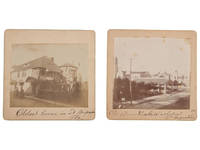
1897185871897. Albumen photographs of slavery-related sites circa 1890s document physical locations tied to the sale and habitation of enslaved people in the United States and the persistence of those sites in post-Emancipation visual culture. The images include a pavilion in St. Augustine Florida identified in contemporary sources as a site where enslaved Africans were bought and sold a photographic negative depicting outbuildings identified as Mississippi slave quarters and a mounted view of the González Alvarez House a colonial structure associated with early settlement in St. Augustine. Together the photographs provide material evidence of how spaces connected to slavery were recorded labeled and circulated in the late nineteenth century linking architectural survival to the historical memory of enslavement in both the Southeast and the Gulf South.<br /> <br /> Collection of three albumen photographs. United States circa 1890s. One mounted photograph approximately 3 3/16 x 3 inches bears the ink inscription "Old Slave Market Cathedral St. Augustine Fla." and depicts the waterfront pavilion constructed in the early nineteenth century originally used as a commercial market and identified in local records as a site of slave trading. One photographic negative approximately 3 1/2 x 3 3/4 inches shows three small structures identified as Mississippi slave quarters. One mounted photograph approximately 3 1/8 x 2 5/8 inches is inscribed "Oldest house in St. Augustine Fla. Built in the early 1700s" depicting the González Alvarez House. Mounts and inscriptions indicate a documentary intent linking the images to historically significant sites.<br /> <br /> By the late nineteenth century sites associated with slavery were being reframed within local historical narratives often presented as landmarks while still retaining traces of their earlier function within systems of forced labor and sale. The identification of the St. Augustine pavilion as a slave market in inscription and record aligns the image with documented urban sites of sale in Spanish and later American Florida while the Mississippi quarters image extends the archive into the plantation landscape of the postbellum South. The grouping provides a concise visual record of how structures tied to enslavement were preserved interpreted and circulated in photographic form decades after abolition. Minor adhesive residue to one mount small tear to negative and light toning and staining to mounts; overall good condition. unknown
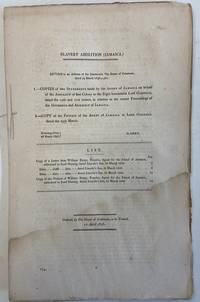
1836175381836. This pamphlet is a return to an Address of the House of Commons from March 25 1836 whereby the Agent of Jamaica William Burge protests against the unilateral abolition of slavery in the British Empire. Ordered to be printed by the House of Commons in London April 1836. 13 pages. 13" x 8.25" inches. Included within is a copy of three letters from the Agent to Lord Glenelg the British colonial secretary as well Burge's protest to Glenelg. Burge states: He is desirous that His Majesty's Government should understand that this Protest is made not as the performance of a formal act of official duty but from his conviction that the proposed legislation for Jamaica is a direct violation of the constitutional rights of that Colony rights coeval with its establishment and which have hitherto been respected." The Agent was a colonial official who was the official representative of a British colony who was based in London and acted as lobbyists and trade negotiators for the affairs of the colony. While Burge had at other times claimed to "hate" slavery he employs the British analogue of the "states rights'" argument that many moderate politicians in the United States used to signal personal distaste for slavery but to nonetheless protect the institution's existence on the basis of constitutionality. When the institution of slavery died out in the British Empire after 1836 the abolitionist movement in the US gained tremendous momentum despite the protests of our own William Burge's. This piece is overall in very good condition. unknown
18391240991839. First Edition. JAY William. A View of the Action of the Federal Government in Behalf of Slavery. New-York: J.S. Taylor 1839. Small octavo 5 by 7-3/4 inches original gilt- and blind-stamped brown cloth; pp. i-iii iv-viii 13-217 1. $1600.First edition of the highly influential work by William Jay son of Founding Father John Jay documenting the ""grim"" legacy of the U.S. Constitution's ""guilty compromise""with Frederick Douglass honoring Jay at his death for his dedication to ""the great cause of universal freedom a tower of strength and his pen a two-edged sword""especially scarce in original cloth.Abolitionist and jurist William Jay was the son of John Jay the first Chief Justice of the Supreme Court and president of the Revolutionary Continental Congress. William Jay ""intensely invested in the fundamental goal of ending American slavery"" served as president of the New York Anti-Slavery Society drafted the constitution of the American Anti-Slavery Society and was removed as a judge in a New York county for his abolitionist activism. His 1839 View of the Action with its epigraph taken from the Constitution demonstrated Jay's conviction that ""Americans had to own up to their sin"" and acknowledged his family's part in that legacy. His book details the ways in which the Constitution's ""'guilty compromise' had shaped federal policy foreign and domestic"" for decades. In its ""nearly 200 pages of research"" he exposes officials ""who regularly made the choice to enact proslavery laws and procedures the data was grim. Yet by putting in one place such a well-informed catalog of federal policy Jay created a guidebook to issues on which antislavery politicians and lawyers could make their stand"" Gellman Liberty's Chain 190 209.Jay documents ""all the ways the federal government advanced slaveholding interests at home and abroad . the Constitution's three-fifth compromise had created substantial"" yet unacknowledged ""political advantages"" for slaveholding states and their supporters. The ""dominoes that fell included the Missouri Compromise"" which Jay firmly assails for surrendering ""all the cruelties and abominations"" of slavery to the territory. He also attacks a ""repugnant"" 1792 law barring Blacks from militia service as well as policies that made the nation's capital ""'the great slave mart of the North American continent' in Jay's book the poison born of moral compromise spread in every direction"" as he cites ""''gross hypocrisy and duplicity' in the lax enforcement of the international slave trade and insidious effects on domestic institutions and policies"" that hollowed out the Constitution in areas such as freedom of the press. In providing antislavery forces with ""a stiff empirical legal backbone ""View of the Action also reinforced a determination to use his family's ""insiders' credentials"" in order to advance defense of the Amistad rebels and to work closely with Black activists such as David Ruggles and minister and African nationalist Alexander Crummell. At Jay's death in 1858 Frederick Douglass honored him as man who ""in the great cause of universal freedom was a tower of strength and his pen a two-edged sword"" Gellman 209-213 3. First edition first printing: issued in brown this copy and dark green cloth no priority determined; mispagination as issued without loss of text. Work 327. Sabin 35866. Text fresh with light scattered foxing mild rubbing to original cloth. A distinctive near-fine copy. hardcover
18401132391840. First Edition. SLAVERY BUXTON Thomas Fowell. The African Slave Trade and its Remedy. London: John Murray 1840. Octavooriginal brown clothuncut and partially unopened; pp.14 viii 3 6-273 274-276 i ii-vi 277 278-582. $2800.First expanded and revised edition of British abolitionist Buxton's powerful call for an end to the slave trade the first to include his extensive and influential Remedy two major works that followed the lead of Wilberforce in calling for treaties and commerce to end the slave trade and outlined a way to ""secure the regeneration of Africa through agricultural development"" with large folding map a handsome copy in original cloth.Quaker Thomas Buxton was in Parliament when in 1824 Wilberforce asked him to become his successor. ""In 1789 Wilberforce had begged Parliament to 'make reparation to Africa by establishing a trade upon true commercial principles Fifty years later Buxton redeveloped this appeal in The African Slave Trade To support his vision Buxton formed the African Civilization Society July 1839."" In this first expanded edition of African Slave Trade 1839the first to include his RemedyBuxton argues for the ""agricultural colonization of West Africa and the development of a broad-based commerce that could undercut the economic dominance of the illicit slave trade"" Hopkins Peter Thonning 615. He documents the horrors of the Middle Passage to show that despite all efforts to end the slave trade ""twice as many human beings are now its victims as when Wilberforce and Clarkson entered upon their noble task."" And in Remedy he further develops his argument: showing how ""legitimate commerce would put down the Slave Trade by demonstrating the superior value of man as a laborer on the soil to man as an object of merchandise.""With African Slave Trade and its Remedy Buxton powerfully ""synthesized contemporary currents of thought developed the arguments about the relationship between abolition and African improvement more systematically than before and then catapulted them to national prominence His views prevailed. The belief that the only way to suppress the African slave trade was to promote 'legitimate commerce' and that this new trade would launch Africa on the road to moral and material progress became the conventional wisdom in mid-19th-century Britain."" Among those he convinced was David Livingstone who as ""an unknown medical student attended the 1840 meeting of the African Civilization Society where Buxton first announced his remedy for the slave trade. What Livingstone heard on that occasion helped inspire a lifetime of work and travel on the continent"" Mann Slavery and the Birth of an African City 88-90. First expanded and revised edition: first to include Buxton's Remedy which was issued separately in 1839. Precedes the first American edition. With folding map of ""Central Africa."" Paginated as issued without loss of text. With 14-page ""Prospectus of the Society for the Extinction of the Slave Trade and for the Civilization of Africa"" preceding title page. Sabin 9685. Goldsmith's 31743. Kress C5121 See Goldsmith's 31181; Kress C4818; Blockson 9121. Interior fresh with light foxing to folding map as often front inner paper hinge starting but very sound mild rubbing and toning to bright original cloth. A desirable near-fine copy. hardcover
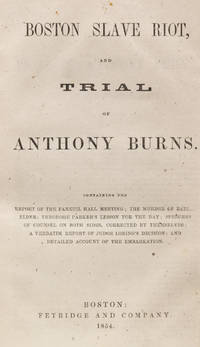
18541266841854. First Edition. SLAVERY BURNS Anthony. Boston Slave Riot and Trial of Anthony Burns. Boston: Fetridge 1854. Slim octavo modern half calf and marbled boards. $3000.First edition of a seminal pre-Civil War pamphlet on the 1854 arrest and Boston trial of fugitive slave Anthony Burns whose return to his Virginia slave owner at the order of the Boston court sparked public fury and ""set Boston on its ear in the spring of 1854"" inspiring Whitman to write his Boston Ballad and Thoreau to deliver his speech Slavery in Massachusetts to a July 4 1854 antislavery rally.The trial of fugitive slave Anthony Burns which ""set Boston on its ear in the spring of 1854 .was nothing less than a pocket revolution"" Von Frank Trials of Anthony Burns xii. The arrest and trial in Boston of Burns whose Virginia slave-owner Suttle followed him there was ""one of the most dramatic and famous incidents in the enforcement of the Fugitive Slave Act."" When Boston Commissioner Loring signed Burns' arrest warrant Richard Henry Dana Jr. and Charles Ellis immediately volunteered to defend Burns. On ""May 26 there was a mass meeting in Faneuil Hall to protest Burns' arrest. This meeting was followed by a poorly planned and disastrously executed attempt to rescue Burns Despite conflicting testimony and imperfect evidence provided by Suttle Loring declared Burns was indeed Suttle's slave."" With that Burns was taken from the courtroom and through streets crowded with his supporters then placed aboard a ship ""for return to Virginia. The trial and removal of Burns from Boston created one of the great spectacles of the late antebellum period"" Finkelman 107-112.""The Burns case made slavery appear to Northerners as an immediate threat Walt Whitman was impelled to write an ironic piece A Boston Ballad soon to be incorporated into his revolutionary volume Leaves of Grass At an antislavery rally in Framingham Massachusetts on July 4 William Lloyd Garrison burned copies of the Fugitive Slave Law and the Constitution as the large crowd chanted 'Amen!' Thoreau delivered his speech Slavery in Massachusetts declaring that the American system had lost its integrity and purity The antislavery sentiment bred by the case helped give birth to the Republican Party which in turn fostered Lincoln's Presidency the South's secession and the Civil War"" New York Times. Containing ""valuable primary source material about the trial and the events surrounding it"" including testimony legal documents"" as well as the full texts of the speeches of the counsel and the opinion of Commissioner Loring."" Bound without rear advertisements: ""some have advertisements at the back of the pamphlet while others do not"" no priority established Finkelman 113. Sabin 6505. Harvard Law Catalogue II:1030. Text fine. hardcover
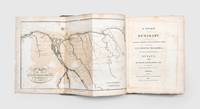
1807177680London: Richard Phillips 1807. First edition of this account of the British colonies within modern-day Guyana. Bolingbroke was a staunch supporter of the Transatlantic slave trade which he discusses in Chapter Five and dedicated this work to the colonial secretary William Windham. Henry Bolingbroke 1785-1855 was a Norfolk merchant who first visited Demerara in 1798. This region had been under the control of the French and Dutch until it was captured by the British in 1796. Bolingbroke remained in the colony until 1805; he then travelled to Surinam in Dutch Guiana to become Deputy Vendue Master in 1807 responsible for public sales and auctions including those of enslaved people. He was one of the 16 MPs who voted against the abolition of slavery in March 1807. In Chapter Five Bolingbroke writes about slavery and what he viewed as its economic importance. In his dedication to Windham 1750-1810 he praised him for relaxing monopoly restrictions and "resisting the abolition of a liberty essential at new settlements of importing additional labourers" p. iii. Quarto pp. xii 400. Folding engraved map. Original green paper-covered boards rebacked modern spine label edges untrimmed. Signature of one George Atkinson on front pastedown a few pencil notes internally. Spine head stabilized boards marked foxing and toning to map and contents two small closed tears to map repaired offsetting to title page: a very good copy. Sabin 6182. hardcover
183431598Philadelphia 1834. 3pp. Later annotation at head of first page. Scarce letter on the Liberian colonization movement by one of its founders.<br/> <br/> Writing to Hawes a member of Parliament and a committee member of the Society for the Extinction of the Slave Trade Cresson wishes for success in the British anti-slavery action off the coast of Sierra Leone writing "I hope that you may yet enjoy the satisfaction of crushing one of the worst & most unacceptable of the slave markets in existence that at Gallinas." After mentioning the travels of the colonial governor of Liberia he writes: ". I have been gratified to learn from several highly respectable sources that such a Colony as you propose located either at the mouth of the Cape Mount River or even a little more to the Northward say at Sugaree & provided with a good supply of trade goods to exchange with the natives would have a powerful tendency to break up the monopoly now enjoyed by the Spanish Slavers. My letters from Africa state that the demand is so great in Cuba from the ravages of Cholera among their ill-fed human cattle as to have rendered the shipments from the Gallinas during the past year almost unprecedented. It appears that the benevolent efforts of your Govt. are not likely to extirpate the evil until commercial & agricultural colonies shall be substituted for cruisers." The letter continues with news from their consul at Liberia before turning to American politics: ". political affairs engrossing the entire energies of the nation. The excitement is painfully great . Our military chieftan Jackson by his acts of unauthorized assumption has called forth a burst of indignation which cannot subside until we get rid of the offender." The letter concludes with an introduction for Gerard Ralston. Cresson a noted Philadelphia businessman and philanthropist was among the most ardent supports of colonization the movement to relocate former slaves and free African Americans to colonies in Liberia. In 1833 Cresson and the Philadelphia Young Men's Colonization Society a branch of the American Colonization Society founded Port Cresson in Liberia. However the colony was attacked in 1835 by Bassa tribesmen incited by Spanish slave traders and destroyed. unknown