Z. MacaulayLivre Rare Book
362 résultats
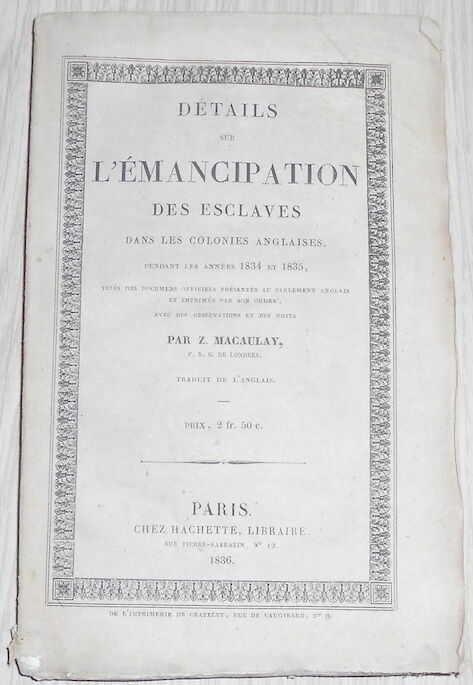
1836188661836. Paris chez Hachette Librairie 1836 - Broché 14 cm x 21 5 cm XIV+ 128 pages - Texte de Z. Macaulay - Bon état
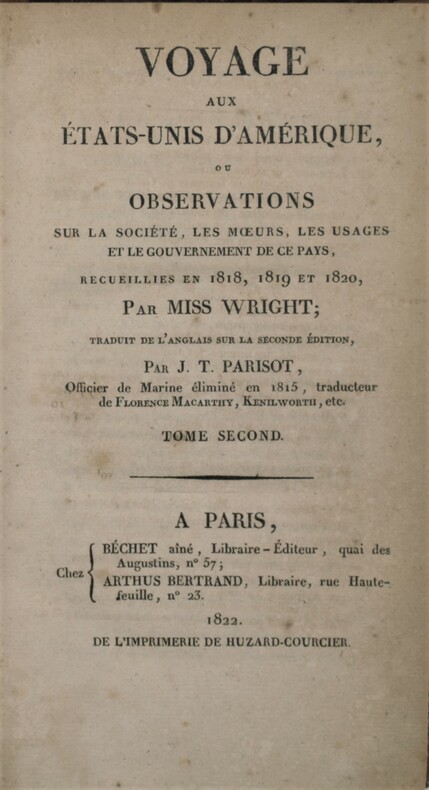
1822PHO-913Paris, Béchet et Arthus Bertrand, 1822. 2 vol. 8°. XIV, 351 p.; VI, 359 p. Reliure demi cuir époque , dos lisse orné avec titre et tomaison, uniformément bruni , plats et charnières légèrement frottés
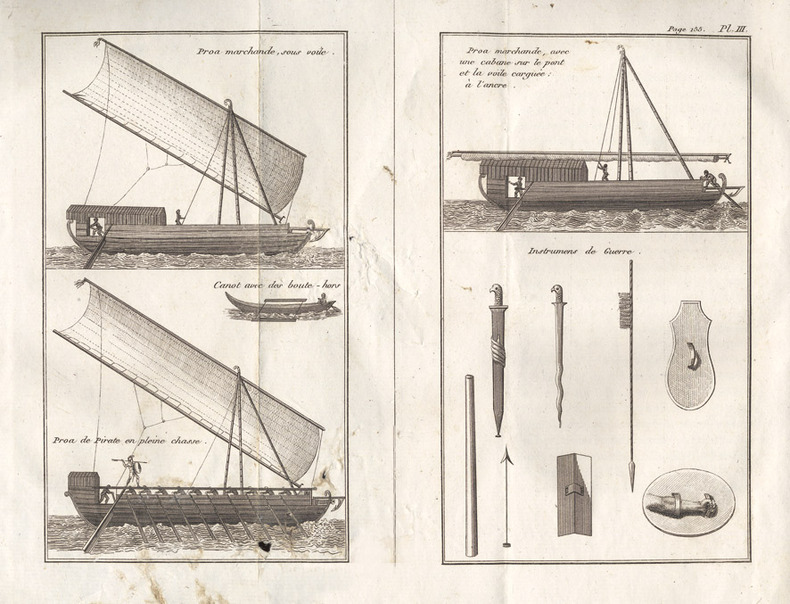
180517636Paris, Buisson (imprimerie Jeunehomme), an XIV-1805 ; in-8, broché ; (4), 322 pp. , portrait en frontispice, planche dépliante représentant 3 proas, bateau indigène et des armes et 2 cartes dépliantes, couverture souple bleu uni.
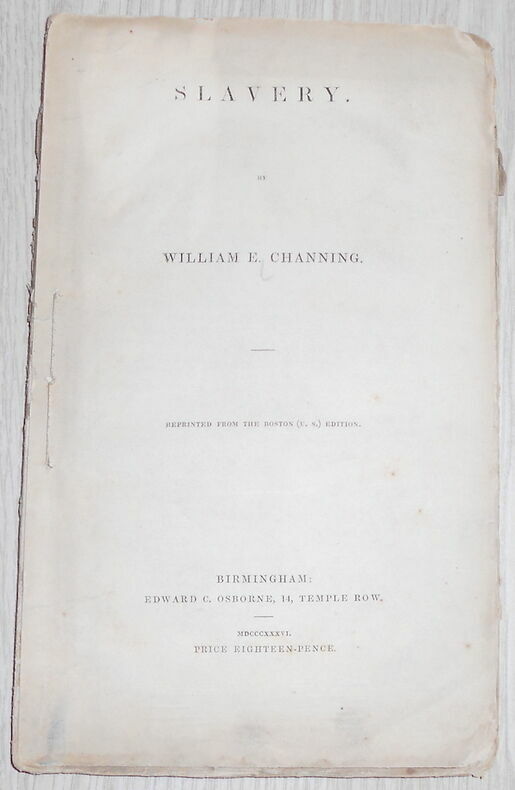
1836188651836. Birmingham Edward C. Osborne 1836 (e.o. anglaise réimprimée de l'ed. de Boston) - Broché 14 cm x 23 cm 99 pages - Texte en anglais de William E. Channing - Sans couv. sinon bon état
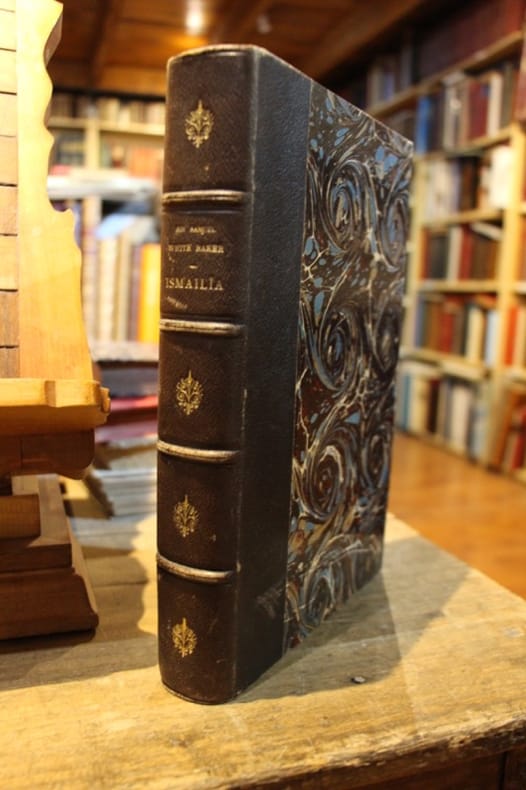
187526975Librairie Hachette et Cie 1875 Traduit de l’anglais par Hippolyte Vattemare. Contenant 56 gravures et 2 cartes. In-4, demi-chagrin brun, Dos ornés de 4 faux-nerfs avec fers à froids encadrés de fleurons dorés. Tête marbrée. Avec carte rempliée en fin d’ouvrage. Brunissures éparses. Bon état.
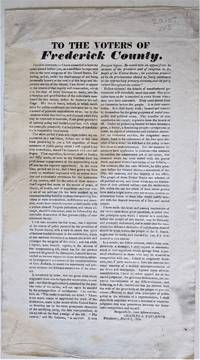
1833713Winchester Va. 1833. Broadside 4to. 290 x 160 mm. 11 ¼ x 6 ¼ inches.  Printed in two columns signed in type by Charles J. Faulkner at Winchester dated March 8 1833 at conclusion. Lightly dust-soiled pale stain affecting perhaps one-third of the left-hand margin and column of text. Neatly silked on verso. Withal about very good. Following the August 1831 Nat Turner rebellion in Southampton County a last effort was made by moderate Virginians to gradually abolish slavery. Faulkner a 26-year-old lawyer and assemblyman along with Thomas Jefferson Randolph sponsored legislation to free all children born of slave parents after July 4 1840. His speech emphasized the evil of slavery for Southern white labor noting that slavery "converts the energy of the community into indolence--its power into imbecility--its efficiency into weakness.Shall society suffer that the slave-holder may continue to gather his crop of human flesh" As the Assembly was malapportioned in favor of the Tidewater slaveocracy the proposal lost rather narrowly and nearly thirty years later the Confederacy was assured of Virginia's succession. It is perhaps not surprising that Faulkner "comparatively a stranger" to the county but a member of the Virginia House of Delegates at this time 1831-34 was not successful in his campaign to represent Virginia in the U.S. Senate. However Faulkner was elected to three terms in Congress from Virginia in the 1850s. He was elected to Congress from West Virginia after the Civil War. In the interim he served as Minister to France during the Buchanan administration and on the staff of Stonewall Jackson. Dictionary of American Biography.  Not in Hummel. Not found in American Imprints for 1833 and not in the 1830-1839 title index. OCLC records four copies at The Library of Virginia University of Virginia Virginia Historical Society and American Antiquarian Society. unknown books
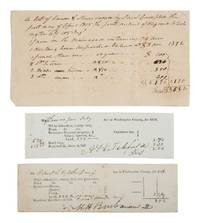
1815201561815. Manuscript fiscal records from antebellum Virginia demonstrate how enslaved people were formally incorporated into legal and economic systems as taxable property. These documents record enslaved individuals not as citizens but as items of assessed value within the personal property systems that structured the slave economy. Such records provide direct evidence of the bureaucratic mechanisms through which slavery functioned in the United States revealing how local governments and property holders catalogued enslaved African Americans alongside land livestock and other assets. The present group of Virginia documents dating from 1815 to 1854 records the ownership and taxation of enslaved people in Washington County during the decades preceding the Civil War.<br /> <br /> Archive of three manuscript fiscal documents from Washington County Virginia dated between 1815 and 1854. The earliest document dated 1 April 1815 records "A list of land & slaves owned by Jacob Campbell the first day of April 1815. The first district of Virginia Washington City." A second associated receipt enumerates eight enslaved persons identified by gender and age categories with assigned monetary values totaling 2170 dollars. A later tax receipt dated 1848 documents revenue obligations for Robert L. Berry and John Berry and includes "Slaves" among taxable property categories alongside horses clocks and land. The third document a tax receipt issued to Miss Francis Jane Irby in 1854 records taxable categories including "Black" titheables in addition to land salary and road levies reflecting the legal classification of enslaved African Americans within Virginia's tax system. Together the documents demonstrate the routine administrative recording of enslaved people as financial assets within county taxation and property accounting.<br /> <br /> Virginia occupied a central role in the history of American slavery. The first documented Africans arrived in the English colony of Virginia in 1619 and by the mid nineteenth century enslaved African Americans constituted a substantial portion of the state's population. By the 1860 census more than one third of Virginia's inhabitants were enslaved people whose labor sustained the agricultural economy of the region. Manuscript tax records such as these provide stark evidence of the legal and economic framework that reduced human beings to taxable property within local government systems. Three manuscript documents measuring approximately 6.75 x 2 inches to standard letter size. Original folds present with minor foxing and a small chip to the lower left corner of one document; docketing on versos; text clear and legible. Overall condition very good. unknown
185931775Duvernay Frères Couverture souple Montréal 1859
183094792Circa 1830s. 1830s. Good . - The close of a letter on a 3-1/4 inch high by approximately 6 inch wide piece of note paper is signed "Geo Thompson". The paper is darkened with some staining not affecting the signature. The paper is mounted on a sheet of yellow paper and has been folded twice for mailing. Good. <p>The British antislavery orator and activist George Donisthorpe Thompson 1804-1878 worked toward the abolition of slavery through lecture tours and by introducing legislation while serving as a member of Parliament. An able orator he was hired by the London Anti-Slavery Society in 1831. While in Scotland in 1832 where he became interested in abolishing slavery in the United States as well as other parts of the world he met William Lloyd Garrison and the African-American abolitionist Nathaniel Paul. Invited to visit New England by Garrison he traveled to the US in 1834 where he drew the attention of pro-slavery supporters and was forced to flee for his life. The Hobart Town Courier later printed a letter in which Thompson stated that he had ".left the United Sates to escape the assassins knife." the editor noting that attempts had been made to "burn and murder" him in several US towns. He returned to the US following the passing of the Fugitive Slave Law in 1850. By then the abolitionist movement having substantially grown and gained in influence Thompson found a warmer welcome. Returning to London he and his son founded the London Emancipation Society which supported the Union during the Civil War. Returning to America he allied himself with William Wells Brown and met President Abraham Lincoln. Throughout his life Thompson was a powerful voice for emancipation. He supported East Indian reform free trade Chartism non-resistance and the peace movement often protesting legislation that offered only limited restrictions on slavery.<p>RARE. Circa [1830s]. unknown
1853664Couverture rigide Perrotin 1853 Paris 21x13,5 cm
1900298891900 P., Hachette, 1900, in 12 relié demi-basane marron, dos à faux nerfs, IV-440 pages ; papier bruni ; reliure frottée, ors du dos partiellement effacés.
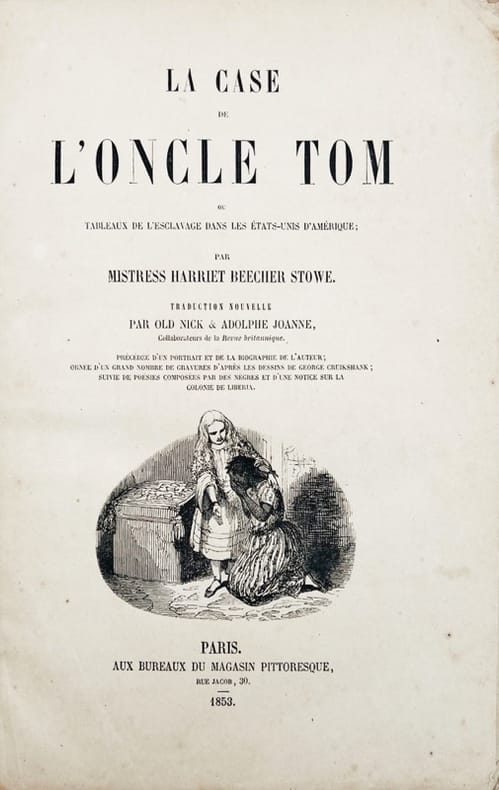
185344736Paris, aux bureaux du Magasin pittoresque, 1853. Grand in-8 de XII-563 pp., demi-maroquin brun à coins, dos à nerfs, tête dorée, non rogné, couverture conservée (reliure de l'époque).
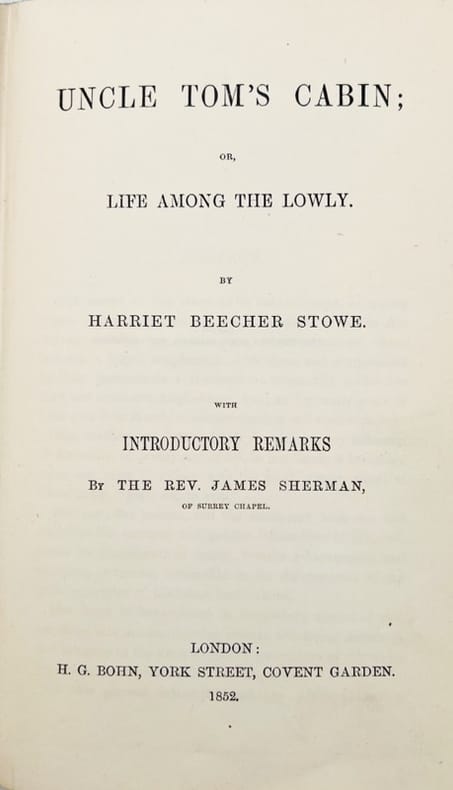
185244735London, H. G. Bohn, 1852. Petit in-8 de XXX-483 pp., cartonnage de l'éditeur.
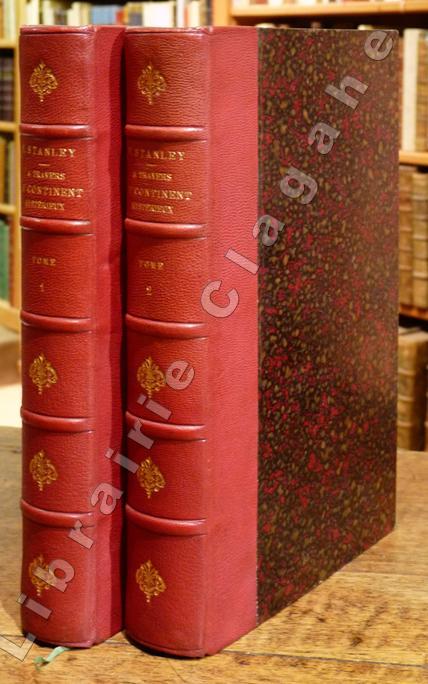
187912907Paris, Hachette, 1879 ; 2 tomes in-8 ; demi-chagrin rouge-cerise, fleurons décoratifs et titre dorés (reliure de l'époque) ; (12), IV, 496 ; (4), 544 pp., 2 frontispices, 9 cartes en couleurs dont 2 très grandes dépliantes en fin de chaque volume et 2 dépliantes, dont celle du fleuve Lingstone (Congo) et de ses chutes.
1829344051829 3 volumes in-8, demi-basane de l'époque, étiquettes de bibliothèque, (4), cviij, 294 p.; (4), 334 p. et (4), iv, 336 p. Paris, Treuttel et Würtz, 1829.
1858WRCAM53597Charleston 1858. 16pp. Original printed wrappers. Spine perished held together with brass tacks; light chipping and soiling. Paper lightly and evenly toned. Good. Report submitted to the South Carolina Senate which concludes that slavery is essential to the agricultural production of the South. Additionally the committee felt that the slave trade helped relieve Africa from "the pressure of a redundant population as might be afforded by emigration in the only form in which its benefits can be extended to them." unknown books
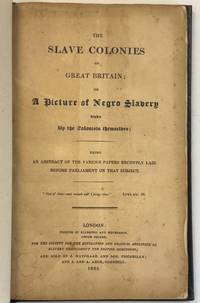
182541192London: Printed by Ellerton and Henderson Gough Square for the Society for the Mitigation and Gradual Abolition of Slavery Throughout the British Dominions; and Sold by J. Hatchard and Son Piccadilly; and J. and A. Arch Cornhill 1825. iv 164 pp. Some foxing to first and last few leaves; title and last page toned. Bound in modern dark boards with gilt-lettered title stamped on front cover. Good plus. <br /> <br /> A second edition issued in 1826. The book reviews developments concerning slavery in each of the British West India colonies: laws for free people of color and for slaves manumissions proposed reforms and objections to reforms trials of alleged rebels and insurgents including the destruction of the Methodist chapel in Barbados and revolts and trials in Jamaica changes in the law punishments inflicted manumissions the slave trade slave unrest.<br /> "The reports were called for in order to learn what had been done in the way of effecting amelioration in the colonies. This work brought out by the Society for the Mitigation and Gradual Abolition of Slavery Throughout the British Dominions. . . showing that nothing substantial has been done" Ragatz. It "presents cases of extreme cruelty" id. to slaves in Berbice. <br /> Authorship and editorship are attributed to Zachary Macaulay founder and organizer of several antislavery societies and a major force in accomplishing the British Emancipation. He focused on providing a picture of Negro Slavery based on reports of "the colonists themselves."<br /> FIRST EDITION. Ragatz 458. Sabin 82063. Not in LCP. Printed by Ellerton and Henderson, Gough Square, for the Society for the Mitigation and Gradual Abolition of Slavery Throughout unknown
188814044New York: Metropolitan Pub. Co 1888. First Edition. Octavo 19cm. Publisher's decorated deep mustard cloth stamped in gilt on spine; viii 431pp. First issue per Wright with no printer's statement on verso of title page. Bit of grubbiness to boards; donation bookplate and private ownership stamp to prelims; else a tight unmarked copy on the better side of VG. Thomas Manson Norwood 1830-1913 was a U.S. Senator and later a Democratic Member of the House from Georgia. In this his only novel he assails the trusts the stock market and the unequal distribution of wealth as the source of vice in America. The setting is New York City with much of the action set on Wall Street. WRIGHT III:3999. Metropolitan Pub. Co unknown books
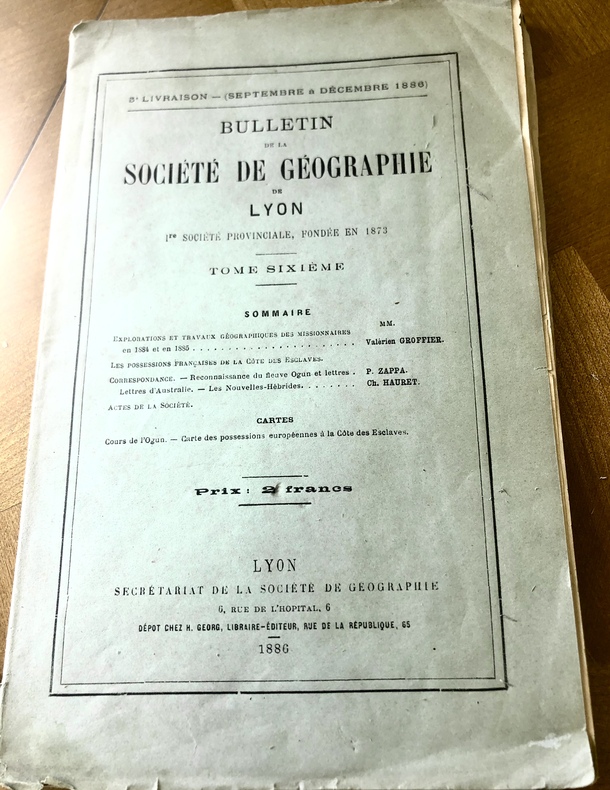
18862785ème livraison .Septembre à décembre 1886. Contient : EXPLORATIONS ET TRAVAUX GEOGRAPHIQUES DES MISSIONNAIRES EN 1884 ET 1885 par Valérien GROFFIER. LES POSSESSIONS FRANÇAISES DE LA CÔTE DES ESCLAVES. CORRESPONDANCE. RECONNAISSANCE DU FLEUVE OGUN ET LETTRES par P. ZAPPA. LETTRES D’AUSTRALIE. NOUVELLES HEBRIDES par CH. HAURET. Secrétariat de la Société de Géographie, Lyon, 1886. In-8 ( 16 X 25 cm) broché, 107 p. ( 257-364 pp) Bien complet des 2 cartes dépliantes dont celle des Possessions européennes de la Côte des Esclaves.
180158147<p>ELOQUENT ARGUMENT FOR ABOLITION OF THE SLAVE TRADE BY A WEST INDIES SLAVE OWNER - WITH A DESCRIPTION OF SUGAR PLANTATIONS</p><p>Full title: 'Letters on the Cultivation of the Otaheite Cane; the Manufacture of Sugar and Rum; the Saving of Molasses; the Care and Preservation of Stock; with the Attention and Anxiety which is due to Negroes. To these Topics are added a few other Particulars analogous to the Subject of the Letters; and also Speech on the Slave Trade the most important Feature in West Indian Cultivation.'</p><p>first edition 8vo. xvi 248 248 1 blank 249-290 291-301 prospectus with detailed contents for book on Leeward Islands 1 blankpp large folding table at p.247 modern quarter rich tan calf spine panelled by raised bands with the panels richly gilt tooled red morocco title label marbled sides scattered foxing some light old water staining to lower and fore margins most noticeable in gatherings B and L and never obtrusive else a nice copy in a very handsome binding.</p><p>SABIN 9850 Goldsmiths'-Kress no. 18156.4 Rare Books Hub records none at auction. <br />Clement Caines d. 1817-1822 trained as a barrister in London inherited his family's sugar plantations in St. Kitts around 1778 and became the largest slave owner in the island. In the General Assembly of the Leeward Islands in 1798 he advocated the abolition of the slave trade better treatment for enslaved workers and an end to the slave trade. He wrote extensively on the desirability of humane treatment for plantation slaves and the abolition of the slave trade as well as political topics including his support for the Embargo. <br />The first part of this book effectively a detailed description the workings of a West Indian sugar cane plantation benefits from Caines's first hand experience of the topic. The second part p.249-288 contains his 'Speech on the Slave Trade' delivered to the General Assembly of the Leeward Islands in March 1798 which was discussing a resolution that the abolition of slave trade 'would be oppressive to the British planter destructive to the sugar colonies and consequently to the British Revenue and of no benefit to the Africans themselves'. Caines unambiguously stated "the slave-trade ought to be abolished. It ought to be abolished immediately. It ought immediately to be abolished for the sake and benefit of the planter". Caines argued that the slave trade was injurious not only to the slaves but to their owners. Having observed the death rates from exposure overwork and disease involved in forest clearing he bluntly stated that slave labour "cements with blood the walls of every sugar-work that is raised where forests grew". He stated that his business had "never been delegated to others. The slaves who were committed to my care performed their work under my own eyes. My time was passed with them and my attention devoted to them and their condition. I could not fail then to become acquainted with their wants and sufferings - to remark their sickness disability and premature decay: - the diseases among their men the sterility of their women and the death among their children". He directly challenged his hearers for their calculation "that a hardy African can be purchased for less than a Creole infant can be reared" and their consequent failure to provide adequate housing for mothers and children. He reports that about a quarter of newly arrived slaves on discovering their situation "pine and droop linger rather than live and shortly sink into the grave". Only an end to the importation of new slaves could disrupt the planters' callous calculation that they could "run our Negroes for two or three years" in the certainty that they could be then be replaced. Caines's familiarity with the actuality of slave life and his eloquent and direct illustration of it give this work an especial power.</p><p><br />Interestingly in 1811 Caines wrote to both Thomas Jefferson and James Madison sending copies of his publications vide https://founders.archives.gov/documents/Jefferson/03-03-02-0394 .</p> Printed for Messrs Robinson hardcover
1858660371858. Dividing Prize Money After the Capture of a Slave Ship Slavery. United States. In the Senate of the United States. February 21 1858-Ordered to Be Printed. Mr. Polk Made the Following Adverse Report To Accompany Bill S. C. of C. 108.: The Committee of Claims To Whom was Referred the Opinion of the Court of Claims in the Case of O.H. Berryman and Others Report: The Claimants in this Case are the Officers and Crew of the United States Schooner "On-Ka-Hy-E" drop-head title. Washington DC: S.n. 1858. 13 pp. Octavo 9" x 5-1/2". Disbound light rubbing to extremities some toning and light foxing. $100. 35th Congress 1st Session Senate Rep. Com. No. 33. This speech disputes the distribution of prize money between the Federal government and the crew that captured the slave ship Laurens. unknown books
1858660371858. Dividing Prize Money After the Capture of a Slave Ship Slavery. United States. In the Senate of the United States. February 21 1858-Ordered to Be Printed. Mr. Polk Made the Following Adverse Report To Accompany Bill S. C. of C. 108.: The Committee of Claims To Whom was Referred the Opinion of the Court of Claims in the Case of O.H. Berryman and Others Report: The Claimants in this Case are the Officers and Crew of the United States Schooner "On-Ka-Hy-E" drop-head title. Washington DC: S.n. 1858. 13 pp. Octavo 9" x 5-1/2". Disbound light rubbing to extremities some toning and light foxing. $100. 35th Congress 1st Session Senate Rep. Com. No. 33. This speech disputes the distribution of prize money between the Federal government and the crew that captured the slave ship Laurens. unknown
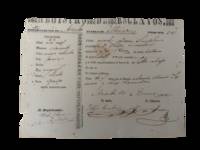
1871231181871. Slavery Black Labor Puerto Rico This official Puerto Rican slave registry document issued in Arecibo in 1871 under Spanish colonial administration represents the bureaucratic infrastructure of slavery in the Caribbean at the precise moment preceding abolition. Titled within the printed form as part of the "Registro de Esclavos - Isla de Puerto Rico" the document records the forced legal identity of an identified enslaved man. <br /> <br /> Single sheet slave registry document "Empadronamiento General de esclavos" from Arecibo Puerto Rico dated 20 de Enero de 1871. Measuring 6.25" x 8.5". This document was registered by a person registering their slave. Document bears official signatures from the local authorities. The enslaved person is listed by their age stature "color" hair color beard eyes nose and mouth. The person is listed as 22 years old and the "color" of this individual is listed as "negro". The physical list of classifications functioned as mechanisms of surveillance control and verification within the colonial slave system. Inclusion of official signatures from both the "dueño" and "comisario" along with a stamped fiscal seal en verso.<br /> <br /> Produced just two years prior to the 1873 abolition of slavery in Puerto Rico the document reflects the transitional legal environment in which enslaved individuals were increasingly catalogued in anticipation of emancipation policies that would in practice impose systems of forced apprenticeship and indemnification to former enslavers.<br /> Some minor wormholes and occasional spotting. Overall good condition. The document stands as evidence of how emancipation in Spanish territories was mediated through administrative control prolonging coercive labor conditions even as slavery was formally dismantled. unknown
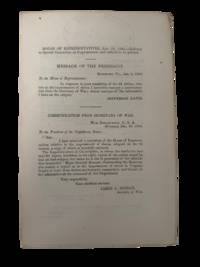
1865231171865. Civil War Black Military Slavery Virginia Confederate government imprint documenting one of the clearest bureaucratic efforts to formalize the use of enslaved labor in direct support of the Confederate war effort at the very moment of institutional collapse. Issued in Richmond Virginia in January 1865 and printed by the Confederate House of Representatives. The document responds to a congressional inquiry into the impressment of enslaved people explicitly acknowledging state-directed seizure of enslaved men for military labor. Within the text the Confederate state attempts to regulate this extraction noting limits such as "no more than one out of five male slaves between the ages specified. from any one owner" while simultaneously confirming large-scale requisitions including "5000 slaves from the State of Virginia for service with the army of Northern Virginia." The language reveals both the administrative reach of the Confederate state and its dependence on enslaved labor as a logistical backbone in the war's final phase.<br /> <br /> Octavo pamphlet measuring 9.5" x 6" 5 pages printed in Richmond Virginia January 1865. The text includes titled sections "Message of the President" "Communication from Secretary of War" "Resolution of House of Representatives" and "Response of Superintendent of Conscription" along with dated correspondence from December 1864 through January 1865. The imprint corresponds to Parrish and Willingham 2298. As a primary source the pamphlet holds substantial institutional value for collections in African American history Civil War studies and the history of slavery particularly for research into the transition from plantation labor systems to militarized coercion and the administrative mechanisms of late Confederate governance.<br /> The pamphlet is especially significant for how it exposes internal contradictions within Confederate ideology. While the Confederacy had long resisted arming or formally incorporating enslaved people in ways that might destabilize slavery this document demonstrates a late-war shift toward coercive mobilization framed as "employment" to "increase the efficiency of the army." Additional correspondence from Brig. Gen. Jno. S. Preston and Major Gen. J. L. Kemper details the mechanics of requisition emphasizing proportional seizure across slaveholders and acknowledging prior errors in impressment including the improper inclusion of enslaved people outside prescribed categories. Condition shows light toning minor spotting and edge wear consistent with age; paper remains stable with clear legible text throughout; faint institutional stamp present on front. Overall very good condition. This document underscores how the Confederate war effort relied on systems of exploitation applied to enslaved African American men. unknown
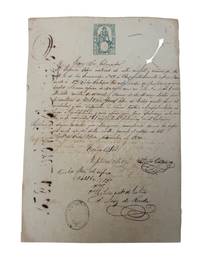
1870231221870. Slavery Cuba Spanish colonial slave sale manuscript recording the transfer of four enslaved individuals in Cuba in 1870. Produced within the official bureaucratic framework of Spanish colonial governance the document reflects the legal normalization of slavery in Cuba even as abolitionist pressures mounted across the Atlantic world. The document records the sale of four enslaved people described as "criollos" and African-born individuals situating the transaction within a labor system that combined locally born and imported enslaved populations. Created at a time when Spain had formally restricted the transatlantic slave trade but continued to permit slavery itself the manuscript demonstrates the persistence of legalized human commodification and the integration of enslaved labor into the island's economic structure sixteen years prior to abolition in 1886.<br /> <br /> Official Cuban slave contract documenting the sale of four enslaved individuals to Don Pedro Catasús by Don Enfemia Ochoa for the sum of 1100 pesos on November 29 1870. Single manuscript leaf written in Spanish cursive in black ink measuring 8.25" x 12". A green "50 cs de escudo" revenue stamp is affixed at the top center with a blind embossed Spanish crest at the upper left and a circular black ink government seal impressed at the lower left. Large vertical docketing appears on the verso. A stylized watermark is visible within the paper. The text organizes the enslaved individuals within a standardized transactional structure while the signatures of Enfemia Ochoa Pedro Catasús and A. Díaz de Rada authenticate the exchange and identify participants within the slaveholding economy.<br /> <br /> By 1870 Cuba remained a central node in the late Atlantic slave system with plantation agriculture especially sugar dependent on enslaved labor despite mounting abolitionist pressure. Although Spain had curtailed official slave imports earlier in the century illegal trafficking persisted into the 1860s and other coerced labor systems including the importation of Chinese indentured workers overlapped with slavery into the 1870s. The presence of both Creole and African individuals in this document reflects the layered composition of the enslaved population during this period. Light toning scattered foxing and edge wear visible. A closed wormhole extends from the upper right margin approximately five inches into the sheet resulting in partial loss of text. Evidence of prior tape reinforcement visible on the verso along with offsetting from previously adjacent material. Overall in very good condition. This document provides named transactional evidence of late-period slavery in Cuba offering concrete material for examining race labor and legal practice within Spanish colonial society. unknown