19 résultats
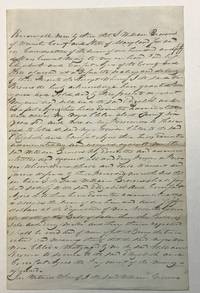
184834983Hinds County MS 1848. Folio 8" x 13" blue unlined paper completely in ink manuscript. Very Good. <br/><br/> In addition to the slaves the inventory lists many household items The verso is a sworn statement from C.R. Clifton that he posted notices of the Sale. Attested to and signed by J.T. Aldham as Justice of the Peace. Docketed: "Exhibit B - Administrators Sale/ Filed February 13th 1849 W.H. Hampton Clk."<br/> Col. William Campbell Demoss 1790-1845 born in Virginia owned plantations simultaneously in Madison County Louisiana and Hinds County Mississippi. He was appointed Associate Justice of the Hinds County Court in 1830 elected to the Mississippi House of Representatives in 1833 and was county sheriff. He was a partner in the mercantile firm of A. Coleman & Co. D.M. Dancy was a physician in Raymond Hinds County Mississippi. The Clerk of the Probate Court William H. Hampton was 2nd Lieutenant with the "Raymond Fencibles" Company G of the First Regiment Mississippi Rifles at the Battles of Monterey and Buena Vista during the Mexican American War. Caswell R. Clifton became Judge of the Circuit Court and Clerk of the High Court of Appeals. unknown books
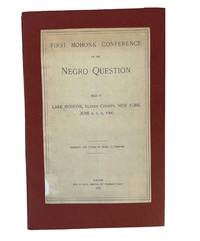
1890196721890. Barrows Isabel C. ed. First Mohonk Conference on the Negro Question Held at Lake Mohonk Ulster County New York June 4 5 6 1890 1890 records one of the earliest organized national discussions among white reformers politicians and intellectuals addressing the status of African Americans in the decades following Reconstruction. Convened at a moment when Black political rights were being systematically dismantled across the South through disenfranchisement and violence the conference brought together predominantly white Northern and Southern participants to debate labor education and civil status. The proceedings include the intervention of Reconstruction advocate Albion W. Tourgée whose address "The Negro's View of the Race Problem" directly challenged the exclusion of Black voices and concluded with a proposed resolution that failed to gain support. Statements within the conference reflect prevailing racial barriers including the observation that in Philadelphia "a colored man may carry mortar up a ladder but he is not allowed to lay the bricks" underscoring systemic exclusion from skilled labor and economic advancement.<br /> <br /> Barrows Isabel C. ed. First Mohonk Conference on the Negro Question Held at Lake Mohonk Ulster County New York June 4 5 6 1890. Boston: Geo. H. Ellis 1890. Softcover pamphlet format 142 pages measuring approximately 24 cm. Original front cover preserved and laid in with a color facsimile wrapper supplied for protection. Text printed as conference proceedings compiling speeches discussions and resolutions delivered across the three-day meeting.<br /> <br /> Produced during the consolidation of Jim Crow policies and the retreat from Reconstruction-era protections this document provides direct evidence of how white-led reform movements framed and debated Black citizenship at the national level. The absence of substantive Black participation alongside Tourgée's protest highlights tensions between advocacy and paternalism within late nineteenth-century reform discourse. As a printed record of policy-oriented discussion the volume supports research into labor exclusion education policy and the ideological foundations of segregation-era governance. Minor staining to lower margins; otherwise very good condition. unknown
186035027Hinds County Miss. 1860. Folio three sheets attached end to end 7 1/4" x 31". First two sheets white and unlined third sheet blue and lined. Completely in ink manuscript. The top section is an "Account of Sale of the Balance of Estate of Wm. B. Mower." the second is "Copy of Notice of Executors Sale" with certification at bottom by Justice of the Peace J.W. Welborn that the notice was posted by Robert P. Paris in two public places. The third attests to the posting of the notice. Other names mentioned within this document are G.H. Jones R.P. & C. Parish Clerk. Signed at end by S.J. Thigpen as Clerk of the Probate Court. <br/><br/> William B. Mower 1810-1860 was born in New York. He worked as a saddler in Hinds County and owned at least eight slaves by 1850 as noted in the U.S. Federal Census Slave Schedule. Justice of the Peace Johnson W. Welborne 1824-1872 was a merchant and planter in Clinton Hinds County. At one time he owned about 2000 acres of land and 90 slaves. He was a Trustee of the Central Female Institute of Clinton as of 1871 and the Mississippi College in Clinton. During the Civil War he was Captain of the Mississippi College Rifles Company E 18th Regiment Mississippi Volunteers C.S.A. He received a wound to his neck on October 21 1861 during the Battle of Ball's Bluff.<br/> Clerk S.J. Thigpen was likely Samuel James Thigpen 1833-1884. A Samuel Thigpen was elected as judge of the probate court of Rowland Hinds County Mississippi during the 1859 elections. Olsen: POLITICAL CULTURE AND SECESSION IN MISSISSIPPI. 2002 page 107 accessed at Google books on 6/11/2018. unknown books
184941786Worcester County Maryland 1849. Single pale blue sheet 8" x 12-1/2" recto and verso entirely in ink manuscript. Signed by Brown with facsimile seal and witnessed. Acknowledgment by Justice of the Peace. Very Good. unknown
1897751961897. Leaflet. Very Good. Single sheet folded to make a small 8-page booklet. 16cm. Written by C. C. Smith Corresponding Secretary of the Board. The Board supported the Southern Christian Institute near Edwards Mississippi the Louisville Christian Bible School and the School at Mt. Willing Alabama as well as three African American evangelists in Missouri Florida and Mississippi. <br/><br/> unknown books
18147701Montpellier: Jean Martel Ainé 1814. 1814. 8vo. 21 pp. 1 page "Professeurs." Disbound. Small stain top right corner not affecting text else very good. 1st Edition. Soft cover. Very Good. Montpellier: Jean Martel Ainé, 1814. paperback
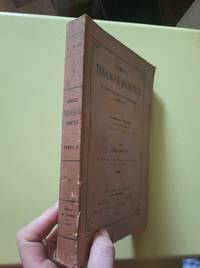
18984000368391898. 1898. Alberto Nègre - Cursus Theologiae Dogmaticae : Tomus Secundus / 1898 unknown
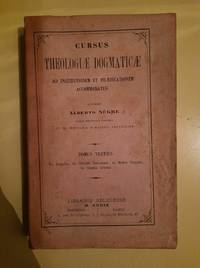
19004001011071900. 1900. Alberto Nègre - Cursus Theologicae Dogmaticae : Tomus Tertius / 1900 unknown
1890WRCLIT69506London New York Melbourne & Toronto: International Headquarters of the Salvation Army 1890. 2851xxxi7pp. Large octavo. Black cloth stamped in gilt. Elaborate color folding plate. Some rubbing to extremities December 1890 gift inscription on half-title; a few stray marks to cloth; a good sound copy. First edition later printing with the McCorquodale & Co. printer's imprint on the verso of the half-title and at the end and with the last line of the dedication in the proper font size. Booth founded the Salvation Army in 1878 and published this work the same year that Stanley published IN DARKEST AFRICA. "In this book he analysed the causes of the pauperism and vice of the period and proposed a remedy by ten expedients. These included land settlement emigration rescue work among prostitutes and at the prison-gate the poor man's bank and the poor man's lawyer. Money was liberally subscribed and a large part of the scheme was carried through"- PMM. PRINTING AND THE MIND OF MAN 373. International Headquarters of the Salvation Army hardcover books
186120085Paris: the Author 1861. Sepia lithographed frontispiece and 6 full-page sepia lithographed plates. Contemporary gilt black sheep-backed marbled boards. Minor foxing otherwise a very good copy in original condition. First edition of this privately published manual of freemasonry by the founder of the Rite of Memphis a Templar-based branch of the practice. Intended for use by novices the text covers the history of the Order from the initiation of King Solomon lists the Grand Lodges with their masters number of members and dates of foundation explains the symbols numbers and letters used in masonry iconography and details the 95 rites that members must exercise. The author describes the chants and responses said during rituals clothing to be worn for various levels of membership calendar of events insular legal system process for promotions religious concordances financial structure and differences in orders depending on their rites and locations. One of the final chapters outlines the five stages of initiation for women to become members. The ornate bistre plates illustrate legends and allegories of freemason foundational lore. <br /> Jacques-Etienne Marconis 1795-1868 was a French author and freemason. His father served in the Napoleonic army where he became obsessed with Egyptian religion and myth. Upon his return to France in 1815 he founded a freemasonry lodge called the Pilgrims of Memphis but the chapter was disbanded only one year later. He entrusted the archives to his son who reformed and revived the charter in 1839 but his small group of pilgrims failed to receive dispensation from the freemasonry governing body the Grand Orient of France. In 1859 Marconis applied again to the Grand Orient for masonic chapterhood and it was finally granted. This book represents the final iteration of the foundation of the Rite of Memphis a project that took over 40 years to come to fruition.<br /> OCLC locates no copies in U.S. libraries.<br /> Caillet 7116; Dorbon 689. the Author unknown
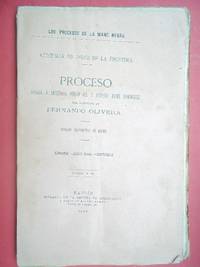
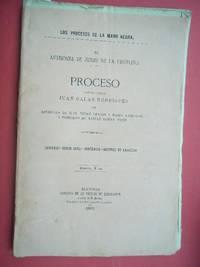
188341.236Madrid: Imp. de la Revista de Legislación 1883. 1ª ed. Rústica. 15x22. Imp. de la Revista de Legislación paperback
188341.238Madrid: Imp. de la Revista de Legislación 1883. 1ª ed. Rústica. 15x22. Imp. de la Revista de Legislación paperback
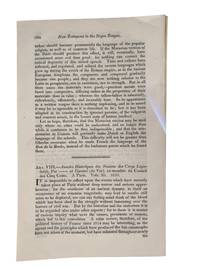
1829225831829. African AmericanReligionCarribean New Testament in the Negro Tongue. In The Eclectic Review Vol. XLIII No. LXXXVI. London: 1829. Excerpt: pp. 553-564. Disbound 12pp. A rare excerpt reviewing a missionaries' translation of the New Testament into "Negro-English" also called talkee-talkee the Creole language spoken by enslaved and free Black populations in Demerara and Surinam. The British and Foreign Bible Society issued the translation in 1829 for missionary use representing one of the earliest attempts to render the Christian scriptures into an Afro-diasporic Creole tongue of the Caribbean basin. This review in The Eclectic Review a leading 19th-century dissenting religious periodical gives a lengthy discussion of the translation providing contemporary reactions that ranged from grudging acknowledgment to outright racist dismissal.<br /> <br /> The review juxtaposes biblical passages rendered into Creole with commentary often mocking the "mixed speech" as "ridiculously offensively and incurably base." Yet despite its dismissive tone the piece captures critical evidence of how missionaries and colonial observers grappled with African- and Creole-derived linguistic traditions including debates over whether vernacular scripture empowered conversion or threatened white control. The review references Moravian missionary John Latrobe's efforts in Suriname as well as comparisons to African Dutch and Portuguese linguistic influences. Particularly striking are verbatim transcriptions of gospel passages in Creole offering researchers a rare contemporaneous witness to early printed Afro-Caribbean language. Light toning disbound with clean margins preserved; pages complete and supple. A rare document of the intersection of race religion and language in the British Caribbean revealing both the efforts made by missionaries to connect through Creole scripture and the entrenched racism of the colonial intellectual establishment. unknown
183557663Northampton MA 1835. Whole number 293. folio pp. 4. Page 3 contains a story about a "negro insurrection in Mississippi". Paper toned folded good. unknown books
187752662Kinsale Ireland: printed at the 50th Regimental Press 1877. Bifolium program 8.5 x 13 cm pp. 4 the last blank; minor foxing previous fold formerly from an album the remains of a card and an engraved illustration on the final blank. Also a manuscript caption: "Programme Garrison Nigger Troupe Camden Fort Feb. 9 1877." With manuscript notes and corrections in a contemporary hand. The Negro Troupe was led by Lieutenant Yaldwyn. Provenance: Major-General Sir Francis Walter de Winton 1835-1901. printed at the 50th Regimental Press unknown
187752662Kinsale Ireland: printed at the 50th Regimental Press 1877. Bifolium program 8.5 x 13 cm pp. 4 the last blank; minor foxing previous fold formerly from an album the remains of a card and an engraved illustration on the final blank. Also a manuscript caption: "Programme Garrison Nigger Troupe Camden Fort Feb. 9 1877." With manuscript notes and corrections in a contemporary hand. The Negro Troupe was led by Lieutenant Yaldwyn. Provenance: Major-General Sir Francis Walter de Winton 1835-1901. <br/><br/> printed at the 50th Regimental Press unknown books
1880135903New York: McLoughlin Bros. Very Good. ud 1880s. First Edition. Hardcover. 7x9" large volume.thin. VERY GOOD CONDITION bit wear spine endstips but unusually bright spine & covers with bright 5x7" cover artwork showing mouse dancing to a pbrown cat playing bagpipes.p=ilust pasted to cover as designed by publisher. Back cover is blind embossed red cloth with 4" inches of dark stain near edges. Bright yellow endpapers.Name "Mrs. Nelson Moffett Dhristmas".else book is not marked up or abused. ; many full page lithographs in various colors showing Nursery rhyme charaters plus introductory story showing several completely dressed Black children in various outdoor activites.with short captions in Dialect & N Word language. "Dis colored chile am done dat sum; "Five and five's ten"--and now's gwine hum." The NURSERY JINGLES are familiar rhymes with similarly colorful White characatures. I hope to help find a home or library where this item will find a constructive purpose and informative usefulness. It is close to being unique .especiall in such excellent condition. Sevral pages in text are clean white on one side as required by printer's requirements Oages are not numbered Nor is a proper date offered on title page. ; 64pg thin pages . McLoughlin Bros.... hardcover
1880140745New York: McLoughlin Bros. Very Good. ud 1880s. First Edition. Hardcover. 7x9" large volume.thin. GOOD CONDITION MISSING ADDITION PAGES. bit wear spine endstips but unusually bright spine & covers with bright 5x7" cover artwork showing mouse dancing to a brown cat playing bagpipes.ilust pasted to cover as designed by publisher. Back cover is blind embossed red cloth with 4" inches of dark stain near edges. Bright yellow endpapers.Name "Mrs. Nelson Moffett Christmas".else book is not marked up or abused. ; many full page lithographs in various colors showing Nursery rhyme charaters plus introductory story showing several completely dressed Black children in various outdoor activites.with short captions in Dialect & N Word language. "Dis colored chile am done dat sum; "Five and five's ten"--and now's gwine hum." The NURSERY JINGLES are familiar rhymes with similarly colorful White characatures. I hope to help find a home or library where this item will find a constructive purpose and informative usefulness. It is close to being unique .especiall in such excellent condition. Several pages in text are clean white on one side as required by printer's requirements Pages are not numbered Nor is a proper date offered on title page. ; 64pg thin pages; BOOK DOES NOT HAVE THE "ADDITION" PAGES WHICH SHOW HOW SOLUTIONS ARE REACHED. .AND MAY HAVE OTHER PAGES MISSING.THE PAGES ARE NOT NUMBERED AND SOME ARE BLANK WITH COLORED ILLUSTRATIONS ON VERSO SIDES.Title Page has no facing art Text for 10 Lit. Nig makes sense.but several blank pages. Nursery Jingles has 24 richly colored pages & numerous text pages. book has both front & back double yellow eng pages .i Would appreciate knowing correct pagination in case any are expected. THIS COPY DOES NOT HAVE THE ADDITION/SUBTRACTION B&W PAGE. but has quite a nice cover and undisturbed text pages. as described. . McLoughlin Bros.... hardcover
1864196771864. African American The Negro Race in America. Edinburgh Review 1864. First Edition. Rebound in lavender wrappers. Original 39 page article with 5 headings extracted from the Edinburgh Review of January 1864. Octavo. An intricate look in 1860's into the transition from slavery to emancipation to reintegration in Western society. Topics covered within follow the "character and probable destiny of the negroes quite apart from the merits and demerits of the classes or parties brought by parties whose strifes they have been brought into by their present position". The author surfaces critical notions on the Black experience more specifically chartering the detrimental effects of enslavement and the difficulties of reintegration. An important text in very good condition. unknown