383 résultats
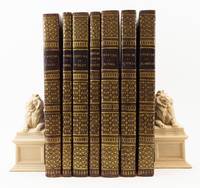
1800ST17757London: William Miller; T. M'Lean; William Bulmer 1800-18. 370 x 270 mm. 14 1/2 x 10 1/2". Seven volumes. <br/> Uniformly bound in stately contemporary dark burgundy straight-grain morocco covers with gilt palmette-and-wheat-sheaf border inner frame of blind-stamped grapevine raised bands spine compartments densely gilt with repeating botanical tools gilt lettering gilt-rolled turn-ins all edges gilt. Two engraved titles with hand-colored vignettes not included in plate count and 356 FULL-PAGE HAND-COLORED PLATES FEATURING COSTUMES OCCUPATIONS AND SOCIAL INTERACTION OF VARIOUS NATIONS. Volume I-III V and VI with text in French as well as English. Front pastedown with armorial bookplate of Edward Gordon Douglas-Pennant 1st Baron Penrhyn. Abbey Life 430; Abbey Travel 71 244 370 373 532 533. Joints and extremities lightly rubbed one board with a couple of faint scratches two rear boards with neat older repairs to short tears at tail edge but the bindings quite sound and most attractive on the shelf. Flyleaves a little foxed minor offsetting from plates to text leaves occasionally more pronounced but never offensive isolated minor marginal foxing to plates otherwise very fine WITH CLEAN BRIGHT PLATES.<br/> <br/> This is a collection of major early 19th century color plate books with well-drawn and richly-colored engravings in bindings that make a handsome appearance on the shelf. All of these works have appealing plates where the costumes of the various social strata are carefully and colorfully delineated. And two of the volumes--those showing British costumes and the book on Chinese punishments--contain in addition a good deal of diverting background detail that serves as a revealing context for each of the costumes depicted. The content of each of the volumes is worth noting. With a few exceptions the plates in the "Costumes of China" portray ordinary working-class men and women toiling at their trades. We see a bookseller with his wares spread out on a mat women sewing and embroidering a butcher a fisher a barber a man with a "magic lantern" show and a "man striking a small gong during an eclipse" an ancient ritual that the author tells us he was privileged to witness on 17 November 1789. The "Punishments of China" volume is filled with almost gleefully painful depictions of all degrees of disciplinary action from the relatively minor twisting of the ears or chaining to an iron pole to the humiliating ordeal of the wooden collar to methods of execution by beheading or by crucifixion using a cord. The opulent and brightly colored costumes in Dalvimart's volume on Turkey are mostly those of the ruling classes although also represented is a wide variety of native dress from the many regions of the vast Turkish empire of the day which included Bosnia Albania Syria Egypt and parts of Greece. It is particularly interesting to contrast the clothing of the very heavily veiled Turkish and Egyptian women with the much more relaxed style of the Greek women and the nearly immodest garb of the female Bedouin. We also are shown a eunuch an odalisque from the harem a grand vizier various royal functionaries and government officials all splendidly attired. The Russian costumes based on engravings done by C. W. Müller at the request of Empress Catherine the Great are focused on the ethnic dress of the empire's many holdings. The Laplanders and Finns wear clothing that would look familiar to most Europeans but the Mongols in their Oriental dress would be quite exotic. The clothing of the northern tribes such as the Kamchatkans Aleutians Koriaks and Tungoosi will impress the modern reader with their similarity to the traditional dress of Native American and First Nation peoples. The Tchutski woman is even depicted naked to display her tattoos. Bertrand de Moleville's Austrian costumes also illustrate the native dress of the empire's citizens but the illustrations here are less fashion plates than romanticized scenes: peasant couples are shown courting and dancing; Croatian women gossip beside a stream; and a wild-haired Bohemian gypsy whose "profession is not hard to guess" from her state of "déshabillé" flees with her naked and no doubt illegitimate child. Pyne's "Costumes of Great Britain" is one of the most highly praised works in this set and for good reason: the simple working men and women of Britain it depicts are always shown going about their daily tasks in the midst of a well-realized scene. The woman selling "salop" a hot morning beverage is seated at her cart with its urn judiciously located by the watchman's stall surrounded by customers including soldiers and a woman with her market basket. A fireman with an ax and a torch hurries toward his engine company while they unwrap their hose. The potter is at his wheel the tanner is cleaning skins and the bill-sticker posts the winning lottery numbers. The clothing while carefully detailed is almost secondary to the depictions of everyday life. The "Military Costumes of Turkey" illustrates the official regalia "uniform" is much too drab a word for these outfits worn by officers in various regions of the empire. Perhaps the most intriguing plate here is that of the Ladle Bearer a post that was also illustrated in "Costumes of Turkey." What appears to be a man with a giant spoon is in fact the holder of an important military position equivalent to the color-bearer in a western army. We are told that the loss of its ladles is the greatest disgrace that can befall a Turkish regiment: if the two great ladles the size of a grown man that are borne into battle at the head of the troops are captured the regiment must be disbanded and formed anew. Former owner Edward Gordon Douglas-Pennant 1st Baron Penrhyn 1800-86 was a leading figure in the Welsh slate industry; he owned the Penrhyn Quarry the largest slate quarry in the world at the end of the 19th century. He was known for his paternalistic attitude to his employees creating the "model village" of Llandegai to house the quarry workers. It was notable for having "no corrupting alehouse." He was ruthless enough to fire 80 men in 1868 because they did not vote for his son George who was running for a seat in Parliament. Single volumes from this set appear with frequency in the marketplace; full sets show up much less often; sets as handsome and well preserved as the present are rarely seen. William Miller; T. M'Lean; William Bulmer unknown
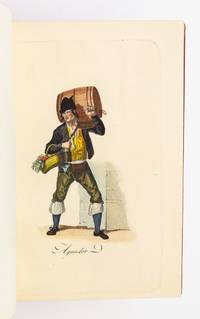
1832ST19313Madrid: Real Calcografía 1832-36. 240 x 160 mm. 9 1/2 x 6 1/4". <br/> ELEGANT MODERN RED MOROCCO VERY HANDSOMELY GILT in the style of the period BY ANTOLIN PALOMINO OLALLA hand-signed on front turn-in with swirling cornerpieces and central lozenge raised bands spine panels gilt gilt turn-ins all edges gilt in slightly worn red marbled paper slipcase. With engraved title page and 112 ENGRAVED PLATES by Juan Carrafa after drawings by Jose Ribelles y Helip and ALL WITH CONTEMPORARY HAND COLORING. Colas 646; Lipperheide 1224. Edges of some leaves with faint stains and thumb soiling of no consequence but the finely colored plates beautifully preserved and THE SPARKLING BINDING IN FLAWLESS CONDITION.<br/> <br/> This is a beautifully bound work filled with exquisitely hand-colored plates depicting early 19th century Spanish costumes. Neither Lipperheide nor Colas identifiy the artist but the San Fernando Royal Academy of Fine Arts in Madrid attributes the images here to the Spanish painter and draughtsman José Ribelles y Helip and identifies the engraver as Juan Carrafa. The plates were originally published by the Royal Academy in 1825 in 14 parts with eight plates per part and the present edition was produced around 1832-36 based on the dates found in the descriptive labels incorporated into two of the plates. The illustrations depict men and women in regional dress from across Spain as well as particular "types" including shepherds fishermen merchants musicians dancers bullfighters smugglers sailors and more. The superb hand coloring enlivens each illustration with vibrant colors and careful attention to shading patterns and accessories. Antolin Palomino Olalla 1909-95 was one of the great Spanish binders of the 20th century. A versatile and meticulous artist teacher and craftsman Palomino Olalla opened his Madrid workshop in 1942 and became especially renowned for his hand-gilding mosaic bindings and marbled paper techniques. He seems to have specialized in binding antiquarian books and attracted important institutional clients as well as discerning bibliophiles such as Bartolomé March Servera. The gilding on the present work is especially elegant and applied with laser precision adding another dimension of pleasure to an already appealing work. The book is uncommonly seen for sale at Anglo-American auctions. Real Calcografía unknown
1820D6906N.p. but Germany possibly Liechtenstein c. 1820. Hardcover. Very Good. 4to 245 x 165mm. A compilation of 73 brightly colored watercolors many with manuscript captions in German some are dated for the costume all clipped and mounted into book and illustrating the costumes and attributions of court officials knights Templar Tartar costume St. George on horseback German orders of nobility also for Spain France Holland Italian Turkish Egypt and Babylon and other various orders as in Order of the Garter in England and France and religious dress of ordained and lay members of various orders including German Italian Spanish and Cistercian Carmelite Carthusian Capuchin and Franciscan monks. Also Jesuit pilgrims and sisters of the Benedictine Sylvestrine and Cistercian among other lesser-known orders and historical figures such as Leopold III of Austria and Louis III of Tremoilles. Early 19th-century half calf over imitation silk cloth-covered boards and decorative endpapers spine with label COSTUME; some light foxing most severe at beginning otherwise the colors remaining extraordinarily fresh and bright. Armorial bookplate from the Princely house of Liechtenstein on front pastedown. <br/><br/>Unique compilation of 73 expertly executed hand-colored watercolors of various religious knightly and official orders with a bookplate of the royal arms of Liechtenstein. Each figure is executed with extraordinary talent and is superbly hand-colored in a range of washes; many of these costumes have changed very little and have a history stretching back to medieval times. In the twentieth century an interest in costume and fashion books was spurred on by the dawning Victorian age in England in the 1830s which then spread to the continent. Each picture in this unique set is an individual work of art full of expression and with strikingly attractive faces and gestures. The expert attention given to each work of art strongly suggests this book was a maquette for a larger print-run of a souvenir book of costumes. Captions are in German and early provenance points to possible creation in the principality of Liechtenstein. One can think of the principalitys official motto For God Prince and Fatherland and see how all these official garments best represent a history of European court and important religious connections for an established royal line such as Liechtenstein. Perhaps this book was once in the royal home of the Johann I Joseph Prince of Liechtenstein who had fourteen children and it may have belonged to his son Prince Friedrich Adalbert 1807-1885 who later became the 1018th Knight of the Order of the Golden Fleece in Austria. With interesting connections to the royal house of Liechtenstein and 73 examples of hand-colored historic costumes this truly is a unique survival. hardcover
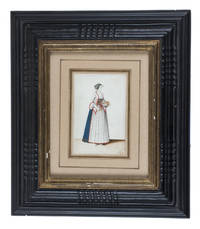
17209AHF2VYD4ZB1Augsburg 1720. Each mounted in a later passe-partout with a gold border in an ebonized wooden frame with a gilt lip glazed 23.5 x 20.5 cm. Four drawings in brown ink watercolour and coloured gouaches on vellum highlighted with gold each 5.9 x 9.0 cm. A matching set of four lovely and delicate watercolour drawings each depicting a young lady in a fancy German costume drawn and painted on vellum by the Augsburg artist Catharina Sperling Heckel 1699-1741. She learned painting and drawing from her father the Augsburg goldsmith Michael Heckel engraving from Johann Ulrich Kraus and married the engraver Hieronymus Sperling 1695-1777 in 1725. It is not clear whether she made these drawings shortly before or shortly after her marriage. She is best known for her ca. 1728 miniature portrait of Charles Edward Stuart Bonnie Prince Charlie the young pretender to the English throne. She never recovered from the birth of her first child in 1741 dying within a few weeks. Each drawing shows a young German lady wearing a long gown and a cap or bonnet but one also carries a hat. The four drawings differ in the style of the gowns and other elements.In very good condition. With a few small chips in the paint of the frame. Lovely watercolour costume drawings of four young German ladies perhaps from a court wedding in the free Imperial city of Augsburg.l Cf. Thieme & Becker XVI pp. 208-209. ABE CAT Costumes & Uniforms hardcover
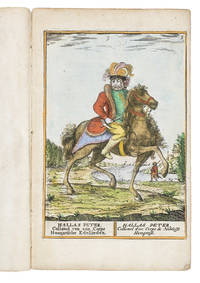
1787ABC_49498The Netherlands The Hague 1787. 8vo. Contemporary marbled paper wrappers sewn through 4 holes. Kept in a custom burgundy cloth case with a leather label on the spine lettered in gold. With 6 full-page numbered engraved plates vividly coloured by a contemporary hand. 16 pp. Second copy located of the second edition of an extremely rare work on 18th-century Central European military costumes. The work was first published in folio format in The Hague in 1742 with the title referring to the Central European soldiers in the service of the "Queen of Hungary" meaning Maria Theresa 1717-1780 ruler of the Habsburg monarchy from 1740 until 1780 and the "King of Prussia" meaning Frederick II the Great in/of Prussia 1712-1786. The title of the present second edition refers to the "Emperor" and the "King of Prussia" most likely meaning Holy Roman Emperor Joseph II r. 1780-1790 and either King Frederick II r. 1740-1786 or King Frederick William II r. 1786-1797. Thus the second edition was probably published after 1780 and possibly in 1787. Two English/French editions were published in 1742 and 1743 in "London" possibly meaning The Hague by Guillaume Meyer.The present copy contains 6 beautifully contemporary hand-coloured engravings of Central Europeans in their military costumes. They show: 1. Hallas Peter a Colonel of a corps of Hungarian nobles on horseback; 2. Captain of the Croats; 3. a Croat soldier; 4. a Slavonian from a historical region in present-day Croatia; 5. an officer of the Ulans also Uhlans originally Lithuanian irregular cavalry later generally meaning a lancer in service of the King of Prussia; 6. ordinary Ulan a lancer.With the book plate of F.C. Koch on the inside of the front wrapper. Wrappers slightly frayed and slightly faded minor foxing throughout the title page is slightly browned. Otherwise in very good condition.l STCN 240071050 1 copy; WorldCat 894593905 1 copy same as STCN; cf. for the first edition: Lipperheide 2224; Colas 2410. ABE CAT Costumes & Uniforms hardcover
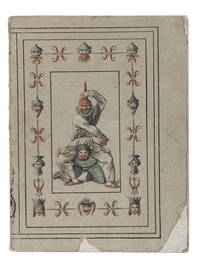
1804E5UG7Z4OCT3NLeipzig 1804. 16mo in 8s 14 x 10.5 cm. Friedrich August Leo Original publisher's paperboards printed from an engraved plate and hand-coloured each board with a costume scene in a decorated frame with caricature faces also with faces and decorations on the spine green paste-downs. With 2 stiff coated leaves at the end apparently intended for writing with a stylus. With 12 numbered engraved plates by Friedrich Wilhelm Nettling all coloured by a contemporary hand each showing several figures in carnival costumes. 31 1 blank pp. Very rare first and only published part of a series of hand-coloured carnival costume plates each of the 12 with a letterpress description in German and French. Only plates 9 and 10 bear the name of the German draughtsman and engraver Friedrich Wilhelm Nettling best known for his portrait of Bach but all may have been engraved by him. The mostly comical or farcical plates illustrate a fairy with her entourage a Chinese man Don Quixote and Sancho Panza a group of beast people and many other extraordinary figures. Two figures in one plate wear funnels as hats like the Tin Man in The Wizard of Oz. Besides the 12 plates in the booklet itself the engravings on the boards show two male figures gymnasts one in a clown-like costume on the front and a dancing woman with a tambourine on the back.With some minor stains and the front of the binding slightly damaged in the lower margin and lower right corner spine cracked. Good copy.l Baumgärtel Die Almanache Kalender und Taschenbücher 1750-1860 der Landesbibliothek Coburg p. 32; Köhring 111; WorldCat 633348944 465355875 3 copies; not in Colas; Hiler; Lanckoronska & Rümann; Lipperheide; for Nettling: Thieme & Becker XXV p. 400. ABE CAT Costumes & Uniforms hardcover
1790ST14261Paris: Drouhin 1790. FIRST EDITION. 265 x 205 mm. 10 3/8 x 8". Two volumes. <br/> VERY ATTRACTIVE CONTEMPORARY MARBLED CALF GILT IN A NEOCLASSICAL DESIGN covers with a cresting palmette frame featuring ornate urn ornaments at corners flat spine divided into compartments by Greek key roll floral spray centerpieces one green and one black label marbled endpapers. With 55 PLATES OF COSTUMES designed by Philippe Chéry and engraved by Pierre-Michel Alix 50 of these PRINTED IN COLOR five in black and white a couple of these with color highlights applied by hand and with a color portrait of the author from the 1802 edition tipped in at front. Colas 717; Hiler p. 542; Lipperheide 3203; Cohen-de Ricci 227; Brunet IV 1135. One corner worn to board joints and extremities lightly rubbed but the bindings lustrous and generally very attractive. First volume slightly browned throughout second volume occasionally so volume II with two-inch marginal stain to upper gutter affecting four quires and six plates but not touching text or images two plates with pen marks in margins touching lettering but not image other trivial defects but still an excellent copy internally the colors especially clear and pleasing.<br/> <br/> This is an elegant production with the Neoclassical binding being the perfect complement to the color engravings of ancient Greek and Roman costumes that illustrate the present history of theatrical attire. In the two volumes here theater critic and historian Jean Charles Le Vacher de Charnois 1749-92 covers Classical tragedies and comedies as well as later interpretations of these dramas by playwrights including Racine. Le Vacher de Charnois intended a series of books encompassing as the title indicates theatrical costumes from all nations and from the ancient to the modern; however the French Revolution interrupted his scheme and as a monarchist he was imprisoned in 1792 for his writings in support of the aristocracy. It was long thought that he had died in the massacres at the Abbaye prison in September of that year but later research indicates that he may have been executed during the Reign of Terror in 1794. The artists who illustrated this work were at the opposite end of the political spectrum. Painter Philippe Chéry 1759-1838 studied with Jacques-Louis David and adopted his master's passionate support for the Revolution as well as his Neoclassical style. Engraver Pierre-Michel Alix 1762-1817 was a specialist in color printing best known for his portraits of leaders of the French Revolution and later of Napoleon and First Empire dignitaries. While the handsome binding here is unsigned the palmette roll on the covers is very similar but not identical to one used by Bozerian see Culot "Jean-Claude Bozerian" roll #44 and plate #XXIV. Perhaps our binder had trained in that atelier as the design and workmanship are certainly of that level. Drouhin unknown
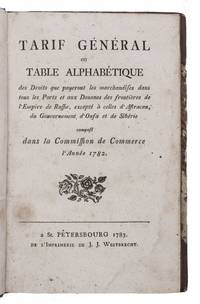
178318774St. Petersburg: J.J. Weitbrecht 1783. Contemporary half calf marbled sides sprinkled edges. 8vo. Second known copy of a commercial publication of statutes promulgated in French by the Russian Empress Catharine the Great concerning import duties for commercial merchandise in Russian ports and at other frontiers of the Russian Empire as they were determined and accepted in 1782. There is an exception for Astrakhan a major port and market city in southern Russia at the head of the Volga river which was under the government of Siberia which apparently maintained its own commercial regulations.This publication is very rare WorldCat lists only 1 copy Kress Library of Business and Economics Harvard University. Other libraries worldwide have only the microfilm of the Kress copy.A faint stain and one tiny hole in the margin of the first 20 pp. Cover slightly rubbed. Otherwise in good condition.l Goldsmiths'-Kress 12431.16. J.J. Weitbrecht, unknown
18782111902160201404Hori Seitaro 1878. Soft Cover. Fine. Number of books: 3 Hori Seitaro paperback
19872083002116300303Not Available 1987. Soft Cover. Fine. The book is in fine condition. Not Available paperback
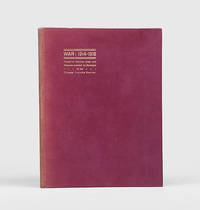
1922173387Shanghai: Statistical Department of the Inspectorate General of Customs 1922. A scarce customs service publication First edition first printing of this informative tribute to the 66 employees of the custom service who served during the First World War as well as the 23 men killed during the conflict. Copies are recorded in just four institutional libraries British Library Leeds Cornell and the University of Hong Kong. For each member of staff sections give their record of service ranks the countries and battles in which they fought honours and wounds received and "other particulars of interest". The majority served on the Western and Eastern Fronts and several were seconded to the Chinese Labour Corps on account of their linguistic skills. The final entry concerns G. R. G. Worcester 1890-1969 whose works on Chinese craft and navigation remain definitive. Octavo. Roll of honour plate decorative title page and initial text printed within red frames. Original purple pebble-grain cloth front cover lettered in gilt patterned endpapers. Spine sunned rear board a touch soiled contents clean: a very good copy. hardcover
185354091James' Town St. Helena: printed at the Government Office by Geo. Gibb 1853. Broadside approx. 12¾" x 8" printed on blue paper; lengthy text in a single column beneath a cut of the Royal Arms at the top; very slight spotting else a fine copy of a rare South Atlantic imprint. The regulations 15 in all outline manifest requirements customs fees and charges quarantines dockage and launch services and charges etc. Also the times draw bridges are raised and lowered the town gates closed and the latitude and longitude of the islands. Also information regarding the "Time Ball." The time ball a visual signaling device meant to be observed by ships at sea for calibrating chronometers was first successfully tested by the Royal Navy at Portsmouth in 1829. Among the first time balls constructed was that at St. Helena Observatory in 1834. The white canvas ball dropped precisely at noon while a time gun positioned on the High Knoll fired the signal. The procedure was repeated at one o'clock to coincide with Greenwich mean time. Not in OCLC and unlocated bibliographically. printed at the Government Office, by Geo. Gibb unknown
1904150513Shanghai: Statistical Department of the Inspectorate General of Customs 1904. A Commissioner's record of four decades of the Chinese Maritime Customs Service First edition sole printing with a pleasing provenance of the Chinese Maritime Customs Service internal staff list for 1904 issued to the sinologist Charles Williams in his first year as an employee. Williams annotated this copy throughout his successful three-decade career to track the fortunes of Service colleagues. His signed armorial bookplate is to the front pastedown. Charles Alfred Speed Williams began working for the Service's revenue department in November 1903 at the junior level of Fourth Assistant. He rose to the rank of Acting Commissioner at the Lungchow station before retiring in late 1935. On leaving the service he was given the honorary rank of Commissioner. Williams' manuscript additions show that he maintained an evolving record of the careers of those who worked with him in the revenue department. He notes colleagues who reached the senior grade of Commissioner and their dates of compulsory retirement while he also records whether members of staff resigned retired or died in office. In line with his own interest in the Chinese language Williams also highlights those who attained the Service's highest grade of Chinese language proficiency. The Chinese Maritime Customs Service was founded in 1854 by Britain and other foreign powers to collect taxes on maritime trade for the Chinese government but its remit quickly expanded to include domestic customs administration the postal service waterway and harbour management and meteorology. These areas of responsibility inevitably overlapped with diplomatic and political issues making the Service one of the most powerful bureaucratic entities in the country. Between 1875 and 1948 the Service published an annual list containing basic information on all members of staff and their responsibilities. These volumes only ever distributed for internal use represent a valuable record of the Service's contributions to the economic and political history of modern China. Alongside his successful career in the Chinese customs bureaucracy Williams maintained a deep scholarly interest in Chinese history and culture. He is most well-known for Outlines of Chinese Symbolism and Art Motives: An Alphabetical Compendium of Antique Legends and Beliefs as Reflected in the Manners and Customs of the Chinese 1931 a work that went through multiple editions over several decades. In 1969 he published his autobiographical Chinese Tribute which recounts his colourful experiences working for the Maritime Customs Service. Quarto. Original brown pebble-grain cloth title to spine in gilt sides ruled in blind edges sprinkled red. A little rubbed and marked overall tips bumped with light wear edges slightly dusty offsetting to endpapers touch of foxing to contents else bright. A very good copy indeed. hardcover
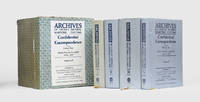
1990173560Beijing: Foreign Languages Press 1990-93. Lifting the veil on late-Qing diplomacy First editions first printings complete with its original box of this historical compendium equal in stature to Morse's Chronicles of the East India Company Trading to China. The scope covers some 3500 letters and 5000 telegrams sent between Beijing and the customs service's London office all drawn from the service's confidential archives and nearly all never before made publicly accessible. The volumes were born out of a long-running collaboration between the Second Historical Archives of China and the Institute of Modern History China Academy of Social Sciences. The Hart-Campbell correspondence is presented unabridged and without editorial corrections to retain as much of the original feel of the documents as possible. New editions have been published in China in the last two decades. 4 vols octavo pp. 942; 1158; 1576; 675. Original blue cloth spines lettered in silver gold bookmarkers. Housed in publisher's box with plastic toggles. Vol. I shaken rear inner hinge starting front board slightly bowed; jackets without prices as issued toned and creased Vol. I jacket cockled and faded Vol. IV jacket cockled: a very good set in like jackets box splitting along one edge lid sunned internal lining worn in places. hardcover
19380001753NEW YORK CITY NEW YORK. Fair. 1938. On offer is an original 1938 - 1939 manuscript relic of pre World War II policing by three US Customs and Duty officers named Barlow Day and Hagner. The entries list seizures they made the date the name of the ship which pier the items seized and the value of these items. Historians and researchers of such work will be amazed at the breadth of the seized items beyond the assumed liquor tobacco and weapons. The notes detail such sundry items pyjamas perfume sandals table cloths lotion wallets shell boxes cameras tea jewellery coins and more. Included within the pages of the journal are several newspaper clippings. Four of them were obits for a man by the name of Sgt. John E. Day who died during WWII. He was the brother of custom's agent Edward F. Day. There are also a few articles about a narcotics bust mostly opium showing a woman by the name of Madeline Mayling as the suspect. In part: "June 9th 1939. United States Customs agents were set last night to crack down on a huge Broadway drug syndicate as a result of the arrest of a woman head of a gown shop and the seizure of more than $15000 worth of crude gum opium and morphine base on her person. The woman under arrest is Madeline Mayling 38 who operated the Helene Modes Inc. on the 6th floor of the Gayety Gaiety Theatre Building 1547 Broadway She was captured as she walked off the Italian liner Vulcania last Friday night with 12 1/2 pound slabs of opium under her girdle. "I thought it was imported Roquefort or limburger cheese" she insisted. She is held in default of $25000 bail charged with smuggling. An alleged accomplice whose name is withheld also is under arrest .Other narcotics were found at her home and at her place of business a Broadway dress shop .In her apartment a fully loaded automatic pistol was also found " Another article notes that a woman was hiding four pounds of pure heroin in the soles of her shoes; several pairs. The handwritten entry in the journal that shows where they arrested Madeline but she was going under the alias name of "Helen Hoffman" as the newspaper article states. There is also a small typed piece of paper which is titled "Enforcement Division Notes." This piece talks about Guard E. F. Day who was "strolling" on board the S. S. Pacific which was docked in Brooklyn at the time. He decided to search the seamen's wash room and found a bottle that ordinarily contained pickles when actually it was "Preserved Marijuana." It was concealed under the iron floor of the wash room. This is really a fascinating 37 pages of intimate details of the unique service these officers performed. There are about 40 different ships mentioned including: the Normandie California Virginia Ile de France New York Champlain Rotterdam Berlin Queen Mary Breman and many more. Some of the piers are; Constable Hook in Bayonne New Jersey Claremont Terminal in New Jersey New Briton Boat Landing in Staten Island Pier 18 North River Brooklyn piers and more. Finally in the back of this journal is two page handwritten entry about a Grand Jury session concerning the seizure of opium on board the ship SS Menclaus. Seems they found opium in the bottom of a bucket hidden under some clothing and belonging to Lee Foo Yung. The diary it's in poor shape with the cover detached but present and the cover is also torn at the spine in places. There are a few torn out pages but the diary itself has over 100 pages of which 37 have entries. Binding still looks good and there is a bit of foxing around the edges of the pages. The journal measures about 4 ¾" x 6 ¾". Overall Fair.; Manuscript; 24mo - over 5" - 5¾" tall; KEYWORDS: HISTORY OF OPIUM HEROIN NORMANDIE QUEEN MARY MAYLING BUST CUSTOM AGENTS BARLOW DAY HAGNER SMUGGLING POLICE ENFORCEMENT CRIMINALITY CRIMINAL CRIME CRIME PROCEDURE CUSTOMS SEIZURES PRE WORLD WAR II DEPRESSION ERA NARCOTICS DRUGS AMERICANA HANDWRITTEN MANUSCRIPT DOCUMENT LETTER AUTOGRAPH DIARY JOURNAL LOG KEEPSAKE WRITER HAND WRITTEN DOCUMENTS SIGNED LETTERS MANUSCRIPTS PHOTO ALBUM PHOTOGRAPHIC ALBUM HISTORICAL HOLOGRAPH WRITERS HANDSCHRIFT HANDGESCHRIEBEN MANUSKRIPT DIARIES JOURNALS LOGS AUTOGRAPHS PERSONAL MEMOIR MEMORIAL PERSONAL HISTORY antiquité contrat vélin document manuscrit papier Antike Brief Pergament Dokument Manuskript Papier oggetto d'antiquariato atto velina documento manoscritto carta antigüedad hecho vitela documento manuscrito Papel . hardcover
1971KOS01205155Shueisha 1971. Soft Cover. Fine. KOS01205155 Shueisha paperback
1911L3 box256 b5<p>Le Marchand de Passions. Comedie en 3 images d'Epinal et en vers de M. Maurice Magre. Decors et Costumes de M. Georges Delaw. Musique de scene M. Gabriel Grovlez. Acheve d'imprimer le dix-huitieme jour de Mars MCMXI sur les presses de La Belle Edition. 71 Rue des Saints-Peres 71 Paris. IL a ete tire de cet ouvrage: Vingt exemplaires sur japon a la forme numerotes de 1 a 20 et vingt sur Hollande van Gelder numerotes de 21 a 40 qui ont ete signes et paraphes des auteurs et des editeurs. Hardcover book size: 6.125 x 5.75 x 0.5 inches.</p> La Belle Edition. hardcover
1823D18682Rome: Luigi Nicoletti 1823. Hardcover. Very Good. 4to 10 1/4 x 81/4 ins.; 265 x 205 mm. Sixty hand-colored plates of military and religious costumes; some light marginal staining to a few plates. Contemporary gilt vellum; upper joint cracked but still holding. Sold as a collection of plates. The hand coloring of the plates especially nice in this copy. Provenance: Robert S Pirie bookplate. <br/><br/> Luigi Nicoletti hardcover
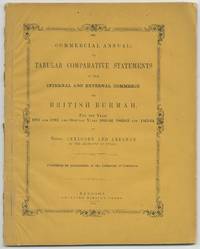
1864438380Rangoon: American Mission Press C. Bennett 1864. Softcover. Very Good. First edition. Quarto. 91 1pp. Tables. Stitched printed yellow wrappers. Faint contemporary penciled name on front wrap "Rev. C. H. Carpenter" modest vertical crease small nicks tears and dogears; spine partially perished but tight overall very good. A comprehensive accounting of cargo exported from and imported to Rangoon with summaries of tonnage specific lists of cargo for each ship etc. "Published by the permission of the Collector of Customs." OCLC locates two copies only both at the British Library. American Mission Press, C. Bennett unknown
1923192991Shanghai: Printed and Published at the Statistical Department of the Inspectorate General of Customs 1923. Second edition following the first of 1912 of this bilingual reference for customs service employees and those serving on private vessels. Though unmarked as such this copy was formerly owned by Lester Knox Little 1892-1981 the service's last inspector-general and was acquired by a private collector from his family in 1999. This handbook is scarcer than most customs service publications most copies likely not surviving the ravages of use onboard ship. WorldCat shows that the New York Public Library holds both editions and a copy of the second can also be found at Cornell. Small octavo. Folding Chinese compass diagram. Original yellow boards green cloth backstrip covers lettered in black. Old red ink manuscript corrections on p. 25 of English text. A little dust-marking: a near-fine copy. hardcover
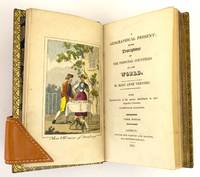
1820ST16372eLondon: Printed for Harvey and Darton 1820. Third Edition. 155 x 95 mm. 6 x 3 3/4". 144 pp. <br/> Appealing sprinkled calf by Wallis for C. E. Lauriat stamp-signed on verso of front free endpaper covers bordered by double gilt fillet raised bands spine gilt in compartments with floral spray at center encircled by small tools leafy branch at corners red morocco label densely gilt turn-ins marbled endpapers all edges gilt. WITH 60 HAND-COLORED PLATES of costumes from around the world. For first edition: Lipperheide 480; Osborne Collection p. 193. See also: Megan Nourcia "X Marks the Spot: Women Writers Map the Empire for British Children 1790-1895" pp. 33-34. A tiny bit of wear to the top of the front joint occasional trivial marginal stains or the faintest of browning but still a fine copy clean and fresh internally with brightly colored plates in a well-preserved lustrous binding.<br/> <br/> Attractively bound and enhanced with excellent contemporary hand coloring this charming introduction to geography aimed at young readers contains numerous plates depicting the traditional dress of cultures from around the world. Beginning in London and spreading to almost every corner of Western Europe the book then guides us to Asia Africa and finally to the Americas ending in Tierra del Fuego. First published in 1817 "A Geographical Present" was the author's most successful work. There is little known about the life of Mary Anne Venning but according to Megan Nourcia the present work "had a broad circulation launching her career as a scientific writer and establishing her authority as an educator of the young." Nourcia also notes that "Venning's texts were marketed as educational aids of keepsake quality"; as we see here the attractive binding and lovely hand-colored plates add an element of luxury to this pedagogical work and the fine condition of our copy suggests that it was carefully looked after by its presumably young previous owners. Printed for Harvey and Darton unknown
3734310<p>New York. 1707–1714. 7¼ x 11½ inches. Laid paper. Edge toned lightly foxed fold lines. Very good.</p> <p>A rare and early eighteenth-century partly-printed blank form for sea vessels likely from the press of William Bradford created during the first two decades of New York printing. The form’s final lines date it to the reign of Queen Anne 1702-14; sovereign from 1707 onward when Bradford was New York’s only working printer.</p> <p>The completed form would certify customs clearance recording the vessel’s name tonnage arms crew origin and itinerary.</p> <p>William Bradford 1663-1752 the first printer in New York and Pennsylvania is cited as the “pioneering printer of the English middle colonies†DAB. He began printing in Pennsylvania in 1685 and opened a bookstore in 1688. Legal troubles including the seizure of his printing equipment in 1692 led him to relocate to New York in 1693 where he printed the acts of assembly and other official documents for the colonial council.</p> <p>DAB II:563–564.</p> unknown
199325288ELos Angeles: Butterfield & Butterfield 1993 & 1994. First Editions. Lavishly illustrated catalogues with many black & white and color photographs. This set of presents costumes and memorabilia from such diverse films as Gone With The Wind Planet of the Apes Big Orson Welles’ crown from Macbeth Bruce Lee costumes and promotional material George Hamilton’s costume pieces from Zorro The Gay Blade a photograph collection of Sarah Bernhardt Elvis Presley’s costumes and signed photograph Tyrone Powers’ suit from The Razor’s Edge Billy Crystal’s vest from City Slickers dresses from The Sound of Music scripts from Star Trek and much more. Part I is 79 pages plus index Part II is 178 pages and has the prices realized sheet laid in and Part III is 167 pages plus an index. All copies are fine in glossy printed wrappers. Butterfield & Butterfield unknown
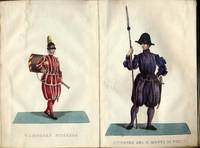
18533220516<i>Hand-coloured lithograph panorama measuring 16 x 335 cm including a title portrait and 30 costumes; folding out of covers measuring 172 x 115 mm.; folding down into original red pattern paper boards 17.2 x 11.5 cm. slightly worn on joints</i><br /><br />Produced as a souvenir for visitors to Rome the panorama depicts the bewildering variety of colourful costumes that were still being worn by the Papal Court. The only flamboyant costume to survive today is the familiar one worn by the Swiss Guard although variants of other costumes used by the clergy in the panorama do survive but in a much reduced modest form.<br /><br />The panels that follow each other depict a costume of a member of the Papal Court beginning with he Pope himself: They are entitled: 'Pio IX P.O.M.'; 'S.P. in Dedia Gestatoria'; 'S.P. in Abrito Pontificale'; 'S.P. in Abrito Di Udienza'; 'S.P. in Mozzetta e Stola'; 'S.P. in Abito Privato'; 'Cardinale Diacono'; 'Cardinale no sibérien Cappa'; 'Cardinale in Manteletta'; 'Cardinale in Privato'; 'Vescovo Greco'; 'Vescovo Siro'; 'Vescovo Armeno'; 'Prelato' 'Crocifero'; 'Bussolante Contriregno'; 'Cammeriere Secreto con Flabello'; 'Senatore'; 'Cameriere Segreto'; 'Mazziere'; 'Gentilomo de Cardinale'; 'Sediaro'; 'Guardia Nobile'; 'Vesillifero di s. Chiesa'; 'Capitano Svizzero'; 'Sargente Svizzero'; 'Svizzero con Corazza'; 'Svizzero con Corazza'; 'Soldato Svizzero'; 'Svizzero del S. Monte di Pieta'; 'Tamburro Svizzero'<br /><br />Compare with Abbey Life 553. Presso i Fratelli d’Atri, Via del Corso No. 395, 395A e 142.
186036183Paris: Typographie de Firmin Didot Frères Fils & Cie 1860. Fifth edition. Extensively illustrated with woodcut illustrations text in Italian and French. 1 vols. Thick 8vo. Three parts bound as one volume. Later half-green morocco front wrapper of each part bound in. Darkened some rubbing especially of raised bands on spine some light offsetting and light marginal discoloration else very good. Fifth edition. Extensively illustrated with woodcut illustrations text in Italian and French. 1 vols. Thick 8vo. Hiler p. 873; Lipperhaide 25; Colas 2980 Typographie de Firmin Didot Frères Fils & Cie unknown