43 résultats
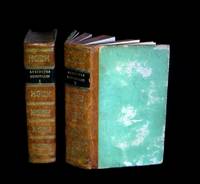
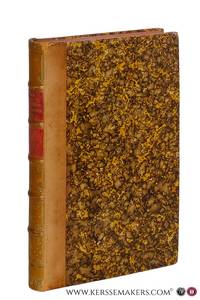
178976058Paris: Different editors 1789-1792. 20 brochures in 1 halfleather binding of mid-19th century. 8vo 21x135 cm. Lightbrown hcalf spine nicely gilt in compartments with ribbons; 2 red morocco title labels. Covers with marbled paper. Corners sl. bumped. Edges painted red marbled endpapers. Nice interior state except for nr 2 title waterstained nr 3 waterstained and nr 4 seriously waterstained. - Important collection concerning the destruction of nobility in France. - Rare documents. Different editors hardcover
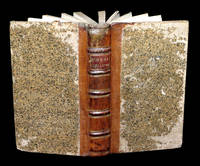
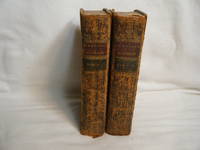
177385101773. A Paris chez Vincent 1773. 2 forts vol. au format gd in-12 173 x 108 mm de 1 f. bl. xii - 748 pp. ; 1 f. n.fol. et 820 pp. Reliures uniformes de l'ÂŽpoque de demi-veau blond dos lisses ornÂŽs de doubles filets dorÂŽs filets gras dorÂŽs larges fleurons dorÂŽs piÂces de titre de maroquin ÂŽbÂne titre dorÂŽ tomaison dorÂŽe toutes tranches rouges. Edition originale complÂte des deux volumes la constituant. ''Par Edme Mentelle d'aprÂs Cioranescu et Grente ; d'aprÂs une lettre autographe signÂŽe d'Edme Mentelle et datÂŽe du 10 octobre 1773 dÂŽcouverte par le libraire Chamonal Mentelle est effectivement auteur mais de la premiÂre partie seulement la seconde ÂŽtant de Jean-FranÂois de La Croix. L'ouvrage a aussi ÂŽtÂŽ attribuÂŽ ˆ tort par Barbier et Cioranescu ˆ Gabriel Mailhol auteur des "Anecdotes orientales" parues ˆ Paris en 1752 et dont les "Anecdotes orientales" de 1773 ne sont pas une 2Âme ÂŽd. comme Barbier l'indique fautivement''. ''Les noms des peuples et des pays de l'histoire orientale sont tout au plus connus d'un certain nombre de lecteurs ; leurs diffÂŽrentes dynasties en revanche sont presque totalement ignorÂŽes. D'o il suit qu'il nous a paru important de suivre en grand la marche gÂŽnÂŽrale de l'histoire en se rÂŽservant aussi de s'arrÂter aussi toutefois ˆ ce qui pouvait amuser ou instruire. ProcÂŽdant selon l'ordre chronologique il rÂŽsulte ainsi un tableau de l'ensemble des rÂŽvolutions qu'a ÂŽprouvÂŽes l'Asie sous les diffÂŽrentes souverainetÂŽs qui s'y sont successivement ÂŽlevÂŽes puis dÂŽtruites. Pour ce faire nous avons rejetÂŽ les ÂŽcrits grecs estimant qu'il n'y avait de vÂŽritablement oriental que ce qui avait ÂŽtÂŽ ÂŽcrit par les Orientaux.''. in Avertissement. Table : Rois de Perse - Souverains en Perse et en Syrie - Souverains en Perse et dans les Indes - Autres dynasties arabes kurdes et persanes - Les Chahs ou Sophis de Perse. Barbier I Dictionnaire des ouvrages anonymes 185 - Chadenat 5252. Plats frottÂŽs. Quelques rares feuillets brunis et rousseurs dans le texte davantage marquÂŽes pour quelques feuillets. Du reste ensemble en belle condition. Peu courant. b42961 unknown
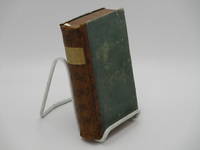
1778182019Yverdon.: De Felice. 1778. 1st edition. 12mo. Hardcover. Contemporary quarter mottled calf over plain green boards red speckled edges. Very good covers moderately shelfworn pages lightly rippled old bookseller’s pencil notes to endpapers contents tight and bright. 16.3x9.5 cm. French text. From a manuscript commentary on the Vedas in French given to Voltaire alleged to be a translation from Sanskrit but later determined to be of of French origin. weight: 0.9 lb. De Felice. hardcover
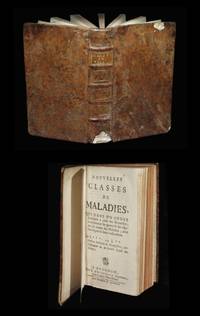
1734285621734. A Avignon chez B. d'Avanville s.d. circa 1734. Un vol. au format in-12 163 x 98 mm de 3 ff. n.fol. xxiv - 450 pp. Reliure de l'ÂŽpoque de pleine basane glacÂŽe et mouchetÂŽe havane plats jansÂŽnistes dos ˆ nerfs ornÂŽ de filets gras ˆ froid caissons d'encadrement dorÂŽs fleurons dorÂŽs piÂce de titre de maroquin havane tranches mouchetÂŽes. Edition originale rare. Impression avignonnaise. ''AprÂs bien des dÂŽtours et du chemin la MÂŽdecine commence enfin ˆ reconna”tre ses ÂŽgarements ; elle renonce peu ˆ peu ˆ ses fictions systÂmes hypothÂses qui aprÂs avoir abusÂŽ et ÂŽbloui longtemps par des idÂŽes chimÂŽriques et des jargons inconnus commenÂaient ˆ se faire mÂŽpriser. Nous nous devons ˆ prÂŽsent de dÂŽcouvrir le mÂŽcanisme la force les propriÂŽtÂŽs des corps par des raisonnements comparaisons et inductions mathÂŽmatiques faites sur l'expÂŽrience''. Barbier III Dictionnaire des ouvrages anonymes 566-d. Angles ÂŽlimÂŽs ; l'un est ÂŽmoussÂŽ. Manque en marge supÂŽrieur du premier plat ainsi qu'en queue du dos. Lequel prÂŽsente un ÂŽclat altÂŽrÂŽ. Quelques claires rousseurs et petites cernes marginales dans le corps d'ouvrage. Manque affectant le dernier feuillet blanc. Du reste belle condition. b42961 unknown
1760238701760. Amstelodami Amsterdam sumptibus Fratrum de Tournes 1760. Un vol. au format in-12 167 x 98 mm de 1 f. bl. 2 ff. n.fol. 351 pp. et 1 f. bl. Reliure de l'ÂŽpoque de demi-veau glacÂŽ havane dos ˆ nerfs ornÂŽ de filets gras ˆ froid doubles caissons d'encadrement dorÂŽs piÂce de titre de maroquin brun titre dorÂŽ tranches mouchetÂŽes. - Frottements ÂŽpars affectant le papier marbrÂŽ des plats. Papier lÂŽgÂrement oxydÂŽ. DiscrÂte cerne claire en marge supÂŽrieure. LÂŽgÂre galerie de ver affectant les fonds de cahiers des feuillets liminaires sans atteinte au texte. Du reste bonne condition. b42961 unknown
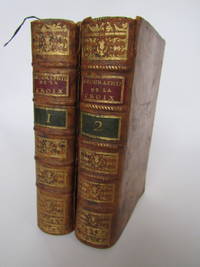
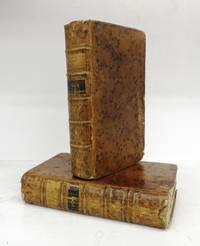
178058218à Paris: Chez Delalain 1780. Fine. Chez Delalain à Paris 1780 10 x 17 cm 2 volumes reliés New edition revised by Barbeau de la Bruyère. Contemporary full marbled sheep bindings. Spines with raised bands decorated. Red morocco title labels and green morocco volume labels. Head caps partly worn. Top joint of volume I cracked. Top joint of volume 2 cracked at head. Traces of dampstaining to outer margin of volume I. The work met with some success and was reprinted numerous times until the 19th century. It contains a treatise on the sphere universal geography Europe Africa Asia America and ecclesiastical geography with the archbishoprics and bishoprics of the Catholic and schismatic churches. Chez Delalain hardcover
176680007à Paris: Par la Compagnie de libraires 1766. Fine. Par la Compagnie de libraires à Paris 1766 9.50 x 17 cm 5 volumes reliés New edition. Contemporary full marbled calf binding. Smooth spine decorated. Red morocco title-labels garnet morocco volume labels. Headcaps of volumes I II and V partly worn. Lacking at tail of volume I. 4 corners slightly bumped throughout the set. Speckled edges. One wormhole to lower joint at head of volume III. Despite minor defects a handsome copy. The work presents itself as the translation by orientalist Pétis de la Croix of a manuscript given to him in friendship by ""Dervis Moclès"" the Faithful Dervish p. 49 who had himself translated and adapted Persian tales from Indian stories moreover sufficiently prized to be also known in a Turkish version under the title of al-Farage bada al-schidda1 p. 49. Thus anchored in Islamic literary tradition to which Pétis de la Croix had actual access through his training this corpus was then compared to the Arabian Nights and deliberately followed in its wake. A particular literary creation of the 18th century these tales borrowed from real Oriental sources while being at the same time pure creations but following the model of imitation and adaptation the author even going so far as to reverse the narrative mode of the Arabian Nights: a prince prejudiced against women; and in the Thousand and One Days it is a princess prejudiced against men. Some critics think that these tales would have been originally conceived to provide a sequel for publisher Barbin to the Arabian Nights of which 2 tales are found at the end of volume VIII. Par la Compagnie de libraires unknown
1764D6239Venice: Nicholas Pezzanae 1764. Hardcover. Very Good. 4to 255 x 190mm. Title printed in red and black. Text in two columns. Contemporary vellum; endpapers browned. Pictorial wood-engraved ex-libris by Leo Wyatt for Lord Norwich on front pastedown. <br/><br/>Sauvages major nosological treatise after Sydenham. François Boissier de Sauvages wrote this comprehensive symptom-based classification called Nosology after the science that deals with the systematic classification of diseases. The author a professor of medicine and botany at Montpellier presents clinical cases classified according to the methods of Thomas Sydenham considering mainly the symptoms and the morphology of the disease and showing much more interest in the diagnosis of disease and for its care. The beginnings of the systematic model in medicine appear early in the writings of Sydenham. A friend of Locke and admirer of Francis Bacon Sydenham called for the setting aside of hypotheses and philosophical systems in favor of a natural description or history of all diseases. He took the significant step of asserting that as there were species of plants so too there were species of disease. This implied that diseases were distinct entities not merely disturbances blending into one another and that these distinct entities could be systematically grouped or classified. This Sauvages magnum opus arranged its objects in classes orders and genera as well as species. Like Sydenham Sauvages distrusted contemporary physiological theories and rejected the idea that a classification of diseases could be based on knowledge of their underlying causes. He insisted that classification be based instead on study of directly observable symptoms. Species definition depended largely on designation of the various circumstances in which symptoms might appear. Species proliferated accordingly finally reaching 2400 divided into 315 genera 44 orders and 10 classes. Sauvages and his contemporary Carl Linnaeus set the pattern for the nosology of the latter 18th century. There is a clustering of nosological treatises in the 1760s and 1770s. Vogel published at Göttingen in 1764; Cullen at Edinburgh in 1772; Macbride at Dublin in 1775; Sagar at Vienna in 1776; and Vitel at Lyons in 1778. All followed Sauvages in departing from Sydenhams original emphasis within the systematic program. Rather than seeking new more accurate descriptions of disease the nosologists of the latter 18th century took existing descriptions and tried to catalogue and group them usually on the basis of symptoms. Nicholas Pezzanae hardcover
1764D6239Venice: Nicholas Pezzanae 1764. Hardcover. Very Good. 4to 255 x 190mm. Title printed in red and black. Text in two columns. Contemporary vellum; endpapers browned. Pictorial wood-engraved ex-libris by Leo Wyatt for Lord Norwich on front pastedown. <br/><br/>Sauvages major nosological treatise after Sydenham. François Boissier de Sauvages wrote this comprehensive symptom-based classification called Nosology after the science that deals with the systematic classification of diseases. The author a professor of medicine and botany at Montpellier presents clinical cases classified according to the methods of Thomas Sydenham considering mainly the symptoms and the morphology of the disease and showing much more interest in the diagnosis of disease and for its care. The beginnings of the systematic model in medicine appear early in the writings of Sydenham. A friend of Locke and admirer of Francis Bacon Sydenham called for the setting aside of hypotheses and philosophical systems in favor of a natural description or history of all diseases. He took the significant step of asserting that as there were species of plants so too there were species of disease. This implied that diseases were distinct entities not merely disturbances blending into one another and that these distinct entities could be systematically grouped or classified. This Sauvages magnum opus arranged its objects in classes orders and genera as well as species. Like Sydenham Sauvages distrusted contemporary physiological theories and rejected the idea that a classification of diseases could be based on knowledge of their underlying causes. He insisted that classification be based instead on study of directly observable symptoms. Species definition depended largely on designation of the various circumstances in which symptoms might appear. Species proliferated accordingly finally reaching 2400 divided into 315 genera 44 orders and 10 classes. Sauvages and his contemporary Carl Linnaeus set the pattern for the nosology of the latter 18th century. There is a clustering of nosological treatises in the 1760s and 1770s. Vogel published at Göttingen in 1764; Cullen at Edinburgh in 1772; Macbride at Dublin in 1775; Sagar at Vienna in 1776; and Vitel at Lyons in 1778. All followed Sauvages in departing from Sydenhams original emphasis within the systematic program. Rather than seeking new more accurate descriptions of disease the nosologists of the latter 18th century took existing descriptions and tried to catalogue and group them usually on the basis of symptoms. Nicholas Pezzanae hardcover books
1729101627Lyon Cologne: Sumptibus Societatis; Sumpt. Fratrum de Tournes 1729 1748. New edition carefully reconsidered and amended. Leatherbound. ex library-good. 2 vols. lxvi 720 752 152 p. Title vignette. Full leather. Edges of covers worn and spine labels mainly missing. Vol. 1 has a chipped spine tail. Vol. 2 has chipped lower corners. Bookplates and lib. stamp to front endpaper and title-page. A few notations in ink. Wormholes in bottom margin of vol. 1. Small tears and chips in t.p. of vol. 2. Pages remain clean apart from minor thumbing and small stain in bottom margin of second volume. <br/><br/>Jesuit theologian Buscembaum developed this celebrated book out of his lectures at the University of Cologne. Claude La Croix later added to the work. Two-volume editions such as this were published in both Germany and France during the 18th century. More photos available on request. Sumptibus Societatis; Sumpt. Fratrum de Tournes hardcover
172048020Köln: Noethen / Metternichiana 1720-1754. 10 vols. Full leather with 5 raised bands. Gilt title and decoration on spines. Red edges; 17x10 cm. Text in Latin. - ticket stamps bit browned few pages loose Although still very good rare complete and decorative set see picture. More pictures on request Year and number of pages per volume: Vol. 1. 1733 / 101 18 516 19 8 224 pp. Vol. 2. 1733 / 24 631 9 120 pp. Vol. 3. 1733 / 24 848 16 pp. Vol. 4. 1733 / 24 844 20 pp. Vol. 5. 1733. 8 298 6 16 449 12 pp. Vol. 6. 1724 / 24 880 pp. Vol. 7. 1724 / 16 881-1511 48 pp. Vol. 8. 1724 / 24 983 pp. Vol. 9. 1720 / 8 1014 1 pp. Vol. 10. 1754 / 20 859 pp. Noethen / Metternichiana hardcover
17071673A Amsterdam: Aux depens d’Estienne Roger Marchand Libraire chez qui l’on trouve un assortiment general de toute sorte de Musique 1707. First Amsterdam edition. With Valentine de Laborde’s bookplate on inner front panel. Woodcut device on title page. Woodcut initials and tailpieces throughout. 19th century leather. Spine richly gilt with title vignettes. Marbled endpapers. Binding restored at hinges. Engraved frontispiece missing. Old entry of ownership on title page in faded ink. Some spots and stains occasionally throughout. L6 torn at lower corner with no effect to the text. Overall in very good condition. First Amsterdam edition. With Valentine de Laborde’s bookplate on inner front panel. Woodcut device on title page. Woodcut initials and tailpieces throughout. 19th century leather. Spine richly gilt with title vignettes. Marbled endpapers. 261 1 p. Frontispiece missing. <p><br /> First Amsterdam edition of this collection of oriental tales. <br /> <p><br /> <p><br /> Scarce edition of Histoire de la Sultane de Perse et des Visirs a collection of oriental tales partly corresponding with the stories of the book The Story of the Forty Viziers. Published first in the same year in Paris chez la veuve de C. Barbin translated by François Petit de la Croix however some sources attribute the translation to Antoine Galland the French translator of the Arabian Nights which was published three years earlier.<br /> <p><br /> <p><br /> Provenance: Valentine de Laborde 1806–1894 wife of Gabriel Delessert Prefect of Paris Police muse of Prosper Mérimée. <br /> <p>. Aux depens d’Estienne Roger Marchand Libraire chez qui l’on trouve un assortiment general de toute sorte de Musique unknown
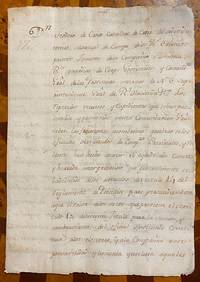
17803452Monclova 1780. Very good. Folio 305 x 213 mm two untrimmed sheets folded once to produce 8 pp. manuscript on 7 pages final page blank. Watermark: Picador type of Heawood 3471: caballero / bull countermark. Top right corners damp stained overall in excellent state. A RARE CONTEMPORARY MANUSCRIPT COPY OF AN ORDER OF TEODORO DE CROIX regulating the presidios regarding the rights of presidial representatives. The present MS clarifies Article 10 of Title 14. Here it is decreed that the presidial representatives are not permitted to purchase for the troops receive money for goods nor contract debts and in case of their bankruptcy of the funds under their control their property will be confiscated. Our manuscript is a copy certified in Monclova September 25 1780 with the written name of Juan de Uvalde not signed. For a COMPLETE TRANSLATION of the manuscript see below.<br/><br/>Teodoro de Croix 1730 Lille France - 1792 Madrid was Viceroy of New Spain. He was the first comandante general of the Internal Provinces serving as the virtual ruler of the northern frontier from his appointment in 1777 to his selection as viceroy of Peru in 1783 a position he held until 1790. <br/><br/>Early documents relating to Teodoro de Croix are now scarce on the market. THIS MANUSCRIPT was the last one of its kind to appear at auction in 2001: Dorothy Sloan Auction 11 lot 99 purchased by her from the consignor after the sale; purchased by us from Dorothy Sloan Rare Books in 2020. In 1968 a much later 3-page document appeared at Parke Bernet undated but after 12 Jan. 1790. These are the only two Teodoro de Croix related manuscripts to have been offered at auction in FIFTY-THREE YEARS.<br/><br/>Our manuscript is written on a type of Spanish paper that Headwood dates to "1766-1776." The text offers valuable primary documentation on presidial-military matters relating to the Arizona-Sonora border in the colonial era. <br/><br/>The significance of the text is such that two other manuscript copies survive both at the Bexar Archive Briscoe Center UT Austin: MS e_bx_003394 D.S. 1-3v pp. in E. 6/23/1780-11/23/1780; and a 1797 copy made in Chihuahua: MS e_bx_003393 D.S. 1-3v p. in E. 6/23/1780-3/10/1797.<br/><br/>TRANSLATION:<br/><br/>DON TEODORO DE CROIX Cavallero de Croix of the Teutonic Field Marshal Order Field Marshal of the Royal Armies First Lieutenant of the Flemish Company of the Royal Guard Corps Governor and Commandant General of the Interior Provinces of New Spain Superintendent of the Royal Treasury &c. <br/><br/>The repeated appeals and "expedientes" presented and initiated at this commandery general concerning the astonishingly frequent bankruptcies of paymasters of presidial and "volante" companies have exposed the mistaken belief and erroneous interpretation generally accorded the articles of Title 14 of the regulations for presidios. The validity of the votes called for in Article 10 of the same title for the election and appointment of the paymaster imposes on the electors and the company the unlimited and absolute responsibility for whatever results debts and charges he contracts during his term. Consequently all the individuals of the company must satisfy such obligations in proportion to their respective salaries and allotments. Accepting this mistaken interpretation of the regulations they have continued practicing this belief since it was commanded that the regulations be observed. Whatever was contrary to this misinterpretation was considered a punishable infraction opposed to the rights of the people the good faith of contracts and commerce and the honor and reputation of the officers and troops who on this wrong principle have unjustly suffered the burden of paying debts for which they are not under any circumstances obligated and that of often losing the value of their income and preferential credit. And finally this has been seen many times as the cause whereby some companies have been unable for a time to perform their functions so that this notorious harm has been passed on to the provinces in general which thus have been lacking in the tranquility safety and defense which they could have been and should have been afforded for the ends for which the King maintains and pays the troops of the frontier in particular. In order to avoid future risks of such a grave nature which if not remedied would alone cause the desolation of the province I have resolved in conformity with the well-founded and wide-ranging opinion of the auditor of the commandery don Pedro Galindo Navarro on the matter in question that the following shall be observed and understood as having the sovereign approval of the King with the force and rigor of ordinances: <br/><br/>DECLARATIONS: <br/><br/>¶ 1st: Paymasters named by companies with the formalities prescribed in the afore-cited article 10 title 14 of the regulations of presidios do not have the power or authority of the companies to purchase on credit to receive borrowed money or to contract any debt or obligation in the companies' name. In addition to this companies are not obligated to satisfy any such debts or obligations if their paymasters do contract them. Rather creditors must claim them against the paymasters themselves or against such properties as they may possess. <br/><br/>¶ 2nd: In the event of the bankruptcy of paymasters who have not delivered or apportioned to their companies the entirety or any part of the funds or supplies to have been received in the companies' name at the royal pay offices the said companies are legitimately entitled to collect what is lacking from whatever properties belong to the bankrupt paymasters. The companies are to have priority and preference over every other personal creditor which the paymasters may have whether prior or posterior in time. This is to be the status of such debts because of the nature of the credit--being directed towards the service of the King and the common defense and benefit of the provinces--and also because paymasters must not use this capital which has been entrusted to them to pay their particular debts since the interests placed in their care and the goods which would have been acquired therewith are not properly those of either the paymasters or the companies. <br/><br/>¶ 3rd: Therefore immediately upon discovery of the bank- ruptcy of any paymaster by the adjutant inspector or those commissioned temporarily to exercise the functions of this office or by the captain or commander of the company the arrest of the paymaster and the confiscation of all his belongings shall be effected. They shall be appraised by qualified persons and sold at public auction. With the proceeds therefrom the balance resulting in favor of the company shall be covered before all else. The remainder if any shall be deposited in the chest having three locks where the "gratificazion" fund is kept so that when other creditors appear and are heard it may be delivered and paid to them according to the graduated order of priority. <br/><br/>¶ 4th: Upon completion of these first proceedings which shall be judicial and to which all formality sh:all be extended by the officer whom it behooves to practise them procedures shall be taken without the slightest delay to determine the cause from which the bankruptcy emanates. Witnesses who may be able to give an account of it shall be examined and a declaration and confession from the suspect shall immediately be taken. Afterwards his objections and defense shall be heard so that the autos may be justified in the terms and processes prescribed and approved by the royal order of May 15 1779 and circulated among the presidios and companies. Then the penalty appropriate to the which is found to have been committed may be imposed. <br/><br/>¶ And whereas such resolutions as I have made as a consequence of the last inspection reviews and those I have made later to clarify them with the opinion of the assessor and auditor of war directing them now to the adjutant inspectors. may contribute to the prompt and scrupulous observance of the preceding four declarations I order that the latter be published by bando in all the cities villas towns and presidios of the provinces under my command that they may come to the attention of all and that none may plead ignorance. Given at Arispe on the twenty third of June seventeen hundred eighty. <br/><br/>¶ El Cavallero Teodoro de Croix. Antonio Bonilla Santiago 25 September 1780. Juan de Uvalde. unknown books
176624449Paris: Herissant Fils. Fair with no dust jacket. 1766. First Edition. Hardcover. 2 volume set. Text in French. Full leather titled in gilt. Covers very worn and rubbed but binding is holding well. Marbled endpages dampstains to prelims vol. 1 PO names. Some damp foxing and stains but contents are legible. ; 12mo 7" - 7½" tall . Herissant Fils hardcover
17864106666Paris: Delalain 1786. XXIV, 672 Seiten. Dünndruckpapier. Mit einigen Tabellen und schwarz-weißen Abbildungen. 8° (18 x 10,5 cm). Lederband der Zeit mit goldgeprägtem Titel auf Rückenschild, floraler Rückenvergoldung und rotgefärbtem Schnitt. [Hardcover / fest gebunden].
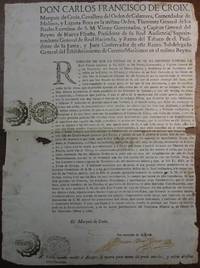
1768230014Mexico 1768. unbound. 2 pages in Spanish roughly translated 16.5 x 12 inches A Royal Proclamation: El Marquis de Croix March 9 1768 ordering the mine owners to make concessions and increase wages in small part: ".A decline in mining.the mines have the common enemy of water which has flooded them.the excessive construction cost of which the Kingdom has no wealth. Is the relief moderation the price you ask as the best mines are completely uninhabited and desolate Send my fatherly love to my vassals subjects.I'll strive by all means.that they are fruitful. I've visited the Council of the Indies. Faith issued.and the moderate price of quicksilver.which is distributed to the miners a part of the quarto has so far been given for relief to support the work.I command you with consequences that you publish and carefully observe that the above ceiling of a fourth part of the price at which would have been taken in quicksilver.be given to the miners.ending the embargo. Also by Royal Proclamation inserted within it is free of tax." Also signed by Manuel Rodriguez 1697 - 1772 -- military leader on the Coahuila-Texas frontier esteemed explorer and one of the greatest Indian fighters from Texas. After the departure of Jacinto de Barrios y Jaurequi in February of 1768 he became brief interim governor and military commandant of the Province. Rare signature as Commandant and Governor of the Province. According to the Texas State Historical Association "It was not until recently that archivists were aware that Rodriguez was a Governor.a fact scarcely noted by historians. Horizontal fold; two holes; smudges in the left margin. Very good- condition.<br/><br/> De Croix 1699 - 1786 was the Viceroy of New Spain Mexico who served during the period of Great Turbulence. The sole purpose of his five-year administration 1766 - 1771 was absolute obedience to the king whom he always referred to as "Mi amo." In 1767 he expelled the Jesuits from the colony removing them from their Monasteries and Colleges allowing them to leave with scarcely the clothes on their backs. These measures provoked a rebellion in which the Viceroy dealt severely with the rebels proclaiming censorship of literary and scientific publications 1768 and hanging the leaders of the uprising. No sooner had opposition been eliminated de Croix turned his attention toward the war-seeking Apache and Comanche Indian tribes financing and authorizing an expedition led by Captain de Galvez into Nueva Vizcaya whereby the Indians were soundly defeated. In March 1768 following the slow-downs boycotts and disturbances in the mines of Guanajuato and Pachuca over the low wages paid to the miners de Croix stunned the Colony by siding with the miners and forcing the mine owners to agree to an increase in wages. His actions were deemed "one of the most significant social reforms in the New World" at that time.<br/><br/> unknown books
1768230014Mexico 1768. unbound. 2 pages in Spanish roughly translated 16.5 x 12 inches A Royal Proclamation: El Marquis de Croix March 9 1768 ordering the mine owners to make concessions and increase wages in small part: ".A decline in mining.the mines have the common enemy of water which has flooded them.the excessive construction cost of which the Kingdom has no wealth. Is the relief moderation the price you ask as the best mines are completely uninhabited and desolate Send my fatherly love to my vassals subjects.I'll strive by all means.that they are fruitful. I've visited the Council of the Indies. Faith issued.and the moderate price of quicksilver.which is distributed to the miners a part of the quarto has so far been given for relief to support the work.I command you with consequences that you publish and carefully observe that the above ceiling of a fourth part of the price at which would have been taken in quicksilver.be given to the miners.ending the embargo. Also by Royal Proclamation inserted within it is free of tax." Also signed by Manuel Rodriguez 1697 - 1772 -- military leader on the Coahuila-Texas frontier esteemed explorer and one of the greatest Indian fighters from Texas. After the departure of Jacinto de Barrios y Jaurequi in February of 1768 he became brief interim governor and military commandant of the Province. Rare signature as Commandant and Governor of the Province. According to the Texas State Historical Association "It was not until recently that archivists were aware that Rodriguez was a Governor.a fact scarcely noted by historians. Horizontal fold; two holes; smudges in the left margin. Very good- condition.<br/> <br/> De Croix 1699 - 1786 was the Viceroy of New Spain Mexico who served during the period of Great Turbulence. The sole purpose of his five-year administration 1766 - 1771 was absolute obedience to the king whom he always referred to as "Mi amo." In 1767 he expelled the Jesuits from the colony removing them from their Monasteries and Colleges allowing them to leave with scarcely the clothes on their backs. These measures provoked a rebellion in which the Viceroy dealt severely with the rebels proclaiming censorship of literary and scientific publications 1768 and hanging the leaders of the uprising. No sooner had opposition been eliminated de Croix turned his attention toward the war-seeking Apache and Comanche Indian tribes financing and authorizing an expedition led by Captain de Galvez into Nueva Vizcaya whereby the Indians were soundly defeated. In March 1768 following the slow-downs boycotts and disturbances in the mines of Guanajuato and Pachuca over the low wages paid to the miners de Croix stunned the Colony by siding with the miners and forcing the mine owners to agree to an increase in wages. His actions were deemed "one of the most significant social reforms in the New World" at that time.<br/> <br/> unknown
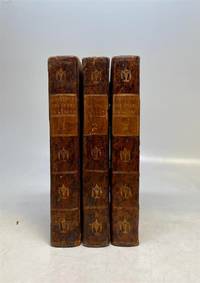
1791262494Paris: Chez Buisson 1791. hardcover. good. 3 volumes. 8vo 1/2 contemporary calf with gilt decorated spines edges of contemporary board corners worn and bumped on all volumes spines lightly rubbed scattered light foxing mostly to margins in all volumes upper right corner lacking on last blank page of volume III pages in volume I slightly wavy throughout some pages lightly creased in upper right corner margins of volume II. Paris: Chez Buisson 1791. Second Edition<br/> <br/> Study of constitutions and their development. Pages 321-406 in volume II are a study of the United States Constitution. Pages 341-426 in volume III are a study of the French constitution. This work also includes the study of the constitutions of Germany Poland Sweden Venice the Netherlands Great Britain Naples Spain and Switzerland.<br/> <br/> Chez Buisson unknown
1786119177Paris: Chez Delalain 1786. Nouvelle edition. Leatherbound. Good . 2 vols.: xxiv 672; xii 658 p. 17 cm. Leather. Vol. I spine ends chipped. Wear to edges and corners. Ink inscriptions on endpapers and last text page in vol. I. Ink signature on front free endpaper in vol. II. <br/><br/>"Précédée d'un Petit Traite de la Sphère & du Globe: ornée de traits d'Histoire naturelle & politique; & terminée par une Géographie Sacrée & une Géographie Ecclésiastique où l'on trouve tous les Archvêches & Evêchés de l'Eglise Catholique & les principaux des Eglises Schismatiques. Avec Une Table des Longitudes & Latitudes des principales Villes du Monde & une autre des Mons des Lieux contenus dans cette Géographie. Revue par J. L. Barbeau de la Bruyère." Chez Delalain hardcover
1791262494Paris: Chez Buisson 1791. hardcover. good. 3 volumes. 8vo 1/2 contemporary calf with gilt decorated spines edges of contemporary board corners worn and bumped on all volumes spines lightly rubbed scattered light foxing mostly to margins in all volumes upper right corner lacking on last blank page of volume III pages in volume I slightly wavy throughout some pages lightly creased in upper right corner margins of volume II. Paris: Chez Buisson 1791. Second Edition<br/><br/> Study of constitutions and their development. Pages 321-406 in volume II are a study of the United States Constitution. Pages 341-426 in volume III are a study of the French constitution. This work also includes the study of the constitutions of Germany Poland Sweden Venice the Netherlands Great Britain Naples Spain and Switzerland.<br/><br/> Chez Buisson unknown books
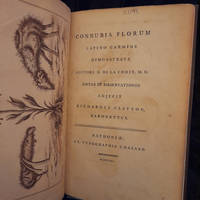
1791001763Bath: Ex. Typographia S. Hazard 1791. 1st Edition . Hardcover. Very Good. William Hibbart. 8vo ix pp138 plus errata page complete with engraved frontispiece printed in sepia ink depicts passion flowers and the Scythian Lamb engraved by William Hibbart. Hardcover no dust jacket. Modern rebind of brown buckram with gilt titles to spine in near fine condition with small scrape to very bottom of front board. Inside a little mild foxing to last few pages a little marking to title page and discreet personal bookplate of J. A. Delhez to verso of frontis and except for a little expected aging all pages in very good clean condition. "First Bath printing of this romanticised Latin verse on the fertilisation of plants or the 'marriage of flowers by Demetrius de la Croix edited by Sir Richard Clayton and printed at Bath by Samuel Hazard. The poem was first published as the preface of Sebastian Vaillant's Botanicon Parisiense in 1727. Written by a Irish physician Demetrius MacEnroe who was living in Paris it was expanded and printed separately in 1728 under the name of Demetrius de la Croix a French translation of the author's Irish name. The poem attained a certain celebrity and came to the attention of both Pope and Swift". A nice copy of a scarce book. <br/> <br/> Ex. Typographia S. Hazard hardcover
17591203270017Lugduni Typis Petri Bruyset Sumptibus fratrum de Tournes 1759. Hardcover. Very Good. 12mo. 8 444 3 p. ; 18 cm. 3rd Edition. Bound in contemporary leather. Gilt lettering on spine. Good binding and cover. Wear to extremities. Latin. Clean unmarked pages. <br><br> Francois Boissier de Sauvages de Lacroix May 12 1706 - February 19 1767 was a French physician and botanist who was a native of Als. He was a good friend to famed Swedish naturalist Carl von Linn 1707-1778 to whom Sauvages de Lacroix sent botanical specimens from southern France for study and classification. Linn designated the genus Sauvagesia from the family of Ochnaceae in honor of his French colleague and in 1748 he was elected a member of the Royal Swedish Academy of Sciences of which Linn had been a co-founder. The following year he was elected a Fellow of the Royal Society. As a physician Sauvages de Lacroix is credited with establishing the first methodical nosology for diseases. His classification was based on the framework created by Thomas Sydenham 1624-1689 and was in accordance with the methodology used by botanists. His classification system listed 10 major classes of disease which were further broken down into 44 orders 315 genera and 2400 species individual diseases. This system is explained in his 1763 treatise Nosologia Methodica which was an inspiration to Philippe Pinel 1745-1826 and his early work with mental illnesses. Lugduni, Typis Petri Bruyset, Sumptibus fratrum de Tournes hardcover
1755BS0BRWN28JAmstelodami: Josephum Tilan 1755. Hardback contemporary mottled calf with gilt stamped spine. 12mo. 270pp. Some loss to spine ends hinges started to crack slight bookworm damage to spine. Private ownership. bs0. Hard Cover. Good. Josephum Tilan Hardcover
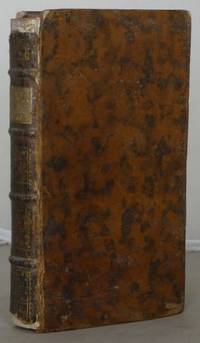
173918396Montpellier: Jean Martel 1739. FIRST EDITION. Contemporary mottled calf edges sprinkled red; title page with a blank space for the date completed in manuscript plus a small repair otherwise in excellent condition with the ownership inscription of J.B. Raudot on title. First edition of this dissertation on human pathology. The author first describes the nature of diseases: simple compounded and ailments that produce fluid. The second section addresses the causes and symptoms of illnesses. The last part classifies diseases into eight types.<br /> <br /> Although Garnier did not make a lasting impression in the medical community the respondent François de la Croix de Sauvage 1706-1767 was a renowned French physician and botanist who is credited with establishing a methodical nosology for diseases.<br /> <br /> OCLC locates only 2 copies in America NLM Univ. of Vermont; Conlon 39:457. Jean Martel unknown
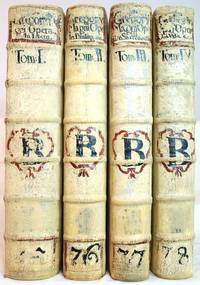
17051410030042Parisiis: Sumptibus Claudii Rigaud via Citharaea 1705-01-01. Hardcover. Very Good. Folio. 4 Volumes. Bound in contemporary full blind-stamped pigskin vellum. Black title on spine. Brass clasps to each volume. Original vellum tags on each title page for quick reference. Good bindings and covers with only minor Wear to extremities. Soiling to boards. Library markings on spine in contemporary gray black and red paint. Library bookplate of the Neander Library on inside boards. Owners inscriptions on inside boards detailing the set as a gift from Countess Marie-Margarite Waldstein upon her death in 1725. Presentation inscription on FEP to Dr. August Neander dated 1830 by Carl Hubner Carl Ferdinand Gustav Muller and Ludwig Wienfreiht Bath. Owners name of the Capuchin Monastery in Hradsite and date of 1725 on title page of each volume of Capuchin monastery in Hradiste. Lacking frontis of Pope Gregory I. Contemporary notation in ink and pencil on last blanks. Clean unmarked pages with minor tanning to extremities. Brunet II 1723/24. <br><br> Contents of each Volume are: Tomus primus. Libri moralium in Job XXXV. Libri duo in Ezechielem. Libri duo in Evangelia --Tomus secundus. Liber regulae pastoralis. Dialogorum libri IV. Registrum epistolarum. Epistolarum ordo restitutus. Index geographicus & varii alii indices --Tomus tertius. Liber sacramentorum S. Gregorii Papae ex editione D. Hugonis Menardi. Notae & observationes ejusdem D. Hugonis Menardi in Librum sacramentorum. Benedictiones quae in Libro sacramentorum desiderantur ex Lambecio. Benedictionum episcopalium aliud supplementum ex ms. Theodericensi. Liber antophonarius S. Gregorii Papae. Liber responsalis seu Antophonarius ex ms. Compendiensi. Variae expositiones in Librum I. Regum lib. VI. Expositio super Cantica canticorum. Expositio in septem psalmos poenitentiales. Concordia quorumdam testimoniorum sacrae scripturae --Tomos quartus. Vita S. Gregorii Papae auctore Paulo Diacono. Eadem auctore Johanne Diacono. Eadem ex ejusdem S. Gregorii Papae scriptis potissimum recens adornata. Sancti Paterii Liber de expositione Veteris & Novi Testamenti. Alulfi De expositione Novi Testamenti libe <br><br> Countess Mary Margaret Waldstein 1689-1725 was the wife of Prince Franz Josef of Waldstein 1680-1722 was an early supporter of the Capuchin Order and their monastery in Hradiste present-day Czechoslovakia. She is called the "mother of the Capuchins." <br> The House of Waldstein is a Czech noble family that received prominent state and civil positions beginning in the 17th century. It was one of the first among the Bohemian nobility to be promoted to Graf count in 1628 and two years later to the imperial court. Its most famous members include General Albrecht von Wallenstein and statesman Ferdinand Gabriel von Waldstein the patron of Ludwig van Beethoven. <br><br> The Order of the Capuchin Friars Minor is an Order of friars in the Catholic Church one of the chief offshoots of the Franciscan Order. The Order began in 1520 when Matteo da Bascio an Observant Franciscan friar said he had been inspired by God with the idea of that the manner of life led by the Franciscans at the time was not in keeping with their found St. Francis of Assisi had envisioned. He created the Capuchin Order to return to the primitive way of life solitude and penance as practiced by St. Francis. The name of their order comes from the Cappuccio a hood worn by the Camaldolese monks in gratitude for refuge given by the monks in the initial years of the order. <br><br> Dr. Johann August Wilhelm Neander 1789-1850 was a German theologian and church historian. Originally born into a Jewish family he changed his name to Neander when he became a Christian in 1806. A German Lutheran he studied with F D. Schleiermacher 1768-1834 in Berlin but soon switched his interest from speculative theology to church history. <br> His General History of the Christian Religion and Church Allgemeine Geschichte der christlichen Religion und Kirche remains the greatest monument of his genius. In this Neander's chief aim was everywhere to understand what was individual in history. In the principal figures of ecclesiastical history he tried to depict the representative tendencies of each age and also the types of the essential tendencies of human nature generally. His guiding principle in dealing both with the history and with the present condition of the church was "that Christianity has room for the various tendencies of human nature and aims at permeating and glorifying them all; that according to the divine plan these various tendencies are to occur successively and simultaneously and to counterbalance each other so that the freedom and variety of the development of the spiritual life ought not to be forced into a single dogmatic form" Otto Pfleiderer. <br> Neander had considerable influence not only in his own church and country but also further afield through the combination of scholarly excellence and personal interest that he achieved in his teaching and writing. Neander believed that church history is not just an academic pursuit but part of the mission and ministry of the church. <br><br>The Congregation of St. Maur often known as the Maurists were a congregation of French Benedictines established in 1621 and known for their high level of scholarship. The congregation and its members were called after Saint Maurus died 565 a disciple of Saint Benedict credited with introducing the Benedictine rule and life into Gaul. <br>The primary idea of the movement was not the undertaking of literary and historical work but the return to a strict monastic regime and the faithful carrying out of Benedictine life. <br>Their historical and critical school produced a number of works of scholarship which still are of permanent value. The foundations of this school were laid by Dom Tarisse the first superior-general who in 1632 issued instructions to the superiors of the monasteries to train the young monks in the habits of research and of organized work. The output was prodigious coming from a single society. The qualities that have made Maurist work proverbial for learning are its critical tact and its thoroughness. <br><br> Pope Gregory I Latin: Gregorius I; c. 540 - 12 March 604 commonly known as Saint Gregory the Great was Pope from 3 September 590 to his death in 604. Gregory is well known for his writings which were more prolific than those of any of his predecessors as pope. He is also known as St. Gregory the Dialogist in Eastern Orthodoxy because of his Dialogues. For this reason English translations of Orthodox texts will sometimes list him as Gregory Dialogus. <br> Throughout the Middle Ages he was known as the Father of Christian Worship because of his exceptional efforts in revising the Roman worship of his day. His contributions to the development of the Divine Liturgy of the Presanctified Gifts still in use in the Eastern Orthodox Church were so significant that he is generally recognized as its de facto author. <br> The Protestant reformer John Calvin admired Gregory and declared in his Institutes that Gregory was the last good pope. He is the patron saint of musicians singers students and teachers. The mainstream form of Western plainchant standardized in the late 9th century was attributed to Pope Gregory I and so took the name of Gregorian chant. <br> Gregory is commonly credited with founding the medieval papacy and so many attribute the beginning of medieval spirituality to him. Gregory is the only Pope between the fifth and the eleventh centuries whose correspondence and writings have survived enough to form a comprehensive corpus. GREGORIUS I MAGNUS 540-604. This is an oversized or heavy book that requires additional postage for international delivery outside of Canada and the US. Parisiis: Sumptibus Claudii Rigaud, via Citharaea hardcover