9 298 résultats
19829266Paris, Robert Laffont, 1982. Gr. in-8°, 302 pp., ill. et fig. dans le texte. Broché, bon état (couv. lég. us, très bon état intérieur). Recherché.
19959799Paris, Robert Laffont, 1995. Gr. in-8°, 302 pp., ill. et fig. dans le texte. (mention d'app. ms. sur le faux titre). Broché, très bon état. Recherché.
198519298Cracow, Jagiellonian University Press, 1985. 1. Edition. 93 pages, 1 n.n., XXIV plates with 144 figures.
Laura Slatkin's influential and widely admired book, here published in a second edition together with six additional essays, explores the superficially minor role of Thetis in the Iliad. Highly charged allusions reverberate through the narrative and establish a constellation of themes that link the poem to other traditions. Slatkin uncovers alternative traditions about the power of Thetis and shows how an awareness of those myths brings a far greater understanding of Thetis's place in the thematic structure of the Iliad. The six additional essays included in this volume--some of them classics, some never before published--cover a broad range of topics in the study of the Greek Epic: the workings of genre in Hesiod and Homer; the poetics of exchange; and the nature of enmity and friendship. The volume also includes a study of the Hesiodic Catalog of Women and reflections on particular heroes, such as Diomedes and Odysseus. ; Hellenic Studies 16; 238 pages
Some creasing to spine, front wrap including upper corner. Small tears to top edge of front wrap. Some fading to spine and yellowing to wraps. Scholar's name to ffep (R. E. Fantham). Internally VG. Pages clean. ; The ancient Athenians were "quarrelsome as friends, treacherous as neighbours, brutal as masters, faithless as servants, shallow as lovers - all of which was in part redeemed by their intelligence and creativity". Thus writes Philip Slater in this classic work on narcissism and family relationships in 5th-century Athenian society. Exploring a rich corpus of Greek mythology and drama, he argues that the personalities and social behaviour of the gods were neurotic, and that their neurotic conditions must have mirrored the family life of the people who perpetuated their myths. The author traces the issues of narcissism to mother-son relationships, focusing primarily on the literary representation of Hera and the male gods and showing how it related to devalued women raising boys in an ambitious society dominated by men. "The role of homosexuality in society, fatherless families, working mothers, women's status, and violence, male pride, and male bonding - all these find their place in Slater's analysis, so honestly and carefully addressed that we see our own societal dilemmas reflected in archaic mythic narratives all the more clearly". "The role of homosexuality in society, fatherless families, working mothers, women's status, and violence, male pride, and male bonding - all these find their place in Slater's analysis, so honestly and carefully addressed that we see our own societal dilemmas reflected in archaic mythic narratives all the more clearly". "The role of homosexuality in society, fatherless families, working mothers, women's status, and violence, male pride, and male bonding - all these find their place in Slater's analysis, so honestly and carefully addressed that we see our own societal dilemmas reflected in archaic mythic narratives all the more clearly".; Beacon Paperback 387
Creasing to spine, including lower corner of fron wrap. Scholar's blindstamp and name to ffep (Robert Brown). Minor shelfwear. ; The ancient Athenians were "quarrelsome as friends, treacherous as neighbours, brutal as masters, faithless as servants, shallow as lovers - all of which was in part redeemed by their intelligence and creativity". Thus writes Philip Slater in this classic work on narcissism and family relationships in 5th-century Athenian society. Exploring a rich corpus of Greek mythology and drama, he argues that the personalities and social behaviour of the gods were neurotic, and that their neurotic conditions must have mirrored the family life of the people who perpetuated their myths. The author traces the issues of narcissism to mother-son relationships, focusing primarily on the literary representation of Hera and the male gods and showing how it related to devalued women raising boys in an ambitious society dominated by men. "The role of homosexuality in society, fatherless families, working mothers, women's status, and violence, male pride, and male bonding - all these find their place in Slater's analysis, so honestly and carefully addressed that we see our own societal dilemmas reflected in archaic mythic narratives all the more clearly". "The role of homosexuality in society, fatherless families, working mothers, women's status, and violence, male pride, and male bonding - all these find their place in Slater's analysis, so honestly and carefully addressed that we see our own societal dilemmas reflected in archaic mythic narratives all the more clearly". "The role of homosexuality in society, fatherless families, working mothers, women's status, and violence, male pride, and male bonding - all these find their place in Slater's analysis, so honestly and carefully addressed that we see our own societal dilemmas reflected in archaic mythic narratives all the more clearly".; Beacon Paperback 387
Creasing to spine. Foxing/dustsoiling to top of textblock. ; The ancient Athenians were "quarrelsome as friends, treacherous as neighbours, brutal as masters, faithless as servants, shallow as lovers - all of which was in part redeemed by their intelligence and creativity". Thus writes Philip Slater in this classic work on narcissism and family relationships in 5th-century Athenian society. Exploring a rich corpus of Greek mythology and drama, he argues that the personalities and social behaviour of the gods were neurotic, and that their neurotic conditions must have mirrored the family life of the people who perpetuated their myths. The author traces the issues of narcissism to mother-son relationships, focusing primarily on the literary representation of Hera and the male gods and showing how it related to devalued women raising boys in an ambitious society dominated by men. "The role of homosexuality in society, fatherless families, working mothers, women's status, and violence, male pride, and male bonding - all these find their place in Slater's analysis, so honestly and carefully addressed that we see our own societal dilemmas reflected in archaic mythic narratives all the more clearly". "The role of homosexuality in society, fatherless families, working mothers, women's status, and violence, male pride, and male bonding - all these find their place in Slater's analysis, so honestly and carefully addressed that we see our own societal dilemmas reflected in archaic mythic narratives all the more clearly". "The role of homosexuality in society, fatherless families, working mothers, women's status, and violence, male pride, and male bonding - all these find their place in Slater's analysis, so honestly and carefully addressed that we see our own societal dilemmas reflected in archaic mythic narratives all the more clearly".; Beacon Paperback 387
Creasing to spine. Minor discoloration to spine. Scholar's name to ffep (Jenifer Neils). ; The ancient Athenians were "quarrelsome as friends, treacherous as neighbours, brutal as masters, faithless as servants, shallow as lovers - all of which was in part redeemed by their intelligence and creativity". Thus writes Philip Slater in this classic work on narcissism and family relationships in 5th-century Athenian society. Exploring a rich corpus of Greek mythology and drama, he argues that the personalities and social behaviour of the gods were neurotic, and that their neurotic conditions must have mirrored the family life of the people who perpetuated their myths. The author traces the issues of narcissism to mother-son relationships, focusing primarily on the literary representation of Hera and the male gods and showing how it related to devalued women raising boys in an ambitious society dominated by men. "The role of homosexuality in society, fatherless families, working mothers, women's status, and violence, male pride, and male bonding - all these find their place in Slater's analysis, so honestly and carefully addressed that we see our own societal dilemmas reflected in archaic mythic narratives all the more clearly". "The role of homosexuality in society, fatherless families, working mothers, women's status, and violence, male pride, and male bonding - all these find their place in Slater's analysis, so honestly and carefully addressed that we see our own societal dilemmas reflected in archaic mythic narratives all the more clearly". "The role of homosexuality in society, fatherless families, working mothers, women's status, and violence, male pride, and male bonding - all these find their place in Slater's analysis, so honestly and carefully addressed that we see our own societal dilemmas reflected in archaic mythic narratives all the more clearly".; Mythos; 513 pages
19711086584Boston; Beacon Press, 1971. XXVI; 513 S.; 20 cm; kart.
1979226730Flammarion 1979 244 pages in4. 1979. Relié jaquette. 244 pages. nombreuses photographies couleurs pleine page 122 reproductions dont 85 en couleurs et 22 dessins dans le texte collection établie par Albert Skira
No marks or inscriptions. No creasing to covers or to spine. A very clean very tight copy with dull unmarked olive/brown boards, slightly dusty page edges and very minor bumping to upper corners. 171pp. At one time thought to have been lost, this 13th century work was (re)discovered in the 19th century. It concerns Gryme the Fisher, the founder of Grymesby (Grimsby), Havelok the Dane and his wife Goldborough. Much work has been put into its translation from Early English and details of this work are included as well as a lengthy Glossarial Index. Introduction dated 1902. Very scarce early edition.
In-4 p., tela edit., sovrac. (picc. strappi), pp. 601,(3), con una ricchiss. documentaz. iconografica a colori e in b.n. nel t. Ampio repertorio sull'arte indiana. Ben conservato.
199340821ABSivanandanagar, Divine Life Society, o.J. (nach 1993, da schon mit 5stelliger PLZ). 8°, XXXVIII, 538 S., Sanskrit Text in Devanagari und wissenschaftlicher Transkription, illustr. original Kartonage (Paperback), gutes, sauberes Exemplar
Dustjacket is protected in mylar. ; Despite the rousing stories of male heroism in battles, the Trojan War transcended the activities of its human participants. For Homer, it was the gods who conducted and accounted for what happened. In the first part of this book, the authors find in Homer s Iliad material for exploring the everyday life of the Greek gods: what their bodies were made of and how they were nourished, the organization of their society, and the sort of life they led both in Olympus and in the human world. The gods are divided in their human nature: at once a fantasized model of infinite joys and an edifying example of engagement in the world, they have loves, festivities, and quarrels. In the second part, the authors show how citizens carried on everyday relations with the gods and those who would become the Olympians, inviting them to reside with humans organized in cities. At the heart of rituals and of social life, the gods were omnipresent: in sacrifices, at meals, in political assemblies, in war, in sexuality. In brief, the authors show how the gods were indispensable to the everyday social organization of Greek cities. ; Mestizo Spaces; 0.71 x 8.5 x 5.56 Inches; 287 pages
Light Foxing to textblock. ; Despite the rousing stories of male heroism in battles, the Trojan War transcended the activities of its human participants. For Homer, it was the gods who conducted and accounted for what happened. In the first part of this book, the authors find in Homer s Iliad material for exploring the everyday life of the Greek gods: what their bodies were made of and how they were nourished, the organization of their society, and the sort of life they led both in Olympus and in the human world. The gods are divided in their human nature: at once a fantasized model of infinite joys and an edifying example of engagement in the world, they have loves, festivities, and quarrels. In the second part, the authors show how citizens carried on everyday relations with the gods and those who would become the Olympians, inviting them to reside with humans organized in cities. At the heart of rituals and of social life, the gods were omnipresent: in sacrifices, at meals, in political assemblies, in war, in sexuality. In brief, the authors show how the gods were indispensable to the everyday social organization of Greek cities. ; Mestizo Spaces; 0.71 x 8.5 x 5.56 Inches; 287 pages
In 8, cm. 13,5 x 21 pp. 263, con 34 figure in bianco e nero fuori testo, due carte geografiche sul mondo greco egeo e una sulla Magna Grecia e una tavola che illustra le linee di discendenza piu' importante della coppia ancestrale Cielo-terra. Rilegatura in tela editoriale con sovraccoperta illustrata. Collana storia e societa'. Traduzione di Claudia Gaspari. Segni a matita ai margini bianchi del testo.
In 8°, tutta tela con sovraccoperta editoriale illustrata, pp. XVIII, 263, con tavole illustrate f.t. b/n; ottimo esemplare. (XC4/B) (La spedizione standard è SEMPRE tracciata con raccomandata - piego di libri, eventuale FATTURA da richiedere all'ordine) 8842034703 (XC4/B)
LATERZA ECONOMICA 349 - 2005 BROSSURA 21 X 14 PP. 259 MACCHIE AI TAGLI, INGIALLIMENTO FISIOLOGICO, SEGNI DEL TEMPO.
Siro Attilio Nulli I processi delle streghe. Torino, Einaudi 1939 - CA.3 italian, Opera con copertina morbida in brossura. CA.3.
Ex-library copy with usual stamps, stickers, etc. Binding is solid and text/interior is free of marking of any kind. 102 pages with a few color drawings.
18051097781805 A Paris, Chez Hacquart, Imprimeur-Librairie - An XIII - 1805 - In-12, problablement reliure de travail - 223 p.
In-4” (cm. 34), tela editoriale, titolo oro al dorso, sovracoperta, con più di 550 illustrazioni a colori nel testo. In buono stato (good copy).
Unesco - Bordas 1993, In-4 relié toile rouge éditeur sous jaquette illustrée. 398 pages. Trés belles photos et illustrations. Trés bon état.
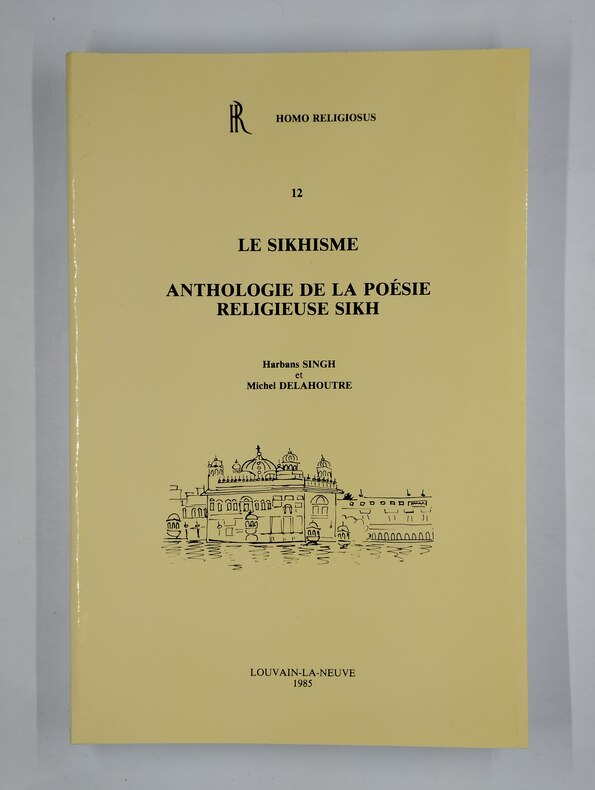
198520418Louvain-la-neuve, centre d'histoire des religions, Homo religiosus, 1985. In-8°, 264 pp., ill. n&b, intérieur frais. Br., couv. ill. Proche du neuf.