9 297 résultats
White octavo, Trade Paperback, 107 pages ; 24 cm. The Sanctified Church is a collection of Hurston's ground-breaking essays on Afro-American folklore, legend, popular mythology, and, in particular, the unique spiritual character of the Soouthern Black Christian Church. Along with preserving the customs, music, speech, and humor of rural Black America, The Sanctified Church introduces us to such extraordinary figures as Mother Catherine, matriarchal founder of a highly personal Voodoo Christian sect; Uncle Monday, healer, conjurer, and powerful herb doctor; and High John de Conquer, the trickster/shaman figure of freedom and laughter still honored in parts of rural Black America today. A pioneering ethnographer and floklore scholar, the great Zora Neale Hurston captured the exuberance, vitality and genius of Black culture with a vividness and authority unmatched by any other writer. (Rear cover). Contents: Father Abraham -- Cures and beliefs -- Mother Catherine -- Uncle Monday -- Daddy Mention -- Characteristics of negro expression -- High John de Conquer -- Spirituals and neo-spirituals -- Conversions and visions -- Shouting -- Sermon -- Sanctified church. African Americans -- Religion, Folklore.
1932006650New York: Alfred A. Knopf 1932. First Edition stated. Very Good no jacket small sticker shadow bottom edge of spine stamp and blindstamp of Folklore Institute Indiana University front end page and title page respectively. light soiling to cloth. . First Edition. Cloth. Very Good/No Jacket. Illus. by Woodcuts by Richard Bennett. 8vo - over 7¾" - 9¾" tall. Alfred A. Knopf Hardcover books
"The championing of wine, love, and adultery and the cosmic upheaval fomented by immortals are the main themes in this book of drama and Greek myth. Here Zeus takes center stage in three unique dramatizations, from the serious to the comic, from the bombastic to the contemplative, and from the decorous to the revelrous." Erez Natanblut lives in Canada and is a Professor of Ancient Greek.880. Book
No marks or inscriptions. A very clean very tight copy with bright unmarked boards, slightly dusty page edges and no bumping to corners. Dusty dust jacket not price clipped or marked or torn or creased with a little rubbing to top of slightly sunned spine. 258pp. Translated from the Icelandic saga setting out the exploits of Grettir in the 9th century. Scarce with dust jacket in this edition.
No marks or inscriptions. A very clean very tight copy with bright unmarked boards, foxing to page fore-edgesand a few pages and no bumping to corners. Dust jacket not price clipped or torn or creased with sunned spine and irregular sunning/staining to front cover spine edge. 146pp. The Saga of Gisli, written in the 13th century about a man and family who came to Iceland from Norway. He killed his brother-in-law and lived in hiding until he too was killed after thirteen or more years.
Light bump to base of spine. Minor crease to upper part of book (book does not lay flat). Sticky note with author's dedication to ffep. ; This study questions the traditional view of sacrifices in hero-cults during the Archaic to the early Hellenistic periods. The analysis of the epigraphical and literary evidence for sacrifices to heroes in these periods shows, contrary to the traditional notion, that the main ritual in hero-cults was a thysia at which the worshippers consumed the meat from the animal victim. A particular handling of the animal’s blood or a holocaust, rituals previously taken to be typical for heroes, can rarely be documented and must be considered as marginal features in hero-cults. The terms eschara, escharon, bothros, enagizein, enagisma, enagismos and enagisterion, believed to be characteristic for hero-cults, are seldom used in hero-contexts before the Roman period and occur mainly in the Byzantine lexicographers and in the scholia. Since the main kind of sacrifice in hero-cults was a thysia, a ritual intimately connected with the social structure of society, the heroes must have fulfilled the same role as the gods within the Greek religious system. The fact that the heroes were dead seems to have been of little significance for the sacrificial rituals and it is questionable whether the rituals of hero-cults are to be considered as originating in the cult of the dead. ; Kernos Supplément 12; 429 pages
Very Minor bump to base of spine. Light shelfwear to DJ. Gift inscription from author to Fergus Millar on ffep. ; First full-length interpretation of the foundation sets out a completely new methodology for analysing large inscriptions, and challenges some of the basic assumptions scholars have made about the origins and significance of the "Second Sophistic". Argues that Ephesians used their past to define their present during the Roman Empire, and his study sheds new light on how second-century Greeks established and maintained their identities in relation to Romans, Christians and jews. ; 1 x 9 x 6 Inches; 192 pages; Signed by Author
book has one bump to upper edge of front board else fine. Dustjacket has very minor shelfwear with one small scratch to foreedge of back panel. ; First full-length interpretation of the foundation sets out a completely new methodology for analysing large inscriptions, and challenges some of the basic assumptions scholars have made about the origins and significance of the "Second Sophistic". Argues that Ephesians used their past to define their present during the Roman Empire, and his study sheds new light on how second-century Greeks established and maintained their identities in relation to Romans, Christians and jews. ; 1 x 9 x 6 Inches; 192 pages
Dustjacket has minor shelfwear and rubbing. Former book price on ffep has been rubbed out. ; First full-length interpretation of the foundation sets out a completely new methodology for analysing large inscriptions, and challenges some of the basic assumptions scholars have made about the origins and significance of the "Second Sophistic". Argues that Ephesians used their past to define their present during the Roman Empire, and his study sheds new light on how second-century Greeks established and maintained their identities in relation to Romans, Christians and jews. ; 1 x 9 x 6 Inches; 192 pages
Dustjacket has very minor shelfwear to top corner else Fine. ; First full-length interpretation of the foundation sets out a completely new methodology for analysing large inscriptions, and challenges some of the basic assumptions scholars have made about the origins and significance of the "Second Sophistic". Argues that Ephesians used their past to define their present during the Roman Empire, and his study sheds new light on how second-century Greeks established and maintained their identities in relation to Romans, Christians and jews. ; 1 x 9 x 6 Inches; 192 pages
VG (original coarse grey cloth binding with white circular device on front cover, gilt titles on spine, very slightly marked, minimum wear, no dj) Octavo 252pp illustrated. Mythology and history
199144766Routledge. 1991. Hardcover. Very Good in Very Good dust jacket. Foxing to textblock and DJ. Dustjacket is protected in mylar.; First full-length interpretation of the foundation sets out a completely new methodology for analysing large inscriptions and challenges some of the basic assumptions scholars have made about the origins and significance of the "Second Sophistic". Argues that Ephesians used their past to define their present during the Roman Empire and his study sheds new light on how second-century Greeks established and maintained their identities in relation to Romans Christians and jews.; 1 x 9 x 6 Inches; 192 pages . 041505530X . Routledge hardcover
199111226Routledge. 1991. Hardcover. Very Good in Near Fine dust jacket. book has one bump to upper edge of front board else fine. Dustjacket has very minor shelfwear with one small scratch to foreedge of back panel.; First full-length interpretation of the foundation sets out a completely new methodology for analysing large inscriptions and challenges some of the basic assumptions scholars have made about the origins and significance of the "Second Sophistic". Argues that Ephesians used their past to define their present during the Roman Empire and his study sheds new light on how second-century Greeks established and maintained their identities in relation to Romans Christians and jews.; 1 x 9 x 6 Inches; 192 pages . 041505530X . Routledge hardcover
19914511Routledge. 1991. Hardcover. Very Good in Near Fine dust jacket. Dustjacket has minor shelfwear and rubbing. Former book price on ffep has been rubbed out.; First full-length interpretation of the foundation sets out a completely new methodology for analysing large inscriptions and challenges some of the basic assumptions scholars have made about the origins and significance of the "Second Sophistic". Argues that Ephesians used their past to define their present during the Roman Empire and his study sheds new light on how second-century Greeks established and maintained their identities in relation to Romans Christians and jews.; 1 x 9 x 6 Inches; 192 pages . 041505530X . Routledge hardcover
19915355Routledge. 1991. Hardcover. Fine in Near Fine dust jacket. Dustjacket has very minor shelfwear to top corner else Fine.; First full-length interpretation of the foundation sets out a completely new methodology for analysing large inscriptions and challenges some of the basic assumptions scholars have made about the origins and significance of the "Second Sophistic". Argues that Ephesians used their past to define their present during the Roman Empire and his study sheds new light on how second-century Greeks established and maintained their identities in relation to Romans Christians and jews.; 1 x 9 x 6 Inches; 192 pages . 041505530X . Routledge hardcover
19917360Routledge. 1991. Hardcover. Near Fine in Near Fine dust jacket. Very Minor bump to base of spine. Light shelfwear to DJ. Gift inscription from author to Fergus Millar on ffep.; First full-length interpretation of the foundation sets out a completely new methodology for analysing large inscriptions and challenges some of the basic assumptions scholars have made about the origins and significance of the "Second Sophistic". Argues that Ephesians used their past to define their present during the Roman Empire and his study sheds new light on how second-century Greeks established and maintained their identities in relation to Romans Christians and jews.; 1 x 9 x 6 Inches; 192 pages; Signed by Author . 041505530X . Routledge hardcover
14 x 21,5, brossura, U.S.A, Spring publications, 1992, 113 pp. Tradotto dal francese da: Loanna Mott. In lingua inglese. In buone condizioni generali, come nuovo.
Light wear to corners. Pencil marginalia to a few pages. ; Interest in goddess worship is growing in contemporary society, as women seek models for feminine spirituality and wholeness. New cults are developing around ancient goddesses from many cultures, although their modern adherents often envision and interpret the goddesses very differently than their original worshippers did. In this thematic study of the Roman goddess Ceres, Barbette Spaeth explores the rich complexity of meanings and functions that grew up around the goddess from the prehistoric period to the Late Roman Empire. In particular, she examines two major concepts, fertility and liminality, and two social categories, the plebs and women, which were inextricably linked with Ceres in the Roman mind. Spaeth then analyzes an image of the goddess in a relief of the Ara Pacis, an important state monument of the Augustan period, showing how it incorporates all these varied roles and associations of Ceres. This interpretation represents a new contribution to art history. With its use of literary, epigraphical, numismatic, artistic, and archaeological evidence, The Roman Goddess Ceres presents a more encompassing view of the goddess than was previously available. It will be important reading for all students of Classics, as well as for a general audience interested in New Age, feminist, or pagan spirituality. ; 308 pages
One small bump along top edge of board else Fine. ; 9 x 0.75 x 6.25 Inches; 227 pages; This book features the efforts of a group of academics from diverse disciplines that have been working together to highlight the presence of the parrot in selected texts across the centuries. Their common purpose is to demonstrate that fictional parrots invariably function as more than decoration, comedy or badges denoting the eccentricity of their human owners. These versatile and talented birds function as markers for subtle literary techniques. Using the parrot as an interpretative tool the focus is on a range of narrative strategies and metaphorical meanings employed by the authors in question and argue that these are embodied in the attributes of the speaking bird who figures significantly in each work. Contents: 1. Two Poetic and Parodic Parrots in Latin Literature by Paula James 2. ‘A Byrde of Paradyse’: - Skelton’s Speke Parot and the Parrots of its Context by Susan Purdie 3. The Nunnery Parrot: Gresset’s Ver-Vert and his English translators by John Gilmore 4. The View from the Perch: Flaubert’s Loulou by Julia Courtney 5. Parrot as Paradigm: Stevenson and others by Julia Courtney 6. Parrots in Children’s Fiction by Hilary Clare 7. Coco: A Parrot of Few Words in Wide Sargasso Sea by Paula James 8. The Scientific Background to Parrots in Literature by Caroline Pond
530237Manchester, University Press, 1908 In-8, cartonnage percaline rouge, XIX, 188 p.
200343858Cambridge University Press, 2003. 301 Seiten ; Ill. ; Sprache: Englisch Pp.
530177Londres, Catholic Truth Society, [vers 1910] In-12, broché, 32 p.
Very Good English In modern aesthetic bound. 12mo. (17 x 12 cm). In English. Ex-library stamp. 124, [2] p. The religion of Babylonia and Assyria.
This is fasicule # 2 intended as part of Volume II Chapter XL of the Cambridge Ancient History series - Revised edition, Volumes I & II [55p. Bibliography] "In order to make .[the CAH] .available to readers as soon as possible it will be issued, in the first instance, as fasicles. With some exceptions [each] will contain one chapter, but the order of publication will not correspond to the sequence of the chapters . In the volumes of the complete editon the pages will be renumbered, and prefatory matter, maps, chronological tables and indexes will be included. The plates will be issued in a separate volume") Paper covers slightly damaged Book
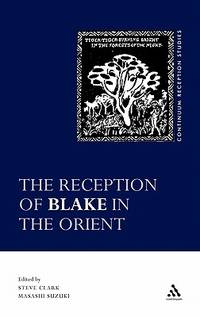
2006PO-14London U.K.: Continuum Publishing 2006. This volume brings together research from international scholars focusing attention on the longevity and complexity of Blake`s reception in Japan and elsewhere in the East. It is designed as not only a celebration of his art and poetry in new and unexpected contexts but also to contest the intensely nationalistic and parochial Englishness of his work and in broader terms the inevitable passivity with which Romanticism and other Western intellectual movements have been received in the Orient. 348 pgs. Illustrated. Dustjacket in mylar. First Edition. Hard Cover. As New/As New. 8vo - over 7¾" - 9¾" tall. Continuum Publishing Hardcover