Timayenis, Telemachus ThomasBiblio.com

56 résultats
1019145110.Ghardcover. Good. Access codes and supplements are not guaranteed with used items. May be an ex-library book. hardcover
1145996574.Gpaperback. Good. Access codes and supplements are not guaranteed with used items. May be an ex-library book. paperback
1160513716.Ghardcover. Good. Access codes and supplements are not guaranteed with used items. May be an ex-library book. hardcover
134072216X.Ghardcover. Good. Access codes and supplements are not guaranteed with used items. May be an ex-library book. hardcover
1020703784.Ghardcover. Good. Access codes and supplements are not guaranteed with used items. May be an ex-library book. hardcover
0484194038.Ghardcover. Good. Access codes and supplements are not guaranteed with used items. May be an ex-library book. hardcover
2000Q-0738817317Xlibris 2000-09-01. Paperback. New. New. In shrink wrap. Looks like an interesting title! Xlibris paperback
6206854175.Gpaperback. Good. Access codes and supplements are not guaranteed with used items. May be an ex-library book. paperback
6206854132.Gpaperback. Good. Access codes and supplements are not guaranteed with used items. May be an ex-library book. paperback
6206854205.Gpaperback. Good. Access codes and supplements are not guaranteed with used items. May be an ex-library book. paperback
20192-6202258969EAE 2019. Paperback. New. 96 pages. Spanish language. 8.78x6.18x0.39 inches. EAE paperback
197966811Spain: Poligrafa 1979. First. Fine. Hervé Télémaque. Original Lithograph. Excerted from Ediciones Poligrafa and Redfern Gallery portfolio published by Poligrafa in an edition of 1000 copies. Size: 10" X 7.1/2 Poligrafa unknown
2007Q-1425712371Xlibris Corp 2007-01-12. Paperback. New. In shrink wrap. Looks like an interesting title! Xlibris, Corp paperback
2000Q-0738817309Xlibris 2000-09-01. Hardcover. New. In shrink wrap. Looks like an interesting title! Xlibris hardcover
0840766130New. hardcover. New. Satisfaction Guaranteed or your money back. hardcover
BN104256Coédition SW Télémaque. Softcover. What The Fuck ! <br/><br/>What The Fuck ! Coédition SW Télémaque paperback
1879C2348<p>ii272 pages with plates diagrams tables and index. Quarto 10 1/2" x 8 1/2" bound in half leather with five raised spine bands black and red labels in gilt lettering over brown boards. Volume XI. Betts: 7-13 First edition.</p><p>Volume one has the title <em>The Westminster Chess Club Papers</em> and published between 1869 and 1879 volumes 1 through 11 no more published. The full name was <em>The Westminster Papers: A Monthly Journal Of Chess Whist Games of Skill and the Drama</em> and although a vehicle of the Westminster Chess Club it covered a variety of recreational activities. William Norwood Potter began as one of its Chess editors but soon founded his own venture <em>The City of London Chess Magazine</em> writing ".our <em>Magazine </em>will be devoted entirely to Chess; and we say this without any disparagement of our contemporary the <em>Westminster Papers</em> which while it appeals to a more general class of readers than is contemplated by us nevertheless never ceases to bestow the greatest possible attention upon that portion of its pages which is devoted to Chess." The Westminster club rapidly grew to have a membership of two hundred; and in 1868 it was resolved to publish a magazine <em>The Westminster Chess Club Papers</em> to give it its full title at the start which was shortened after the first year to <em>The Westminster Papers</em>. This was to be a <em>Monthly Journal of Chess Whist Games of Skill and the Drama</em> price sixpence and appeared in April. Hewitt and Boden were at the beginning in general control and Duffy was the chess editor; though on the cover of the third number there appeared the statement in some archaic style of humor Edited by Telemachus Brownsmith.</p><p><strong>Condition: </strong>Front inner hinge cracked and detached previous owner's gift inscription to front end paper British Chess Magazine stamp to front paste down corners bumped spine bands and hinges rubbed spine ends rubbed London Chess Club stamp to front end paper else a good.</p> W Kent and Company hardcover
1875C2426<p>258 pages with frontispiece portrait diagrams drawings tables illustrations and index. Quarto 10 1/2" x 8 1/2" bound in half leather with five raised spine bands black and red labels in gilt lettering over marbled boards. Volume VIII. From the library of J W Rimington Wilson. Betts: 7-13 First edition.</p><p>Volume one has the title <em>The Westminster Chess Club Papers</em> and published between 1869 and 1879 volumes 1 through 11 no more published. The full name was <em>The Westminster Papers: A Monthly Journal Of Chess Whist Games of Skill and the Drama</em> and although a vehicle of the Westminster Chess Club it covered a variety of recreational activities. William Norwood Potter began as one of its Chess editors but soon founded his own venture <em>The City of London Chess Magazine</em> writing ".our <em>Magazine </em>will be devoted entirely to Chess; and we say this without any disparagement of our contemporary the Westminster Papers which while it appeals to a more general class of readers than is contemplated by us nevertheless never ceases to bestow the greatest possible attention upon that portion of its pages which is devoted to Chess." The Westminster club rapidly grew to have a membership of two hundred; and in 1868 it was resolved to publish a magazine <em>The Westminster Chess Club Papers</em> to give it its full title at the start which was shortened after the first year to <em>The Westminster Papers</em>. This was to be a <em>Monthly Journal of Chess Whist Games of Skill and the Drama</em> price sixpence and appeared in April. Hewitt and Boden were at the beginning in general control and Duffy was the chess editor; though on the cover of the third number there appeared the statement in some archaic style of humor Edited by Telemachus Brownsmith.</p><p>James Wilson Rimington Wilson 1822-1877 developed an extensive gaming library which was maintained and perhaps added to by his son Reginald Henry Rimington-Wilson 1852-1927. After the death of R. H. his son Captain H. E. Rimington-Wilson 1899-1971 ordered the sale of the library by auction at Sotheby's. It was the Quaritch firm that purchased the vast majority of the Rimington-Wilson lots at Sotheby's. They offered the books in two catalogues shortly after the sale.</p><p><strong>Condition: </strong>J W Rimington Wilson's signature to front end paper. Boards inner hinges taped and held by tape to the exterior corners bumped and rubbed spine heal chipped away else a good copy internally very good.</p> W Kent and Company, W W Morgan, J Menzies and Company, McGlashan and Gill hardcover
1874C2351<p>264 pages with plates diagrams tables and index. Quarto 10 1/2" x 8 1/2" bound in half leather with five raised spine bands black and red labels in gilt lettering over brown boards. From the library of J W Rimington Wilson Volume VI. Betts: 7-13 First edition.</p><p>Volume one has the title <em>The Westminster Chess Club Papers</em> and published between 1869 and 1879 volumes 1 through 11 no more published. The full name was <em>The Westminster Papers: A Monthly Journal Of Chess Whist Games of Skill and the Drama </em>and although a vehicle of the Westminster Chess Club it covered a variety of recreational activities. William Norwood Potter began as one of its Chess editors but soon founded his own venture <em>The City of London Chess Magazine</em> writing ".our <em>Magazine</em> will be devoted entirely to Chess; and we say this without any disparagement of our contemporary the <em>Westminster Papers</em> which while it appeals to a more general class of readers than is contemplated by us nevertheless never ceases to bestow the greatest possible attention upon that portion of its pages which is devoted to Chess." The Westminster club rapidly grew to have a membership of two hundred; and in 1868 it was resolved to publish a magazine <em>The Westminster Chess Club Papers </em>to give it its full title at the start which was shortened after the first year to <em>The Westminster Papers</em>. This was to be a Monthly Journal of Chess Whist Games of Skill and the Drama price sixpence and appeared in April. Hewitt and Boden were at the beginning in general control and Duffy was the chess editor; though on the cover of the third number there appeared the statement in some archaic style of humor Edited by Telemachus Brownsmith.</p><p>James Wilson Rimington Wilson 1822-1877 developed an extensive gaming library which was maintained and perhaps added to by his son Reginald Henry Rimington-Wilson 1852-1927. After the death of R. H. his son Captain H. E. Rimington-Wilson 1899-1971 ordered the sale of the library by auction at Sotheby's. It was the Quaritch firm that purchased the vast majority of the Rimington-Wilson lots at Sotheby's. They offered the books in two catalogues shortly after the sale.</p><p><strong>Condition: </strong>J W Rimington Wilson's name to front end paper. Boards hinges cracked and detached but held by tape to the exterior Corners bumped and rubbed else a good copy internally very good.</p> W Kent and Company, W W Morgan, J Menzies and Company, McGlashan and Gill hardcover
1872C2428<p>224 pages with plates diagrams tables and index. Quarto 10 1/2" x 8 1/2" bound in half leather with five raised spine bands black and red labels in gilt lettering over brown boards. From the library of J W Rimington Wilson. Volume IV. Betts: 7-13 First edition.</p><p>Volume one has the title <em>The Westminster Chess Club Papers</em> and published between 1869 and 1879 volumes 1 through 11 no more published. The full name was <em>The Westminster Papers: A Monthly Journal Of Chess Whist Games of Skill and the Drama</em> and although a vehicle of the Westminster Chess Club it covered a variety of recreational activities. William Norwood Potter began as one of its Chess editors but soon founded his own venture <em>The City of London Chess Magazine</em> writing ".our <em>Magazine </em>will be devoted entirely to Chess; and we say this without any disparagement of our contemporary the <em>Westminster Papers</em> which while it appeals to a more general class of readers than is contemplated by us nevertheless never ceases to bestow the greatest possible attention upon that portion of its pages which is devoted to Chess."</p><p>The Westminster club rapidly grew to have a membership of two hundred; and in 1868 it was resolved to publish a magazine <em>The Westminster Chess Club Papers</em> to give it its full title at the start which was shortened after the first year to The Westminster Papers. This was to be a <em>Monthly Journal of Chess Whist Games of Skill and the Drama</em> price sixpence and appeared in April. Hewitt and Boden were at the beginning in general control and Duffy was the chess editor; though on the cover of the third number there appeared the statement in some archaic style of humor Edited by Telemachus Brownsmith.</p><p>James Wilson Rimington Wilson 1822-1877 developed an extensive gaming library which was maintained and perhaps added to by his son Reginald Henry Rimington-Wilson 1852-1927. After the death of R. H. his son Captain H. E. Rimington-Wilson 1899-1971 ordered the sale of the library by auction at Sotheby's. It was the Quaritch firm that purchased the vast majority of the Rimington-Wilson lots at Sotheby's. They offered the books in two catalogues shortly after the sale.</p><p><strong>Condition: </strong>J W Rimington Wilson's name to front end paper. Inner hinges tape reinforced Corners bumped and rubbed spine exterior taped spine ends rubbed else a good copy.</p> W Kent and Company, W W Morgan, J Menzies and Company, McGlashan and Gill hardcover
1875C1515<p>ii256 pages with one plate diagrams tables and index. Quarto 10 1/2" x 8 1/2" bound in gold cloth with gilt lettering to spine. Betts: 7-13 First edition.<br /><br />Volume one has the title <em>The Westminster Chess Club Papers</em> and published between 1869 and 1879 volumes 1 through 11 no more published. The full name was <em>The Westminster Papers: A Monthly Journal Of Chess Whist Games of Skill and the Drama</em> and although a vehicle of the Westminster Chess Club it covered a variety of recreational activities. William Norwood Potter began as one of its Chess editors but soon founded his own venture <em>The City of London Chess Magazine</em> writing ".our Magazine will be devoted entirely to Chess; and we say this without any disparagement of our contemporary the <em>Westminster Papers</em> which while it appeals to a more general class of readers than is contemplated by us nevertheless never ceases to bestow the greatest possible attention upon that portion of its pages which is devoted to Chess. "<br /><br /><strong>Condition:</strong><br /><br />Modern binding previous owner's book plate on front pastedown some occasional marginal pencil notations corners bumped closed tear to page 151 else a very good copy.</p> W Kent & Co, J. Menzies & Co and McGlashan & Gill hardcover
1875C3200<p>258 pages with frontispiece plates diagrams tables and index. Quarto 10 1/2" x 8 1/2" bound in half leather with five raised spine bands black and red labels in gilt lettering over marbled boards and gilt to head end pages. From the library of J W Rimington Wilson Volume XI. Betts: 7-13 First edition.</p><p>Volume one has the title <em>The Westminster Chess Club Papers</em> and published between 1869 and 1879 volumes 1 through 11 no more published. The full name was <em>The Westminster Papers: A Monthly Journal Of Chess Whist Games of Skill and the Drama</em> and although a vehicle of the Westminster Chess Club it covered a variety of recreational activities. William Norwood Potter began as one of its Chess editors but soon founded his own venture <em>The City of London Chess Magazine</em> writing ".our <em>Magazine </em>will be devoted entirely to Chess; and we say this without any disparagement of our contemporary the <em>Westminster Papers</em> which while it appeals to a more general class of readers than is contemplated by us nevertheless never ceases to bestow the greatest possible attention upon that portion of its pages which is devoted to Chess." The Westminster club rapidly grew to have a membership of two hundred; and in 1868 it was resolved to publish a magazine <em>The Westminster Chess Club Papers</em> to give it its full title at the start which was shortened after the first year to <em>The Westminster Papers</em>. This was to be a <em>Monthly Journal of Chess Whist Games of Skill and the Drama</em> price sixpence and appeared in April. Hewitt and Boden were at the beginning in general control and Duffy was the chess editor; though on the cover of the third number there appeared the statement in some archaic style of humor Edited by Telemachus Brownsmith.</p><p>James Wilson Rimington Wilson 1822-1877 developed an extensive gaming library which was maintained and perhaps added to by his son Reginald Henry Rimington-Wilson 1852-1927. After the death of R. H. his son Captain H. E. Rimington-Wilson 1899-1971 ordered the sale of the library by auction at Sotheby's. It was the Quaritch firm that purchased the vast majority of the Rimington-Wilson lots at Sotheby's. They offered the books in two catalogues shortly after the sale.</p><p><strong>Condition: </strong>J W Rimington Wilson's name to front end paper. Boards hinges cracked and detached but held by tape to the exterior Corners bumped and rubbed else a good copy internally very good.</p> W Kent and Company, W W Morgan, J Menzies and Company, McGlashan and Gill hardcover
1873C2429<p>206 pages with plates diagrams tables and index. Quarto 10 1/2" x 8 1/2" bound in half leather with five raised spine bands black and red labels in gilt lettering over brown boards. From the library of J W Rimington Wilson Volume V. Betts: 7-13 First edition.</p><p>Volume one has the title <em>The Westminster Chess Club Papers</em> and published between 1869 and 1879 volumes 1 through 11 no more published. The full name was <em>The Westminster Papers: A Monthly Journal Of Chess Whist Games of Skill and the Drama </em>and although a vehicle of the Westminster Chess Club it covered a variety of recreational activities. William Norwood Potter began as one of its Chess editors but soon founded his own venture <em>The City of London Chess Magazine</em> writing ".our<em> Magazine</em> will be devoted entirely to Chess; and we say this without any disparagement of our contemporary the <em>Westminster Papers</em> which while it appeals to a more general class of readers than is contemplated by us nevertheless never ceases to bestow the greatest possible attention upon that portion of its pages which is devoted to Chess." The Westminster club rapidly grew to have a membership of two hundred; and in 1868 it was resolved to publish a magazine <em>The Westminster Chess Club Papers</em> to give it its full title at the start which was shortened after the first year to <em>The Westminster Papers</em>. This was to be a Monthly Journal of Chess Whist Games of Skill and the Drama price sixpence and appeared in April. Hewitt and Boden were at the beginning in general control and Duffy was the chess editor; though on the cover of the third number there appeared the statement in some archaic style of humor Edited by Telemachus Brownsmith.</p><p>James Wilson Rimington Wilson 1822-1877 developed an extensive gaming library which was maintained and perhaps added to by his son Reginald Henry Rimington-Wilson 1852-1927. After the death of R. H. his son Captain H. E. Rimington-Wilson 1899-1971 ordered the sale of the library by auction at Sotheby's. It was the Quaritch firm that purchased the vast majority of the Rimington-Wilson lots at Sotheby's. They offered the books in two catalogues shortly after the sale.</p><p>Condition: J W Rimington Wilson's name to front end paper. Boards hinges cracked held by tape to the exterior some foxing corners bumped and rubbed spine ends chipped else a good copy internally very good.</p> W Kent and Company, W W Morgan, J Menzies and Company, McGlashan and Gill hardcover
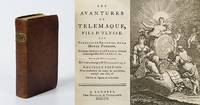
175632426AB1756. A Londres London Chez Nourse & Vaillant 1756. Octavo 10.8 cm wide x 18 cm high. Pagination: Frontispiece XXXII 386 pages plus 22 unnumbered pages of a Dictionary for Mythology and Geography to the rear of the volume. With ten engravings plus one folded map throughout the Volume resulting in 11 engravings including Frontispiece plus Map. Hardcover / Original full leather with gilt lettering on spine-label. Edges of bookblock and binding slightly rubbed. Overall in very good and firm condition with only minor signs of wear. Few dogears. Front free endpaper partially torn name of pre-owner Reverend Richard Meade verso the frontispiece. From the library of Richard Meade Ballymartle with his Exlibris / Bookplate loosely inserted. "Les Aventures de Télémaque fils d'Ulysse" English: The Adventures of Telemachus son of Ulysses is a didactic novel by François Fénelon Archbishop of Cambrai who in 1689 became tutor to the seven-year-old Duc de Bourgogne grandson of Louis XIV and second in line to the French throne. It was published anonymously in 1699 and reissued in 1717 by his family. The slender plot fills out a gap in Homer's Odyssey recounting the educational travels of Telemachus son of Ulysses accompanied by his tutor Mentor who is revealed early on in the story to be Minerva goddess of wisdom in disguise. The tutor Mentor is arguably the true hero of the book much of which is given over to his speeches and advice on how to rule. Over and over Mentor denounces war luxury and selfishness and proclaims the brotherhood of man and the necessity of altruism though that term would only be coined in the 19th century by Auguste Comte. He recommends a complete overhaul of government and the abolition of the mercantile system and taxes on the peasantry and suggests a system of parliamentary government and a Federation of Nations to settle disputes between nations peacefully. As against luxury and imperialism represented by ancient Rome Fénelon holds up the ideal of the simplicity and relative equality of ancient Greece an ideal that would be taken up by in the Romantic era of the 19th century. The form of government he looks to is an aristocratic republic in the form of a constitutional monarchy in which the ruler-prince is advised by a council of patricians. Although set in a far off place and ancient time Télémaque was immediately recognized by contemporaries as a scathing rebuke to the autocratic reign of Louis XIV of France whose wars and taxes on the peasantry had reduced the country to famine. Louis XIV who had previously banished Fénelon from Versailles and confined him to his diocese because of a religious controversy was so angered by the book that he maintained those restrictions on Fénelon's movements even when the religious dispute was resolved. Yet a few years later royal panegyrists were hailing the young king Louis XV as a new Telemachus and flattering his tutors as new "Mentors". Later in the century royal tutors gave the book to their charges and King Louis XVI 175493 was strongly marked by it. The French literary historian Jean-Claude Bonnet calls Télémaque "the true key to the museum of the eighteenth-century imagination".2 One of the most popular works of the century it was an immediate best-seller both in France and abroad going through many editions and translated into every European language and even Latin verse first in Berlin in 1743 then in Paris by Étienne Viel 173787. It inspired numerous imitations such as the Abbé Jean Terrasson's novel Life of Sethos 1731; it also supplied the plot for Mozart's opera Idomeneo 1781. With its message of world peace simplicity and the brotherhood of man Télémaque was a favorite of Montesquieu and of Jean-Jacques Rousseau and through him of the French revolutionaries and of German Romantics such as Johann Gottfried Herder 17441803 who approvingly quotes Fénelon's remark "I love my family more than myself; more than my family my fatherland; more than my fatherland humankind". It was also a favorite of Thomas Jefferson who re-read it frequently. It was also widely read in the Ottoman Empire and in Iran. One critic explains the popularity of Télémaque this way: Fénelon's story stood as a powerful rebuke to the aristocratic court culture that dominated European societies with its perceived artificiality hypocrisy and monumental selfishness. The book did not simply express these feelings; it helped shape and popularize them. From its wellspring of sentimentality a river of tenderly shed tears would flow straight through the eighteenth century fed by Richardson Greuze and Rousseau among others finally to pour out into the broad sea of Romanticism. Influence on Rousseau In Rousseau's Émile 1762 a treatise on education the eponymous pupil is specifically given only two novels although as a young man he also reads poetry and other literature: as a child he is given Daniel Defoe's Robinson Crusoe to inculcate him in resourcefulness and self-reliance; and when he becomes a young man the political treatise Télémaque which is put into his hands by his intended Sophie who has read it and fallen in love with the fictional hero. The education of Émile is completed by a journey during which the institutions of various nations are to be studied. His tutor inculcates principles into him which sum up the essentials of the Social Contract. But it is with a Telemachus in hand that teacher and pupil establish a "scale of measurement" for judging various existing societies. Fénelon's story presents models and counter models of monarchs. The princes and governments of the real world will be compared with them. In Rousseau's novel Émile and his tutor travel to Salento which formerly included much of what is now Calabria and Apulia Italy to seek the "good Idomeneo" whom Fénelon's novel had relocated from his former kingdom in Crete to the kingship of a new and reformed government. Contrary to Louis XIV whom he resembles in many traits of character Idomeneus renounces conquest and is able to make peace with his neighbors. The prosperous fields and laborious capital are schools of virtue where law rules over the monarch himself. Everything here is brought down to a "noble and frugal simplicity" and in the harmony of a strictly hierarchical society everything combines in a common utility. Wikipedia _____________________________________________________ Telemachus Romanized: Telemakhos lit. 'far-fighter' is the son of Odysseus and Penelope in Greek mythology and a central character in Homer's Odyssey. When Telemachus reached manhood he visited Pylos and Sparta in search of his wandering father. On his return to Ithaca he found that Odysseus had reached home before him. Then father and son slayed the suitors who had gathered around to woo Penelope. According to later tradition Telemachus married Circe after Odysseus's death. The first four books of the Odyssey focus on Telemachus's journeys in search of news about his father who has yet to return home from the Trojan War and are traditionally given the title Telemachy. Telemachus's name in Greek means "far from battle" or perhaps "fighting from afar" as a bowman does. In Homer's Odyssey Telemachus under the instructions of Athena who accompanies him during the quest spends the first four books trying to gain knowledge of his father Odysseus who left for Troy when Telemachus was still an infant. At the outset of Telemachus's journey Odysseus had been absent from his home at Ithaca for twenty years due to the Trojan War and the intervention of Poseidon. During his absence Odysseus's house has been occupied by hordes of suitors seeking the hand of Penelope. Telemachus first visits Nestor and is well received by the old man who regales him with stories of his father's glory. Telemachus then departs with Nestor's son Peisistratus who accompanies him to the halls of Menelaus and his wife Helen. While there Telemachus is again treated as an honored guest as Menelaus and Helen tell complementary yet contradictory stories of his father's exploits at Troy. Telemachus also learns from Menelaus that his father was last seen stranded on Ogygia. Telemachus focuses on his father's return to Ithaca in Book XV. He visits Eumaeus the swineherd who happens to be hosting a disguised Odysseus. After Odysseus reveals himself to Telemachus due to Athena's advice the two men plan the downfall of the suitors. Telemachus then returns to the palace to keep an eye on the suitors and to await his father as the beggar. When Penelope challenges the suitors to string Odysseus's bow and shoot an arrow through the handle-holes of twelve axe heads Telemachus is the first to attempt the task. He would have completed the task nearly stringing the bow on his fourth attempt; however Odysseus subtly stops him before he can finish his attempt. Following the suitors' failure at this task Odysseus reveals himself and he and Telemachus bring swift and bloody death to the suitors. The Telegony was a short two-book epic poem recounting the life and death of Odysseus after the events of the Odyssey. In this mythological postscript Odysseus is accidentally killed by Telegonus his unknown son by the goddess Circe. After Odysseus's death Telemachus returns to Aeaea with Telegonus and Penelope and there marries Circe. Seemingly later tradition included the character of Cassiphonethe daughter of Odysseus and Circe and therefore half-sister of Telemachusin the narrative. In this account Telemachus still marries Circe but Odysseus is resurrected by Circe at some point. From the Dictionary of Greek and Roman Biography and Mythology: In the post-Homeric traditions we read that Palamedes when endeavouring to persuade Odysseus to join the Greeks against Troy and the latter feigned idiocy placed the infant Telemachus before the plough with which Odysseus was ploughing. In Contest of Homer and Hesiod it is alleged that the Roman Emperor Hadrian asked the Delphic Oracle about Homer's birthplace and parentage. The Oracle replied that Homer came from Ithaca and that Telemachus was his father by Epicasta daughter of Nestor. According to Aristotle and Dictys of Crete Telemachus married Nausicaa King Alcinous's daughter and fathered a son named Perseptolis or Ptoliporthus. Eustathius says that the mother was Polycaste the daughter of Nestor. Others relate that he became the father of Latinus by Circe. He is also said to have had a daughter called Roma who married Aeneas. Servius makes Telemachus the founder of the town of Clusium in Etruria. Wikipedia hardcover
1878C2354264 pages with plates diagrams tables and index. Quarto 10 1/2" x 8 1/2" bound in half leather with five raised spine bands black and red labels in gilt lettering over marbled boards. Volume X. Betts: 7-13 First edition. Volume one has the title The Westminster Chess Club Papers and published between 1869 and 1879 volumes 1 through 11 no more published. The full name was The Westminster Papers: A Monthly Journal Of Chess Whist Games of Skill and the Drama and although a vehicle of the Westminster Chess Club it covered a variety of recreational activities. William Norwood Potter began as one of its Chess editors but soon founded his own venture The City of London Chess Magazine writing ".our Magazine will be devoted entirely to Chess; and we say this without any disparagement of our contemporary the Westminster Papers which while it appeals to a more general class of readers than is contemplated by us nevertheless never ceases to bestow the greatest possible attention upon that portion of its pages which is devoted to Chess." The Westminster club rapidly grew to have a membership of two hundred; and in 1868 it was resolved to publish a magazine The Westminster Chess Club Papers to give it its full title at the start which was shortened after the first year to The Westminster Papers. This was to be a Monthly Journal of Chess Whist Games of Skill and the Drama price sixpence and appeared in April. Hewitt and Boden were at the beginning in general control and Duffy was the chess editor; though on the cover of the third number there appeared the statement in some archaic style of humor Edited by Telemachus Brownsmith. Condition: Boards inner hinges taped and held by tape to the exterior corners bumped and rubbed spine head chipped away else a good copy internally very good. W Kent and Company, W W Morgan, J Menzies and Company, McGlashan and Gill hardcover