2 653 résultats
1950774311950 Le Puy, Imprimerie Jeanne d'Arc, sans date (vers 1950), plaquette petit in 8° brochée, 40 pages ; couverture ; jaquette.
19212114Paris, Les Amis des livres, 1921; in-8, broché sous étui muet en papier bleu avec motifs géométriques ; (7) ff., 99 pp., (3) ff. ; 37 eaux-fortes in et hors-texte d'Armand Berton, la plupart en couleurs, protégées par des serpentes ; couverture beige imprimée à rabats.
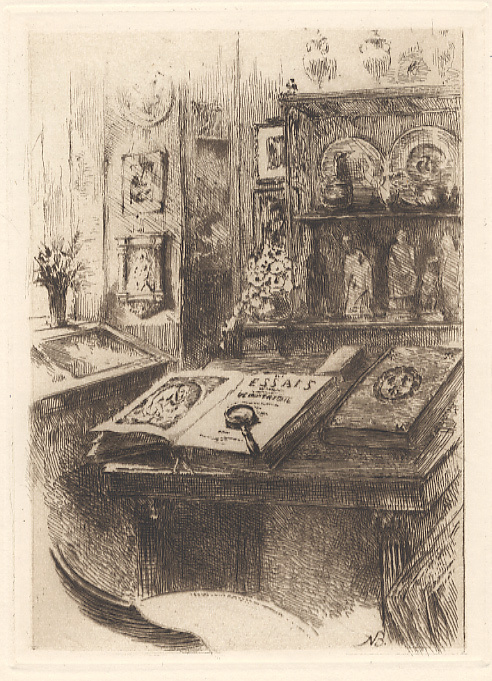
1878_201800850Paris, Chez Alphonse Picard, Libraire, 1878 ; in-8 (183 x 232 mm), VIII-108-2-12-2, broché, couverture d'attente avec manque, dos muet (quelques rousseurs). Extrait du «Cabinet historique», Tome XXIII, Catalogue; p. 126 à 235. Tiré à 350 exemplaires.
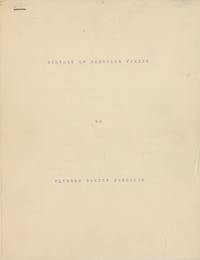
1954List3210Greenville Illinois 1954. Two stapled packets of mimeographed typed pages eighty-seven and twenty-eight pages with one signed. Excellent to Near Fine. An autobiography and genealogy written by Ulysses S. DeMoulin 1871–1955 founder of DeMoulin Bros. a uniform manufacturing company which now mainly supplies marching band attire. The genealogy incorrectly traces the family’s history back to French Revolutionary figure Camille Desmoulins though it appears accurate otherwise. It includes a description of early Sebastopol Highland Illinois with a simple map. In the autobiography which is told in a large number of short anecdotes DeMoulin discusses his childhood and early life in Jamestown and Sebastopol and goes into detail about the early years of his company beginning with the formation of the Modern Woodmen of America fraternal organization for which the company supplied uniforms and items used in ‘rituals’. DeMoulin used the profits from this enterprise to invest in a number of others including a mine near Gold Hill Colorado and oil drilling land in Illinois. However the most interesting portions of the autobiography concern DeMoulin’s role in the development of agriculture in California’s Imperial Valley.<br /> <br /> DeMoulin first travels to southern California in 1903 happening to meet several engineers involved with the Imperial Irrigation System who take him to see the new town of Brawley:<br /> <br /> “Here by lantern light we sat around on the ground in the evening discussing many kinds of farm lands and if soft hard or sandy. We slept in ‘remadas’ made by setting posts to protrude about twelve feet above the ground which were then braced and divided into small box-like stalls. The remada was then covered with tree branches and a huge heavy taupalin sic curtain hung over the sides and front at night to keep out the dust of which you might find two or three inches at your door in the morning. A pitcher of water and a bowl were your only means of bathing. There were no streets in Brawley at this time only trails as the town had not yet been surveyed having only been founded in October 1902. People were living in tents while waiting for completion of hotel accommodations and other living quarters under construction.â€<br /> <br /> DeMoulin begins buying land in the Brawley area to rent to farmers and traveling to the area regularly. He describes the building of the Laguna Dam spending a week at the workers’ camp “at which time I slept in the workmen’s crudely-built bunks and ate with them at the long rough pine tablesâ€; and befriends author Harold Bell Wright. He also witnesses several conflicts with the IWW:<br /> <br /> “In 1908 there moved into Brawley about 200 International Workmen of the World or more familiarly known as ‘I.W.W.’s’ I won’t Work and in command was a Captain Stanley. However as most unwelcome guests they proceeded to join a strike in the cantaloupe sheds and inserting razor blades into apples the strikers threw them at workers. ‘Goons’ also tried to interfere with the trucking operations from the fields to the packing sheds. I recall of one driver telling a goon that if he even attempted to place a foot in his truck he would shoot him. And defying the driver the goon was instantly killed. Naturally this would cause a riot and they sent to El Centro for a tank such as it was in those days - a cannon and several machine guns. But soon after the Mayor had issued orders to shoot anyone getting out of hand an agreement was easily reached.â€<br /> <br /> University of Washington’s IWW History Project documents two IWW actions in Brawley between 1905 and 1920 neither of which match DeMoulin’s description; nor does the event appear in newspapers. However “Captain†William Stanley was in the area serving as the secretary of the I.W.W.’s chapter in the Imperial Valley. In 1911 Stanley was killed in an early battle of the Mexican Revolution assisting Mexican Liberal Party fighters in occupying Mexicali. DeMoulin claims to have traveled with several others to watch the fighting that would end the occupation:<br /> <br /> “It was suddenly discovered one morning that Captain Stanley and his I.W.W.’s had disappeared during the night and word had gotten around they had settled in Mexicalo sic a Mexican border town and were so strong in number they overpowered the police pillaged the shops and stores defying the Mexican Government by taking over complete possession of Mexicalo. However after putting up with this condition for several months the Mexican Government sent in about 500 Infantrymen with orders to get rid of them immediately under any condition. . Stanley’s men had made a large opening in the river bank to a depth of about five feet which led through to the bank facing south. From this vantage point his men could fire their muskets when the Mexicans advanced towards them and soon took to their heels when Stanley’s men began firing. . Several of us had driven down to sic Brawley to witness the fighting and bullets had been spattered everywhere. Many of the people never thinking of danger stood out in the open so as not to miss what was going on but I was glad to stay in the back of the adobes at least where one was protected from stray bullets. And having heard rumors of their retreating possibly the next day which was Sunday we drove down again but all was quiet and we met with no resistance. Many of the men were swimming and others were entertaining their wives and families in one way or another. We didn’t stay too long on that trip as one never knew what might happen. But it wasn’t long before they disappeared from Mexicalo entirely for which everyone was most grateful and happy.â€<br /> <br /> DeMoulin is none too fond of Mexican workers either describing how the 1928 construction of a primitive border wall “didn’t stop the wetbacks . from swimming across†and complaining that “regardless of having no sense nor education many were hired and the employers would hide them in groves because if they were arrested it would cost $160.00 including court and attorney fees to have each one returned to Mexico.†DeMoulin’s other targets for racial abuse include “a couple of crooked ‘Jewish Kikes’†who were “certainly professionals when it came to putting the money in their pockets†and several Black men who he claims steal from him.<br /> <br /> DeMoulin credits himself with bringing grapefruit production to the Imperial Valley and describes a scam by the area’s real estate agents to unload inferior farmland onto unsuspecting investors. He recounts his company making leather “‘Red Men’s’ costumes†for a “Chief Gray Eagle†in Oklahoma whose “squaws wouldn’t work for him any more.â€<br /> <br /> Of interest to historians of the Imperial Valley’s development and especially of labor relations in the agriculture industry. unknown
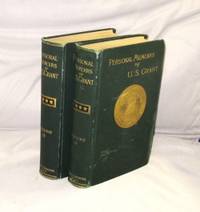
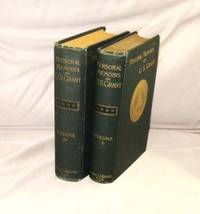
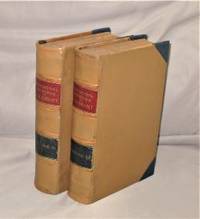
188528594New York:: Charles L. Webster & Company 1885 1886. First Printing of the First US Edition. Two Volumes Complete. A Very Good plus tight set in green cloth bindings stamped in gold on the spine and front covers with light wear to the spine edges and slight discoloration to the front board of Volume 1. This set is complete with the facsimile letter of Grant's original terms for Lee's surrender that is often missing. Mark Twain was the publisher of this monumental memoir as well as its editor and proof reader. Twain was extremely fond of and a close friend of Grant and encouraged the President and war hero to write his memoirs. Grant was dying of throat cancer but completed his two volume opus dictating the second volume to a secretary. Twain noted in a letter to his daughter that the manuscript was not even set yet and 20000 sets had been ordered from only two states. "Wait till you hear from the other 37." Grant finished his memoirs on July 18 1885 and died five days later on July 23rd. Following his death advance orders of the memoirs reached 300000 sets realizing close to $450000 for his family which was otherwise penniless. In a 1992 New York Times book review General Schwarzkopf is quoted as using Grant's two-volume work as his model calling it the finest military history of the Civil War. Charles L. Webster & Company, hardcover
188528635New York:: Charles L. Webster & Company 1885 1886. First Printing of the First US Edition. Two Volumes Complete. A Very Good plus tight set in green cloth bindings stamped in gold on the spine and front covers with light wear to the spine edges and slight discoloration to the front board of Volume 1. This set is complete with the facsimile letter of Grant's original terms for Lee's surrender that is often missing. Mark Twain was the publisher of this monumental memoir as well as its editor and proof reader. Twain was extremely fond of and a close friend of Grant and encouraged the President and war hero to write his memoirs. Grant was dying of throat cancer but completed his two volume opus dictating the second volume to a secretary. Twain noted in a letter to his daughter that the manuscript was not even set yet and 20000 sets had been ordered from only two states. "Wait till you hear from the other 37." Grant finished his memoirs on July 18 1885 and died five days later on July 23rd. Following his death advance orders of the memoirs reached 300000 sets realizing close to $450000 for his family which was otherwise penniless. In a 1992 New York Times book review General Schwarzkopf is quoted as using Grant's two-volume work as his model calling it the finest military history of the Civil War. Charles L. Webster & Company, hardcover
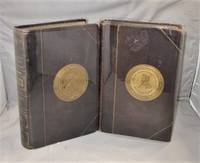
188527459New York:: Charles L. Webster & Company 1885. First Printing of the First US Edition. This is a Near Fine tight set with light wear to the extremities in the publisher's deluxe brown morocco leather over brown cloth boards with gilt circular emblems on the front and rear covers. This set is complete with the facsimile letter of Grant's original terms for Lee's surrender that is often missing. Mark Twain was the publisher of this monumental memoir as well as its editor and proof reader. Twain was extremely fond of and a close friend of Grant and encouraged the President and war hero to write his memoirs. Grant was dying of throat cancer but completed his two volume opus dictating the second volume to a secretary. Twain noted in a letter to his daughter that the manuscript was not even set yet and 20000 sets had been ordered from only two states. "Wait till you hear from the other 37." Grant finished his memoirs on July 18 1885 and died five days later on July 23rd. Following his death advance orders of the memoirs reached 300000 sets realizing close to $450000 for his family which was otherwise penniless. In a 1992 New York Times book review General Schwarzkopf is quoted as using Grant's two-volume work as his model calling it the finest military history of the Civil War. Charles L. Webster & Company, hardcover
188528077New York:: Charles L. Webster & Company 1885. First Printing of the First US Edition. This is a Near Fine tight set with light wear to the extremities in the publisher's full brown calf leather binding with black leather tips. There is slight moisture bleed in Volume 1. The spine title is red leather and the volume label is black. The rear hinges of each volume have been reinforced. This set includes the facsimile letter of Grant's original terms for Lee's surrender laid in. Mark Twain was the publisher of this monumental memoir as well as its editor and proof reader. Twain was extremely fond of and a close friend of Grant and encouraged the President and war hero to write his memoirs. Grant was dying of throat cancer but completed his two volume opus dictating the second volume to a secretary. Twain noted in a letter to his daughter that the manuscript was not even set yet and 20000 sets had been ordered from only two states. "Wait till you hear from the other 37." Grant finished his memoirs on July 18 1885 and died five days later on July 23rd. Following his death advance orders of the memoirs reached 300000 sets realizing close to $450000 for his family which was otherwise penniless. In a 1992 New York Times book review General Schwarzkopf is quoted as using Grant's two-volume work as his model calling it the finest military history of the Civil War. Charles L. Webster & Company, hardcover
196763382Carbondale & Edwardsville IL: Southern Illinois University Press 1967- 1991. Eighteen vols. xxxix 1 458; xxxiii 1 399 1; xxv 1 479 1; xxv 1 520; xxv 1 458; xxiv 2 492; xxiv 588; xxiii 1 609 1; xxiv 700; xxv 1 618; xxvi 497 1; xxv 1 520; xxvi 599 1; xxvi 548; xxv 1 691 1; xxvi 635 1; xxiii 1 663 1; xxiii 1 661 1; xxiv 651 1 pp. With frontispiece’s photo illustrations facsimiles of letters maps. Uniformly bound in brick-red publisher’s cloth black & gilt spine labels minor bumping to upper right corner vol. 1 w/ d.j.’s from the Clark County Historical Society deaccessioning material. First editions of the first 18 volumes in this massive project encompassing Ulysses Grant’s letters and correspondence from his Prewar career through Reconstruction. Beginning with his 17-year-old cadet letters home at West Point and then service in Louisiana Texas the Mexican War and at Fort Vancouver entry into the Civil War the early campaigns of Fort Donelson Battles of Shiloh Corinth Vicksburg ascension to Lieutenant General the battles of Petersburg Cold Harbor & the Wilderness General Sherman’s March Appomattox assassination of President Lincoln the capture of Jefferson Davis and finally the disbanding of the immense Union Army. Simon d. 2008 drew upon a vast number of previously unpublished or unknown letters memorandum and writings of Grant and together with extensive notes and analysis offered an essential research tool for the study of American History the Civil War Reconstruction and the steps to the Grant Presidency. The set continues in production and Simon himself oversaw the first 31 annotated volumes. He also edited the memoirs of Julia Dent Grant. Southern Illinois University Press, hardcover
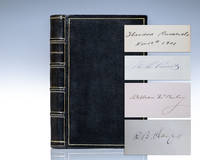
1872149519Philadelphia: J.B. Lippincott & Co 1872. Rare and remarkable autograph book compiled by West Virginia senator and industrialist Henry Gassaway Davis 1823-1916 containing 289 historic autographs including seven presidents seven vice presidents and scores of members of the Senate House of Representatives and presidential cabinets as well as a few other 19th-century notables. Octavo bound in full crushed levant morocco by the Harcourt Bindery with gilt titles and tooling to the spine in six compartments within raised gilt bands gilt ruling to the front and rear panels gilt-scrolled inner dentelles stamp-signed by the Harcourt Bindery all edges gilt title page printed in gilt. With Davis' ownership signature and subsequently that of his daughter to the title page "H. G . Davis 1872" and "Grace T. Davis 1887" Miss Davis was 18 in 1887. The book has approximately 300 unnumbered pages but only the first 144 which were numbered in pencil by hand at some point include the autographs generally three on each side of a page most often including the person's home state or in the case of cabinet members their office title. The highlights of the album are the signatures of seven presidents representing a half-century of American politics: U. S. Grant Rutherford B. Hayes James A. Garfield Grover Cleveland Benjamin Harrison twice William McKinley and Theodore Roosevelt. Also included are seven vice presidents - Hannibal Hamlin Schuyler Colfax Henry Wilson William A. Wheeler Levi P. Morton Garrett A. Hobart and Charles W. Fairbanks - and one first lady Frances F. Cleveland. With the later presidents' autographs are several examples of partial cabinets including: Harrison Secretary of the Treasury Charles Foster Secretary of War Stephen B. Elkins Attorney General William H. H. Miller Postmaster General John Wanamaker Secretary of the Navy Benjamin F. Tracy Secretary of the Interior John W. Noble and Secretary of Agriculture Jeremiah M. Rusk Cleveland Secretary of State Walter Q. Gresham Secretary of the Treasury John G. Carlisle Secretary of the Navy Daniel S. Lamont Attorney General Richard Olney Postmaster General Wilson S. Bissell Secretary of the Navy Hilary A. Herbert Secretary of the Interior Hoke Smith and Secretary of Agriculture J. Sterling Morton McKinley Secretary of State John Sherman Secretary of the Treasury Lyman J. Gage Secretary of War Russel A. Alger Attorney General Joseph McKenna Postmaster General James A. Gary Secretary of the Navy John D. Long Secretary of Agriculture James Wilson and Secretary of the Interior Cornelius N. Bliss and Roosevelt Secretary of State John Hay Attorney General Philander C. Knox Postmasters General Charles Emory Smith and Henry C. Payne and Secretary of the Interior Ethan A. Hitchcock. Others significant names include influential members of the House and Senate many of whom were celebrated veterans of the Civil War. These include: Hamilton Fish William M. Evarts Charles Sumner David Davis Simon Cameron James G. Blaine George S. Boutwell Augustus H. Garland Roscoe Conkling Ambrose Burnside John A. Logan John B. Gordon Carl Schurz Wade Hampton John T. Morgan Henry W. Slocum and William Mahone. Interestingly one page features the autographs of James Cardinal Gibbons Archbishop of Baltimore and famed agnostic lecturer Robert G. Ingersoll. In fine condition. A remarkable collection spanning half a century of American politics. J.B. Lippincott & Co unknown
187610470Washington: Government Printing Office 1876. Hard Cover. Good binding. Octavo. 815 pp. First edition. In publisher cloth. Edgeworn with closed tear to the top of the spine; staining and discoloration to to the rear board as well as to the textblock edges; minor silverfishing to the front pastedown; contents evenly toned throughout. <br /> <br /> A fairly uncommon volume with General Alfred Terry's report of General Custer's defeat at the the Battle of Little Bighorn. Also reprinted is Major Marcus Reno's report. Both reports offer details related to the movement prior to the engagement information on which companies were involved and the losses. A larger than life individual Custer's mystique has been complicated and controversial in relation to the United States government's policies and actions related to the indigenous Americans throughout the 19th century. Government Printing Office unknown
25391Vienne, Martin, Editions de la Société des Amis de Vienne, 1922-23, 2 volumes grand in 8° brochés, IV-331 et 303pp. ; qq. rares passages soulignés au stylo bleu et qq. menus défauts ; couverture légèrement fanées.
1887769111887 Valence, Céas, 1887, plaquette grand in 8° brochée, 19-29 pages ; couverture imprimée (effrangée).
1999LFA-126719705N° 246 (Septembre 1999): 88 pages, format 215 x 285 mm, illustré, broché couverture couleurs, bon état
183320260Lausanne, Marc Ducloux, 1833. In-8 broché, couverture imprimée. Petits manques de papier au dos, nombreuses rousseurs.
1981923201981. Anvil Press Poetry London. 1981. First edition. Hardback with DW. Wrapper shelf worn and browned with some offsetting to upper board. Overall a lovely clean copy of this SCARCE book. hardcover
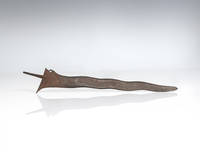
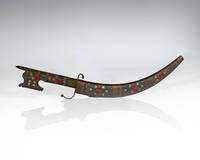
147821Rare Javanese kris commonly used in the pencak silat martial art native to Indonesia from the collection of General William T. Sherman preserved in his military trunk. Ulysses S. Grant a close friend of Sherman’s went on a “World Tour†after his second presidential term had ended. It has been suggested that Grant collected a few souvenirs for his dear friend while visiting Asia. When the Grant family returned from their trip Sherman greeted Grant at a reunion held by the veterans of the Army of the Tennessee. In good condition with handle missing. The piece measures 14.5 inches. General William Tecumseh Sherman and General Ulysses S. Grant were key figures in the Union Army during the American Civil War forming a close personal and professional relationship that significantly influenced the war’s outcome. Grant known for his strategic leadership recognized Sherman’s military talents early in the war and the two collaborated on major campaigns including the Vicksburg Campaign 1863 and Sherman’s March to the Sea 1864–1865. Their coordinated efforts exemplified the Union’s strategy of total war aimed at crippling the Confederacy’s resources and morale. After the war their partnership continued with Sherman succeeding Grant as Commanding General of the U.S. Army in 1869 when Grant became President. Their mutual trust and shared military philosophy played a crucial role in shaping U.S. military strategy and post-war reconstruction efforts. unknown
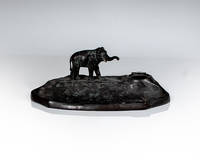
147816Rare bronze sculpture of an elephant most likely used as an ink well from the collection of General William T. Sherman preserved in his military trunk. Ulysses S. Grant a close friend of Sherman's went on a "World Tour" after his second presidential term had ended. It has been suggested that Grant collected a few souvenirs for his dear friend while visiting Asia. When the Grant family returned from their trip Sherman greeted Grant at a reunion held by the veterans of the Army of the Tennessee. In very good condition with some patina. The piece measures 9.5 inches by 4.5 inches. General William Tecumseh Sherman and General Ulysses S. Grant were key figures in the Union Army during the American Civil War forming a close personal and professional relationship that significantly influenced the war’s outcome. Grant known for his strategic leadership recognized Sherman’s military talents early in the war and the two collaborated on major campaigns including the Vicksburg Campaign 1863 and Sherman’s March to the Sea 1864–1865. Their coordinated efforts exemplified the Union’s strategy of total war aimed at crippling the Confederacy’s resources and morale. After the war their partnership continued with Sherman succeeding Grant as Commanding General of the U.S. Army in 1869 when Grant became President. Their mutual trust and shared military philosophy played a crucial role in shaping U.S. military strategy and post-war reconstruction efforts. unknown
147820Rare Indo-Persian khanjar a 20th century curved dagger from the collection of General William T. Sherman preserved in his military trunk. The khanjar has decorative wooden and metal inlays and intricate detailing to the handle and sheath with etchings to the blade. Ulysses S. Grant a close friend of Sherman's went on a "World Tour" after his second presidential term had ended. It has been suggested that Grant collected a few souvenirs for his dear friend while visiting Asia. When the Grant family returned from their trip Sherman greeted Grant at a reunion held by the veterans of the Army of the Tennessee. In very good condition. The piece measures approximately 15.5 inches. General William Tecumseh Sherman and General Ulysses S. Grant were key figures in the Union Army during the American Civil War forming a close personal and professional relationship that significantly influenced the war’s outcome. Grant known for his strategic leadership recognized Sherman’s military talents early in the war and the two collaborated on major campaigns including the Vicksburg Campaign 1863 and Sherman’s March to the Sea 1864–1865. Their coordinated efforts exemplified the Union’s strategy of total war aimed at crippling the Confederacy’s resources and morale. After the war their partnership continued with Sherman succeeding Grant as Commanding General of the U.S. Army in 1869 when Grant became President. Their mutual trust and shared military philosophy played a crucial role in shaping U.S. military strategy and post-war reconstruction efforts. unknown
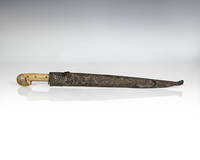
147824Rare Persian kard a straight single-edged dagger that is worn on the left side of the belt from the collection of General William T. Sherman preserved in his military trunk. The kard has a bone handle no guard and repoussé sheath with a floral arabesque design. A major characteristic of a kard is that the sheath partially covers the hilt. Ulysses S. Grant a close friend of Sherman's went on a "World Tour" after his second presidential term had ended. It has been suggested that Grant collected a few souvenirs for his dear friend while visiting Asia. When the Grant family returned from their trip Sherman greeted Grant at a reunion held by the veterans of the Army of the Tennessee. In very good condition with the tip of the blade broken the end of the right extended side of the handle missing and the left side cracked. The piece measures 19 inches. General William Tecumseh Sherman and General Ulysses S. Grant were key figures in the Union Army during the American Civil War forming a close personal and professional relationship that significantly influenced the war’s outcome. Grant known for his strategic leadership recognized Sherman’s military talents early in the war and the two collaborated on major campaigns including the Vicksburg Campaign 1863 and Sherman’s March to the Sea 1864–1865. Their coordinated efforts exemplified the Union’s strategy of total war aimed at crippling the Confederacy’s resources and morale. After the war their partnership continued with Sherman succeeding Grant as Commanding General of the U.S. Army in 1869 when Grant became President. Their mutual trust and shared military philosophy played a crucial role in shaping U.S. military strategy and post-war reconstruction efforts. unknown
2005LFA016dc2005 : une revue de 144 pages, format 215 x 270 mm, illustrée, brochée couverture couleurs, bon état
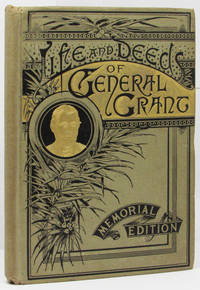
188534195Boston: Boyle Brothers 1885. A rare original publisher's 'Salesman's Dummy' for the Memorial Edition of this early biography of Grant published almost immediately after his death. Specimen pages include two engraved portraits one with facsimile autograph 62 pages of engraved illustrations maps or facsimile records sixteen pages of facsimile manuscripts and 60 pages of text many of which are also illustrated. Bound in the rear are several ruled pages for recording orders including the subscribers' names addresses and preferred binding ten orders are already recorded. 8vo in the original olive cloth decorated in gilt and black on the upper cover and in blind on the lower cover attached to the front endpaper is the sample spine for cloth binding option and attached to the rear endpaper the sample spines for the deluxe morocco and calf binding options floral endpapers. A very fresh copy especially so. The binding is bright and clean the text is free of foxing stains or other evidence of use. A SCARCE SALES DUMMY AND A BEAUTIFULLY PRESERVED ITEM OF PUBLISHING HISTORY AS RELATES TO THE 18th AMERICAN PRESIDENT AND HERO OF THE CIVIL WAR.<br> These 'dummies' were used by door-to-door publisher's salesmen to pre-sell the upcoming publication through subscription. Thus they are full with illustrations and passages of the book chosen to be the most appealing to potential buyers. Boyle Brothers hardcover
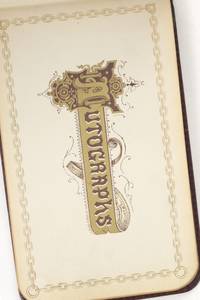
18852007Philadelphia: S.n. 1885. Leather over boards. Oblong duodecimo. 54 leaves. Near fine. Leather over thin board with gilt-stamped upper board. Professionally restored with about half of the original gilt-ornamented spine retained. Wesson's name card laid down on front pastedown. A fantastic and eclectic trove of 19th century autographs collected by one Edward Wesson apparently associated with the Continental Hotel in Philadelphia. The autographs range from military figures to actors and actresses singers diplomats explorers and more. <br /> <br /> Some of the most notable figures whose autographs appear here include Ulysses S. Grant Edwin Booth William Tecumseh Sherman P. T. Barnum King David KalÄkaua of Hawaii Henry Ward Beecher David Ross Locke aka 'Petroleum V. Nasby' and Hannibal Hamlin Vice-President under Abraham Lincoln. There are also autographs from survivors of the tragic Jeanette Expedition to the Arctic including John W. Danenhower Louis P. Noros William F. C. Nindemann and George W. Melville. Among the other entertainment figures of the day to sign Mr. Wesson's album were actresses Maggie Mitchell and Emma Abbott and several others. <br /> <br /> Of the 54 leaves only 5 are blank on both sides with the remaining 49 having autographs on one or both sides and one autograph on the recto of rear free endpaper for a total of 57 autographs in all.<br /> <br /> The album originated at Philadelphia's Continental Hotel one of the grandest and most socially prominent establishments of the 19th century. Opened in 1860 and famed for hosting presidents generals and celebrities-including Abraham Lincoln who stayed there en route to his 1861 inauguration-the Continental stood as a national landmark until its 1924 demolition to make way for the Benjamin Franklin Hotel.<br /> <br /> Apart from a single tipped‑in signature from a Mayor of Mt. Vernon NY every autograph in this volume is penned directly onto its original pages. This is of vital significance because unlike albums assembled from clipped signatures from various sources this is a continuous artifact: the very book that moved through the hands of each signer. To hold it now is to experience that unique connection with each of the historical figures who once inscribed it. <br /> <br /> A truly remarkable artifact. (S.n.) unknown
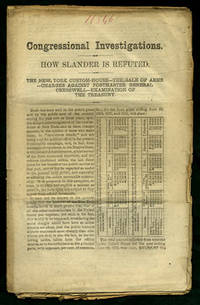
187227653n.p.: n.p. 1872. First edition. Self-wrappers. An untrimmed unopened uncut single folio leaf edges soiled fore edge with a few small tears rear leaves creased overall still about very good. 16 pp. 8vo. The Grant administration was one of the most corrupt of the 19th century with numerous investigations convened. As it prepared for the elections of 1872 and Grant's run for a second term it issued this piece of campaign literature in an attempt to refute the charges. n.p. unknown
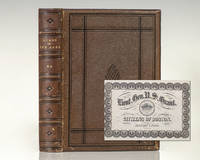
1865138284Boston: Ticknor and Fields 1865. First edition of the second series of Hymns of the Ages from the library of Ulysses S. Grant. Octavo bound in full pebbled morocco with gilt titles and tooling to the spine in six compartments within raised bands gilt turn-ins and inner dentelles all edges gilt marbled endpapers tissue-guarded frontispiece. From the library of Ulysses S. Grant with a presentation bookplate to the pastedown which reads “Lieut. Gen. U. S. Grant from the Citizens of Boston January 1 1866.†In very good condition. Rare and desirable. Ulysses S. Grant was the 18th President of the United States 1869–77. As Commanding General of the United States Army 1864–69 Grant worked closely with President Abraham Lincoln to lead the Union Army to victory over the Confederacy in the Civil War. He implemented Congressional Reconstruction often at odds with Lincoln's successor Andrew Johnson. Twice elected president Grant led the Republicans in their effort to remove the vestiges of Confederate nationalism and slavery protect African-American citizenship and supported unbridled nationwide industrial expansionism during the Gilded Age. Ticknor and Fields hardcover