Bersani, Leo; Dutoit, UlysseBiblio.com

1 817 résultats
1993Q-0674048768Harvard University Press 1993-12-01. Paperback. New. New. In shrink wrap. Looks like an interesting title! Harvard University Press paperback
621815-nnew. unknown
ria9780674048768_inpPaperback / softback. New. New Book; Fast Shipping from UK; Not signed; Not First Edition; Taking three artists - Beckett Rothko and Resnais the book demonstrates that these artists train us in new modes of mobility which differ from the moves of an appropriating consciousness. paperback
658658290Harvard University Press pp. 256 . Papeback. New. Harvard University Press unknown
18642764930/12/1864. <blockquote><p>Welles had written at the President's suggestion: ""The largest naval force ever assembled is ready""</p></blockquote><blockquote><p>Fort Fisher guarded the port of Wilmington NC the last port open to blockade runners supplying Robert E. Lee’s Confederate forces in Virginia</p><p> </p></blockquote><p><img class=""alignnone wp-image-28384 size-post-window"" src=""https://cdn.raabcollection.com/wp-content/uploads/20231204120136/Grant_168-2-1-e1694097936583-1600x492.jpg"" alt="""" width=""1600"" height=""492"" /></p><p>As 1864 dawned Wilmington North Carolina protected by Fort Fisher was one of the Confederacy’s last remaining major ports on the Atlantic open to blockade runners and was the chief supply line for General Robert E. Lee’s Army of Northern Virginia. Navy Secretary Gideon Welles reintroduced the idea of a joint operation against Wilmington to the Secretary of the War Edwin Stanton but Stanton saw it as premature. After the Navy’s occupation of Mobile Bay in August all eyes turned to Wilmington. In October 1864 Wilmington finally became the next objective for a joint amphibious operation. Admiral David Porter was chosen to command the naval squadron and General Benjamin Butler the army contingent.</p><p>On December 24 the 63 ships of Porter’s fleet prepared to bombard the fort. Thirty-seven ships formed in three lines of battle end-to-end facing the enemy. Just after midday Porter commenced the Navy’s first bombardment of the fort and continued firing until it became too dark to aim the guns effectively. While the Confederate troops hid and huddled beneath the mounds of the fort this bombardment actually did little damage with the exception of the wooden quarters of the garrison which were set ablaze. Butler’s force returned too late on that first night to attempt a landing. The next morning December 25 the fleet resumed its barrage while a naval contingent sought to secure a landing area for the Union infantry north of the fort. A group of sailors was sent to take soundings south of the fort but Porter withdrew the sounding party after it became clear that the army group was making no progress north of the fort. The timely arrival of Confederate reinforcements caused Butler to question the strength of his position. He felt his forces could not take the fort without a siege for which they were unprepared. Butler immediately began to re-embark his soldiers. On December 27 he called off the expedition and directed the transports to return to Hampton Roads. The U.S. Navy had suffered 83 casualties and the U.S. Army 12. Thus the first attempt by the Union forces to close the port of Wilmington ended in failure. While Butler returned to Hampton Roads Porter remained off the coast of North Carolina dedicated to preparing another attempt to capture Fort Fisher.</p><p>Following the fall of Savannah on December 21 1864 General William T. Sherman prepared to march through the Carolinas. Knowing Sherman could soon be in North Carolina and ready to try to capture the fort again on December 25 Porter wrote to Sherman clearly expressing his frustration with Butler’s decision to abandon the joint operation. Porter was also in communication with Welles. With these communications in hand Welles spoke to President Lincoln who was all for trying again to take the fort. On December 29 Welles wrote to General U.S. Grant in overall command of the army that the President hoped that another joint operation might be forthcoming.</p><p>Welles’s telegram to Grant stated: “December 29 1864 at 9:30 pm. The substance of dispatches and reports from Rear-Admiral Porter off Wilmington is briefly this: The ships can approach nearer to the enemy’s works than was anticipated. Their fire can keep the enemy away from their guns. A landing can easily be effected upon the beach north of Fort Fisher not only of troops but all their supplies and artillery. This force can have its flanks protected by gun-boats. The navy can assist in the siege of Fort Fisher precisely as it covered the operations which resulted in the capture of Fort Wagner. The winter season is the most favorable for operations against Fort Fisher. The largest naval force ever assembled is ready to lend its co-operation. Rear-Admiral Porter will remain off Fort Fisher continuing a moderate fire to prevent new works from being erected and the ironclad have proved that they can maintain themselves in spite of bad weather. Under all these circumstances I invite to such a military co-operations as will insure the fall of Fort Fisher the importance of which has already received your careful consideration. This telegram is made at the suggestion of the President and in hopes that you will be able at this time to give the troops which heretofore were required elsewhere. If it cannot be done the fleet will have to disperse whence it cannot again be brought to this coast.â€</p><p><img class=""alignnone wp-image-28385 size-post-window"" src=""https://cdn.raabcollection.com/wp-content/uploads/20231204120124/Grant_177-1-1-e1694097999755-1600x684.jpg"" alt="""" width=""1600"" height=""684"" /></p><p>Grant responded to Welles immediately. <strong>Autograph letter signed</strong> headquarters at City Point Va. December 30 1864 to Welles. <em>“Your dispatch of 9:30 p.m. 29th received. I will advise fully with the Sec. of War about what you propose. Please call on him for information. U.S. Grant Lieut. Gen.â€</em> Thus Grant promised to inform Stanton “fully†about the plan and requested that Welles consult with Stanton to finalize it. Grant had told Stanton that he did not intend to correspond with the Navy Department except through Stanton and this letter further indicates that.</p><p>Porter had a good working relationship with Grant and a solid record of success in joint operations. Due to this Welles was able to argue successfully with Lincoln for Porter’s retention as commander. In early January Porter coordinated directly with Sherman and Grant about plans for a renewal of operations against Fort Fisher. As Sherman marched north the port of Wilmington was now more important to the U.S. Army than it had been during the first battle for Fort Fisher. Butler rightly took the blame for the first expedition’s failure. For his replacement Grant chose General Alfred Terry one of Butler’s staff officers. Grant assigned him the same troops that had participated in the first attempt augmented with an additional brigade for a total of 8000 soldiers. On January 4 1865 the second expedition to capture Fort Fisher embarked from Bermuda Landing in Virginia. On January 12 they headed for Fort Fisher. Arriving that night Porter and Terry prepared to commence their attack the next day. At dawn on January 13 8000 Federal soldiers landed above the fort as the Navy began its bombardment. Sailors were landed on the 15th and drew fire. This diversion allowed the army to breach the walls of the fort. By 10 p.m. the fort was in possession of the Federal forces. The Confederates started a retreat and when Federal infantry caught up with them General Terry accepted the formal surrender of the fort.</p><p>The first battle of Fort Fisher was the most concentrated naval bombardment of the war. The fleet fired 20271 projectiles into the fort during the first battle. Another 19682 were fired during the second battle. In total the U.S. Navy expended 39953 projectiles at the fort. After Fort Fisher’s capture Porter proceeded to put vessels over the bar and into the Cape Fear River. He declared the port of Wilmington to be “hermetically sealed against blockade runnersâ€. Five weeks after the fall of Fort Fisher the Federal army occupied the city of Wilmington. This occupation ended the trickle of supplies coming along the Wilmington and Weldon Railroad to the Army of Northern Virginia. The fall of Wilmington contributed directly to this army’s surrender at Appomattox Courthouse in April 1865.</p><p><img class=""alignnone wp-image-25018 size-post-window"" src=""https://cdn.raabcollection.com/wp-content/uploads/20231204144051/Folder-site-11-1600x1327.jpg"" alt="""" width=""1600"" height=""1327"" /></p> unknown
SONG2894647239Brand: Hunter Pub Inc 0000-00-00. 5. paperback. Used: Good. 5.75x0.50x8.50. Buy with confidence. Excellent Customer Service & Return policy. Brand: Hunter Pub Inc paperback
20091229471PN. New. 2009. Reprint Edition. Soft Cover. Date is copyright date; this is a later reprint edition . PN paperback
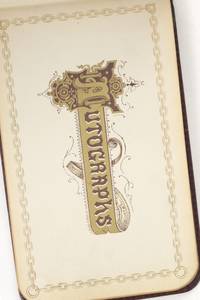
18852007Philadelphia: S.n. 1885. Leather over boards. Oblong duodecimo. 54 leaves. Near fine. Leather over thin board with gilt-stamped upper board. Professionally restored with about half of the original gilt-ornamented spine retained. Wesson's name card laid down on front pastedown. A fantastic and eclectic trove of 19th century autographs collected by one Edward Wesson apparently associated with the Continental Hotel in Philadelphia. The autographs range from military figures to actors and actresses singers diplomats explorers and more. <br /> <br /> Some of the most notable figures whose autographs appear here include Ulysses S. Grant Edwin Booth William Tecumseh Sherman P. T. Barnum King David KalÄkaua of Hawaii Henry Ward Beecher David Ross Locke aka 'Petroleum V. Nasby' and Hannibal Hamlin Vice-President under Abraham Lincoln. There are also autographs from survivors of the tragic Jeanette Expedition to the Arctic including John W. Danenhower Louis P. Noros William F. C. Nindemann and George W. Melville. Among the other entertainment figures of the day to sign Mr. Wesson's album were actresses Maggie Mitchell and Emma Abbott and several others. <br /> <br /> Of the 54 leaves only 5 are blank on both sides with the remaining 49 having autographs on one or both sides and one autograph on the recto of rear free endpaper for a total of 57 autographs in all.<br /> <br /> The album originated at Philadelphia's Continental Hotel one of the grandest and most socially prominent establishments of the 19th century. Opened in 1860 and famed for hosting presidents generals and celebrities-including Abraham Lincoln who stayed there en route to his 1861 inauguration-the Continental stood as a national landmark until its 1924 demolition to make way for the Benjamin Franklin Hotel.<br /> <br /> Apart from a single tipped‑in signature from a Mayor of Mt. Vernon NY every autograph in this volume is penned directly onto its original pages. This is of vital significance because unlike albums assembled from clipped signatures from various sources this is a continuous artifact: the very book that moved through the hands of each signer. To hold it now is to experience that unique connection with each of the historical figures who once inscribed it. <br /> <br /> A truly remarkable artifact. (S.n.) unknown
186936730Washington D.C. 1869. Single page entirely in ink manuscript Very Good.<br /> <br /> Randall was a Pennsylvania Democrat born in Philadelphia and a Union soldier during the War. He was Speaker of the House 1876-1881. This letter is an early unfavorable evaluation of President Grant's character only two weeks after Grant's inauguration as President. "The chief characteristic thus far developed is his vindictiveness. He must have much changed from the time when he received Lee's surrender. But we shall see the end is not yet. unknown
066669317X.Ghardcover. Good. Access codes and supplements are not guaranteed with used items. May be an ex-library book. hardcover
1332510779.Gmass_market. Good. Access codes and supplements are not guaranteed with used items. May be an ex-library book. unknown
6202034769.Gpaperback. Good. Access codes and supplements are not guaranteed with used items. May be an ex-library book. paperback
2070717968.Gmass_market. Good. Access codes and supplements are not guaranteed with used items. May be an ex-library book. unknown
131262227X.Ghardcover. Good. Access codes and supplements are not guaranteed with used items. May be an ex-library book. hardcover
373474931X.Gpaperback. Good. Access codes and supplements are not guaranteed with used items. May be an ex-library book. paperback
ria9783734749315_inpPaperback. New. New Book; Fast Shipping from UK; Not signed; Not First Edition; N/A paperback
9234Black & white illus. 25 pp. & colophon. 4to black printed softcover title on spine. Amsterdam: Galerie Da Costa 1980.<br /> <br> <br> One of 500 copies a scarce exhibition catalogue with an introduction composed by Carrión 1941-89. The catalogue provides a survey of Galerie Da Costa a publisher of artists’ books and livres d’artistes managed by Juan J. Agius. Agius published two of Carrión’s bookworks: Verzamelde Werken 1980 and Sistemas 1983.<br /> <br> <br> Carrión writes: “This catalogue illustrates the publishing activity developed by Juan Agius from Da Costa Gallery during the last 4 years. Such an activity takes place in a cultural context that is already familiar with the production of books by visual artists but where it has not yet been decided what the defining characteristics of this type of work are.â€<br /> <br> <br> With pictures and bibliographical information on bookworks by François Righi Adriaan Nette Francesc Guitart Manuel Menán Agius Federico Sanguineti François Bouillon Lia Rondelli Ben Sleeuwenhoek Roberto Comini Alessandro Algardi and Jean Zuber.<br /> <br> <br> Near fine copy. Withdrawn stamp of the Stedelijk Museum Amsterdam Library on title-page. unknown
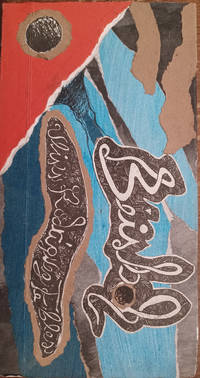
20091445<p>Beisbol de ulises rodriguez febles prologo de yamila gordillo primera edicion ediciones vigia matanzas cuba 2009.<strong>Ulises José Rodríguez Febles</strong> >Cárdenas 30 de agosto de 1968 es un dramaturgo investigador y guionista cubano. Licenciado en >Español y Literatura. Diplomado en Teatro para niños y de >Títeres en el ISA. Dirige la >Casa de la Memoria Escénica el lugar donde se conserva protege y difunde la memoria escénica matancera y nacional. La Casa de la Memoria Escénica es miembro de la Red iberoamericana de Archivos de las >Artes Escénicas.</p><p>Ediciones Vigía creadas por el poeta >Alfredo Zaldívar su editor principal hasta 1998 y hasta la actualidad por Agustina Ponce adquieren su título de la >Plaza de la Vigía por el lugar geográfico donde se instala en la Casa del Escritor de Matanzas Río y Magdalena en la ciudad de Matanzas y que al cobijar bajo el mismo techo a la editorial y operar como un espacio de presentación de autores se convirtió en un centro de promoción cultural único.</p><p>Bajo el emblema del >quinqué y caracterizadas por un riguroso criterio de selección el carácter inédito de sus publicaciones y un diseño singular las ediciones están dirigidas a un público intelectual sin distinción de edad sexo o nacionalidad. Surgen en 1985 con el propósito inicial de vincular a los escritores matanceros con la literatura universal y con las creaciones de escritores nacionales. Desde un inicio la idea estética de Vigía estuvo encaminada a acercar lo más posible el libro al trabajo humanoHasta hoy todos estos detalles se mantienen y multiplican en un derroche de imaginación y talento creador. La política editorial ha sido celosa en resguardar ese distintivo especial y para ello ha disfrutado del raro privilegio de poseer desde su fundación un mismo diseñador >Rolando Estévez Jordán artista pintor poeta diseñador En tiradas de 200 ejemplares Vigía publica literatura cubana y extranjera en nueve colecciones y dos revistas. Haciendo de los 200 ejemplares de cada edición verdaderas obras de arte en las cuales la palabra en su empeño de arboladura literaria está trenzada con eficaces soluciones plásticas. Las obras son mimeografiadas con iluminación hecha a mano firmadas por sus autores numeradas en fin totalmente manufacturadas.</p> editorial vigia paperback
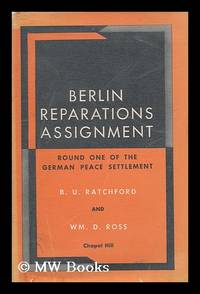
1947147952Chapel Hill : University Of North Carolina Press 1947. First Edition. Hardback. Fine cloth copy in a near-fine very slightly edge-nicked and dust-dulled dw now mylar-sleeved. Remains particularly and surprisingly well-preserved overall; tight bright clean and strong. ; 259 pages; Description: xii 259 p. ; 25 cm. Subjects: World War 1939-1945 --Reparations --Reconstruction 1939-1951 --Germany --History --1945-1955. Chapel Hill : University Of North Carolina Press hardcover
6206836134.Gpaperback. Good. Access codes and supplements are not guaranteed with used items. May be an ex-library book. paperback
B9781032879949Paperback / softback. New. <p><i>Beyond Health Capacity </i>sheds light on the systemic challenges communities with limited access to medical support and health maintenance have endured. It emphasizes how approaching medical interventions through non-traditional health facilities can positively impact health's social and environmental impact. </p> paperback
49907122like new. unknown
49907122-nnew. unknown
A9781032879949Paperback / softback. New. <p><i>Beyond Health Capacity </i>sheds light on the systemic challenges communities with limited access to medical support and health maintenance have endured. It emphasizes how approaching medical interventions through non-traditional health facilities can positively impact health's social and environmental impact. </p> paperback
2025x-1032879955Routledge 2025. Hardcover. New. 270 pages. 9.18x6.12x9.45 inches. Routledge hardcover