130 résultats
189074898No Place: The American Geologist. Very Good. 1890. Softcover. 9-5/8" X 6-1/4" Ex-Library with a few stamps. This work is soft-bound in tan wrappers with black printing to the upper cover. The covers show some edge-wear with a vertical crease from being folded. The staple binding is solid. The contents are bright and clean with a small illustrated map at the front. . The American Geologist paperback books
4516ULYSSES S. GRANT 1822-1885. Grant was the Eighteenth President and the head of the Union Army during the Civil War. Manuscript. 3pg. 8†x 12 ½â€. No date circa 1888. No place likely New York. A lengthy manuscript entitled “Grant’s Last Review of Veterans†done by an unknown soldier. He wrote “The final farewell which the representatives of the Army took other old chief for the scene so memorable and so touching that it will never be if faced from the memories of those who participated in it or of those who viewed it. It occurred on decoration day three years ago. On that day the old veterans rose earlier than was there want spent more time than usual in unfurling their old battle flags in burnishing their metals of honor which decorated their breasts. They seem for time to forget ever the pain of their old wounds for they had resolved on that day to March by the house of their dying commander give a final marching salute the knew that one year from that day there would be a new made grave to decorate one which their children's children down through all the years would keep decked with the choicest of flowers. Outside that house the street was filled with the sound of marching men and martial music. Inside that house the chief lay upon a bed of anguish the power of approaching death already beginning to… His features for his disease with doing the work which even the enemies bullets had shrunk from. The hand which it sees the surrender sounds of countless thousands was scarcely able to return the pressure of a friendly grasp. The voice which had cheered on to triumph and victory the legions of American manhood was no longer able to call for the cooling draft which lacked the thirst of a fever tongue and prostrate upon that bed of suffering lay the form which is the New World had written at the head of concrete columns in the old world had marched through the palaces of crown heads with the descendants of a line of kings rising and standing uncovered before him. His ears caught the sound of the movement of marching men. The bands were playing the grand strains which had mingled with the echo of his guns at Vicksburg playing the same quick steps to which his men had stepped in hot haste in pressuring Lee through Virginia and there came the measured tread swinging past of trained men which seem to shake the earth. He understood it all then it was the approaching tread of the old veterans. He seized his crutch with his little remaining strength and dragged himself painfully and slowly to the window. And as he gazed upon those banners bullet ridden battle stained those kindled in his eyes the flame which had lit them at Chattanooga at the Wilderness and amid the glories of Appomattox. And as he gazed upon those banners dipping to him in the salute he once more drew himself into the position of a soldier. And as they saw him standing cheeks which had been bronzed by Southern suns and begrimed with powder were now bathed in the tears of a manly grief. And then they saw a rising hand which had so often pointed out to them the path of victory he raises slowly and feebly to his head in acknowledgment of their salutations. The last the column had passed. The hand fell…to his side. It was his last military salute.†In late May 1885 the Union veterans knowing that Grant was dying had a military parade outside his 66th Street home. The document has light staining and chipping; the two pages have some separation and the lower right corner of the third page is missing but it affects no text. A fine firsthand account of the love the troops had for their general. unknown books
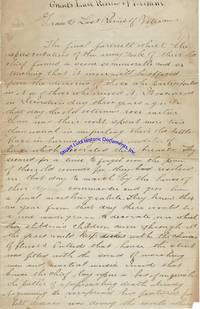
4510ULYSSES S. GRANT 1822-1885. Grant was the Eighteenth President and the head of the Union Army during the Civil War. Manuscript. 3pg. 8†x 12 ½â€. No date circa 1888. No place likely New York. A lengthy manuscript entitled “Grant’s Last Review of Veterans†done by an unknown soldier. He wrote “The final farewell which the representatives of the Army took other old chief for the scene so memorable and so touching that it will never be if faced from the memories of those who participated in it or of those who viewed it. It occurred on decoration day three years ago. On that day the old veterans rose earlier than was there want spent more time than usual in unfurling their old battle flags in burnishing their metals of honor which decorated their breasts. They seem for time to forget ever the pain of their old wounds for they had resolved on that day to March by the house of their dying commander give a final marching salute the knew that one year from that day there would be a new made grave to decorate one which their children's children down through all the years would keep decked with the choicest of flowers. Outside that house the street was filled with the sound of marching men and martial music. Inside that house the chief lay upon a bed of anguish the power of approaching death already beginning to… His features for his disease with doing the work which even the enemies bullets had shrunk from. The hand which it sees the surrender sounds of countless thousands was scarcely able to return the pressure of a friendly grasp. The voice which had cheered on to triumph and victory the legions of American manhood was no longer able to call for the cooling draft which lacked the thirst of a fever tongue and prostrate upon that bed of suffering lay the form which is the New World had written at the head of concrete columns in the old world had marched through the palaces of crown heads with the descendants of a line of kings rising and standing uncovered before him. His ears caught the sound of the movement of marching men. The bands were playing the grand strains which had mingled with the echo of his guns at Vicksburg playing the same quick steps to which his men had stepped in hot haste in pressuring Lee through Virginia and there came the measured tread swinging past of trained men which seem to shake the earth. He understood it all then it was the approaching tread of the old veterans. He seized his crutch with his little remaining strength and dragged himself painfully and slowly to the window. And as he gazed upon those banners bullet ridden battle stained those kindled in his eyes the flame which had lit them at Chattanooga at the Wilderness and amid the glories of Appomattox. And as he gazed upon those banners dipping to him in the salute he once more drew himself into the position of a soldier. And as they saw him standing cheeks which had been bronzed by Southern suns and begrimed with powder were now bathed in the tears of a manly grief. And then they saw a rising hand which had so often pointed out to them the path of victory he raises slowly and feebly to his head in acknowledgment of their salutations. The last the column had passed. The hand fell…to his side. It was his last military salute.†In late May 1885 the Union veterans knowing that Grant was dying had a military parade outside his 66th Street home. The document has light staining and chipping; the two pages have some separation and the lower right corner of the third page is missing but it affects no text. A fine firsthand account of the love the troops had for their general. unknown books
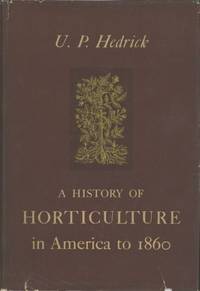
19506235New York: Oxford University Press 1950. Octavo 23.5 x 16 cm. xiii 551 pages. Illustrated; bibliography. FIRST EDITION. Ulysses Prentiss Hedrick 1870-1951 was an American botanist and horticulturalist. He was director of the New York State Agricultural Experiment Station where he produced many of his most influential works including his monumental series on fruits of America titled Grapes Pears Plums Small Fruits etc. of New York. He also served as president of the American Society of Horticultural Science. This work serves as the first book to describe the development of horticulture in America and includes a chapter on "The Development of American Horticultural Literature 1700-1860". Some light age-toning internally a small abrasion to title page otherwise fine. In the publisher's burgundy dust jacket with slight edgewear; near very good. With the ownership signature of Orville Taylor Bailey "one of the pioneers of neuropathology" to the front fee endpaper. Oxford University Press unknown books
1933193060New York State Agricultural Society 1933-01-01. Hardcover. Good. Green cloth boards are clean binding is tender with a couple of pages loosening at bottom edge but all pages still intact. No marks or notations found. Boards have some light patches of silverfishing edges are lightly scuffed. No dust jacket. HB HS New York State Agricultural Society hardcover books