St Lawrence Justinia, Bernard JustinianBiblio.com
34 résultats
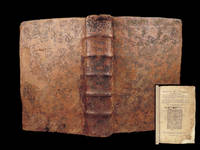
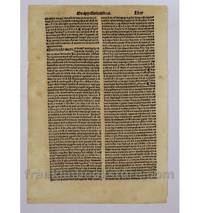
15253779<p>Original Leaf from the 1525 Bernardus Justinianus or Bernardo Giustiniani or Bernard Justinian De Tridinio Explicatur Sermons by St. Lawrence Justinian 1381 1456.</p><p>6 X 9.75 Tall Printed at Lyons France ca. 1507-1525. Early Black Letter Latin volume o 1525. Soft. Very Good. Original Leaf from the 1525 Bernardus Justinianus or Bernardo Giustiniani or Bernard Justinian De Tridinio Explicatur Sermons by St. Lawrence Justinian 1381 1456. 6 X 9.75 Tall Printed at Lyons France ca. 1507-1525.<br />Early Black Letter Latin volume of commentary on the Monastic laws of the Medieval church. <br /><br />The present example predates the third edition of 1535. Lawrence Giustiniani or Lorenzo Giustiniani or St. Lawrence Justinian was the writer of the sermons in this publication and his nephew Bernardus Justinianus organized Lorenzo's writings into these works.<br /><br />Title on the pages are: De appellationibus of appeals</p> Original Leaf from the 1525 Bernardus Justinianus (or Bernardo Giustiniani or Bernard Justinian) De Tridinio Explicatur Sermons
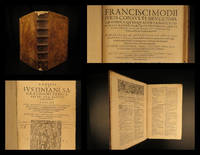
155929000<p>This 1559 Paris edition of Codex dn. Justiniani contains the imperial compilation of civil ecclesiastical and administrative statutes first issued under Justinian I. The folio includes the full Accursian gloss alongside annotations by Antonius Contius integrating medieval legal interpretation with humanist scholarship. Text is organized into 2136 double-column pages preceded by 30 unnumbered leaves and followed by 12. Original leather binding remains intact with age-appropriate wear. Title page and front matter reinforced. Format: Folio 14 x 9.5 inches. Collation: 30 2136 columns 12. References: USTC 152603. Item Number SKU: #29000. PHOTOS AVAILABLE UPON REQUEST.</p> Gulielmum Merlin hardcover
1585230252Lugduni Lyon: Bartholomew Honorati 1585. New Edition. Hardcover. Fair. Octavo xx 555 double-columned mostly pages later full leather covers disbound; inked names on front pastedown inked presentation to John A. Stein in 1857 on title-page; rear Index leaves sliced in the center as by a razor.Scarce. WorldCat cites only a copy in the Vatican Library. <br /> <br/><br/>A popular 16th century guide to the Code of Justinian with extensive annotations by Godefroy but this edition of it is quite scarce. Godefroy was a highly regarded lawyer and jurist. This text is coeval to his 1583 new edition of CORPUS JURIS CIVILIS. <br /> <br /> Bartholomew Honorati hardcover
158712150<p><b>1587 Justinian LAW Corpus Juris Civilis Codex Digest Godefroy Modius Commentary</b></p><p>"<i>Freedom is the natural ability of everyone to do what he likes unless it is prohibited by law or by force</i>."</p><p>― Justinian I</p><p>Justinian's '<i>Corpus Juris Civilis'</i> is unquestionably the fundamental work on law and jurisprudence! Parts of this work were originally intended to be used by law students but they were not solely used as a textbook – they carried legal weight …as law! It includes four distinct parts – Codex Digest Institutes and Novellae – each written with a different purpose.</p><p>'<i>Digest'</i> or '<i>Pandectae'</i> is a collection of juristic treatises taken from various legal writings of Ulpian and Paulus. '<i>Codex'</i>was the Justinian's attempt at organizing the laws in a systematic manner. Following the successes and legal implications of Codex and Digest '<i>Novellae Constitutiones' </i>or<i> 'New Constitutions'</i> was written after 534AD. These new laws were enacted following Justinian's reign and while credited to Justinian were compiled by several other politicians and legal scholars.</p><p>The Godefroy editions of this iconic work were influential in the law field well into the 20th-century. While Godefroy was known as a jurist his fame came from his edition of the '<i>Corpus'</i> which went through dozens of editions into the 18th-century. This edition includes a commentary entitled '<i>Notae perpetuae siue Praetermissorum</i>' by Francois Modius.</p><p>Item number: #12150</p><p>Price: $950</p><p>JUSTINIAN</p><p><b><i>Codicis Dn. </i></b><b><i>Iustiniani sacratissimi principis p.p. Aug. repetitae praelectionis libri XII</i></b></p><p>Francofurti ad Moenum : Impensis societatis Sigis. Feyrabendij Henrici Thack & Petri Vischeri 1587.</p><p><br /></p><p><u>Details</u>: </p><p>· Collation: Complete with all pages; 4 parts</p><p>o 22 956 2; 24 532 2; 8 64 64; 30 76</p><p>o Each section with individual title page and separate pagination</p><p>· Language: Latin</p><p>· Binding: Leather; tight & secure</p><p>· Size: ~13.5in X 9in 34cm x 23cm</p><p>Our Guarantee:</p><p>Very Fast. Very Safe. Free Shipping Worldwide.</p><p>Customer satisfaction is our priority! Notify us with 7 days of receiving and we will offer a full refund without reservation!</p><p>12150</p><p>Photos available upon request. </p> Impensis societatis Sigis. Feyrabendij, Henrici Thack, & Petri Vischeri hardcover
1590953000Lyon: Batholomäus Honorats Erben 1590. leather_bound. Gut. Zusammen ca. 890 Seiten. Schweinslederband der Zeit auf 5 Bünden mit Blindprägung in der Mitte der Deckel in orientalischer Manier. Groß-Quart 39 x 27 cm Trotz diverser Mängel siehe unten recht ordentlich erhalten. Zweite Ausgabe der großen Ausgabe des Corpus Iuris Civilis von Denis Godefroy der Erstdruck erschien 1580. Erscheinungsvermerk: Lugduni / Apud Haeredes Bartholomaei Honorati. / M. D. XC. Vollständiges Exemplar Kollation: 8 Blatt 952 Spalten; 6 Bl. 446 Sp.; Sp. 147-158; 3 Bl. 104 Sp.; 2 Bl. 124 Sp.; 31 Blatt Indices. Die Paginierung ist teilweise irrig das Buch aber vollständig. Der Band hat folgende Mängel: Einband gebräunt und fleckig Ecken und Kanten restauriert ohne fliegende Vorsätze vorne und hinten Schnitt fleckig Titelblatt auf Japanpapier aufgezogen erste Blätter mit Feuchtigkeitsrand vereinzelt zeitgenössische Anstreichungen und Marginalien kleine Wurmspur im weißen Bug in den ersten Blättern innen teils eselsohrig und ganz vereinzelt knitterig kleine Einrisse im weißen Rand innen nur wenig gebräunt bzw. braunfleckig. Der Band wurde vom Buchbinder restauriert. Trotz aller beschriebenen Mängel ein beeindruckendes voluminöses Werk und im Ganzen recht ordentlich erhalten. "Das Corpus Iuris Civilis C.I.C. oder zur besseren Unterscheidung vom kirchlichen Corpus Iuris Canonici auch CICiv dt.: 'Bestand des zivilen Rechts' umfasst ein seit der Zeit des Humanismus so bezeichnetes Gesetzeswerk das von 528 bis 534 n. Chr. im Auftrag des oströmischen Kaisers Justinian zusammengestellt wurde. Die in einer späten Restaurationsphase römischer Reichskultur entstandene Sammlung die antike und spätantike römische Gesetze kompiliert und kodifiziert geriet nach dem Untergang des Römischen Reiches weitgehend in Vergessenheit und wurde im 11. Jahrhundert vor allem durch Irnerius von Bologna wiederentdeckt. Sie war jahrhundertelang die wichtigste Textgrundlage des in weiten Teilen Europas bis ins 19. Jahrhundert angewandten Römischen Rechts. Ihr Inhalt ist in mehrstufigen und vielschichtigen Rezeptionsprozessen auch in zahlreiche moderne Gesetzeswerke und Rechtsordnungen eingegangen. . Die Teile des Corpus Iuris Civilis sind: - Institutiones = ein juristisches Lehrbuch zur Einführung in Codex und Pandekten das vom Gesetzgeber gleich mitveröffentlicht wurde und somit besondere Autorität hat. . - Pandekten / Digesta lateinisch: geordnete Darstellung oder Pandectai griechisch: allumfassend 533/534 = Zusammenfassung des geltenden Rechts - Codex Iustinianus = gesammelte noch gültige Kaisergesetze seit dem 2. Jahrhundert n. Chr. - Novellae: Kaiserliche Gesetze die nach dem Jahr 534 erlassen wurden wurden in verschiedenen Novellensammlungen gesammelt und veröffentlicht." Wikipedia. "Dionysius Gothofredus eigentlich Denis Godefroy; geboren 17. Oktober 1549 in Paris; gestorben 7. September 1622 in Straßburg war ein französischer Rechtswissenschaftler. Gothofredus war Professor an den Universitäten Genf Straßburg und Heidelberg und Herausgeber der ersten kritischen Gesamtausgabe des »Corpus iuris civilis« Genf 1583. Diese Bezeichnung für die spätrömische Gesetzessammlung stammt auch von ihm." Wikipedia Außerhalb der EU höhere Versandkosten ! Higher shipping costs outside the EU ! - Weitere Bilder auf Anfrage oder auf unserer Homepage. Wegen Urlaub kann Ihre Bestellung / Anfrage erst nach dem 21.06.2026 bearbeitet werden. - Because of holidays your order / question can be handled only after 06/21/2026. Batholomäus Honorats Erben hardcover
158912028<p><b>1589 ENORMOUS LAW Corpus Juris Civilis Justinian Codex Digest Godefroy 6v SET</b></p><p>"<i>Freedom is the natural ability of everyone to do what he likes unless it is prohibited by law or by force</i>." </p><p>― Justinian I</p><p>Justinian's '<i>Corpus Juris Civilis'</i> is unquestionably the fundamental work on law and jurisprudence! Parts of this work were originally intended to be used by law students but they were not solely used as a textbook – they carried legal weight …as law! It includes four distinct parts – Codex Digest Institutes and Novellae – each written with a different purpose.</p><p>'<i>Digest'</i> or '<i>Pandectae'</i> is a collection of juristic treatises taken from various legal writings of Ulpian and Paulus. '<i>Codex'</i>was the Justinian's attempt at organizing the laws in a systematic manner – each of these works is included in this <b><u>enormous 16th-century six-volume edition</u></b>.</p><p>The Godefroy editions of this iconic work were influential in the law field well into the 20th-century. While Godefroy was known as a jurist his fame came from his edition of the '<i>Corpus'</i> which went through dozens of editions into the 18th-century.</p><p>Item number: #12028</p><p>Price: $4950</p><p>JUSTINIAN</p><p><b><i>Corpus Juris Civilis</i></b></p><p>Lugduni: Godefroy 1589.</p><p><br /></p><p><u>Details</u>: </p><p>· Collation: Complete with all pages; 6 volumes</p><p>o Vol. I – 20 1926 1</p><p>o Vol. II – 16 2020</p><p>o Vol. III – 44 2222 1</p><p>o Vol. IV – 40 2204 32</p><p>o Vol. V – 12 324 2 8 640 20 198 1; 16 564</p><p>o Vol. VI – 284 378 318 1 10 2 8 198</p><p>· Language: Latin</p><p>· Binding: Leather; tight & secure</p><p>· Size: ~15.75in X 10.75in 40cm x 27cm</p><p>· Exceedingly rare valuable and desirable</p><p>Our Guarantee:</p><p>Very Fast. Very Safe. Free Shipping Worldwide.</p><p>Customer satisfaction is our priority! Notify us with 7 days of receiving and we will offer a full refund without reservation!</p><p>12028</p><p>Photos available upon request. </p> Godefroy hardcover
15871711300045Francofurti ad Moenum ex officina Ioannis Wecheli 1587. Hardcover. Good. Folio. Title page in red and black Later mottled calf raised bands compartments decorated in gilt leather spine label. Rubbing modern restoration to leather. Contemporary signature to front flyleaf and title. Title page creased and tender. Moderate toning contemporary ink underscoring. Scattered spotting. <br> The Corpus Juris or Iuris Civilis "Body of Civil Law" is a collection of fundamental works in jurisprudence issued from 529 to 534 by order of Justinian I Eastern Roman Emperor. Its influence on common law legal systems has been much smaller although some basic concepts from the Corpus have survived through Norman law – such as the contrast especially in the Institutes between statute and custom. The Corpus continues to have a major influence on public international law. Its four parts thus constitute the foundation documents of the Western legal tradition. In the Renaissance Justinian’s Code was translated into vernacular languages and formed the base for the legal system for the majority of countries up until the 19th century. Francofurti ad Moenum ex officina Ioannis Wecheli hardcover
1598710761598. Venice: Giunta 1598. 6 vols in 5 bks. Venice: Giunta 1598. 6 vols in 5 bks. Impressive 1598 Edition of the Corpus Iuris Civilis Corpus Juris Civilis Justinian I 485-565CE Emperor of the East Accursius c.1182-c.1260 Glossator. Leconte Antoine 1517-1586 Commentary. Cujas Jacques 1522-1590 Commentary. Douaren Francois 1509-1559 Commentary. De Bottis Jacopo Anello 1524-1581 Commentary. Caravita Agostino d.1580 Commentary. D. Iustiniani Imperatoris Opus Prudentum Responsa Caesarumque Rescripta Complectens. Quinque Voluminibus Distinctum Multis Legibus Additis Ac Iuris Consultorum Cuiacii Dyonisii Gothofredi & Iacobi Anelli de Bottis Augustinque Caravitae Glossis Additionibus Atque Nonnullis Aliis Illustratum. Utieorum Omnium Elenchus Indicabit. Novissima Editio Juntarum. Venice: Apud Iuintas 1598. Six volumes in five books. Complete set. Main text in parallel columns with linear glosses. Each volume preceded by title page title page of Volume I preceded by general title page. Folio 9-1/2" x 6-3/4". Contemporary vellum early hand-lettered titles and volume numbers to spines speckled edges. Some spotting and staining light wear to extremities corners and spine ends bumped front joint of Book IV cracked a few small wear holes to front boards of Books IV and V early armorial bookplates to front pastedowns small early owner stamp to front free endpapers vellum beginning to crack through pastedowns of a few volumes front free endpaper lacking from Book I. General title page is a copperplate with an architectural border volume title pages each with large woodcut Giunta device printed in red and black. Light to moderate toning faint dampstaining and light foxing in places early repair to leaf a1 in Book II with content replaced in manuscript chipping and edgewear to general title page with some loss to image early owner signatures to title pages of each volume except Volume VI. $4500. Commissioned by the Emperor Justinian I the body of works known as the Corpus Iuris Civilis reformed restated and preserved Roman law. The Code is the reformed legal system. The Novels is a compilation of additional laws and amendments. The Institutes is an elementary textbook about it. And the Digest is a collection of commentary by leading jurisconsults. unknown books
157118254Gulielmum Rouillum. Good. 1571. Hardcover. Bound in full leather. The top of the spine has been repaired with another piece of leather glued on. The binding is splitting at the bottom of the spine. Contents have been trimmed at the top but are otherwise "fine". ; 32mo 4" - 5" tall; 1116 pages . Gulielmum Rouillum hardcover
1562710271562. Paris 1562. Interleaved and annotated. Paris 1562. Interleaved and annotated. Interleaved Copy Annotated by a French Nobleman Justinian I 485-565 CE Emperor of the East. Hotman Francois 1524-1590 Editor. Digestorum seu Pandectarum Libri Quinquaginta ex Pandectis Florentinis Nuper in Lucem Emissis Quoadeius Fieri Potuit Repraesentati & In Septem Partes Justiniani Sententia Distincti Adjectis Brevibus Francisci Hotomanni Parisiensis I.C. Clarissimi Summariis. Paris: Apud Guilielmum Merlin in ponte nummulariorum et Guilielmum Desboys 1562. civ 258 pp. Interleaved. Octavo 6-1/2" x 4-1/4". Contemporary vellum armorial devices to boards lettering piece to spine. Soiling and a few stains and minor nicks some wear to spine ends pastedowns loose a few chips to vellum along fore-edge of front board early owner bookplate to front pastedown early owner signature dated 1729 to front free endpaper crack in text block between front free endpaper and title page. Moderate toning to text light foxing to a few leaves occasional faint dampstaining to foot of text block. Annotations in neat contemporary hand some quite extensive to several leaves and about a third of the interleaves occasional early underlining. $750. This volume is first of a seven-volume edition of the Novels one of the four components of the Corpus Juris Civilis. It belonged to a French noble Charles Du Ruisseau "in supremo senatu Patroni." Excepting one page in Latin in a different hand the annotations most likely by Du Ruisseau are in French. Mostly analytical they reflect considerable engagement with the text. Several include cross-references and references to other sections of the Corpus Juris Civilis. unknown books
1572D4701Venice: F. Rampazeto 1572. Hardcover. Very Good. 8vo 175 x 120mm. 48 366pp. Signatures: a-f 8; A-YY 8; ZZ 8 -ZZ7-8 blank. Woodcut printers device on title of basilisk fighting a bird with motto Terrena coelestibus obsunt; in an architectural frame and woodcut historiated headpiece woodcut vignette beginning book of the Institutiones; on leaf 212r a full-page representation of the arbor civilis. Text is all-around gloss; printed in black and red. Dedicatory letter of H. Messaggius to Senator Federicus Baduarius prelim. leafs 2 is dated 1558. Period vellum three raised bands; leaves slightly offset slightly browned; hinge cracked at rear some quires loose rear pastedown glue-stained. The Corpus Iuris Civilis or the Justinian Code was the result of Emperor Justinians desire that existing Roman law be collected into a simple and clear system of laws or code. Tribonian a legal minister under Justinian lead a group of scholars in an effort to codify existing Roman law. The result was the first Justinian Code completed in 529. This code was later expanded to include Justinians own laws as well as two additional books on areas of the law. In 534 the Justinian Code made up of the Code the Digest and the Institutes was completed. Justinians collections were in ancient times always copied separately and afterwards they were printed in the same way. This part of the Institutiones falls under the whole Corpus Iuris Civilis is an early example before the unification under this heading. The present name of Justinians codification was only adopted in the 16th century when it was printed in 1583 by Dionysius Gothofredus. The legal thought behind the Corpus Juris Civilis served as the backbone of the single largest law reform of the modern age the Napoleonic Code which marked the abolition of feudalism. <br/><br/> [F. Rampazeto] hardcover
1572D4701Venice: F. Rampazeto 1572. Hardcover. Very Good. 8vo 175 x 120mm. 48 366pp. Signatures: a-f 8; A-YY 8; ZZ 8 -ZZ7-8 blank. Woodcut printers device on title of basilisk fighting a bird with motto Terrena coelestibus obsunt; in an architectural frame and woodcut historiated headpiece woodcut vignette beginning book of the Institutiones; on leaf 212r a full-page representation of the arbor civilis. Text is all-around gloss; printed in black and red. Dedicatory letter of H. Messaggius to Senator Federicus Baduarius prelim. leafs 2 is dated 1558. Period vellum three raised bands; leaves slightly offset slightly browned; hinge cracked at rear some quires loose rear pastedown glue-stained. The Corpus Iuris Civilis or the Justinian Code was the result of Emperor Justinians desire that existing Roman law be collected into a simple and clear system of laws or code. Tribonian a legal minister under Justinian lead a group of scholars in an effort to codify existing Roman law. The result was the first Justinian Code completed in 529. This code was later expanded to include Justinians own laws as well as two additional books on areas of the law. In 534 the Justinian Code made up of the Code the Digest and the Institutes was completed. Justinians collections were in ancient times always copied separately and afterwards they were printed in the same way. This part of the Institutiones falls under the whole Corpus Iuris Civilis is an early example before the unification under this heading. The present name of Justinians codification was only adopted in the 16th century when it was printed in 1583 by Dionysius Gothofredus. The legal thought behind the Corpus Juris Civilis served as the backbone of the single largest law reform of the modern age the Napoleonic Code which marked the abolition of feudalism. <br/><br/> [F. Rampazeto] hardcover books
156850275Geneva: I. Crispini Jean Crespin 1568. 16mo. xxxii 368 155 5 8 pp with the final page of the preliminaries lacking and the text supplied in neat early manuscript. Contemporary full vellum hand lettered to the spine owner's inscription "E. Howes" dated 1830 to the head of the title page occasional old manuscript marginalia the verso of the title page to the second part with a few lines of manuscript handwriting - likely 17th century a blank verso to the rear with later juvenile inscription and doodles - possibly late 17th or 18th century. Some worming to the lower margin most pronounced towards the end of the first part staining at intervals becoming more prevalent to the second half of the volume spine darkened with some marking to the boards. [Geneva]: I. Crispini [Jean Crespin] unknown
1501707701501. Venice: Per Paganinum de Paganinis May 25 1501. Venice: Per Paganinum de Paganinis May 25 1501. 1501 Venetian Edition of the Institutes in a Contemporary Binding Justinian I 485-565 CE Emperor of the East. Accursius Accorso Francisco c.1182-c.1260 Glossator. Gradibus Johannes de active 15th-16th c. Instituta cum Summariis. Venice: Per Paganinum de Paganinis May 25 1501. 152 i.e. 140 ff. Text in parallel columns with linear gloss. Octavo 6-3/4" x 4-3/4". Contemporary calf blind frames and ornaments to boards raised bands to spine clasps lower clasp lacking strap and buckle endpapers renewed inner margins of title page and leaf s1 fol. 137 reinforced. Light rubbing to boards light gatoring to spine rubbing and light wear to spine ends rubbing with heavier wear to corners. Printed throughout in red and black "I" of "Instituta" on title page colored red. Moderate toning faint in some places very faint dampstaining some edgewear to preliminaries and final three leaves annotations in early hand to title page and its verso the verso of final leaf and some leaves of the text. $7500. Commissioned by the Emperor Justinian in 530 CE the body of writings known collectively as the Corpus Juris Civilis restated all existing Roman law. It has four components: the Code Novels Institutes and Digest. Intended for students the Institutes is a synopsis of the reformed legal system. Rediscovered during the late middle ages it became the standard textbook of Roman law. The main text of our 1501 imprint is accompanied by Accorso's great Glossa Ordinaria or Magistralis. A Professor of Law at Bologna and a leading figure in the revival of classical jurisprudence Accorso examined every extant note and commentary when he prepared his epochal edition of Justinian's Institutes Digest and Code. This massive effort eliminated much of the obscurity and contradiction introduced by earlier writers. His editions which superseded all previous attempts remained definitive until the 1583 revision by Denis Godefroy. OCLC locates 3 copies 1 in North America Library of Congress. Not in Adams. Censimento Nazionale delle Edizioni Italiane del XVI Secolo CNCE 14113. unknown books
1576216631576. Parisiis Paris apud Nicolaum Chesneau & Joanneni Poupy 1576. Un fort vol. au format in-16 123 x 82 mm de 48 ff. n.fol. 629 pp. et 5 ff. n.fol. et 1 f. bl. Reliure de l'ÂŽpoque de plein glacÂŽ blond filet dorÂŽ encadrant les plats lesquels s'ornent en outre d'un large mÂŽdaillon central dorÂŽ dos ˆ nerfs ornÂŽ de filets ˆ froid caissons d'encadrement dorÂŽs fleurons dorÂŽs Belle impression en deux tons agrÂŽmentÂŽe d'ornements typographiques. DÂs le dÂŽbut de son rÂgne Justinien sÕapplique ˆ la mise en oeuvre d'une grande rÂŽforme juridique. Diverses commissions sont chargÂŽes de remettre de lÕordre dans lÕensemble des constitutions impÂŽriales publiÂŽes depuis Hadrien. Cette rÂŽorganisation le Corpus Juris Civilis est ce que nous appelons le Code Justinien. En 533 est publiÂŽ aussi le Digeste ou Pandectes qui correspond ˆ une modernisation de toute la lÂŽgislation antique ainsi quՈ une synthÂse de la jurisprudence antique. Ë cela sÕajoute un manuel pour enseigner le droit les Institutes. Les Institutiones ou Elementa forment la premiÂre partie du corps de droit de Justinien et servent pour ainsi dire d'introduction aux trois autres : le Code le Digeste ou les Pandectes et les Novelles. C'est ˆ la fois un texte de lois puisqu'il a ÂŽtÂŽ promulguÂŽ et en mÂme temps un livre didactique puisque Justinien a ordonnÂŽ de le composer pour faciliter l'enseignement et l'ÂŽtude du droit. Il contient outre le prÂŽambule quatre livres : le premier traite des personnes; le deuxiÂme des choses propriÂŽtÂŽ et diverses maniÂres d'acquÂŽrir servitudes prescription testaments; le troisiÂme de l'hÂŽrÂŽditÂŽ des obligations et des contrats; le quatriÂme enfin des obligations provenant d'un dÂŽlit ou d'un quasi-dÂŽlit et des actions. La sÂŽparation des personnes et des biens est encore celle du Code civil franÂais ainsi que de beaucoup de textes juridiques contemporains. Angles ÂŽmoussÂŽs. Dos prÂŽsentant de nets manques. Faiblesse affectant le mors du premier plat. Cerne claire dans le corps d'ouvrage. Rousseurs dans le texte. AltÂŽration en marge d'une vingtaine de feuillets avec pour deux d'entre-eux infime atteinte au texte. b42961 unknown
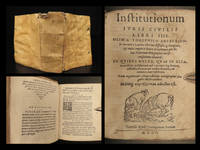
157150302<p>This 1571 Lyon edition of Justinian's "Institutionum civilium libri quatuor" was issued by Gulielmum Rovillium and prepared by Antonius Contius. As part of the Corpus Juris Civilis the work formed a central component of Roman legal study and authority drawing from earlier sources such as the Institutes of Gaius. The text includes a dedicatory epistle by Contius and associated material connected to Dorotheus and Theophilus reflecting its scholarly transmission in the early modern period. Very Good. Full vellum binding shows expected age wear and remains tight and secure text block complete with moderate toning and occasional marginal spotting. Sextodecimo 16mo single volume. Collation: 361 p. Edition: 1571. References: USTC 158328. Item Number SKU: 50302. PHOTOS AVAILABLE UPON REQUEST.</p> Gulielmum Rovillium hardcover
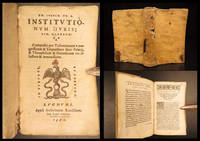
155619755<p><b>1556 LAW Justinian Institutes Theophilus Antecessor Byzantine Law Jacques Corte </b></p><p><i>"Freedom is the natural ability of everyone to do what he likes unless it is prohibited by law or by force."</i> </p><p><i>― </i>Justinian I </p><p>The<i> 'Institutes of Justinian' </i>is a portion of the full <i>Corpus Juris Civilis</i> largely based on the Institutes of Gaius. Justinian sought to reform Roman law and education. This work was originally intended to be used by law students but they were not solely used as a textbook they carried legal weight …as law! </p><p>Numerous jurists throughout history have made commentary on Justinian and created their own perspectives on the famed '<i>Corpus Juris Civilis</i>'. Sixth-century Byzantine jurist Theophilus Antecessor was one such mind who wrote a commentary on each portion of Justinian's '<i>Corpus Juris'</i>. This 1556 edition of Theophilus was edited by Jacques de Corte. </p><p>Item number: #19755</p><p>Price: $950</p><p>JUSTINIAN</p><p><b><i>Institutionum iuris civilis libri IIII</i></b></p><p>Venetiis : Apud Hieronymum Scotum 1556.</p><p><br /></p><p><u>Details</u>: </p><p>· Collation: Complete with all pages </p><p>o 14 671 3</p><p>o Signatures: a-z8 A-V8</p><p>· References: USTC 803781</p><p>· Language: Latin</p><p>· Binding: Vellum; tight and secure</p><p>· Size: ~4.25in X 3.25in 11cm x 8.5cm</p><p>Our Guarantee:</p><p>Very Fast. Very Safe. Free Shipping Worldwide.</p><p>Customer satisfaction is our priority! Notify us with 7 days of receiving and we will offer a full refund without reservation!</p><p>19755</p><p>Photos available upon request. </p> Hieronymum Scotum hardcover
1576100910Paris: Nicolas Chesneau & Jean Poupy 1576. 12mo. Woodcut title vignette. 86 629 11 pp. Contemporary calf covers with single fillet gilt border and gilt-stamped centerpiece spine in compartments with raised bands small gilt fleuron in compartments; portions of spine head and tail lacking exposing sewing and raised band cords tips worn contemporary manuscript notes on rear pastedown Nicolas Chesneau & Jean Poupy hardcover
15861302781586. JUSTINIAN ALDOBRANDINI Silvestro editor. Institutiones iuris civilis D. Iustiniani Imp. Venetiis: Apud Iuntas 1568. Octavo contemporary vellum-covered boards with early rebacking of blind-stamped vellum with raised bands. $3200.Giunta printing of the Institutes of Justinian edited and annotated by noted legal scholar Aldobrandini in a binding blind-stamped 1586.The Code of Justinian was a ""collection of laws and legal interpretations developed under the sponsorship of the Byzantine emperor Justinian I from 529 to 565 CE. Strictly speaking the works did not constitute a new legal code. Rather Justinian's committees of jurists provided basically two reference works containing collections of past laws and extracts of the opinions of the great Roman jurists. Also included were an elementary outline of the law and a collection of Justinian's own new laws. The Justinian code consists of four books: 1 Codex Constitutionum 2 Digesta or Pandectae 3 Institutiones and 4 Novellae Constitutiones Post Codicem The Institutiones compiled and published in 533 under Tribonian's supervision and relying on such earlier texts as those of Gaius was an elementary textbook or outline of legal institutions for the use of first-year law students"" Britannica. The Institutiones were largely forgotten during the early medieval period but a first printed edition reappeared in 1468. This 1568 printing of Aldobrandini's influential edition came from the press of the famed Giunti or Giunta family of printer-publishers with their fleur-de-lys printer's mark in red on the title page; the text is attractively printed in black and red in double columns with decorative initials and extensive commentary surrounding the main text. Graesse III:505. Front pastedown with ink owner inscription dated Jan. 24 1882; title page with early ink owner inscription. Contemporary hand-inked list of chapter headings at back; early underlining throughout and occasional small annotations.A few sections with light waterstaining final leaf with edges chipped; text block sound with a few slightly proud signatures binding darkened a bit rubbed and slightly bowed. A handsome copy in an early vellum binding. hardcover
1560002437Venice 1560 Apud Iuntas Giunta. Bound in vellum with leather spine title52391 ff. printed in black and red three woodcut illustrations in text plus one full page. Vellum covers have been repaired and I believe the spine label was added at the time of repair. Copy with a tide line quite occasional and brief worm holes four pages with faded brief marginal notations. While Worldcat lists this particular edition it finds no copies in any library. I found a copy listed at auction in 2005 but that copy with considerable repairs. This copy lists Sylvestro Albrandini as editor and this has a two column text with linear gloss. Title page and colophon both with Guntia device and dated 1560. Sharp copy with no repairs or underlining except as noted an 1890 ownership initial and date inside front cover and four lines in Latin on ffep. hardcover
1505707811505. 1505 Paris Edition of the Institutes Justinian I 485-565 CE Emperor of the East. Accursius Accorso Francisco c.1182-c.1260 Glossator. Chappuis Jean Editor. Institutiones Imperiales: Ordinate Glosis Textuales Divisiones Habentur. Patescit Grecum Utile cum Expositione Succincta. Universi Tituli Alphabetico Ordine Ponuntur. Summaria Rubra Multis Adiectis Sunt Textibus Immixta. Orbibus Variis Vallata Civilis Arbor hic exaratur fo. cxvij. Plurima et Textuum et Glosarum Turpis Menda Expurgatur. Tituli Continuatione Patenti Redduntur Clari. Involute Materie Nectuntur Tabula Singulari. Medulle Glosarum Omnibus in Marginibus Sunt Extracte. Versibus Rubrice Iuris Cesarei Leguntur Aperte. Multiplices bone Glose plerisque Locis Sunt Apposite. Paris: Per Udalricum Gering et Magistrum Bertholdum Rembolt December 5 1505. xii 117 ff. Text in parallel columns with linear gloss. First letters of the verses that follow Institutiones Imperiales on title page from an anagram "opus optimum." Two-page table of descents. Folio 10" x 7". Contemporary blind-stamped calf raised bands to spine clasps lacking hasps present. Moderate rubbing and a few minor scuffs to boards heavier rubbing to extremities corners and spine ends worn calf worn away from two spine bands a few cracks to text block signature n ff. 97-104 detached and moderately edgeworn. Printed throughout in red and black large crible printer device and decorative borders to title page crible initials and table of descents. Moderate toning and occasional light soiling and foxing early annotations to endleaves and title page additional early annotations and underlining to some leaves in the text. $5000. Commissioned by the Emperor Justinian in 530 CE the body of writings known collectively as the Corpus Juris Civilis restated all existing Roman law. It has four components: the Code Novels Institutes and Digest. Intended for students the Institutes is a synopsis of the reformed legal system. Rediscovered during the late middle ages it became the standard textbook of Roman law. The main text of our 1501 imprint is accompanied by Accorso's great Glossa Ordinaria or Magistralis. A Professor of Law at Bologna and a leading figure in the revival o. unknown books
158564252Venedig, Giovanni Varisco (Johannes Variscus) & Paganino de Paganini (Paganius de Paganinis) (am Ende: Alexander Gryphius Excudebat), 1585. 8°. 48 nn., 366 num Bll. (ohne die beiden weißen Bll. am Ende), Pgmt. d. Zt. m. durchzogenen Bünden, goldgepr. Rückenschild u. dreiseitigem Farbschnitt.
160024443Lugduni (Lyon), ohne Verlag, 1600. 4°. Mit Titelvignette und vielen Bordüren. ca. 1200 Seiten (z.T. unpag.). Pergamenteinband der Zeit. [5 Warenabbildungen]
15711706300001Lugduni : Apud Gulielmum Rouillium sub scuto Veneto 1571. Acceptable. 12mo. Contemporary limp vellum ink title. Loss to bottom half of spine. An unsophisticated copy. Contemporary signatures to front blanks and title page. Scattered foxing faint marginal dampstaining. <br> Agylaeus was a Dutch politician in the mid-16th century who published many classical texts on jurisprudence. In this work Agylaeus complies the edicts and laws of Justinian with additional laws issued by Eastern Roman Emperors such as Zeno the Isaurian Leo I the Thracian and even the Holy Roman Emperor Frederick II. <br> Contents: Iustini Imperatoris Augusti Novellae constitutions; Tiberii Imperatoris De divinis domibus constitution; Aliae aliquot constitutiones Iustiniani Iustini Tiberii ex libro Iuliani Antecessoris; Sacrum pragmaticum Tiberii Augusti De confiramtione constitutionum Iustini Imperatoris De filiis colonorum et liberarum; Imperatoris Leonis Augusti Novellae constitutions; Zenonis Imperatoris De novis operibus constitution; Canones sanctorum et venerandorum apostolorum; Consuetudines feudorum; Constitutiones Friderici Secundi Imperatoris; Extravagantes quas nonnulli XI. Collationem appellant; Liber de pace Constantiae; Henrici Stephani Castigationes in Leonis Imperatoris constitutiones. Lugduni : Apud Gulielmum Rouillium, sub scuto Veneto hardcover
1561709811561. Basel: Per Ioannem Hervagium 1561. First edition. Basel: Per Ioannem Hervagium 1561. First edition. Edited by a "Reformed" Lawyer and Dedicated to Queen Elizabeth I Justinian I 485-565CE Emperor of the East. Haloander Gregor 1501-1531 Translator and Editor. Agylaeus Henricus 1532 or 1533-1595 Editor. Iustiniani Principis Novellae Constitutiones Latine Ex Gregorii Haloandri et Henrici Agylaei Interpretatione Ad Grecum Scrimgeri Exemplar Nunc Primum Edite. Quibus Suis Locis Interferiter Quicquid Vetus Versio Amplius Habet Atque Proximis Editionib. Ex Vetustis Libris Ac Iuliani Epitme Aspersum Est. In qua Editione Henrici Agylaei Opera Diligentem tum Variarum Lectionum Annotationem Tum Haloandrice Versionis Castigationem Invenire est. Item Eiusdem Iustiniani Edicta Iustini Tiberii Leonis Philosophi Constitutiones; & Una Zenonis Quae ad Titulum Codicis de Privatis Aedificiis Pertinet: Henrico Aegylaeo Interprete. Postremo Canones Sanctorum Apostolorum per Clementem in Unum Congesti Gregorio Haloandro Interprete. Basel: Per Ioannem Hervagium 1561. xxxii 598 2 pp. Quarto 9-1/4" x 6-1/2". Contemporary limp vellum early hand-lettered title to spine ties lacking. Minor soiling a few small stains and few tiny worm holes some wear to corners a few minor tears to spine ends front joint starting at ends front pastedown worn and partially detached text block somewhat loose vellum beginning to crack though rear pastedown. Faint dampstaining to head of text block moderate toning foxing and light browning in places mild edgewear to corners of preliminaries recent early owner inscription to front free endpaper. $2500. First edition. This collection of legal texts begins with the first appearance of a revised edition with original commentary by teh Dutch jurist Agylaeus of Gregor Haloander's complete translation of the Novels one of the four components of the Corpus Juris Civilis. This is followed by a group legal texts from other sources edited with commentary by Agylaeus Including: De Indulgentia Tributariorum Reliquorum Tiberii Imperatoris de Divinis Domibus Constitutio Imperatoris Leonis Augusti Novellae Constitutiones Imperatoris Leonis Augusti Novellae Constitutiones and Zenonis Imperatoris de Novis Operibus Constituio Eodem Interprete. He also includes Haoloander's version of the Apostolic Canons of Pope Cleme. unknown books