Diodorus SiculusBiblio.com
106 résultats
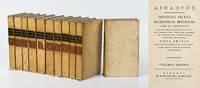
179332387AB1793. Editio Bipontina / Bilingual Edition in Greek and Latin. 11 Volumes complete set. Biponti Zweibrücken Ex typographia Societatis 1793. Octavo. Pagination: Volume I: CLXXXII 476 pages / Volume II: 565 pages / Volume III; 645 pages / Volume IV: LXXII 400 pages / Volume V: 638 pages / Volume VI: 680 pages / Volume VII: 680 pages / Volume VIII: 568 pages / Volume IX: 553 pages / Volume X: 493 pages plus 1 unnumbered page of Corrigenda / Volume XI: 456 pages. Hardcover / Original full vellum with gilt lettering and ornament on spine. Very good condition with only minor signs of wear. Very few Volumes with the pages a bit dusty and only some Volumes with a minor faded dampstain to the outer margins. From the library of Augustus Langdon Bayswater with his Exlibris to pastedown. Diodorus Siculus or Diodorus of Sicily Diódoros; fl. 1st century BC was an ancient Greek historian from Sicily. He is known for writing the monumental universal history Bibliotheca historica in forty books fifteen of which survive intact between 60 and 30 BC. The history is arranged in three parts. The first covers mythic history up to the destruction of Troy arranged geographically describing regions around the world from Egypt India and Arabia to Europe. The second covers the time from the Trojan War to the death of Alexander the Great. The third covers the period to about 60 BC. Bibliotheca meaning 'library' acknowledges that he was drawing on the work of many other authors. Diodorus' universal history which he named Bibliotheca historica "Historical Library" was immense and consisted of 40 books of which 15 and 1120 survive: fragments of the lost books are preserved in Photius and the Excerpts of Constantine Porphyrogenitus. It was divided into three sections. The first section books IVI deals with the mythic history of the non-Hellenic and Hellenic tribes up to the destruction of Troy and is geographical in theme describing the history and culture of Ancient Egypt book I of Mesopotamia India Scythia and Arabia II of North Africa III and of Greece and Europe IVVI. The next section books VIIXVII recounts the history of the world from the Trojan War down to the death of Alexander the Great. The last section books XVII to the end concerns the historical events from the successors of Alexander down to either 60 BC or the beginning of Julius Caesar's Gallic Wars. The end has been lost so it is unclear whether Diodorus reached the beginning of the Gallic War as he promises at the beginning of his work or as evidence suggests old and tired from his labours he stopped short at 60 BC. Diodorus selected the name "Bibliotheca" in acknowledgment that he was assembling a composite work from many sources. Identified authors on whose works he drew include Hecataeus of Abdera Ctesias of Cnidus Ephorus Theopompus Hieronymus of Cardia Duris of Samos Diyllus Philistus Timaeus Polybius and Posidonius. Wikipedia hardcover
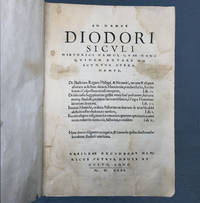
153124Basel Heinrich Petri 1531. En 4º 258 x 191 mm. Foliación: 24 374 363 reales 1 p.; Fol. Muy buen estado general bien conservado. Letras capitulares. Hojas limpias papel verjurado gran impresor. rastro de insecto xilógrafo en la primera parte pocas hojas. Algunas manchas pero esporádicas. apostillas marginales. Un par de pequeñas lagunas sin pérdida significativa ver en fotos algo corto de márgenes. Encuadernación moderna seguramente siglo XVIII en buen estado en pergamino de época. CCPB000298467-9<br /><br />Rara en comercio. No hay referencias en Palau a esta edición.<br /><br />Primera edición de Diodoro impresa por el famoso impresor de Basilea Henricus Petrus 1508-1579 mejor conocido como el impresor de la "Cosmographia" de Sebastián Münster.<br /><br />San Jerónimo Chronica sitúa la madurez de Diodoro hacia el 49 a. C. lo que coincide con las afirmaciones del propio autor. La fecha más antigua que menciona Diodoro es su visita a Egipto en la 180ª Olimpiada entre el 60 a. C. y el 56 a. C. que fue recordada por un tumulto en demanda de la pena de muerte para un ciudadano romano que habÃa matado accidentalmente un gato animal sagrado para los antiguos egipcios Bibliotheca historica 1.41 1.83.<br />El último hecho recordado por Diodoro es la venganza de Octavio César Augusto sobre la ciudad de Tauromenium hoy Taormina cuya negativa a ayudarle condujo al futuro emperador a una derrota naval en el 36 a. C. Diodoro no da muestra de haberse enterado de la conversión de Egipto en provincia romana —lo que ocurrió en el 30 a. C.— por lo que seguramente publicó su obra completa antes de esa fecha. Diodoro afirma que empleó treinta años en la composición de su Historia y que emprendió varios peligrosos viajes a través de Europa y Asia para completar sus investigaciones históricas; sin embargo los crÃticos modernos han advertido varios errores sorprendentes que un testigo ocular no deberÃa haber cometido.<br /><br />Su Historia a la que llamó Bibliotheca Historica consta de 40 volúmenes divididos en tres secciones:<br />La primera sección libros de I a VI narra la historia por regiones geográficas: historia y cultura de Egipto libro I Mesopotamia India Escitia y Arabia libro II Ãfrica del Norte libro III asà como Grecia y Europa libros IV a VI.<br /><br /><br />En la siguiente sección libros VII a XVII cuenta la Historia del mundo desde la guerra de Troya hasta la muerte de Alejandro Magno.<br />La última sección libros XVIII a XL trata de los acontecimientos históricos desde la muerte de Alejandro Magno hasta el año 60 a. C. o hasta el comienzo de la guerra de las Galias por Julio César en el 58 a. C. el final está perdido y no está claro si Diodoro llegó hasta el comienzo de esa guerra como promete en el prefacio de su obra o si como sugiere la evidencia viejo y cansado de escribir la terminó en el 60 a. C.<br />Eligió el nombre de Bibliotheca en reconocimiento de la multiplicidad de fuentes que le sirvieron para componer la obra. Entre los autores que han podido ser identificados figuran Hecateo de Mileto Ctesias Éforo Teopompo Jerónimo de Cardia Duris de Samos Diulo Filisto Timeo Polibio y Posidonio.<br /><br /><br />C.H. Oldfather escribió en su introducción de su traducción de Diodoro:<br /><br />"Mientras que tales caracterÃsticas excluyen a Diodoro de entre los historiadores más capaces de la Antigüedad hay todas las razones para creer que utilizó las mejores fuentes y las reprodujo fielmente. Su Primer Libro que trata casi exclusivamente de Egipto es el relato literario más completo de la historia y costumbres de ese paÃs después de Heródoto. Los libros II a V cubren un espectro más amplio y debido a la inclusión de abundante material mitológico tienen un valor mucho menor. En el periodo del 480 al 301 a. C. que desarrolla en forma de anales y cuya fuente principal es la Historia Universal de Éforo su importancia es variable según si es la única fuente disponible de un periodo o se han conservado fragmentos de otros autores superiores. Al medio siglo que va del 480 al 430 a. C. TucÃdides le dedica poco más de 30 capÃtulos; Diodoro lo cubre de forma más completa 11.37 - 12.38 y es el único relato literario sin interrupción para la cronologÃa del periodo. Para los años 362-302 a. C. Diodoro es otra vez la única fuente literaria ininterrumpida y ofrece el único relato cronológico de periodo de Filipo y completa a los escritores mencionados y a otras fuentes contemporáneas en muchos aspectos. Para el periodo de los sucesores de Alejandro 323-302 a. C. libros XVIII a XX es la principal autoridad y su historia del periodo adquiere por tanto una importancia que no alcanza para los demás años."<br /><br />Como ya se indicó la inmensa obra de Diodoro no se ha conservado intacta: tenemos los cinco primeros libros y los numerados del X al XX. El resto solo nos ha llegado en fragmentos preservados en Focio y los resúmenes de Constantino Porfirogénito.<br />La editio princeps de Diodoro fue una traducción latina de los cinco primeros libros realizada por Poggio Bracciolini y publicada póstumamente en Bolonia en 1472. La primera impresión del original griego en Basilea en 1535 contenÃa únicamente los libros XVI a XX y fue el trabajo de Vincentius Opsopoeus. Todos los libros y fragmentos sobrevivientes fueron publicados solo en 1559 por H. Stephanus en Ginebra.<br /><br /><br />Otros responsables:<br />Petri Heinrich 1508-1579 imp.<br />Diodoro SÃculo. De illustrium regum Philippi & Alexandri . praeclare factis . lib. II.<br />Diodoro SÃculo. De fabulosis aegyptiorum gestis . lib. VI.<br />Monachus Johannes. Ex libris historiarum suarum de vita Alex¯adri . lib. I.<br />Bocatius. Aliquot insignum foeminarum . historias .lib. X.<br />Cospo Bartholomaeus trad.<br />Bracciolini Poggio 1380-1459 trad.<br /><br />El trad. Bartholomaeus Cospo aparece en p. 1 y en p. 133 como Angelo Cospo.<br /><br />Fuentes: Wikipedia & CCPB
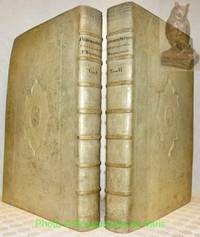
17467807Amstelodami Amsterdam Sumptibus Wetstenii. 1746. 2 vols. Folio. pp. xxxviii 731 v; iv 666 cviii index. With half title additional engraved title and portrait of Wesseling to volume one. Letterpress titles printed in red and black with engraved vignettes. Text in Greek and Latin. Occasional minor spotting. Contemporary Dutch blind-stamped vellum gilt a couple of chips to head and tail of spine of second volume lack free end-paper to vol I. Dibdin sums up the importance and beauty of this edition: the splendour and critical excellence of all former editions sayes Harles are eclipsed by this of Peter Wesseling which contains everything to be found in the preceding ones; and besides a learned preface useful notes and various illustrations of the author presents us with the readings of better MSS. and very full and perfect indexes. Dibdin I 497 Book hardcover
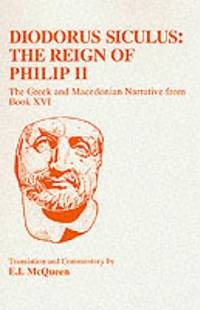
199534997Bristol Classical Press. New. 1995. 1853993859 . FREE UPGRADE to Courier/Priority Shipping Upon Request IN STOCK AND IMMEDIATELY AVAILABLE FOR SHIPMENT - FLAWLESS COPY BRAND NEW PRISTINE NEVER OPENED - 196 pages; 5 1/2 x 8 1/2 inches -- This edition one of the BCP Classics Companion Series provides a translation and detailed commentary of the Greek and Macedonian narrative of Diodorus Book XVI. An outstanding general statesman and diplomat Philip II inherited a kingdom near collapse and transformed it into the greatest power in the Mediterranean world. But for all its significance his reign is badly served by the surviving writers of Greek literature. The loss of the major contemporary historians has left us dependent for our knowledge on the speeches of the Attic orators especially the hostile Demosthenes and on the 16th Book of Diodorus Siculus who though he lived some 300 years later has bequeathed the only detailed account of Philip's reign in Macedonia and the Greek mainland. -- Preface Introduction 1 The Life and Works of Diodorus 2 Diodorus' Purpose of Writing 3 Diodorus' Chronological Scheme 4 The Sources of Diodorus in the Sixteenth Book 5 Diodorus' Portrait of Philip 6 Inaccuracies in Diodorus 16 Book Sixteen: Greek and Macedonian Narrative Commentary on the Text Appendix A: Philip II and the Transformation of Macedonia Appendix B: The Death of Philip Bibliography -- with a bonus offer-- . Bristol Classical Press unknown
151011701Paris: Jehan Barbier venundantur in vico Sancti Iacobi sub signo Ensis 1510. Hardcover. Very good. Full leather sometime rebacked in calf with gilt decoration and black morocco title label marbled end papers and page edges 18 x 13 cm tp with ink institution stamp. The text has no page numbers rather a �Folio� at the top right corner of the recto of each leaf. This has 123 folios 246 pp. plus 11 pp. Index and 1 p. afterword. 258 pp. total including the title page. a-v8/4 x6 y4. a-v alternates 8s and 4s. Jean Barbier was a printer in Paris during the years 1502-1516 and used the address in the imprint from 1508. His printer�s emblem on the title page was used 1509-1514 and the dent visible in the top rule limits this printing to 1510. See A Typographical Catalogue of Books printed in France 1501-1520 in the British Library Renouard 33 Device of Jean Barbier.Translation from the Greek into Latin by Pogius Florentinus; edited by Egidius de Maseriis.Diodorus Siculus fl. 1st century BC Greek historian born at Agira Sicily. His monumental work once consisted of 40 parts; now only fifteen are known. The book we offer is the first third of the surviving parts which forms a distinct period that of the mythic history of the non-Greek and Greek tribes up to the destruction of Troy. It follows a geographical arrangement describing the history and culture of ancient Egypt book I of Mesopotamia India Scythia and Arabia book II of North Africa book III and of Greece and Europe books IV-VI. The text is in Latin. Jehan Barbier, venundantur in vico Sancti Iacobi sub signo Ensis hardcover
174678344Amstelodami - Amsterdam : RBL Jacobi Wetstenii 1746. 413x265mm. 1 ff. faux-titre frontispice page de titre 14 ff. 1 planche portrait de Pierre Wesseling 731 p. 3 ff. tome 2 page de titre 1 f. 666 p. 56 ff. index reliure plein parchemin de lՎpoque dos ˆ 7 nerfs titre et tomaison calligraphiÂŽs ˆ lÕencre plats ornÂŽs ˆ froid tranches jaspÂŽes. PremiÂre ÂŽdition de Diodore de Sicile donnÂŽe par Pierre Wesseling dans une reliure de type germanique. TrÂs bel exemplaire. 7400 RBL Jacobi Wetstenii unknown