7 résultats
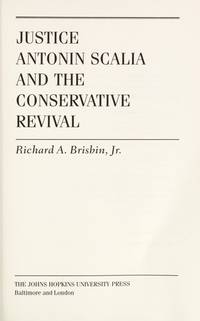
199837788Baltimore:: Johns Hopkins University Press. Fine. 1998. Paperback. 0801860946 . First paperback printing. Fine in pictorial wraps. . Johns Hopkins University Press, paperback books
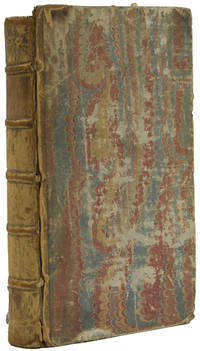
1902291158Richmond Virginia: Clyde W. Saunders Printer 1902. Hard Cover. Good binding. An uncommon account of the impeachment trial against Clarence J. Campbell judge of the county court of Amherst in 1902 by the Virginia General Assembly. The story begins when Campbell dismissed the case of a druggist having sold twenty-five barrels of whiskey in a year despite local Temperance laws. A Richmond minister then wrote an article calling Judge Campbell practically corrupt and certainly pro-liqueur trafficking to which the Judge responded by bringing him to court. Despite failing to land a contempt of court charge The Honorable Clarence Campbell found his revenge by striking the minister with a riding crop multiple times after the court adjourned though circumstances leading to this altercation are inconclusive. A stacked court then acquitted Judge Campbell of felonious assault strangely enough with the defense that a Virginian had a right to beat any Yankee that insulted them. This resulted in mass rioting in the streets by pro- and anti-Campbell factions all while the judge and his circle hosted a raucous into-the-wee-hours party which of course respected the Temperance laws and presumably contained only prescribed whiskey. In this account Judge Campbell becomes one of the few circuit court judges to be successfully impeached after outrage and a petition calling for his dismissal. Cheers to that! Binding is fragile and somewhat shaken; front hinge cracked. Quarter black cloth over contemporary paper boards with a paper spine label. OCLC notes two institutional holdings. Good binding. Clyde W. Saunders, Printer unknown books
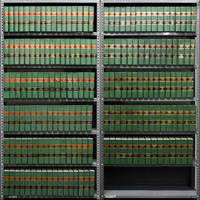
2007549552007. North Carolina Court of Appeals Reports. Raleigh NC: Administrative Office of the Courts. Vols. 1-180 1968-2007. Ex-private law library very good. See digital image. $795. unknown books
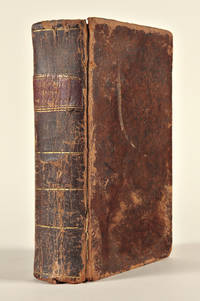
1802WRCAM24229Albany: Printed for Collier and Stockwell 1802. 796pp. Contemporary calf morocco label stamped in gilt. Calf scuffed and worn front hinge cracking rear hinge tender. Light even tanning; foxing. Good. An important - and possibly the most extensive - record of Congressional debates concerning the nature of the Judiciary and its establishment as an independent branch of the government in the wake of the Judiciary Act of 1801. Two versions of these debates were printed in 1802: one in Philadelphia; and the present Albany New York version which bears imprints by two different sets of printers. This Albany version differs from the Philadelphia printing in that it includes both the Senate and House debates. It also appears to have been edited from a pro- Jeffersonian viewpoint mentioning in the preface that the "judicial power has armed itself in defence of its own supposed rights and independence." <br> <br> The election of 1800 represented the end of Federalist control of the Executive branch after twelve years. On the eve of Jefferson's inauguration President Adams nominated and the Senate confirmed John Marshall as chief justice of the Supreme Court. In addition Congress quickly passed a law reducing the number of Supreme Court justices to five took away their Circuit Court duties and reorganized the Circuit Courts with sixteen new justices all of whom were nominated and confirmed just weeks prior to the inauguration. The intention was to keep the Judiciary as an adjunct of the Federalists. The Federalists waited about a year to organize and one of the first measures introduced in the Senate in 1802 was a repeal of the Act of 1801 at Jefferson's insistence. The Senate deadlocked and Vice President Burr cast the deciding vote against the measure but the act was repealed after a subsequent vote. The Supreme Court went back to having six justices all of whom headed one of six U.S. Circuit Courts. <br> <br> Repeal of the 1801 Judiciary Act helped reduce Democrat-Republican influence in the U.S. courts; but as with so many triumphs this victory came with an unanticipated result: one minor aspect of the 1801 Act was the appointment by the President of the justices of the peace for Washington and Alexandria. On March 2 Adams nominated and the next day the Senate confirmed forty-two justices but four of the commissions had not been delivered by midnight when Adams' term expired. One of these was to William Marbury who sued after Jefferson ordered Secretary of State Madison to withhold the commission. The case went to the Supreme Court in 1803 where Marbury lost primarily because the Court had just emerged from the Federalist-Democrat-Republican political thicket and a new struggle with the executive branch was to be avoided. However the case also included a hidden doorway through which Marshall hustled to declare the independence of the Judiciary from the blatant partisanship of recent years and claim its equality with the other two branches of government. In addition the Court ruled that Section 13 of the Judiciary Act of 1789 which authorized such a writ was contrary to the Constitution and therefore invalid. It was the first time the Supreme Court declared a law of Congress void but this was a power the Court itself possessed with the greatest timidity. This was the only case while Marshall was chief justice in which the Court specifically reversed an Act of Congress. The concept would not be employed again by the full court until the Dred Scott decision fifty-four years later. COHEN 1203. SHAW & SHOEMAKER 3271. SABIN 19101 variant imprint. Printed for Collier and Stockwell unknown books
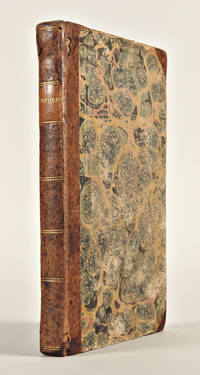
1802WRCAM32306Philadelphia 1802. 2324pp. Half title. Contemporary three-quarter morocco and marbled boards spine gilt leather label. Some scattered foxing lightly toned. About very good. An important record of the evolution of American law and the development of judicial independence in the early republic. This is one of two printings of the debates over the repeal of the Judiciary Act of 1801. This version is edited from a Federalist perspective with critical comments on the debates as recorded in the NATIONAL INTELLIGENCER an organ of the Jeffersonian Republicans. The debate over the repeal of the Judiciary Act of 1801 addressed issues of judicial review and the role size and authority of the judiciary branch issues which led ultimately to the landmark case of Marbury v. Madison. The 1801 act passed by a Federalist Congress reduced the number of Supreme Court justices from six to five created new circuits and allowed outgoing President John Adams to appoint several new federal judges the so-called "midnight judges." Jefferson opposed the 1801 act and though it was overturned by the Judiciary Act of 1802 the federal judiciary remained fundamentally unaltered. The Marbury v. Madison decision of 1803 solidified the notion of judicial review of legislation and elevated the Supreme Court to a level of equality with the executive and legislative branches. <br> <br> A vital document exemplifying the debates over the judiciary in the Federalist era and emblematic of the political skirmishes of the day. COHEN 1058. SABIN 19105. SHAW & SHOEMAKER 3273. OXFORD COMPANION TO THE SUPREME COURT pp.474- 75. hardcover books
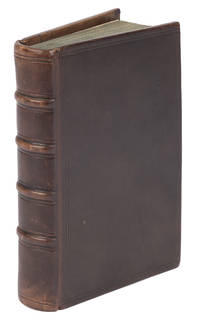
1559717111559. London 1559. London 1559. "The Booke That Teacheth" Great Britain. Justices of the Peace. Courts Leet and Baron. The Contentes of This Boke. Fyrst the Booke for a Iustice of Peace. The Boke that Teacheth to Kepe a Courte Baron Or a Lete. The Boke Teachynge to Kepe a Courte Hundred. The Boke Called Returna Brevium. The Boke Called Carta Feodi Conteynynge the Forme of Dedes Releasses Indentures Obligacions Acquitaunces Letters of Atturney Letters of Permutacion Testamentes And Other Thynges. And the Boke of the Ordinaunce to be Observed by the Offycers of the Kynges Escheker for Fees Takinge. London: In Fletestreete within Temple barre At the Signe of the Hande and Starre by Richard Tottil The XIII. Daye of Maye. Anno Domini 1559. 195 11 ff. Lacking Final two blank leaves. Octavo 5-1/4" x 3-1/2". Recent period-style calf blind rules to boards raised bands to spine endpapers renewed blank interleaves added in a few places. Moderate toning edges trimmed touching headlines in a few places worming with occasional minor loss to text repairs to corners of a few leaves. Faint stain and faint fragment of an annotation to final leaf early illegible owner signatures to title page. $2500. First printed in 1505 by Richard Pynson this is a handy anthology of treatises for justices of the peace sheriffs bailiffs. It includes the Carta Foedi and exchequer ordinance. It is sometime attributed erroneously to Sir Anthony Fitzherbert. OCLC locates 5 copies of this edition in North American law libraries Columbia Harvard LA County Library of Congress University of Minnesota. English Short-Title Catalogue S102175. Beale A Bibliography of Early English Law Books T154. unknown books
1746217802London: Various publishers 1746. Mostly first editions unless otherwise noted below. 1 vols. 8vo. Contemporary calf backed marbled boards. Binding worn internally clean. Mostly first editions unless otherwise noted below. 1 vols. 8vo. Courts Martial of Mathews and Lestock. A good single collection relating to the trials of Admirals Mathews and Lestock which resulted from their engagement with the French and Spanish fleet near Toulon in February 1744. The battle part of the War of the Austrian Succession is said to have "marked the lowest pitch reached in discipline and fighting and efficiency by the fleet in the 18th century and it had a very bad effect in confirming the pedantic system of tactics set up by the old Fighting Instructions . " - Encyclopedia Britannica 11th ed. To the puzzlement of many contemporary observors Rear-Admiral Richard Lestock who was second in command and who kept his distance from the battle was acquitted. In contrast Vice-Admiral Thomas Mathews who engaged the enemy however confusedly was censured and was one of seven ship-captains to be discharged from the service.<br/><br/>A hand-written table of contents on the front free flyleaf gives a list of the contents amended in pencil by a later hand. <br/><br/>1. Corbett Thomas. An account of the expedition of the British fleet to Sicily in the years 1718 1719 and 1720. Under the command of Sir George Byng Bart. . Collected from the Admiral's manuscripts and other original papers. With folding table. For J. and R. tonson 1739. Third edition. Lacking final leaf pp. 95-96. Sir George Byng the naval hero was the father of Admiral John Byng who presided over the cout martial of Lestock and was himself court-martialed and executed a few years later. ESTC T 142387.<br/><br/>2. Mathews Thomas. Authentick letters from Admiral Mathews to the Sec--t----s of st--te the L----ds of the Ad------ty &c. Relating to his expedition to the Mediterranean with their answers . 2 5-29 29-30 30-68 pp. Printed for W. Webb. Title leaf detached. ESTC T 22798.<br/><br/>3. Mathews Thomas. Admiral Mathews's conduct in the late engagement vindicated. Wherein the whole affair is compendiously stated. The several pieces published by Mr. Lestock examined with candor. . By a gentleman of the Royal Navy. For M. Cooper 1745. Lacking half-title. ESTC T 115878<br/><br/>4. Mathews Thomas. The Charge of Thomas Mathews Esq; also the answer and defence of Admiral Mathews to the said charge &c. For E. Cooper n.d. `746. ESTC T 182897.<br/><br/>5. Lestock Richard. Vice-Adm--l L-st-k's Account of the Late Engagement near Toulon between His Majesty's fleet and the fleets of France and Spain : as presented by him the 12th of March 1744-5 : also letters to and from Adm---l L-st--k relating thereto since his arrival in England with notes. London: for M. Cooper 1745. ESTCT4221.<br/><br/>6. Lestock Richard. Vice-Admal Lestock's recapitulation as spoke by him at the Bar of the Honble House of Commons on Tuesday the 9th of April 1745. Containing his remarks on the evidence that have been examined . printed for John Millan 1745. ESTC T 177090.<br/><br/>7. Lestock Richard. The sentence pronounc'd by the Court-martial sitting aboard His Majesty's Ship the Prince of Orange at Deptford on Tuesday the 3d of June 1746 on Vice-Admiral Lestock. printed for M. Cooper 1746. ESTC T 47456. Provenance: Philip.C. Duschnes; Paul Peralta-Ramos with stamp Various publishers unknown books