60 résultats
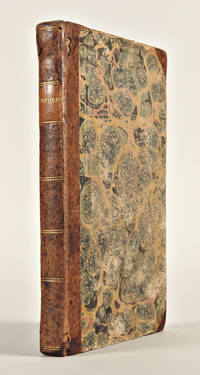
1802WRCAM24229Albany: Printed for Collier and Stockwell 1802. 796pp. Contemporary calf morocco label stamped in gilt. Calf scuffed and worn front hinge cracking rear hinge tender. Light even tanning; foxing. Good. An important - and possibly the most extensive - record of Congressional debates concerning the nature of the Judiciary and its establishment as an independent branch of the government in the wake of the Judiciary Act of 1801. Two versions of these debates were printed in 1802: one in Philadelphia; and the present Albany New York version which bears imprints by two different sets of printers. This Albany version differs from the Philadelphia printing in that it includes both the Senate and House debates. It also appears to have been edited from a pro- Jeffersonian viewpoint mentioning in the preface that the "judicial power has armed itself in defence of its own supposed rights and independence." <br> <br> The election of 1800 represented the end of Federalist control of the Executive branch after twelve years. On the eve of Jefferson's inauguration President Adams nominated and the Senate confirmed John Marshall as chief justice of the Supreme Court. In addition Congress quickly passed a law reducing the number of Supreme Court justices to five took away their Circuit Court duties and reorganized the Circuit Courts with sixteen new justices all of whom were nominated and confirmed just weeks prior to the inauguration. The intention was to keep the Judiciary as an adjunct of the Federalists. The Federalists waited about a year to organize and one of the first measures introduced in the Senate in 1802 was a repeal of the Act of 1801 at Jefferson's insistence. The Senate deadlocked and Vice President Burr cast the deciding vote against the measure but the act was repealed after a subsequent vote. The Supreme Court went back to having six justices all of whom headed one of six U.S. Circuit Courts. <br> <br> Repeal of the 1801 Judiciary Act helped reduce Democrat-Republican influence in the U.S. courts; but as with so many triumphs this victory came with an unanticipated result: one minor aspect of the 1801 Act was the appointment by the President of the justices of the peace for Washington and Alexandria. On March 2 Adams nominated and the next day the Senate confirmed forty-two justices but four of the commissions had not been delivered by midnight when Adams' term expired. One of these was to William Marbury who sued after Jefferson ordered Secretary of State Madison to withhold the commission. The case went to the Supreme Court in 1803 where Marbury lost primarily because the Court had just emerged from the Federalist-Democrat-Republican political thicket and a new struggle with the executive branch was to be avoided. However the case also included a hidden doorway through which Marshall hustled to declare the independence of the Judiciary from the blatant partisanship of recent years and claim its equality with the other two branches of government. In addition the Court ruled that Section 13 of the Judiciary Act of 1789 which authorized such a writ was contrary to the Constitution and therefore invalid. It was the first time the Supreme Court declared a law of Congress void but this was a power the Court itself possessed with the greatest timidity. This was the only case while Marshall was chief justice in which the Court specifically reversed an Act of Congress. The concept would not be employed again by the full court until the Dred Scott decision fifty-four years later. COHEN 1203. SHAW & SHOEMAKER 3271. SABIN 19101 variant imprint. Printed for Collier and Stockwell unknown books
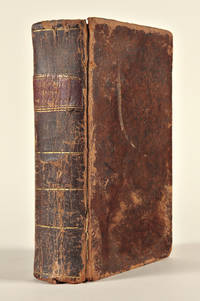
1802WRCAM32306Philadelphia 1802. 2324pp. Half title. Contemporary three-quarter morocco and marbled boards spine gilt leather label. Some scattered foxing lightly toned. About very good. An important record of the evolution of American law and the development of judicial independence in the early republic. This is one of two printings of the debates over the repeal of the Judiciary Act of 1801. This version is edited from a Federalist perspective with critical comments on the debates as recorded in the NATIONAL INTELLIGENCER an organ of the Jeffersonian Republicans. The debate over the repeal of the Judiciary Act of 1801 addressed issues of judicial review and the role size and authority of the judiciary branch issues which led ultimately to the landmark case of Marbury v. Madison. The 1801 act passed by a Federalist Congress reduced the number of Supreme Court justices from six to five created new circuits and allowed outgoing President John Adams to appoint several new federal judges the so-called "midnight judges." Jefferson opposed the 1801 act and though it was overturned by the Judiciary Act of 1802 the federal judiciary remained fundamentally unaltered. The Marbury v. Madison decision of 1803 solidified the notion of judicial review of legislation and elevated the Supreme Court to a level of equality with the executive and legislative branches. <br> <br> A vital document exemplifying the debates over the judiciary in the Federalist era and emblematic of the political skirmishes of the day. COHEN 1058. SABIN 19105. SHAW & SHOEMAKER 3273. OXFORD COMPANION TO THE SUPREME COURT pp.474- 75. hardcover books
1863GITe137Paris Dentu 1863. In-8 IV 142pp. Demi basane havane, dos à faux nerfs orné de filets noirs et dorés, reliure de l'époque. Quelques pâles rousseurs, exemplaire bien complet.
1851GITc701Toulouse Jougla, Delboy 1851. In-8 broché 87pp. Dos fendu, rousseurs par endroits.
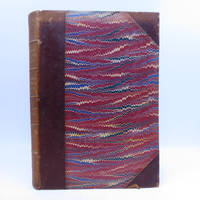
1896042700Washington DC: Government Printing Office 1896. Hardcover. Very Good. First Edition. Half leather with marbled boards. Raised bands. Marbled end papers. All page edges marbled. 503pp. Full refund if not satisfied. Government Printing Office hardcover
1868GITe196Paris Baillière et Fils 1868. In-8 2 feuillets non chiffrés VI 1 feuillet non chiffré 2-280pp. Demi basane blonde marbrée, dos lisse orné de chaînettes dorées, pièce de titre noire, tranches mouchetées, reliure de l'époque. Bel exemplaire sans aucune rousseur et bien complet, dans une reliure décorative.
1868GITe195Paris Baillière 1868. In-8 2 feuillets non chiffrés VI-VIII 2-342pp. Demi basane blonde marbrée, dos lisse orné de chaînettes dorées, pièce de titre noire, tranches mouchetées, reliure de l'époque. Orné de 3 planches en couleurs en fin d'ouvrage, regroupant 14 figures. Bel exemplaire sans aucune rousseur, bien complet du texte et des 3 planches, dans une reliure décorative.
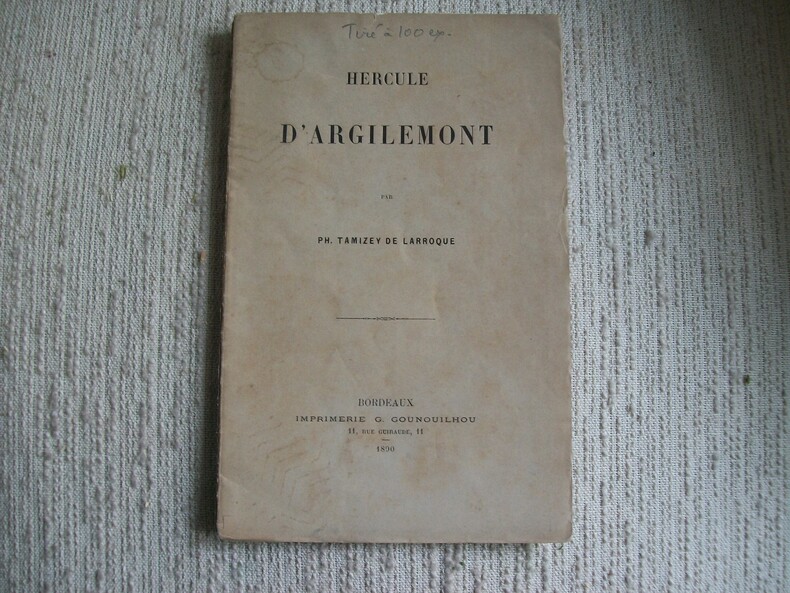
1890GITj660bBordeaux Imprimerie Gounouilhou 1890. In-16 broché 38pp. Exemplaire en bon état et complet de ce tiré à part des Actes de l'Académie Nationale des Sciences, Belles Lettres et Arts de Bordeaux, tiré à 100 exemplaires non justifiés. (5005)
1865GITg5061865. In-4 broché 2-99pp. Signature autographe page 99 "Paris 1er octobre 1865, J Talabot". Manque le dos de la couverture, intérieur en bon état et bien complet.
1843GITb687paris Amsterdam chez Mme Bouchard-Huzardn chez JH et G Van Heteren 1843. In-8 broché VIII 131pp. Dos légèrement fendillé avec petits manques de papier, petits manques angulaires sur le 2e plat de couverture, cachets de bibliothèque.
1872DEMO003037ILondon: Tinsley Bros. 1872. First edition. Hardcover. Very Good. 8vo 423 pages 3/4 leather newly replaced worn corners. Scarce <br/><br/>True-life accounts of French court cases. The "opening chapter is unexpectedly titled 'Ghosts in Court.' . The back and forth of the case can be a bit involved and confusing . but it is worth working through . to get to the punch line - Levi Stahl." Another case involves a priest-magician. Ex libris Sir Charles Lennox Peel Paul M. Godhue Edward.Freiberger Hobart Chatfield-Taylor Tinsley Bros. hardcover
1880782941880 Librairie Générale Henri Georg, Lyon - 1880 - Deuxième volume - 1 vol in-8 - broché - 230 pages
1898GITc716Paris Félix Alcan 1898. In-8 VI 281pp. Cartonnage éditeur percaline bleue bradel, titre en noir sur le dos et le 1er plat.
1892GITa811Marseille Typographie et Lithographie Barlatier et Barthelet 1892. In-8 broché 65pp.
1891892631891 Griamud, Gervais-Bedot, André Catelan, 1891, 128 p., broché, dos en mauvais état, des déchirures le long des plats, intérieur propre, pages non coupées (jamais lu).
1835GITf702Paris Imprimerie Royale 1835. In-4 1 feuillet non chiffré (titre) 458pp. Exemplaire sans sa reliure, brochage solide, sans rousseurs, bien complet de tout son texte. RARE.
1828GIT0139dParis Imprimerie Anthelme Boucher 28 février 1828. In-12 broché 23pp. Sans la couverture.
1860GITc537Paris Hachette 1873. In-8 405pp. Demi chagrin vert, dos à nerfs orné de cadres de filets dorés, plats de percaline verte, fers dorés sur le 1er plat, reliure de l'époque. Quelques rousseurs. Bel exemplaire.
1864GIT01257Paris Michel Lévy 1864. In-8 broché 515pp. Petit manque sur le dos, rousseurs par endroits.
1892GITa808Poitiers Imprimerie Millet et Pain 1892. In-8 broché 43pp. manque sur le dos.
18287241828 - reliure - A Paris, Masson et Yonet, Libraires - 1828 - In-8 (21 x 13 cm) reliure demi basane, plats marbrés, filets, fleurons et titre doré au dos - 475 + 378 pages - Deux volumes reliés en un seul ouvrage - Ouvrage intitulé : Lois des bâtiments, ou le Nouveau Desgodets contenant la Théorie et la Pratique, 1° des servitudes, telles que murs mitoyens, contre-murs, vues, égouts, haies mitoyennes, etc. 2° des réparations grosses et menues, locatives, usufruitières et de propriété, etc. 3° des formes à suivre, par les juges de paix, les tribunaux et les experts, pour visiter les lieux, avec formule des actes de procédure. Nouvelle édition corrigée et considérablement augmentée, d'après les arrêts et la doctrine des meilleurs auteurs
1886GITc504Paris Lecoffre 1886. In-8 broché XI 506pp. Petit manque de papier en tête du dos, quelques pâles rousseurs. Edition originale.
1866GITh296Paris Victor Masson et Fils 1866. In-8 broché XVI 383pp. Quelques pâles et rares rousseurs par endroits. Ouvrage rare et intéressant.
1841GIT00fbeNismes Imprimerie Ballivet et Fabre 1841. Plaquette in-12 brochée couverture imprimée 75pp. Pâles rousseurs, petit manque en bordure du 1er plat, traces de papier collé sur le 2e.
1825GITc744Paris Au Bureau du Mémorial Catholique 1825. In-8 dérelié 45pp. Quelques pâles rousseurs.