160 résultats
2008Q-0738548456Arcadia Publishing 2008-03-12. Paperback. New. In shrink wrap. Looks like an interesting title! Arcadia Publishing paperback
0260748463.Ghardcover. Good. Access codes and supplements are not guaranteed with used items. May be an ex-library book. hardcover
1396441492.Ghardcover. Good. Access codes and supplements are not guaranteed with used items. May be an ex-library book. hardcover
0260171042.Ghardcover. Good. Access codes and supplements are not guaranteed with used items. May be an ex-library book. hardcover
2023Manohar-9781447365426Policy Press 2023. Paperback. New. Policy Press paperback
2023Manohar-9781447365426Policy Press 2023. Paperback. New. Policy Press paperback
20162090502113709108Not Available 2016. Soft Cover. Fine. The book is in fine condition. Not Available paperback
2090502113709250Not Available N.A. Soft Cover. Fine. The book is in fine condition. Not Available paperback
194918441ARCHUnited States Bureau of Prisons 1949. 318 pp. Original black cloth covers w/ gilt title on spine. DJ has mild wear along edges. Light rubbing to rear panel. Illust. w/ b/w photos and diagrams. Contents very nice. Hard Cover. Very Good/Very Good-. Folio - over 12" - 15" tall. United States Bureau of Prisons Hardcover
36749London: Printed by Bensley and Son 1818. First edition 8vo 205 x 130 mm 32pp. disbound. The committee was under the chairmanship of Samuel Hoare junior and the report advocated improvements to the prison regime - more employment better food and clothing more space greater cleanliness etc. The juvenile crime rate had increased greatly and much of the report deals with the treatment of young offenders. London: Printed by Bensley and Son, 1818 hardcover
19941862244900Scepter Publishing 1994. Paperback. Good. Pages can have notes/highlighting. Spine may show signs of wear. ~ ThriftBooks: Read More Spend Less.Shelf and handling wear to cover and binding with general signs of previous use. This copy is in a hardcover format. Binding and pages are intact. All pages are free from any markings. Light scuffing and bumping visible to boards. Secure packaging for safe delivery.Dust jacket quality is not guaranteed. Scepter Publishing paperback
a26243May 14 1937. 4to. 69 leaves mimeo on rectos charts blue stapled wraps. Good several corners bumped. . paperback
Z1-H-006-00874Home Office HM Inspectorate of Prisons for England and Wales. Used - Good. Ships from UK in 48 hours or less usually same day. Your purchase helps support Sri Lankan Children's Charity 'The Rainbow Centre'. Ex-library so some stamps and wear but in good overall condition. 100% money back guarantee. We are a world class secondhand bookstore based in Hertfordshire United Kingdom and specialize in high quality textbooks across an enormous variety of subjects. We aim to provide a vast range of textbooks rare and collectible books at a great price. Our donations to The Rainbow Centre have helped provide an education and a safe haven to hundreds of children who live in appalling conditions. We provide a 100% money back guarantee and are dedicated to providing our customers with the highest standards of service in the bookselling industry. Home Office, HM Inspectorate of Prisons for England and Wales unknown
Z1-C-084-01153The Inspectorate. Used - Good. Paperback. Ships from UK in 48 hours or less usually same day. Your purchase helps support Sri Lankan Children's Charity 'The Rainbow Centre'. Ex-library so some stamps and wear but in good overall condition. 100% money back guarantee. We are a world class secondhand bookstore based in Hertfordshire United Kingdom and specialize in high quality textbooks across an enormous variety of subjects. We aim to provide a vast range of textbooks rare and collectible books at a great price. Our donations to The Rainbow Centre have helped provide an education and a safe haven to hundreds of children who live in appalling conditions. We provide a 100% money back guarantee and are dedicated to providing our customers with the highest standards of service in the bookselling industry. The Inspectorate paperback
Z1-I-018-00504Home Office. Used - Good. Ships from UK in 48 hours or less usually same day. Your purchase helps support Sri Lankan Children's Charity 'The Rainbow Centre'. Ex-library so some stamps and wear but in good overall condition. 100% money back guarantee. We are a world class secondhand bookstore based in Hertfordshire United Kingdom and specialize in high quality textbooks across an enormous variety of subjects. We aim to provide a vast range of textbooks rare and collectible books at a great price. Our donations to The Rainbow Centre have helped provide an education and a safe haven to hundreds of children who live in appalling conditions. We provide a 100% money back guarantee and are dedicated to providing our customers with the highest standards of service in the bookselling industry. [Home Office] unknown
191273780Jeffersonville IN: Reformatory Press 1912. First edition. Octavo. 8 ll. printed on rectos only and bound at the top. Publisher's string-tied brown wrappers with printed paper title label on front. Excellent.This pamphlet lauds the fact that one of the very first psychological laboratories in the country was opening at the Reformatory at Jeffersonville preceded by New York and Boston. This was a huge step forward in penal reform and reflects the growing importance of psychology in preparing inmates for the outside world. "The new laboratory was endorsed by academics and reformers across the country including sociologist Hasting Hart of the Russell Sage Foundation Charles Henderson from the University of Chicago Zebulon Brockway and Maude Ballington Booth. Warden Peyton explained how the lab would disseminate knowledge and significantly advance prison reform. He also emphasized that both heredity and environment played a role in crime. Interestingly Governor Thomas Marshall rejected this view because he said it would be necessary to reject the religious doctrine of original sin" P. R. Clark; Barred Progress 2008. Earlier it was commonly believed that the best course of action for the health of society was to sterilize the insane and "feeble-minded" inmates. But Dr. Petyton was of the new school of though and pushed for psychological reform rather than physical. "Fortunately for inmates the big push for sterilization fizzled and was replaced by a more sophisticated and nuanced approach to crime and the treatment of criminals. In the summer of 1912 prison officials and the scientific community collaborated to create a department of research at the Indiana Reformatory. The psychology laboratory paralleled the commencement of the research department but other sub-departments soon followed including those dedicated to medical and sociological research. The research department took individual testing classification and treatment to a new level. Using relatively new techniques such as the Binet-Simon IQ test researchers tested inmates for perception association memory reason orientation fatigue mental activity motor control moral appreciation the ability to profit by experience attention the ability to carry on a conversation and the ability to plan. Researchers further classified the inmates by the kinds of criminal activity in which they participated. These categories included habitual criminal born criminal criminal through passion criminal by chance accidental" Ibid. The Laboratory seemed to have functioned as both a guidance counselor and a low-skill trade school. David Peyton was a doctor prison warden and a champion of prison reform and published Psychology and Crime 1915; Principles of Prison Reform 1915; The Differential Diagnosis of Crime 1912; Crime as an Expression of Feeble-Mindedness 1913 and many others. He once risked his entire career when he decided to allow the inmates at the Reformatory to fight a local fire.OCLC only locates 2 copies and incorrectly gives the page count as 12. {Reformatory Press] unknown
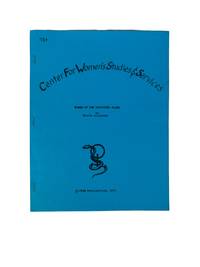
18163Scholarly article on the overlooked state of women in prison. "Women of the Convicted Class" by Rhetta Alexander. Center for Women's Studies and Services Publications 1971. Stapled with bright blue front and back soft covers front cover with illustration of black snake coiled around the female gender symbol. Measures 8.5 x 11 inches. 13 pages with article subdivided into parts I-VI. 75 cent mark on upper left hand of front cover. Paper details the institutional disinterest on the state of women's prisons and the broader systemic link between patriarchy and female incarceration. "The nature of the crimes committed by women and the conditions surrounding their imprisonment are rooted in the sexism of American society; a society in which sex-based inequlities are written into the law." A sweeping indictment of the carceral state and call to action for a population most often ignored. Slight crease to back cover. Very good condition. unknown
41852996like new. unknown
10058London 1818. 'Ordered by The House of Commons to be Printed 5 June 1818.'. Folio 293 pp. With fold-out engraved 'Ground Plan of the New Prison Clerkenwell Commenced Septr. 1816'. Text clear and complete. Disbound. Paginated in a contemporary hand 1 to 29 5. Good on lightly-aged paper. The minutes of evidence cover 152 pages with testimony on Tothill Fields Clerkenwell and Cold Bath Fields Prisons and on 'POLICE:- Parish Officers: - Licencing System'. Scarce: copies on COPAC at the Victoria and Albert Museum the Guildhall Southampton and Oxford. London, 1818. ['Ordered by The House of Commons, to be Printed, 5 June 1818.'] unknown
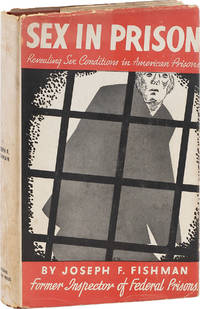
193480648New York: National Library Press 1934. First Edition. First Printing. Octavo. 24cm. Publisher's red cloth titled in gilt to spine. Dustjacket. 256pp. Minor bumping to the spine ends a little superficial wear to extremities strong and handsome with a few areas of discolouration to the bright red cloth in a clean solid dustjacket lightly sunned and spotted to the spine and with some soiling of the white areas and shallow marginal wear. A very good copy. Internally clean although there is some acid reaction or offsetting to the pastedowns and flyleaves toning to page edges. Six illustrative photographs. A rather fascinating early work on conditions for prisoners in US carcerial institutions Fishman pioneered what was referred to as "Deprivation Theory" citing lack of access to heterosexual relationships as a major cause of unrest and friction amongst inmates he was an early suggestor of conjugal visits and a reduction in overcrowding:<br /> "Why is there such a wall of silence encircling the subject of Sex in Prison We are living in a frank and realistic age yet the subject of sex in prison - so provocative so vital so timely in view of the recent epidemic of prison riots - is shrouded in dread silence."<br /> Fishman's researches despite encompassing a number of theories that we know today definitively contribute to unrest and violence amongst prison populations weren't favourably received until the 1960's when a new generation of reformers took sections of his research and advanced them into a more modern understanding of what happens to incarcerated peoples and why the concept of "punishment" is essentially useless without a conceptual pathway towards rehabilitation and a time "after punishment." An important book. National Library Press unknown
CA05A-00327United States Bureau Of Prisons. Collectible - Good. United States Bureau Of Prisons 1949. 4to hardcover. Black cloth with gilt lettering and front board device. 317pp. Good book and Near Good dust jacket. The front and rear hinges are bit stress though binding remains secure. The dust jacket is quite shelfworn with a split to the upper front joint and slight dampstaining to each corner. jails prisons architecture design Inquire if you need further information. United States Bureau Of Prisons hardcover
188232544Richmond VA: W. A. Mountcastle 1882. Lithograph. Ca. 9" X 8". Very good. Well-known lithograph of the notorious Confederate prison in Richmond second in infamy only to Georgia's Andersonville Prison. A clean and handsome example of this famous image of this prison with six large tents in the middle ground. One soldier stands sentry in the foreground another stands with arm in a sling and a handful of others military and civilian mill about near the tents and along the large brick structure; interestingly three male civilians stand as a group in the foreground one of them clutching the hand of a young girl clearly posing for the photograph upon which this lithograph has been based. A front corner of the building still retains its original large "Libby & Son / Ship Chandlers & Grocers" sign. An attractive and highly detailed image. Housed in a modern ca. 1970s single cream matte and a simple ½" wooden frame with non-glare glass overall dimensions 12" X 11½". A simple but suitable presentation. W. A. Mountcastle unknown
1845elala484Brussels: Weissenbruch Père 1845. 1845. 8vo. pp. 2 p.l. iv 316 ccxv 1errata. 3 folding lithographed plans. partially unopened in original printed wrs. wrs. & outer leaves chipped at edges & detached lower margins of plates ragged upper inner margin of two leaves of preface wanting affecting several words. Brussels: Weissenbruch Père, 1845. unknown
193176467Moundsville: Work & Hope 1931. First edition for this year OCLC records no holding for this year but does for 1927 4 1930 3 1932 3 1935 2 1937 1. Octavo. 48 pp. Extensively illustrated from photographs. Publisher's teal wrappers with red lettering and a large decorated border. Some finger soiling to rear wrapper else a very good copy.The publishers Work & Hope and printers and writers were all inmates of the Moundsville Penitentiary in West Virginia. Likely they worked in the hope of getting released as for a time the Moundsville Penitentiary ranked on the United States Department of Justice's Top Ten Most Violent Correctional Facilities list. The photographs herein present a different story of course. We see a beautiful chapel clean and tidy cells and prisoners at work in the shirt shop the broom shop and the whip shop. There are also photographs of the gothic prison itself. When it was built it was outside the town but by the time of closing it was right in the middle of a residential zone One of the countries most famous pre-historic mounds lent its name to the town.'The West Virginia Penitentiary in Moundsville was built in 1876 and closed in 1995. During its working history it was deemed as one of the most violent prisons in the U.S.A. seeing its fair share of riots murders and executions. Conditions were less than adequate and humane with the cells and rooms crawling with vermin and cockroaches.During its operation there were 36 reported murders and 94 executions. This does not take into account the suicides and accidents which take the total number of deaths to nearly 1000" A. Oborn 2019 Work & Hope unknown
183339519Paris: Au Dépôt de Lois Chez Gustave Pissin Imprimerie de P. Dupont et Laguionie 1833. Pp. 1-32 49-128 lacking part of "Nouvelle lois actes rendues en Angleterre" and much of Victor Foucher's "Code pénal de la république de Bolivia". 1 vols. 8vo. Disbound accompanied by upper cover some light spotting inked underlining of a few pages else very good. Pp. 1-32 49-128 lacking part of "Nouvelle lois actes rendues en Angleterre" and much of Victor Foucher's "Code pénal de la république de Bolivia". 1 vols. 8vo. Intended to provide the readers with recent changes or papers in the international legal and economic fields. Includes Mittermaier's paper on the British Penal System "Renseignemens nouveaux et récens sur l'efficacité du systeme pénal des Anglais et spécialement de la transportation" pp. 7-24 a section on "Nouvelle Publications" the "Chronique" M. Pinnheiro-Ferreira former minister of Portugal's "Observations sur la loi belge du 1er Octobre 1833 concernant l'extridition des réfugiés" pp. 65-80 an extract of the article by M. Wagener on "De l'Administration de la Justice criminelle en Autriche" pp. 113-122. Au Dépôt de Lois, Chez Gustave Pissin [Imprimerie de P. Dupont et Laguionie unknown