BAUDELAIRE, Charles - LYDIS, MarietteLivre Rare Book
285 résultats
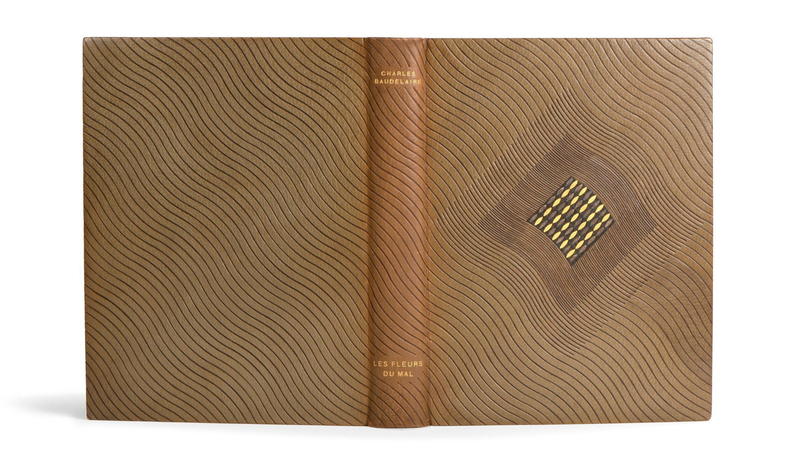
19283859Paris, G. Govone éditeur, 1928. Un volume in-4 (339 x 250 mm) 337 pp., reliure en plein maroquin gris, plats et dos ornés en continue de filets ondulés noirs parallèles, encadrant au centre du premier plat un losange de maroquin noir orné de bandes de motifs ovales mosaïqués bronze et dorés, dos lisse titré or, doublures avec un large encadrement de maroquin gris, orné de filets ondulés parallèles à froid et gardes de soie moirée bronze, doubles gardes, tête dorée, non rogné, couverture et dos conservés, étui bordé (Lefranc). Édition limitée à 353 exemplaires, ornée de la reproduction d’un autoportrait de Baudelaire et d’une page autographe de l’auteur en fac-similé, contrecollées à pleine page. 10 EAUX-FORTES ORIGINALES DE MARIETTE LYDIS TOUTES EN HORS-TEXTE. L'exemplaire est l'un des 290 exemplaires numérotés sur Hollande Pannekoek (n° 92). Il est exceptionnellement enrichi de LA SUITE COMPLÈTE DES DIX EAUX-FORTES TIRÉES EN COULEURS ET SIGNÉES AU CRAYON PAR MARIETTE LYDIS. Il s’agit ici de l’une des 75 en couleurs sur vélin de Hollande Pannekoek. Cette suite, considérée comme l’une des meilleures productions de l’artiste, a été publiée séparément par l’éditeur à 125 exemplaires seulement. À noter qu’en 1937, l’éditeur publiera une autre suite très différente de 33 compositions lithographiées en couleurs de Mariette Lydis pour illustrer ce même texte.
194611878Paris, Imprimerie Roger Amiard, 1946. Petit in-4 autographié (23 x 18 cm) de 350-(2) pp., couverture imprimée conservée, demi-maroquin bleu, dos à nerfs (reliure moderne).
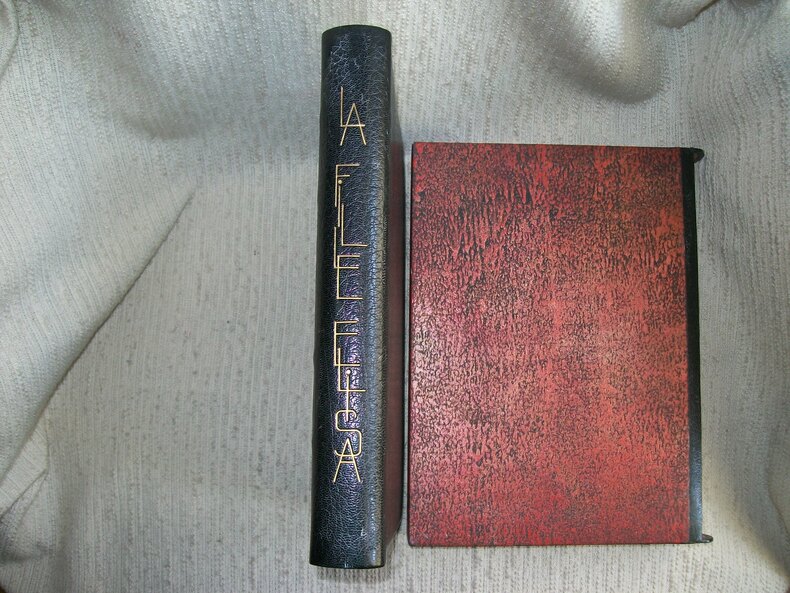
1929GITk288Paris Le Livre du Bibliophile Georges Briffaut 1929. In-4 3 feuillets blancs, 2 feuillets non chiffrés, II-VI 1 feuillet non chiffré (fin de la préface) 1-201pp 1 feuillet blanc, 1 feuillet achevé d'imprimer. Plein maroquin ébène, dos lisse avec le titre en long (lettres bâton dorées se chevauchant), tête dorée, non rogné, large bordure intérieure de maroquin ébène à quadruple filet doré, contreplats et gardes de papier brique, doublé de papier fort mordoré; reliure de l'époque (Y.M.O) sous étui recouvert de papier mordoré, bordé de maroquin ébène. Orné de 20 pointes sèches de Paul-Louis Guilbert: grande vignette sur le titre, frontispice, 3 têtes de chapitre, 1 dans le texte, 14 pratiquement à pleine page. A ces illustrations s'ajoutent 2 CROQUIS ORIGINAUX (au lieu d'un) contrecollés sur un feuillet blanc.EDITION DE LUXE appréciée des Amateurs, tirée à 425 exemplaires, celui-ci 1 des 30 sur Japon Impérial portant le numéro 36 avec 2 états des illustrations dont un avec remarque et 1 croquis original (notre exemplaire en possède 2). Carteret IV page 190. Talvart et Place VII page 220. BEL EXEMPLAIRE TRES FRAIS dans une reliure sobre de bonne facture, qui se marie bien à la noirceur du texte de Edmond de Goncourt, tout comme les illustrations de Paul-Louis Guilbert. Enrichi d'un croquis supplémentaire.
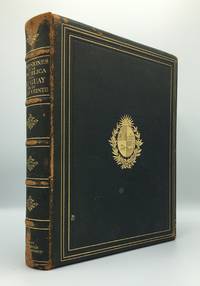
19121080Londres etc.: Lloyds Greater Britain Publishing Company Limited. 1912. First edition. Large quarto. Publisher's original full dark-green morocco; the upper board triple-ruled in gilt and with the Uruguayan crest in gilt; the spine with five raised bands compartments ruled and decorated in gilt and with titles in gilt. All edges gilt. Marbled endpapers. Title page contents page introduction and first text page with gilt borders and embellishments. Illustrated profusely throughout with black and white photographs and one map. Ownership inscription of the Australian writer Mary Gilmore to the head of the title page: "Mary Gilmore / Her book / 16. 3. 26". A very good copy the binding square and firm with a few small marks and scuffs to the boards rubbing to the spine and joints and wear to the corners. The contents with scattered foxing to the endpapers are otherwise in very good order and clean throughout. An interesting association copy of this comprehensive extensively illustrated and luxuriously produced survey of the people culture history politics economy industry agriculture geography and natural history of Uruguay at the beginning of the twentieth-century belonging to the influential Australian author journalist and poet Dame Mary Gilmore 1865-1962. </p><p>A prolific contributor to Australian literature and the broader national discourse during the first half of the twentieth-century Gilmore wrote for a number of leading newspapers and journals of the period serving as the editor of the women's section of The Australian Worker 1908-1931 as well as The Bulletin The Sydney Morning Herald and the Communist Party's Tribune becoming known as a campaigner for the welfare of the disadvantaged. Her first volume of poetry was issued in 1910 thereafter publishing prodigiously for the ensuing half-century coming to be regarded as one of Australia's most popular and widely read poets. Her poetry essays and memoirs covered a wide variety of themes although public imagination was particularly captured by her evocative views of country life with her best known work - 'No Foe Shall Gather Our Harvest' - serving as a morale booster during the Second World War.</p><p>A political progressive Gilmore gained a reputation as a 'fiery radical' - a champion of the workers and the oppressed. Involving herself with the burgeoning labour movement early in her life she had become a devotee of the utopian socialism of William Lane 1861-1917. In 1896 Gilmore and two hundred others followed Lane to Paraguay where they established a communal settlement called New Australia. She started a family there with William Gilmore whom she married in 1897 but the colony was ultimately short-lived with Gilmore leaving in 1900 living in Buenos Aires for six months followed by a period in Patagonia returning to Australia in 1902 after having saved enough money for a return passage.</p><p>Gilmore maintained a strong interest in Latin American politics culture and literature for the rest of her life. Indeed she also engaged in translation projects bringing Latin American literature to a wider audience notably endeavouring to produce a 'Uruguayan anthology' for which she corresponded with friends and associates in the country. This was perhaps also the origin of the present volume which itself forms a pleasing representation of Gilmore's wide-ranging ambitions.</p><p>By her later years Gilmore was a doyenne of the Sydney literary world and became something of a national icon making frequent appearances in the new media of radio and television and maintaining a significant literary output into old age publishing her last book of verse in 1954 aged 89. She died at the age of 97 and was accorded a state funeral a rare honour for a writer and has featured on the reverse of the Australian ten-dollar note since 1993. Londres [etc.]: Lloyds Greater Britain Publishing Company, Limited. hardcover
195025986Milwaukee WI: Tee-Pee-Gee Company n.d. but ca.1950. Board game consisting of one 1 game board 21.5" x 22" set of two 2 red acrylic dice 41 round and square painted wood pieces in black white green red yellow blue and brown one black piece replaced 17 game cards 2.25" x 3.75" printed on rectos only and original instruction manual 6" x 4". Dice game pieces and cards housed in the original manufacturers two-piece box. Game board is hinged with linen lightly worn at extremities with some occasional board exposure; instruction manual is browned overall folded in half with some splitting along spine fold and holographic notes to front and rear wrappers. Box for entire game not present though it is unclear whether or not one was issued. Presumed complete. "The fascination of this game lies in the variety of ways chances and combinations in which it can be played. For instance - a player may decide to play all the men on the straight and narrow path to freedom by being pardoned or take a shorter but more risky method as a fugitive. The trials of fate and temptation may enter at any time and upset all plans. This novel game which may be played by two to six players illustrates the separation of prisoners from the outside world and their discipline and reformation. It is a game of chance and skill and the possibility of your opponents' chance to win depends upon where and how you make your moves. It will hold you spellbound from beginning to end" - opening statement from instruction booklet.<br/><br/>A prison-themed board game with a phantom manufacturer; our research has failed to reveal much information about either one though in theory and objective it bears remarkable similarities to the much later ca.1990's board game The Slammer produced by Ruppert Games. Tee-Pee-Gee can be played by up to six players and while it appears fairly easy at first glance the dynamics are quite complicated with game pieces representing inmates messengers guards and visitors. The possibility for numerous moves exists dictated by the roll of the dice cards chosen and each players respective positioning on the board. Prisoners can be released or can choose to escape with or without the help of visitors. The winner of the game is the player with all their prisoners outside the walls either as "pardoned" or "fugitives" and their visitors "in good standing" with the prison officials. Rare; we find no example for sale at the time of this writing March 2021 and no record in OCLC. Tee-Pee-Gee Company unknown books
1948015871Paris Les Actes des Apotres, Charles de Jonquières Editeur 1948 In-12 Reliure Ed. originale
190328238Paris Charpentier et Fasquelle 1903 in-12 demi-basane verte, dos à faux-nerfs orné de filets à froid et de fleurons dorés [Rel. de l'époque], dos légèrement insolé
1951GITh338Ensemble de 251 numéros de cette célèbre revue de faits divers, format in folio (30cm sur 41cm). *1951 numéros 264 à 287, du 23 juillet au 31 décembre, 20 numéros (sans les numéros 265, 270, 284 et 285). *1952 numéros 288 à 326, du 7 janvier au 29 septembre, 32 numéros (sans les numéros 294, 299, 308, 309, 310 et 312). *1953 numéros 353 à 374, du 6 avril au 28 décembre, 30 numéros (sans les numéros 355, 366, 367, 368, 376, 386, 387 et 390). *1954 numéros 392 à 443, du 4 janvier au 27 décembre, 43 numéros (sans les numéros 397, 399, 409, 413, 418, 435, 437, 438, et 439). *1955 numéros 445 à 495 du 10 janvier au 26 décembre, 40 numéros (sans les numéros 452, 453, 455, 457, 465, 469, 478, 481, 482 483 et 487). *1956 numéros 496 à 548 du 2 janvier au 31 décembre, 32 numéros (sans les numéros 499, 500, 502, 503, 505, 507, 508, 510, 511, 516, 517, 521, 522, 523, 525, 529, 532, 536, 537, 545 et 547). * 1957 numéros 552 à 600 du 28 janvier au 30 décembre, 32 numéros (sans les numéros 558, 560, 563, 564, 571, 573, 574, 577, 580, 584, 586, 587, 590, 594, 595, 596 et 599). * 1958-1959 numéros 601 à 657 du 6 janvier 1958 au 30 janvier 1959, 23 numéros (sans les numéros 602, 605, 607, 608 à 612, 614 à 629, 631, 632, 634, 643, 644, 646, 647, 652 à 656. Abondante illustration d'après des photographies. Quelques numéros présentent une usure des dos, des coupures ou des petits manques sans gravité, le plus grand nombre est frais et en bon état. Ensemble de 9 années incomplètes mais chaque numéro est bien complet et représente un aperçu intéressant des fais divers de cette époque, servi par une bonne iconographie, dans la tradition de cette revue créée en 1928 par Gaston Gallimard et qui continue à paraître de nos jours.
1903122713Paris, Imprimerie Nationale, coll. « Histoire générale de Paris. Collection de documents publiée sous les auspices de l'édilité parisienne » 1903 In-folio 34,5 x 25 cm. Reliure éditeur pleine percaline vert-émeraude, report auteur et titre dorés sur le dos, fer de la Ville de Paris sur le premier plat, LIII-482 pp., 12 gravures hors texte dont le frontispice, table onomastique et méthodique. Exemplaire en très bon état, intérieur d’une grande fraîcheur, pages non coupées.
1933008858Paris Editions Sociales Internationales 1933 In-8 Broché, couverture rempliée illustrée
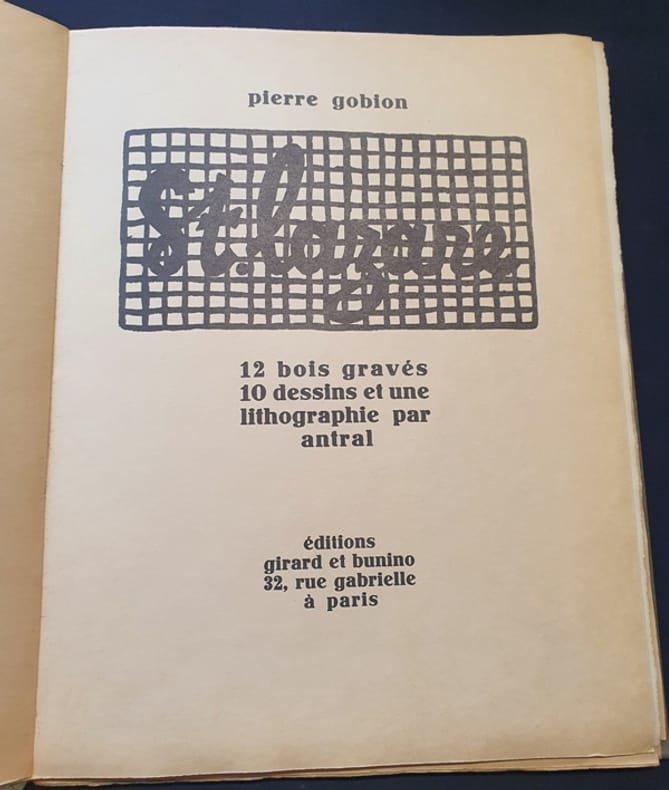
1930Arm1002Paris Girard et Bunino 1930 In4 - broché - 67 pages - dos insolé - Exemplaire N. 1 sur Japon sans les dessins orignaux et sans les suites annoncées , toutefois le frontispice est en deux états . Louis Robert Antral ( 1895/1940) peintre graveur et lithographe , élève de Cormon , membre du Salon des Indépendants illustra de nombreux écrivains . La prison St Lazare était une prison pour femmes .
1930Arm1002Paris Girard et Bunino 1930 In4 - broché - 67 pages - dos insolé - Exemplaire N. 1 sur Japon sans les dessins orignaux et sans les suites annoncées , toutefois le frontispice est en deux états . Louis Robert Antral ( 1895/1940) peintre graveur et lithographe , élève de Cormon , membre du Salon des Indépendants illustra de nombreux écrivains . La prison St Lazare était une prison pour femmes .
193176467Moundsville: Work & Hope 1931. First edition for this year OCLC records no holding for this year but does for 1927 4 1930 3 1932 3 1935 2 1937 1. Octavo. 48 pp. Extensively illustrated from photographs. Publisher's teal wrappers with red lettering and a large decorated border. Some finger soiling to rear wrapper else a very good copy.The publishers Work & Hope and printers and writers were all inmates of the Moundsville Penitentiary in West Virginia. Likely they worked in the hope of getting released as for a time the Moundsville Penitentiary ranked on the United States Department of Justice's Top Ten Most Violent Correctional Facilities list. The photographs herein present a different story of course. We see a beautiful chapel clean and tidy cells and prisoners at work in the shirt shop the broom shop and the whip shop. There are also photographs of the gothic prison itself. When it was built it was outside the town but by the time of closing it was right in the middle of a residential zone One of the countries most famous pre-historic mounds lent its name to the town.'The West Virginia Penitentiary in Moundsville was built in 1876 and closed in 1995. During its working history it was deemed as one of the most violent prisons in the U.S.A. seeing its fair share of riots murders and executions. Conditions were less than adequate and humane with the cells and rooms crawling with vermin and cockroaches.During its operation there were 36 reported murders and 94 executions. This does not take into account the suicides and accidents which take the total number of deaths to nearly 1000" A. Oborn 2019 Work & Hope unknown
195419322New York: Prentice-Hall Inc 1954. First Edition. First Printing. Octavo 22cm; black cloth with titles stamped in gilt on spine; brown topstain; dustjacket; 361pp. Base of spine gently nudged else a clean Near Fine copy. Dustjacket is unclipped lightly edge-rubbed with a few tiny tears and creases to same; Very Good to Near Fine with the spine notably unfaded. Chessman's classic account of life on San Quentin's Death Row adapted for the 1955 film of the same name directed by Fred F. Sears in 1955 starring William Campbell as Chessman. After publishing three books and exhausting a number of appeals Chessman was finally executed in 1960. An unusually nice copy. SUVAK 57. Prentice-Hall, Inc unknown books
1902GITj137Paris Charles Carrington 1902. Fort in-8 broché titre en rouge et noir 2 feuillet non chiffrés LII 376pp. Abondante illustration d'après des documents anciens, 1 frontispice et 8 hors texte compris dans la pagination. Tirage unique à 750 exemplaires numérotés sur beau papier. 2e plat de la couverture taché, brunissure de contact sur les pages 336-337, page 376 brunie, quelques rousseurs, exemplaire bien complet. Ouvrage curieux et très bien documenté.
1923GITk551Paris Editions des Juris Classeurs 1923. In-8 broché VII 386pp 1 feuillet non chiffré (table des illustrations et des matières). Orné de 17 illustrations à pleine page dont 7 fac similes d'autographes. Bel exemplaire frais et complet accompagné d'une lettre autographe originale sur double page (21,5cm x 15cm) à en-tête imprimée du Ministère des Affaires Etrangères, Cabinet du Ministre, datée de Versailles, 18 avril 1871. Jules Favre (1809-1880), alors Ministre des Affaires Etrangères, s'adresse à "Monsieur le Gouverneur", c'est-à-dire au Comte de Gueydon 1809-1886), alors Gouverneur de l'Algérie, pour lui recommander un jeune Lieutenant de Spahis, qu'il avait recueilli à l'âge de 12 ans, lorsque son père, Mohamed Bel-Hadj, Agah des Ouled Riah, avait été condamné pour son implication dans l'affaire de l'attaque de la diligence de Tlemcen-Oran, le 12 septembre 1856 dont il est question dans ce livre. On trouvera, page 296, un fac simile de lettre de Jules Favre faisant déjà allusion à ce jeune homme. Le capitaine Auguste Edouard Doineau (1823-1914) fit à nouveau parler de lui en 1874 lorsqu'il aida le Maréchal Bazaine, qu'il avait connu en Algérie, à s'évader. BEAU DOCUMENT EN PARFAIT ETAT.
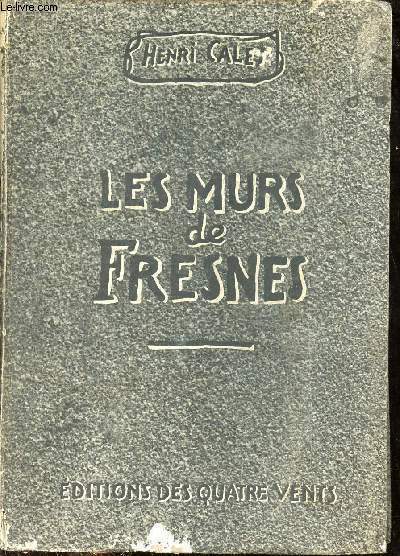
1945R320119021Aux éditions des quatre vents. 1945. In-8. Broché. Etat d'usage, Plats abîmés, Dos frotté, Intérieur acceptable. 109 pages - nombreuses illustrations en noir et blanc dans et hors texte dont une en frontispice - déchirures sur les plats principalement le 2ème plat.. . . . Classification Dewey : 365-Prisons
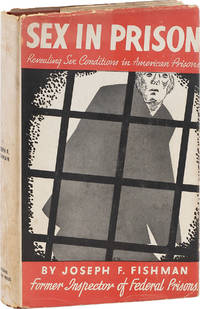
193480648New York: National Library Press 1934. First Edition. First Printing. Octavo. 24cm. Publisher's red cloth titled in gilt to spine. Dustjacket. 256pp. Minor bumping to the spine ends a little superficial wear to extremities strong and handsome with a few areas of discolouration to the bright red cloth in a clean solid dustjacket lightly sunned and spotted to the spine and with some soiling of the white areas and shallow marginal wear. A very good copy. Internally clean although there is some acid reaction or offsetting to the pastedowns and flyleaves toning to page edges. Six illustrative photographs. A rather fascinating early work on conditions for prisoners in US carcerial institutions Fishman pioneered what was referred to as "Deprivation Theory" citing lack of access to heterosexual relationships as a major cause of unrest and friction amongst inmates he was an early suggestor of conjugal visits and a reduction in overcrowding:<br /> "Why is there such a wall of silence encircling the subject of Sex in Prison We are living in a frank and realistic age yet the subject of sex in prison - so provocative so vital so timely in view of the recent epidemic of prison riots - is shrouded in dread silence."<br /> Fishman's researches despite encompassing a number of theories that we know today definitively contribute to unrest and violence amongst prison populations weren't favourably received until the 1960's when a new generation of reformers took sections of his research and advanced them into a more modern understanding of what happens to incarcerated peoples and why the concept of "punishment" is essentially useless without a conceptual pathway towards rehabilitation and a time "after punishment." An important book. National Library Press unknown
19497364Washington DC: United States Bureau of Prisons 1949. First Edition. Full pebble-grained leather; dustjacket; 317pp; illus. Mild rubbing to leather at board edges and spine ends; bookplate to verso of rear endpaper; early presentation to front endpaper to architect Stanley McGaughan with ownership label of McGaughan and Johnson Architects. Text clean complete and unmarked. Jacket rubbed at extremities with shallow chips to spine ends. Scarce monograph including a section on the history of prison design and construction. United States Bureau of Prisons unknown books
191210574Lyon, A. Rey, 1912. In-4 broché de 84-(1) pp., couverture beige imprimée, non coupé, trace de mouillure marginale.
191273780Jeffersonville IN: Reformatory Press 1912. First edition. Octavo. 8 ll. printed on rectos only and bound at the top. Publisher's string-tied brown wrappers with printed paper title label on front. Excellent.This pamphlet lauds the fact that one of the very first psychological laboratories in the country was opening at the Reformatory at Jeffersonville preceded by New York and Boston. This was a huge step forward in penal reform and reflects the growing importance of psychology in preparing inmates for the outside world. "The new laboratory was endorsed by academics and reformers across the country including sociologist Hasting Hart of the Russell Sage Foundation Charles Henderson from the University of Chicago Zebulon Brockway and Maude Ballington Booth. Warden Peyton explained how the lab would disseminate knowledge and significantly advance prison reform. He also emphasized that both heredity and environment played a role in crime. Interestingly Governor Thomas Marshall rejected this view because he said it would be necessary to reject the religious doctrine of original sin" P. R. Clark; Barred Progress 2008. Earlier it was commonly believed that the best course of action for the health of society was to sterilize the insane and "feeble-minded" inmates. But Dr. Petyton was of the new school of though and pushed for psychological reform rather than physical. "Fortunately for inmates the big push for sterilization fizzled and was replaced by a more sophisticated and nuanced approach to crime and the treatment of criminals. In the summer of 1912 prison officials and the scientific community collaborated to create a department of research at the Indiana Reformatory. The psychology laboratory paralleled the commencement of the research department but other sub-departments soon followed including those dedicated to medical and sociological research. The research department took individual testing classification and treatment to a new level. Using relatively new techniques such as the Binet-Simon IQ test researchers tested inmates for perception association memory reason orientation fatigue mental activity motor control moral appreciation the ability to profit by experience attention the ability to carry on a conversation and the ability to plan. Researchers further classified the inmates by the kinds of criminal activity in which they participated. These categories included habitual criminal born criminal criminal through passion criminal by chance accidental" Ibid. The Laboratory seemed to have functioned as both a guidance counselor and a low-skill trade school. David Peyton was a doctor prison warden and a champion of prison reform and published Psychology and Crime 1915; Principles of Prison Reform 1915; The Differential Diagnosis of Crime 1912; Crime as an Expression of Feeble-Mindedness 1913 and many others. He once risked his entire career when he decided to allow the inmates at the Reformatory to fight a local fire.OCLC only locates 2 copies and incorrectly gives the page count as 12. {Reformatory Press] unknown
191723145Boston: Little Brown and Company 1917. FIRST EDITION. Hardcover. Small rubber receipt stamp from the Government of Vermont 1918. Fine book in a near fine dust jacket with one small chip at top edge. 201 pages plus index. Scarce in jacket. <br/><br/> Little, Brown and Company hardcover books
193146420New York: Macmillan Company 1931. First Edition. Octavo 22cm.; publisher's maroon gilt-lettered buckram blue-green printed dust jacket; vii7318pp.; photographic frontispiece eleven leaves of photographs printed on rectos and versos. A hint of shelf wear to cloth extremities endpapers toned bottom corner of upper jacket flap clipped though upper corner retaining original price of $3.50 shallow chips along jacket extremities most notably at spine ends spine additionally a bit toned with brief soil spot at foot not affecting cloth binding else Near Fine in a Very Good copy of the scarce dust jacket. This work the result of a year-long study of penological practices across the globe from the criminal tribes in India Japanese penal institutions and the Parchman prison farm in Mississippi. John L. Gillin 1871-1958 was president of the American Sociological Association and showed little qualms at Parchman Farm's use of the strap as a disciplinary practice. Macmillan Company unknown books
19941862244900Scepter Publishing 1994. Paperback. Good. Pages can have notes/highlighting. Spine may show signs of wear. ~ ThriftBooks: Read More Spend Less.Shelf and handling wear to cover and binding with general signs of previous use. This copy is in a hardcover format. Binding and pages are intact. All pages are free from any markings. Light scuffing and bumping visible to boards. Secure packaging for safe delivery.Dust jacket quality is not guaranteed. Scepter Publishing paperback
1903106620Paris, Imprimerie Nationale, coll. « Histoire générale de Paris. Collection de documents publiée sous les auspices de l'édilité parisienne » 1903 In-folio 34,5 x 25 cm. Cartonnage éditeur vert pâle, titre en noir sur le dos et le premier plat, LIV-482 pp., notes en bas de page, table onomastique et méthodique. Cartonnage légèrement passé, tête de dos avec accrocs, coins émoussés, intérieur frais