3 052 résultats
2081502111902635Shanghai Jiao Tong University Publishing House N.A. Soft Cover. Fine. The book is in fine condition. Shanghai Jiao Tong University Publishing House paperback
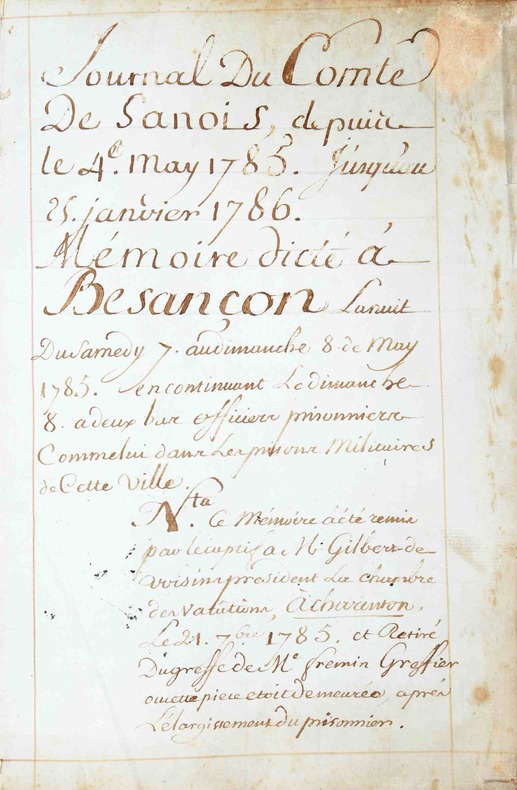
178611680, , 1786. Manuscrit in-folio réglé (22 x 32,5 cm) de (2)-162 pp., quelques feuillets laissés vierges, vélin sur ais de bois (reliure de l’époque). Titre manuscrit sur le plat supérieur à l'encre du temps : Journal du Comte de Sanois sortant de la Maison de force de Charenton où il a été détenu au secret depuis le 4. may 1785 jusqu'au 25 janvier 1786. Premier cahier. Mémoire dicté à Besançon (suivi sur le dos, en long :) Journal manuscrit du comte de Sanois May 1786 7bre 1787.
19511903891951. The failed appeal against the "trial of the century" One of very few copies of Emanuel Bloch's appeal seeking to overturn the prosecution of the Rosenbergs at their infamous trial signed by Bloch for submission to the Court of Appeals on the final page. Bloch 1901-1954 an attorney who focused on civil rights was known for defending clients associated with left-wing and communist causes. The Rosenbergs communists accused of sending atomic secrets to the Soviets chose Bloch to lead their defence. The court found the Rosenbergs guilty of espionage in March 1951 and sentenced them to death in April following a trial widely criticized as prejudiced and motivated by Cold War hysteria. J. Edgar Hoover dubbed the case which attracted worldwide attention "the trial of the century". The Rosenbergs were granted time to prepare the appeal which Bloch submitted to the Circuit Court on 5 November 1951. Comprising 143 pages of argument extensively referenced against other legal cases and with an index Bloch sets forth his legal case. It rests on three grounds: the government had not established definite guilt the Rosenbergs had not been granted a fair trial and the "cruel and unusual punishment" violated the eighth amendment. Besides the constitutional grounding Bloch emphasizes the "frantic atmosphere" in which the Rosenbergs were arrested placing the trial within the context of the panic caused by the Soviet Union's acquisition of the atomic bomb. The appeal was denied by the three judges on the court on 25 February 1952. They reported they had carefully examined the trial record against Bloch's appeal and had found the death sentence was constitutional and would stand. Following the defeat Bloch filed a further appeal with the Supreme Court which declined to review the case. A stay on execution was granted to appeal to President Eisenhower who denied the petition. Various other legal challenges the last of which reached the Supreme Court also failed. Despite an international campaign for clemency backed by the Pope and Albert Einstein the Rosenbergs were executed on 19 June 1953. Despite the failure of Bloch's appeal his brief greatly impressed the Rosenbergs. Julius wrote to Ethel on 4 November 1951 "I read the brief and I wrote Manny Bloch telling him what a stupendous job he did and how everlastingly grateful we are for his tireless efforts for us. Darling the brief is a legal masterpiece and in addition is a literary gem. Although I don't have the background to really pass on the legal fine points I can attest to its excellent organization its meticulousness in presenting in a fair light our case the devastating logic of his points and the tremendous assiduous effort Manny exerted in preparing this document. Believe me it's a priceless piece of work from a great man. How proud we are to be considered his friends. I intend to reread it a number of times so I'll be able to better understand some of the legal points raised" The Rosenberg Letters 2013 pp. 253-4. Bloch is often seen as a lawyer unsuited to the case more suited to civil rights work than a major criminal trial. His failure to interrogate properly the government's key witness Harry Gold has been much criticized. This appeal shifted more to Bloch's speciality of constitutional and civil rights probably constitutes a stronger legal case than that which he presented in the original trial. Nonetheless the Rosenbergs were very confident in him and he became a close friend. Bloch delivered the eulogy at their funeral and took guardianship of their sons though he died soon afterwards of a heart attack. This copy of the brief is evidently one of a small number produced for official use alongside the copies which each Rosenberg received. This copy was deposited in the Civil Rights Division of the American Jewish Committee - it is marked as their file copy and subsequently "withdrawn". It is unknown how they acquired the brief - the American Jewish Committee pointedly distanced themselves from the case likely to avoid the association of Jews with communism and treachery which the case did much to encourage among the public. An inscription on the first page reads "Return to Ted Leskes" - Theodore Leskes 1908-1964 was director of the legal division of the American Jewish Committee focusing on civil rights and discrimination. We trace only one other example of the brief at the University of Kansas and no other copy in commerce. Quarto 285 x 217 mm. Containing 154 mimeographed leaves printed recto only paginated comprising i-xi index 143 pages of contents firmly staple-bound in "Accopress binder" an early likely original binding printed title page mounted to front of binder. Housed in a black cloth flat-back box by the Chelsea Bindery. Stamps of American Jewish Committee to front cover and p. i verso. Chipping around title on front cover reinforced with tape at extremities slight wear to binder extremities contents a little toned else clean. A good copy. hardcover
1914659851914. New York 1912-1914. Image in 30-1/2" x 24" frame. New York 1912-1914. Image in 30-1/2" x 24" frame. "His Famous Wig Composed Entirely of Split Hairs and Adorned with the Ceremonial Crimson Tape" Robinson Boardman 1876-1952. Becker-Rosenthal Murder Trial. Mr. Justice Precedent. New York 1914. 21" x 15-1/2" gouache image on 26" x 19-1/2" sheet image signed twice and inscribed by Robinson caption in pencil below image most likely in another hand laid down on illustration board. Image in 30-1/2" x 24" wooden frame glazed. Light soiling a few minor stains and four crop-marks to margins outside of image which could be covered with a matte image fine. Several minor scuffs and nicks to frame. A unique item relating to a notable trial. $4500. This piece was created to illustrate "Leaden Footed Justice in New York State" an article that appeared in the Special Feature Section of the New York Tribune on Sunday March 1 1914. The caption reads: "Mr. Justice Precedent wearing his famous wig composed entirely of split hairs and adorned with the ceremonial crimson tape." The caption refers to the protracted nature of the Becker-Rosenthal Murder case which began on October 7 1912 restarted on May 2 1914 and finally concluded after a series of procedural events in 1915. The case involved a group of corrupt police offices led by Charles Becker who ran a protection racket on illegal casinos. Becker hired gangsters to kill a casino owner and rival gangster who was threatening to expose the racket. A breathtaking example of police corruption the investigation and trial was front-page news in New York for months. In the end Becker was sent to the electric chair at Sing Sing. This was the first time a police officer received the death penalty. The case lived on for several years in the popular imagination; it is mentioned for example in The Great Gatsby 1925. Robinson the creator of this illustration was a distinguished artist illustrator and cartoonist. A native of Nova Scotia he studied art in Boston and completed his training in Paris at the Academie Colarossi and the Ecole des Beaux-Arts both in Paris. "Mr. Justice Precedent" shows his affinity acquired in Paris for the work of Daumier Forain and Steinlen. Robinson produced work for several newspapers and periodicals. He created "Mr. Justice Precedent" when he was an editorial cartoonist for the Tribune a posit. unknown books
173142632S.l.n.d., , (1731 circa). Manuscrit in-8 calligraphié de (24) ff., texte encadré, maroquin rouge, dos lisse orné, titre doré en long sur le dos : Chansons manuscrites du Père Girard, filets d’encadrement dorés sur les plats, frise intérieure (Purgold).
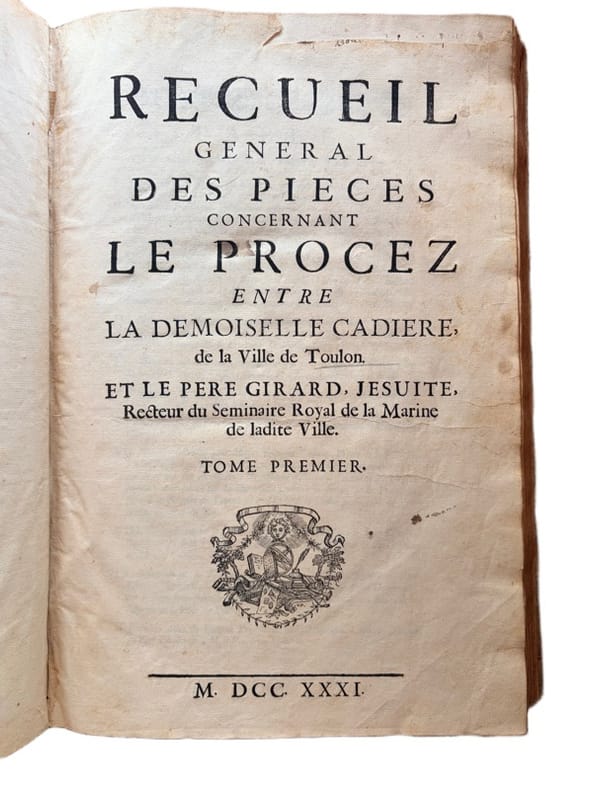
17315744, , 1731. 42 pièces reliées en 2 vol. in-folio, précédées pour chaque tome d'un feuillet de titre général et d'un feuillet de table, veau brun, dos orné à nerfs, tranches rouges (reliure de l'époque).
1914659851914. New York 1912-1914. Image in 30-1/2" x 24" frame. New York 1912-1914. Image in 30-1/2" x 24" frame. "His Famous Wig Composed Entirely of Split Hairs and Adorned with the Ceremonial Crimson Tape" Robinson Boardman 1876-1952. Becker-Rosenthal Murder Trial. Mr. Justice Precedent. New York 1914. 21" x 15-1/2" 53.3 x 39.4 cm gouache image on 26" x 19-1/2" 66 x 49.5 cm sheet image signed twice and inscribed by Robinson caption in pencil below image most likely in another hand laid down on illustration board. Image in 30-1/2" x 24" 77.5 x 60.9 cm wooden frame glazed. Light soiling a few minor stains and four crop-marks to margins outside of image which could be covered with a matte image fine. Several minor scuffs and nicks to frame. An exceptional unique piece of original artwork capturing a defining moment in American legal and criminal history. $3500. This striking original gouache was created to illustrate "Leaden Footed Justice in New York State" a feature article published in the Special Feature section of the New York Tribune on Sunday March 1 1914. The penciled caption reads:"Mr. Justice Precedent wearing his famous wig composed entirely of split hairs and adorned with the ceremonial crimson tape." The caricature was a scathing commentary on the notoriously protracted bureaucratically tangled legal proceedings of the Becker-Rosenthal Murder case which centered on NYPD Police Lieutenant Charles Becker who ran a massive protection racket targeting illegal Manhattan casinos. When gambling house owner Herman Rosenthal threatened to expose Becker's corruption to District Attorney Charles S. Whitman Becker hired a gang of underworld executioners including "Gyp the Blood" and "Lefty Louie" to gun Rosenthal down outside the Hotel Metropole. The investigation and subsequent trials completely dominated New York front pages. Becker's first trial began on October 7 1912 resulting in a conviction that was subsequently overturned on appeal by the New York Court of Appeals due to judicial bias. His highly anticipated second trial began on May 6 1914 just over two months after this cartoon appeared. Becker was convicted a second time and after his appeals were exhausted in 1915 went to the electric chair at Sing Sing-marking the first time in U.S. history a police officer was executed for murder. The case profoundly shook the public psyche and entered the cultural lexicon most. unknown
180316593Paris, C. F. Patris, 1803. In-8 de (4)-281 pp., veau blond, dos lisse orné, pièce de titre en maroquin vert, roulette dorée d'encadrement sur les plats, ex-dono au centre du premier plat, tranches marbrées (reliure de l'époque).
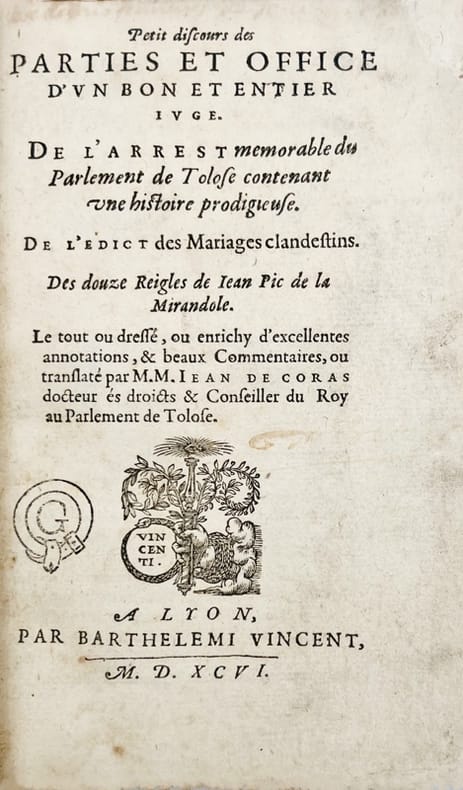
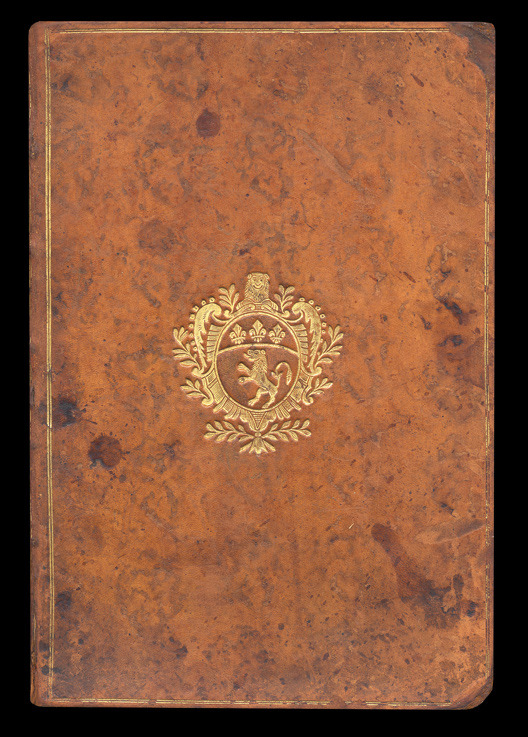
159644490Lyon, Barthelemi Vincent, 1596. 3 parties en 1 vol. petit in-8 de 80-(16)-160 pp., 16 ff., maroquin havane, dos titré à nerfs, armes dorées au centre des plats et super-libris en pied, roulette dorée sur les chasses et double filet doré sur les coupes, signet de soie verte, tranches dorées (Niédrée).
194961207New York 1949. Pen and ink on watercolor paper image 10 x 20 inches on larger sheet one margin toned. Illustrations in photo reproduction most 8 x 18 inches mounted on black board. 1 vols. Oblong folio. Full green morocco stamped in gilt with full red morocco doublures silk endleaves by Whitman Bennett N.Y. Faintest traces of rubbing but overall fine. Pen and ink on watercolor paper image 10 x 20 inches on larger sheet one margin toned. Illustrations in photo reproduction most 8 x 18 inches mounted on black board. 1 vols. Oblong folio. Red Scare Trial: Judge Medina's Album with Original Drawing. Large souvenir album prepared for Harold R. Medina the judge who presided over the 1949 trial of Communist conspirators in New York City. The trial of party chairman William Z. Foster Gus Hall and 10 other prominent Reds was the culmination of several years of FBI investigation of Communist activities. It garnered worldwide publicity and lasted nine contentious months against a backdrop of acrimonious exchanges between Judge Medina and the defense attorneys. Medina charged the defense with delaying tactics trifling unnecessary jury challenges and contempt; the defense attorneys claimed judicial bias racism in the jury selection and infringements upon the freedom of the press.<br/>Artist William Sharp also illustrated the Limited Editions Club Poe 1941 and Pepys 1942.<br/>A unique and superbly visual record of a key episode in postwar American history. Provenance: the Library of Judge Harold Medina unknown books
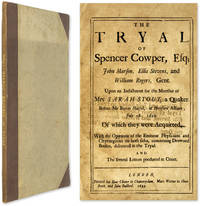
1699646431699. 3 titles bound together. London 1699. 3 titles bound together. London 1699. "The Murder of Mrs. Sarah Stout A Quaker" Trial. Cowper Spencer 1669-1728 Principal Defendant. The Tryal of Spencer Cowper Esq; John Marson Ellis Stevens And William Rogers Gent. Upon an Indictment for the Murther of Mrs. Sarah Stout a Quaker. Before Mr. Baron Hatsell At Hertford Assizes July 18 1699. Of Which They were Acquitted. With the Opinions of the Eminent Physicians and Chyrurgeons on Both Sides Concerning Drowned Bodies Delivered in the Tryal. And the Several Letters Produced in Court. London: Printed for Isaac Cleave in Chancery-Lane Matt. Wotton in Fleet-street and John Bullord 1699. ii 22 i.e.46 pp. Folio 11-1/2" x 7". Bound with P.D. The Hertford Letter: Containing Several Brief Observations on a Late Printed Tryal Concerning the Murder of Mrs. Sarah Stout. London: Printed and Sold by the Booksellers of London and Westminster 1699. 16 pp. Octavo 8-1/2" x 5". And A Reply to the Hertford Letter: Wherein the Case of Mrs. Stout's Death is More Particularly Considered; And Mr. Cowper Vindicated from the Slanderous Accusation of Being Accessory to the Same. London: Printed; And Sold by the Booksellers of London and Westminster 1699. 8 pp. Octavo 8-1/2" x 5". Three titles in an 11-1/2" x 7-1/2" binding. Three-quarter cloth over paper-covered boards gilt title to spine. Light soiling dampspotting and offsetting to boards some rubbing to extremities early owner bookplate top front pastedown. Light browning and foxing to interior internally clean. $2500. Only editions. Spencer Cowper a judge was indicted for the murder of Sarah Stout. He was at her house late on the evening before she was found drowned in a river. Cowper's alleged motivations were a desire to end an illicit love affair and avoid payment of a debt. Cowper's lawyers argued that Stout's parents wanted to hide the fact that their daughter committed a suicide a heinous act among Quakers. The defence also suggested a political motivation: a desire by local Tories to harm the career of a rising Whig. Cowper had been at the woman's house late on the evening before she was found drowned in the river but there was little material evidence against him. Also his lawyers benefited from expert medical testimony from three leading physicians Samuel Garth Hans Sloane and William Cowper." He. unknown books
194611878Paris, Imprimerie Roger Amiard, 1946. Petit in-4 autographié (23 x 18 cm) de 350-(2) pp., couverture imprimée conservée, demi-maroquin bleu, dos à nerfs (reliure moderne).
10234ou journal des Assemblées Nationales, depuis 1789 jusqu’en 1815. La narration des évènemens, les débats des assemblées, les discussions des principales sociétés populaires, et particulièrement des la société des Jacobins, les procès verbaux de la Commune de Paris, les séances du tribunal révolutionnaire, le compte rendu des principaux procès politiques, le détail des budgets annuels, le tableau du mouvement moral, extrait des journaux de chaque époque, etc. précédé d’une introduction sur l’histoire de France jusqu’à la convocation des Etats généraux. 40 tomes en 40 volume in 8 reliure demi-cuir noire d’époque, titre, tomaison, roulette, palmette, filets dorés. Fers filets à froid. Tome1 : faux-titre, titre, 486 pages, 2 pages explication du plan de la salle d’assemblée des notables à la séance présentée par le Roi, 1 plan. Une page d’explication du plan de la salle d’assemblée des notables présidée par Monsieur. Un plan. Tome 2 : faux-titre, titre, IV-475 pages. Tome 3 : faux-titre, VIII, titre, 480 pages. Tome 3 : faux-titre, titre, VIII, 480 pages. Tome 4 : faux-titre, VIII, titre, 478 pages. 3 pages de table. Tome 5 : faux-titre, titre VIII 480 pages. Tome 6 : faux-titre, titre, VIII, 479 pages. Tome 7 : faux-titre, titre VIII, 473 pages. 3 pages de catalogue. Tome 8 : faux-titre, titre, XV, 463 pages. Tome 9 : faux-titre, titre XII, 475 pages. Tome 10 faux-titre, titre, XII, 478 pages. Tome 11 : faux-titre, titre, X, 494 pages ; 1 page d’errata. Tome 12 : faux-titre, titre, XIII, 493 pages. Tome 13 : faux-titre, titre, XI, 455 pages. Tome 14 faux-titre, titre, XII ; 457 pages. Avec une liste des membres de la Société des amis de la Constitution séante à Paris A la maison des Jacobins dite des Jacobins Saint-Honoré. Tome15 : Faux-titre, titre, XV, 469 pages. Tome 16 : faux-titre, titre, XV, 470 pages. Tome 17 faux-titre, titre, XVI 479 pages. Tome 18 faux-titre, titre, XVI 480 pages. Tome 19 : faux-titre, titre ; XV, 469 pages. Tome 20 faux-titre, titre, XV, 469 pages. Tome 21 : faux-titre, titre ; XVI, 443 pages. Tome 22 : faux-titre, titre, XI, 479 pages. Tome 23 : faux-titre, titre, XV, 480 pages. Tome 24 : faux-titre, titre, XI, 479 pages. Tome 25 : faux-titre, titre, XV, 474 pages. Tome 26 faux-titre, titre, XV, 479 pages. Tome 27 : faux-titre, titre, XVI, 463 pages. Tome 28 : faux-titre, titre, XV, 508 pages. Tome 29 : faux-titre, titre, XVI, 480 pages. Tome 30 : faux-titre, titre, XV, 472 pages. Tome 31 : Faux-titre, titre, XV, 503 pages ; Tome 32 : faux-titre, titre, XV, 487 pages. Tome 33 : faux-titre, titre, XI, 461 pages. Tome 34 : Faux-titre, titre, 489 pages, 1 page d’errata. Tome 35 : faux-titre, titre, 508 pages. Tome 36 faux-titre, titre, 524 pages. Tome 37 : faux-titre, titre, 508 pages .Tome 38 : faux-titre, titre, 508 pages. Tome 39 : faux-titre, titre, 532 pages. Tome 40 : faux-titre, titre, V, 422 pages Une page d’avis. Paris PAULIN libraire 1834-1838. Edition originale. Fort rare complet, en reliure uniforme. Petites rousseurs, plus principalement concentrées en début et fin de volume. Sinon très bon état
243827Paris, C.-F. Patris, 1804 8 vol. in-8, veau caramel, dos à nerfs (reliure du XXe siècle). Traits en marges avec quelques annotations au crayon.
186436882np 1864. 4to. Written in ink and signed at the end by Royce on the verso of a single leaf. Several small holes text unaffected a few closed tears two archival tape repairs. Good. <br/><br/> This unusual insightful document illuminates the laws of war applicable during the bitter American Conflict. Royce's Petition seeking justice for Gurley is directed to the Confederate Commission of Exchange. Its author Confederate Captain Moses Strong Royce was captured in Tennessee and imprisoned at Nashville. His cell-mate Captain Frank R. Gurley had allegedly murdered Union General Robert McCook of Ohio near Huntsville Alabama in August 1862. In October 1863 Gurley was captured and charged with the murder. Gurley Union officials claimed was a guerrilla who shot McCook while the General was lying in an ambulance. Southerners claimed that Gurley was not a guerrilla but a regular soldier in the Confederacy's 4th Alabama Cavalry; and that he killed McCook according to the laws of war. <br/> The pages of Harper's Weekly and Frank Leslie's Illustrated Newspaper fanned the flames claiming that guerrillas or lawless Confederate cavalrymen caused the general's death; feelings ran high. "US General Grant wrote CS General Hardee in December of 1863 and said that although Gurley was a member of the Confederate army that did not preclude him from being tried for having committed a foul murder" online Huntsville-Madison County Public Library essay 'Frank B. Gurley's 1866 Diary'.<br/> Royce advises that he escaped from prison "on the 1st of March." War Department Records claim Royce was a still a prisoner at Nashville on April 6 1864. That Record doubtless relied on outdated information. Having escaped in March 1864. Royce pleads Captain Gurley's case. "He was confined in a cell for sixty-eight days and allowed only about one hour a day for exercise and was put upon trial for the killing of Genl. McCook. He was obliged to employ counsel to defend himself at an expense of 2500 dollars in greenbacks. The evidence produced completely exonerated him of anything like MURDER and the argument of his counsel was a complete vindication of his RIGHT as a soldier and an officer to do all that he did in bringing Genl. McCook to his death. When the trial was nearly ended four communications by flag of truce were sent to the court and were there read - one from Lt. Col. Hambrick one from Genl. Forrest one from Genl. Hardee and one from Genl. Johnston" assuring that Gurley was not a guerrilla but a duly enrolled member of the Confederate military forces. Nevertheless Gurley was found guilty and sentenced to death. original italics are printed here in capital letters.<br/> "The undersigned believes that if an effort were to be made by the Confederate Commission of Exchange to have Capt. Gurley exchanged the Federal authorities would immediately send him forward for that purpose and as a friend of Capt. Gurley the undersigned respectfully requests General Johnston to use his influence in procuring the exchange of Capt. Gurley. Respectfully submitted M. S. Royce." <br/> Even after War's end the dispute continued. Gurley having been released from prison in an administrative snafu was re-arrested charged but finally released and placed on parole in April 1866. unknown books
1849717751849. Petersburg VA: J.M.H. Brunet 1849. Petersburg VA: J.M.H. Brunet 1849. An 1849 Murder in Petersburg VA: McDade 286 Trial. Epes William Dandridge 1806-1848 Defendant. Brunet James Monroe.H. d. 1856 Reporter. Trial of William Dandridge Epes For the Murder of Francis Adolphus Muir Dinwiddie County Virginia: Including the Testimony Submitted in the Case The Speeches of Counsel &c. To Which are Added the Confessions of the Prisoner An Account of His Execution &c. &c. Petersburg VA: J.M.H. Brunet Reporter 1849. 76 pp. Woodcut portrait of Epes on p.3. Stab-stitched pamphlet bound into later three-quarter calf over cloth recently rebacked gilt title to spine endpapers renewed. Light rubbing to board edges some wear to corners. Moderate toning to text light foxing in a few places light soiling and edgewear to title page the following leaf and final leaf. $1850. "Muir threatened to foreclose farm property he had sold to Epes so Epes shot his creditor and hid his body on the farm. He faked a series of letters to account for Muir's absence but he pawned his victim's watch and led the police to his door" McDade. OCLC locates 7 copies in law libraries Harvard Jenkins Library of Congress University of Missouri University of Virginia US Supreme Court William & Mary. McDade The Annals of Murder 286. unknown books
1739706801739. York: Printed by Ward and Chandler 1739. 6th ed. York: Printed by Ward and Chandler 1739. 6th ed. Unrecorded Imprint With an Added Hand-Colored Portrait of the Criminal Trial. Turpin Richard c.1705-1739 Defendant. Kyll Thomas Reporter. The Whole Life and Trial at Large of the Notorious Highwayman Richard Turpin At York Assizes On the 22d Day of March 1739 Before the Hon. Sir William Chapple Knt. Judge of Assize And One of His Majesty's Justices of the Court of King's Bench. Taken Down in Court by Mr. Thomas Kyll Professor of Short-Hand. To Which is Prefix'd An Exact Account of the Said Turpin From His First Coming Into Yorkshire To the Time of His Being Committed Prisoner to York Castle; Communicated by Mr. Appleton of Beverly Clerk of the Peace for the East-Riding of the Said County. With a Copy of a Letter which Turpin Received from his Father While Under Sentence of Death. To which is Added His Behaviour at the Place of Execution On Saturday the 7th of April 1739. Together with the Whole Confession he Made to the Hangman at the Gallows; Wherein he Acknowledg'd Himself Guilty of the Facts for Which he Suffer'd Own'd the Murder of Mr. Thompson's Servant on Epping-Forest And Gave a Particular Account of Several Robberies which he Had Committed. The Sixth Edition. To Which is Prefix'd a Large and Genuine History of the Life of Turpin From his Birth to his Execution; And of All his Transactions and Robberies And the Various Methods he Took to Conceal himself. The Whole Grounded on Well-Attested Facts And Communicated by Mr. Richard Bayes At the Green Man on Epping-Forest and Other Persons of the County of Essex. York: Printed by Ward and Chandler Booksellers At their Printing-Office in Coney-Street; And Sold at Their Shop without Temple-Bar London 1739. Price Sixpence. vi 2 18 iii-vii 1 3-25 1 pp. Copperplate portrait frontispiece of Richard "Dicky" Dickinson. Added Colored portrait of Turpin dated 1742 preceding p. iii. Complete. Octavo 8" x 5". Stab-stitched pamphlet with untrimmed edges bound into recent cloth gilt title to spine small bookplate Waite Collection to front pastedown. Moderate toning somewhat heavier in places light foxing to title page and a few other leaves faint dampstaining to margins of Turpin portrait. $1850. Sixth edition. Turpin a charismatic highwayman was one of the "media sensations" of his day especially after his executi. unknown books
177316518Lyon, Aimé de La Roche, 1773 ; in-folio ; veau fauve marbré, titre en long sur tout le dos, armes dorées de la ville de Lyon au centre des plats, dans un double encadrement de filets dorés, tranches dorées (reliure de l’époque) ; 87 pp., (1) p. de Table.
202Nüremberg, Secrétariat du Tribunal, 1947-1948 41 vol. in-8, bradel toile bleue (reliure de l'éditeur).
179755883Paris, Imprimerie nationale [puis] Baudouin, 1797, in-8, 4 volumes: I. 472pp. + II. 514-(2) pp. + III. 631-(1bl.) pp. + IV. 378-(2)-134 pp, demi-basane havane de l'époque, dos lisses filetés ornés de petits fers dorés, pièces de titre et de tomaisons ocre, tranches mouchetées (reliure trés légèrement frottée), Rare ÉDITION ORIGINALE. Le procès de la conjuration des Égaux par la Haute Cour de Justice de Vendôme constitue une des sources les plus importantes pour comprendre Babeuf et ses théories égalitaires, pour comprendre en quoi cette conjuration représente la première tentative pour transformer en une force pratique l'idée d'un nouvel ordre du monde, pour comprendre comment et pourquoi, pour la première fois, l'idéal communiste souhaita phagocyter une république chancelante. Né à Saint-Quentin d'un père fermier du Roi en 1760, François Noël Babeuf s'engagea dans la Révolution dès la convocation des États-Généraux en revendiquant la communauté des biens et des travaux. Pour lui, le but de la Révolution était d'instaurer l'Égalité. C'est cette théorie qu'il développa dans ses journaux le Courrier picard ou le Tribun du peuple, ou bien encore dans ses livres comme le Cadastre perpétuel. Déçu par Thermidor puis par le Directoire, il rassembla des rosbespierristes, des hébertistes et des démocrates révolutionnaires, afin de renverser le régime pour instaurer la constitution de 1793 et l'Égalité. Grâce aux informations d'un indicateur, Babeuf et ses complices sont arrêtés le 21 floréal an IV [1796] et une haute cour est constituée pour les juger le 20 février 1797. Le procès se déroule du 20 février au 26 mai 1797, en présence de deux ministres. Sur les 65 accusés, seuls Babeuf et l'un de ses complices Darthé sont condamnés à mort. Plusieurs autres sont condamnés à la déportation, et une majorité est acquittée. Bel ensemble en 4 volumes bien conservés, quelques charnières légèrement frottées. Couverture rigide
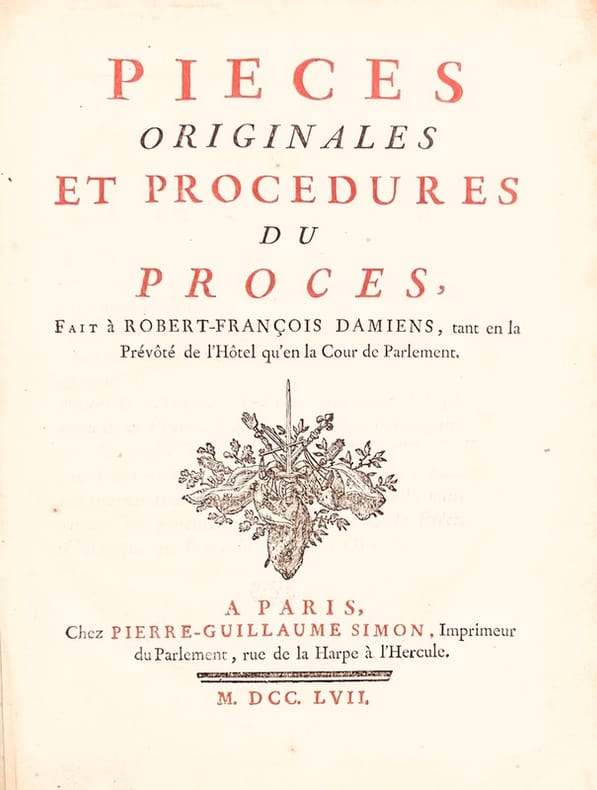
175711021A Paris, chez Pierre-Guillaume Simon, 1757. In-4 de XLII-610-(2)-28 pp., veau brun, dos lisse orné, triple filet doré sur les plats, pièce de titre en maroquin rouge (reliure de l'époque).
1789002011(Kehl) Société Littéraire-Typographique 1789
1752691781752. London: P. Brown 1752. London: P. Brown 1752. The First Major Victory for Freedom of the Press in America Trial. Zenger John Peter 1697-1746 Defendant. The Trial of John Peter Zenger Of New-York Printer; Who was Tried and Acquitted For Printing and Publishing a Libel Against the Government With the Pleadings and Arguments of Both Sides. London: Printed for P. Brown 1752. iv 74 2 pp. Octavo 7-3/4" x 4-3/4". Stab-stitched pamphlet bound into recent quarter calf over marbled boards gilt title to spine endleaves added. Light rubbing to extremities light toning to text light foxing in a few places. A handsome copy. $1750. London reissue of an account first published in New York in 1736 as A Brief Narrative of the Case and Trial of John Peter Zenger which was probably written by James Alexander the co-founder and main editorial voice of Zenger's newspaper the New-York Weekly Journal. Zenger was tried for seditious libel for publishing satirical comments about the governor of New York in his newspaper. Defended by the brilliant Philadelphia lawyer Andrew Hamilton his 1735 acquittal is generally regarded as the first major victory for freedom of the press in the American colonies and a precedent for the First Amendment of the U.S. Constitution. McCoy Freedom of the Press Z8. English Short-Title Catalogue T877. unknown books
1956184698Pretoria: The Government Printer 1956. A major moment in South African history First edition of the indictment for the "Treason Trial" in which Nelson Mandela and almost the entire anti-apartheid leadership were prosecuted. One defendant Ahmed Kathrada has signed beside his name; the signature was acquired by a collector in recent years. "The core of the treason charge related to a momentous - and for the government disconcerting - event at Kliptown on the outskirts of Johannesburg on 25-26 June 1955. The delegates were drawn from the ranks of the Congress Alliance a coalition of race-based anti-apartheid groups - the ANC still Africans only the Indian Congresses the Coloured People's Congress and the white mix of communists and non-communists. They had come together to draw up the country's first democratic constitution. Out of the deliberations came the endorsement of a Freedom Charter which to western eyes was an unexceptionable statement of democratic principles and equal rights owing something to the UN Charter but virtually nothing to the Communist Manifesto" Herbstein pp. 28-9. In response 156 individuals who attended or were associated with the meeting were arrested under the 1950 Suppression of Communism Act. The trial helped unite the anti-apartheid movement and attracted worldwide support for the struggle and international condemnation of the South African government. The trial lasted over four years after which all the accused were acquitted. However soon after Mandela and other defendants were imprisoned following the Rivonia Trial. 3 vols bound in 1 as issued folio. Ex library of the South African embassy in Bonn with their stamp to the front free endpaper and their shelf label and number to spine; binding rubbed and slightly worn and shaken contents toned. A good copy. Denis Herbstein White Lies: Canon Collins and the Secret War Against Apartheid 2004. unknown