693 résultats
179212138AOhne Ort und Verlag, 1792-1793. Ca. 21 x 12,5 cm. XVI Seiten, 456 Seiten, mit einem gefaltetem Kupferstich; XVI Seiten, 534 Seiten, mit einem gefaltetem Kupferstich. Pappband der Zeit. Zwei Teile in einem Band.
1697ARC-214203Amsterdam, Mortier, 1697. In-12° (160 x 100 mm) de: [8] ff. (titre en rouge et noir, vignette gravée et collée sur la page de titre : «Misericordia et Justitia», épître, avertissement, table) ; 251 pp.; [13] pp. (table); 6 planches dont 3 dépliantes; 3 bandeaux, lettrines et culs de lampe.
Ambas obras en un tomo, 14,5 x 10 cm., holandesa piel de época, impresas en Madrid, Imprenta de Collado, 1820, 128 págs. = XVI + 205 págs. (La segunda obra carece de anteportada).
Ambas obras en un tomo, 26,5 x 19,5 cm., pasta española de época, lomo cuajado, impresas en Madrid, por Antonio de Sancha, 1790 y el suplemento en Madrid, Imprenta Real, 1805, 2 hojas + XL + 305 págs. /-/ (Suplemento:) 7 + 57 págs. (Texto impreso a dos columnas en papel de hilo. Sello de anterior poseedor en la primera portada y firma manuscrita en las dos portadas de Clemente de Larrauri, Revisor en Vitoria del Tribunal de la Inquisición de Logroño).
9254è quibusque probatissimis scriptoribus per Adream Eborensem luisitanum selectorum, tomus posterior. Adiecto duplici indice, uno locorum communium, altero propriorum nominum, rerùmque memoria dignarum locupletissimo. In 12 plein cuir fauve raciné, pièce de titre cuir noir, fers, nom de ville et date en pied, dorés. Roulette dorée sur coupes, filet à froid encadrant les plats. Titre XIII 667 pages, 1 page d’errata, 32 pages, Index copiosissimus omnium nomina, quorum Exempla in hoc volumine referuntur,complectens. Tranches rouges Lugduni Apud Theobaldum Paganum 1557.Petits manques aux coiffes, intérieur en très bon état, sans rousseurs, ni autres marques, ou pliures, pas de feuillets déboité. Très bon exemplaire en première édition. Fort rare.
16878-8-490Leiden, Gaasbeek, 1687. 12°(13x8cm), 4 Bl., 220 S., Ldr. d. Zt. mit Rsch. und Rvg.
3353934 pages in4 - bon état malgré quelques rousseurs -
175559311(Köln) Coloniae Agrippinae, Joannis Josephi Hutsch M.DCCLV 1755. 18 ungezählte Seiten 1040 Seiten + Index Locorum Nach-Gebundene Ausgabe (Deckel vorne Leder) - Volllederband fachmännisch den Vorderdeckel nachgebunden, die ersten 3 Seiten (auch Titelblatt) oben mit Fehlstücken (ausgefranst) winzigen Randverlusten sonst Exemplar in gutem Erhaltungszustand
Lima, 1777, 29 x 20,5 cm., cartoné moderno, portada + 142 págs. + 4 hojas de tablas plegadas. (El nombre del autor aparece al fin de esta rara obra no recogida por Palau y de la que no hemos visto ningún ejemplar en el Catálogo Colectivo de Bibliotecas Públicas Españolas, en la web Iberian Boooks, ni en los fondos de la Biblioteca Nacional. Amusquívar Fue uno de los inquisidores más jóvenes que tuvo el Tribunal de Lima, inclusive tuvo que esperar cumplir los 30 años en setiembre de 1744 para ejercerlo. Llegó a mostrar tal desinterés por las funciones del cargo que, estando como único inquisidor en el Tribunal de Lima, pretextando motivos de salud salió fuera de la ciudad y le encargó su puesto al fiscal Bartolomé López Grillo, figura que no tenía precedentes. El Arzobispo de Lima presentó una queja en su contra por la difusión que había realizado de unas profecías que anunciaban la destrucción de Lima. Falleció en Abril de abril de 1763 con fama de hombre justo y caritativo).
168880629London: for James Knapton 1688. First Edition in English. Small 4to 21cm. Later marbled paper-covered boards with gilt morocco spine label; vi70pp. Mild external aging and wear; text quite fresh a few leaves trimmed close at top edge but with no loss of printed area; easily Very Good. A most attractive copy. <br /> <br /> A celebrated account of suffering under the Portuguese Inquisition. Dellon a French medical doctor and naturalist settled at Daman on the western coast of India around 1673 where he began a private medical practice. Within a year he was taken prisoner by the Inquisition accused among other crimes of blaspheming against the adoration of the crucifix. He was transported to Goa where he was held for two years under harsh conditions before being shipped to Lisbon where he was finally released in 1675. This account of Dellon's sufferings first appeared in Leiden 1687; in Paris a year later then rapidly went into English German and Dutch translations. Howgego: "Although long regarded purelyi as a work of propaganda recent research has testified to its accuracy." HOWGEGO I:304. WING D941. for James Knapton unknown
200269482Downsview Ontario Canada: Univ of Toronto Pr. New. 2002. Hardcover. 080203585X . FREE UPGRADE to Courier/Priority Shipping Upon Request - IN STOCK AND IMMEDIATELY AVAILABLE FOR SHIPMENT - FLAWLESS COPY BRAND NEW PRISTINE NEVER OPENED -- with a bonus offer-- . Univ of Toronto Pr hardcover
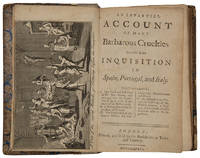
107285London Printed and Sold by the Booksellers in Town and Country 1738. . First edition 8vo 17.5 x 11 cm; five engraved full-page plates including frontispiece woodcut headpieces tailpieces and initials ownership inscription in pen to front free endpaper leaves slightly toned hinges cracked but holding occasional minor tears lacking final few ff.; vellum-backed marbled boards MS spine corners slightly rubbed; x 11-416 pp.<br /> An extremely scarce collection of works on the Inquisition in Spain Portugal and Italy compiled anonymously from several tracts popular at the time including Isaac Martin's Trial and Sufferings first published in 1723 the Prosecution of the famous Molinos a narrative account of the Spanish quietist's trial in 1687 and William Lithgow's Travels and Sufferings relaying the author's seizure and imprisonment in Malaga in 1620.<br /><br />The work can be placed in the tradition of Protestant martyrologies dating back to Foxe's Actes and Monuments which sought to discredit the prosecution of heresy by the Catholic Church: 'Since Persecution and the very Methods now in Use among some Christians for propagating and defending their Religion were in these first Ages so destructive of and apparently opposite to the Gospel of Jesus Christ we may justly wonder how they have been introduced into any Church calling her self by his Name' p.vii.<br /><br />The work is illustrated with five engraved plates two of which are signed 'Hulett' probably the James Hulett d.1671 known for his later portraits of Essex and Lord Fairfax in Francis Peck's Memoirs of the Life and Actions of Oliver Cromwell 1740.<br /><br />ESTC records just four copies of An Impartial Account three in the British Isles London Library National Library of Scotland and Lincoln College Oxford and one in North America Pennsylvania State University.<br /> ESTC N16844. London, Printed, and Sold by the Booksellers in Town and Country, 1738. hardcover
In -8°, 132 cc., cartonato; incisioni nel testo, capilettera, finalini. Un capolettera in rosso e nero apre la dedica al cardinale Reginaldo Polo, raffigurandone lo stemma. Prima e unica edizione di questo trattato dottrinario, scritto da un prolifico e contraddittorio predicatore che sarebbe stato condannato dall’Inquisizione non più di tre anni dopo: all’epoca della pubblicazione Davidico era a Roma, nelle grazie del cardinale Reginald Pole al quale il lavoro è dedicato. Scrittore controverso, prolifico e disordinato, la sua produzione riflette il suo carattere, diviso fra aspirazioni di santità e ambizione materiale, così come emblematico è questo suo trattato, scritto in un volgare fitto e sostenuto, che inquadra le indicazioni dottrinarie in un discorso spesso polemico e censorio verso il vizio di una parte della Chiesa stessa. L’autore non era estraneo ai vizi, sembrerebbe: la biografia di Davidico (Paolo Lorenzo Castellino, Vercelli 1513-1574) è tumultuosa e costellata di accuse di vario genere, dalla sodomia al commercio di indulgenze al furto vero e proprio, così come appare controverso e composito il suo rapporto con vari ordini clericali, tra cui i barnabiti e i gesuiti: i barnabiti lo avevano ammesso all’istituto nel 1536, ma ne fu espulso nel 1547, mentre rimase sempre al margine della Società del Gesù, alla quale non fu mai ammesso nonostante le sue istanze. La condanna arriva nel 1555, dopo un aperto conflitto col cardinale Giovanni Morone, che due anni prima l’aveva chiamato alla Diocesi di Novara come vicario, per poi espellerlo soltanto tre mesi dopo, accusato di malversazione. Nei mesi successivi Davidico avrebbe cominciato a segnalare metodicamente il Morone come eretico a varie autorità. L’Inquisizione, prevalentemente per accuse di sodomia, arresta Davidico stesso che rimarrà in carcere fino al 1559. In -8°, 132 ll., boards. Illustrations, initials, finals, a black and red initial at the beginning of dedication to Cardinal Polo, whom the book is dedicated. First and only edition of this treaty, written by a self-contradictory preacher who was sentenced to prison three years later. Davidico’s production reflects his controversial nature, between holiness instances and material ambitions. Davidico (Paolo Lorenzo Castellino, Vercelli 1513-1574) seems to have been quite vicious, since the various charges submitted to him also before the 1555 sentence: from sodomy to mercies commerce, to robbery, he was imprisoned under omosexuality charges, and he came out of prison in 1559 when the roman prison was opened by civil unrest.
In-4° grande; pp. (20), 503, (1), marca tipografica incisa su legno al frontespizio. Legatura in piena pergamena coeva con titolo manoscritto al dorso. Un libro di viaggio che ripercorre i luoghi di San Domenico. Il domenicano Giovanni Michele Pio compila in quest’opera una straordinaria storia dell’Ordine di San Domenico, letta sia attraverso le vite degli uomini che resero tanto illustre quell’ordine, sia attraverso i luoghi fisici, conventi e monasteri, che segnarono la diffusione dei domenicani in Italia e in Europa, ma anche, ciò che è specialmente interessante, in Asia e in America. Pio descrive infatti per i singoli conventi le architetture, le cose mirabili che vi sono conservate, gli eventi che vi hanno avuto luogo, e lo fa, come dichiara nella lettera al lettore, per aver viaggiato e visto lui stesso in tutta Italia, e affidandosi per l’estero a fonti scritte, come per le fondazioni in Spagna, Inghilterra, Francia, Germania, Fiandre, Polonia e Portogallo, e per le relative missioni nelle Indie Orientali e Occidentali. La testimonianza di un domenicano contemporaneo è di straordinaria importanza per ricostruire la rete dei movimenti attraverso cui viaggiavano non solo I missionari e l’evangelizzazione, ma anche la cultura e l’economia europea, principalmente spagnola e portoghese: Goa, Mozambico, Cochin, Messico, Perù, Cile, Cuba, Porto Rico, Acapulco, Honduras, Guatemala, Nicaragua, Filippine ecc. Nelle pagine dell’opera si legge anche la storia dell’Inquisizione, di santi e miracoli. Molto ricche le tavole d’Indice con i conventi, i monasteri delle monache, santi, religiosi e religiose, pontefici, cardinali, arcivescovi, vescovi, scrittori, e la Tavola delle cose più notabili. (Fantuzzi, voll VII, p.42; manca a Sabin) In-4th large; pp. (20), 503, (1), woodcut printer’s mark on title page. Full vellum contemporary binding with handwritten title on the spine. A travel book that follows the places of San Domenico. The Dominican Giovanni Michele Pio compiles in this work an extraordinary history of the Order of St. Dominic, read both through the lives of the men who made that order so illustrious, and through the physical places, convents and monasteries, which marked the spread of Dominicans in Italy and Europe, but also, what is especially interesting, in Asia and America. In fact, Pio describes for the single convents the architectures, the admirable things that are preserved and the events that took place there, and he does so, as he declares in the letter to the reader, for having traveled and seen himself throughout Italy, and entrusting himself for abroad to written sources, as for the foundations in Spain, England, France, Germany, Flanders, Poland and Portugal, and for the related missions in the East and West Indies. The testimony of a contemporary Dominican is of extraordinary importance to reconstruct the network of movements through which not only missionaries and evangelization traveled, but also the European culture and economy, mainly Spanish and Portuguese: Goa, Mozambique, Cochin, Mexico , Peru, Chile, Cuba, Puerto Rico, Acapulco, Honduras, Guatemala, Nicaragua, Philippines etc. In the pages of the work one can also read the story of the Inquisition, of saints and miracles. The index tables with convents, monasteries of nuns, saints, men and women religious, pontiffs, cardinals, archbishops, bishops, writers, and the Table of the most notable things are very rich. (Fantuzzi, vols VII, p.42; Sabin is missing)
In-4°, XXXIX, frontespizio con grande marca della Stamperia Camerale xilografica (Aquila coronata con ali spiegate che tiene drappo tra gli artigli), grande iniziale xilografica, legatura in cartonato. Singolare figura di ecclesiastico, il De Dominis incontrò l'avversione del Papato per le sue idee riformistiche e per essersi schierato al fianco di Paolo Sarpi nella contesa tra Venezia e Paolo V. A seguito dell'incolmabile distanza con il Papato di Roma, De Dominis fece un passo epocale, convertendosi all'anglicanesimo e trasferendosi alla corte di Giacomo I, che lo accolse con grande entusiasmo. Ben presto però venne in urto anche con la corte inglese e solo grazie all'elezione del pontefice Gregorio XV (Alessandro Ludovisi, suo amico) poté ritornare a Roma, ma dovette fare mostra di pentimento e ritrattazione di quanto aveva prima scritto contro il Papato, cosa che gli costò il feroce disprezzo della corte anglicana. La morte di Gregorio XV determinò la sospensione della protezione e della pensione assegnatagli dal papa: la conseguente ira del De Dominis lo espose alla feroce repressione dell'Inquisizione, che lo condannò per eresia recidiva. Condannato alla Fortezza (Castel S. Angelo), vi morì per cause naturali. L'Inquisizione tuttavia proseguì il processo arrivando alla condanna post mortem: le spoglie del De Dominis furono riesumate e arse assieme ai suoi libri e l'autore condannato a una perpetua damnatio memoriae. L'opera della ritrattazione, il Reditus, verrà proibita anche a Venezia a causa dell'affermazione della supremazia del potere papale sui poteri temporali.A. Russo, Marc'Antonio De Dominis, Arcivescovo di Spalato e apostata (1560-1624), Napoli, Istituto della Stampa 1965.Delio Cantimori, Eretici italiani del Cinquecento, Torino, Einaudi 1992In-4°, XXXIX, title page with large wood engraved print of the Stamperia Camerale (crowned eagle with outstretched wings holding cloth in its claws), large wood engraved initial, cardboard binding. A singular ecclesiastical figure, De Dominis encountered the aversion of the Papacy for his reformist ideas and for having sided with Paolo Sarpi in the dispute between Venice and Paul V. Following the unbridgeable distance with the Papacy of Rome, De Dominis made a major change, converting to Anglicanism and moving to the court of James I, who welcomed him with great enthusiasm. Soon, however, he came into conflict with the English court and thanks to the election of Pope Gregory XV (Alessandro Ludovisi, his friend) he was able to return to Rome, but he had to show repentance and retraction of what he had previously written against the Papacy. The retraction cost him the fierce contempt of the Anglican court. The death of Gregory XV led to the suspension of the protection and pension assigned to him by the pope: the consequent wrath of De Dominis exposed him to the ferocious repression of the Inquisition, which condemned him for heresy recidivism. Sentenced to the Fortress (Castel S. Angelo), he died there of natural causes. However, the Inquisition continued the process arriving at the post-mortem sentence: the remains of De Dominis were burned together with his books and the author sentenced to a perpetual damnatio memoriae. The work of retraction, the Reditus, was also prohibited in Venice due to the affirmation of the supremacy of papal power over temporal powers.A. Russo, Marc'Antonio De Dominis, Archbishop of Spalato and apostate (1560-1624), Naples, Institute of the Press 1965.Delio Cantimori, Italian heretics of the sixteenth century, Turin, Einaudi 1992
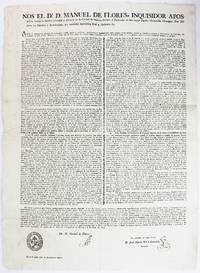
18155342Mexico: 8 de Julio 1815. Very good. Double-sheet broadside measuring 23.75 x 17 inches. Old fold lines some slight rumpling. Minor soiling and wear. A fascinating and rare broadside in which the Inquisition attempts to prohibit pro-independence publications including the 1814 Constitution of Apatzingán during the midst of the Mexican Revolution. Dated July 8 1815 this proclamation of the Inquisition first reiterates a blanket prohibition on what it labels seditious and anti-Catholic publications that is to say anything in favor of the revolution and independence. It warns that any statements in favor of liberty and democracy constitute heresy in the eyes of the Inquisition and that such calls in fact seek to subvert the natural order rather than re-establish it:<br /> <br /> "Producciones de una nueva raza de Filósofos hombres de espíritu corrompido que baxo del especioso titulo de defensores de la libertad maquinan realmente contra ella destruyendo de este suerte el orden político y social y gerarquia de la Religion cristiana exhortando con este language de seduccion á ascudir el yugo de subordinacion y sujecion á las lexítimas Potestades tan recomendada por Jesucristo y pretendiendo por aqui fundar si les fuera posible sobre las ruinas de la Religion y Monarquias aquella soñada libertad que malamente suponen concedida á todos los hombres por la naturaleza: razon porque prohibe los muchos libros que menciona y los demás que sean de la misma clase para precaver con oportuno remedio el daño que puedan occasionar."<br /> <br /> The proclamation then continues in seven numbered sections to outlaw specific works published by the revolutionary government its forces and its supporters. Most significantly the broadside outlaws the Decreto Constitucional para la Libertad de la América Mexicana more commonly known as the Constitution of Apatzingán. This document promulgated by the Congress of Anáhuac on October 22 1814 printed 242 articles for the establishment of republican government in Mexico although it was never brought into force. The propositions put forth by the Constitution are so egregious according to the Inquisition that it is impossible in one edict to denounce them all individually:<br /> <br /> "Excederia los límites de un edicto la especificacion particular de todos y de cada uno de los crasísimos errores que contiene este infernal papel; pero bastará advertir á los Fieles que en él baxo el respetable nombre de Religion Católica Apostólica Romana que sirve de escudo á sus tramas como antes servia el de Fernando VII contra quien tan iniquamente se han declarado rebeldes se introducen las mas groseras heregias y los mayores delerios."<br /> <br /> Nevertheless the authors go on to highlight the most transgressive articles condemn the inferred inspiration of the document from authors like Hobbes and Rousseau and emphasize the rejection of Church doctrine implicit in calls for revolution and democracy:<br /> <br /> "Mas como los Autores de Constitucion se han propuesto revelarse tambien contra la Doctrina expresa de la Iglesia dogmatizan ser licito á los Ciudadanos levantarse contra el Principe prevarle del Reyno mudar el Gobierno monárquico en republicano á pretexto de tirania como si fuera lo mismo fundarlo de nuevo que revelarse contra el ya fundado. Decir que es licito y justo el tal levantamiento contra el lexitimo Principe aunque sea baxo de pretexto de tirania es una proposicion condenada repetidamente por la Iglesia y heregia declarada."<br /> <br /> In the remaining six sections the Inquisition continues to condemn a litany of decrees sermons almanacs manuscripts and other texts that emanate from revolutionary sources or espouse democratic ideas. In all the document serves as an outstanding representation of the royalist Catholic and conservative forces that were attempting to hold power in Mexico during this period and a fascinating example of attempted censorship of revolutionary ideals. Rare we locate only two copies -- one at Berkeley and Medina's copy at the National Library of Chile. 8 de Julio unknown
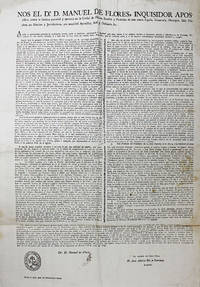
1815LL 577<p><em>Nos el Dr. D. Manuel de Flores inquisidor aposto</em><em>Ì</em><em>lico contra la here</em><em>Ì</em><em>tica pravedad y apostasi</em><em>Ì</em><em>a en la ciudad de Me</em><em>Ì</em><em>xico estados y provincias de esta Nueva Espan</em><em>̃</em><em>a Guatemala Nicaragua Islas Filipinas sus distritos y jurisdicciones .: A todas y qualesquiera personas de qualquier estado . y habitantes en las ciudades villas y lugares de este nuestro distrito . salud en nuestro Sen</em><em>̃</em><em>or Jesucristo . y a</em><em>Ì </em><em>los nuestros mandamientos firmemente obedecer y cumplir. <strong> Begins </strong>Sabed: Que la paternal solicitud del Santo Oficio encargada por la autoridad aposto</em><em>Ì</em><em>lica leyes del reyno y una inmemorial costumbre . de extirpar en estos reynos no solo las heregias manifiestas sino quanto pueda ofender la pureza de la religion . ha clamado en todos tiempos contra los perversos perturbadores del buen orden religioso y social …</em> Mexico: 8 de Julio 1815.</p><p>Double-sheet broadside measuring 23.75 x 17 inches.Title from caption and beginning of text. Dated and signed at end: Dada en la Inquisicion de MeÌxico aÌ 8 de julio de 1815. Dr. D. Manuel de Flores with his rubric in manuscript. Por mandado del Santo Oficio D. JoseÌ Maria Ris y Garnica secretario with his rubric in manuscript. Title from caption and beginning of text.Dated and signed at end: Dada en la Inquisicion de MeÌxico aÌ 8 de julio de 1815 . Dr. D. Manuel de Flores with his rubric in manuscript. Por mandado del Santo Oficio D. JoseÌ Maria Ris y Garnica secretario with his rubric in manuscript. At foot of sheet: Nadie le quite pena de excomunion mayor.Text in double columns.Printed on 2 sheets joined together to form a single broadside. Seal of the Inquisition with caption "Domine Iudica Causam tuam. Exurge" printed at bottom left corner.</p><p>A fascinating and rare broadside in which the Inquisition attempts to prohibit pro-indepedence publications including the 1814 Consitution of Apatzingán during the midst of the Mexican Revolution. Dated July 8 1815 this proclamation of the Inquisition first reiterates a blanket prohibition on what it labels seditious and anti-Catholic publications that is to say anything in favor of the revolution and independence. It warns that any statements in favor of liberty and democracy constitute heresy in the eyes of the Inquisition and that such calls in fact seek to subvert the natural order rather than re-establish it:</p><p>"Producciones de una nueva raza de Filósofos hombres de espÃritu corrompido que baxo del especioso tÃtulo de defensores de la libertad maquinan realmente contra ella destruyendo de este suerte el orden polÃtico y social y gerarquia de la Religion cristiana exhortando con este language de seduccion á ascudir el yugo de subordinacion y sujecion á las lexÃtimas Potestades tan recomendada por Jesucristo y pretendiendo por aqui fundar si les fuera posible sobre las ruinas de la Religion y Monarquias aquella soñada libertad que malamente suponen concedida á todos los hombres por la naturaleza: razon porque prohibe los muchos libros que menciona y los demás que sean de la misma clase para precaver con oportuno remedio el daño que puedan occasionar."</p><p>The proclamation then continues in seven numbered sections to outlaw specific works published by the revolutionary government its forces and its supporters. Most significantly the broadside outlaws the Decreto Constitucional para la Libertad de la América Mexicana more commonly known as the Constitution of Apatzingán. This document promulgated by the Congress of Anáhuac on October 22 1814 printed 242 articles for the establshment of republican government in Mexico although it was never brought into force. The propositions put forth by the Constitution are so egregious according to the Inquisition that it is impossible in one edict to denounce them all individually:</p><p>"<em>Excederia los lÃmites de un edicto la especificacion particular de todos y de cada uno de los crasÃsimos errores que contiene este infernal papel; pero bastará advertir á los Fieles que en él baxo el respetable nombre de eligion Católica Apostólica Romana que sirve de escudo á sus tramas como antes servia el de Fernando VII contra quien tan iniquamente se han declarado rebeldes se introducen las mas groseras heregias y los mayores delerios."</em></p><p>Nevertheless the authors go on to highlight the most transgressive articles condemn the inferred inspiration of the document from authors like Hobbes and Rousseau and emphasize the rejection of Church doctrine implicit in calls for revolution and democracy:</p><p><em>"Mas como los Autores de Constitucion se han propuesto revelarse tambien contra la Doctrina expresa de la Iglesia dogmatizan ser licito á los Ciudadanos levantarse contra el Principe prevarle del Reyno mudar el Gobierno monárquico en republicano á pretexto de tirania como si fuera lo mismo fundarlo de nuevo que revelarse contra el ya fundado. Decir que es licito y justo el tal levantamiento contra el lexitimo Principe aunque sea baxo de pretexto de tirania es una proposicion condenada repetidamente por la Iglesia y heregia declarada."</em></p><p>In the remaining six sections the Inquisition continues to condemn a litany of decrees sermons almanacs manuscripts and other text that emanate from revolutionary sources or espouse democratic ideas.</p><p><strong>In all the document serves as an outstanding representation of the royalist Catholic and conservative forces that were attempting to hold power in Mexico during this period and a fascinating example of attempted censorship of revolutionary ideals. </strong></p><p>¶ Medina Mexico 11059 confusing the date for "8 de Febrero" instad of "8 de Julio. LL 577</p>
181134599Mexico: no publisher/printer 26 January 1811. Folio 43.4 cm; 17.125". 1 p. <br><br>Approximately two months prior to Father Hidalgo's capture by the Royal Forces the Holy Office issued this decree condemning a publication of the Father of Mexican Independence as seditious Lutheran and anti-Catholic. Other writings circulating in manuscript are also condemned: One beginning "Hemos llegado a la epoca" and ending "De una Patriota de Lagos" and another beginning "Es posible. Americanos!" and ending "será gratificado con quinientos pesos." Copies of each were burned by the public executioner and all citizens are warned of the penalties excommunication and fines for owning or reading these writings or failing to denounce those who do.<br>Â Â Â Â Printed on two sheets precisely glued together to form a seamless whole in double-column format and with the woodcut seal of the Inquisition in the lower right corner of the lower edge.<br>Â Â Â Â Garritz located only the copy in the Biblioteca Nacional and WorldCat locates only seven U.S. institutions holding copies. <br>Â Â Â Â <br>Â Â Â Â Garritz Impresos novohispanos 1137. Not in Palau; Medina Mexico; Ziga & Espinosa Adiciones a la imprenta en Mexico; González de Cossío 510 or González de Cossío Cien. Old folds; a few small wormholes touching or costing a very few letters and one larger hole costing five letters but not impeding reading sense. Slight discoloration along the area where the two sheets are pasted together and at points on vertical fold. no publisher/printer unknown books