Poincare, HenriBiblio.com
1 189 résultats
1168238501.Ghardcover. Good. Access codes and supplements are not guaranteed with used items. May be an ex-library book. hardcover
1168116856.Gpaperback. Good. Access codes and supplements are not guaranteed with used items. May be an ex-library book. paperback
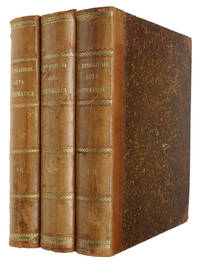
188460243Berlin Stockholm Paris F. & G. Beijer 1882-84. Large4to 272 x 230 mm. Three volumes uniformly bound in contemporary half calf with gilt lettering to spine. In "Acta Mathematica" volume 1-5. Light wear to extremities boards and spines with scratches. Stamp to verso of front board in all volumes. First three leaves in first volume detached otherwise internally fine and clean. Vol. I pp. 1-62; Pp. 193-294; Vol. II pp. 97-113; Vol. III. pp. 49-92; Vol. IV pp. 201-312; Vol. V pp. 209-278. <br/><br/><em>First publication of these groundbreaking papers which together constitute the discovery of Automorphic Functions. "Before he was thirty years of age Poincaré became world famous with his epoch-making discovery of the "automorphic functions" of one complex variable or as he called them the "fuchsian" and "kleinean" functions." DSB.These manuscripts written between 28 June and 20 December 1880 show in detail how Poincaré exploited a series of insights to arrive at his first major contribution to mathematics: the discovery of the automorphic functions. In particular the manuscripts corroborate Poincaré's introspective account of this discovery 1908 in which the real key to his discovery is given to be the recognition that the transformations he had used to define Fuchsian functions are identical with those of non-Euclidean geometry. See Walter Poincaré Jules Henri French mathematician and scientist.The idea was to come in an indirect way from the work of his doctoral thesis on differential equations. His results applied only to restricted classes of functions and Poincaré wanted to generalize these results but as a route towards this he looked for a class functions where solutions did not exist. This led him to functions he named Fuchsian functions after Lazarus Fuchs but were later named automorphic functions. First editions and first publications of these epochmaking papers representing the discovery of "automorphic functions" or as Poincaré himself called them the "Fuchsian" and "Kleinian" functions."By 1884 Poincaré published five major papers on automorphic functions in the first five volumes of the new Acta Mathematica. When the first of these was published in the first volume of the new Acta Mathematica Kronecker warned the editor Mittag-Leffler that this immature and obscure article would kill the journal. Guided by the theory of elliptic functions Poincarë invented a new class of automorphic functions. This class was obtained by considering the inverse function of the ratio of two linear independent solutions of an equation. Thus this entire class of linear diffrential equations is solved by the use of these new transcendental functions of Poincaré." Morris Kline.Poincaré explains how he discovered the Automorphic Functions: "For fifteen days I strove to prove that there could not be any functions like those I have since called Fuchsian functions I was then very ignorant; every day I seated myself at my work table stayed an hour or two tried a great number of combinations and reached no results. One evening contrary to my custom I drank black coffee and could not sleep. Ideas rose in crowds; I felt them collide until pairs interlocked so to speak making a stable combination. By the next morning I had established the existence of a Class of Fuchsian functions those which come from hypergeometric series; i had only to write out the results which took but a few hours.the transformations that I had used to define the Fuchsian functions were identical with those of Non-Euclidean geometry." </em> hardcover
188246049Berlin Stockholm Paris F. & G. Beijer 1882. Large4to. As extracted from "Acta Mathematica" no backstrip. With title-page and front free end-paper. In "Acta Mathematica" volume 1. Title pages with library stamp. A fine and clean copy. Pp. 6 62. <br/><br/><em>First publication of this groundbreaking paper which became Poincaré first paper in his much celebrated and famous six-paper series which together constitute the discovery of Automorphic Functions. "Before he was thirty years of age Poincaré became world famous with his epoch-making discovery of the "automorphic functions" of one complex variable or as he called them the "fuchsian" and "kleinean" functions." DSB.These manuscripts written between 28 June and 20 December 1880 show in detail how Poincaré exploited a series of insights to arrive at his first major contribution to mathematics: the discovery of the automorphic functions. In particular the manuscripts corroborate Poincaré's introspective account of this discovery 1908 in which the real key to his discovery is given to be the recognition that the transformations he had used to define Fuchsian functions are identical with those of non-Euclidean geometry.The idea was to come in an indirect way from the work of his doctoral thesis on differential equations. His results applied only to restricted classes of functions and Poincaré wanted to generalize these results but as a route towards this he looked for a class functions where solutions did not exist. This led him to functions he named Fuchsian functions after Lazarus Fuchs but were later named automorphic functions. First editions and first publications of these epochmaking papers representing the discovery of "automorphic functions" or as Poincaré himself called them the "Fuchsian" and "Kleinian" functions."By 1884 Poincaré published five major papers on automorphic functions in the first five volumes of the new Acta Mathematica. When the first of these was published in the first volume of the new Acta Mathematica Kronecker warned the editor Mittag-Leffler that this immature and obscure article would kill the journal. Guided by the theory of elliptic functions Poincarë invented a new class of automorphic functions. This class was obtained by considering the inverse function of the ratio of two linear independent solutions of an equation. Thus this entire class of linear diffrential equations is solved by the use of these new transcendental functions of Poincaré." Morris Kline.Poincaré explains how he discovered the Automorphic Functions: "For fifteen days I strove to prove that there could not be any functions like those I have since called Fuchsian functions I was then very ignorant; every day I seated myself at my work table stayed an hour or two tried a great number of combinations and reached no results. One evening contrary to my custom I drank black coffee and could not sleep. Ideas rose in crowds; I felt them collide until pairs interlocked so to speak making a stable combination. By the next morning I had established the existence of a Class of Fuchsian functions those which come from hypergeometric series; i had only to write out the results which took but a few hours.the transformations that I had used to define the Fuchsian functions were identical with those of Non-Euclidean geometry." </em> unknown
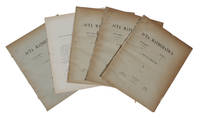
188245854Berlin Stockholm Paris F. & G. Beijer 1882-84. Large4to. As extracted from "Acta Mathematica" no backstrip. With title-page and the original wrappers. except for paper no. 3 and 5 which only has the title page. In "Acta Mathematica" volume 1-5. Title pages with library stamp. Internally clean and fine. Vol. I pp. 1-62; Pp. 193-294; Vol. II pp. 97-113; Vol. III. pp. 49-92; Vol. IV pp. 201-312; Vol. V pp. 209-278. <br/><br/><em>First publication of these groundbreaking papers which together constitute the discovery of Automorphic Functions. "Before he was thirty years of age Poincaré became world famous with his epoch-making discovery of the "automorphic functions" of one complex variable or as he called them the "fuchsian" and "kleinean" functions." DSB.These manuscripts written between 28 June and 20 December 1880 show in detail how Poincaré exploited a series of insights to arrive at his first major contribution to mathematics: the discovery of the automorphic functions. In particular the manuscripts corroborate Poincaré's introspective account of this discovery 1908 in which the real key to his discovery is given to be the recognition that the transformations he had used to define Fuchsian functions are identical with those of non-Euclidean geometry. See Walter Poincaré Jules Henri French mathematician and scientist.The idea was to come in an indirect way from the work of his doctoral thesis on differential equations. His results applied only to restricted classes of functions and Poincaré wanted to generalize these results but as a route towards this he looked for a class functions where solutions did not exist. This led him to functions he named Fuchsian functions after Lazarus Fuchs but were later named automorphic functions. First editions and first publications of these epochmaking papers representing the discovery of "automorphic functions" or as Poincaré himself called them the "Fuchsian" and "Kleinian" functions."By 1884 Poincaré published five major papers on automorphic functions in the first five volumes of the new Acta Mathematica. When the first of these was published in the first volume of the new Acta Mathematica Kronecker warned the editor Mittag-Leffler that this immature and obscure article would kill the journal. Guided by the theory of elliptic functions Poincarë invented a new class of automorphic functions. This class was obtained by considering the inverse function of the ratio of two linear independent solutions of an equation. Thus this entire class of linear diffrential equations is solved by the use of these new transcendental functions of Poincaré." Morris Kline.Poincaré explains how he discovered the Automorphic Functions: "For fifteen days I strove to prove that there could not be any functions like those I have since called Fuchsian functions I was then very ignorant; every day I seated myself at my work table stayed an hour or two tried a great number of combinations and reached no results. One evening contrary to my custom I drank black coffee and could not sleep. Ideas rose in crowds; I felt them collide until pairs interlocked so to speak making a stable combination. By the next morning I had established the existence of a Class of Fuchsian functions those which come from hypergeometric series; i had only to write out the results which took but a few hours.the transformations that I had used to define the Fuchsian functions were identical with those of Non-Euclidean geometry." </em> unknown
1895S6990Paris:: Georges Carre 1895. 1895. At head of title: Cours de la Faculte des Sciences de Paris . . . Cours de Physique Mathematique. 8vo. iv 316 pp. 33 figs. Modern brown buckram gilt spine. Fine. FIRST EDITION. DSB XI pp. 51-61; Gascoigne 6883.6; Parke Guide to the literature of mathematics and physics p. 167. Georges Carre, 1895. hardcover books
1895S6990Paris:: Georges Carre 1895. 1895. At head of title: Cours de la Faculte des Sciences de Paris . . . Cours de Physique Mathematique. 8vo. iv 316 pp. 33 figs. Modern brown buckram gilt spine. Fine. FIRST EDITION. DSB XI pp. 51-61; Gascoigne 6883.6; Parke Guide to the literature of mathematics and physics p. 167. Georges Carre, 1895. hardcover
0260567191.Ghardcover. Good. Access codes and supplements are not guaranteed with used items. May be an ex-library book. hardcover
1907017051<p>New York: The Science Press 1907 Book. Good. Hardcover. Good / No Jacket; front hinge split but holding very light rubbing to corners po names on ffep; o/w clean & tight text.</p> The Science Press hardcover
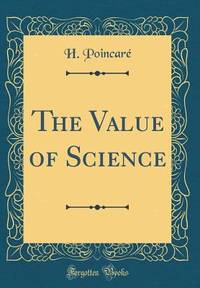
1907000013575New York: The Science Press 1907. First American edition. Hardcover. Very Good. 8vo. 4 iii 1 1-147 1 pp. Navy cloth with a border in blind on each board gold lettering and two gold rules on the spine. Authorized translation with an introduction by George Bruce Halsted. With a special prefatory essay. Part of the Library of Philosophy Psychology and Scientific Methods series edited by J. McKeen Cattell. A moving work from the pioneering polymath. A small concavity to the spine a few pencil annotations. A bookseller's ticket from Ideal Bookstore which was on Amsterdam Avenue in New York City. The Science Press hardcover
0486604691.Gpaperback. Good. Access codes and supplements are not guaranteed with used items. May be an ex-library book. paperback
45136806like new. unknown
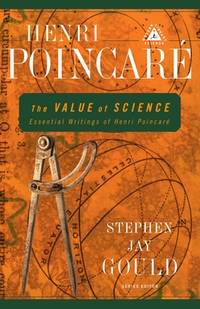
2001Q-0375758488Modern Library 2001-10-02. Paperback. New. In shrink wrap. Looks like an interesting title! Modern Library paperback
1376278332.Gpaperback. Good. Access codes and supplements are not guaranteed with used items. May be an ex-library book. paperback
1015435033.Gpaperback. Good. Access codes and supplements are not guaranteed with used items. May be an ex-library book. paperback
1015430147.Ghardcover. Good. Access codes and supplements are not guaranteed with used items. May be an ex-library book. hardcover
ria9783319528984_inpHardcover. New. New Book; Fast Shipping from UK; Not signed; Not First Edition; N/A hardcover
ria9783319850122_inpPaperback. New. New Book; Fast Shipping from UK; Not signed; Not First Edition; N/A paperback
331952898XNew. Brand new and still unused unknown
331952898X.Ghardcover. Good. Access codes and supplements are not guaranteed with used items. May be an ex-library book. hardcover
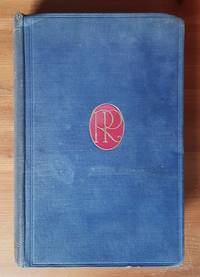
1922206080London UK: Cassell and Company 1922. First English Language Edition. Hardcover. Good/No Dust Jacket Issued. 8vo - over 7¾" - 9¾" tall. Written immediately after the end of the First World War by the former Prime Minister and President of France. Atudy of the long-term causes of the First World War. 276pp. Blue cloth boards with author's initials in gilt on upper board and gilt lettering to spine. Blue cloth boards faded to spine small nick to cloth at the head of the spine. Corners bumped and shelf wear to cloth. Ex-Farnborough Abbey library copy with stamp on fixed endpaper and name written on free endpaper. Heavy foxing to endpapers. Text block in very good order. . Cassell and Company hardcover
1019185112.Ghardcover. Good. Access codes and supplements are not guaranteed with used items. May be an ex-library book. hardcover
1165104431.Gpaperback. Good. Access codes and supplements are not guaranteed with used items. May be an ex-library book. paperback
1437305571.Gpaperback. Good. Access codes and supplements are not guaranteed with used items. May be an ex-library book. paperback
192212874London: Cassell and Company Limited 1922. fair ex-lib. 276 footnotes index boards weak lib stamps pocket & barcode binding shaken boards & spine scuffed stained & scratched. Board corners somewhat bumped library call number on spine board and spine edges worn small tears at top of spine. The author was President of the French Republic from 1913 to 1920. Cassell and Company, Limited hardcover