166 résultats
17318204Jean-Frédéric Bernard 10 x 16,5 Amsterdam Edition Originale 1731 In-12, reliure plein veau de l'époque, dos à cinq nerfs orné de caissons fleuronnés, pièce de titre de maroquin rouge, titre doré, tranches rouges, 234 pp. Frontispice gravé par Van Buisen, d'après B. Picart, titre imprimé en rouge et noir. Edition originale, premier tirage, caractérisé par le fleuron de titre portant la signature de Picart et l'Avertissement composé de 19 lignes et non de 17 lignes comme dans le second tirage. Fragments de mémoires de cour de Madame de La Fayette (1633-1693) parus à titre posthume et où sont relatées notamment les relations diplomatiques du règne. Edition originale, mais reliure très usagée, à restaurer.(VeiB85) PHOTOS NUMERIQUES DISPONIBLES PAR EMAIL SUR SIMPLE DEMANDE-DIGITAL PHOTOGRAPS MAY BE AVAILABLE ON REQUEST
183027618affiche au format 46 x 37 cm, Imprimerie du Gouvernement, [ Paris ], 31 juillet 1830. Rappel du titre complet : Aux Habitans de Paris. Paris le 31 juillet 1830. [ Rare Affiche de La Fayette annonçant la nomination du Duc d'Orléans au lendemain des Trois Glorieuses ] : "La réunion des Députés actuellement à Paris vient de communiquer au Général en chef la résolution qui, dans l'urgence des circonstances, a nommé M. le duc d'Orléans lieutenant-général du Royaume. ... elle sait que le Lieutenant-général du Royaume appelé par la Chambre fut un des jeunes patriotes de 89, un des premiers généraux qui firent triompher le drapeau tricolore. Liberté, égalité et ordre public, fut toujours ma devise : je lui serai fidèle".
1741AMA-336Paris, Par la Commpagnie des Libraires Associés, 1741. 2 tomes en 1 volume in 12, basane marbrée, dos à nerfs orné de fleurettes dorées, tranches rouges, un coin émoussé, tampon ex-libris au verso du faux-titre, mouillure marginale claire sur quelques feuillets (Reliure de l’époque) (3)ff.-204 pp., (2)ff.-209 pp.-(1)f.
192563414Illustrations en couleurs de Serger Solomko, un des 100 exemplaires sur Japon impérial contenant deux états des illustrations dont un état en noir avec remarques (n°132 paraphé par l'éditeur), 1 vol. grand in-8 reliure postérieure plein chagrin rouge sous étui cartonné, dos à 4 nerfs, non rogné, couvertures conservées, Librairie des Amateurs, A. Ferroud, F. Ferroud, Paris, 1925
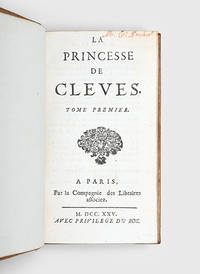
1725183264Paris: La Compagnie des Libraires Affociez 1725. An early edition of one of the first psychological novels concerning a married noblewoman tormented by her feelings for another man. Set in Henry II's court between 1558 and 1559 it is also one of the first European historical novels. It became an immediate commercial success when it was first published anonymously in 1678 although its depiction of adulterous feelings was controversial. Novels in 17th-century France typically focused on the wide-ranging adventures of a hero which could extend over several volumes and often employed flamboyant language. Conversely the drama in La Princesse de Cleves is contained within the characters' psyches focussing on "the elements of violence and conflict in passion" especially "as opposed to the conventional love sanctioned by society" McNeill p. 25. Further the events of the novel span less than a year and La Fayette's language is "innovative in its relative simplicity and concision" McNeill p. 27. 2 vols bound in 1 octavo 153 x 87 mm pp. 6 207 1 3 210. Woodblock printer's devices headpieces and initials. Near-contemporary sprinkled calf flat spines separated with gilt rolls lettered in gilt on red morocco label gilt ruling to covers and board edges endpapers marbled edges sprinkled green chartreuse silk bookmarker. Contemporary ownership inscription to title page: "M: C: Archer". Extremities rubbed tiny chip at head of front board joint a couple of small scrapes to covers contents clean. A very good copy. Isabelle McNeill "Madame De La Fayette: A Modern Woman of the Seventeenth Century" Simone de Beauvoir Studies vol. 10 1993. unknown
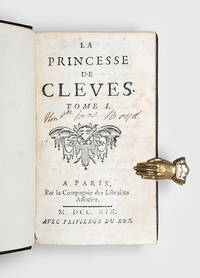
1719183236Paris: La Compagnie des Libraires Affociez 1719. An early edition of one of the first psychological novels concerning a married noblewoman tormented by her feelings for another man. Set in Henry II's court between 1558 and 1559 it is also one of the first historical novels. It was immediate commercial success upon its first anonymous publication in 1678 although the depiction of adulterous feelings was controversial. Novels in 17th century France typically focussed on the wide-ranging adventures of a hero which could extend over several volumes and often employed flamboyant language. Conversely the drama in La Princesse de Cleves is contained within the characters' psyches focussing on "the elements of violence and conflict in passion" especially "as opposed to the conventional love sanctioned by society" McNeill p. 25. Further the events of the novel span less than a year and La Fayette's language is "innovative in its relative simplicity and concision" McNeill p. 27. A near-contemporary female ownership inscription is found on the title page: "Honourable Mrs Boyd". This may be Jeanne Antoinette Wyandt circa 1730-1763 who married the Jacobite Charles Boyd 1728-1782 during his years of exile in France following the Battle of Culloden. 2 vols in 1 octavo 154 x 90 mm pp. 8 1-207 1; 4 1-210. Woodblock printer's devices headpieces initials and factotum initials. Early 19th-century black straight-grain calf corners retouched flat spine with red morocco label and gilt fillets and lettering gilt frames to covers edges and turn-ins gilt marbled endpapers edges gilt. Ownership inscription on front free endpaper verso: "David Baird Smith". Extremities slightly rubbed corners bumped a few minor scrapes to covers contents a little foxed: a very good copy. Isabelle McNeill "Madame De La Fayette: A Modern Woman of the Seventeenth Century" Simone de Beauvoir Studies vol. 10 1993. unknown
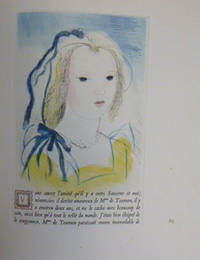
192036017Paris: Éditions Nilsson n.d. 1920. 8vo pp. 186; numerous pochoir illustrations tipped in front hinge starting extremities lightly toned else a very good bright copy in original pictorial wrappers with glassine covers. Partially unopened; from the Collection Émeraud series. Éditions Nilsson, n.d. unknown
GF1947111 pages autographes in4 en feuilles sous couverture cartonnée - ratures et corrections -
0576-07Paris Compagnie des Libraires 1719. Avec privilège du Roy. 4 Tle. in 1 Bd. kl.-8°. Titelbl. 3 Bll. 207 S.; Titelbl. 209 1 S. Durchgeh. paginiert. HLdr. d. Zt. Mit Rückensch. Rü. leicht berieb. La princesse de Clèves stellt innerhalb der als nouvelle historique bezeichneten Form des zeitgenössischen Kurzromans eine Ausnahme gerade durch die einzigartige Darstellungskunst hinsichtlich seelischer Konflikte dar und darf als Anfang des psychologischen Romans in Frankreich gelten." Kindler. - Erschien erstmals 1678. Paris, Compagnie des Libraires 1719. Avec privilège du Roy. unknown
51-6842Paris: Robert Laffont 1947 . 4to. 22.5 x 28cm. Original printed wrappers. and plain chemise and slipcase repaired . Sheets loose as issued. One of 300 numbered copies. 10 color etchings.OCLC Number / Unique Identifier:10618286; Luc Monod no. 6665 ; Daniel Marchesseau no 240-249. Paris: Robert Laffont, 1947, unknown
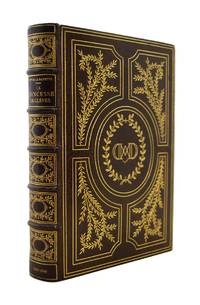
188969537Paris: Librairie L. Conquet 1889. SAMBLANX & WECKESSER. . La Princesse de Cleves. Preface par Anatole France. Un Portrait et Douze Compositions de Jules Garnier. Graves par A. Lamotte. Paris: Librairie L. Conquet 1889.<br> <br> Full Description:<br> <br> LA FAYETTE Marie-Madeleine Pioche de la Vergne. SAMBLANX & WECKESSER binder. La Princesse de Cleves. Preface par Anatole France. Un Portrait et Douze Compositions de Jules Garnier. Graves par A. Lamotte. Paris: Librairie L. Conquet 1889.<br> <br> Limited edition one of 500 copies this being number 449. Numbered and initialed by the publisher. Four parts in one octavo volume 8 1/16 x 5 3/8 inches; 205 x 135 mm. xxviii 344 1 table 1 blank pp. With half-title. With engraved frontispiece portrait four engraved plates and four engraved head and tail piece vignettes for the beginning and end of each part. Original wrappers bound in.<br> <br> Beautifully bound by Belgian bookbinders Samblanx and Wexkesser in full brown borocco. Boards elaborately ruled and stamped in gilt in leaf motifs. With a gilt central wreath and initial device. Spine stamped and lettered in gilt. Board edges double ruled in gilt. Gilt dentelles. Marbled endpaper. All edges gilt. Original front and back wrapper bounds in. Previous owner's bookplate on front free endpaper. An about fine unread copy. Housed in a marbled slipcase.<br> <br> Commonly cited as the first French novel as opposed to picaresques and fables La Princesse de Cleves is among the most scrupulously accurate historical fictions in literature. It is also arguably the first historical novel ever written and one of the earliest novels in any language.<br> <br> "In La Princesse de Cleves will and duty triumph over passion; but the moral is melancholy - that to do one's duty does not necessarily bring happiness. Mme de la Fayette may be said to have inaugurated the French novel of character replacing the grandiloquence incredible adventures and tedious length of Mlle de Scudery's romances by proportion simplicity sincerity and an easy sober style without affectation or sentimentality" Oxford Companion to French Literature. It single-handedly launched a new fiction of the vraisembable and can thus be considered one of the earliest modern psychological novels as well.<br> <br> HBS 69537.<br> <br> $1750. Librairie L. Conquet unknown
LCS-18517Exemplaire somptueusement reliée en maroquin de l’époque de Simier aux armes de la Duchesse de Berry (1798-1870). Paris, Ménard et Desenne, 1818. 4 parties en 1 volume petit in-8 de (2) ff. et 298 pp., 4 gravures hors texte. Plein maroquin bleu nuit, filet doré et roulette à froid encadrant les plats, armoiries frappées or au centre, dos à nerfs orné, coupes décorées, roulette intérieure, tranches dorées. Reliure en maroquin armorié de l’époque de Simier. 134 x 90 mm.
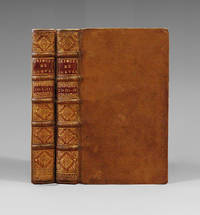
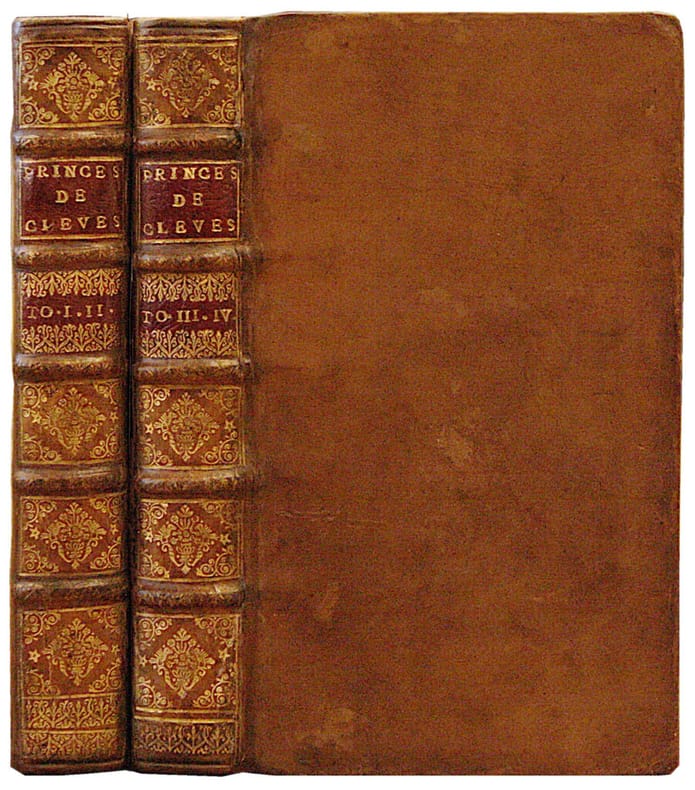
TR05<p>Paris Claude Barbin 1689.</p><p>4 parts in 2 volumes 12mo 154 x 85 mm of: I/ 2 ll. 211 pp. ; 1 l. 214 pp. 1 bl.l. ; II/ 1 l. 216 pp.; 211 pp. numbered 213 5 pp. of privilege. </p><p>Glazed calf decorated ribbed spines red morocco lettering pieces red edges. <i>Contemporary binding</i>.</p><p><b>True second edition of one of the most important works of French 17th century literature</b><b>.</b><br /><b>Tchemerzine III 840-841.</b></p><p><b>Published on March 17th 1678 the book was very successful</b><b>:</b> Mme de Sévigné proclaimed her enthusiasm; Fontenelle read and read again the book four times; Boursault made a tragedy in five acts of it; Valincour inflamed public opinion with his " <i>Letters.</i>" to which the abbot of Charnes answered. </p><p>If Mme de la Fayette denies her taking part in the writing of this work in a letter dated April 1678 one cannot doubt anymore that she wrote the book influenced by her close friend La Rochefoucault and advised by Segrais.</p><p><b>This true second edition printed in large characters takes up the first edition except for the fleuron on the title of part III.</b> It is here composed of a bunch of flowers that can also be seen on the title of part IV.</p><p><b>Representative of the new literary school this book is the first that suits the modern idea of a novel;</b> the author's great credit is that she knew how to combine in this psychological novel the novelistic subtlety of precious mind and the sober and eternal truth of classicism. </p><p><b>The work also revives historical figures</b><b>:</b> <i>Henri</i> <i>II Catherine de</i> <i>Medici Diane de Poitiers Maria Stuart</i> real plots of the end of Henri II's reign and of the beginning of François II's reign. By an unconscious transposition the atmosphere of Louis XIV's court is often evoked.</p><p>Precious historical and psychological novel <i>La Princesse de Clèves</i> remains a living work by its drawing of sincere emotions and devastation of passion. </p><p><b>An attractive copy very wide-margined </b><b>height: 154 mm preserved in its elegant contemporary binding.</b></p><p><b><br /></b></p><p><u>FRENCH</u><br /></p><p>Paris Claude Barbin 1689.</p><p>4 tomes en 2 volumes in-12 de : I/ 2 ff. 211 pp. ; 1 f. 214 pp. 1 f. bl. ; II/ 1 f. 216 pp. ; 211 pp. numérotées 213 5 pp. de privilège.</p><p>Veau glacé dos à nerfs ornés pièces de titre et de tomaison de maroquin rouge roulette dorée sur les coupes tranches rouges. <i>Reliure de l'époque</i>.</p><p>154 x 85 mm.</p><p><b>Véritable seconde édition de l'une des principales œuvres littéraires françaises du XVIIe siècle.</b></p><p>Tchemerzine III 840-841. </p><p><b>Paru le 17 mars 1678 le livre eut un immense succès</b>: Mme de Sévigné clama son enthousiasme ; Fontenelle lut et relut l'ouvrage 4 fois ; Boursault en fit une tragédie en 5 actes ; Valincour passionna l'opinion par ses " <i>Lettres</i>… " auxquelles répliqua l'abbé de Charnes.</p><p>Si Mme de la Fayette nie toute part dans la rédaction de cette œuvre dans une lettre d'avril 1678 il n'est plus permis de douter à présent que cette dernière ait rédigé l'ouvrage influencée par l'esprit de concision de son ami intime La Rochefoucault et conseillée par Segrais.</p><p><b>Cette véritable seconde édition imprimée en gros caractères reprend l'originale à l'exception du fleuron de titre du tome III </b>ici composé du bouquet de fleurs porté également sur le titre du tome IV.</p><p><b>Œuvre représentative de toute la nouvelle école littéraire </b>c'est le premier livre qui corresponde à la conception moderne du roman ; le grand mérite de l'auteur étant d'avoir su concilier dans ce roman d'analyse la subtilité romanesque de l'esprit précieux et la vérité sobre et éternelle du classicisme.</p><p><b>L'œuvre fait revivre également des figures historiques</b> : <i>Henri</i><i>II Catherine de</i> <i>Médicis Diane de Poitiers Marie Stuart</i> des intrigues réelles de cette fin de règne d<i>'Henri II</i> et du début du règne de <i>François II</i>. Par une transposition inconsciente l'atmosphère de la cour de Louis XIV est souvent évoquée.</p><p>Roman précieux historique et d'analyse <i>La Princesse</i><i> de Clèves</i> demeure une œuvre vivante par sa peinture de sentiments vrais et des ravages de la passion.</p><p><b>Séduisant exemplaire à très grandes marges </b><b>hauteur 154 mm revêtu d'une élégante reliure de l'époque.</b></p> hardcover
LCS-17848Véritable seconde édition de l’une des principales œuvres littéraires françaises du XVIIe siècle. Paris, Claude Barbin, 1689. 4 tomes en 2 volumes in-12 de : I/ (2) ff., 211 pp. ; (1) f., 214 pp., (1) f. bl. ; II/ (1) f., 216 pp. ; 211 pp. numérotées 213, (5) pp. de privilège. Veau glacé, dos à nerfs ornés, pièces de titre et de tomaison de maroquin rouge, roulette dorée sur les coupes, tranches rouges. Reliure de l’époque. 154 x 85 mm.
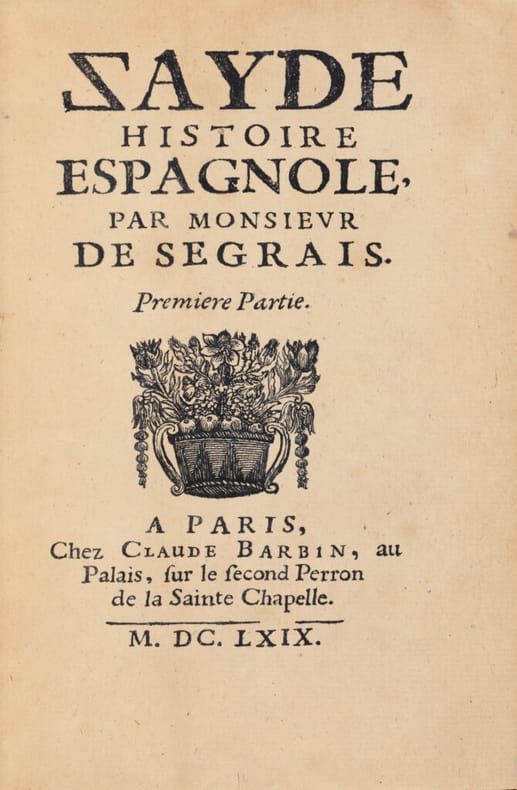
LCS-18287Edition originale de ce roman précieux de Madame de La Fayette publié sous le nom de Segrais. Paris, Claude Barbin, 1669-1671. 2 volumes petit in-8 de : I/ 99 pp. pour la Lettre de Huet, (1) p., 441 pp., (1) p. ; II/ (2) ff., 536 pp. Plein maroquin bleu nuit, double filet à froid encadrant les plats, dos à nerfs ornés de filets à froid, double filet or sur les coupes, large roulette dorée intérieure, tranches dorées sur marbrures. Niedrée. 160 x 100 mm.