DAURON M. - DEVISSE J.Livre Rare Book
257 résultats
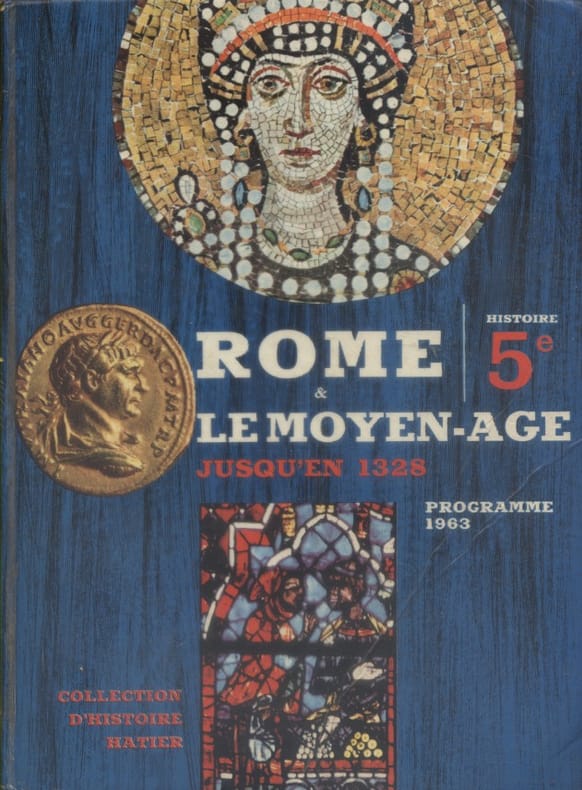
196491860Couverture rigide. Cartonnage de l'éditeur légèrement défraîchi. 256 pages. Annotations sur les pages de garde.
1964103224Couverture rigide. Cartonnage de l'éditeur. 256 pages.
1835DEZ-5000Paris, Librairie Classique et élémentaire de L. Hachette, 1835. 4 volume in-8 en demi veau au dos lisse orné d'un décor floral romantique doré. 1 f. bl., 2 ff, iij, 470 pp, 1 f. d'errata, 1 f. bl., 1 f. bl. 2 ff, 434 pp, 1 f. de table.1 f. bl; 1 f. bl., 2 ff, 415 pp, 2 ff, 1 f. bl., 1 f. bl. 438 pp, 2 ff, 1 f. bl. Illustré de trois plans dépliants en fin du premier volume. Edition Originale. Décolorations des dos. Coins légèrement frottés, Quelques rares rousseurs.
194398685Couverture souple. Broché. 140 pages.
194398686Couverture souple. Broché. 140 pages. Défraîchi. Dos réparé.
46400434, Paris, Furne, 1853; in-8, demi-chagrin vert, dos orné, tr. dor. (Rel. de l'époque). 2 ff., XI pp., 400 pp., 1 f.- 10 eaux-fortes hors-texte d'après Rouargue, Moreau, Guillon-Lethière, etc. Très bel exemplaire, frais et bien relié. Histoire, mœurs et usages, jeux et spectacles, institutions…L'auteur est né en Tarn-et-Garonne en 1812. Il fit carrière dans les lettres à Paris, comme journaliste, dramaturge, romancier et historien, avant de s'en retourner en terre natale pour diriger la Bibliothèque de Montauban.
83410Paris, sans date, 230x150mm, broché. Bel exemplaire.
21127[Lyon, Hugues de la Porte pour Samuel Girard, 1609 ?]. In-8, [30]-600+[80] pp. 2 pl. [suivi de :] Coloniae Allobrogum [Genève], Gabriel Cartier, 1613. In-8, [32]-438-[48] pp., parchemin souple à petits rabats (premier titre manquant, exemplaire un peu défraîchi).
189783977Couverture rigide. Cartonné. 348 pages. Coiffes un peu usées.
18704424DBRegensburg, Druck und Verlag von Georg Joseph Manz, 1870. 8°. 20 cm. XII, 524, 580, 576, 674 Seiten. Halblederbände der Zeit.
18795061DBTübingen, Verlag der H. Laupp'schen Buchhandlung, 1879. 4°. 26,5 cm. VIII, 599 Seiten. Halblederband mit goldgeprägtem Rückentitel.
198050002CBParis, Presses Universitaires de France, 1980. Groß-8°. 24 cm. 783 Seiten. Original-Leinenband mit Original-Schutzumschlag. (= Histoire générale des civilisations, publiée sous la direction de Maurice Crouzet, inspecteur général de l'instructio
188968302Couverture rigide. Cartonnage muet. 58 pages.
17985552CB10 Bände. Wein und Prag, bey Franz Haas, 1798-99. 8°. Mit gest. Titeln, gest. Frontispizen von Weinrauch nach Kininger und gest. Titelvignetten. Jalbleder d.Zt. mit zwei Rückenschildchen und Rückenvergoldung.
198560141CBMainz am Rhein, Verlag Philipp von Zabern, 1985. Groß-8°. 23 cm x 16 cm. 413 Seiten. Original-Kunstlederband mit Original-Schutzumschlag. (= Kulturgeschichte der antiken Welt, Band 25).
199061877CBMünchen, Verlag C.H. Beck, 1990. Groß-8°. 23,5 x 15,5 cm. XXVI, 419 Seiten. Original-Broschur, in selbstklebende Klarsichtfolie eingeschlagen. (= Zetemata, Monographien zur klassischen Altertumswissenschaft, Heft 87).
17985552CBWein und Prag, bey Franz Haas, 1798-99. 8°. Mit gest. Titeln, gest. Frontispizen von Weinrauch nach Kininger und gest. Titelvignetten. Jalbleder d.Zt. mit zwei Rückenschildchen und Rückenvergoldung. + Wichtig: Für unsere Kunden in der EU erfolgt der Versand alle 14 Tage verzollt ab Deutschland / Postbank-Konto in Deutschland vorhanden + 10 Bände.
195151310CBFrankfurt am Main, Klostermann Verlag, 1951-1953. 8°. 21 cm. 249, 502 Seiten. Original-Leinenbände. Kopffarbschnitt.
186861451CBBerlin, Weidmannsche Buchhandlung, 1868-1869. 8°. 20 x 13,5 cm. X, 956, VIII, 470 und VI, 694 Seiten. Braune Halblederbände mit goldgeprägten Rückentiteln.
15747609CBBasel, Sebastian Henricpetri, 1574. Folio. 518 Bl., (1) Bl. Mit 15 doppels. Holzschnittkarten im Text und 19 kleinere Textholzschn. Schweinslederband auf Holzdeckeln mit Roll- und Plattenstempelprägung sowie 2 Metallschliessen. + Wichtig: Für unsere Kunden in der EU erfolgt der Versand alle 14 Tage verzollt ab Deutschland / Postbank-Konto in Deutschland vorhanden + 17 Bücher in 1 Band.
188494091-C29331884, Paris, Victor Palmé. 467 pages. Grand in 8° relié demi-cuir rouge, dos à caissons ornés, titre doré, plats marbrés. Typographie Edmond Monnoyer.
13871SEDES, 1991 - In-12°, broché, couverture souple glacée ill, 351 pages, qq passages soulignés bon ensemble.
9216Paris, Marcelle Lesage, 1929 ; in-8, broché, 330 pp.,rousseurs couverture,
Very light shelfwear to book. DJ has minor shelfwear and creasing. ; A sweeping, revisionist history of the Roman Empire from one of our foremost classicists. Ancient Rome was an imposing city even by modern standards, a sprawling imperial metropolis of more than a million inhabitants, a "mixture of luxury and filth, liberty and exploitation, civic pride and murderous civil war" that served as the seat of power for an empire that spanned from Spain to Syria. Yet how did all this emerge from what was once an insignificant village in central Italy? In S. P. Q. R. , world-renowned classicist Mary Beard narrates the unprecedented rise of a civilization that even two thousand years later still shapes many of our most fundamental assumptions about power, citizenship, responsibility, political violence, empire, luxury, and beauty. From the foundational myth of Romulus and Remus to 212 ce? Nearly a thousand years later? When the emperor Caracalla gave Roman citizenship to every free inhabitant of the empire, S. P. Q. R. (the abbreviation of "The Senate and People of Rome") examines not just how we think of ancient Rome but challenges the comfortable historical perspectives that have existed for centuries by exploring how the Romans thought of themselves: how they challenged the idea of imperial rule, how they responded to terrorism and revolution, and how they invented a new idea of citizenship and nation. Opening the book in 63 bce with the famous clash between the populist aristocrat Catiline and Cicero, the renowned politician and orator, Beard animates this “terrorist conspiracy, ” which was aimed at the very heart of the Republic, demonstrating how this singular event would presage the struggle between democracy and autocracy that would come to define much of Rome’s subsequent history. Illustrating how a classical democracy yielded to a self-confident and self-critical empire, S. P. Q. R. Reintroduces us, though in a wholly different way, to famous and familiar characters? Hannibal, Julius Caesar, Cleopatra, Augustus, and Nero, among others? While expanding the historical aperture to include those overlooked in traditional histories: the women, the slaves and ex-slaves, conspirators, and those on the losing side of Rome’s glorious conquests. Like the best detectives, Beard sifts fact from fiction, myth and propaganda from historical record, refusing either simple admiration or blanket condemnation. Far from being frozen in marble, Roman history, she shows, is constantly being revised and rewritten as our knowledge expands. Indeed, our perceptions of ancient Rome have changed dramatically over the last fifty years, and S. P. Q. R. , with its nuanced attention to class inequality, democratic struggles, and the lives of entire groups of people omitted from the historical narrative for centuries, promises to shape our view of Roman history for decades to come. ; 608 pages
1796boz_002076Tableaux de l’histoire romaine ; ouvrage posthume, abrégé de Millot, par lui-même, orné de 48 figures, qui en représentent les traits les plus intéressants. À Paris, de l'Imprimerie de Gay et Gide, An 4 (1796). Reliure demi basane d'époque, dos lisse orné de filets et fleurons dorés, toutes tranches marbrées. Exemplaire complet des 48 figures annoncées, avec le frontispice, 47 gravures dont 3 dépliantes. État : Reliure usagée, quelques mouillures et rousseurs. Nombre de pages : 204 pages.