Apothecary, SeagrapeBiblio.com

10 résultats
2021x-1006375406Blurb 2021. Paperback. New. 174 pages. 10.00x8.00x0.37 inches. Blurb paperback
B9781006375408Paperback / softback. New. paperback
19911216728PN. New. 1991. Reprint Edition. Soft Cover. Date is copyright date; this is a later reprint edition . PN paperback
1991250417PN. New. 1991. Soft Cover. Date is original print. This is a reprint edition . PN paperback
173720358London: Printed By J.Bettenham for the Author 1737. Referenced from the writings of the ancients and 'modern' physicians and dedicated to the physicians of Norwich. Much on method together with many case histories of miraculous cures. "Case XL. Roger Hawes a Taylor at Bedingham in Norfolk from a weakness fixed upon his ankles and knees became incapable of walking but after a fortnight's Cold Bathing he so well recovered the use of his legs as to run away without paying for his immersions." xvi List of subscribers 20pp followed by the main text 172pp2. Sometime rebound in paper covered boards utilising the title page as a cover design. Boards. Very Good. 190x120mm. Printed By J.Bettenham for the Author Hardcover
175800TP91VERSAILLES FRANCE 1758. Very extensive listing of medications to Monseigneur le Marechal duc de Belisle from the House of Jodor Apothecary in Versailles. A total of 288 pounds is required to settle the account. Biographical Notes: SIR THOMAS PHILLIPPS 1792-1872. Born in 1792 Sir Thomas Phillipps from childhood was obsessed with the idea of obtaining virtually anything written or printed on paper including cartloads of documents from wastepaper merchants and the entire inventories of booksellers. "I wish to have one copy of every book in the world" he declared to a friend. He very nearly succeeded. His collection ultimately grew to more than 100000 books and at least 60000 manuscripts. As a result of his extravagant purchases Sir Thomas was permanently on the verge of bankruptcy and was constantly pursued by creditors. So many books arrived at his house that it was impossible to unpack his acquisitions much less keep pace with them. Visiting scholars driven to distraction would spend days hunting for an elusive text in the dusty heaps that filled every room. Because Sir Thomas has a morbid dread of fire most of his collection was housed in coffinlike boxes that could be carted away quickly. Visitors to Middle Hill were struck too by the presence of numerous logs a ploy he used to lure beetles away from his books. As Sir Thomas relentlessly pursued his passion the house itself began to crumble and its floors started to sag under the cast weight of hundreds of tons of paper. His neglect of Middle Hill was partly deliberate however. Sir Thomas's chief enemy in life James Halliwell had married his daughter against his wishes. It appears that Halliwell was in Sir Thomas' eyes the worst kind of criminal a book thief who had stolen valuable works from university libraries and even from his father-in-law. Having no sons Sir Thomas was unable to prevent Halliwell from inheriting his estate. To ensure that his detested heir would never receive anything of value Sir Thomas's solution was to allow Middle Hill to fall unto complete disrepair. He even went so far as to chop down and sell for lumber the centuries-old oak trees that lined the majestic mile-long drive to his home. In 1863 Sir Thomas decided to move - in order to accommodate his books. With the aid of 160 men 103 wagonloads of books and papers drawn by 230 horses the books were lumbered from Middle Hill top their new estate in nearby Cheltenham. It is said that for years afterwards the countryside was littered with the remains of carts that had collapsed under the sheer weight of the Phillipps collection. Sir Thomas continues to add to his library until his death in 1872. After Sir Thomas's death his immediate family had no room for his collection. So vast was the library that although individual items and large sections were sold privately or through numerous auction sales the Phillipps collection is still being sold more than a century after the death of its owner. In the course of its sales many treasures have come to light. As late as 1964 part of the long-lost and unique medieval manuscript of the Roman poet Ovid's Metamorphoses appeared and was subsequently reunited with its other half at Magdalen College Oxford. Once destined for destruction as worthless wastepaper this and many other priceless works were saved by the single-minded obsession of the greatest bibliomaniac of all time. Autograph. Manuscript. Very Fine. Folio - over 12" - 15" tall. Paperback
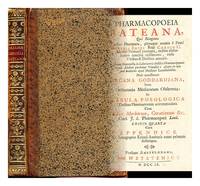
1709294191Amstelaedami: apud Westenios 1709. 1709 Edition. Hardcover. Fine copy bound in half aniline calf over marble boards with gilt tooling and a leather gilt-blocked label to the spine. Remains well preserved overall; tight bright clean and sharp-cornered. Physical description; 240 pages. Subjects; George Bate 1608-1669. Pharmacy. Apothecary. Amstelaedami: apud Westenios hardcover
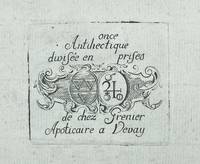
168006407Switzerland: s.n. 1680. <p> Grenier’s shop was located in Vevey on the northeast shore of Lake Geneva. The label’s paper was produced by I. & L. Caprony a manufacturer in eastern France active from the middle of the 17th into the 18th century. In good condition.<br /> ¶See Gaudrillault’s Filigranes 183</p> s.n. unknown
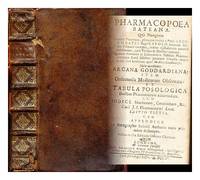
1704294194Lugduni: apud Amabilem Auroy Bibliopolam 1704. 1704 Edition. Hardcover. Worn copy bound in full aniline calf with a leather gilt-blocked label to the spine. Some wear and tear to the spine and panel edges as with age. Provenance; from the library of A. Garrigues DM witht the owner's bookplate. Physical description; 432 pages. Subjects; George Bae 1608-1669. Apothecary. Pharmacy. 17th century apothecary. Lugduni: apud Amabilem Auroy Bibliopolam hardcover