1 489 résultats
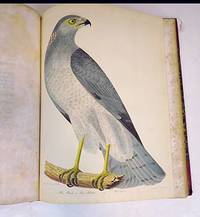
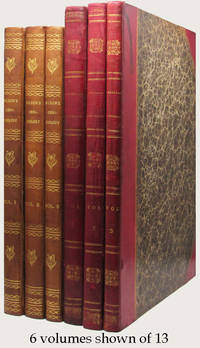
180832275Philadelphia: The Wilson volumes published by Bradford and Inskeep. Printed by Robert Carr; R. & W. Carr; VII-IX by Samuel F. Bradford printed by Thomas H. Palmer; the Bonaparte volumes published by Samuel Augustus Mitchell Vol.I Carey Lea Carey Vols. II and III and Carey & Lea Vol. IV all Printed by William Brown 1808-1812; 1824-1825; 1825-1833. 13 volumes. First Edition of this rare textual and illustrated work that is considered to be the First Outstanding American Ornithology and the First Great American Colour- Plate Book. Volumes I-VI are first issue Volumes VII VIII and IX reissued with the alterations and corrections by Ord made after further ornithological information had been gleaned and First Edition of the Bonaparte volumes with the first volume in rare first state. The nine Wilson volumes beautifully illustrated with 76 superb hand-coloured engraved folio plates by Alexander Lawson J.G. Warnicke G. Murray and Benjamin Tanner from original drawings by Wilson depicting a vast array of American birds. The Bonaparte volumes are illustrated with 27 additional richly hand-coloured folio plates from drawings by Titian Ramsay Peale A. Rider and plate 10 by Audubon and A. Rider Folio 36 x 27 cm. and Folio 38 x 29 & 39 x 32 cm. The Wilson volumes in contemporary mottled calf over marbled paper covered boards the spines gilt decorated within compartments separated by fine gilt tooling two compartments lettered and numbered in gilt some volumes restored at the backs to style and in effort to match the original spine panels though the tooling is slightly different considering the unavailability of the original tools. The four Bonaparte volumes in fine period red morocco over marbled paper covered boards. The spines fully decorated in gilt. vi 158; xii 167; xvi 120; xii 100; xii 122; xx 100; xii 138; xi 162; ccxxiii i 298 4 General Index pp. Complete viii 105; x 95; iv 60; iv 142 pp. Quite a handsome set in pleasing condition the usual spotting in places usually from offsetting from the plates a few expert repairs to old closed tears in the text the plates all quite well preserved with much less spotting or browning than is usually found. One volume with a bit of evidence of old damp at the edges of the prelims. Vol. VI with a bit more spotting or foxing than the others as is usual due to the paper this confined to some of the textual pages An excellent set. The Bonaparte volumes in very handsome bindings as well some of the usual offsetting and browning throughout the volumes as is typical with the paper used. Generally in all volumes the plates are quite clean and the spotting is confined to the text and tissues. The paper used for the text in these sets was prone to foxing and offsetting spotting and splotching but fortunately the paper used for the plates was of a better quality and so as in the copies being offered here the plates are generally quite clean with some minor spotting on occasion and then usually confined to the outer margins. The bindings on the Bonaparte volumes are in original state and offer a very handsome and especially appealing presence. FIRST EDITION OF TWO OF THE MOST IMPORTANT BOOKS IN THE HISTORY OF AMERICAN ORNITHOLOGY AND COLOUR-PLATE PRINTING INCLUDING THE FIRST GREAT WORK ON AMERICAN BIRDS. “The story of Alexander Wilson's spasmodic rise from Scottish peddler and failed poet to the father of Amrican ornithology is a cloyingly American story. Numerous "types" those we recognize from the writings of Benjamin Franklin through the literature of James Fenimore Cooper to the Jacksonian businessman emerge in his journey. It is a journey that takes him from the small town of Paisley in West Scotland to the shores of Delaware where he lands a penniless immigrant over vast tracks of the eastern United States and finally to Philadelphia; here like Franklin he finds renowned associates from Charles Wilson Peale to Thomas Jefferson to Thomas Paine and the international recognition that he had craved since his first poetic jottings as a youth in Scotland. The tragic irony of this American story is its truncation; indeed it is Alexander Wilson's exhaustingly extreme dedication to his ornithological studies and the illnesses contracted during his Leatherstocking-esque roamins through the forests that kill him at the age of forty-seven just as he attains the station in life he so desires. An immigrant who embraced so fully the "American Dream" of constant industry leading to financial and personal reward Wilson achieved his dream but scarcely lived to enjoy it. Perhaps though Wilson did achieve what he truly desired; in 1805 frustrated by attempts to gain help in publishing his ornithology he swore to continue on his own even if it killed him: "I shall at least leave a small beacon to point out where I perished." Ord p. 61. This declaration transcends Americanness; Wilson seemed to fear that in the vast cauldron of humanity he would be subsumed. His Ornithology then which has earned him title of the father of American ornithology seems the work of a talented and driven man whose desires in life were met too well by the American attitudes and mores of the early nineteenth century.†The book is of considerable importance. Vols. VII-IX revised by George Ord were reissued in 1824-1825<br> The Bonaparte volumes were designed as a supplement to Wilson's American Ornithology. Originally intended to be issued inn 3 vols. 1825-1828 it is now considered imperfect without the final 4th volume 1833. Born in 1803 Charles Lucien Jules Laurent Bonaparte 2nd Prince of Canino and Musignano was a French naturalist and ornithologist and a nephew of Napoleon. He emigrated to the United States from France and Italy in 1822 but before leaving Europe he had already discovered a warbler new to science the moustached warbler and on the voyage he collected specimens of a new storm-petrel. On arrival in the United States he presented a paper on this new bird which was later named after Alexander Wilson.<br> On his arrival in America Bonaparte set about studying the ornithology of the United States and updating Wilson's Ornithology. The revised edition was published between 1825 and 1833. His other publications included "Observations on the Nomenclature of Wilson's Ornithology" in the Journal of the Philadelphia Academy and "Synopsis of the Birds of the United States" in the Annals of the Lyceum of New York. In 1824 Bonaparte attempted to get the then unknown John James Audubon accepted by the Academy of Natural Sciences but this was opposed by the ornithologist George Ord who disliked Audubon's dramatic bird poses and considered him to be "a back-country upstart who romanticized his subject matter" according to the Audubon Galleries.<br> At the end of 1826 Bonaparte and his family returned to Europe. He visited Germany where he met Philipp Jakob Cretzschmar and England where he met John Edward Gray at the British Museum and renewed his acquaintance with Audubon. In 1828 the family settled in Rome. In Italy he was the originator of several scientific congresses and lectured and wrote extensively on American and European ornithology and other branches of natural history. Between 1832 and 1841 Bonaparte published his work on the animals of Italy Iconografia della Fauna Italica. He had also published Specchio Comparativo delle Ornithologie di Roma e di Filadelfia Pisa 1827 presenting a comparison between birds of the latitude of Philadelphia and Italian species. He created the genus Zenaida for the mourning dove and its relatives. He was elected a member of the American Antiquarian Society in 1845.<br> In 1840 he became Prince of Canino and Musignano after his father's death and became involved in politics particularly the anti-Austrian party that he joined in 1848. He did not however lose interest in his favourite studies for he organized and presided over several scientific congresses in Italy. He visited Sir William Jardine in southern Scotland and began work on preparing a methodical classification of all the birds in the world visiting museums across Europe to study the collections. In 1854 he became director of the Jardin des Plantes. In 1855 he was made a foreign member of the Royal Swedish Academy of Sciences. He published the first volume of his Conspectus Generum Avium before his death the second volume being edited by Hermann Schlegel.<br> Bonaparte was extremely prolific and is responsible for coining Latin names for a large number of bird species. As of August 2019 in the online list of birds maintained by Frank Gill and David Donsker on behalf of the International Ornithological Committee IOC Bonaparte is credited as the authority for 165 genera 203 species and 262 subspecies. wiki<br><br>Fine Bird Books p.114; Sabin 104598; Nissen IVB 992; Wood p.630; BM Natural History p. 2333 The Wilson volumes published by Bradford and Inskeep. Printed by Robert Carr; R. & W. Carr; VII-IX by Samuel F. Bradford, printe hardcover
17357Paris, Gravé et imprimé pour l'auteur, 1884.
9925Philadelphia: Porter & Coates 1871. Faint damp staining to the top and right edges of some of the pages in the Bonaparte Supplement which does not affect the images corner torn to one tissue guard; a near fine set in the original publishers binding. Pp. Text: iii-cxxxii 214; iii-viii 9-390; vi-viii xvi 9-426; Plates: title page 2 pp index of plates 76 plates; title page of Bonaparte Supplement 1 pp index of plates 27 plates for a total of 103 hand-colored lithographed plates featuring nearly 400 figures of birds most by Alexander Lawson after Wilson and Rider. Publisher's original half brown morocco over marbled boards spine with five raised bands and titles in gilt all edges gilt yellow endpapers lg. 8vo text large folio 15 by 17-1/2 inches plate volumes. This is the rare Philadelphia Edition which was printed on much larger paper than earlier editions. Owner signature of George L. Ledyard dated 1873 on endpapers of plate volumes. Philadelphia: Porter & Coates, [1871]. hardcover
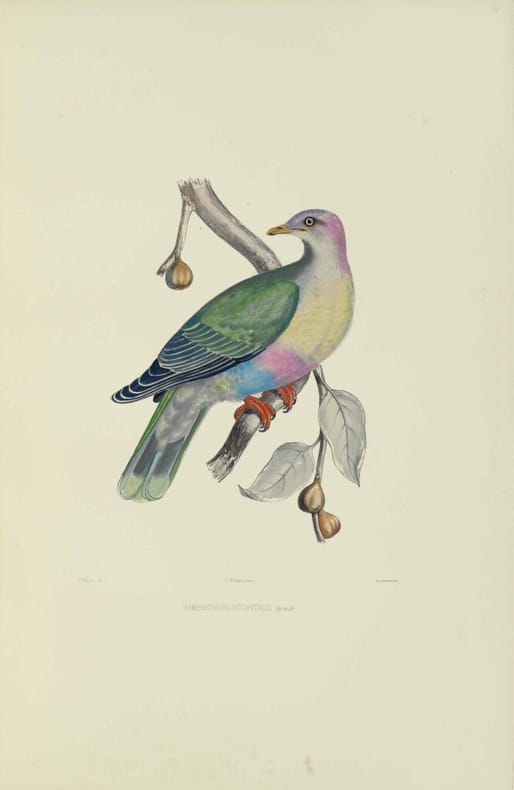
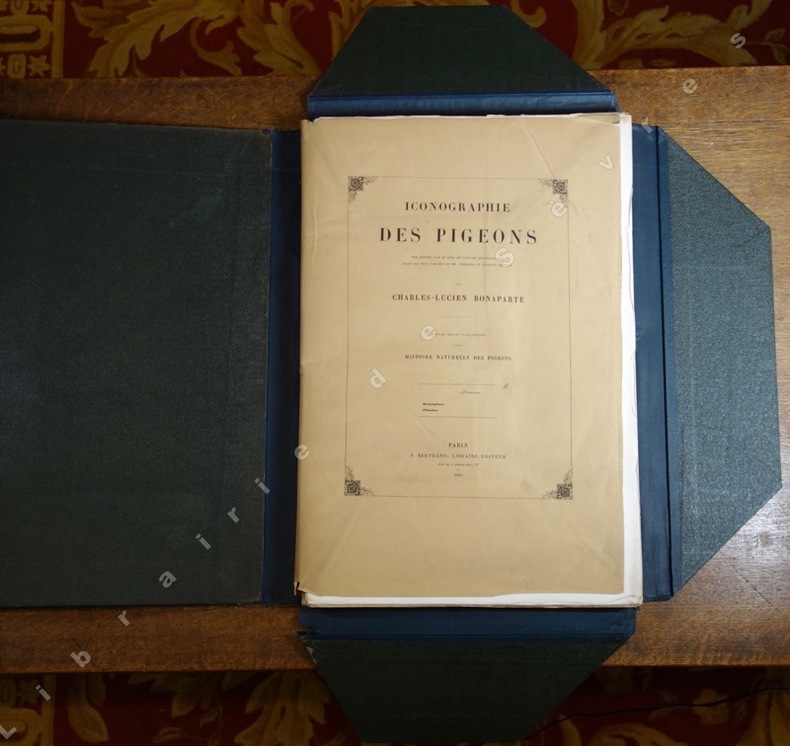
LCS-17310Edition originale de l’un des plus beaux livres de chasse et d’ornithologie consacré aux pigeons, orné de 55 estampes coloriées à la main à l’époque. Paris, P. Bertrand, 1857 (1858).Grand in-folio de (123) ff., 55 planches en couleurs à pleine page dans le texte. Relié en demi-maroquin bleu, titre frappé en lettres d’or sur le dos lisse, couverture de la 3è livraison reliée à la fin. Reliure du XXe siècle.550 x 360 mm.
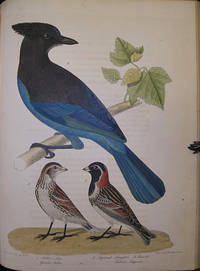
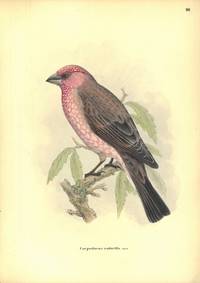
183322742Philadelphia: Samuel Augustus Mitchell vol I; Carey Lea & Carey vols II & III; Carey & Lea vol IV 1833. 4 volumes folio. 15 x 12 inches. 27 hand-colored engraved plates by Alexander Lawson 11 after Titian R. Peale 15 after A. Rider and 1 after J.J. Audubon and A. Rider. Extra-illustrated with 5 uncoloured engraved plates in vol. IV. Usual paper toning in vol. IV minor offsetting in vols. II-IV short repaired tear to an uncoloured plate in vol. IV. 19th-century black half morocco over green cloth-covered boards the spine in six compartments with raised bands lettered in the second and fourth the compartments bordered in gilt with double fillets marbled endpapers top edge gilt.<br/> <br/>Provenance: Juliette Clary inscribed by Bonaparte on the vol. I title "Offert par l'auteur a sa Cousine Juliette"<br/> <br/>A very fine set of the first edition first issue of this important American ornithological work inscribed by Prince Bonaparte to his cousin and with additional uncoloured states of the plates in volume four.<br/> <br/>Bonaparte's important continuation of Wilson's American Ornithology describes 60 birds not in the original work. "A love for the same department of natural science and a desire to complete the vast enterprise so far advanced by Wilson's labors has induced us to undertake the present work" Bonaparte writes in the preface "in order to illustrate what premature death prevented him from accomplishing as well as the discoveries subsequently made in the feathered tribes of these States." "The work which had been performed by Wilson's hands alone now gave employment to several individuals. Titian R. the fourth son of Charles Wilson Peale not only collected many of the birds figured while on the Long expedition which were credited to Thomas Say who originally described them in footnotes scattered through the report; or in a subsequent private trip to Florida during the winter and spring of 1825 under the patronage of Bonaparte; but also drew the figures engraved for the first and two plates for the fourth and last volume. A German emigrant by the name of Alexander Rider of whom little is known beyond that he was a miniature painter in 1813 and a portrait and historical painter in 1818 was responsible for the remainder of the drawings with the exception of the two figures of plate 4 of volume I." Frank L. Burns On Alexander Wilson. That plate the Great Crow Blackbird is notable as being the first book appearance of any engraving after John James Audubon. Perhaps the most influential artist involved with the work however was Bonaparte's master engraver Alexander Lawson arguably the most talented ornithological engraver in America at that time. Three issues of the first edition of Wilson's continuation have been identified. This fine set is comprised of the rare first issue of vol. 1 with the Mitchell imprint and containing the first issue of plate 6 in that volume see Ellis/Mengel and with first issues of volumes two through four published by Carey & Lea and printed by William Brown. Carey & Lea later reissued the first volume with their own imprint after purchasing the rights to the publication from Mitchell in 1828. The third issue includes volumes reprinted by T.K. and P.G. Collins with their imprint replacing that of William Brown for Carey & Lea with unchanged dates on the titles but actually printed in about 1835 after the completion of the final volume. We are aware of the existence of only one other inscribed set of Bonaparte's Ornithology to have appeared on the market in the last 30 years inscribed to the Count Charles de Chatillon.<br/> <br/>Anker 47; Bennett 16; Coues 1:609; Ellis/Mengel 312a-b; Fine Bird Books 1990 p. 78; Nissen IVB 116; Sabin 6264; Wood 247; Zimmer p.64. Samuel Augustus Mitchell [vol I]; Carey, Lea & Carey [vols II & III]; Carey & Lea [vol IV] unknown books
1925ST17769jLondon: Metheun & Co 1925. FIRST EDITION. 216 x 140 mm. 8 1/2 x 5 1/2". vii i 246 pp. <br/> SUPERB CONTEMPORARY DEEP BLUE MOROCCO BY SANGORSKI & SUTCLIFFE FOR ASPREY WITH MORE THAN 60 INLAYS front cover with center medallion featuring inlaid teal blue crossed "J's" surrounded by gilt wreath and crown as well as inlaid pink flowers lovely gilt floral sprays with more inlaid pink flowers in corners of both covers raised bands spine beautifully gilt and inlaid in the same floral vine pattern DOUBLURES OF CRIMSON MOROCCO with inlaid blue flowers in corners as well as an intricate series of patterned rules against deep blue morocco border FRONT DOUBLURE WITH FINE INSET HAND-PAINTED IVORY MINIATURE OF JOSEPHINE watered silk free end papers gilt edges. In a slightly scuffed but sturdy and attractive morocco-backed plush-lined folding cloth box gilt titling on spine. With 12 illustrations all photographs of portraits as called for. ◆A CHOICE BINDING IN IMMACULATE CONDITION.<br/> <br/> Our sumptuous binding would no doubt have pleased the subject of this work known for her exquisite taste and love of beautiful things. When she met and captivated Napoleon Bonaparte in 1795 Josephine de Beauharnais 1763-1814 was a Martinique-born widow of an aristocrat who had died in the Reign of Terror. Josephine married the general in January of 1796 despite the fact that she was a shocking six years his senior. In this biography the British writer C. S. Forester 1899-1966 best known for his beloved Horatio Hornblower series portrays the empress with great sympathy. Sanford V. Sternlicht notes that in telling the dramatic story of her rise to the imperial throne and her fall when she was unable to produce an heir for the emperor "Forester almost treats Josephine as a fictional character as he finely draws a portrait of a poorly educated but clever woman who . . . rolls with the punches of fate and outlives her foes." The so-called "Cosway" binding featuring handsome morocco inset with one or more painted miniatures apparently originated with the London bookselling firm of Henry Sotheran about 1909. It was in that year that G. C. Williamson's book entitled "Richard Cosway" dealing with the British miniature painter of that name 1742-1821 was remaindered by Sotheran and presumably given this special decorative treatment. The name "Cosway" was then used to describe any book so treated whoever its author. Although the artist of our miniature is unidentified the work here is remarkably well done with carefully painted detail showing the empress at the prime of her life bedecked with emeralds pearls and rubies but with a sadness in her large brown eyes that foreshadows the heartbreak to come. Metheun & Co unknown
183334816Philadelphia: Samuel Augustus Mitchell vol I; Carey Lea & Carey vols II & III; Carey & Lea vol IV 1833. Four volumes small folio 15 x 12 inches vols. 2 and 4 and 14 1/2 x 11 1/4 inches vols. 1 and 3. 27 hand-colored engraved plates by Alexander Lawson 11 after Titian R. Peale 15 after A. Rider and 1 after J.J. Audubon and A. Rider. Foxing to the text particularly in vols. 3 and 4 though the plates clean throughout. Vols. 2 and 4 uncut. Publisher's half red morocco and marbled paper covered boards<br/> <br/>First edition first issue of this important American ornithological work with the plates beautifully hand colored.<br/> <br/>Bonaparte's important continuation of Wilson's American Ornithology describes 60 birds not in the original work. "A love for the same department of natural science and a desire to complete the vast enterprise so far advanced by Wilson's labors has induced us to undertake the present work" Bonaparte writes in the preface "in order to illustrate what premature death prevented him from accomplishing as well as the discoveries subsequently made in the feathered tribes of these States." "The work which had been performed by Wilson's hands alone now gave employment to several individuals. Titian R. the fourth son of Charles Wilson Peale not only collected many of the birds figured while on the Long expedition which were credited to Thomas Say who originally described them in footnotes scattered through the report; or in a subsequent private trip to Florida during the winter and spring of 1825 under the patronage of Bonaparte; but also drew the figures engraved for the first and two plates for the fourth and last volume. A German emigrant by the name of Alexander Rider of whom little is known beyond that he was a miniature painter in 1813 and a portrait and historical painter in 1818 was responsible for the remainder of the drawings with the exception of the two figures of plate 4 of volume I." Frank L. Burns On Alexander Wilson. That plate the Great Crow Blackbird is notable as being the first book appearance of any engraving after John James Audubon. Perhaps the most influential artist involved with the work however was Bonaparte's master engraver Alexander Lawson arguably the most talented ornithological engraver in America at that time. Three issues of the first edition of Wilson's continuation have been identified. This set is comprised of the rare first issue of vol. 1 with the Mitchell imprint and containing the first issue of plate 6 in that volume see Ellis/Mengel and with first issues of volumes two through four published by Carey & Lea and printed by William Brown. Carey & Lea later reissued the first volume with their own imprint after purchasing the rights to the publication from Mitchell in 1828. The third issue includes volumes reprinted by T.K. and P.G. Collins with their imprint replacing that of William Brown for Carey & Lea with unchanged dates on the titles but actually printed in about 1835 after the completion of the final volume.<br/> <br/>Anker 47; Bennett 16; Coues 1:609; Ellis/Mengel 312a-b; Fine Bird Books 1990 p. 78; Nissen IVB 116; Sabin 6264; Wood 247; Zimmer p.64. Samuel Augustus Mitchell [vol I]; Carey, Lea & Carey [vols II & III]; Carey & Lea [vol IV] unknown books
183335614Philadelphia: Samuel Augustus Mitchell vol I; Carey Lea & Carey vols II & III; Carey & Lea vol IV 1833. 4 volumes folio. 15 x 12 inches. 27 hand-colored engraved plates by Alexander Lawson 11 after Titian R. Peale 15 after A. Rider and 1 after J.J. Audubon and A. Rider. Vol. 4 uncut. Some foxing browning and offsetting as ususal. Contemporary half red morocco and marbled paper covered boards rebacked.<br/> <br/>First edition first issue of this important American ornithological work: the first book appearance of any engraving after John James Audubon.<br/> <br/>Bonaparte's important continuation of Wilson's American Ornithology describes 60 birds not in the original work. "A love for the same department of natural science and a desire to complete the vast enterprise so far advanced by Wilson's labors has induced us to undertake the present work" Bonaparte writes in the preface "in order to illustrate what premature death prevented him from accomplishing as well as the discoveries subsequently made in the feathered tribes of these States." "The work which had been performed by Wilson's hands alone now gave employment to several individuals. Titian R. the fourth son of Charles Wilson Peale not only collected many of the birds figured while on the Long expedition which were credited to Thomas Say who originally described them in footnotes scattered through the report; or in a subsequent private trip to Florida during the winter and spring of 1825 under the patronage of Bonaparte; but also drew the figures engraved for the first and two plates for the fourth and last volume. A German emigrant by the name of Alexander Rider of whom little is known beyond that he was a miniature painter in 1813 and a portrait and historical painter in 1818 was responsible for the remainder of the drawings with the exception of the two figures of plate 4 of volume I." Frank L. Burns On Alexander Wilson. That plate the Great Crow Blackbird is notable as being the first book appearance of any engraving after John James Audubon. Perhaps the most influential artist involved with the work however was Bonaparte's master engraver Alexander Lawson arguably the most talented ornithological engraver in America at that time. Multiple issues of the first edition of Wilson's continuation have been identified. This fine set is comprised of the rare first issue of vol. 1 with the Mitchell imprint and containing an early issue of plate 6 in that volume with the Latin name given as Pyrrhula Erythrina; see Ellis/Mengel; and with first issues of volumes two through four published by Carey Lea & Carey or Carey & Lea and printed by William Brown. Carey & Lea would reissue the first volume with their own imprint after purchasing the rights to the publication from Mitchell in 1828 and all the volumes would be reprinted by T.K. and P.G. Collins with their imprint replacing that of William Brown for Carey & Lea with unchanged dates on the titles but actually printed in about 1835.<br/> <br/>Anker 47; Bennett 16; Coues 1:609; Ellis/Mengel 312a-b; Fine Bird Books 1990 p. 78; Nissen IVB 116; Sabin 6264; Wood 247; Zimmer p.64. Samuel Augustus Mitchell [vol I]; Carey, Lea & Carey [vols II & III]; Carey & Lea [vol IV] unknown books
18284341Philadelphia: Bradford and Inskeep; Samuel Augustus Mitchell 1828. FIRST EDITIONS. I. Contemporary half red roan over marbled boards gilt spine; some wear to extremities offsetting from plates. Ex-libris David Bixler and Lee Lawrence Stopple with their bookplates. II. Contemporary half red roan over marbled boards gilt spine; some wear to extremities offsetting from plates. Ex-libris David Bixler and Lee Lawrence Stopple with their bookplates. I. First edition of "the first truly great American ornithology . . . absolutely basic as a collector's item" Bennett. Wilson's Ornithology was an artistic scientific and commercial undertaking of magisterial proportions. His plates depict 320 figures of 262 species including 39 that were entirely new and 23 that were for the first time described sufficiently to distinguish them from European species with which they had been confused. <br /> II. First edition with the rare first issue of Volume 1. The work was subsequently purchased by Carey Lea and Carey and published under their aegis. Intended as a supplement to Wilson's American Ornithology Bonaparte describes 60 birds supposedly not treated in the original work. Bradford and Inskeep; Samuel Augustus Mitchell unknown
51-4266Philadelphia: Carey Lea & Carey: London: John Miller 1825-1828. Original editions. 3 volumes of 4 large 4to 375 x 288: 1 f. vi pp. 1 f. 105 pp. 9 plates; vii 1 f. 95 pp. 6 plates; 1 f. 60 pp. 1 f. 6 plates. Red half-morocco with corners gilt castors smooth spine decorated contemporary binding. Bindings solid but rubbed with surface losses. The 21 color plates in fresh condition but text pages browned in vols. 2 and 3. Sitwell Fine Bird Books 1700-1900 1990 p. 78; Nissen Die illustrierten Vogelbuecher p. 93.This work on the birds of America is the supplement given by the Italian zoologist and politician Charles Lucien Bonaparte 1803-1857 to Alexander Wilson's monumental American ornithology published in 9 volumes at the beginning of the century.In the first volume Bonaparte describes 16 species of land birds in the second he describes 74 of them 60 of which are aquatic species. The last volume is devoted to the description of terrestrial and aquatic species based mainly on the observations made by the painter and naturalist Titian Ramsay Peale 1799-1885 in Florida.Each species was reproduced in color on 21 copper engraved plates by Alexander Lawson after A. Rider.The 4th volume is not included and was not published until 1833.Rubbings and extensive epiderminations on the bindings. Heavy foxing especially in volumes 2 and 3 but not reaching the plates.Provenance: Charles Campbell with this manuscript annotation on the free endpapers : "Edward to Charles Campbell. Merton Abbey. Surrey. England. " - Label with embossed Russian inscription and handwritten inventory number. Philadelphia: Carey, Lea & Carey: London: John Miller, 1825-1828. unknown
182571529Philadelphia:: Carey Lea & Carey 1825-1833. First edition. old half red morocco over marbled boards. There is some offsetting foxing particularly to the tissue overleaves and age-toning particularly to Vols. II-IV as is usually the case. This discoloration affects the text primarily; the lovely plates are largely free of it. Light rubbing to the bindings; all are tight and sound. . Folio. Illustrated with 32 hand-colored engraved plates. Additional postage applicable for this set of oversized volumes. Carey, Lea & Carey, hardcover
1825823871825. BONAPARTE Charles Lucian. American Ornithology; or the Natural History of the Birds Inhabiting the United States Not Given by Wilson. With Figures Drawn Engraved and Coloured from Nature. Philadelphia: Carey Lea & Carey 1825-1833. 1st ed. 4 Volumes. Folio. vi 2 105; vii 3 95; 4 60; 4 142 pp. 27 plates. In orig. morocco-backed boards with corners. Collates complete. Vols. 1 3 & 4 have been rebacked in morocco with backstrips laid down. Boards are rubbed. Contents are moderately foxed and toned as usual particularly Vol. 4. A few leaves with short closed tear to the margin. Final several leaves of Vol. 4 with dampstaining to the fore-edge margin. Remarkably the hand-colored plates are free of foxing and very clean. A very good set in slipcases. Bennett p. 16. Sabin 6264. In this work Bonaparte finished what Alexander Wilson started in his monumental work of the same title-and the first such work by an American. Of Bonaparte's work Bennett writes "This admirable supplement to Wilson is in the same format as the original 9 volume series and is regarded as an essential part of the work the whole being the most important work on American birds prior to Audubon and a collectors' item of absolutely basic importance" p. 16. This set is almost invariably found foxed as here with pronounced foxing to Vols. 1 2 & 4 while much milder in Vol. 3. But the plates in this set many retaining their tissue guards are remarkably bright. unknown
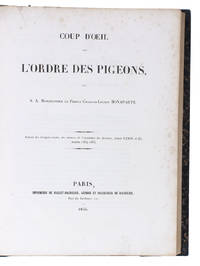
1855689EGAV992D0Paris 1855. 4to. Mallet-Bachelier Modern half morocco. With a collective title-page for several of the offprints: Tableaux paralléliques des oiseaux praecoces ou autophages. Gallinacés échassiers palmipèdes et rudipennes Paris 1856 and all first leaves of the quires signed with a "B" indicating a revised offprint. 7 parts in 1 volume. Collection of revised ornithological offprints from Comptes rendus a French scientific journal published since 1666 by Charles Lucien Bonaparte a well-known ornithologist and nephew of Napoleon. Included are taxonomic classifications of various birds including pigeons herons galliformes gamefowl and ostriches birds found in the collections of various museums in the Netherlands Belgium and the Marquesas Islands and also a review of George Robert Gray's Genera and subgenera of birds 1855. Apparently several similar collections were published containing various articles by Bonaparte from the Comptes rendus.Some foxing near the edges otherwise a good copy.l Ronsil 294; Zimmer pp. 72-77. unknown
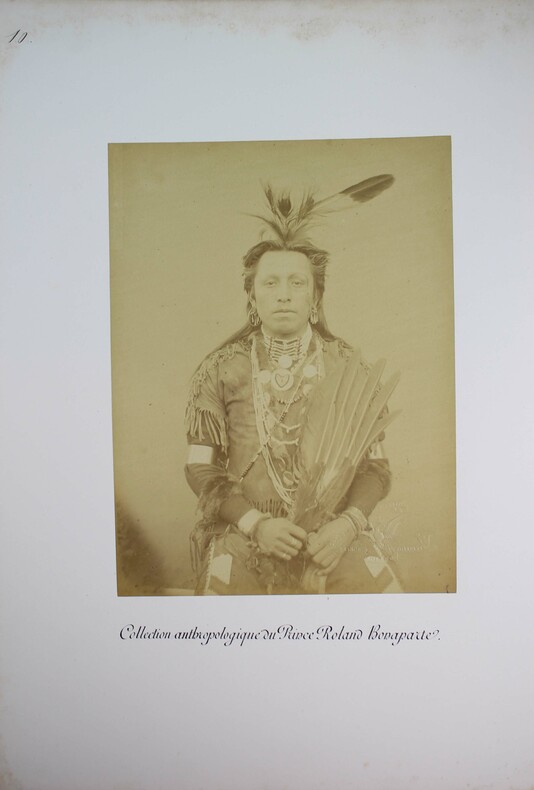
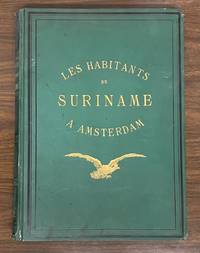
#[37933]Paris A. Quantin 1884. Large folio. Original decorated green cloth with gilt eagle and lettering on front some small light spotting. With frontispiece 2 double-page/folding lithographed maps in colours 9 ornamental initials 13 chromo-lithographed plates showing ornaments and head-dresses and 62 collotype plates depicting Indians maroons and blacks. 4VIII2261 pp. First edition. - First great anthropological work by Prince Roland Bonaparte 1858-1924. He was a grandson of Lucien Bonaparte Napoleon's brother scholar soldier scientist and photographer. Twenty-eight people from Suriname accompanied by plantation owner William MacIntosh were displayed as human curiosities at the world exhibition in Amsterdam in 1883. The result was the first photobook about the people of Suriname photographed by Friedrich Carel Hisgen. It was the first time that living people were included in a world exhibition. The photographs contain portraits of male and female members of all ages of the Indian and black population groups with an accurate description of their sources of income dress work religion and social institutions. This comprehensive anthropological study on Suriname was among the first to make systematic use of photographs in studying an indigenous group in the Americas. - A monumental book.- Light waterstains in some corners otherwise fine copy. Work p.643; Cat. KITLV p.634; Suriname-catalogus UB Amsterdam 0770; Koeman Suriname 77. hardcover
1857138291857 Paris, P. Bertrand, 1857-1858, grand in folio de 136 pp. de texte et bien complet des 55 planches lithographiées en noir et blanc, en feuilles sous couverture de papier chamois imprimée, sous chemise d'époque cartonnée de pleine percaline bleu-foncé, pièce de titre de chagrin fauve, bel ex.
1884310538Paris: A. Quentin 1884. First. hardcover. very good. Numerous plates some folding; 59 photographic portraits by Roche: phototypes of natives in full face & profile; 13 vibrant chromolithographs of tribal headdresses ornaments etc. Folding colored maps with tissue guards. Elephant folio original green pictorial cloth uncut edges. Paris: A Quantin 1884. First edition. Some buckling on spine and wear at end; some waviness on the bottom margins of some pages; inner hinges strengthened but some pages starting. A very good copy of a scarce book.<br/> <br/> Prince Roland was the grandson of Lucien brother of the Emperor Napoleon I. He was one of the earliest anthropologists to successfully employ photography.<br/> <br/> A. Quentin unknown
185072490Leiden et Düsseldorf 1850. 4to. Samtidig kartonasjebind med titteletikett i papir på ryggen. XVII 55 s. Illustrert med 54 farvelitografier. 4to. Contemporary boards. Title in paper on spine. XVII 55 pp. Illustrated with 54 coloured lithographs. Arnz & Comp. Fransk. <br/><br/><em>Navnetrekk og ex libris på forsats. Små slitasjer ved kapitélene. Meget rent og fint eksemplar. Sjelden. Name and bookplate on front endpaper. Small wear at spine. Internally very clean. Scarce. </em> hardcover
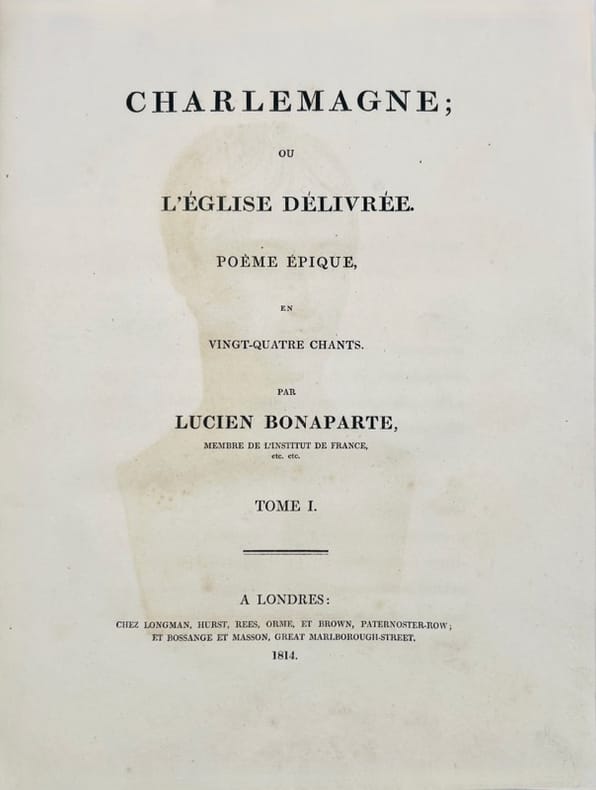
181444684A Londres, chez Longman, Hurst, Rees, Orme, et Brown, 1814. 2 vol. in-4 de (II)-XXVIII-392 pp. et (4)-419-(1) pp., demi-basane brune à petits coins de vélin, dos lisse orné, pièces de titre et de tomaison en maroquin bleu (reliure de l'époque).
18849581884 Paris, A. Quantin, 1884. In-folio 32x45,5 cm. Imposant ouvrage orné de 61 planches noir-blanc, 13 planches en chromolithographie, 1 frontispice, 4 illustrations non numérotées et 2 cartes. Page de titre en rouge et noir. Reliure en pleine percaline verte portant le titre et un aigle couronné aux ailes éployées sur le plat supérieur. Dos lisse orné de caissons noirs et portant le nom de l'auteur et le titre en lettres dorées. Traces de frottement sur le dos et les coins. Coiffes et mors restaurés. Une planche collée sur onglet se détache, cependant l'ouvrage est complet et en bon état général pour ce type de reliure et ce poids. RARE.
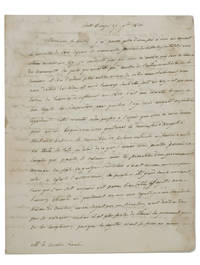
1830D4RF0SQXA54ZPointe Breeze New Jersey 1830. 4to 25 x 20 cm. Manuscript letter in French in brown ink on wove paper 3 sides of folded leaf signed and dated. 3 pp. Autograph letter by Joseph Napoléon Bonaparte 1768-1844 the elder brother of Napoleon I of France who made him King of Naples and Sicily 1806-1808 and later King of Spain and the Indies as Joseph I of Spain 1808-1813. After the fall of Napoleon I Joseph styled himself "Comte de Survilliers" and fled to America in 1816. In the present letter Bonaparte thanks the politician Pierre François Réal 1757-1834 for his messages on the recent July Revolution 27-29 July 1830 called "Les Trois Glorieuses" the overthrow of the French Bourbon monarch Charles X at Paris. Bonaparte shows himself disappointed in the role of the Marquis de La Fayette 1757-1834 the famous French general and political leader who had played such a great role in the American Revolution.Some soiling and waterstains a large tear in the folding of the leaf some folds and some tears in the margins. Still in good condition.l Cf. NBG XXXVII cols. 447-448 & 41 cols. 790-793. unknown
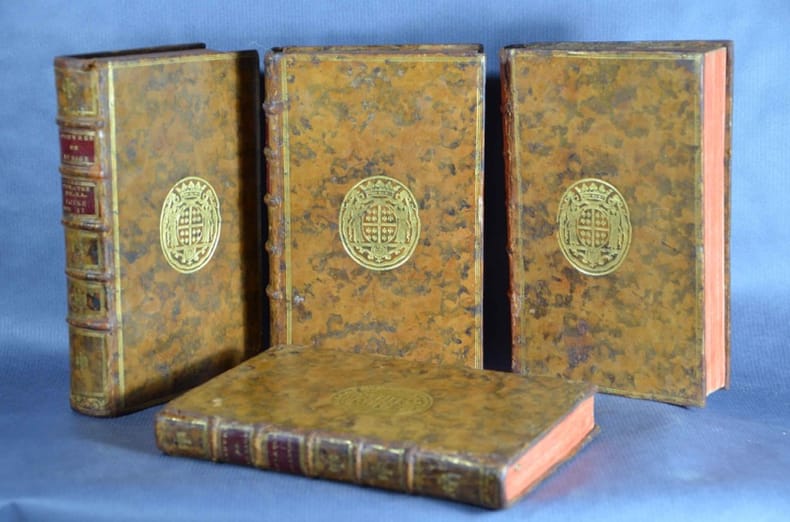
1684A Amsterdam, & se trouve à Paris, Rue et Hôtel Serpente, 1783, 4 volumes in-8, en plein-veau marbré, dos à 5 nerfs orné de fleurons, pièce de titre et de tomaison de maroquin rouge, filet doré en encadrement des plats, frappés aux armes de Anne-Léon II de Montmorency (Olivier planche 810 fer 1) illustrés de 8 gravures.Ex-libris manuscrit Laetitia Bonaparte répété sur chacun des volumes ; ex-libris Robert de Billy.Mouillures et quelques défauts.
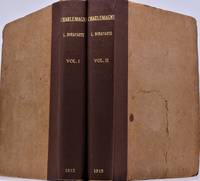
1815008240London: Longman Hurst Rees Orme and Brown 1815. SCARCE. SIGNED AND INSCRIBED BY AUTHOR at half-title page -" ministre des Etats Unis de la de l'auteur. Rome Avril 1819 author's initials". Two volumes rebacked in 20th c. quarter leather with gilt lettering over original paper covered boards. Eight page publisher's catalogue at front of Vol. I frontispiece portrait of bust of author xl 2 388 frontispiece map of Plan of Rome Vol. II 419 pp. Very Good 1st signature Vol. ! loose but holding boards worn at edges and lightly soiled end pages browned light spotting throughout both volumes some pages yet uncut. Lucien Bonaparte Prince of Canino 1775-1840 was a younger brother of Napoleon and a French statesman who played an indispensable role in Napoleons rise to power. He wrote this heroic poem on Charlemagne while living in exile in England where he was forced to stay after attempting to obtain a passport to go to America. SIGNED copies of his books are quite uncommon and this copy with its intriguing inscription is unique. . SIGNED AND INSCRIBED BY AUTHOR. First Edition. Quarter Calf. Very Good/No Jacket As Issued. 4to - over 9¾" - 12" tall. Presentation Copy. Longman, Hurst, Rees, Orme, and Brown Hardcover books
96514RMN. New. 0. Paperback. 2711857743 . FREE UPGRADE to Courier/Priority Shipping Upon Request - IN STOCK AND IMMEDIATELY AVAILABLE FOR SHIPMENT - Flawless copy brand new pristine never opened -- Text in French. 144 pp. ; well-illustrated mostly in color. -- with a bonus offer-- . RMN paperback
31120New York: Basic Books. As New. Hardcover. FREE UPGRADE to Courier/Priority Shipping Upon Request - IN STOCK AND IMMEDIATELY AVAILABLE FOR SHIPMENT - TEXT BLOCK CLEAN - Corresponds to ASIN: B00005WJ3V -- ND; copyright 1954. 486 pages. First edition so stated. -- with a bonus offer-- . Basic Books hardcover
50024New York: Basic Books. As New. Hardcover. FREE UPGRADE to Courier/Priority Shipping Upon Request IN STOCK AND IMMEDIATELY AVAILABLE FOR SHIPMENT - AS NEW THE TEXT BLOCK IS PRISTINE CLEAN UNMARKED AND IN EXCELLENT CONDITION - - Corresponds to ASIN: B00005WJ3V -- ND; copyright 1954. 486 pages. First edition so stated. -- with a bonus offer-- . Basic Books hardcover