481 résultats
2020x-0367531259CRC Pr I Llc 2020. Hardcover. New. 255 pages. 9.50x6.25x1.00 inches. CRC Pr I Llc hardcover
2011DADAX0367531259CRC Press 2020-11-04. 1. hardcover. New. 6.25x1.00x9.50. Buy with confidence. Excellent Customer Service & Return policy. CRC Press hardcover
0367531313.Gpaperback. Good. Access codes and supplements are not guaranteed with used items. May be an ex-library book. paperback
In 8° (16,8x12,5 cm); due opere in un volume: (2), 231, (1 b.), V, (1) pp. e (2), 167, (1 b.), III, (1 b.) pp. Legatura coeva in mezza pelle rossa con titolo, iniziali dell’autore, data e filetti in oro ai tasselli ed ai filetti. Dorso a 4 nervi. Iniziali dell’autore in oro anche al piatto anteriore. Qualche leggerissima e rara fioritura, alcune rare note a matita e nel complesso esemplare, in buone-ottime condizioni di conservazione. Seconda edizione della prima opera e prima edizione della seconda opera. Celebre e rara raccolta di poesie del Granduca di Russia, Konstantin Konstantinovic Romanov (Strel'na, 22 agosto 1858 – Pavlovsk, 15 giugno 1915). Nipote dell’Imperatore Nicola I di Russia fu un poeta e drammaturgo di motevole importanza. Quarto figlio del granduca Konstantin Nikolaevic di Russia e della moglie, la principessa Alessandra di Sassonia-Altenburg, Konstantin Romanov nacque nel palazzo di Costantino a Strelna. Nonostante che fin dalla giovanissima età dimostrasse grande predisposizione per la letteratura e assai minor interesse per la corriera militare, venne, come ogni Romanov, avviato a questa carriera nella Marina Imperiale Russa. Nella Marina non rimase a lungo, insoddisfatto dall’ambiente, passando ben presto nell'elitario reggimento Izmajlovskij della Guardia Imperiale dove, fra l’altro, si distinse, durante il servizio. Omosessuale dichiarato, nonostante questo, considerava di primaria importanza i propri “doveri” verso la famigli imperiale e così sposò, nel 1884, la principessa Elisabetta di Sassonia-Altenburg, sua seconda cugina, la quale, con il matrimonio, divenne la granduchessa Elizaveta Mavrikievna (in famiglia meglio conosciuta come Mavra) e dalla quale ebbe nove figli. Come padre e marito fu devoto e sempre attento alle necessità della moglie e dei figli. Pianista di talento, fu mecenate di numerosi artisti e divenne anche, per meriti, presidente della Società Musicale Russa. Amico di Pëtr Il'ic Cajkovskij, è comunque nella letteratura che diede il meglio. Poliglotta, a lui si devono alcune apprezzate traduzioni in russo di grandi classici tedeschi (Schiller e Goethe in primis) ed inglesi (era particolarmente orgoglioso della sua traduzione dell'Amleto). Esperto drammaturgo e poeta, produsse e diresse diverse rappresentazioni teatrali da lui scritte (ed almeno in un caso, vi prese parte anche come attore). Konstantin, insieme alla sua famiglia, fu tra i pochi membri della famiglia reale ad essere sempre accolti con piacere a corte da Alessandro III e dalla zarina Alessandra Feodorovna prima, poi da Nicola II che vedevano nella sua slavofilia artistica e nella sua devozione al dovere, un ottimo esempio, da contrapporre allo stile di vita mondano e frivolo di molti altri granduchi. Proprio per il suo carattere aperto e gioviale, fu uno dei più intimi amici della sorella della zarina, Elizaveta Fëdorovna moglie Sergej Aleksandrovic (fu uno dei pochi membri della famiglia reale ad esser presente al funerali di questi quando il Granduca venne ucciso con un attacco dinamitardo). Se pubblicamente la sua vita era caratterizzata da morigeratezza ed equilibrio, nel privato fu confusionaria e piena di contrasti. Anche la sua omosessualità non venne conosciuta in vita, ma divenne pubblica solo dopo la sua morte quando i suoi diari, videro la luce. Questi scritti schietti e diretti dimostrarono tutta la sensibilità e l’amore del Granduca per sua moglie e la sua famiglia ma anche i suoi sensi di colpa per i tradimenti con altri uomini ai quali non seppe resistere. Nei suoi diari Konstantin Romanov affermò che tra il 1893 ed 1899 egli si astenne dalla pratica di quello che egli definiva come il suo "peccato principale"; però, dopo la nascita del settimo figlio, Konstantin divenne un assiduo frequentatore dei numerosi bordelli maschili di San Pietroburgo. Nel 1904 egli scrisse nel suo diario che «ordinai al mio cocchiere [...] di andare, e continuai a piedi fin dopo la bath-house. Avevo intenzione di proseguire dritto [...] ma prima ancora di raggiungere il ponte Pevceskij, mi girai ed entrai. E così mi ero arreso ancora una volta, senza lottare poi molto contro le mie inclinazioni depravate». Il ciclo di resistenze e capitolazioni alle tentazioni è un tema molto frequente delle pagine di diario di Konstantin Romanov. Strinse diverse lunghe relazioni con uomini ma negli ultimi anni della sua vita, Konstantin scrisse nei suoi diari che la sua omosessualità, diventava sempre meno pressante, sia perché egli aveva raggiunto una propria pace interiore, sia a causa dell'età avanzata e della cattiva salute. Allo scoppio della Prima Guerra Mondiale, la coppia Granducale con l’intero entuorage, fu colta di sorpresa in territorio tedesco mentre era in vacanza. Fatta prigioniera come ostaggio, venne poi liberata su intervento diretto del Kaiser che permise alla famiglia di ritornare in Russia. Accompagnati al fronte, dovettero affrontare a piedi il passaggio dalle linee tedesche a quelle russe, cosa che segno profondamente la salute, già precaria del Granduca. La morte di uno dei figli in guerra segnò di nuovo Konstantin portandolo ad un tale livello di prostrazione che la morte lo colse il 15 giugno del 1915. La morte gli risparmiò di assistere allo sterminio di buona parte della sua famiglia dopo la fine dello Zar e della sua famiglia. Sopravvissero alla “Rivoluzione” solo la moglie e tre dei suoi figli (uno salvato per intercessione di Maksim Gor'kij che aveva cercato di salvare tutti i Romanov). L’opera qui presentata raccoglie i componimenti poetici scritti dal Granduca tra gli anni 1879 e 1888. I suoi componimenti, seppur anonimi, incontrarono il favore della critica, tanto che furono numeorsi gli articoli a lui dedicati su riviste specializzate e altrettanti furono i commenti entusiasti di numerosi celebri poeti russi che li lessero senza sapere chi ne fosse l’autore. Per ragioni legate alla sua posizione nella famiglia imperiale, Konstantin non firmò l’opera se non con le iniziali, anche se verso la fine della sua vita, l’attribuzione divenne pubblica, tanto che moltissime sue opere furono distrutti durante la “Rivoluzione” rendendole rare, quando non rarissime, specialmente quelle stampate prima del 1900 quando ancora, il Granduca, stampava le sue opere, anonime, in poche copie. Si sa ad esempio che la prima edizione dei suoi componimenti (qui presenti in seconda edizione), edita nel 1886, venne stampata in meno di mille copie, non per la vendita, ma regalate direttamente dal Granduca a personalità ed amici a lui vicini. Allo stesso modo si comportò il Granduca per la stampa della seconda parte dei suoi componimenti nel 1889. Stampò, sempre in circa 1000 copie, la seconda raccolta dei suoi componimenti e decise di ristampare alcune copie, in seconda edizione, della prima raccolta da donare a personalità ed artisti che non conosceva ancora, al momento della stampa della prima edizione. Probabilmente Konstantin curò anche la legatura dei volumi, cosa che spiegherebbe la curiosa presenza delle sue iniziali al piatto anteriore del volume che noi presentiamo. Una terza raccolta poetica che raccoglieva i componimenti scritti tra il 1889 ed il 1899 venne pubblicata nel 1901. Rarità bibliografica.
alb2737fb3a7a5d4f06M. Izd-vo Zakharov. 1998. You are welcome to reach out to us for a detailed description of the copies currently available. Delivery of this book may take longer than usual including extended processing and pre-shipping time no expedited shipping is available. Please advise us if you have a set date or a deadline to receive your order.SKUalb2737fb3a7a5d4f06 unknown
alb2737fb3a7a5d4f06Stanislav Dumin. Romanovs. Imperial House in Exile. Family Chronicle. In Russian /Stanislav Dumin. Romanovy. Imperatorskiy dom v izgnanii. Semeynaya khronika. M. Izd-vo Zakharov. 1998. You are welcome to reach out to us for a detailed description of the copies currently available. Delivery of this book may take longer than usual including extended processing and pre-shipping time, no expedited shipping is available. Please advise us if you have a set date or a deadline to receive your order.SKUalb2737fb3a7a5d4f06
187018-0-89St. Petersburg, Selbstverlag, um 1870. jeweils Foto: 15,2 x 9,8 cm; Karton: 16,7 x 10,9 cm
7585498Short description: In Russian. Romanov Alfred Albertovich. Guide to the technological equipment of fish processing industries. Moscow: Food Industry 1979 The image is provided for reference only. It may reflect condition of one of the available copies or only help in identifying the edition. Please feel free to contact us for a detailed description of the copies available. SKU7585498 unknown
1918002706Winnipeg Canada: Nakladom "Ruskoi knyharni" 1918. First Edition. Very good. First Ukrainian edition translated from Russian n. d. ca 1918; 7 x 5 1/2; pp. 1 4-64; green wraps printed and ruled in black; a few nicks to fore-edge and a small chip to corner of front wrap; thin strip of foxing to margin of back wrap; overall in very good condition. Allegedly written by the the last Emperor of Russia Nikolai II Romanov as an explanation to the events and reasons for his "abdication of the throne" it was sharply criticized and labeled "not entirely but predominantly conscious lies" by the anonymous author of the preface to the point where one could wonder if the "cofession" was really written by the tsar. Chapters included the history of the Romanovs with Rasputin Tsarina Alexandra's contempt for the Russian people etc. Nakladom "Ruskoi knyharni" paperback books
1918002706Winnipeg Canada: Nakladom "Ruskoi knyharni" 1918. First Edition. Very good. First Ukrainian edition translated from Russian n. d. ca 1918; 7 x 5 1/2; pp. 1 4-64; green wraps printed and ruled in black; a few nicks to fore-edge and a small chip to corner of front wrap; thin strip of foxing to margin of back wrap; overall in very good condition. Allegedly written by the the last Emperor of Russia Nikolai II Romanov as an explanation to the events and reasons for his "abdication of the throne" it was sharply criticized and labeled "not entirely but predominantly conscious lies" by the anonymous author of the preface to the point where one could wonder if the "cofession" was really written by the tsar. Chapters included the history of the Romanovs with Rasputin Tsarina Alexandra's contempt for the Russian people etc. Nakladom "Ruskoi knyharni" paperback
9505Edition Paris Musée Fort in-4, broché, couverture illustrée à rabats, 288 pp. Somptueuse iconographie en couleurs. Glossaire et bibliographie in fine Broché,couverture illustrée - SUPERBE EXEMPLAIRE ;
20171-3330036397LAP LAMBERT Academic Publishing 2017. Paperback. New. 456 pages. Russian language. 8.66x5.91x1.03 inches. LAP LAMBERT Academic Publishing paperback
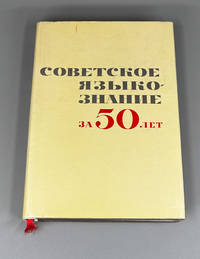
196743963033780371<p>Soviet Linguistics over 50 Years 19171967 : a collection of essays / USSR Academy of Sciences Institute of Linguistics ; editors R. M. Izhbulatova V. K. Romanov ; artist L. S. Erman ; art editor T. P. Polenova.<br />Moscow : Nauka Publishing House 1967. 428 pp.<br />Publisher's composite binding. In the original illustrated publisher's dust-jacket. Slightly enlarged format 70×100/16 approximately 170×245 mm. Print run of 5300 copies. With the original red silk ribbon bookmark preserved.<br />Condition good: light age-toning to the dust-jacket minor edge nicks and rubbing the binding itself clean spine fully preserved. The silk ribbon bookmark intact. Text-block firm leaves clean.</p><p>A landmark Soviet collective volume marking the fiftieth anniversary of the October Revolution and offering language family by language family a programmatic stocktaking of half a century of Soviet linguistic scholarship. Published by Nauka under the auspices of the Institute of Linguistics of the USSR Academy of Sciences the book runs from chapters on Russian F. P. Filin S. G. Barkhudarov the other East and West Slavonic languages Old Church Slavonic N. I. Tolstoy great-grandson of Leo Tolstoy and a foundational Slavist through Baltic Germanic Romance Classical Armenian E. G. Tumanyan Iranian Indic Albanian Celtic / Tocharian / Indo-European of Ancient Asia Minor A. V. Desnitskaya Finno-Ugric and Samoyedic an extensive Turkic chapter signed by nine specialists E. R. Tenishev N. Z. Gadzhieva L. A. Pokrovskaya N. A. Baskakov and others Mongolic Tungus-Manchu Korean L. R. Kontsevich the principal Soviet Koreanist Caucasian G. A. Klimov the central figure of Soviet Caucasiology Paleoasiatic Japanese Southeast Asian Chinese Malayo-Polynesian Semitic-Hamitic and African languages closing with a chapter on the indigenous languages of America and Oceania by Yury Valentinovich Knorozov the celebrated decipherer of the Maya hieroglyphic script. The volume holds particular bibliographic interest as the effectively posthumous publication site of Vladislav Markovich Illich-Svitych's chapter on the comparative grammar of the Slavic languages: the brilliant young founder of the Nostratic hypothesis Illich-Svitych had been killed in a road accident at the age of 31 in August 1966 while the book was still in production and the volume was signed for printing in February 1967 carrying one of his last completed essays. Beyond its individual chapters the book is a significant historiographical document for the history of the Soviet humanities recording how the Institute of Linguistics chose to narrate its own genealogy at the close of the Khrushchev period and the opening of the Brezhnev era. Issued in 5300 copies through closed academic distribution copies in the original dust-jacket are uncommon and the volume is sought after by historical-linguistic specialists by Knorozoviana and Illich-Svitychiana collectors and by historians of Soviet science.</p> Nauka hardcover
Mm 170x240 Brossura editoriale con bandelle, 253 pagine, numerose illustrazioni in bianco e nero nel testo. Esemplare in perfette condizioni, come nuovo. SPEDIZIONE IN 24 ORE DALLA CONFERMA DELL'ORDINE.
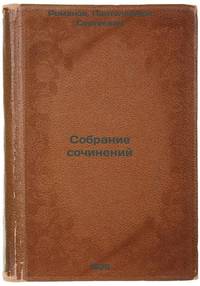
8966903Short description: In Russian. Romanov Panteleimon Sergeevich. Collection of Works. Moscow: Nikitinsky Subbotniki 1926. The image is provided for reference only. It may reflect condition of one of the available copies or only help in identifying the edition. Please feel free to contact us for a detailed description of the copies available. SKU8966903 unknown
0990319601.Gpaperback. Good. Access codes and supplements are not guaranteed with used items. May be an ex-library book. paperback
2014500133272OMNIBUS 2014 205 pages 13x2 2x19 6cm. 2014. Broché. 205 pages.
This is a near fine softcover copy with virtually no wear. Completely clean inside and out. This is a sale catalog for an auction held at Sotheby's London on June 2, 2006. Sale # L06412 "ZAUM". The sale consisted of important Russian books across many fields. Russian Avant garde materials by El Lissitsky, Olga Rozanova, Natalia Goncharova, Kruchenykh, Larionov, Mayakovsky, Burliuk, Iliazd, among many others. Children's books by Alexander Benois, Bilibin, Lebedev, among them a group that formed the core of the great exhibition at MAK in Vienna in 2004, 'Shili-Byli Russian Children's Books 1920-1940'. Also important political works by Marx and Lenin. Also Russian literature, travel books, and maps and a short section of 19th & 20th century Russian photographs. Romanov family photos, letters, telegrams, etc. 219 lots in the sale. All illustrated, many in color. Prices realized sheets included. 11" high X 8" wide, 186 pages.
SLIVCN-9781536142662NOVA SCIENCE PUBLISHERS INC (11/2018)
2824608811.Gpaperback. Good. Access codes and supplements are not guaranteed with used items. May be an ex-library book. paperback
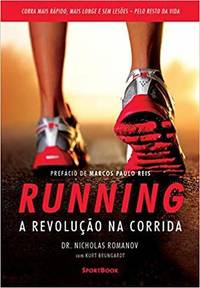
9788569371069SPORTBOOK. new. Um guia inovador para todos os corredores que querem ir mais longe mais rapido sem ter lesoes. Running A revolucao na corrida e um guia ilustrado para corredores iniciantes e tambem para os experientes melhorarem suas passadas otimizando sua performance e ao mesmo tempo minimizando os danos ao corpo. Com o metodo do doutor Nicholas Romanov voce podera responder a muitas questoes: Estou correndo da maneira errada Meu tenis e o mais adequado para mim Por que e melhor pisar com a planta do pe do que com os calcanhares Como mudar entre os estilos de corrida de maneira segura e efetiva Running A revolucao na corrida responde estas e outras questoes. SPORTBOOK unknown
9786556600970EDIPRO. new. Um guia inovador para todos os corredores que querem ir mais longe mais rǭpido e sem les��es.Running � A revolu��o na corrida Ǹ um guia ilustrado para corredores iniciantes e tambǸm para os experientes melhorarem suas passadas otimizando sua performance e ao mesmo tempo minimizando os danos ao corpo.Com o mǸtodo do Dr. Nicholas Romanov voc� poderǭ responder a muitas quest��es: Estou correndo da maneira errada Meu t�nis Ǹ o mais adequado para mim Por que Ǹ melhor pisar com as plantas dos pǸs do que com os calcanhares Como mudar entre os estilos de corrida de maneira segura e efetivaAlǸm de responder a essas e outras quest��es Running � A revolu��o na corrida ensina:��Como correr dist�ncias maiores que qualquer marca anterior � sem perder o f�lego EDIPRO unknown
1997ZB1339984St. Petersburg 1997. Price HAS BEEN REDUCED by 10% until Monday June 29 weekend SALE item paperback fine. - If you are reading this this item is actually physically in our stock and ready for shipment once ordered. We are not bookjackers. Buyer is responsible for any additional duties taxes or fees required by recipient's country. Photos available upon request. St. Petersburg paperback
"Romanovs: A Tsarist Story - Who were they? Where are they now? The Romanov dynasty was dethroned during the revolution in 1917, and the Tsar and his immediate family executed. Some escaped into exile.. Swedish author and journalist Staffan Skott has met and interviewed several Romanovs of our time. In his book full of whimsical details, he tells what happened to the heirs of the family after the revolution and what their lives were like during the Soviet era. 384p. illus. genealogical charts. index.Crisp copy, Donor inscription, else as new.[NO copies found in Worldcat] Book