ERARD Pascal - MOUNIER FrédéricLivre Rare Book

132 résultats
198433656Couverture souple. Broché. 217 pages.
65716Paris, Editions La Découverte, 1984. 14 x 22, 216 pp., broché, bon état (couverture légèrement défraîchie).
Very Good English Original bdg. Roy. 8vo. (24 x 17 cm). In English. Many b/w plates. [xii], 340 p., 1 folding huge map. A tour through the famine districs of India.
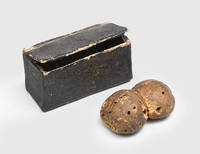
1817127400Germany: 1817. A relic from the Year Without a Summer This small "Hungersemmel" produced in German-speaking countries during the famine of 1816-17 illustrates the severity of the food shortage. It was kept as a memento of the hardship as the accompanying note explains: "This 2-penny bun is from the expensive time of the year 1817 stored here as a memorial on the 12th of July. Paid by Carl Weißenbach" our translation. The price of such famine buns remained unchanged throughout the period but their size decreased as the stock of flour dwindled. Bakers supplemented their scarce flour with inedible material such as sawdust straw and tree bark and added whiteners such as alum chalk gypsum and burnt bones Angerer p. 165. They were often passed through families to remember the dead although some public institutions such as churches and town halls also displayed them. The famine resulted in the first wave of German emigration in the 19th century with many fleeing to Poland Russia and the United States. "Hunger pastries" are scarce survivals. The Museum der Brotkultur in Ulm holds five similar examples. Four more are traced in the Historical Museum in Regensburg and two in the Gerätemuseum in Ahorn near Coburg Angerer p. 162. The note in German reads: "Diese 2-Pfennigsemmel ist von der theuren Zeit des Jahres 1817. Als Andenken hierin aufbewahrt am 12. July. Von Carl Weißenbach bezahlt". Dried bun 60 x 40 x 25 mm accompanied by a folded manuscript note in German. Housed in a contemporary black card box. Bun darkened and with some expected damage including insect; manuscript note browned finger-stained and with a 20 mm tear; box worn. In good condition. Birgit Angerer Gutes Wetter - Schlechtes Wetter 2013; Dorothee Bayer O gib mir Brot: Die Hungerjahre 1816 und 1817 in Württemberg und Baden 1966. unknown
0260665983.Gpaperback. Good. Access codes and supplements are not guaranteed with used items. May be an ex-library book. paperback
199629631P., Les Belles Lettres, 1996. In-8 broché (21,4 x 15 cm), couv. rempliée, 428pp., importante bibliographie, index. - 610g. - Excellent état, comme neuf.
Gift inscription to titlepage from editor (Peter Garnsey). Light knock to base of spine. Corners have light creasing. Mild shelfwear. ; A theme of the volume is that a combination of natural and artificial shortages made inevitable the bulk movement of staples between regions in all periods of antiquity. Novel contributions are offered in addition in relation to the cost of shipping, the extent of long-distance trade in wine, the relative demand for wheat and barley, the incidence and gravity of food crises, the efficiency of famine-relief measures and the part played by food shortages in the collapse of the late Roman frontier system. ; Cambridge Philological Society Supplementary Vol 8; 126 pages; Signed by Editor
Pages a bit tanned. Tiny faint stain to rear wrap. Else very light shelfwear. ; A theme of the volume is that a combination of natural and artificial shortages made inevitable the bulk movement of staples between regions in all periods of antiquity. Novel contributions are offered in addition in relation to the cost of shipping, the extent of long-distance trade in wine, the relative demand for wheat and barley, the incidence and gravity of food crises, the efficiency of famine-relief measures and the part played by food shortages in the collapse of the late Roman frontier system. ; Cambridge Philological Society Supplementary Vol 8; 126 pages
Payot 1990, grand In-8 broché, 328 pages. Très bon état.
194695882London, Victor Gollancz, [ 1946]. 48 S. 18,5 cm. Bedruckte OBroschur.
7810depuis les Temps les plus reculés jusqu’à la date d’union avec la grande Bretagne.En 1801.Traduite de l’anglais par Pierre LAMONTAGNE.Deux tomes sur trois,en deux volumes cartonnage papier bleu épouse,pièce de titre imprimée,en partie effacée.Tome 2 faux-titre,titre 520 pages.Tome 3 faux-titre,titre 514 pages.Paris à la Librairie française et étrangère de Parsons Galignani & Cie 1808.On joint Un volume en reliure identique annoncé comme le tome 1:faux titre VIII préface du traducteur à la suite le tome 2. Probablement une erreur de l’imprimeur Les trois volumes
269 pages. Index. Reference notes. Black and white illustrations. Author's signature upon title page else book clean, bright and unmarked with negligible wear. Dust jacket in like condition and now preserved in Brodart sleeve. "Tales of adventure on the sea, suffering and starvation on land, monstrous weather, hardships, insanity, and the happiness found by some families on the lights." - from dust jacket. Would make an excellent gift. Book
15472From Nice France. On letterhead of the Diocese of Ohio. 25 January 1889. 1p. 12mo. In fair condition on aged and creased paper. Reads: 'Dear Sir and His Honor the Lord Mayor of London. Your appeal has this hour met my eye. Be so good as to add the enclosed $100 to your collection for "the China Famine Relief Fund." Messrs. Brown Shipley & Co are in the habit of cashing my check on Bank of New York; it it is desired.' With oval stamp of the City bankers Brown Shipley & Co. and initaled note of the converted sum '£20 7s 3d'. From Nice, France. (On letterhead of the Diocese of Ohio.) 25 January 1889. unknown
2276Lausanne,Les Cahiers de la R.S.F., 1995 ; petit 4°, oblong, broché, couverture illustrée.
Generously illustrated with black and white photos and illustrations. Features: A Baptism of Fire - A young British Columbia Forest Service Ranger helps to save 100 people trapped in a logging camp from forest fire; Through Arctic Seas - Part II - Wonderful photos accompany this continuation of the cruise of the Hudson Bay Company steamer Baychimo to the Western Arctic to study the Eskimos and wild life; "Kruger's Millions" - ;A diagram is found which may lead to an enormous quantity of gold hidden by President Kruger after the Boer War; How We Fought the Famine - In East Africa Captain Anthony Parsons needed meat to trade to the Angonis for flour for his "boys"; Through Spain in Disguise - Part VI - Count and Countess Malmignati sing and dance their way across Spain disguised as Arab beggars; Photo of river gardens in Siam; The Adventures of a "Sand-Hog" - Photos of brutal subterranean conditions accompany this story of the men who dig tunnels and tubes beneath the Hudson River, between New York and Jersey City; The Thief Who Lost His "Luck" - A Chinese burglar lucks out; "Crawling Cavern" - Close call for Mark Howard in the spring of 1907 while on outpost duty on the coast of Mindanao; Across Central Africa from East to West - Part I - Major Frederick G. Jackson describes his 6,000 mile trans-African trek - with nice photos; The "Phantom Bandits" - In 1923 Joe Tanko and Floyd Hall escaped from San Quentin Prison and terrorized the countryside before they were finally subdued - includes facsimile of their wanted poster; The Mystery Man of Arnhem's Land - a man goes wrong so flees to the wilds, intent on earning enough to make restitution, but ends up in a lonely grave on the Australian coast; The Hakim - A doctor in Kenya includes fortune-telling in his treatment of disease. 84 pages plus 12 pages of nostalgic ads. Bits of peripheral nibbling, otherwise clean and unmarked with moderate wear. A quality copy of this fascinating vintage issue. Book
200110626Larousse 2001 345 pages 15 6x2 2x23cm. 2001. Broché couverture rempliée. 345 pages. Ce livre de Claude Hudelot publié chez Larousse adopte une approche en deux parties : la première retrace la vie objective de Mao Zedong de ses origines paysannes à son ascension au pouvoir jusqu'à la Révolution culturelle. La seconde partie analyse la construction de sa légende basée sur un culte de la personnalité entretenu par une propagande massive confrontant ainsi la biographie historique aux mythes qui l'entourent
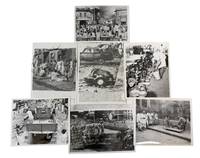
1943234951943. Indian famine crisis press archive depicting hunger relief work and public unrest from Bengal famine conditions through later food riots in independent India. The Bengal Famine of 1943 killed an estimated three million people and food scarcity remained politically volatile in India for decades afterward. Street demonstrations over grain rationing and hunger drew police deployments in multiple cities turning food access into a public order crisis as well as a humanitarian emergency.<br /> <br /> Photo archive of 7 silver gelatin press photographs mostly measuring 8" x 10" India 1943-1964. Crowds gather outside food distribution points children sit with metal bowls during feeding mounted police face demonstrators and uniformed officers move through dense street scenes. Press captions identify Calcutta famine conditions food rioters dispersed by police in Kerala fighting and fire in Lucknow and relief activity for famine victims. Typed captions identify "food rioters" being dispersed outside the Travancore state government house in Trivandrum Kerala where police and mounted officers filled the street after looting over food. Another caption describes Lucknow fighting in which "rioters set fire to about a six-block square" with crowds massed near burning buildings and shopfront signs. Calcutta scenes show famine victims clustered around relief vessels and feeding bowls with one caption stating that people had been "reduced to skin and bone" after food shortages. A street-side feeding scene shows children and adults crouched in rows with metal dishes receiving food from a man holding a large bucket.Verso stamps include Acme Newspictures NEA reference markings New York Bureau labels editor crop marks typed captions and publication dates.<br /> <br /> The group connects famine mortality postwar scarcity and street protest in India across a period when food distribution became a central test of colonial and postcolonial government authority. Press handling wear caption remnants crop marks corner creasing and scattered surface marks; overall in very good condition. A strong press group linking famine relief imagery with the public unrest that followed hunger into India's mid-century political life. unknown
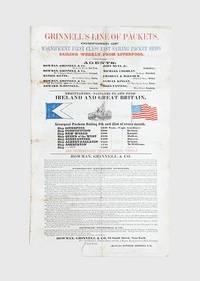
1850183852New York: Bowman Grinnell & Co. c.1850s. Fleeing to a new life in America An advertising poster assuring American patrons that Bowman Grinnell & Co. could be trusted to relocate their relatives from Ireland in comfort. The advertisement lists the addresses of the company's agents the names of their ships and the procedures for emigrating from Ireland. Throughout the Great Famine of 1845 to 1852 many companies took advantage of emigrants' desperation to force them to travel in overcrowded and understocked vessels and coffin ships or to scam them out of their money. As printed on this item "Bowman Grinnell & Co. have seen and witnessed with feelings of regret for a long time that something was necessary for the protection of the Irish people in the United States sending their remittances to their friends in Ireland. from the numberless disappointments they have lately met with and in many instances the heartless frauds that have been practiced on them by parties professing to bring them out on ships over which they had no control or with which they had no connexion". Bowman Grinnell & Co. was formed in the 1850s by William Bowman and Robert Minturn Grinnell of the Grinnell Minturn & Co. shipping line owners of the famous Flying Cloud clipper ship. It claims that their ships listed with their captains' names were fast well-ventilated and comfortably furnished that their drafts could be cashed anywhere in Ireland and that baggage would be transported for free. Single sheet 444 x 265 mm printed in red black and blue on one side only vignettes. Ink number on verso 19th-century pencil inscription on lower right corner. Sometime folded loss on lower left corner barely affecting printed area light toning and soiling especially on verso: a very good copy of an ephemeral item. unknown
New English Original bdg. HC. Roy. 8vo. (24 x 17 cm). In English. 102 p. First printing Constantinople 1875. Account of a famine which devastated Central Anatolia in the 1870's. The famine in Asia-Minor: Its history. Compiled from the pages of the Levant Herald.
Very Good English Original bdg. HC. Roy. 8vo. (24 x 17 cm). In English. 102 p. First printing Constantinople 1875. Account of a famine which devastated Central Anatolia in the 1870's. The famine in Asia-Minor: Its history. Compiled from the pages of the Levant Herald.
3016Editions Sociales 1984
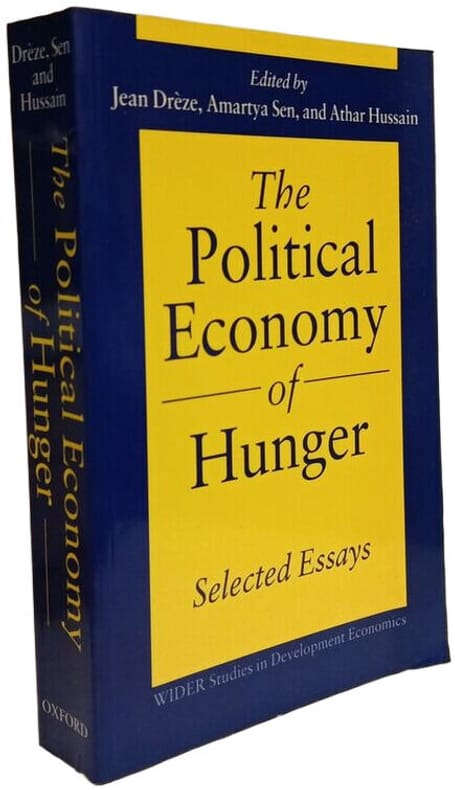
1995100148110Oxford 1995 in8. 1995. Broché. Cet ouvrage collectif dirigé par Jean Drèze et Amartya Sen analyse le paradoxe de la persistance de la faim dans un monde d'abondance alimentaire. Il couvre la nature et la diversité de la faim et des privations ainsi que les stratégies de prévention des famines avec une attention particulière portée à l'Afrique subsaharienne et à l'Asie
20098'"Standard" Office Wigan May 27th. 1862.'. For the background to this letter see William Otto Henderson 'The Lancashire Cotton Famine 1861-65' 1934 and Angela V. John 'By the Sweat of their Brow' 2013. Between 14 April and 16 October 1862 Whittaker published a dozen letters on the 'Lancashire Distress' in the London Times under the pseudonym of 'A Lancashire Lad'. Edwin Waugh in his 'Home Life of the Lancashire Factory Folk During the Cotton Famine' 1867 describes Whittaker as 'one of the first writers whose appeals through the press drew serious attention to the great distress in Lancashire during the Cotton Famine. There is no doubt that his letters in The Times and to the Lord Mayor of London led to the Mansion House Fund. In The Times of April 14 1862 appeared the first of a series of letters pleading the cause of the distressed operatives.' The letter is 2pp. 12mo. Bifolium on grey paper. In fair condition aged and worn. Whittaker begins by apologising to Langley for sending only part of the note intended for him but as Langley has 'gathered the sense of what the whole note contained' he will not trouble him 'with the same thing again'. Regarding his seventh 'Lancashire Lad' letter he writes: 'In today's Times I try to correct the statement made by the chairman of your Board of Guardians last week. It is a great pity that he should have made that statement especially as about the very time that he was making it I was consulting with others as to the 400£ distributed to Preston and other towns. He ought to have seen that it is injurious to make any statement which may lead to cavilling and the more so in a case like this where the thousands of out-of-work-operatives are becoming more and more dependent upon what is being contributed for their relief. He concludes by suggesting that 'all ought to combine in helping and that each ought to be specially careful not to say or do anything which might lead to lessening the help afforded to our poor'. Whittaker's later activities are clouded in obscurity. In 1869 the 'Bookseller' reported that 'Mr. John Whittaker whose letters in " The Times" under the signature of " A Lancashire Lad" led to the formation of the Mansion-House Relief Fund has we are informed left the staff of The Daily Telegraph upon which paper he has been engaged during the last few years and joined that of The Echo the new half-penny daily paper.' '"Standard" Office | Wigan | May 27th. 1862.' unknown