[Reform and Anti-Slavery]Biblio.com
53 résultats
184639101Philadelphia 1846. 16 of 18 issues lacking 1 and 2 bound together in contemporary three-quarter calf with marbled boards. Pages numbered 33-288. Some leaves browned. General title page is absent; a small bookplate "Bodichon Scalands Robertsbridge" covers the caption title of No. 3. This is the bookplate of Barbara Leigh Smith Bodichon notable British artist feminist writer and women's rights activist who founded the first women's college at the University of Cambridge. Bound in contemporary quarter calf rubbed and marbled paper over boards. Occasional text browning. Except as noted Very Good. <br /> <br /> This periodical is a literary anthology of American and British reformist prose and poetry with significant anti-slavery contributions. The authors included John Greenleaf Whittier James Russell Lowell Ralph Waldo Emerson Nathaniel Hawthorne Henry Longfellow John Pierpont Lydia Maria Child Harriet Martineau Lydia Sigourney Alfred Lord Tennyson Elizabeth Barrett and William Lloyd Garrison who wrote three poems for the journal one while imprisoned for libel of a merchant he had accused of illegal slave trading. <br /> The anti-slavery pieces are not only poetic most famous being Whittier's "Branded Hand" but also include his essay on the "Slave Market at Washington" Child on the "Economy of Slavery" the "Declaration of Sentiments of the American Anti-Slavery Society" and principles of the 1838 "Peace Convention" organized by Garrison. <br /> LCP 10848. AI 46-7277 6. Not in Lomazow or Mott. unknown
187579905Columbus Ohio: Nevins & Myers State Printers. Very Good. 1875. Softcover. This item is soft-bound in light yellow wrappers with black printing on the upper cover. The lower cover is torn/lacking with wear to the spine. The string binding is solid. The contents are bright and generally clean but with light toning to the page edges. There is a very nice fold-out view by Strobridge at the front. . Nevins & Myers, State Printers paperback
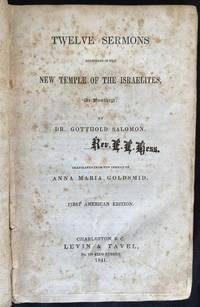
184141441Charleston S. C. : Levin & Tavel 1841. 1st American Edition Original Publisher's Cloth Small 8vo 2 236 pages followed by several unnumbered pages of publisher's advertisements. Singerman 0761 Rosenbach 483. <br> <br> Jacob Rader Marcus the dean of historians of American Jewish history suggests in his work UNITED STATES JEWRY 1776-1985 Detroit 1989 that "The motive that prompted Nathaniel Levin and a Charleston associate to reprint an English translation of the sermons of Gotthold Salomon was apologetic.The book was Twelve Sermons Delivered in the New Temple of the Israelites at Hamburgh. The Hamburg temple in Germany was a liberal Jewish synagog one of the first in Europe. <br> An English translation had been made of the sermons at London in 1839 by Anna Maria Goldsmid the daughter of Sir Isaac Lyon Goldsmid the Anglo-Jewish emancipator and religious liberal. The American reprint appeared two years later. <br> Both editions were intended not only to edify Jews but also to interest and attract non-Jews. It was Levin's hope that these sermons would remove unjust prejudices against the Jew and would present 'the lofty character of the Israelite in its true colors.' A book of this sort would help the Jews put their best foot forward." <br> Interestingly this 1st American edition of Twelve Sermons contains a new preface extolling the religious liberty of America and highlighting the refuge it afforded to the Jews. The new preface is merely signed "L" certainly referring authorship by Isaac Leeser and further supported by the fact that volume is preceded by two pages of advertisements for works by Leeser even though his works had no connection to the Charleston Publisher of this work.<br> That Leeser who would become American Orthodoxy's greatest warrior against the Reform would offer a preface to and advertise his works in a collection of sermons from the breakaway Liberal Hamburg Temple in Germany suggests that he did not yet see the coming threat from the Reform movement. <br> At the time of printing in Charleston Gustavus Poznanski 5 years into his term as rabbi and still somewhat traditional was just starting to make what felt like radical reforms as he "excised the Resurrection of the Dead and abolished the Second day of festivals five years before the same was done at the Breslau conference." <br> <br> America's first Reform import from Germany and it's first synagogue established as Reformed Har Sinai Congregation in Baltimore was still a year away from birth. Indeed the official term "Reform" did even come into use to describe Liberal Judaism except as a general adjective until 1845 even in Germany. <br> Leeser's involvement in this publication merits further study as it is not mentioned in the bibliographies nor in Sussman's comprehensive "Isaac Leeser and the Making of American Judaism." <br> Indeed in the 1840s at the time of this printing "there was a major split in Congregation Beth Elohim which many historians of American Jewish history see as the beginning of the American Reform movement. The conflict began after the introduction of an organ into the synagogue when it was rebuilt following a fire in 1840. <br> The series of conflicts between Reform and Traditionalist elements in Beth Elohim resulted in a complicated dispute between the President who favored Reform and the Board of Trustees which was controlled by the Traditionalists. The President refused to call the Board of Trustees to meet as was required by the synagogue's constitution because he knew they would admit new traditionalist members and obtain control of the congregation. The Board ignored him and met on their own a move which the Reformers challenged in court. The resulting case State v. Ancker has become known as an early example of U. S. Courts refusing to intervene in complex religious questions" Wikipedia. <br> <br> Salomon 1784-1862 was the preacher of the new Reform Hamburg Temple. His "sermons modeled like those of other preachers on Protestant examples were praised by his contemporaries notably H. Heine." Goldsmid 1805-1889 a daughter of Sir Isaac Lyon Goldsmid was a London author poetess translator educator and communal worker JE. Includes bibliographical references. <br> SUBJECTS: Jewish sermons. OCLC: 5001081. OCLC lists 11 copies worldwide. Ownership stamp of "Rev. E.L. Hess" on title page signiture of "S. Uhlfelder" on blank endpaper. Lacks backstrip wear and foxing occational period notes binding starting to loosen but Good Condition in acid-free book box. A scarce and important publication associated with the early beginnings of the Reform movement in Charleston and with Leeser's first years of scholarly output. B KH-9-29-BDZ-elx. Charleston, S. C. : Levin & Tavel unknown
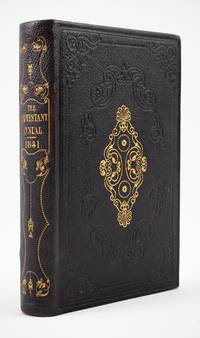
1840ST20302-02London: Francis Baisler 1840. FIRST EDITION. 195 x 130 mm. 7 3/4 x 5". xi 1 307 1 4 pp. <br/> Publisher's black pebbled morocco covers elaborately decorated in blind with gilt centerpieces smooth spine decorated in gilt all edges gilt gutter between the end of the text and the ads at the back expertly reinforced. With 10 engraved plates including the frontispiece and engraved title. Dedication page with contemporary ink ownership inscription of Wm. C. Drysdale. Noticeable discoloration to pastedowns and flyleaves from binding adhesive plates negligibly foxed otherwise especially clean and fresh internally with only the most trivial of imperfections; the exceptionally clean binding showing virtually no signs of use.<br/> <br/> This collection of essays and verse promoting Protestant thought and values comes in a beautifully preserved Victorian publisher's binding. The editor of this work Charlotte Elizabeth Tonna 1790-1846 was an evangelical Protestant social reformer particularly devoted to exposing poor factory conditions and improving the welfare of women and the poor. Writing under the name Charlotte Elizabeth she made "contributions to social reform literature and her use of the 'Christian Lady's Magazine' as a forum to influence politics through her female readers mark her as a significant nineteenth-century figure especially for other women social reform writers such as Harriet Beecher Stowe . . . and Elizabeth Gaskell." DNB Of particular note in our volume is an essay by Charlotte Elizabeth discussing the figure of Katherine Parr sixth wife of Henry VIII as a model of Protestantism and womanhood. Francis Baisler unknown
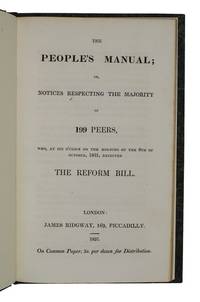
1831AQ30613London: James Ridgway 1831. 32pp. Modern marbled paper boards printed paper lettering-piece to spine. A trifle rubbed. Scattered spotting. The first edition of a register of the 199 members of the House of Lords that voted against the passing of the Reform Bill. A second edition appeared the same year. . First edition. 8vo. James Ridgway hardcover
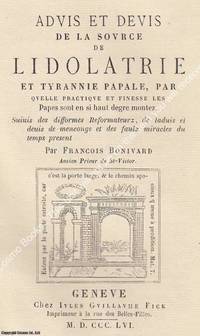
1856373747Jules Guillaume Fick Geneva 1856. Full Vellum. Very Good Condition. This rare 1856 edition resurrects a fiery Reformation tract by Franois Bonivard the former Prior of St. Victor in Geneva and a vocal critic of papal authority. Originally penned in the 16th century Bonivard's Advis et Devis is a sweeping denunciation of papal idolatry tyranny and political cunning tracing the rise of the papacy through pratique et finesse craft and manipulation. The title alone is a manifesto: a condemnation not only of Rome's spiritual claims but of its worldly ascent bolstered by false miracles distorted reformers and the machinery of deception. The 1856 printing by Jules Guillaume Fick a Genevan publisher active in theological and polemical works is notable for its typographic austerity and symbolic frontispiece a woodcut archway labeled la porte large & le chemin spacieux qui mene a perdition the wide gate and spacious path that leads to perdition. This visual metaphor sets the tone for the text's moral urgency and rhetorical force. Though the book is printed in French its spirit is unmistakably Calvinist echoing Geneva's role as a bastion of Protestant reform and intellectual dissent. Bonivard's work is more than theological invective it's a window into the political theology of the Reformation where spiritual critique was inseparable from civic resistance. His attacks on les difformes reformateurs distorted reformers suggest a layered critique not just of Rome but of those who claimed reform while perpetuating corruption. The 1856 edition likely served both archival and agitational purposes reasserting Protestant identity in a century grappling with religious revivalism ultramontanism and the legacy of Enlightenment skepticism. For collectors this volume sits at the intersection of Reformation polemic Genevan print culture and 19th-century religious historiography. Its vellum binding untrimmed edges and stark layout reinforce its status as a deliberate revival a book meant to be read debated and remembered. Bound in full vellum yapped edges. Ties now absent. Edges untrimmed. Binding dusty and marked but very firm and sound. Contents very clean and firm. Size: 14.5 x 22 cms. Category: Antiquarian & Rare; Special Interest. This item may require more postage than the rates shown for delivery outside the UK. If extra postage is required we will contact you before processing your order and you will be given the details and option to decline the extra cost. Jules Guillaume Fick hardcover
186276501Philadelphia: Philadelphia Society for Alleviating the Miseries of Public Prisons 1862-1871. First editions. Octavo. Various paginations but all complete. Publisher’s printed green wrappers two issues have had their wrappers reattached a few instances of erosion to spine but never affecting integrity. Overall in very good condition.There were two main series of this publication. The first series began in 1845 under the title Pennsylvania Journal of Prison Discipline and Philanthropy and in 1862 a second or “new†series was begun leaving off the Pennsylvania no doubt in hopes of national readership. It was a yearly publication. This two-series format continued until the journal ceased publication in 1920 after which it was succeeded by what is now known as The Prison Journal. The Pennsylvania Prison Society founded in Philadelphia in 1787 was the first private agency to concentrate specifically on correctional issues. The society's journal was one of the earliest periodicals devoted solely to studies of correction and crime. The articles run the gamut of subjects related to these fields from discussions of penal philosophy to inmate interviews and even down to the brass tacks of the costs involved in running a prison. . The journal not only provides information on prison conditions and the evolution of the American penal system particularly in Pennsylvania but also offers a detailed record of the penal reform movement in this country. They were remarkably foresighted. This can be seen in the following two quotes; "The readers of this Journal need not be told that we are not very sanguine in our expectations of the permanent reformation of the mass of convicts. There are doubtless instances enough of success in such efforts to warrant and encourage them and we are not to suppose that they are ever wholly useless. The true position for us to take is this. The earlier we address ourselves to the cultivation of right principles and habits in a human being the more hopeful is the prospect of success" and this little gem "May we not easily forget that between a score of men in our prison cells and twenty score of men that may be selected from society at large the only difference is that the former are detected rogues and the latter are perhaps greater rogues undetected" It was a bold movement away from prison as a punishing experience toward a kinder belief that prisoners must once again become useful members of society. Philadelphia Society for Alleviating the Miseries of Public Prisons unknown
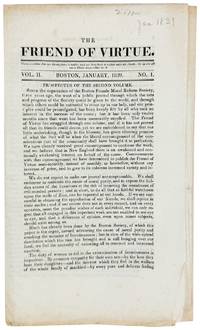
183933043Boston: New England Female Moral Reform Society 1839. Very Good. Boston: New England Female Moral Reform Society 1839. First Edition. Octavo; self-wrappers unopened. 16pp. Toning and creasing to edges with a few minor nicks; about Very Good. <br /> <br /> The New England Female Moral Reform Society's stated goal was the "prevention of licentiousness" prostitution the moral double standard regarding both and protecting young women from the "unprincipled destroyer who seduce and ruin the unsuspecting." Indeed this issue devotes a section to "Street Beggars" who are imposters attempting to lead astray the young and unsuspecting. The paper continues in telling the story of two young women who were led to "a house of ill fame" by one such imposter and were saved from a member of the society and thus saved "from this sink of iniquity. from her 'whose house is the way to hell going down to the chambers of death.'"<br /> <br /> Also of note here is the ongoing "Letters to Sarah E. Grimke" portion of this publication which runs several pages in this issue gently arguing several points regarding the role of women in society. The letter concludes with a post script that the author has just received Grimke's pamphlet "Equality of the Sexes" acknowledges her sincere obligations and urges everyone who reads this publication to also read Grimke's. Scarce in retail. New England Female Moral Reform Society unknown
1874ZB586829London etc.: 1874. large octavo iv 204 pp paper wrappers soiled and chipped text age toned with late advertising leaves tip chipped working copy. - If you are reading this this item is actually physically in our stock and ready for shipment once ordered. We are not bookjackers. Buyer is responsible for any additional duties taxes or fees required by recipient's country. London (etc.): unknown
1880ZB586834London/Liverpool: 1880. large octavo iv 196 pp library markings extraction roughness at spine and only front cover remains from paper wrappers minor tip chipping reading copy only. - If you are reading this this item is actually physically in our stock and ready for shipment once ordered. We are not bookjackers. Buyer is responsible for any additional duties taxes or fees required by recipient's country. London/Liverpool: unknown
1885ZB586839London/Liverpool: 1885. large octavo 2 200 2 pp paper wrappers soiled with a large corner missing from back cover text age toned and bumped reading copy only. - If you are reading this this item is actually physically in our stock and ready for shipment once ordered. We are not bookjackers. Buyer is responsible for any additional duties taxes or fees required by recipient's country. Photos available upon request. London/Liverpool: unknown
1882ZB586836London/Liverpool: 1882. large octavo iv 200 pp paper wrappers badly chipped and back cover detached text age toned and needs careful handling reading copy only. - If you are reading this this item is actually physically in our stock and ready for shipment once ordered. We are not bookjackers. Buyer is responsible for any additional duties taxes or fees required by recipient's country. London/Liverpool: unknown
1878ZB586831London/Liverpool: 1878. large octavo iv 192 pp library hand stamps only the chipped front cover remains of paper wrappers text age toned with an occasional margin chip and minor loss poor copy. - If you are reading this this item is actually physically in our stock and ready for shipment once ordered. We are not bookjackers. Buyer is responsible for any additional duties taxes or fees required by recipient's country. London/Liverpool: unknown
1881ZB586835London/Liverpool: 1881. large octavo iv 200 pp paper wrappers chipped at bottom back joint text age toned good. - If you are reading this this item is actually physically in our stock and ready for shipment once ordered. We are not bookjackers. Buyer is responsible for any additional duties taxes or fees required by recipient's country. London/Liverpool: unknown
1876ZB586830London/Liverpool: 1876. large octavo iv 192 pp general age toning with paper sides detached and chipped last text leaf also detached and margin chipped with minor loss working copy only. - If you are reading this this item is actually physically in our stock and ready for shipment once ordered. We are not bookjackers. Buyer is responsible for any additional duties taxes or fees required by recipient's country. London/Liverpool: unknown
1883ZB586832London/Liverpool: 1883. large octavo iv 200 pp paper wrappers darkened and chipped with back cover detached text age toned good only. - If you are reading this this item is actually physically in our stock and ready for shipment once ordered. We are not bookjackers. Buyer is responsible for any additional duties taxes or fees required by recipient's country. London/Liverpool: unknown
1871ZB586828Liverpool: 1871. large octavo vii 1 94 pp. errata slip; paper sides and first text page detached and chipped general age toning working copy only. - If you are reading this this item is actually physically in our stock and ready for shipment once ordered. We are not bookjackers. Buyer is responsible for any additional duties taxes or fees required by recipient's country. Photos available upon request. Liverpool: unknown
1884ZB586833London/Liverpool: 1884. large octavo 2 iv 200 2 pp paper wrappers darkened and chipped text lightly age toned overall good. - If you are reading this this item is actually physically in our stock and ready for shipment once ordered. We are not bookjackers. Buyer is responsible for any additional duties taxes or fees required by recipient's country. London/Liverpool: unknown
183156386London: Effingham Wilson 1831. Octavo 22.5cm. Later half brown calf purple cloth over boards and subsequently rebacked with brown calf reinforcements to corners top edge stained other edges sprinkled red; orange endpapers; xx576pp. Lacking frontispiece. Externally worn but skilfully repaired internally clean with occasional spots of foxing: Very Good. <br /> <br /> A key text of early nineteenth-century English parliamentary reformers: "a massive compendium of all the abuses electoral ecclesiastical legal" that they "sought to abolish. . . its emphasis on the need to have practical as well as equitable representation lies at the root of parliamentary democracy." The book "passed through edition after edition continually augmented with new arguments new reports of abuses and new statistics"; this 1831 edition "was the most influential coming as it did on the eve of the Reform Bill 1832" Printing and the Mind of Man p.180. PMM296. GOLDSMITHS 23071. KRESS C.638. Effingham Wilson unknown
183284913London: Effingham Wilson 1832. A New Edition Greatly Enlarged and Corrected. Octavo. 23cm. Bound in later rather institutional black buckram with paper title label. 16pp. ads to front matter; xxxii; 683pp. 1pp ads to rear. Minor wear and bumping to extremities with a little rippling of the cloth to the front board strong and tight; internally clean later endpapers ink ownerships to front flyleaf frontispiece portrait "Friends of Reform - Foes of Revolution" quite heavily spotted with some offsetting to the title page edges untrimmed some occasional light spotting within. A very good copy in a later binding of a rather unwieldy work.<br /> <br /> A later printing of Wade's incendiary 1820 catalog of abuses performed by the Church The King the Government and various business interests against the people security and progress of Great Britain. A continued bestseller demonstrating a fervent appetite on the part of the British public to read Wade's excoriating denunciation of the upper classes and their merely wealthy counterparts. On a number of fronts this public airing of secretly dirty laundry met with some political and social success and led to some very public gestures at reform. Effingham Wilson unknown
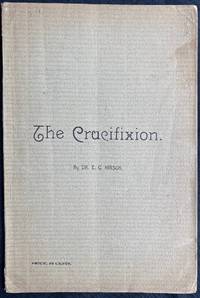
189243449Chicago: Bloch 1892. paperback. 1st edition original printed green paper wrappers 8vo. 49 pages. Singerman 4345. <br> <br> Rabbi Emil G. Hirsch 1851-1923 "who headed Chicago's Sinai Congregation for forty-two years and led Reform Judaism into the Progressive movement and down social justice pathways was born in Luxemburg.<br> One of several Jews involved in founding the NAACP Hirsch was married to the daughter of abolitionist rabbi David Einhorn and served in his father-in-law's former pulpit in Baltimore before moving to Louisville Kentucky and then Chicago. He was professor of rabbinical literature and philosophy at the University of Chicago in 1892 active in the Republican Party and editor of several influential Jewish publications" Lawrence Bush in Jewish Currents<br> "Hirsch and his congregants struggled to come to terms with the large number of Jewish immigrants who moved to Chicago after 1880 boosting the Jewish community from about 10000 in 1880 to over 300000 in 1920.For the established Jews represented by Sinai the Jewish 'Ghetto' - the immigrant neighborhood on the city's West Side - appeared to represent a world apart and a sharp contrast to Sinai's radical and inclusive reform agenda: a highly visible expression of Jewish ethnicity and traditional Judaism which Reform Jews associated with isolation discrimination and exclusion." <br> Nevertheless during the 1890s "Hirsch spoke up against the deplorable condition of Jews in the Russian Empire and reached out to West Side residents. His support for workers' rights also won him much support among Jewish immigrants who overwhelmingly belonged to the working class.<br> "Hirsch worked closely with Jane Addams and other members of the Hull House circle. In 1908 Hirsch and Addams were among the co-founders of the NAACP. Hirsch inspired several members of Sinai congregation: Sears and Roebuck president and philanthropist Julius Rosenwald was one of Hirsch's closest associates so was legal scholar Julian Mack who presided over a widely noted juvenile court in Chicago in the first decade of the 20th century. <br> Hannah Solomon was one of the founders of the organized Jewish women's movement in the United States. Joseph Schaffner and Harry Hart were the leading partner of the clothing manufacturer Hart Schaffner & Marx one of Chicago's largest employers. Influenced by Hirsch's social theology Schaffner and Hart settled with their workers during the 1910-1911 clothing strike recognizing their right to form a union" Tobias Brinkmann.<br> <br> SUBJECT S : Jesus Christ -- Jewish interpretation. Jewish Christ -- Crucifixion.OCLC: 13532781. Light wear excellent condition a beautiful copy Very Good Condition B AMR-2-2-XLF#. Chicago: Bloch unknown
182055414London: John Fairburn 1820. First Edition. First printing. Octavo in fours 22cm. In nineteenth-century half brown calf with marbled paper over boards seven double gilt rules to spine with blind ornament in compartments titled in gilt on brown leather spine label all edges sprinkled brown; plain endpapers; iv 480pp. 1944 pencil ownership inscription to rear endpaper. A straight sound copy with minor general wear to boards paper lightly scuffed edges rubbed internally largely clean with one or two pencil marks and small spots of foxing: Very Good. <br /> <br /> A key text of early nineteenth-century English parliamentary reformers: "a massive compendium of all the abuses electoral ecclesiastical legal" that they "sought to abolish." The book "passed through edition after edition continually augmented with new arguments new reports of abuses and new statistics. . . its emphasis on the need to have practical as well as equitable representation lies at the root of parliamentary democracy" Printing and the Mind of Man p.180. Previously published in installments in 1819; this is the first book edition. PMM296. GOLDSMITHS 23071. KRESS C.638. John Fairburn unknown
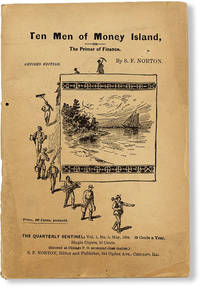
189448920Chicago: By the Author 1894. Revised Edition. 12mo 20cm; original pictorial wrappers stapled; 931pp; illus. Text is tanned and a bit brittle at the edges neat splits to front wrapper above and below the staples with several tiny tears and a few slivers missing from wrapper extremities particularly at preliminary and terminal leaves; Good complete copy. A tax reform utopia originally published serially in the Chicago Sentinel between 1879 and 1885. An author's note at base of title page states: ".it was then published in cheap pamphlet form - of which over a hundred thousand copies have since been sold. Its popularity as an educator seems to warrant the present better and more expensive edition." Issued as Vol. I no. 1 in Norton's Quarterly Sentinel apparently a successor to his weekly newspaper of the same name. No further numbers of the Quarterly appear to have been issued. <br /> <br /> Ten Men of Money Island was variously reprinted even as late as 1930 including editions by Wayland's Appeal to Reason the London utopian publisher Reeves and the Chicago publisher F.J. Schulte. SARGENT p.45 citing only the London ed. Not in Negley or Lewis and not found in Wright. By the Author unknown
1845547003New York: American Female Moral Reform Society 1845. Unbound. Very Good. Single leaf folded to make eight pages. One quarter of first page toned old folds very good or better. A cursory examination of the contents indicates that the American Female Moral Reform Society weren't very enthusiastic about prostitution. American Female Moral Reform Society unknown
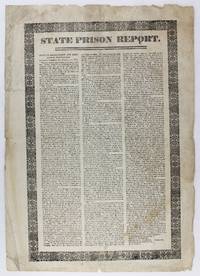
18343806Providence 1834. Good plus. Broadside 15 x 10.5 inches printed in three columns within an ornamental border. Old folds short splits along some folds a few small chips moderate dust-soiling and foxing. Untrimmed. A rare broadside disseminating a report from a five-man committee of the General Assembly of Rhode Island recommending penal code reform and the establishment of a state prison in the Ocean State in 1834. The beginning of the report expounds upon the inconsistency of the various legal punishments meted out in county jails. The committee then evaluates different methods of imprisonment in New York Pennsylvania Connecticut and other states concluding as follows: "On the whole the committee are in favor and recommend to the General Assembly the erection of a State penitentiary on the principle of solitary confinement at labor with instruction in labor in morals and religion." The committee hoped this prison reform would "relieve the State from the future support of convicts and may produce a moral reformation in those who may be subjected to its operation." We could locate just one copy of this broadside in OCLC at Brown. unknown