118 résultats
187140718New York: Harper & Brothers Publishers 1871. 1st US edition. Not in Sadleir nor in Wolff though OCLC records 6 holding instituions. Original publisher's printed salmon paper wrappers sewn. Wear & soiling to wrappers with spine roll to volume. Spine paper worn with some paper loss & front wrapper nearly detached. A Good copy. 2 141 1 blank 2 pp. Text double column. Adverts first & last two pages. 8vo. 9-3/4" x 6-1/4" <br/><br/>A scarce novel by this British author who Sadleir tells us "was the sentimental counterpart of the sensational Farjeon and in his way as popular. Gibbon was of working class origin and by dogged self-education raised himself first to clerkship then to journalism and finally to the writing of successful fiction." Sadleir XIX C Fiction Vol I p. 139. Harper & Brothers, Publishers unknown books
1878135043London: Macmillan 1878. Hardcover. Fair Ex-lib. labels at spines bookplate inside front covers pocket inside backs usual markings; Some wear to cloth particularly at extremities; Back board and last hundred pages of volume one show water damage only at the very top of the pages; Hinges cracking; Some pencil markings throughout but still very readable. Brown embossed cloth; Gilt titling at spine; 335 404 pp.; No illustrations other than title page of volume one. Scottish lawyer and writer; Founded the Edinburgh Phrenological Society in 1820; Combe's major work was The Constitution of Man. Macmillan hardcover books
1989126318Sacramento California: Crocker Art Museum 1989. Softbound. VG. Pictorial wraps 84 pp 49 color and BW plates plus additional images. Published for the exhibition at the Crocker Art Museum Sacramento CA September 16-October 29 1989 and the Laguna Art Museum Laguna Beach CA November 24 1989- January 28 1990. Crocker Art Museum paperback books
19791318525New York: Crescent 1979. Hardcover. Quarto; G/G; Hardcover with DJ; DJ spine black with white print; DJ has edgewear small tears at spine ends shelfwear; Boards in purple cloth with gold print peripheral toning else clean and strong; Text block clean and tight; 93 pages illustrated color. 1318525. FP New Rockville Stock. Crescent hardcover books
1959112359London: Cassell 1959. Octavo boards. First edition. Brief inscription by Fitz Gibbon to "John D" signed "Constantine" on front free endpaper. Miscellany of short fiction essays and "Paradise Lost" a three-act play. Mild bruises to lower corner tips some foxing to edges of text block a near fine copy in near fine dust jacket with some foxing to flap folds and several small internal tape mends. #112359 Cassell unknown books
19752195New York: W. W. Norton & Company 1975. Octavo boards. First U.S. edition. "In the third age of human history after the Monster had divided the world into two separate histories another Orpheus lives through the ancient myths." - Clarke Tale of the Future 1978 p. 238. A fine copy in fine dust jacket. #2195 W. W. Norton & Company unknown books
1975103335New York: W. W. Norton & Company 1975. Octavo boards. First U.S. edition. "In the third age of human history after the Monster had divided the world into two separate histories another Orpheus lives through the ancient myths." - Clarke Tale of the Future 1978 p. 238. A fine copy in fine dust jacket. #103335 W. W. Norton & Company unknown books
195022640London Toronto Melbourne Sydney Wellington: Cassell and Company Ltd. 1950. Octavo cloth. First British edition. The author's second novel. "Life in an occupied city during the 'Third World War.'" - Clarke Tale of the Future 1978 p. 83. Reginald 05450. A near fine copy in about good dust jacket with shelf wear at edges and several long tears in rear panel with internal tape reinforcement. #22640 Cassell and Company Ltd. unknown books
1997Embry 157247Lawrence King 1997. First edition first printing. Fine in fine dust jacket with some light rubbing to rear panel in mylar cover. Hundreds of full and partial page color photographs. Lawrence King, 1997. First edition, first printing. unknown books
1963WRCLIT83522New York: Norton 1963. Cloth boards. Later impression of the U.S. edition. Fine in very good dust jacket with short tear. Norton hardcover books
196330212London: Cassell. Very Good in Good dust jacket. 1963. Hardcover. First British edition. Publication date blacked out on copyright page else very good in a good small ring stain on rear panel dust jacket. . Cassell hardcover books
194851422New York: Rinehart 1948. First Edition. Octavo. Cloth boards in dust jacket; 249pp. Minor sunning to spine of jacket and boards. Trivial shelf wear to boards else a tight clean unmarked copy. A few nicks and closed tears to top and bottom edges of mildly age-toned jacket. Very Good. Rinehart unknown books
1896292718London: John Murray 1896. Three Quarters Leather. Good binding. The set in two volumes in three quarter burgundy morocco over cloth; marbled endpapers. The joints are a bit tender especially the front joint of Volume I. It has just begun to separate but is still holding pretty well. Good binding. John Murray unknown books
197560996New York: Bonanza Books 1975. Reprint of the 1926 original. 4to. xiii 67 pp. Architectural plates from photographs with captions for each. Bookplate some foxing a good solid copy. Tan cloth spotted. #8073. <br/><br/> Bonanza Books hardcover books
25951Holden A. CURTIS Elizabeth Gibbon. GATEWAYS AND DOORWAYS OF CHARLESTON SOUTH CAROLIN New York: Architectural Book Publishing 1926. 4to. Cloth. Frontispiece xiii i pages 68 plates. First edition. Photographs of ironwork doorways and gateways with contributions by Maxwel Kimball and Arthur Holden. Cover worn; internally fine. unknown books
19632300657The Garden Club of America 1963. Large Hardcover. Near Fine/No Jacket. No jacket. A nice copy. 1963 Large Hardcover. 98 pp. A history of the Garden Club of American spanning over fifty years. The Garden Club of America hardcover books
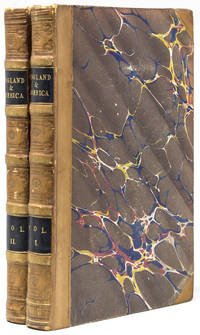
1833247284London: Richard Bentley New Burlington Street 1833. First Edition. xii 331 1; iv 341 1 pp. 2 vols. 8vo. Contemporary quarter tan calf and marbled boards. Ticket of R.E. Narby Bookseller & Printer Warminster. Bookplate. Fine. First Edition. xii 331 1; iv 341 1 pp. 2 vols. 8vo. Founder of the "New Colonization System". Following imprisonment Wakefield began to study colonial affairs of Australia with an eye towards immigration. Recognizing that the depressed condition of Australian affairs was due to a lack of efficiency and sensible handling he gathered his theories for correcting the problems and first published them in "A Letter from Sydney" London 1829 under the name Robert Gouger. It was so well done that the author was supposed to be an immigrant. He revised and refined these views for his "New Colonization System" in "England and America" as the chapter the "Art of Colonisation." The theories for his "System" were to abolish free grants of agricultural land requiring a fixed price which would be kept low enough so that a laborer would be able to purchase land after a few years this to reduce the number of ex-convicts laborers from receiving land for which they had no use to regulate immigration and to use tax monies from the rental of grants to bring laborers to the colonies. One of the main results of his publications and efforts was the founding of the National Colonization Society and then the South Australian Association the latter intended to be based upon Wakefield's theories. He was also a close advisor to the Molesworth Committee. On the appointment of Lord Durham to Canada in 1838 Wakefield became interested in that territory and is credited with having greatly assisted Durham with his famous "Report on the Affairs of British North America." He also acted as an adviser to Sir Charles Theophilus Metcalfe in Canada in the 1840's. In 1837 Wakefield had formed the New Zealand Association and spent most of years following directing the affairs of the association from England while his brother William Hayward Wakefield directed and managed it from New Zealand. Kress C3643; McCulloch's "Literature of Political Economy" 1845. p 94; Sabin 100976; Palgrave III p. 648; Goldsmiths' 27890 Richard Bentley, New Burlington Street unknown books
183321655London: Richard Bentley 1833. First edition. 331; 341pp. 2 vols. 8vo. Contemporary half calf. Binding wornboards detached but present browning of text some excisions in margins of a few pages including the title bookplates removed with an inscription on both volumes reading "1835/ To be returned in a Fortnight/ Mr. Adam President" else a very good copy. First edition. 331; 341pp. 2 vols. 8vo. Founder of the "New Colonization System". Following imprisonment Wakefield began to study colonial affairs of Australia with an eye towards immigration. Recognizing that the depressed condition of Australian affairs was due to a lack of efficiency and sensible handling he gathered his theories for correcting the problems and first published them in "A Letter from Sydney" London 1829 under the name Robert Gouger. It was so well done that the author was supposed to be an immigrant. He revised and refined these views for his "New Colonization System" in "England and America" as the chapter the "Art of Colonisation." The theories for his "System" were to abolish free grants of agricultural land requiring a fixed price which would be kept low enough so that a laborer would be able to purchase land after a few years this to reduce the number of ex-convicts laborers from receiving land for which they had no use to regulate immigration and to use tax monies from the rental of grants to bring laborers to the colonies. One of the main results of his publications and efforts was the founding of the National Colonization Society and then the South Australian Association the latter intended to be based upon Wakefield's theories. He was also a close advisor to the Molesworth Committee. On the appointment of Lord Durham to Canada in 1838 Wakefield became interested in that territory and is credited with having greatly assisted Durham with his famous "Report on the Affairs of British North America." He also acted as an adviser to Sir Charles Theophilus Metcalfe in Canada in the 1840's. In 1837 Wakefield had formed the New Zealand Association and spent most of years following directing the affairs of the association from England while his brother William Hayward Wakefield directed and managed it from New Zealand. Kress C3643; McCulloch's"Literature of Political Economy" 1845. p 94; Sabin 100976 Richard Bentley unknown books