108 résultats
BN66789Necropolis Smith Clark Ashton <br/><br/> unknown
New Turkish Paperback. Roy. 8vo. (24 x 17 cm). In Turkish. 335, [1] p., 139 numerous color, 126 b/w plates, tables. Tralleis Güney Nekropolü Terrakotta figürinleri. Terrakotta figurines of Tralleis Necropole. The terracotta figurines in this study were found throughout the South Necropolis of the Tralleis, with a large number coming from the barrel vaulted chamber tombs. The figurines were recovered in the earlier salvage excavations by the Aydin Archaeological Museum. The excavators records of objects found in a representative series of graves must form basis for our study of the chronology and styles of the figurines. Thirty three contexts are listed as of interest, but not of sharply defined chronological significance. The evidence for dating is derived for the most part from pottery, coins and other archaeological remains, the cemetery of Tralleis dates from the 2nd century B.C.E. at least through the 2nd century A. C. E. The figurines were each cast in a mold. In the 2nd century B.C.E. however, the number of molds used in the creation of a single figurine was increased. The manufacture of terracotta figurines in Roman Imperial Period was an industry. The clay of the Tralleis figurines are rather coarse but homogeneous and contains a fair amount of mica. Yellowish red clay with some mica was used rarely, and mostly in 2nd century B.C.E. Reddish yellow clay, sometimes burned light red, with mica, is characteristic of the finest pieces. The commonest clay is reddish yellow usually with mica, and often with a light white slim according to Munsell Soil Color Chart. According to the stylistic analysis, the influences from Attica, Tanagra, Boeotia and Myrina also are obvious among the early figurines at Tralleis. Flying figurines as Eros and Nike were prominent in the 2nd century B.C.E. Religious types are also found and include Aphrodite and worshipers. Other representations of deities included an Ariadne, Dionysos and his entourage. During the second half of the 2nd century B.C.E. genre groups with animals and standing draped women proliferated. Tralleis was destroyed by an earthquake in 26 B.C.E. and reconstructed with the efforts of Emperor Augustus. The typology repertoire of the 1st century A.C.E. consists of standing draped women and men, athletes with quiver, masks, actors, puppets, caricatures, animals and other mythological and religious types. This type of figurines was commonly found in most of the Mediterranean sites in the Hellenistic and Roman Imperial Period. The works of the coroplasts whose signatures are found in the South Necropolis may be examined here in more detailed. These are Trophimos, Simalionos, Theodotos, AA and the others. The signatures show that workshops were active at Tralleis in the Roman Imperial Period as early as the 1st century B.C.E. and continued to produce figurines until the 2nd century A.C.E. We may therefore assume the fabric of which the coroplasts are made to be a local fabric of its period. Each figurine is introduced by a general commentary that outlines the typology, chronology and significance of the class in the catalogue. Catalogue descriptions give factual detail, references to previous publications, and close parallels. Finally, typology and style of these examples can also be compared with the dated finds from the other contemporary sites and contexts. On the whole, the evidence presented points to the fact that the 2nd century B.C.E. was the most prosperous ones for the city of Tralleis.
As New Turkish Paperback. Roy. 8vo. (24 x 17 cm). In Turkish. 335, [1] p., 139 numerous color, 126 b/w plates, tables. Tralleis Güney Nekropolü Terrakotta figürinleri. Terrakotta figurines of Tralleis Necropole. The terracotta figurines in this study were found throughout the South Necropolis of the Tralleis, with a large number coming from the barrel vaulted chamber tombs. The figurines were recovered in the earlier salvage excavations by the Aydin Archaeological Museum. The excavators records of objects found in a representative series of graves must form basis for our study of the chronology and styles of the figurines. Thirty three contexts are listed as of interest, but not of sharply defined chronological significance. The evidence for dating is derived for the most part from pottery, coins and other archaeological remains, the cemetery of Tralleis dates from the 2nd century B.C.E. at least through the 2nd century A. C. E. The figurines were each cast in a mold. In the 2nd century B.C.E. however, the number of molds used in the creation of a single figurine was increased. The manufacture of terracotta figurines in Roman Imperial Period was an industry. The clay of the Tralleis figurines are rather coarse but homogeneous and contains a fair amount of mica. Yellowish red clay with some mica was used rarely, and mostly in 2nd century B.C.E. Reddish yellow clay, sometimes burned light red, with mica, is characteristic of the finest pieces. The commonest clay is reddish yellow usually with mica, and often with a light white slim according to Munsell Soil Color Chart. According to the stylistic analysis, the influences from Attica, Tanagra, Boeotia and Myrina also are obvious among the early figurines at Tralleis. Flying figurines as Eros and Nike were prominent in the 2nd century B.C.E. Religious types are also found and include Aphrodite and worshipers. Other representations of deities included an Ariadne, Dionysos and his entourage. During the second half of the 2nd century B.C.E. genre groups with animals and standing draped women proliferated. Tralleis was destroyed by an earthquake in 26 B.C.E. and reconstructed with the efforts of Emperor Augustus. The typology repertoire of the 1st century A.C.E. consists of standing draped women and men, athletes with quiver, masks, actors, puppets, caricatures, animals and other mythological and religious types. This type of figurines was commonly found in most of the Mediterranean sites in the Hellenistic and Roman Imperial Period. The works of the coroplasts whose signatures are found in the South Necropolis may be examined here in more detailed. These are Trophimos, Simalionos, Theodotos, AA and the others. The signatures show that workshops were active at Tralleis in the Roman Imperial Period as early as the 1st century B.C.E. and continued to produce figurines until the 2nd century A.C.E. We may therefore assume the fabric of which the coroplasts are made to be a local fabric of its period. Each figurine is introduced by a general commentary that outlines the typology, chronology and significance of the class in the catalogue. Catalogue descriptions give factual detail, references to previous publications, and close parallels. Finally, typology and style of these examples can also be compared with the dated finds from the other contemporary sites and contexts. On the whole, the evidence presented points to the fact that the 2nd century B.C.E. was the most prosperous ones for the city of Tralleis.
1911333Bourg, Imp. du Courrier de l’Ain, 1911, in-8, broché ; 623, (4) pp., 8 planches hors-texte.
120619Editions Arles - Sans date - In-8, broché - 52 pages - illustrations en N&B in-texte
18890Bruxelles, Vromant, 1926. 15 x 24, 31 pp., 7 planches en N/B, 3 figures, broché, bon état (couverture légèrement déraîchie).
From the historical record and discoveries unearthed in the extensive excavations over a fifteen year period, the author recreates the amazing story of Salamis, on the Levant coast of Cyprus, which served as an important link between the Greek world and the Near East. The manner in which archaeology and history are woven together to make this period live again is shown by one of the later excavations, a 'tomb' which in fact was proved to be only a cenotaph. This is almost certainly a memorial to King Nicocreon, last king of Salamis, who, with his family, committed suicide in 311 B.C. rather than submit to Ptolemy I .Account of the excavations of Necropolis at Salamis in Cyprus. . The Site of Salamis; II. Salamis at the End of the Bronze Age; III. The Age of Exuberance: The Necropolis in the 8th and 7th Centuries; IV. A King's Cenotaph; V. The City Site; VI. Salamis-Constantia. 212p.; notes; select bibliography; list of illustrations: 17 color plates, 128 monochrome plates, and 33 line drawings; index. Neat sound copy, usual libray marks, Ex-Library
New Turkish Paperback. Pbo. Roy. 8vo. (24 x 17 cm). In Turkish and summary in English. 82 p., color ills. Gravestones in Adilcevaz and its environs.= Adilcevaz çevresindeki mezar taslari. The book covers the medieval Turkish tombstones documented during the surveys in 2005-2006 in Bitlis region. Although their number is not high, their materials, forms and decoration reflect the general characteristics of Lake Van area.
Pictorial boards. Very light shelfwear. ; 184 pl. Oversized; Xxve Supplément à "Gallia"; 4to 11" - 13" tall; 632 pages
2001116947Maison de l'Orient Méditerranéen 2001 Travaux de la Maison de l'Orient Méditerranéen, N°34, 2001, 204 p. de planches, broché, environ 30x21cm. Haut et bas du dos légèrement frottés, bon état et intérieur bien propre.
1978ARCH0183Sofia 1978. 126 S., mit insges. 46, tls. farb. Abb., OLn. m. Deckelemblem u. farb. OU., an diesem geringe Gebrauchsspuren. Der Text ist in Bulgarisch, Englisch und Deutsch.
9283Atelier Bauquier 1940
New Turkish Paperback. 4to. (30 x 21 cm). In Turkish. 121 p., b/w plates. Afyonkarahisar Müzesi terrakotta figürinleri. Terracotta figurines from Afyonkarahisar Museum. Contents: Önsöz / Figen ÇEVIRICI-COSKUN.; Afyonkarahisar Bölgesi Tarihçesi (Apameia, Synnada ve Dokimeion) Mehmet GARIPÇIN.; Afyonkarahisar Müzesi / Mehmet GARIPÇIN.; Afyonkarahisar Müzesi Koleksiyonunda Yer Alan Pismis Toprak Figürinlerin Teknik Özellikleri / Fikret ÖZBAY.; Aphrodite Figürinleri / Figen ÇEVIRICI COSKUN.; Kybele Figürinleri / Figen ÇEVIRICI COSKUN.; Telesphoros Figürinleri / Figen ÇEVIRICI COSKUN.; Eros Figürinleri / Figen ÇEVIRICI COSKUN.; Ilermes Figürinleri / Aslihan ÖZBAY.; Kadin Figürinleri / Aslihan ÖZBAY.; Erkek Figürinleri / Aslihan ÖZBAY.; Protomlar / Aslihan ÖZBAY.; Groteskler ve Mask / Aslihan ÖZBAY.; Plastik Vazolar / Aslihan ÖZBAY.; Hayvan Figürinleri / Aslihan ÖZBAY.; Kaynakça.; Levhalar (Plates).
19812143023Ptuj (Pettau): Societe archeologique de yougoslavie / Musee provincial de Ptuj 1981. (12) Blatt. Ungebunden. Überwiegend Abbildungen der Funde mit umseitiger Beschreibung, gedruckt auf festem Karton. Gr. 8° (22,5-25 cm) Papierumschlag.
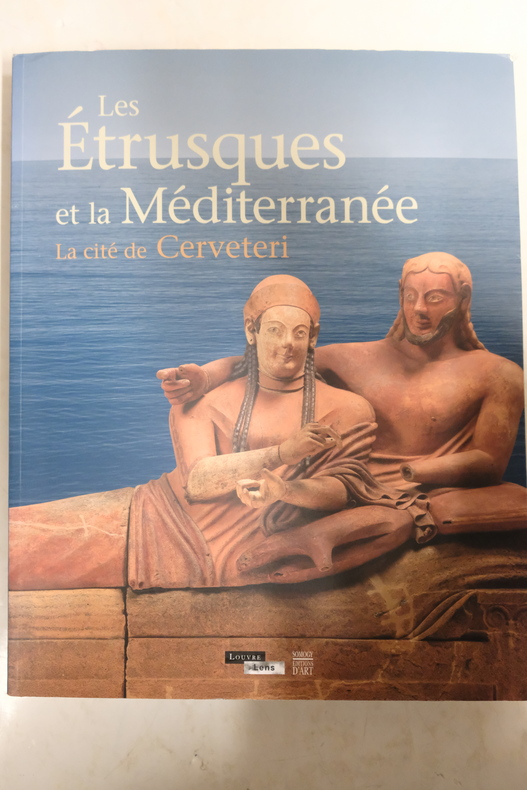
2013ART5976MBroché, 359 pages, paru le 5 décembre 2013 chez Somogy éditions d'art, livre en très bon état général.
116980CNRS Editions du CNRS, XVIIIe supplément à Gallia Préhistoire, 1983, 192 p. et XII planches, broché, environ 28x22cm, bon état.
A clean, unmarked book with a tight binding. 270 pages. Very slight wear to cover.
New English Paperback. Pbo. 4to. (28 x 20 cm). In Turkish. 240 p. B/w ills. 500 copies were printed. International Symposium of last researches on Late Bronze Era cultures in Western Anatolia and Eastern Mediterranean. (24.-25. April 2007; Hacettepe Üniversitesi, Ankara). Bati Anadolu ve Dogu Akdeniz Geç Tunç Çagi kültürleri üzerine yeni arastirmalar (10. kurulus yili etkinligi).
New English Paperback. Pbo. 4to. (28 x 22,5 cm). In French. 317 p., 39 b/w plates. B/w ills. A heavy volume. Les Lyciens et la mort. Une etude d'historie sociale. Following the presentation of the subject with its chronological limits and sources, the researcher continues with tomb types, lexicological study, funeral rites and cult, protection of the tombs, profanation of the tombs and the tomb as a reflection of a society. A collection of inscriptions is also given in detail.
New English Paperback. Pbo. Large roy. 8vo. (24 x 21 cm). In English. 273, [2] p., color ills. Contents: Ates Kadioglu, Messages from the President of Turkish Society of Andrology; The Editors, How was this book prepared?; Sengul Aydingün, The defication of female sexuality before written history (9000-2000 B.C.); Gaye Sahinbas Erginöz, The Hittites' knowledge of genital anatomy in the light of cuneiform tablets; Muammer Kendirci and Ates Kadioglu, Andrology on the Hittite cuneiform tablets"; Seda Karaöz Arihan, Female sexuality and fertility in ancient Asia Minor; Özgen Acar, Anatolia: The land of the 'Father God'; Muammer Kendirci, Ugur Boylu, Cengiz Miroglu, Andrologic surgery of the 15th century in Cerrhiyyetü'l Haniyye: Deniz Ozden, Human sexuality in Ottonam miniatures; Nil Sari and Bedüzel Zülfikar, Hubanname: The book of male beauties; Muammer Kendirci and Eyüp Gümüs, Bahname: Sex compendia of the Ottoman times; Muammer Kendirci and Cengiz Miroglu, The surgical and traditional history of circumcision in Anatolia; Muammer Kendirci and Kaya Horasanli, The prescriptions for the treatment of erectile dysfunction and loss of libido in the Ottoman period; Muammer Kendirci and Bulent Atay, The secrets of human sexuality in Marifetname. HISTORY OF MEDICINE Ottoman culture Medical Andrology Fertility Sexuality History of art Miniature.
21441Paris, Editions de Naturisme, 1940. 17 x 25, 382 pp., nombreuses figures, 1 très grand plan dépliant de la nécropole, broché, non coupé, bon état.
376 p., pl. n/b., 1 plan dépl. Rousseurs sur le dos. Inv. 10578. 0
36327Tome 25 - 2002 - Ouvrage publié avec le concours du ministère de la culture et de la communication, du centre national de la recherche scientifique, de l'université de Provence - grand in-8 - revue illustrée - broché - 318 pages