VOLNEY (Constantin-François de Chasseboeuf, Comte de)Livre Rare Book
37 résultats
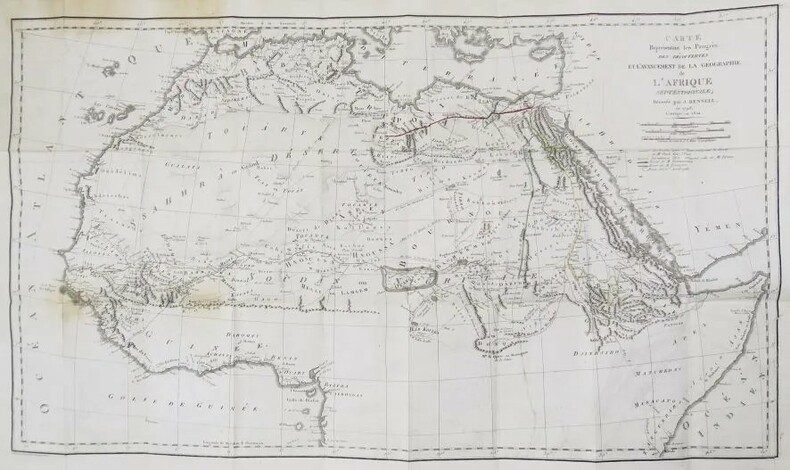
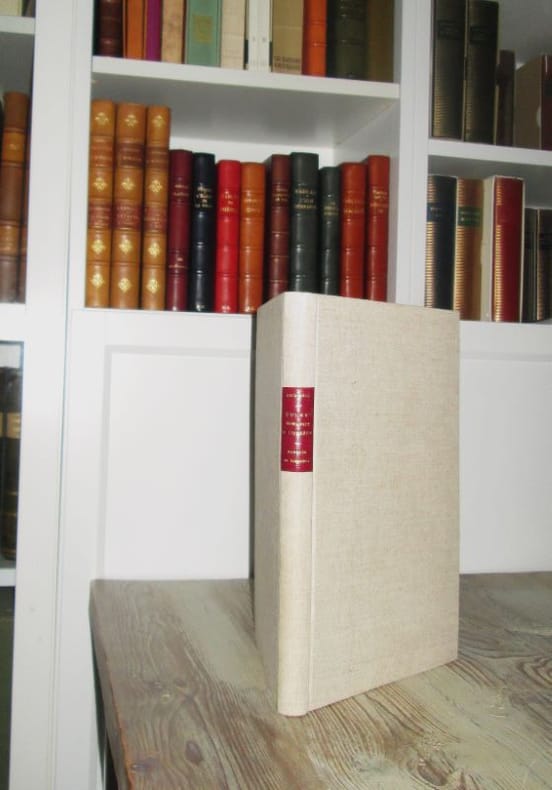
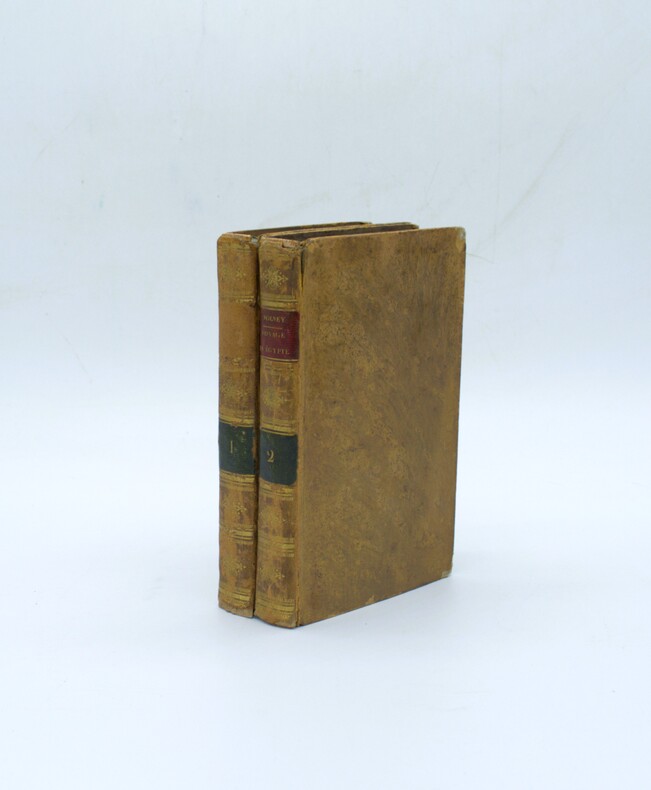
1822PHO-2324Paris, Bossange frères libraires, 1825, 2 volumes in-8 (20,5x13,5cm), viii-456pp. & 454pp., basane époque, dos lisse avec pièces d’auteur, titre et tomaison, tranches marbrées. Manque la pièce de titre au tome 1, charnière fendillée au tome 1, quelques griffures, coiffes arasées, coins usés, petites rousseurs. Illustré de 5 gravures dépliantes et 3 cartes (complet)
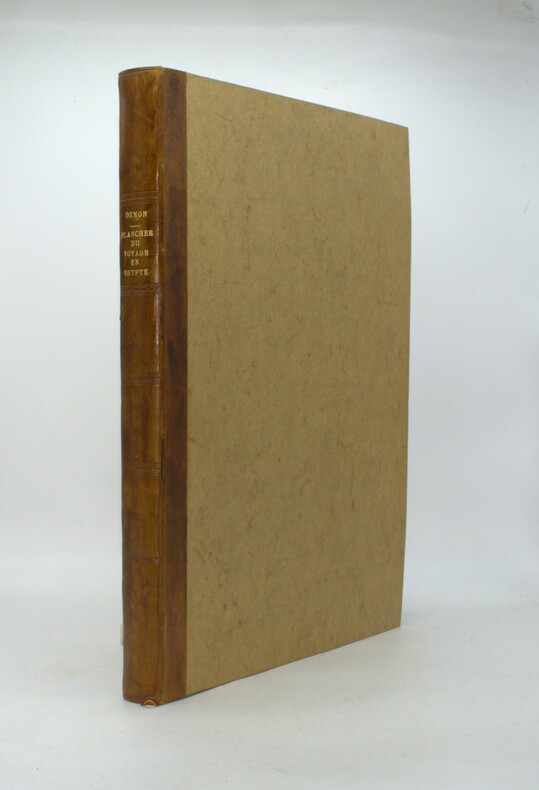
1829PHO-1464Paris, Henri Gaugain et Cie -Caillou., 1829. 2 volumes de texte in-8, et un atlas grand in-folio (440x600),illustré du portrait de Vivant Denon en frontispice gravé par Garnier d'après R. Lefèvre et de 143 planches dont deux cartes., relié demi-veau époque , dos lisse avec titre et tomaison , coins usés ,frottements aux plats , frottements, coiffes usées et traces de réparations (atlas) , peu de rousseurs dans le texte .
1802PHO-2073S.L (Paris), sd (1802), un volume folio (565x410mm) comprenant 131 planches (143, manque les pl. 10-14-24-27-33-41-54 bis -76-81-84-90-91). Demi basane fauve, auteur et titre au dos (reliure moderne), réparations sur les bordures de 3 planches. Quelques rousseurs
1803PHO-1651Paris, Dentu, An XI (1803). 2 parties (pagination continue) en un vol. in-8, basane fauve marbrée, dos lisse orné, p. de titre rouge, tr. rouges (reliure de l'époque). Reliure restaurée, illustré de 2 grandes cartes dépliantes.
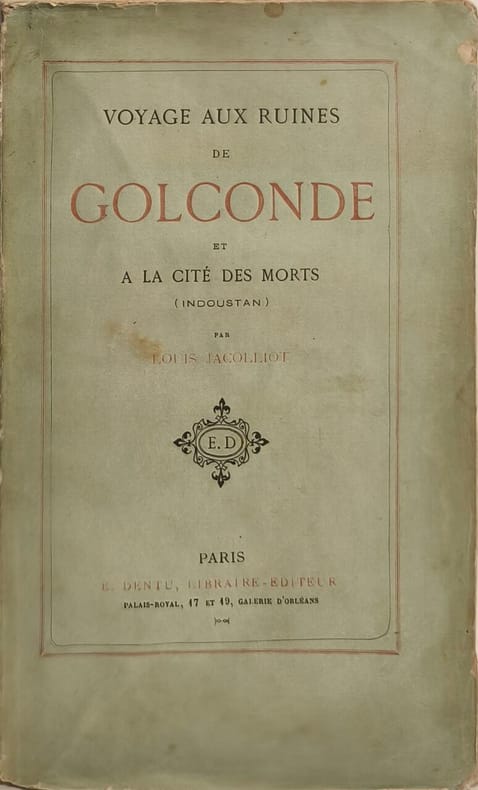
18755990E. Dentu Libraire-Éditeur 1875 394 pages in8. 1875. broché. 394 pages. Louis Jacolliot relate son voyage en Inde où il explore les ruines de Golconde et la Cité des Morts de l'Indoustan. L'ouvrage écrit dans un style captivant offre une plongée détaillée dans les coutumes traditions et lieux mystérieux de cette région tout en proposant une vision de l'Inde comme berceau de l'humanité et source des traditions religieuses
1830271171830 Un dessin original à l'encre brune et lavis d'encre brune sur papier vergé gris ligné et filigrané , Format : 14 centimètres de haut par 22 centimètres de large, non signé, sans date (XVIIIème)
1870273491870 Un dessin original, crayon et craie, format : 228 centimètres de haut par 27 centimètres de large, sur papier marron-clair, non signé (vraisemblablement Louis PERCAUD) , sans date (1870 environ)
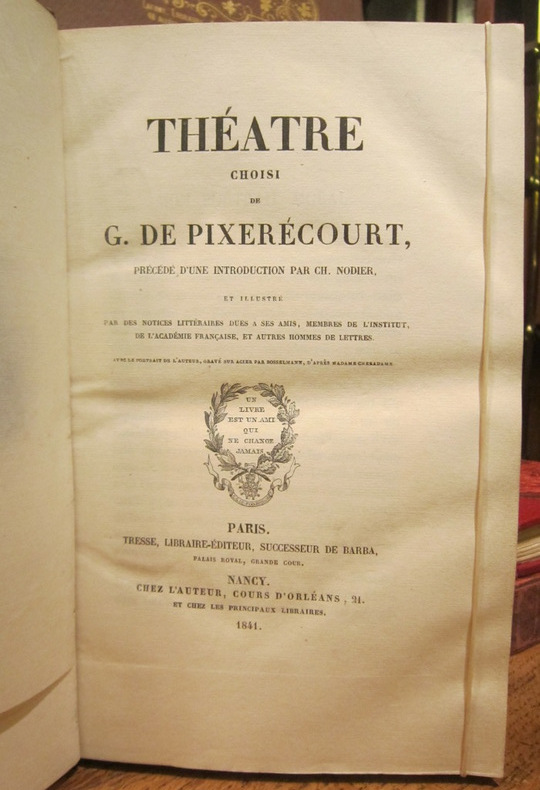
1841002830Paris et Nancy, Tresse, et Chez Lauteur, 1841
1893135394Longmans, Green and Co. London 1893. XVII, 427, 24 pages. With a lot of illustrations and one folded map. Original cloth binding. (Binding partially broken). 20x14 cm
187912414Lyon, Imprimerie typographique H. Albert, 1879 ; petit in-8 carré, broché ; 242, (6) pp., couverture gris-bleu imprimée.
1821036-I1821. Bleistift, auf cremefarbenem Velin, links unten signiert ?E. Förster?, betitelt und datiert ?Rom 9 Apr. 1858?, rechts oben numeriert ?OHz 821.?. 23,4:28,7 cm. Auf Untersatz montiert. Provenienz: Mit Stempel der Münchner Künstlergesellschaft, nicht bei Lugt.
186832981Paris, Imprimerie de J. Claye, 1868. In-4 relié de pleine toîle écrue (28,5 x 19 cm), titre doré sur pièce de titre rouge sur le dos, couverture originale conservée, 189 pages + 17 pages d'Inscriptions en reproduction + 17 planches hors-texte dont une dépliante + 1 grande carte en couleurs repliée : "Carte de la Kabylie de Djurdjura dressée par le Capitaine d'Etat-Major Ch. de Vigneral", au format 80 x 56 cm). A sommaire : Cercle de Dellys, de Tizi-Ouzzou, de Dra-el-Mizane, de Fort-Napoléon - Territoire civil d'Alger (Alma) - Annexe des Beni-Mansour - Cercle de Bordj-Bou-Arrérod - Cercle de Sétif - Cercle de Bougie - Voies romaines, Géographie comparée - Inscriptions.- Envoi autographe signé de l'auteur (dédicace. ). Exemplaire très frais, en très bon état, rare.
1858262181858 Paris . Dufour , Mulat et Boulanger éditeur / Imprimerie Gilquin et Dupain . Vers 1858 - Eau forte 27,5 x 18 cm [ 15,5 x 10,5 cm de Gravure ] - Vers 1858 -
1830049-I1830. Bleistift, mit unregelmäßiger Bleistiftlinie umrandet, auf Velin, rechts unten bezeichnet und datiert ?Rom 1830?. 15:22,2 cm.
1817035-I1817. Bleistift, auf cremefarbenem Velin, links unten signiert ?E. Förster?, betitelt und datiert ?Rom 21 Apr. 1858?, rechts oben numeriert ?OHz 817.?. 23,4:28,7 cm. Papier vergilbt. Provenienz: Mit Stempel der Münchner Künstlergesellschaft, nicht bei Lugt.
181214240PARIS divers editeurs 1812 in-folio demi-vélin un volume, reliure d'époque demi-vélin vert pomme in-folio à coins (half binding green vellum in-folio with corners) (25 x 33 cm), dos long muet (spine without raised band and without title) , coiffes supérieure et inférieure légèrement défraîchies (head and tail of the spine lightly faded), 1er plat marqués par l'humidité (cover with humidity mark) et insolé en marge, papier fantaisie vert gauffré aux plats (cover with imagination paper), orné d'une étiquette (pièce de titre) ex-libris rouge en forme de part de gateau avec l'arrondi vers le bas cerné d'un pointillé, d'un filet et d'une roulette dorée, ex-libris : "Melle SIFFAIT" doré (gilt title) au centre de l'étiquette, coins émoussés (corners blunt), tête lisse (top edge smooth), toutes tranches lisses (all smooth edges), livre de partitions pour le Piano Forte par divers Auteurs, 15 + 13+ 13 + 8 + 19 + 15 + 9 + 7 + 12 + 7 pages , sans date (1812 environ) Paris chez divers Editeurs,
1874HIS2681M1874 / VIII + 24 + 86 pages augmentées de 20 planches (complet). Editions Henri Charpentier. Format In Folio : 35 x 50 cm.
18162091502135500138Not Available 1816. Soft Cover. Fine. The book is in fine condition. Not Available paperback
1900221191900. Archive of 15 stereoview photographs of Mexico published by the Keystone View Company around the turn of the twentieth century documenting Mexican urban architecture Indigenous labor archaeological sites and monumental landscapes during a period of modernization and expanding foreign visual interest in the country. Produced for the international stereograph market the images present Mexico through interconnected views of colonial civic grandeur rural labor systems and Indigenous historical sites reflecting contemporary American and European fascination with both modernization and ethnographic spectacle in Latin America. The archive documents visual and commercial systems of early photographic tourism and ethnographic representation through stereographic imagery printed captions and descriptive texts revealing how Mexico was interpreted and circulated to foreign audiences through mass-produced educational photography. At the same time the photographs preserve valuable visual evidence of everyday labor urban space transportation and architecture during the late Porfirian period.<br /> <br /> Archive consists of 15 original stereoview photographs measuring approximately 3.5 x 7 inches primarily silver gelatin prints mounted on curved gray or tan cardstock with printed captions and descriptive text on versos. Subjects include monumental architecture archaeological ruins agricultural labor transportation scenes and volcanic landscapes across Mexico. Several stereographs depict the historic center of Mexico City including views of the Metropolitan Cathedral with its twin bell towers and baroque façade the National Palace and distant perspectives of Chapultepec Castle framed by broad boulevards and landscaped public space. Rural and labor scenes include Indigenous and mestizo workers harvesting maguey plants for pulque production mule teams transporting water and figures posed beside adobe structures in village environments. One stereograph presents the terraces and volcanic slopes of Popocatépetl emphasizing the dramatic topography associated with Mexico's central highlands. Another depicts the pyramid complex at Cholula surmounted by a Catholic church accompanied by printed Keystone commentary interpreting the site as evidence of Christian conquest over Indigenous religion. The versos retain substantial printed explanatory text characteristic of Keystone educational stereographs combining geographic description historical narrative and ethnographic framing for consumers of stereoscopic travel imagery.<br /> <br /> The archive reflects the growing role of stereography in shaping international perceptions of Mexico during the late nineteenth and early twentieth centuries when photographic publishers marketed immersive visual experiences of foreign landscapes and cultures to middle-class audiences in the United States and Europe. Keystone's stereographs frequently combined documentary photography with interpretive narratives emphasizing archaeology modernization colonial history and rural labor contributing to broader visual constructions of Latin America during the Porfirian era. Particularly notable are the images juxtaposing Indigenous life Catholic architecture and pre-Columbian ruins which reveal contemporary tensions between modernization nationalism and colonial historical memory in visual culture. Minor expected wear and occasional toning to mounts; photographs generally sharp and well preserved with captions and versos legible throughout. Overall very good condition. A visually rich archive of early stereographic photography documenting Mexico's landscapes architecture and social life at the turn of the twentieth century. unknown
182728119Paris F. Didot 1827 une Lithographie en noir , format : 30 x 46,5 cm, "RUINES DU CHATEAU DE GRIESSENSTEIN.", tirée du livre : "Promenade sur le lac Wallenstadt et dans le pays des Grisons", d'Alexandre de Lamotte-Baracé, dessinée par le Vte de Senonnes et Ed. Pingret, Paris : imp. de F. Didot, 1827,
182728112Paris F. Didot 1827 une Lithographie en noir colorée à la main et gommée à la gomme arabique, format : 30 x 46,5 cm, "RUINES DU CHATEAU DE ROTHEMBRUN (vallée de Domlesch)", tirée du livre : "Promenade sur le lac Wallenstadt et dans le pays des Grisons", d'Alexandre de Lamotte-Baracé, dessinée par le Vte de Senonnes et Ed. Pingret, Paris : imp. de F. Didot, 1827,
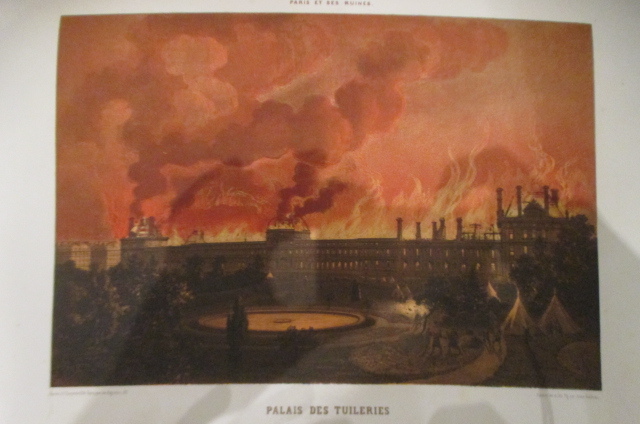
187328148Paris H. Charpentier 1873 une Lithographie en 2 tons : format : 49 x 34 cm, titrée : "LE NOUVEL OPERA, boulevard des Capucines", par PH. BENOIST, fait partie de : "Paris et ses ruines en mai 1871, précédé d'un coup d'oeil sur Paris, de 1860 à 1870 et d'une introduction historique : monuments, vues, scènes historiques, descriptions, histoire...", par Fournel, Victor, 1873 Paris : H. Charpentier Editeur,
1812243071812 une lettre à en-tête de la Mairie du Cellier préimprimée en noir et manuscrite à l'encre brune, lettre de 4 pages (un feuillet plié en deux) sur velin ligné et filigrané (seule la première page est manuscrite), format : 25 x 20 cm, adresse du destinataire manuscrit à l'encre brune au milieu de la page : Monsieur DEQUEBRIAC sous-prefet de l'Arrondissement d'Ancenis à Ancenis, avec cachet de la mairie d'ancenis en noir avec les armes royales : lma couronne royale et les trois fleurs de Lys, lettre signée SIFFAIT JOURDAN à l'encre brune, Le Cellier, le 7 Octobre 1822,
189425495Sillé-le-Guillaume Impr. de Fr. DESLANDES 1894 -in-8 broché une plaquette, brochée in-octavo (booklet in-8), toutes tranches lisses, sans illustrations (no illustration), 14 pages, 1894 Sillé-le-Guillaume Imprimerie Fr. DESLANDES Editeur,
182262615Paris, Bossange Fréres, 1822. Original-Broschur, kl.8°, 383 Seiten. Gestocher Titel und gestochenes Frontispiz und 2 faltbaren Taffeln.