2 720 résultats
1880ABC_50292Paris: Garnier frères 1880. Contemporary gold-tooled half morocco by Lambert marbled paper sides the title author and volume number lettered in gold on the spine surrounded by a gold-tooled frame with onlaid morocco ornaments top edge gilt marbled endpapers. 8vo. With 145 full-page engravings the wrappers and titles of each volume are printed in red and black. 8 volumes. Rare luxury issue of the most accomplished Parisian edition beautifully bound by the Parisian bookbinding atelier Lambert with the original wrappers included. The luxury issue printed on Holland paper was limited to a 100 numbered copies of which this is number 26 and is further distinguished by its wide margins and exceptional and unique illustrations. It has been enriched with 145 full-page copper engravings comprising plates after Jules-Adolphe Chauvet 1828-1898 engraved in 1875 by Henry Barraud 1811-1874 together with plates after Jules Nisle engraved by Adolph Gnauth 1840-1884. Some of these engravings long admired and occasionally criticised for their frankness were conceived not merely to titillate but to document with remarkable care the costumes interiors furnishings and social rituals of mid-18th-century Europe.Giacomo Casanova's 1725-1798 Mémoires remain one of the great autobiographical monuments of European literature. Beyond the famous amorous adventures the work offers vivid accounts of travel intellectual life imprisonment gambling music diplomacy and survival at the courts and salons of the Enlightenment. Written with candour wit and astonishing narrative energy Casanova reveals both his triumphs and his failings producing not only a personal confession but an unparalleled cultural record of 18th-century Europe.The present edition is the first Garnier frères edition of Casanova's Mémoires following the establishment of the complete French text earlier in the century. While not a first edition in the strict bibliographical sense it is widely regarded as the most accomplished Parisian edition of the work. It follows the Jean Laforgue 1782-1852 text derived from Casanovas original manuscripts acquired by Friedrich Arnold Brockhaus 1772-1823 in 1821 with a small number of additions traceable to the Jean-Baptiste-Alexandre Paulin 1796-1859 continuation of 1837. Garniers aim explicitly stated in the preliminary notice was to unite accuracy completeness and elegance in a single edition correcting the shortcomings of earlier editions including the Leipzig twelve-volume edition which lacked an index.The present Garnier edition includes extensive appendices among them extracts from the writings of the Prince de Ligne 1735-1814 on Casanova 21 letters from Casanova to Faulkircher Johann Ferdinand Opiz 1741-1812 passages from Histoire de ma fuite and extracts from the memoirs of Lorenzo Da Ponte 1749-1838. Garnier himself claimed that this edition united all the conditions which should make it superior to those preceding.With the stamp of the bookbinder on the verso of the first free flyleaf of every volume the work has been bound with the original wrappers with the original spine included separately in the back. The spine of the first three volumes is slightly rubbed the front of the first volume is broken. The fore edge and foot edge are uncut minor foxing to the margins of some of the leaves and plates attributable to the paper quality used for these engravings. Otherwise in very good condition.l Gay-Lemonnyer vol III 121; Rives Child no. 45 pp. 147-148. Garnier frères, unknown
1779ABC_50392Venice 1779. 8vo. Presso Modesto Fenzo Later gold-tooled brown morocco with the title lettered in gold on the spine gold-tooled board edges and turn-ins gilt edges marbled endpapers. With a woodcut illustration on the title page and 1 woodcut initial. 96 pp. Rare first edition of Giacomo Casanovas 1725-1798 sharply polemical booklet dedicated to Doge Paolo Renier 1710-1789 and written in the summer of 1779 while he was convalescing in Abano. Published the year after Voltaires 1694-1778 death the work critiques the celebrated French writer with a mixture of fascination and bitterness. Following point by point the traditional praises read to the French Academy by Voltaires successor Jean-François Ducis 1733-1816 and the Abbot of Radonvilliers 1709-1789 Casanova counters each with such intensity that the effect is often the opposite of praise.The Scrutinio reveals Casanovas complex relationship with Voltaire. Initially captivated by the French philosopher Casanovas admiration evolved into gradual disillusionment after his visits to Les Délices in 1760-61 culminating in the more aggressive critiques of the Confutazione in 1769. On his return to Venice in 1774 possibly acting on behalf of the Inquisitors Casanova openly criticised Voltaires works condemning them as impious morally unsound and even objecting to the way Voltaire had altered his name to include a noble particle. In his Mémoires Casanova reflected on this period with some regret acknowledging that for ten years he had been compelled to critique everything Voltaire produced although he still considered his criticisms justified.The text also provides personal insights into Casanovas life. During his visits to Voltaire in July 1760 he engaged in lively literary discussions including readings from Ludovico Ariostos 1474-1533 Orlando Furioso which he recalled as some of the happiest moments of his life. Although Voltaire was sometimes dismissive of him their exchanges reveal the depth of Casanovas engagement with literature and philosophy. They disagreed sharply on religion: Voltaire regarded it as mere superstition while Casanova maintained that a society without religion could not be happy as people need moral structure even if philosophers resist obedience.Nearly twenty years later while writing the Scrutinio in Abano Casanova reiterated this perspective. The work also presents a slightly different account of his 1760 visit to Les Délices including the episode of Merlin Coccai offering valuable documentary evidence that these meetings actually took place.With a black oval library stamp on the title page G. Romagnoli lid. Est. Bologna from the library of Giovanni Romagnoli 1893-1976 an Italian painter and sculptor from Faenza active in Bologna and internationally who exhibited widely and won several major prizes in the 1920s and 1930s the title page is slightly browned. Otherwise in very good condition.l Rives Childs no. XXIII pp. 43-45; WorldCat 42134255. unknown
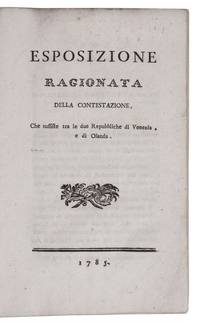
178585NGWX01U79OVienna or Venice 1785. Contemporary blue-grey marbled wrappers. 8vo. With a woodcut vignette on the title page. One of the rare first two Italian editions possibly by the same printer priority uncertain of a diplomatic pamphlet by Giacomo Casanova 1725-1798 famous for his romantic adventures. The work first appeared in French in 1785 with both Italian editions following the same year; Casanova likely translated it himself to publicise the affair and his own role in Venetian political circles.Casanova began his propaganda about the affair with Lettre historico-critique sur un fait connu dependent dúne cause peu connue Dessau 1784 then wrote the "much more extended" Rives Childs present pamphlet in 1785 but it is not clear whether it was published in Vienna or Venice. The French edition appeared under the title: Exposition raisonée du différent qui subsiste entre les deux républiques de Venise et d'Holland. There are two different 1785 Italian editions using much of the same printing materials Rives Childs says the text "appears to be identical" but with different collations: the present A-C8 D12 = 6 ll. LXX 2 blank pp. and the other A-C8 D6 = 30 ll. LX pp. but some catalogues do not distinguish them. Later the same year Casanova also wrote and published a Supplément.The spine is somewhat discoloured a pen marking on the back wrapper. The leaves are slightly creased. Otherwise in very good condition.l Pollio p. 119; Rives Childs Casanoviana XXXII.2 p. 74; WorldCat 3 copies this edition 3 another ed. & 2 ambiguous. unknown
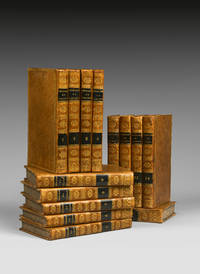
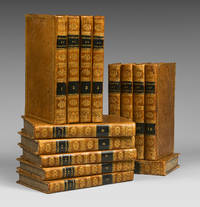
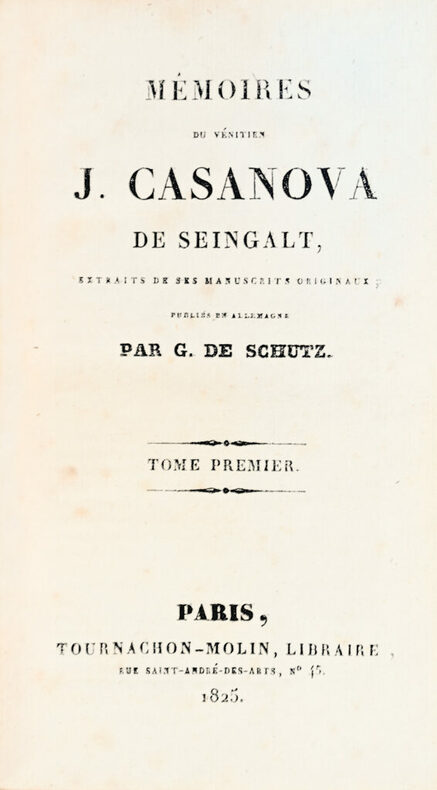
CBF20<p>Paris Tournachon-Molin 1825-1829.</p><p>14 volumes 166 x 93 mm iv xxviii 246 iv 310 iv 272 iv 288 iv 250 iv 258 iv 237 1 l. iv xii 278 iv 292 iv 299 iv 288 iv 292 iv 284 iv 346 pp.</p><p>Bound in full blond sheepskin gilt border around the covers flat decorated spines hinges and extremities of the spine slightly rubbed. <i>Contemporary binding.</i></p><p><b>"The first French edition"</b> J. Rives Childs 1956.</p><p>"<i>Quite rare</i>" J. Rive Childs.</p><p><b>Memoires. Published in Germany and translated by Sir Aubert de Vitry</b> translator of Goethe's Memoirs etc. with a preface by de Vitry.</p><p>"<i>The German edition of the Memoirs had been received so favorably that a Paris editor decided to bring out this pirated edition. It is thus the first French edition. However it is not the first French edition of the original French text but a translation of the Schütz edition and is therefore a translation of a translation</i>." J. Rives Childs.</p><p>This first French edition of 1825-1829 has a value identical to that of the 12-volumes French edition printed from 1826 to 1838: <i>"Brought 10 000 francs at auction in Paris in 1945 ; 15 000 in 1948 ; quoted at $150 in NY in 1945 for the 1825-1829 edition versus 15500 francs in 1946 for the Brockhaus edition of 1826-1838 and $100 to $150 in 1955."</i></p><p>Casanova's<i>Memoirs</i> are written in French. G. de Schutz first published a German version. The edition published in Paris by <i>Tournechon-Molin</i> in 1825 is a translation of the German version.</p><p><i>"The most famous Venetian adventurer Balzac Théophile Gautier and Roger de Beauvoir were inspired by certain chapters of Casanova's Memoirs which appeared at the height of the Romantic era."</i>Carteret.</p><p><i>"I consider Casanova's Memoirs to be the true Encyclopaedia of the eighteenth century".</i> Blaise Cendrars.</p><p><i>"Casanova that unparalleled mind whose every word is a line and every thought a book!"</i> Le Prince de Ligne.</p><p>In turns adventurer diplomat crook <i>Giacomo Casanova</i> 1725-1798 was also the only prisoner to escape from the prison of the Leads in Venice. At other times in his life he was one of the intellectuals of the time and was received in the European courts. As he became rich he led a life of madness and disorder. He was arrested by the Inquisition. He escaped and when he arrived in Paris in 1757 got in touch with the Marshal of Richelieu Crébillon Voisenon Fontenelle Favart and Rousseau.</p><p>In Geneva in 1760 he introduced himself to Voltaire. In London he met the Chevalier d'Eon and King George III in Berlin he met Frederick II and then in St Petersburg he had several meetings with Catherine II.</p><p>In his<i> Memoirs</i> <b>Casanova drew up a picture of Louis XV France's mores but also that of Italy and courts of Europe in general.</b></p><p>"<i>We know from the Memoires that he was constantly writing and that his baggage comprised in considerable part his papers</i> ". J. Rives Childs <i>Casanoviana</i> p. 108.</p><p>It has been said that Casanova's <i>Memoirs</i>are <i>Anticonfessions.</i></p><p><i>"I write neither the story of an illustrious man nor a novel. Worthy or unworthy my life is my material my material is my life. Having written it without ever believing that the desire to write it would come to me it may have an interesting character that it might not have if I had written it with the intention of writing it in my old age and what is more of publishing it."</i></p><p><i>"An attentive reader of the autobiographical works of Saint Augustine Montaigne and the Marquis d'Argent Casanova was familiar with the work of Rousseau whom he often criticized but without being able to conceal an admiration mixed with envy. He would say: "I will not give my story the title of Confessions because since an extravagant has soiled it I can no longer suffer it. But it will be a confession if ever there was one. People will tell me that a book which alarms virtue is bad. I confess that those whose favourite virtue is chastity must refrain from reading me.".</i></p><p>The book's influence spread overseas. An article published in the <i>North American Review</i> in 1835 was devoted to <i>Casanova</i>'s <i>Memoirs</i>: <i>"It presents a curious and not uninstructive picture of the state of society in Europe at the period immediately preceding the French Revolution".</i></p><p>The author of the article refers to the author's arrest by the Inquisition as an element of comparison between European and American politics: "<i>The constant repetition of similar cases of the violation of private right by the old governments of Europe was among the causes that operated most strongly in bringing on the revolutionary movements of the last century. We are not blind to the inconveniences abuses and dangers of our political system but it gives us a permanent national peace instead of the wars that constantly desolate Europe</i>." <i>The North American Review</i> XLI p.46-69.</p><p><b>In 1834 the work was put on the index of prohibited books.</b></p><p>"Sold in broad daylight or under the cloak the <i>Memoirs</i>made one hell of a fuss and everywhere people talked about them either to doubt their authenticity or to discuss the veracity of the Venetian's love confessions or to inspire themselves in the romantic circles Balzac Théophile Gautier Gorge Sand Roger de Beauvoir Eugène Sue before Émile Zola and Pierre Louys drew according to their imagination on the vast reservoir of adventures that Casanova made available to them.</p><p>Especially after the "Great War" the price of any work by Jacques Casanova became unaffordable and unrealistic. The Brockhaus edition for example oscillated between 99 francs bound P.-A. Chéramy sale and 405 francs in wrappers same sale session of Monday 21 April 1913. In 1917 at the J. P. sale Bosse expert this edition in a half sheepskin binding with speckled edges was sold for 295 francs.</p><p>From now on do not expect to obtain a copy for less than a thousand or 1500 francs when the opportunity arises if it arises!" J. Pollio.</p><p>The last copy recorded on the French market bound later in half-calf with foxing was sold for 75000 francs in May 1996 €11500 26 years ago.</p><p>The "most important heritage acquisition" by the French National Library was finalized on 18 February 2010. The Minister of Culture <i>Frédéric Mitterrand</i> signed the deed that officially brings the manuscripts of Casanova's <i>Memoirs</i> into the B.n.F; a 3700-page unbound manuscript declared to be of <i>"major heritage interest".</i> The work was the object of envy of major libraries and collectors around the world since the 1960s.</p><p>Giacomo Girolano Casanova in turn financial consultant diplomat crook gambler but always an enlightened intellectual in his own way began writing his memoirs in a French strewn with crossing-outs and Italianisms around 1789. In other words<i> "in the twilight of his life as in the twilight of the century"</i> agitated by <i>"revolutionary turmoil"</i> as the Minister of Culture pointed out. It took three years and the intervention of a generous patron from the financial world who paid nearly 7 million euros to complete this exceptional acquisition.</p><p>During the ceremony the Minister of Culture paid tribute to <i>"one of the great authors of eighteenth-century French literature" </i>and to his <i>"freedom of tone and expression which is nourished by a true freedom of conduct".</i></p><p><b>A precious copy pure and without foxing exceedingly rare in full contemporary decorated binding.</b></p><p><br /></p><p><u>Français</u></p><p>Paris Tournachon-Molin 1825-1829.</p><p>14 volumes iv xxviii 246 iv 310 iv 272 iv 288 iv 250 iv 258 iv 237 1 f. iv xii 278 iv 292 iv 299 iv 288 iv 292 iv 284 iv 346 p.</p><p>Reliés en pleine basane blonde racinée roulette dorée en encadrement autour des plats dos lisses ornés roulette dorée sur les coupes charnières et coiffes légèrement frottées. <i>Reliure de l'époque</i>.</p><p>166 x 93 mm.</p><p><b>"The first French edition"</b> J. Rives Childs 1956.</p><p>"<i>Quite rare</i>" J. Rive Childs.</p><p><b>Mémoires…. Publiés en Allemagne et traduits par M. Aubert de Vitry</b> traducteur des Mémoires de Goethe etc. avec une préface par de Vitry.</p><p>"<i>The German edition of the Memoirs had been received so favorably that a Paris editor decided to bring out this pirated edition. It is thus the first French edition. However it is not the first French edition of the original French text but a translation of the Schütz edition and is therefore a translation of a translation</i>." J. Rives Childs.</p><p>Cette première édition française de 1825-1829 a une valeur identique à celle de l'édition française en 12 volumes imprimée de 1826 à 1838 : " <i>Brought 10 000 francs at auction in Paris in 1945 ; 15 000 in 1948 ; quoted at $ 150 in NY in 1945 pour l'édition de 1825-1829 contre 15 500 Francs en 1946 pour l'édition Brockhaus de 1826-1838 et 100 à 150 $ en 1955</i>. "</p><p>Les <i>Mémoires</i> de <i>Casanova</i> sont écrits en français. G. de Schutz publie d'abord une version allemande. L'édition publiée à Paris chez <i>Tournechon-Molin</i>en 1825 est une traduction de la version allemande.</p><p>" <i>Aventurier vénitien des plus célèbres Balzac Théophile Gautier Roger de Beauvoir se sont inspirés de certains chapitres des Mémoires de Casanova lesquels parurent en pleine effervescence romantique</i> ". Carteret.</p><p>" <i>Je considère les Mémoires de Casanova comme la véritable Encyclopédie du XVIIIe siècle</i>". Blaise Cendrars.</p><p>" <i>Casanova cet esprit sans pareil dont chaque mot est un trait et chaque pensée un livre !</i> " Le Prince de Ligne.</p><p>Tour à tour aventurier diplomate escroc <i>Giacomo Casanova</i>1725-1798 a aussi été le seul prisonnier à s'évader de la prison des Plombs à Venise. A d'autres moments de sa vie il fait partie des intellectuels de l'époque il est reçu dans les cours européennes. Devenu riche il mène une vie de folie et de désordre. Il est arrêté par l'Inquisition. Il s'évade et arrivé à Paris en 1757 se met en rapport avec le maréchal de Richelieu Crébillon Voisenon Fontenelle Favart Rousseau.</p><p>A Genève en 1760 il se présente à Voltaire. À Londres il rencontre le chevalier d'Éon et le roi Georges III à Berlin il fréquente Frédéric II puis à Saint-Pétersbourg il a plusieurs entrevues avec Catherine II.</p><p><b>Dans ses </b><i><b>Mémoires</b></i><b> Casanova dresse un tableau des mœurs de la France de Louis XV de l'Italie et des cours de l'Europe en général.</b></p><p>"<i>We know from the Memoires that he was constantly writing and that his baggage comprised in considerable part his papers</i> ". J. Rives Childs <i>Casanoviana</i> p. 108.</p><p>On a dit que les <i>Mémoires</i> de Casanova étaient des <i>Anticonfessions</i>.</p><p>" <i>Je n'écris ni l'histoire d'un illustre ni un roman. Digne ou indigne ma vie est ma matière ma matière est ma vie. L'ayant faite sans avoir jamais cru que l'envie de l'écrire me viendrait elle peut avoir un caractère intéressant qu'elle n'aurait peut-être pas si je l'avais faite avec l'intention de l'écrire dans mes vieux jours et qui plus est de la publier</i>".</p><p>" <i>Lecteur attentif des œuvres autobiographiques de Saint Augustin de Montaigne et du marquis d'Argent Casanova connaît l'œuvre de Rousseau qu'il critique souvent mais sans pouvoir cacher une admiration mêlée d'envie. Il dira " Je ne donnerai pas à mon histoire le titre de Confessions car depuis qu'un extravagant l'a souillé je ne peux plus le souffrir. Mais elle sera une confession si jamais il en fut. On me dira qu'un livre qui alarme la vertu est mauvais. J'avoue que ceux dont la vertu préférée est la chasteté doivent s'abstenir de me lire.</i> ".</p><p>L'influence de l'ouvrage s'étend outremer. Un article publié dans la <i>North American Review</i> datée de 1835 est consacré aux <i>Mémoires</i> de <i>Casanova </i>: " <i>It presents a curious and not uninstructive picture of the state of society in Europe at the period immediately preceding the French Revolution</i> ".</p><p>L'auteur de l'article évoque l'arrestation de l'auteur par l'Inquisition pour en faire un élément de comparaison entre les politiques européenne et américaine " <i>The constant repetition of similar cases of the violation of private right by the old governments of Europe was among the causes that operated most strongly in bringing on the revolutionary movements of the last century. We are not blind to the inconveniences abuses and dangers of our political system but it gives us a permanent national peace instead of the wars that constantly desolate Europe </i>". <i>The North American Review</i> xli p.46-69.</p><p><b>En 1834 l'ouvrage est mis à l'index des livres interdits. </b></p><p>" Vendus au grand jour ou sous le manteau les <i>Mémoires</i> firent un tapage d'enfer et partout l'on en parla soit pour douter de leur authenticité soit pour discuter la véracité des confessions amoureuses du Vénitien soit pour s'en inspirer dans les milieux romantiques Balzac Théophile Gautier Gorge Sand Roger de Beauvoir Eugène Sue avant Émile Zola et Pierre Louys puisèrent au gré de leur imagination dans le vaste réservoir d'aventures que Casanova mettait à leur disposition.</p><p>C'est surtout à la suite de la " grande guerre " que le prix de n'importe quelle œuvre de Jacques Casanova devint inabordable et chimérique. L'édition Brockhaus oscillait par exemple entre 99 francs reliée vente P.-A. Chéramy et 405 francs brochée même vente vacation du lundi 21 avril 1913. En 1917 la vente J. P. Bosse expert cette édition en demi-reliure basane tranches jaspées trouvait acquéreur à 295 francs.</p><p>N'espérez pas désormais obtenir un exemplaire moins d'un billet de mille ou de 1 500 francs quand l'occasion se présentera si elle se présente !. " J. Pollio.</p><p>Le dernier exemplaire référencé sur le marché français relié en demi veau postérieur avec rousseurs fut vendu 75 000 Francs en mai 1996 11 500 € il y a 25 ans.</p><p>" La plus grande acquisition patrimoniale " de la Bibliothèque nationale de France a été finalisée le 18 février 2010. Le Ministre de la Culture <i>Frédéric Mitterrand</i> a signé l'acte qui fait officiellement entrer à la B.n.F. les manuscrits des <i>Mémoires</i> de <i>Casanova</i> ; il s'agit d'un manuscrit de 3 700 pages non reliées déclaré " <i>bien d'intérêt patrimonial majeur</i> ". L'objet excitait la convoitise des grandes bibliothèques et des collectionneurs du monde entier depuis les années 1960.</p><p>Giacomo Girolano Casanova tour à tour financier diplomate escroc joueur mais toujours intellectuel éclairé à sa manière entame la rédaction de ses mémoires dans un français parsemé de ratures et d'italianismes aux alentours de 1789. Autant dire " <i>au crépuscule de son existence comme au crépuscule du siècle </i>" agité par les " <i>tourments révolutionnaires </i>" a signalé le ministre de la Culture. Il aura fallu trois ans et l'intervention d'un généreux mécène du milieu de la finance ayant déboursé près de 7 millions d'euros pour finaliser cette acquisition exceptionnelle.</p><p>Lors de la cérémonie le ministre de la Culture a rendu hommage à " <i>l'un des grands auteurs de la littérature française du XVIIIe siècle </i>" et à sa " <i>liberté de ton et de propos qui se nourrit d'une vraie liberté de conduite</i> ".</p><p><b>Précieux exemplaire pur et sans rousseur de la plus extrême rareté en pleine reliure décorée de l'époque.</b> </p> hardcover
1825LCS-18328<p><strong>" <em>The first French edition</em> " printed from 1825 to 1829 is " <em>quite rare</em> ".</strong></p><p><strong><em>"The most famous Venetian adventurer Balzac Théophile Gautier Roger de Beauvoir </em></strong></p><p><strong><em>were inspired by certain chapters of Casanova's Memoirs </em></strong></p><p><strong><em>which were published at the height of the Romantic era".</em></strong><strong> Carteret.</strong></p><p><strong><em>"I consider Casanova's Memoirs to be the true Encyclopedia of the eighteenth century". </em></strong></p><p><strong>Blaise Cendrars.</strong></p><p><strong><em>"Casanova that unparalleled mind whose every word is a line and every thought a book!" </em></strong></p><p><strong>Le Prince de Ligne.</strong></p><p><strong>A pure copy without foxing exceedingly rare in full contemporary binding.</strong></p><p>14 volumes 166 x 93 mm iv xxviii 246 iv 310 iv 272 iv 288 iv 250 iv 258 iv 237 1 l. iv xii 278 iv 292 iv 299 iv 288 iv 292 iv 284 iv 346 pp.</p><p>Bound in full blond sheepskin gilt border around the covers flat decorated spines hinges and extremities of the spine slightly rubbed. <em>Contemporary binding.</em></p><p>"The first French edition" J. Rives Childs 1956.</p><p>"<em>Quite rare</em>" J. Rive Childs.</p><p>Memoires. Published in Germany and translated by Sir Aubert de Vitry translator of Goethe's Memoirs etc. with a preface by de Vitry.</p><p>"<em>The German edition of the Memoirs had been received so favorably that a Paris editor decided to bring out this pirated edition. It is thus the first French edition. However it is not the first French edition of the original French text but a translation of the Schütz edition and is therefore a translation of a translation</em>." J. Rives Childs.</p><p>This first French edition of 1825-1829 has a value identical to that of the 12-volumes French edition printed from 1826 to 1838: <em>"Brought 10 000 francs at auction in Paris in 1945 ; 15 000 in 1948 ; quoted at $150 in NY in 1945 for the 1825-1829 edition versus 15500 francs in 1946 for the Brockhaus edition of 1826-1838 and $100 to $150 in 1955."</em></p><p>Casanova's <em>Memoirs</em> are written in French. G. de Schutz first published a German version. The edition published in Paris by <em>Tournachon-Molin</em> in 1825 is a translation of the German version.</p><p><em>"The most famous Venetian adventurer Balzac Théophile Gautier and Roger de Beauvoir were inspired by certain chapters of Casanova's Memoirs which appeared at the height of the Romantic era."</em> Carteret.</p><p><em>"I consider Casanova's Memoirs to be the true Encyclopaedia of the eighteenth century".</em> Blaise Cendrars.</p><p><em>"Casanova that unparalleled mind whose every word is a line and every thought a book!"</em> Le Prince de Ligne.</p><p>In turns adventurer diplomat crook <em>Giacomo Casanova</em> 1725-1798 was also the only prisoner to escape from the prison of the Leads in Venice. At other times in his life he was one of the intellectuals of the time and was received in the European courts. As he became rich he led a life of madness and disorder. He was arrested by the Inquisition. He escaped and when he arrived in Paris in 1757 got in touch with the Marshal of Richelieu Crébillon Voisenon Fontenelle Favart and Rousseau.</p><p>In Geneva in 1760 he introduced himself to Voltaire. In London he met the Chevalier d'Eon and King George III in Berlin he met Frederick II and then in St Petersburg he had several meetings with Catherine II.</p><p>In his<em> Memoirs</em> Casanova drew up a picture of Louis XV xv France's mores but also that of Italy and courts of Europe in general.</p><p>" <em>We know from the Memoires that he was constantly writing and that his baggage comprised in considerable part his papers</em> ". J. Rives Childs <em>Casanoviana</em> p. 108.</p><p>It has been said that Casanova's <em>Memoirs</em> are <em>Anticonfessions.</em></p><p><em>"I write neither the story of an illustrious man nor a novel. Worthy or unworthy my life is my material my material is my life. Having written it without ever believing that the desire to write it would come to me it may have an interesting character that it might not have if I had written it with the intention of writing it in my old age and what is more of publishing it."</em></p><p><em>"An attentive reader of the autobiographical works of Saint Augustine Montaigne and the Marquis d'Argent Casanova was familiar with the work of Rousseau whom he often criticized but without being able to conceal an admiration mixed with envy. He would say: "I will not give my story the title of Confessions because since an extravagant has soiled it I can no longer suffer it. But it will be a confession if ever there was one. People will tell me that a book which alarms virtue is bad. I confess that those whose favourite virtue is chastity must refrain from reading me.".</em></p><p>The book's influence spread overseas. An article published in the <em>North American Review</em> in 1835 was devoted to <em>Casanova</em>'s <em>Memoirs</em>: <em>"It presents a curious and not uninstructive picture of the state of society in Europe at the period immediately preceding the French Revolution".</em></p><p>The author of the article refers to the author's arrest by the Inquisition as an element of comparison between European and American politics: "<em>The constant repetition of similar cases of the violation of private right by the old governments of Europe was among the causes that operated most strongly in bringing on the revolutionary movements of the last century. We are not blind to the inconveniences abuses and dangers of our political system but it gives us a permanent national peace instead of the wars that constantly desolate Europe</em>." <em>The North American Review</em> XLI p.46-69.</p><p>In 1834 the work was put on the index of prohibited books.</p><p>"Sold in broad daylight or under the cloak the <em>Memoirs </em>made one hell of a fuss and everywhere people talked about them either to doubt their authenticity or to discuss the veracity of the Venetian's love confessions or to inspire themselves in the romantic circles Balzac Théophile Gautier Gorge Sand Roger de Beauvoir Eugène Sue before Émile Zola and Pierre Louys drew according to their imagination on the vast reservoir of adventures that Casanova made available to them.</p><p>Especially after the "Great War" the price of any work by Jacques Casanova became unaffordable and unrealistic. The Brockhaus edition for example oscillated between 99 francs bound P.-A. Chéramy sale and 405 francs in wrappers same sale session of Monday 21 April 1913. In 1917 at the J. P. sale Bosse expert this edition in a half sheepskin binding with speckled edges was sold for 295 francs.</p><p>From now on do not expect to obtain a copy for less than a thousand or 1500 francs when the opportunity arises if it arises!" J. Pollio.</p><p>The last copy recorded on the French market bound later in half-calf with foxing was sold for 75000 francs in May 1996 11500 26 years ago.</p><p>The "most important heritage acquisition" by the French National Library was finalized on 18 February 2010. The Minister of Culture <em>Frédéric Mitterrand</em> signed the deed that officially brings the manuscripts of Casanova's <em>Memoirs</em> into the B.n.F; a 3700-page unbound manuscript declared to be of <em>"major heritage interest".</em> The work was the object of envy of major libraries and collectors around the world since the 1960s.</p><p>Giacomo Girolano Casanova in turn financial consultant diplomat crook gambler but always an enlightened intellectual in his own way began writing his memoirs in a French strewn with crossing-outs and Italianisms around 1789. In other words<em> "in the twilight of his life as in the twilight of the century"</em> agitated by <em>"revolutionary turmoil"</em> as the Minister of Culture pointed out. It took three years and the intervention of a generous patron from the financial world who paid nearly 7 million euros to complete this exceptional acquisition.</p><p>During the ceremony the Minister of Culture paid tribute to <em>"one of the great authors of eighteenth-century French literature" </em>and to his <em>"freedom of tone and expression which is nourished by a true freedom of conduct".</em></p><p>A precious copy pure and without foxing exceedingly rare in full contemporary decorated binding.</p><p>FRANCAIS</p><p><strong>" <em>The first French edition</em> " imprimée de 1825 à 1829 is " <em>quite rare</em> ".</strong></p><p><strong>" <em>Aventurier vénitien des plus célèbres Balzac Théophile Gautier Roger de Beauvoir </em></strong></p><p><strong><em>se sont inspirés de certains chapitres des Mémoires de Casanova </em></strong></p><p><strong><em>lesquels parurent en pleine effervescence romantique</em></strong><strong> ". Carteret.</strong></p><p><strong>" <em>Je considère les Mémoires de Casanova comme la véritable Encyclopédie du XVIIIe siècle </em>". </strong></p><p><strong>Blaise Cendrars.</strong></p><p><strong>" <em>Casanova cet esprit sans pareil dont chaque mot est un trait et chaque pensée un livre !</em> " </strong></p><p><strong>Le Prince de Ligne.</strong></p><p><strong>Exemplaire pur sans rousseur de la plus extrême rareté en pleine reliure de l'époque.</strong></p><p>14 volumes iv xxviii 246 iv 310 iv 272 iv 288 iv 250 iv 258 iv 237 1 f. iv xii 278 iv 292 iv 299 iv 288 iv 292 iv 284 iv 346 p.</p><p>Reliés en pleine basane blonde racinée roulette dorée en encadrement autour des plats dos lisses ornés roulette dorée sur les coupes charnières et coiffes légèrement frottées. <em>Reliure de l'époque</em>.</p><p>166 x 93 mm.</p><p>"The first French edition" J. Rives Childs 1956.</p><p>"<em>Quite rare</em>" J. Rive Childs.</p><p>Mémoires. Publiés en Allemagne et traduits par M. Aubert de Vitry traducteur des Mémoires de Goethe etc. avec une préface par de Vitry.</p><p>"<em>The German edition of the Memoirs had been received so favorably that a Paris editor decided to bring out this pirated edition. It is thus the first French edition. However it is not the first French edition of the original French text but a translation of the Schütz edition and is therefore a translation of a translation</em>." J. Rives Childs.</p><p>Cette première édition française de 1825-1829 a une valeur identique à celle de l'édition française en 12 volumes imprimée de 1826 à 1838 : " <em>Brought 10 000 francs at auction in Paris in 1945 ; 15 000 in 1948 ; quoted at $ 150 in NY in 1945 pour l'édition de 1825-1829 contre 15 500 Francs en 1946 pour l'édition Brockhaus de 1826-1838 et 100 à 150 $ en 1955</em>. "</p><p>Les <em>Mémoires</em> de <em>Casanova</em> sont écrits en français. G. de Schutz publie d'abord une version allemande. L'édition publiée à Paris chez <em>Tournechon-Molin</em> en 1825 est une traduction de la version allemande.</p><p>" <em>Aventurier vénitien des plus célèbres Balzac Théophile Gautier Roger de Beauvoir se sont inspirés de certains chapitres des Mémoires de Casanova lesquels parurent en pleine effervescence romantique</em> ". Carteret.</p><p>" <em>Je considère les Mémoires de Casanova comme la véritable Encyclopédie du XVIIIe siècle</em> ". Blaise Cendrars.</p><p>" <em>Casanova cet esprit sans pareil dont chaque mot est un trait et chaque pensée un livre !</em> " Le Prince de Ligne.</p><p>Tour à tour aventurier diplomate escroc <em>Giacomo Casanova</em> 1725-1798 a aussi été le seul prisonnier à s'évader de la prison des Plombs à Venise. A d'autres moments de sa vie il fait partie des intellectuels de l'époque il est reçu dans les cours européennes. Devenu riche il mène une vie de folie et de désordre. Il est arrêté par l'Inquisition. Il s'évade et arrivé à Paris en 1757 se met en rapport avec le maréchal de Richelieu Crébillon Voisenon Fontenelle Favart Rousseau.</p><p>A Genève en 1760 il se présente à Voltaire. À Londres il rencontre le chevalier d'Éon et le roi Georges III à Berlin il fréquente Frédéric II puis à Saint-Pétersbourg il a plusieurs entrevues avec Catherine II.</p><p>Dans ses <em>Mémoires</em> Casanova dresse un tableau des murs de la France de Louis XV de l'Italie et des cours de l'Europe en général.</p><p>" <em>We know from the Memoires that he was constantly writing and that his baggage comprised in considerable part his papers</em> ". J. Rives Childs <em>Casanoviana</em> p. 108.</p><p>On a dit que les <em>Mémoires</em> de Casanova étaient des <em>Anticonfessions</em>.</p><p>" <em>Je n'écris ni l'histoire d'un illustre ni un roman. Digne ou indigne ma vie est ma matière ma matière est ma vie. L'ayant faite sans avoir jamais cru que l'envie de l'écrire me viendrait elle peut avoir un caractère intéressant qu'elle n'aurait peut-être pas si je l'avais faite avec l'intention de l'écrire dans mes vieux jours et qui plus est de la publier</em> ".</p><p>" <em>Lecteur attentif des uvres autobiographiques de Saint Augustin de Montaigne et du marquis d'Argent Casanova connaît l'uvre de Rousseau qu'il critique souvent mais sans pouvoir cacher une admiration mêlée d'envie. Il dira " Je ne donnerai pas à mon histoire le titre de Confessions car depuis qu'un extravagant l'a souillé je ne peux plus le souffrir. Mais elle sera une confession si jamais il en fut. On me dira qu'un livre qui alarme la vertu est mauvais. J'avoue que ceux dont la vertu préférée est la chasteté doivent s'abstenir de me lire.</em> ".</p><p>L'influence de l'ouvrage s'étend outremer. Un article publié dans la <em>North American Review</em> datée de 1835 est consacré aux <em>Mémoires</em> de <em>Casanova </em>: " <em>It presents a curious and not uninstructive picture of the state of society in Europe at the period immediately preceding the French Revolution</em> ".</p><p>L'auteur de l'article évoque l'arrestation de l'auteur par l'Inquisition pour en faire un élément de comparaison entre les politiques européenne et américaine " <em>The constant repetition of similar cases of the violation of private right by the old governments of Europe was among the causes that operated most strongly in bringing on the revolutionary movements of the last century. We are not blind to the inconveniences abuses and dangers of our political system but it gives us a permanent national peace instead of the wars that constantly desolate Europe </em>". <em>The North American Review</em> xli p.46-69.</p><p>En 1834 l'ouvrage est mis à l'index des livres interdits.</p><p>" Vendus au grand jour ou sous le manteau les <em>Mémoires</em> firent un tapage d'enfer et partout l'on en parla soit pour douter de leur authenticité soit pour discuter la véracité des confessions amoureuses du Vénitien soit pour s'en inspirer dans les milieux romantiques Balzac Théophile Gautier Gorge Sand Roger de Beauvoir Eugène Sue avant Émile Zola et Pierre Louys puisèrent au gré de leur imagination dans le vaste réservoir d'aventures que Casanova mettait à leur disposition.</p><p>C'est surtout à la suite de la " grande guerre " que le prix de n'importe quelle uvre de Jacques Casanova devint inabordable et chimérique. L'édition Brockhaus oscillait par exemple entre 99 francs reliée vente P.-A. Chéramy et 405 francs brochée même vente vacation du lundi 21 avril 1913. En 1917 la vente J. P. Bosse expert cette édition en demi-reliure basane tranches jaspées trouvait acquéreur à 295 francs.</p><p>N'espérez pas désormais obtenir un exemplaire moins d'un billet de mille ou de 1 500 francs quand l'occasion se présentera si elle se présente !. " J. Pollio.</p><p>Le dernier exemplaire référencé sur le marché français relié en demi veau postérieur avec rousseurs fut vendu 75 000 Francs en mai 1996.</p><p>" La plus grande acquisition patrimoniale " de la Bibliothèque nationale de France a été finalisée le 18 février 2010. Le Ministre de la Culture <em>Frédéric Mitterrand</em> a signé l'acte qui fait officiellement entrer à la B.n.F. les manuscrits des <em>Mémoires</em> de <em>Casanova</em> ; il s'agit d'un manuscrit de 3 700 pages non reliées déclaré " <em>bien d'intérêt patrimonial majeur</em> ". L'objet excitait la convoitise des grandes bibliothèques et des collectionneurs du monde entier depuis les années 1960.</p><p>Giacomo Girolano Casanova tour à tour financier diplomate escroc joueur mais toujours intellectuel éclairé à sa manière entame la rédaction de ses mémoires dans un français parsemé de ratures et d'italianismes aux alentours de 1789. Autant dire " <em>au crépuscule de son existence comme au crépuscule du siècle </em>" agité par les " <em>tourments révolutionnaires </em>" a signalé le ministre de la Culture. Il aura fallu trois ans et l'intervention d'un généreux mécène du milieu de la finance ayant déboursé près de 7 millions d'euros pour finaliser cette acquisition exceptionnelle.</p><p>Lors de la cérémonie le ministre de la Culture a rendu hommage à " <em>l'un des grands auteurs de la littérature française du XVIIIe siècle </em>" et à sa " <em>liberté de ton et de propos qui se nourrit d'une vraie liberté de conduite</em> ".</p><p>Précieux exemplaire pur et sans rousseur de la plus extrême rareté en pleine reliure décorée de l'époque.</p> Tournachon-Molin.
LCS-18328«The first French edition» imprimée de 1825 à 1829 is «quite rare». « Aventurier vénitien des plus célèbres, Balzac, Théophile Gautier, Roger de Beauvoir se sont inspirés de certains chapitres des Mémoires de Casanova, lesquels parurent en pleine effervescence romantique ». Carteret. Paris, Tournachon-Molin, 1825-1829. 14 volumes, [iv], xxviii, 246 + [iv], 310 + [iv], 272 + [iv], 288 + [iv], 250 + [iv], 258 + [iv], 237, (1) f. + [iv], xii, 278 + [iv] + 292 + [iv], 299 + [iv], 288 + [iv], 292 + [iv], 284 + [iv], 346 p. Reliés en pleine basane blonde racinée, roulette dorée en encadrement autour des plats, dos lisses ornés, roulette dorée sur les coupes, charnières et coiffes légèrement frottées. Reliure de l’époque. 166 x 93 mm.
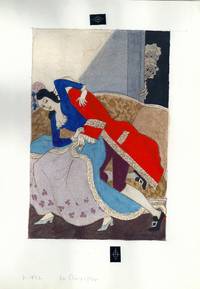
1972016607Haarlem Holland: Limited Editions Club 1972. Original Art. Fine. Rene Ben Sussan. The complete publisher's archive of 16 ORIGINAL watercolors some mildly erotic in theme and 17 ORIGINAL line drawings by Rene Ben Sussan used for the book. The watercolors are 5" x 8" on 7-3/4" x 11-1/4" paper with the line drawings on smaller various sized sheets. All are lettered in the upper corner in red ink with pencil annotations below the image. Housed in a paper folder from the publisher. Accompanied by an out-of-series copy of the book SIGNED by the artist that was bound upside down. <br/><br/>Rene Ben Sussan was active from the 1920s to the 1960s and illustrated many books including 8 for the Limited Editions Club alone. [Limited Editions Club] unknown
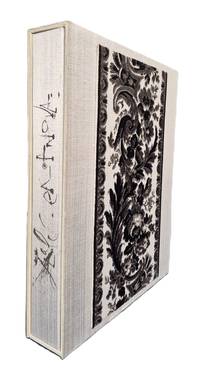
1967003131Paris : Cercle du Livre Precieux 1967. Book. Fine. Hardcover. 1st Edition. Loose sheets in illustrated wrappers. In gray silk covered chemise and matching slipcase with both sides decorated with a velvet floral design. Artist book comprising 14 full-page color engravings and 7 engraved vignettes at the beginning of each story. All full page engravings are signed in the plate and protected by tissue guards. Text by Giacomo Casanova. This is number 262 of a limited edition of 390 copies. Printed on Rives paper. Tiny tear in the bottom edge of the wrapper otherwise in very fine collectible condition. . Cercle du Livre Precieux Hardcover
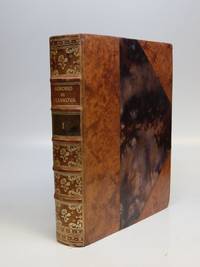
34967Paris Garnier Frres sans date 8 volumes in-8, demi-maroquin lavallire, plats de papier peigne, dos nerfs finement orns petits fers dors; doublures et gardes de papier peigne, ttes dores, non rogns (Dupr).Nouvelle dition, collationne sur l'dition originale de Leipzig. Bel exemplaire.
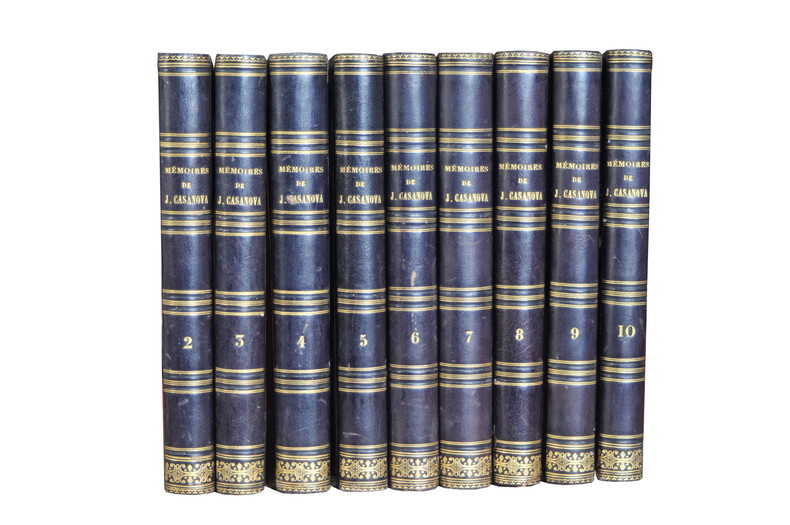
35600943, Paris, Paulin, 1833-1837; 10 vol. in-8, demi-basane violette, dos lisses, ornements dor., tr. jasp. (Reliures de l'époque). 2 ff., 427 pp., 1f.-2 ff., 422 pp., 1 f.- 2 ff., 432 pp., - 2 ff., 478 pp., 1f.- 2 ff., 455 pp.- 2 ff., 468 pp.- 2 ff., 475 pp.(1 p.).-2 ff., 455 pp.- 2 ff., 426 pp.- 2 ff., 394 pp. Au sujet de cette édition très rare, voir la longue notice de Pollio pp. 218-19. Pour les 8 premiers volumes Paulin a copié le texte de l'édition française de Brockhaus-Laforgue, dont les 8 premiers volumes étaient en circulation dès 1832. Mais les quatre derniers se faisant attendre ( jusqu'en 1838!), Paulin que sa clientèle harcelait sans répit, chargea un écrivain du nom de BUSONI de terminer d'une façon quelconque l'édition suspendue en 1833. De quoi faire perdre la tête ) tous les Casanovistes! Voir à ce sujet: Rives Childs. Casanova. Trad. Mars, p. 24-25. Rives Childs. Casanoviana p. 137 n°12- Pollio pp.215-219 - Clouzot p.34. Bel exemplaire.
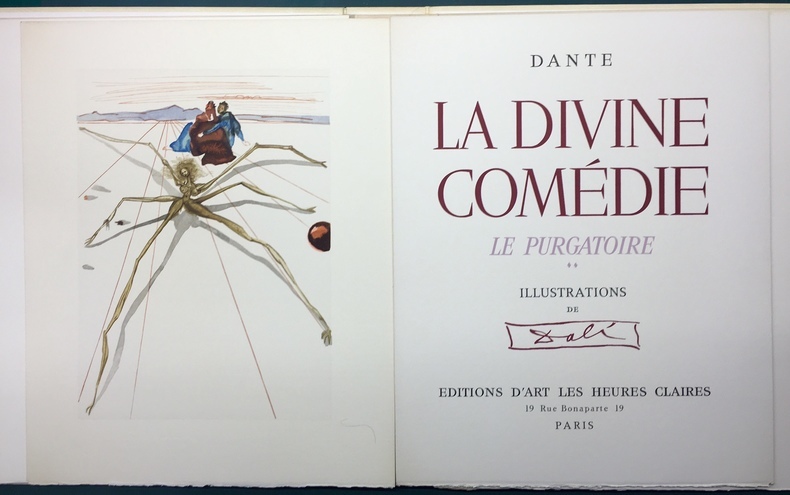
19631371Les Heures Claires, Paris 1959-1963. 6 volumes in-folio (34 x 26 cm) en feuilles sous couvertures imprimées rempliées, chemises et étuis décorés de l'éditeur. 100 AQUARELLES ORIGINALES HORS-TEXTE DE SALVADOR DALI GRAVÉES SUR BOIS EN COULEURS par Raymond Jacquet. - Exemplaire : 1 des 3900 ex. numérotés sur pur chiffon de Rives filigrané. Les 6 ouvrages sont en excellent état et bien complets des 100 gravures et des 3 doubles-feuillets de justification numérotés. Les planches belles aux couleurs lumineuses. Les emboîtages sont en excellent état de conservation.
1932235728Paris: Javal et Bourdeaux 1932. Limited. hardcover. near fine. Many color illustrations reproduced from original aquarelles by Auguste Leroux. Tissue guards. 10 volumes small thick folio 3/4 mottled calf spines elaborately gilt g.t. Paris: Javal et Bourdeaux 1932. Very good .<br/><br/> Limited numbered edition.<br/><br/> Javal et Bourdeaux unknown books
1833ABC_50290Paris 1833. 8vo. Paulin Contemporary gold-tooled quarter calf with the title author and volume number lettered in gold on the spine marbled paper boards green marbled endpapers brown sprinkled edges. The set is housed in two blue marbled paper slipcases. 10 volumes. 4 427 3; 4 422 2; 4 432 4 480; 4 455 1 blank; 4 468; 4 475 1; 4 455 1 blank 4 426; 4 394 pp. First complete French edition of Giacomo Casanova's 1725-1798 Mémoires comprising 10 volumes. The original French manuscripts were acquired in 1821 by the German publisher Friedrich Arnold Brockhaus 1772-1823 who first published an expurgated German translation prepared by Willem von Schütz 1776-1847 between 1822 and 1828. Its success prompted a French retranslation from the German by Victor Tournachon 1771-1837 published in 14 volumes between 1825 and 1828.The Brockhaus firm subsequently undertook a French-language edition based on the original manuscripts revised and rewritten by Jean Laforgue 1782-1852. The first four volumes appeared in 1826-1827 but publication was then delayed by censorship with the next four volumes published in 1832 and the final four only in 1838.During these delays the Parisian publisher Paulin published a rival edition. After reprinting the first eight Laforgue volumes in 1833 he commissioned Philippe Busoni 1804-1883 to complete the work. Their two concluding volumes published in 1837 contain material not found in the Laforgue text and may derive from a free combination of the Schütz translation and earlier French adaptations. The 9th volume bore the imprint Paulin Libraire-Éditeur Rue de Seine 33. 1837 and the tenth volume Chez E.-B. Delanchy Imprimeur Rue du Faubourg-Montmartre 11. 1837.The Mémoires are celebrated not only as an extraordinary autobiography but also as a rich historical and cultural record of 18th-century Europe. Casanova recounts his travels amorous adventures encounters with royalty intellectuals and artists as well as his experiences in prisons courts and salons. The work combines vivid storytelling with keen observation offering a unique window into the social political and cultural life of the Enlightenment. This edition as the first complete French version preserves the full scope of Casanovas narrative and remains a cornerstone for both literary and historical study.Volume 10 bears a pencil ownership inscription on the verso of the second flyleaf reading Monsuur Dehor a modern manuscript volume number label mounted on the front pastedown of each volume The upper spines of volumes 1 and 5 are slightly rubbed brown stains on some of the boards. The leaves are somewhat foxed p. 455 of volume 5 has been reinforced pp. 82-88 of volume 6 show some brown staining consistent with the quality of the paper. Otherwise in good condition.l Rives Childs no. 12 p. 137-139; WorldCat 800403619 4887572. hardcover
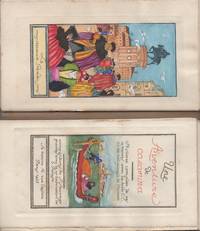
192611004Paris: Chez l’artiste 16 rue Cassini 1926. 2 volumes. No. 371 of 450 printed on papier vergé d’Arches but this a rare hand-coloured copy. 33 engravings by Sylvain Sauvage engraved in collaboration with Emile-Henri Feltesse including an engraving on each wrapper all expertly hand-coloured in gouache. Tall thin 8vo. loose in the original wrappers each volume with its own maroon cloth backed chemise and both in the matching maroon cloth edged slipcase. Slipcase and chemises with a little wear or rubbing at edges a little darkening to the wrappers but otherwise very good.Sylvain Sauvage 1888-1948 whose real name was Felix Roy was an illustrator and engraver who published his own artist’s books with the imprint of his home in Paris as well as creating illustrations for other publishers. Sauvage had originally intended to produce illustrations to the whole of the memoirs of Casanova but the task was too great so he settled on the erotic story of Casanova and the Nun of Murano - hence it being a singular adventure.<br>His first version was a large paper edition of 75 copies being a portfolio of 20 full page plates and 13 smaller ones which was published in 1920 and quickly sold. In 1924 he produced another portfolio containing 50 watercolours illustrating Casanova’s memoirs. Eventually in 1926 this two volume edition as the first in ‘La rose mal defendue’ The Poorly Protected Rose series.<br>The illustrations included all the original plates in their black and white version. A very few hand-coloured copies exist as here thought to have been coloured by Sauvage for special clients. These have certainly been done by a professional sensitive hand. Carteret IV 92 An expertly hand-coloured copy possibly by Sauvage himself Chez l’artiste, 16, rue Cassini hardcover
1927145168Paris: Le livre du bibliophile 1927. Casanova's exploits beautifully illustrated First edition thus first printing number 226 of 414 copies printed on velin d'arches paper of a total print run of 500. The text is extracted from Casanova's memoirs describing his relationship with "M.M." a nun from the convent at Murano. This edition is beautifully illustrated by Gerda Wegener likely using her wife Lili Elbe as a model. Gerda Wegener 1886-1940 was a Danish artist working in art deco and art nouveau styles known for her eroticized depictions of women her pioneering reconsideration of the female gaze in portraiture and her stunningly decadent backgrounds which are well-exemplified here. In 1925 Wegener represented France at the world exhibition in Paris where she was awarded two gold and one bronze medals. Wegener was married to fellow artist Lili Elbe having met at the Royal Danish Academy of Fine Arts in Copenhagen. The two lived in Paris from 1912 where Elbe was one of Wegener's most frequent models. Elbe is also known for being one of the first documented recipients of gender affirming surgery and as the subject of the novel The Danish Girl by David Ebershoff and 2015 film of the same name. 2 vols quarto. Text in French. With 8 full-page colour etchings by Andre Lambert after Wegener's watercolours with tissue guards and wood engraved headpieces initials and vignettes by G. Aubert printed in sepia after her designs. Original plain paper wrappers titles to spines and front covers in black and red edges untrimmed. With the original glassine wrappers. Slight chips to spine ends gatherings a little fragile a near-fine copy in the faintly toned glassine jackets. unknown
98880Paris Le Livre du Bibliophile Georges Briffaut 1927 . Limited edition signed by the illustrator to Doctor Potel on papier japon; large 4to 27.5 x 21.5 cm; 27 wood engravings in-text by G. Aubert and 10 coloured etchings hors-texte by André Lambert all after original watercolours by Gerda Wegener with an extra suite in black and yellow; original wrappers with covers ink inscription to top left corner of cover some wear to edges but internally fine.<br /> Gerda Wegener 1886 1940 was a Danish illustrator and painter best known for her erotic works. After moving to Paris in 1912 she became highly successful both as a painter and as illustrator for Vogue La Vie Parisienne and Fantasio. Her work comes with a sensational backstory: Gerda's husband Einar also a successful artist posed as a model for many of her works dressed in women's clothing and later underwent the world's first sex-change operation. The actress Alicia Vikander won an Oscar for her portrait of Gerda in the recent film adaptation of this story Tom Hooper's The Danish Girl.<br /> Paris, Le Livre du Bibliophile, Georges Briffaut, 1927 hardcover
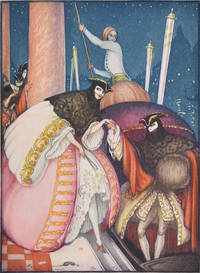
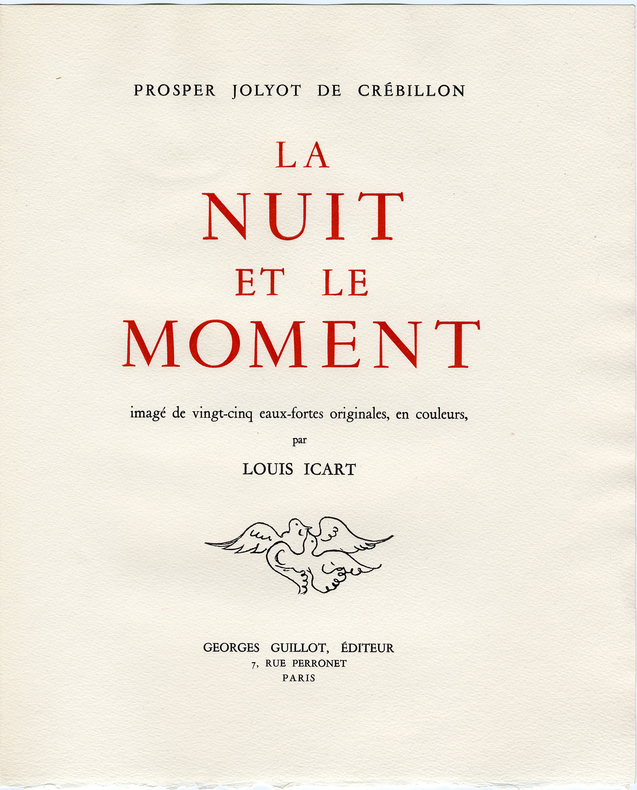
1946880Éditions Georges Guillot, Paris 1946. In-4 (325 x 255 mm)en feuilles sous couverture rempliée imprimée, étui-chemise de l'éditeur. 25 eaux-fortes originales en couleurs par Louis Icart dont 5 refusées. 1 des 100 exemplaires réimposés sur vélin de Rives (2ème papier, n° 68)) accompagné d' une suite complèteen sanguine et UNE AQUARELLE ORIGINALE DE GRANDE QUALITÉ SIGNÉE PAR LOUIS ICART (325 x 255 mm). Notre exemplaire est enrichi d'une SECONDE TRÈS BELLE AQUARELLE ORIGINALE SIGNÉE SUR UN FEUILLET LIBRE, AU FORMAT DU LIVRE. - English description : Éditions Georges Guillot, Paris 1946. 1 vol. 4° (325 x 255 mm) in sheets under printed folded cover, publisher's slipcase. 25 ORIGINAL ETCHINGS IN COLOR by Louis Icart, 5 of which were refused. 1 of the 100 copies in large size sheets on Rives vellum (2nd paper) with an extra a suite in sanguine and A BEAUTIFUL ORIGINAL WATERCOLOR SIGNED BY LOUIS ICART. This copy is enriched with a SECOND SUPERB ORIGINAL WATERCOLOR SIGNED ON A LOOSE SHEET (each 325 x 255 mm).
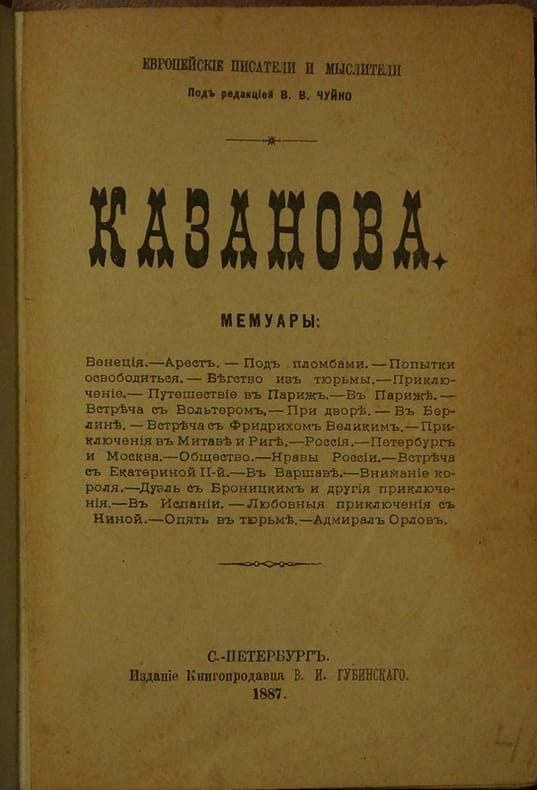
4649900In Russian. Casanova Giovanni Giacomo. Memoirs. St. Petersburg: 1887 V.I. Gubinsky The image is provided for reference only. It may reflect condition of one of the available copies or only help in identifying the edition. Please feel free to contact us for a detailed description of the copies available. SKU4649900 unknown
4649900In Russian. Casanova, Giovanni Giacomo. Memoirs. St. Petersburg: 1887, V.I. Gubinsky The image is provided for reference only. It may reflect condition of one of the available copies or only help in identifying the edition. You are welcome to reach out to us for a detailed description of the copies currently available. Delivery of this book may take longer than usual including extended processing and pre-shipping time, no expedited shipping is available. Please advise us if you have a set date or a deadline to receive your order.SKU4649900
1950144798Paris & Nice: Éditions de la Vieille France 1950. First edition thus number 338 of 900 copies on Vergé du Marais from a total edition of 964. This illustrated edition selected from Casanova's memoirs and illustrated by the artist Kees Van Dongen 1877-1968 was created as part of the publisher's "Les Petits Maîtres Érotiques" series. Small octavo. Woodcut frontispiece and plates by Kees Van Dongen. Publisher's sheep spine gilt-tooled in compartments with black morocco title labels spotted edges marbled endpapers. An exceptional copy with minimal rubbing to ends and corners otherwise fine. unknown
192525022Aventuros 1925. 1/2 morocco. Near Fine. Rockwell Kent. The 1925 limited edition. #8 OF THE FIRST 150 COPIES WITHIN A LARGER LIMITATION OF 1000 COPIES BOUND IN A SUMPTUOUS DEEP-RED HALF-MOROCCO WITH WONDERFUL GILT-TOOLING ALONG THE SPINES. Complete in 12 octavo volumes with top-edges gilt. All 12 volumes bright clean and Near Fine. "Translated into English by Arthur Machen with an Introduction by Arthur Symons a new Preface by the translator and twelve drawings by Rockwell Kent". Additionally stated along the limitation page: "The Type Used is Derived from a Fifteenth Century Italian Handwrought Face and the Paper Has Been Specially Made and Watermarked to Reproduce an Early Italian Handmade Paper Aventuros unknown
2015114819ILR Press. New. 2015. Paperback. 1501700499 . FREE UPGRADE to Courier/Priority Shipping Upon Request - IN STOCK AND IMMEDIATELY AVAILABLE FOR SHIPMENT - IN STOCK AND IMMEDIATELY AVAILABLE FOR SHIPMENT - Flawless copy brand new pristine never opened - -- with a bonus offer-- . ILR Press paperback
2015114820ILR Press. New. 2015. Hardcover. 0801454182 . FREE UPGRADE to Courier/Priority Shipping Upon Request - IN STOCK AND IMMEDIATELY AVAILABLE FOR SHIPMENT - IN STOCK AND IMMEDIATELY AVAILABLE FOR SHIPMENT - Flawless copy brand new pristine never opened - -- with a bonus offer-- . ILR Press hardcover
2014113423Wasmuth. New. 2014. Hardcover. 3803007666 . FREE UPGRADE to Courier/Priority Shipping Upon Request - IN STOCK AND IMMEDIATELY AVAILABLE FOR SHIPMENT - IN STOCK AND IMMEDIATELY AVAILABLE FOR SHIPMENT - Flawless copy brand new pristine never opened - -- with a bonus offer-- . Wasmuth hardcover
198974642Quadrante. New. 1989. Paperback. 8838100659 . FREE UPGRADE to Courier/Priority Shipping Upon Request - IN STOCK AND IMMEDIATELY AVAILABLE FOR SHIPMENT - Flawless copy brand new pristine never opened -- Text in Italian. 220 pp. With 173 ills. 18 col. . 22 x 23 cm -- with a bonus offer-- . Quadrante paperback