1 568 résultats
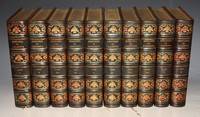
1932038809United Kingdom: Joiner & Steele 1932. First Edition Thus . Hardcover. Very Good/NO Dustwrapper. 12mo - over 6¾" - 7¾" tall. By Casanova - Chevalier De Seingalt. Translated with an Introduction by Arthur Machen. First Edition Thus. Joiner & Steele London 1932. xxxii 970pp hb NO Dust-wrapper black cloth with green printing on spine covers rubbed. pages browned vg <br/> <br/> Joiner & Steele hardcover
195531379Paris : Gilbert Jeune Librairie dÕAmateurs 1955. 295x205mm. 337Êpages brochÂŽ. couverture rempliÂŽe. Exemplaire numÂŽrotÂŽ sur papier vÂŽlin de Condat 1494/3000. TrÂs bel exemplaire. 2400 Gilbert Jeune Librairie dÕAmateurs unknown
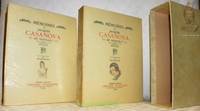
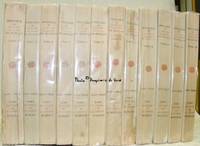
192486157Paris : Editions La SirÂne 1924. 255x165mm. brochÂŽ. couverture rempliÂŽe. DÂŽchirures au tome 8 10 et 12 autrement bon ÂŽtat. 10050 Editions La SirÂne unknown
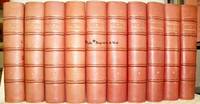
193186158Paris : Javal et Bourdeaux 1931-1932. 285x220mm. demi-chagrin rouge ˆ coins dos ˆ nerfs titre et filets dorÂŽs couvertures conservÂŽes.Exemplaire numÂŽrotÂŽ sur papier vÂŽlin du Marais 419/2335. TrÂs bel exemplaire. 26700 Javal et Bourdeaux unknown
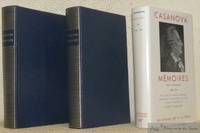
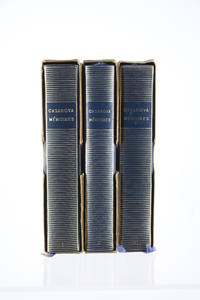
195888020Paris : Librairie Gallimard Nrf BibliothÂque de la PlÂŽiade 1958 1959 1960. 175x110mm. LV XV - 1253 1325Êpages reliure d'ÂŽditeur. Jaquette rhodo•de et jaquette imprimÂŽe. Bel exemplaire. 1409 Librairie Gallimard, Nrf BibliothÂque de la PlÂŽiade unknown
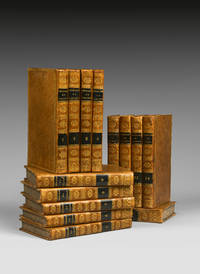
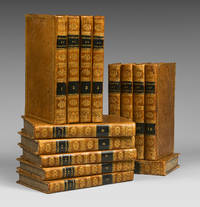
CBF20<p>Paris Tournachon-Molin 1825-1829.</p><p>14 volumes 166 x 93 mm iv xxviii 246 iv 310 iv 272 iv 288 iv 250 iv 258 iv 237 1 l. iv xii 278 iv 292 iv 299 iv 288 iv 292 iv 284 iv 346 pp.</p><p>Bound in full blond sheepskin gilt border around the covers flat decorated spines hinges and extremities of the spine slightly rubbed. <i>Contemporary binding.</i></p><p><b>"The first French edition"</b> J. Rives Childs 1956.</p><p>"<i>Quite rare</i>" J. Rive Childs.</p><p><b>Memoires. Published in Germany and translated by Sir Aubert de Vitry</b> translator of Goethe's Memoirs etc. with a preface by de Vitry.</p><p>"<i>The German edition of the Memoirs had been received so favorably that a Paris editor decided to bring out this pirated edition. It is thus the first French edition. However it is not the first French edition of the original French text but a translation of the Schütz edition and is therefore a translation of a translation</i>." J. Rives Childs.</p><p>This first French edition of 1825-1829 has a value identical to that of the 12-volumes French edition printed from 1826 to 1838: <i>"Brought 10 000 francs at auction in Paris in 1945 ; 15 000 in 1948 ; quoted at $150 in NY in 1945 for the 1825-1829 edition versus 15500 francs in 1946 for the Brockhaus edition of 1826-1838 and $100 to $150 in 1955."</i></p><p>Casanova's<i>Memoirs</i> are written in French. G. de Schutz first published a German version. The edition published in Paris by <i>Tournechon-Molin</i> in 1825 is a translation of the German version.</p><p><i>"The most famous Venetian adventurer Balzac Théophile Gautier and Roger de Beauvoir were inspired by certain chapters of Casanova's Memoirs which appeared at the height of the Romantic era."</i>Carteret.</p><p><i>"I consider Casanova's Memoirs to be the true Encyclopaedia of the eighteenth century".</i> Blaise Cendrars.</p><p><i>"Casanova that unparalleled mind whose every word is a line and every thought a book!"</i> Le Prince de Ligne.</p><p>In turns adventurer diplomat crook <i>Giacomo Casanova</i> 1725-1798 was also the only prisoner to escape from the prison of the Leads in Venice. At other times in his life he was one of the intellectuals of the time and was received in the European courts. As he became rich he led a life of madness and disorder. He was arrested by the Inquisition. He escaped and when he arrived in Paris in 1757 got in touch with the Marshal of Richelieu Crébillon Voisenon Fontenelle Favart and Rousseau.</p><p>In Geneva in 1760 he introduced himself to Voltaire. In London he met the Chevalier d'Eon and King George III in Berlin he met Frederick II and then in St Petersburg he had several meetings with Catherine II.</p><p>In his<i> Memoirs</i> <b>Casanova drew up a picture of Louis XV France's mores but also that of Italy and courts of Europe in general.</b></p><p>"<i>We know from the Memoires that he was constantly writing and that his baggage comprised in considerable part his papers</i> ". J. Rives Childs <i>Casanoviana</i> p. 108.</p><p>It has been said that Casanova's <i>Memoirs</i>are <i>Anticonfessions.</i></p><p><i>"I write neither the story of an illustrious man nor a novel. Worthy or unworthy my life is my material my material is my life. Having written it without ever believing that the desire to write it would come to me it may have an interesting character that it might not have if I had written it with the intention of writing it in my old age and what is more of publishing it."</i></p><p><i>"An attentive reader of the autobiographical works of Saint Augustine Montaigne and the Marquis d'Argent Casanova was familiar with the work of Rousseau whom he often criticized but without being able to conceal an admiration mixed with envy. He would say: "I will not give my story the title of Confessions because since an extravagant has soiled it I can no longer suffer it. But it will be a confession if ever there was one. People will tell me that a book which alarms virtue is bad. I confess that those whose favourite virtue is chastity must refrain from reading me.".</i></p><p>The book's influence spread overseas. An article published in the <i>North American Review</i> in 1835 was devoted to <i>Casanova</i>'s <i>Memoirs</i>: <i>"It presents a curious and not uninstructive picture of the state of society in Europe at the period immediately preceding the French Revolution".</i></p><p>The author of the article refers to the author's arrest by the Inquisition as an element of comparison between European and American politics: "<i>The constant repetition of similar cases of the violation of private right by the old governments of Europe was among the causes that operated most strongly in bringing on the revolutionary movements of the last century. We are not blind to the inconveniences abuses and dangers of our political system but it gives us a permanent national peace instead of the wars that constantly desolate Europe</i>." <i>The North American Review</i> XLI p.46-69.</p><p><b>In 1834 the work was put on the index of prohibited books.</b></p><p>"Sold in broad daylight or under the cloak the <i>Memoirs</i>made one hell of a fuss and everywhere people talked about them either to doubt their authenticity or to discuss the veracity of the Venetian's love confessions or to inspire themselves in the romantic circles Balzac Théophile Gautier Gorge Sand Roger de Beauvoir Eugène Sue before Émile Zola and Pierre Louys drew according to their imagination on the vast reservoir of adventures that Casanova made available to them.</p><p>Especially after the "Great War" the price of any work by Jacques Casanova became unaffordable and unrealistic. The Brockhaus edition for example oscillated between 99 francs bound P.-A. Chéramy sale and 405 francs in wrappers same sale session of Monday 21 April 1913. In 1917 at the J. P. sale Bosse expert this edition in a half sheepskin binding with speckled edges was sold for 295 francs.</p><p>From now on do not expect to obtain a copy for less than a thousand or 1500 francs when the opportunity arises if it arises!" J. Pollio.</p><p>The last copy recorded on the French market bound later in half-calf with foxing was sold for 75000 francs in May 1996 €11500 26 years ago.</p><p>The "most important heritage acquisition" by the French National Library was finalized on 18 February 2010. The Minister of Culture <i>Frédéric Mitterrand</i> signed the deed that officially brings the manuscripts of Casanova's <i>Memoirs</i> into the B.n.F; a 3700-page unbound manuscript declared to be of <i>"major heritage interest".</i> The work was the object of envy of major libraries and collectors around the world since the 1960s.</p><p>Giacomo Girolano Casanova in turn financial consultant diplomat crook gambler but always an enlightened intellectual in his own way began writing his memoirs in a French strewn with crossing-outs and Italianisms around 1789. In other words<i> "in the twilight of his life as in the twilight of the century"</i> agitated by <i>"revolutionary turmoil"</i> as the Minister of Culture pointed out. It took three years and the intervention of a generous patron from the financial world who paid nearly 7 million euros to complete this exceptional acquisition.</p><p>During the ceremony the Minister of Culture paid tribute to <i>"one of the great authors of eighteenth-century French literature" </i>and to his <i>"freedom of tone and expression which is nourished by a true freedom of conduct".</i></p><p><b>A precious copy pure and without foxing exceedingly rare in full contemporary decorated binding.</b></p><p><br /></p><p><u>Français</u></p><p>Paris Tournachon-Molin 1825-1829.</p><p>14 volumes iv xxviii 246 iv 310 iv 272 iv 288 iv 250 iv 258 iv 237 1 f. iv xii 278 iv 292 iv 299 iv 288 iv 292 iv 284 iv 346 p.</p><p>Reliés en pleine basane blonde racinée roulette dorée en encadrement autour des plats dos lisses ornés roulette dorée sur les coupes charnières et coiffes légèrement frottées. <i>Reliure de l'époque</i>.</p><p>166 x 93 mm.</p><p><b>"The first French edition"</b> J. Rives Childs 1956.</p><p>"<i>Quite rare</i>" J. Rive Childs.</p><p><b>Mémoires…. Publiés en Allemagne et traduits par M. Aubert de Vitry</b> traducteur des Mémoires de Goethe etc. avec une préface par de Vitry.</p><p>"<i>The German edition of the Memoirs had been received so favorably that a Paris editor decided to bring out this pirated edition. It is thus the first French edition. However it is not the first French edition of the original French text but a translation of the Schütz edition and is therefore a translation of a translation</i>." J. Rives Childs.</p><p>Cette première édition française de 1825-1829 a une valeur identique à celle de l'édition française en 12 volumes imprimée de 1826 à 1838 : " <i>Brought 10 000 francs at auction in Paris in 1945 ; 15 000 in 1948 ; quoted at $ 150 in NY in 1945 pour l'édition de 1825-1829 contre 15 500 Francs en 1946 pour l'édition Brockhaus de 1826-1838 et 100 à 150 $ en 1955</i>. "</p><p>Les <i>Mémoires</i> de <i>Casanova</i> sont écrits en français. G. de Schutz publie d'abord une version allemande. L'édition publiée à Paris chez <i>Tournechon-Molin</i>en 1825 est une traduction de la version allemande.</p><p>" <i>Aventurier vénitien des plus célèbres Balzac Théophile Gautier Roger de Beauvoir se sont inspirés de certains chapitres des Mémoires de Casanova lesquels parurent en pleine effervescence romantique</i> ". Carteret.</p><p>" <i>Je considère les Mémoires de Casanova comme la véritable Encyclopédie du XVIIIe siècle</i>". Blaise Cendrars.</p><p>" <i>Casanova cet esprit sans pareil dont chaque mot est un trait et chaque pensée un livre !</i> " Le Prince de Ligne.</p><p>Tour à tour aventurier diplomate escroc <i>Giacomo Casanova</i>1725-1798 a aussi été le seul prisonnier à s'évader de la prison des Plombs à Venise. A d'autres moments de sa vie il fait partie des intellectuels de l'époque il est reçu dans les cours européennes. Devenu riche il mène une vie de folie et de désordre. Il est arrêté par l'Inquisition. Il s'évade et arrivé à Paris en 1757 se met en rapport avec le maréchal de Richelieu Crébillon Voisenon Fontenelle Favart Rousseau.</p><p>A Genève en 1760 il se présente à Voltaire. À Londres il rencontre le chevalier d'Éon et le roi Georges III à Berlin il fréquente Frédéric II puis à Saint-Pétersbourg il a plusieurs entrevues avec Catherine II.</p><p><b>Dans ses </b><i><b>Mémoires</b></i><b> Casanova dresse un tableau des mœurs de la France de Louis XV de l'Italie et des cours de l'Europe en général.</b></p><p>"<i>We know from the Memoires that he was constantly writing and that his baggage comprised in considerable part his papers</i> ". J. Rives Childs <i>Casanoviana</i> p. 108.</p><p>On a dit que les <i>Mémoires</i> de Casanova étaient des <i>Anticonfessions</i>.</p><p>" <i>Je n'écris ni l'histoire d'un illustre ni un roman. Digne ou indigne ma vie est ma matière ma matière est ma vie. L'ayant faite sans avoir jamais cru que l'envie de l'écrire me viendrait elle peut avoir un caractère intéressant qu'elle n'aurait peut-être pas si je l'avais faite avec l'intention de l'écrire dans mes vieux jours et qui plus est de la publier</i>".</p><p>" <i>Lecteur attentif des œuvres autobiographiques de Saint Augustin de Montaigne et du marquis d'Argent Casanova connaît l'œuvre de Rousseau qu'il critique souvent mais sans pouvoir cacher une admiration mêlée d'envie. Il dira " Je ne donnerai pas à mon histoire le titre de Confessions car depuis qu'un extravagant l'a souillé je ne peux plus le souffrir. Mais elle sera une confession si jamais il en fut. On me dira qu'un livre qui alarme la vertu est mauvais. J'avoue que ceux dont la vertu préférée est la chasteté doivent s'abstenir de me lire.</i> ".</p><p>L'influence de l'ouvrage s'étend outremer. Un article publié dans la <i>North American Review</i> datée de 1835 est consacré aux <i>Mémoires</i> de <i>Casanova </i>: " <i>It presents a curious and not uninstructive picture of the state of society in Europe at the period immediately preceding the French Revolution</i> ".</p><p>L'auteur de l'article évoque l'arrestation de l'auteur par l'Inquisition pour en faire un élément de comparaison entre les politiques européenne et américaine " <i>The constant repetition of similar cases of the violation of private right by the old governments of Europe was among the causes that operated most strongly in bringing on the revolutionary movements of the last century. We are not blind to the inconveniences abuses and dangers of our political system but it gives us a permanent national peace instead of the wars that constantly desolate Europe </i>". <i>The North American Review</i> xli p.46-69.</p><p><b>En 1834 l'ouvrage est mis à l'index des livres interdits. </b></p><p>" Vendus au grand jour ou sous le manteau les <i>Mémoires</i> firent un tapage d'enfer et partout l'on en parla soit pour douter de leur authenticité soit pour discuter la véracité des confessions amoureuses du Vénitien soit pour s'en inspirer dans les milieux romantiques Balzac Théophile Gautier Gorge Sand Roger de Beauvoir Eugène Sue avant Émile Zola et Pierre Louys puisèrent au gré de leur imagination dans le vaste réservoir d'aventures que Casanova mettait à leur disposition.</p><p>C'est surtout à la suite de la " grande guerre " que le prix de n'importe quelle œuvre de Jacques Casanova devint inabordable et chimérique. L'édition Brockhaus oscillait par exemple entre 99 francs reliée vente P.-A. Chéramy et 405 francs brochée même vente vacation du lundi 21 avril 1913. En 1917 la vente J. P. Bosse expert cette édition en demi-reliure basane tranches jaspées trouvait acquéreur à 295 francs.</p><p>N'espérez pas désormais obtenir un exemplaire moins d'un billet de mille ou de 1 500 francs quand l'occasion se présentera si elle se présente !. " J. Pollio.</p><p>Le dernier exemplaire référencé sur le marché français relié en demi veau postérieur avec rousseurs fut vendu 75 000 Francs en mai 1996 11 500 € il y a 25 ans.</p><p>" La plus grande acquisition patrimoniale " de la Bibliothèque nationale de France a été finalisée le 18 février 2010. Le Ministre de la Culture <i>Frédéric Mitterrand</i> a signé l'acte qui fait officiellement entrer à la B.n.F. les manuscrits des <i>Mémoires</i> de <i>Casanova</i> ; il s'agit d'un manuscrit de 3 700 pages non reliées déclaré " <i>bien d'intérêt patrimonial majeur</i> ". L'objet excitait la convoitise des grandes bibliothèques et des collectionneurs du monde entier depuis les années 1960.</p><p>Giacomo Girolano Casanova tour à tour financier diplomate escroc joueur mais toujours intellectuel éclairé à sa manière entame la rédaction de ses mémoires dans un français parsemé de ratures et d'italianismes aux alentours de 1789. Autant dire " <i>au crépuscule de son existence comme au crépuscule du siècle </i>" agité par les " <i>tourments révolutionnaires </i>" a signalé le ministre de la Culture. Il aura fallu trois ans et l'intervention d'un généreux mécène du milieu de la finance ayant déboursé près de 7 millions d'euros pour finaliser cette acquisition exceptionnelle.</p><p>Lors de la cérémonie le ministre de la Culture a rendu hommage à " <i>l'un des grands auteurs de la littérature française du XVIIIe siècle </i>" et à sa " <i>liberté de ton et de propos qui se nourrit d'une vraie liberté de conduite</i> ".</p><p><b>Précieux exemplaire pur et sans rousseur de la plus extrême rareté en pleine reliure décorée de l'époque.</b> </p> hardcover
196811427DESCH 1968. 1. softcover. DESCH paperback
187272573Bruxelles Brussels: J. Rozez 1872. Fine. J. Rozez Bruxelles Brussels 1872 14 x 22.80 cm 6 volumes reliés New edition. Printed on laid paper. Uncut copy with full margins. Contemporary half glazed morocco with chocolate corners signed on first endpaper by Smeers. Spine with 5 raised bands richly decorated gilt title-label volume labels and date. Top edges gilt. Occasional worming. Light traces of rubbing. Leaf 395 small angular lack. Superb copy. J. Rozez hardcover
195877070Paris: Gallimard Bibliothèque de La Pléiade 1958. Fine. Gallimard Bibliothèque de La Pléiade Paris 1958-1960 10.50 x 17.50 cm 3 volumes en reliures de l'éditeur sous étuis souples et cartonnés Bibliothèque de La Pléiade edition printed on Bible paper. Publisher's full grained blue sheep bindings blue tops smooth spines decorated with gilt fillets. A small tear to the cellophane at the head of the spine of the first volume. Handsome set complete with cellophane covers dust jackets except for the second volume and slipcases. Gallimard, Bibliothèque de La Pléiade unknown
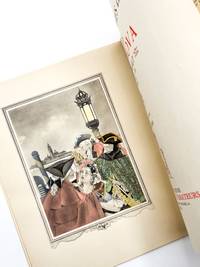
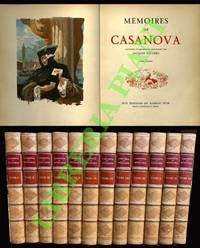
195554997Paris: Gibert Jeune Libraire d'Amateurs 1955. Near fine. Lavish French limited edition set of Casanova's infamous memoirs featuring elegant and erotic illustrations. Italian artist Brunelleschi moved to fin-de-siècle Paris where he worked as an artist illustrator and fashion designer. He designed sets and costumes for Folies Bergère in the 1920s including for Josephine Baker and for the Scala in Milan and the Roxy Theater in New York; according to Jane Merrill "his style was opulent yet humorous and light" 152. Among his known specialties was 18th-century Venetian styles and "refined coloring" both on their best display in this work. 2 volumes 10.5'' x 8'' each. Original cream pictorial wrappers with French flaps. In original cream paper slipcase. Illustrated by Brunelleschi with 32 full-page color plates and 79 black-and-white in-text images. 4 346 4; 4 338 6 pages. One of 3000 copies. Slipcase with moderate wear and bumping still intact. Wrappers with only light soil. Gibert Jeune Libraire d'Amateurs unknown
1970143324Cercle du bibliophile 1970. Hardcover. <b>Livre en français</b>. Couverture rigide. Chronologie et notices de Gilbert Sigaux. Notices historiques et biographiques de Jean Savant. 12 volumes d'environ 400 pages. Reliures de l'éditeur. Dos passés aux tomes 2 et 3. <i>ref. 143324</i> Cercle du bibliophile hardcover
98106Paris Javal & Bourdeaux LIMITED EDITION 2335: THIS NO. 2001. on Marais vellum paper. 1931. FRENCH LANGUAGE Superb ten volume set of Casanova’s works. 4to. Beautifully bound in a decorative blue morocco with stunning gilt decorations. Raised bands on spines. Gilt top edge. With original booksellers fredesieo d'almeich label. Size 11.5 x 9.5 inches In very good condition. Beautiful bindings. Spines gilt is a bit red tinted from at some point attempting to clean with wrong product. Volume 10 lower spine raised band slightly scuffed. Insides very clean & tight. 6-VI-330 pp. 6-310 pp. 6-306 pp. 6-314 pp. 6-310 pp. 6-326 pp. 6-308 pp. 6-300 pp. 6-300 pp. 6-300 pp. Illustrated with 200 full-page colour illustrations based on the original watercolours by Auguste LEROUX 2335 copies were printed. Paris, Javal & Bourdeaux LIMITED EDITION (2335): THIS NO. 2001. on Marais vellum paper. 1931 hardcover
188021520PARIS: Garnier Freres 1880. 8º Mayor.- Media piel lomera con nervios y florones dorados.- 8 tomos.- Tomo I: 507 páginas.- Tomo II: 530 páginas.- 4 páginas.- Tomo III: 516 páginas.- Tomo IV: 533 páginas.- Tomo V: 569 páginas.- Tomo VI: 563 páginas.- Tomo VII: 567 páginas.- Tomo VIII: 551 páginas. . Garnier Freres unknown
3-67005Paris Aux Editions du Rameau d'Or Paul Cotinaud senza data ma 1947-1950 dodici 12 volumi in-8vo elegante legatura d'amatore coeva in mezza pelle nocciola con angoli dorso a cinque nervi con titoli in oro su doppio tassello in cuoio rosso e ornamenti dorati piatti e risguardi in carta francese copertine originali conservate conservate all'interno pp. 216 231 232 252 242 260 254 246 281 249 229 233 tutti con capolettere animati finalini in nero e numerose bellissime illustrazioni colorate a mano presso l'atélier Maurice Beaufumé. Il testo riproduce quello della cosiddetta "edizione Laforgue" terminata nel 1838 con l'aggiunta dei due capitoli del tomo XII che furono ritrovati solo successivamente e che quindi a quell'edizione mancavano. Edizione di 1200 esemplari numerati "sur vélin des Papeteries Boucher. La nostra copia fa parte della tiratura ordinaria n. 804. Opera completa in dodici volumi in belle legature omogenee e in eccellente stato di conservazione con solo minime sbucciature alla pelle di alcuni volumi. unknown
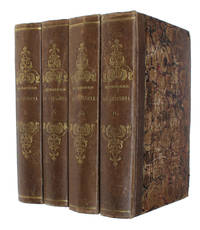
184360202Paris Paulin 1843. 8vo. Uniformly bound in four contemporary half cloth bindings with gilt lettering and ornamentation to spines. Previous owner's name to upper corner of pasted down front end-paper in all volumes. Light wear to extremities and light occassional brownspotting throughout primarily affecting first and least leaves as usual. A fine set. 4 600; 4 568; 4 607 4 583 pp. <br/><br/><em>Later edition of the Busoni-edition 1833-1837 in which he himself added passages. </em> hardcover
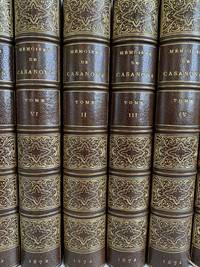
1872196958Bruxelles: J Rozez 1872. Hardcover. Good Cover have general wear leather damage corner/edge damage. Bookblock has age toning. Interior pages have age toning. French language text. Decorative leather boards red leather corners and spine. 5 band spine with gilt lettering. J Rozez hardcover
1334625549.Gpaperback. Good. Access codes and supplements are not guaranteed with used items. May be an ex-library book. paperback
1334949573.Gpaperback. Good. Access codes and supplements are not guaranteed with used items. May be an ex-library book. paperback
1334911088.Gpaperback. Good. Access codes and supplements are not guaranteed with used items. May be an ex-library book. paperback
1334897948.Gpaperback. Good. Access codes and supplements are not guaranteed with used items. May be an ex-library book. paperback
065618907X.Ghardcover. Good. Access codes and supplements are not guaranteed with used items. May be an ex-library book. hardcover
20181-2512009181GrandsClassiques.com 2018. Paperback. New. 318 pages. French language. 7.09x5.12x0.72 inches. GrandsClassiques.com paperback
1825LCS-18328<p><strong>" <em>The first French edition</em> " printed from 1825 to 1829 is " <em>quite rare</em> ".</strong></p><p><strong><em>"The most famous Venetian adventurer Balzac Théophile Gautier Roger de Beauvoir </em></strong></p><p><strong><em>were inspired by certain chapters of Casanova's Memoirs </em></strong></p><p><strong><em>which were published at the height of the Romantic era".</em></strong><strong> Carteret.</strong></p><p><strong><em>"I consider Casanova's Memoirs to be the true Encyclopedia of the eighteenth century". </em></strong></p><p><strong>Blaise Cendrars.</strong></p><p><strong><em>"Casanova that unparalleled mind whose every word is a line and every thought a book!" </em></strong></p><p><strong>Le Prince de Ligne.</strong></p><p><strong>A pure copy without foxing exceedingly rare in full contemporary binding.</strong></p><p>14 volumes 166 x 93 mm iv xxviii 246 iv 310 iv 272 iv 288 iv 250 iv 258 iv 237 1 l. iv xii 278 iv 292 iv 299 iv 288 iv 292 iv 284 iv 346 pp.</p><p>Bound in full blond sheepskin gilt border around the covers flat decorated spines hinges and extremities of the spine slightly rubbed. <em>Contemporary binding.</em></p><p>"The first French edition" J. Rives Childs 1956.</p><p>"<em>Quite rare</em>" J. Rive Childs.</p><p>Memoires. Published in Germany and translated by Sir Aubert de Vitry translator of Goethe's Memoirs etc. with a preface by de Vitry.</p><p>"<em>The German edition of the Memoirs had been received so favorably that a Paris editor decided to bring out this pirated edition. It is thus the first French edition. However it is not the first French edition of the original French text but a translation of the Schütz edition and is therefore a translation of a translation</em>." J. Rives Childs.</p><p>This first French edition of 1825-1829 has a value identical to that of the 12-volumes French edition printed from 1826 to 1838: <em>"Brought 10 000 francs at auction in Paris in 1945 ; 15 000 in 1948 ; quoted at $150 in NY in 1945 for the 1825-1829 edition versus 15500 francs in 1946 for the Brockhaus edition of 1826-1838 and $100 to $150 in 1955."</em></p><p>Casanova's <em>Memoirs</em> are written in French. G. de Schutz first published a German version. The edition published in Paris by <em>Tournachon-Molin</em> in 1825 is a translation of the German version.</p><p><em>"The most famous Venetian adventurer Balzac Théophile Gautier and Roger de Beauvoir were inspired by certain chapters of Casanova's Memoirs which appeared at the height of the Romantic era."</em> Carteret.</p><p><em>"I consider Casanova's Memoirs to be the true Encyclopaedia of the eighteenth century".</em> Blaise Cendrars.</p><p><em>"Casanova that unparalleled mind whose every word is a line and every thought a book!"</em> Le Prince de Ligne.</p><p>In turns adventurer diplomat crook <em>Giacomo Casanova</em> 1725-1798 was also the only prisoner to escape from the prison of the Leads in Venice. At other times in his life he was one of the intellectuals of the time and was received in the European courts. As he became rich he led a life of madness and disorder. He was arrested by the Inquisition. He escaped and when he arrived in Paris in 1757 got in touch with the Marshal of Richelieu Crébillon Voisenon Fontenelle Favart and Rousseau.</p><p>In Geneva in 1760 he introduced himself to Voltaire. In London he met the Chevalier d'Eon and King George III in Berlin he met Frederick II and then in St Petersburg he had several meetings with Catherine II.</p><p>In his<em> Memoirs</em> Casanova drew up a picture of Louis XV xv France's mores but also that of Italy and courts of Europe in general.</p><p>" <em>We know from the Memoires that he was constantly writing and that his baggage comprised in considerable part his papers</em> ". J. Rives Childs <em>Casanoviana</em> p. 108.</p><p>It has been said that Casanova's <em>Memoirs</em> are <em>Anticonfessions.</em></p><p><em>"I write neither the story of an illustrious man nor a novel. Worthy or unworthy my life is my material my material is my life. Having written it without ever believing that the desire to write it would come to me it may have an interesting character that it might not have if I had written it with the intention of writing it in my old age and what is more of publishing it."</em></p><p><em>"An attentive reader of the autobiographical works of Saint Augustine Montaigne and the Marquis d'Argent Casanova was familiar with the work of Rousseau whom he often criticized but without being able to conceal an admiration mixed with envy. He would say: "I will not give my story the title of Confessions because since an extravagant has soiled it I can no longer suffer it. But it will be a confession if ever there was one. People will tell me that a book which alarms virtue is bad. I confess that those whose favourite virtue is chastity must refrain from reading me.".</em></p><p>The book's influence spread overseas. An article published in the <em>North American Review</em> in 1835 was devoted to <em>Casanova</em>'s <em>Memoirs</em>: <em>"It presents a curious and not uninstructive picture of the state of society in Europe at the period immediately preceding the French Revolution".</em></p><p>The author of the article refers to the author's arrest by the Inquisition as an element of comparison between European and American politics: "<em>The constant repetition of similar cases of the violation of private right by the old governments of Europe was among the causes that operated most strongly in bringing on the revolutionary movements of the last century. We are not blind to the inconveniences abuses and dangers of our political system but it gives us a permanent national peace instead of the wars that constantly desolate Europe</em>." <em>The North American Review</em> XLI p.46-69.</p><p>In 1834 the work was put on the index of prohibited books.</p><p>"Sold in broad daylight or under the cloak the <em>Memoirs </em>made one hell of a fuss and everywhere people talked about them either to doubt their authenticity or to discuss the veracity of the Venetian's love confessions or to inspire themselves in the romantic circles Balzac Théophile Gautier Gorge Sand Roger de Beauvoir Eugène Sue before Émile Zola and Pierre Louys drew according to their imagination on the vast reservoir of adventures that Casanova made available to them.</p><p>Especially after the "Great War" the price of any work by Jacques Casanova became unaffordable and unrealistic. The Brockhaus edition for example oscillated between 99 francs bound P.-A. Chéramy sale and 405 francs in wrappers same sale session of Monday 21 April 1913. In 1917 at the J. P. sale Bosse expert this edition in a half sheepskin binding with speckled edges was sold for 295 francs.</p><p>From now on do not expect to obtain a copy for less than a thousand or 1500 francs when the opportunity arises if it arises!" J. Pollio.</p><p>The last copy recorded on the French market bound later in half-calf with foxing was sold for 75000 francs in May 1996 11500 26 years ago.</p><p>The "most important heritage acquisition" by the French National Library was finalized on 18 February 2010. The Minister of Culture <em>Frédéric Mitterrand</em> signed the deed that officially brings the manuscripts of Casanova's <em>Memoirs</em> into the B.n.F; a 3700-page unbound manuscript declared to be of <em>"major heritage interest".</em> The work was the object of envy of major libraries and collectors around the world since the 1960s.</p><p>Giacomo Girolano Casanova in turn financial consultant diplomat crook gambler but always an enlightened intellectual in his own way began writing his memoirs in a French strewn with crossing-outs and Italianisms around 1789. In other words<em> "in the twilight of his life as in the twilight of the century"</em> agitated by <em>"revolutionary turmoil"</em> as the Minister of Culture pointed out. It took three years and the intervention of a generous patron from the financial world who paid nearly 7 million euros to complete this exceptional acquisition.</p><p>During the ceremony the Minister of Culture paid tribute to <em>"one of the great authors of eighteenth-century French literature" </em>and to his <em>"freedom of tone and expression which is nourished by a true freedom of conduct".</em></p><p>A precious copy pure and without foxing exceedingly rare in full contemporary decorated binding.</p><p>FRANCAIS</p><p><strong>" <em>The first French edition</em> " imprimée de 1825 à 1829 is " <em>quite rare</em> ".</strong></p><p><strong>" <em>Aventurier vénitien des plus célèbres Balzac Théophile Gautier Roger de Beauvoir </em></strong></p><p><strong><em>se sont inspirés de certains chapitres des Mémoires de Casanova </em></strong></p><p><strong><em>lesquels parurent en pleine effervescence romantique</em></strong><strong> ". Carteret.</strong></p><p><strong>" <em>Je considère les Mémoires de Casanova comme la véritable Encyclopédie du XVIIIe siècle </em>". </strong></p><p><strong>Blaise Cendrars.</strong></p><p><strong>" <em>Casanova cet esprit sans pareil dont chaque mot est un trait et chaque pensée un livre !</em> " </strong></p><p><strong>Le Prince de Ligne.</strong></p><p><strong>Exemplaire pur sans rousseur de la plus extrême rareté en pleine reliure de l'époque.</strong></p><p>14 volumes iv xxviii 246 iv 310 iv 272 iv 288 iv 250 iv 258 iv 237 1 f. iv xii 278 iv 292 iv 299 iv 288 iv 292 iv 284 iv 346 p.</p><p>Reliés en pleine basane blonde racinée roulette dorée en encadrement autour des plats dos lisses ornés roulette dorée sur les coupes charnières et coiffes légèrement frottées. <em>Reliure de l'époque</em>.</p><p>166 x 93 mm.</p><p>"The first French edition" J. Rives Childs 1956.</p><p>"<em>Quite rare</em>" J. Rive Childs.</p><p>Mémoires. Publiés en Allemagne et traduits par M. Aubert de Vitry traducteur des Mémoires de Goethe etc. avec une préface par de Vitry.</p><p>"<em>The German edition of the Memoirs had been received so favorably that a Paris editor decided to bring out this pirated edition. It is thus the first French edition. However it is not the first French edition of the original French text but a translation of the Schütz edition and is therefore a translation of a translation</em>." J. Rives Childs.</p><p>Cette première édition française de 1825-1829 a une valeur identique à celle de l'édition française en 12 volumes imprimée de 1826 à 1838 : " <em>Brought 10 000 francs at auction in Paris in 1945 ; 15 000 in 1948 ; quoted at $ 150 in NY in 1945 pour l'édition de 1825-1829 contre 15 500 Francs en 1946 pour l'édition Brockhaus de 1826-1838 et 100 à 150 $ en 1955</em>. "</p><p>Les <em>Mémoires</em> de <em>Casanova</em> sont écrits en français. G. de Schutz publie d'abord une version allemande. L'édition publiée à Paris chez <em>Tournechon-Molin</em> en 1825 est une traduction de la version allemande.</p><p>" <em>Aventurier vénitien des plus célèbres Balzac Théophile Gautier Roger de Beauvoir se sont inspirés de certains chapitres des Mémoires de Casanova lesquels parurent en pleine effervescence romantique</em> ". Carteret.</p><p>" <em>Je considère les Mémoires de Casanova comme la véritable Encyclopédie du XVIIIe siècle</em> ". Blaise Cendrars.</p><p>" <em>Casanova cet esprit sans pareil dont chaque mot est un trait et chaque pensée un livre !</em> " Le Prince de Ligne.</p><p>Tour à tour aventurier diplomate escroc <em>Giacomo Casanova</em> 1725-1798 a aussi été le seul prisonnier à s'évader de la prison des Plombs à Venise. A d'autres moments de sa vie il fait partie des intellectuels de l'époque il est reçu dans les cours européennes. Devenu riche il mène une vie de folie et de désordre. Il est arrêté par l'Inquisition. Il s'évade et arrivé à Paris en 1757 se met en rapport avec le maréchal de Richelieu Crébillon Voisenon Fontenelle Favart Rousseau.</p><p>A Genève en 1760 il se présente à Voltaire. À Londres il rencontre le chevalier d'Éon et le roi Georges III à Berlin il fréquente Frédéric II puis à Saint-Pétersbourg il a plusieurs entrevues avec Catherine II.</p><p>Dans ses <em>Mémoires</em> Casanova dresse un tableau des murs de la France de Louis XV de l'Italie et des cours de l'Europe en général.</p><p>" <em>We know from the Memoires that he was constantly writing and that his baggage comprised in considerable part his papers</em> ". J. Rives Childs <em>Casanoviana</em> p. 108.</p><p>On a dit que les <em>Mémoires</em> de Casanova étaient des <em>Anticonfessions</em>.</p><p>" <em>Je n'écris ni l'histoire d'un illustre ni un roman. Digne ou indigne ma vie est ma matière ma matière est ma vie. L'ayant faite sans avoir jamais cru que l'envie de l'écrire me viendrait elle peut avoir un caractère intéressant qu'elle n'aurait peut-être pas si je l'avais faite avec l'intention de l'écrire dans mes vieux jours et qui plus est de la publier</em> ".</p><p>" <em>Lecteur attentif des uvres autobiographiques de Saint Augustin de Montaigne et du marquis d'Argent Casanova connaît l'uvre de Rousseau qu'il critique souvent mais sans pouvoir cacher une admiration mêlée d'envie. Il dira " Je ne donnerai pas à mon histoire le titre de Confessions car depuis qu'un extravagant l'a souillé je ne peux plus le souffrir. Mais elle sera une confession si jamais il en fut. On me dira qu'un livre qui alarme la vertu est mauvais. J'avoue que ceux dont la vertu préférée est la chasteté doivent s'abstenir de me lire.</em> ".</p><p>L'influence de l'ouvrage s'étend outremer. Un article publié dans la <em>North American Review</em> datée de 1835 est consacré aux <em>Mémoires</em> de <em>Casanova </em>: " <em>It presents a curious and not uninstructive picture of the state of society in Europe at the period immediately preceding the French Revolution</em> ".</p><p>L'auteur de l'article évoque l'arrestation de l'auteur par l'Inquisition pour en faire un élément de comparaison entre les politiques européenne et américaine " <em>The constant repetition of similar cases of the violation of private right by the old governments of Europe was among the causes that operated most strongly in bringing on the revolutionary movements of the last century. We are not blind to the inconveniences abuses and dangers of our political system but it gives us a permanent national peace instead of the wars that constantly desolate Europe </em>". <em>The North American Review</em> xli p.46-69.</p><p>En 1834 l'ouvrage est mis à l'index des livres interdits.</p><p>" Vendus au grand jour ou sous le manteau les <em>Mémoires</em> firent un tapage d'enfer et partout l'on en parla soit pour douter de leur authenticité soit pour discuter la véracité des confessions amoureuses du Vénitien soit pour s'en inspirer dans les milieux romantiques Balzac Théophile Gautier Gorge Sand Roger de Beauvoir Eugène Sue avant Émile Zola et Pierre Louys puisèrent au gré de leur imagination dans le vaste réservoir d'aventures que Casanova mettait à leur disposition.</p><p>C'est surtout à la suite de la " grande guerre " que le prix de n'importe quelle uvre de Jacques Casanova devint inabordable et chimérique. L'édition Brockhaus oscillait par exemple entre 99 francs reliée vente P.-A. Chéramy et 405 francs brochée même vente vacation du lundi 21 avril 1913. En 1917 la vente J. P. Bosse expert cette édition en demi-reliure basane tranches jaspées trouvait acquéreur à 295 francs.</p><p>N'espérez pas désormais obtenir un exemplaire moins d'un billet de mille ou de 1 500 francs quand l'occasion se présentera si elle se présente !. " J. Pollio.</p><p>Le dernier exemplaire référencé sur le marché français relié en demi veau postérieur avec rousseurs fut vendu 75 000 Francs en mai 1996.</p><p>" La plus grande acquisition patrimoniale " de la Bibliothèque nationale de France a été finalisée le 18 février 2010. Le Ministre de la Culture <em>Frédéric Mitterrand</em> a signé l'acte qui fait officiellement entrer à la B.n.F. les manuscrits des <em>Mémoires</em> de <em>Casanova</em> ; il s'agit d'un manuscrit de 3 700 pages non reliées déclaré " <em>bien d'intérêt patrimonial majeur</em> ". L'objet excitait la convoitise des grandes bibliothèques et des collectionneurs du monde entier depuis les années 1960.</p><p>Giacomo Girolano Casanova tour à tour financier diplomate escroc joueur mais toujours intellectuel éclairé à sa manière entame la rédaction de ses mémoires dans un français parsemé de ratures et d'italianismes aux alentours de 1789. Autant dire " <em>au crépuscule de son existence comme au crépuscule du siècle </em>" agité par les " <em>tourments révolutionnaires </em>" a signalé le ministre de la Culture. Il aura fallu trois ans et l'intervention d'un généreux mécène du milieu de la finance ayant déboursé près de 7 millions d'euros pour finaliser cette acquisition exceptionnelle.</p><p>Lors de la cérémonie le ministre de la Culture a rendu hommage à " <em>l'un des grands auteurs de la littérature française du XVIIIe siècle </em>" et à sa " <em>liberté de ton et de propos qui se nourrit d'une vraie liberté de conduite</em> ".</p><p>Précieux exemplaire pur et sans rousseur de la plus extrême rareté en pleine reliure décorée de l'époque.</p> Tournachon-Molin.
1505586097.Gpaperback. Good. Access codes and supplements are not guaranteed with used items. May be an ex-library book. paperback
1505576792.Gpaperback. Good. Access codes and supplements are not guaranteed with used items. May be an ex-library book. paperback