BAZIRE (Edmond).Livre Rare Book

2 109 résultats
1884UDG-211BAZIRE (Edmond). Manet. Paris, A. Quantin, 1884. In-8, édition originale de la première biographie d'Édouard Manet, publiée seulement neuf mois après sa mort, par son ami, Edmond Bazire. Illustrée de nombreuses compositions in-texte, d'un fac-similé d'une lettre de Manet à Madame Guérard, de 3 eaux-fortes de H. Guérard et 6 héliogravures d'après des oeuvres de Manet et de 2 eaux-fortes originales d'Édouard Manet ("L'Odalisque" et "La convalescente") Reliure demi-maroquin marron foncé à coins, dos à 5 nerfs, les caissons ornés d'un fer à la palette de peintre, titre, auteur et date dorés, couvertures conservées, signée L. Feuillet. Belle et rare édition, bien complète des deux superbes eaux-fortes originales de l'artiste, encore plus désirable en reliure signée. (quelques frottements à la reliure, notamment aux nerfs, petite bande de rousseurs en marge de "La femme au carlin" et "Argenteuil")
Very Good Turkish, Ottoman (1500-1928) Original brown leather photo album including 31 large gelatin silver photographs. Album size: 23x31 cm. Photo sizes: 16,5x22,5 cm. No captions. Each photo is mounted on album leaves and separated with tissue guards. Historically significant photo album including attractive photographs showing the process of the construction and launchings of the first two Turkish submarines at the Fijenoord Shipyard in Rotterdam, by German and Turkish engineers, under the secret project "NV Ingenieurskantoor voor Scheepsbouw (i.e. Engineer-office for Shipbuilding) which was a Dutch dummy company set up in The Hague and funded by the Reichsmarine after World War I in order to maintain and develop German submarine know-how and to circumvent the limitations set by the Treaty of Versailles in 1919. IvS first designed two submarines based on the World War I UB III of the Kaiserliche Marine. Both were built by the Fijenoord shipyard in Rotterdam in 1927 and sold to Turkey, which named them TCG Birinci Inönü and Ikinci Inönü. Photos show the Turkish and German commissions of engineers including Ata[ullah] Nutku who is the first Turkish shipbuilder and designer as well as the process of construction of these two Turkish submarines and launching at the Fijenoord Shipyard. The first two submarines built during the Republic era were U-Boats designed based on the UB-III class, one of the German submarine classes of the First World War era, ordered in 1925, received in 1928, and built at the Fijenoord shipyard in the Netherlands. NV Ingenieurskantoor voor Scheepsbouw (Dutch: engineer-office for shipbuilding) designed several submarine types for paying countries, including the Soviet S-class submarine, as well as the prototypes for the German Type II submarines and Type VII submarines. The company was a joint venture by the German shipyards AG Vulcan Stettin (located in Stettin and Hamburg), the Krupp-owned Germaniawerft in Kiel, and AG Weser in Bremen. Design work was carried out at the facilities of these companies in Germany. At the time of IvS, the Germans were bound by the Treaty of Versailles, signed in 1919. This treaty, among other terms, demanded that all German U-boats be destroyed or given to other nations. Thus the Reichsmarine was left without a submarine capability, and IvS was created to work around these restrictions. The work of the company was a major factor in the foundation of the Kriegsmarine of World War II. The first designed two U-Boats TCG Birinci Inönü and Ikinci Inönü were followed by the Submarino E-1 built-in 1930 by the Echevarrieta y Larrinaga shipyard in Cádiz, Spain, initially for the Spanish Navy, but mainly as a prototype of the German Type I submarine. However, the Spanish lost interest in the E-1, and it was also sold to Turkey in 1935 as the TCG Gür.
18575980Paris Hangard-Maugé 1857 in-4° Fort 344+280 ( I )+16+np ( II )+np ( III ). Histoire du costume et de l'ameublement et des arts et industries qui s'y rattachent, sous la direction de Hangard-Maugé, dessins de CLus Ciappori, introduction générale et texte explicatif de Ch. Louandre, impressions en couleur par Hangard-Maugé ( chromolithographies ). Vol. I (tome premier) : introduction générale, frontispice ; vol.II (tome premier) : 145 planches du Vè au XIVè, non paginées ; vol. III (tome deuxième) : 278 planches du XVè au XVIIè, non paginées. Têtes dorées, dos à 5 nerfs illustré de caissons dorés. frottis, coins et coupes élimé. mors fendu sur 3 cm sur un des vol.
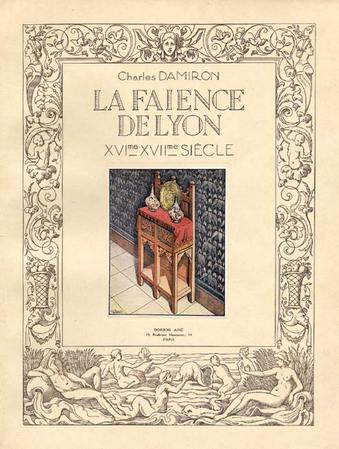
19266395Paris, Dorbon-Aîné (Lyon, Imprimerie Rey et Bellegarde -Ain- pour les planches en couleurs ou en héliogravure), 1926 ; deux tomes, grand in-4, brochés ; (2) ff. blancs, XI, (1 bl.), 68, (3) planches recto en noir et blanc représentant 20 vignettes, (4) pp. dont 3 blanches, XXIII planches recto, dont 11 en couleurs, toutes protégées par des serpentes légendées, représentant 109 pièces, (2) pp., (2) ff. blancs, couverture crème rempliée illustrée en couleurs avec large encadrement à décor Renaissance ; (1) f. blanc, (4), 50, (2) pp., XVI planches recto, dont 6 en couleurs, avec serpentes légendées, représentant 115 pièces, (2) pp., couverture crème rempliée, illustrée en couleurs avec large encadrement à décor rocaille ; les décors des deux couvertures sont de Ch. Repelin.
Very Good Turkish, Ottoman (1500-1928) Original gelatin silver photograph mounted on cardboard. Cardboard size: 30x36 cm, photo size: 17x23 cm. Descriptive text on the bottom of print in Ottoman script (Old Turkish with Arabic letters). Extremely rare souvenir photograph of 44 Turkish Presidency Orchestra members of the Mobile Exhibition [or Floating Exhibition, or Touring Exhibition] in 1926, with conductor Zeki Bey, Karadeniz ship [i.e. The Black Sea ship] and its route during the exhibition on the map in Ottoman showing 18 main ports of Europe. The orchestra gave concerts in the ports of Le Havre, Marseille, Genoa, Venice, Trieste, Barcelona, Liverpool, Antwerp, London, Hamburg, Stockholm, Helsinki, Leningrad, Danzig, Copenhagen, Amsterdam, Batumi, Odessa, Constanta, and Varna as part of the three-month tour. Seyyar Sergi [i.e. The Mobile Exhibition] was created in the Black Sea Ferry in 1926 as an international propaganda tool in the early Republican period. The ship containing Turkish products and artworks visited the major ports of Europe during its three-month journey and received accolades from the western countries. The Black Sea Ferry functioned not only as a merchant ship but also as a propaganda tool representing the new Turkish image during the floating exhibition. Onboard proms, elegance and refinement of staff were seen as a mirror of the Republic of Turkey by Western audiences. The Mobile Exhibition was a symbol of the strong will and determination that the Republic of Turkey, led by Mustafa Kemal Pasha, has put forward toward modernization. (Source: A Propaganda and Publicity Event of the Republic of Turkey: Mobile Exhibition and Europe Travel of 1926). Additionally, the book titled Seyyâr sergi ile seyahât intibâlari. [i.e. Description of and memories from Turkish Mobile Exhibition printed in 1928. First edition of this rare book by Arseven describing his experiences during this trip and his impressions of the places he saw. Arseven was a Turkish painter, writer, and politician. He made contributions to various fields, including photography, literary art history, theater, cinema, architecture, and urbanism. He was one of the first to introduce the scholastic disciplines of the history of art and architecture and urbanism to Turkey. He pioneered a unique "Turkish art" and pioneered the acceptance of the Turkish art concept. His 5-volume Art Encyclopedia is his most recognizable work. During World War I, he was at Kadiköy Municipality Branch Directorate and then organized exhibition arrangements for artists in Europe. Also during World War I, while in Germany he and his friends founded a company called Transorient Film. In 1917, a contemporary adaptation of Goethe's Faust was filmed in Munich in the name of "Die Tote Watch." Due to his experiences in art and exhibitions, Turkey, after the proclamation of the Republic, organized a traveling exhibition that will take three months to introduce itself to Europe along with the new Turkey export products. In addition to businessmen, many intellectuals and artists, including Celâl Esat Arseven, were assigned to the exhibition organized on the 'Black Sea' cruise. The Black Sea cruise has been on duty at sixteen important ports in twelve European countries. Those ports and cities: Batoum, Odessa, Constanza, Varna, Istanbul, Trieste, Venezia (Venice), Genova (Genoa), Marseille (Marseilles), Barcelona, Havres, Anvers (Antwerp), London, Liverpool, Hamburg, Amsterdam, Danzig, Kopenhag (Copenhagen), Stockholm, Helsingborg (Helsing), Leningrad. The ship traveled 10 thousand miles in 86 days and returned to Istanbul on 5 September 1926. Özege 17939.; TBTK 4759. Totaly nine copies in OCLC: 26232123 / 13081396 / 1030749227.
Very Good Turkish, Ottoman (1500-1928) Original nineteen mostly large photographs by Ali Enis Oza. Eight photos: 18x13 cm, six photos: 23x16,5 cm, two photos: 25x18 cm, one photo: 15x10 cm, one photo: 28,5x18 cm, one photo: 25,5x20,5 cm. Some of them are mounted on cardboards and several ones have "Ali Eniss" as studio sign on photograph papers. Slightly chipped on extremities on two photos, otherwise a very good collection. A fine photograph collection by Turkish photographer Ali Enis Oza, shot his photographs in the early Republican period of Istanbul. His photos are extremely rare in the market and institutional holdings. This collection includes architectural buildings in very artistic style like Camondo Stairs, mosques of Istanbul, scenes from the shores of the Bosphorus, beaches, calligraphic plates, and scenes from the Galata Bridge with a pair of the earliest Republican arches in Ottoman script, snowy ground, and trees, etc. Social life and figures are in almost all photos of him. Ali Enis Oza started photography in 1900 and studied photography in Paris. He wouldn't use a small format machine. Whatever size he wanted to take the photos in, he would take it with the film in the same size. It did not enlarge or reduce in print. When he was going to shoot in a large format, he would take a few people with him to transport his equipment. He was interested in the natural and historical beauties of our country, Ottoman architecture, calligraphy, ornamentation, and handicrafts. (Source: Sanat Garaji Online).
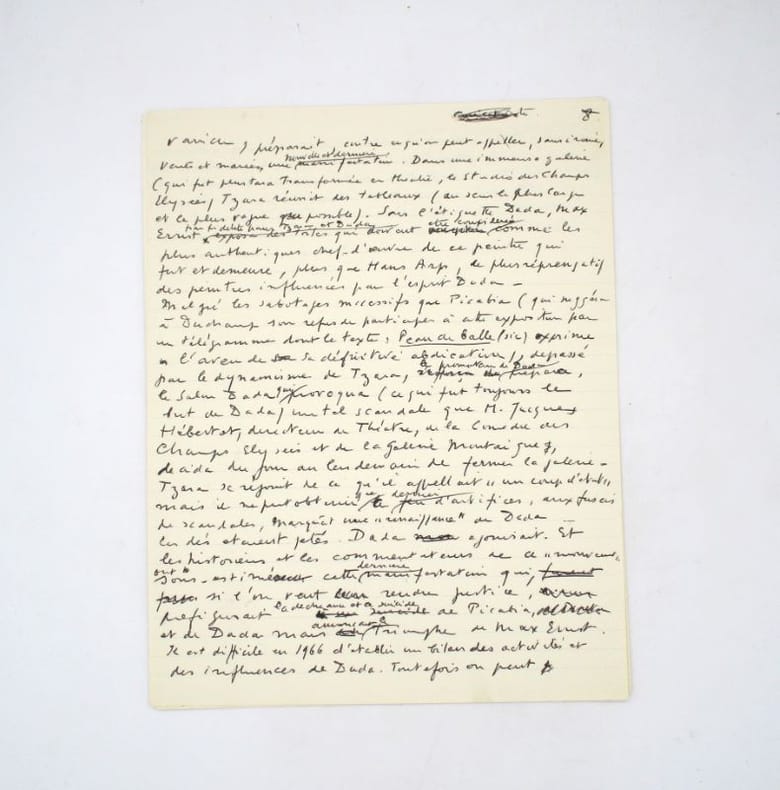
19392S.l., [1966 ?] In-4, [9] ff., en feuilles (3 minuscules déchirures marginales).
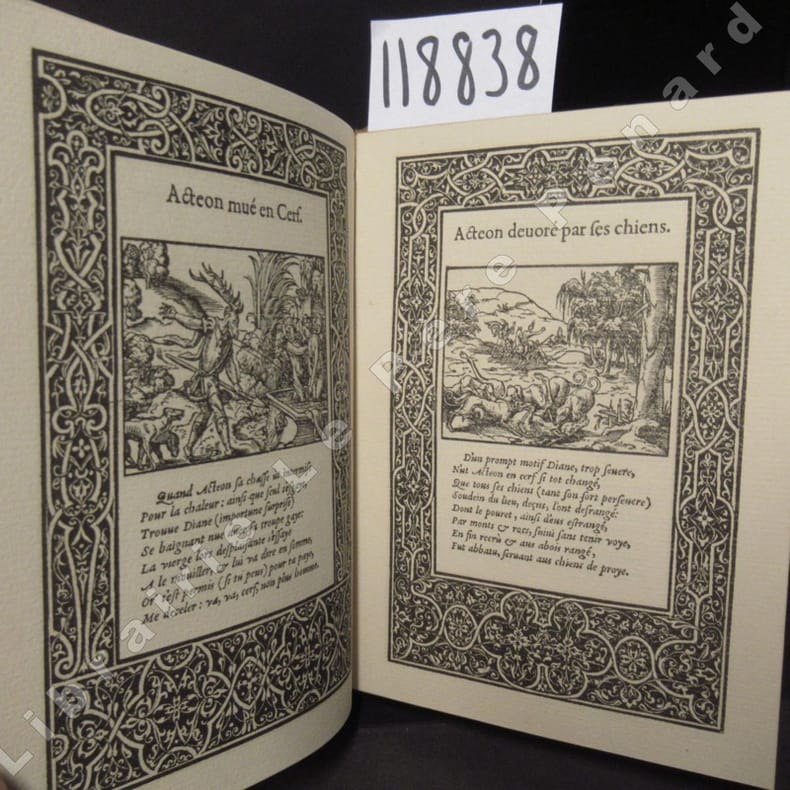
19331188381933 Editions des Bibliothèques Nationales de France, Collection d'Unica et de livres rares - 1933 - Edition limitée à 440 exemplaires, l'un des 425 numérotés de 1 à 425, exemplaire n° 8 - Fac-similé de l'édition de 1557 éditée à Lyon par Ian de Tournes - In-16, pleine basane brune avec riche décor à froid et en doré sur les plats; frise florale en doré au dos, dans son étui rigide - Sans pagination - Complet de son livret non relié de présentation signé Robert Brun
1975CAV-1-57Maeght Editeur - Chroniques de l'Art Vivant Ferce sur Sarthe, France 1975 Book Condition, Etat : Très Bon broché, sous couverture illustrée In-4 58 volumes - 2190 pages
183491596Paris, Audot 1834 16 volumes. In-12. Reliures de l’époque demi-basane vert moyen, dos lisses ornés de filets dorés avec roulette dorée en pied, chaque volume ne comprend qu'une cinquantaine ou une soixantaine de pages de texte, et est composé essentiellement des gravures. Reliures légèrement frottées, rousseurs marginales. Bon ensemble.
1979gt365Nobele F. de Revue en brochure d'éditeur 1979 "TROIS DÉCENNIES DE L'HISTOIRE DE L'ART FRANÇAIS. BEL ÉTAT. Trente et un volumes in-4 (22 x 27 cm.), revue brochée, trois décennies complètes du ""Bulletin de la Société de l'Histoire de l'Art Français"" ; les dos les plus anciens sont un peu plissés et/ou incurvés, frottements sur peu de coiffes, intérieur frais, bel état d'ensemble pour cette série. Livraison a domicile (La Poste) ou en Mondial Relay sur simple demande."
4341Edition originale en 3 volumes éditée par Hachette en 1889-91-95. Grands in-4 sur Japon. Edition numérotée, n°4. Très nombreuses illustrations et planches en couleur. Reliure en demi-maroquin à coins chocolat, signée Pagnant. Tranches dorées. Dos à nerfs, caissons, filets et arabesques dorés. Très beau.
Very Good English Original 51 gelatin silver photographs. All photos: 9x14 cm. A very good photo collection. This scarce early photograph collection includes the visual documentation of the ruined cities, buildings, and remains of the Olba Kingdom and the Roman Empire around the Cilicia region, today are Mersin and Adana cities. The photographer is not indicated and no captions at all. The collection focuses on temples, inscriptions (including Greek and Armenian), castles, baths, rock tombs, decorations, reliefs, some geographical features of the region, general views of cities, aqueducts, and many archaeological inventories like Diokaisareia or Diocaesarea (today Uzuncaburç), a part of the Seleucid Empire; Corycus, or Corycos, Korykos (today Kiz Kalesi), an ancient city in Cilicia Trachaea; Mezgitkale, Elaiussa Sebaste, Canbazli ruins, Athena relief, Lamas Aqueduct, Mancinik, and Meydan Castles, etc. These archaeological remnants are located around Mersin and Adana cities in South Anatolia. The Olba Kingdom was an ancient kingdom in southern Anatolia. It was a vassal of the Seleucid and Roman Empires. The kingdom was a small state situated in Cilicia Trachea, present Mersin and Adana provinces. It was bounded by the Toros Mountains in the north, the Mediterranean Sea in the south, the Lamos River in the east, and the river Calycadnus (Göksu) in the west. The archaeologists today call this area Olba Territorium. Its capital was on a plateau named Uguralani, a settlement to the northeast of Uzuncaburç (Diokaisareia).
Fine Fine English Original bdg. Dust wrapper. 4to. (32 x 27 cm). In English and Turkish. 2 volumes set: (359 p.; 473 p.), color and b/w ills. The centennial tale of Turkish painting.= Türk resim sanatinin bir asirlik öyküsü. 2 volumes set. Texts by Kiymet Giray, Kaya Özsezgin, Zeynep Inankur et alli. 1500 copies were printed. A comprehensive set on history of the Turkish art of painting. A very heavy set.
Very Good Turkish Chapograph print. Extremely rare first and the earliest printing material in book form (both in scarce institutional holdings and market rarity), which has brought the concept of optical art to Turkey. This compilation and work were prepared by the contemporary Turkish architects Güven and Alemdar, who were experts on urbanization. The book includes nine chapters excluding the plates: History of op-art.; Optical effects: Black and white.; Optical effects: Color.; Reliefs, moving objects, and light.; Special joint characteristics in 'Op'.; 'Op' and other art genres.; Leading names in the European school of 'Op'.; British and American 'Op'.; Critics.; and Plates. Plates were taken from various American art magazines published in the period and German advertisements from German magazines which reflected 'Optic art'. Op art, short for optical art, is a style of visual art using optical illusions. Op artworks are abstract, with many better-known pieces created in black and white. Typically, they give the viewer the impression of movement, hidden images, flashing and vibrating patterns, or swelling or warping. The antecedents of op art, in terms of graphic and color effects, can be traced back to Neo-impressionism, Cubism, Futurism, Constructivism, and Dada. László Moholy-Nagy produced photographic op art and taught the subject in the Bauhaus. Time magazine coined the term op art in 1964, in response to Julian Stanczak's show Optical Paintings at the Martha Jackson Gallery, to mean a form of abstract art (specifically non-objective art) that uses optical illusions. Works then labeled as "op art" had actually been produced for several years before Time's 1964 article. For instance, Victor Vasarely's painting Zebras (1938) is made up entirely of curvilinear black and white stripes not contained by contour lines. Consequently, the stripes appear to both meld into and burst forth from the surrounding background. Also, the early black and white "dazzle" panels that John McHale installed at the 'This Is Tomorrow' exhibit in 1956 and his 'Pandora' series at the Institute of Contemporary Arts in 1962 demonstrated proto-op art tendencies. Martin Gardner featured Op Art and its relation to mathematics in his July 1965 Mathematical Games column in Scientific American. In Italy, Franco Grignani, who originally trained as an architect, became a leading force of graphic design where op art or kinetic art was the focus. His Woolmark logo (launched in Britain in 1964) is probably the most famous of all his designs. Op art perhaps more closely derives from the constructivist practices of the Bauhaus. This German school, founded by Walter Gropius, stressed the relationship of form and function within a framework of analysis and rationality. Students learned to focus on the overall design or entire composition to present unified works. Op art also stems from trompe-l'oil and anamorphosis. Links with psychological research have also been made, particularly with Gestalt theory and psychophysiology. When the Bauhaus was forced to close in 1933, many of its instructors fled to the United States. There, the movement took root in Chicago and eventually at the Black Mountain College in Asheville, North Carolina, where Anni and Josef Albers eventually gave lectures [.] (Source: Wikipedia). Not located in OCLC and the Turkish National Library.
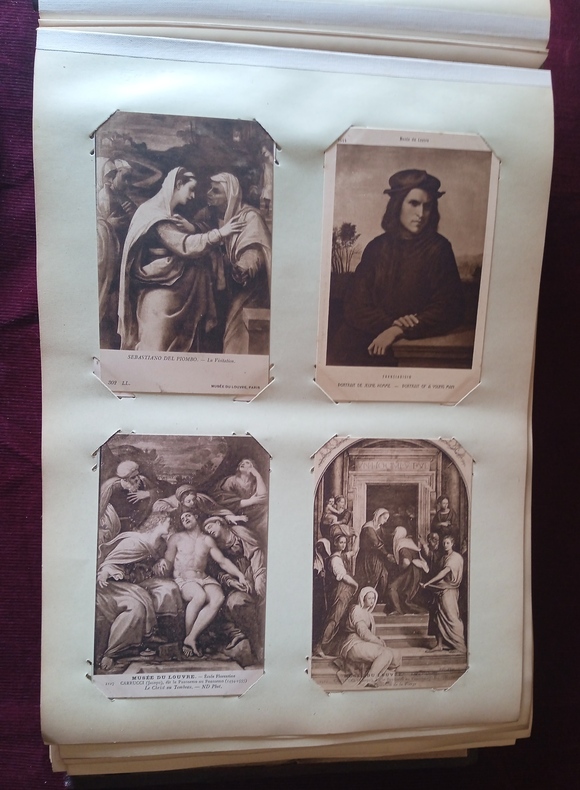
1910LR58-HN5Album de cartes postales avec feuillets monté sur onglets, titre doré "Collection Artistique)" sur le premier plat, format italien, 8 cartes par feuillets. Ces cartes ont été éditées par différents musées au début du vingtième siècle : Le Louvre (706 CPA), Luxembourg (40 CPA) , Amiens (40 CPA), Chantilly (88 CPA) , Versailles (86 CPA, Lille (16 CPA) , Lyon, Rouen, Bordeaux, Lonchamp, Dijon (1 CPA chacun). Très bel ensemble collecté par une collectionneur du début du vingtième siècle et gardé dans la même maison, toutes les cartes sont en bonne condition.
Paris, Librairie Firmin Didot frères, fils et Cie 1870. In-plano superbe reliure éditeur signée en queue de Ch. Magnier, plein chagrin rouge, dos à nerfs très orné de motifs dorés, plats richement décorés également de motifs dorés et au chiffre FD de l'éditeur, doubles filets sur les coupes, contre-plats de cuir vert et rouge très ornés, large bordure dentelle à la roulette dorée, tête dorée, gardes de tissu moiré vert, page de titre en chromolithographie. Ouvrage contenant 20 planches chromolithographiques exécutées par Franz Kellerhoven et 30 planches gravées sur bois, toutes sous serpentes. Texte dans un double encadrement rouge et noir, lettrines. Un des 270 exemplaires sur papier à la forme, celui-ci N° I. Paul Mantz, historien de l'art, né à Bordeaux, collabora entre autres à la célèbre Gazette des Beaux Arts et fut Directeur Général de l'Administration des Beaux Arts. Très bel et spectaculaire exemplaire, papier bien blanc, sans rousseurs.
Editions Citadelles 1989, 2 volumes In-folio reliure éditeur demi-chagrin noir, plats de toile beige rosé, dos à nerfs, sous emboitage toilé et illustré, réalisée par Buchbinderei Schumacher, Schmitten t Berne. 367 + 371 pages. Superbes photographies de Takashi OKAMURA, certaines doubles et dépliantes. Bien complet de la grande reproduction volante "La création d'Adam". Edition originale française, tirage limité à 3000 exemplaires numérotés, celui ci N° 1902. Très bel exemplaire de cet ouvrage monumental à la gloire de Michel Ange.
Very Good Turkish Paperback. 4to. (27,5 x 20 cm). In Turkish. 32, [30] p., color and b/w ills., serigraph and mimeograph printing on paper and fabric, 1 folded plate (Ismail Saray's photo). This very interesting and rare book includes the texts on the first 32 pages. Some texts were translated from English and French languages by Sükrü Aysan, Nazli Damlaci, and Faruk Ulay. Articles in the first 32 pages: Kavramsal sanat [i.e. Conceptual art] by Sükrü Aysan.; Felsefenin sonu sanatin baslangici [i.e. The end of philosophy and the beginning of art] by Joseph Kosuth.; Kavramsal sanat üzerine paragraflar [i.e. Paragraphs on Conceptual Art] by Sol Lewitt.; Kavramsal sanat üzerine tümceler [i.e. Sentences on Conceptual Art] by Sol Lewitt.; Not, by Bernar Venet.; Giris notu, by Joseph Kosuth, and Inekleri düzene sokmak için bir yöntem [i.e. A Method For Sorting Cows] by Robert Morris. They're the first and the earliest translations (and for some only) in Turkey on the Conceptual Art. The Definition of Art Group is an original Conceptual Art approach. Conceptual Art was founded to research the structure and nature of art. Conceptual artists question the structure of art through a progression of work that refers to the concept of art. What is being considered is a work or an idea directed towards the analysis of all the facets of and contradictions within the concept of art. Sol LeWitt said, "this type of art is related to all intellectual processes". Impressionism and Cubism gave the first formulas for questioning art. Later, as a result of Duchamp's systematic operations about art's boundaries, function, language, and its being, art again became an intellectual process. Today, the subject of art itself and its place in the universe has reached a stage where its effort is directed towards understanding existence. The stages of this change make twentieth-century art history. Only an art audience informed about the development of art can comprehend contemporary work. To be able to understand today's artistic endeavors, it is necessary to make a conceptual history of art. Pure Conceptual Art by taking this situation to its extreme point, accepts no other audience or observer than the ones actively participating in the making of the work. Thus, art transforms into a state as serious as a science that needs no audience. When using the term, Conceptual Art or its more characteristic name, Analytical Art, in referring to a specific period in the history of Conceptual Art as an approach to art, one is speaking of art that has completely eliminated the production of objects and all plastic art forms. But if one considers the broader understanding of conceptualism, within our twentieth-century art, in addition to the side that verifies by analyzing itself, there is also a logical and philosophical dimension directed towards the comprehension of its structure. In other words, a strongly intellectual art continues its hegemony today. In our time, art without an idea can not be effective. (Source: Official site of Sanat Tanimi Toplulugu). In 1961, philosopher and artist Henry Flynt coined the term "concept art" in an article bearing the same name which was appeared in a proto-Fluxus publication An Anthology of Chance Operations. Flynt's concept art, he maintained, devolved from his notion of "cognitive nihilism," in which paradoxes in logic are shown to evacuate concepts of substance. Drawing on the syntax of logic and mathematics, concept art was meant jointly to supersede mathematics and the formalistic music then current in serious art music circles. Therefore, Flynt maintained, to merit the label concept art, work had to be an object-critique of logic or mathematics via linguistic paradox, a quality which is absent from subs... The use of pure Turkish language in this book is pointed to and this book was printed for an exhibition held between 'March 22 - April 5, 1980'. Printed to only 200 copies and all copies were numbered. This is 49 no. (49/200). Extremely r
197679452Paris, Librairie Gründ 1976 10 volumes. Fort in-8 24,5 x15,5 cm. Reliures de l’éditeur pleine toile bleue. IX-71-728 -728-728-760-760-792-792-888 -942 pp. Reliures légèrement frottées, sinon ensemble en bon état.
1945134640Pierre Trémois 1945 Petit in-4 en feuilles sous couverture rempliée illustrée en couleurs, chemise et étui cartonnés, 125 pp. Dix compositions hors-texte en couleurs, figures et ornements typographiques en sanguine. Bel exemplaire.
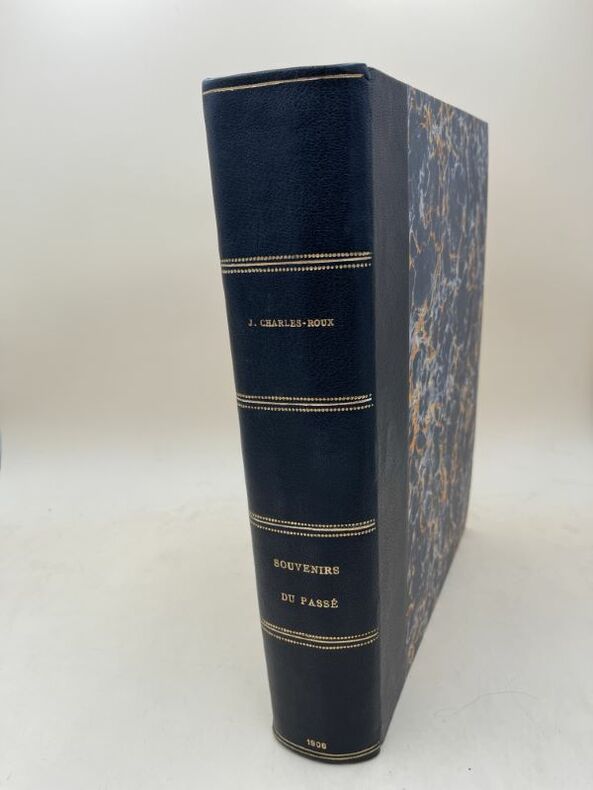
190699942728A. Lemerre A. Rey A. Lemerre , A. Rey et Cie, P. Ruat, 1906. Grand et très fort In-4 relié demi-chagrin noir, dos lisse à filets et pointillés dorés, couverture conservée dessinnée par L. OLLIER. 500 pages : une gravure au burin, 31 héliogravures, 2 planches en couleurs hors-texte, 686 dessins originaux et illustrations dans le texte. La reliure est récente, belle et en parfait état, la couverture à été restaurée en bords, toutes les illustrations sont sous serpentes légendées. Envoi autographe de l'auteur à Denys PUECH, Maître sculpteur aveyronnais, Membre de l'institut à la date du 30 novembre 1906. ITirage limité à 1200 exemplaires. Bel exemplaire.
A. Lemerre , A. Rey et Cie, P. Ruat, 1906. Grand et très fort In-4 relié demi-chagrin noir, dos lisse à filets et pointillés dorés, couverture conservée dessinnée par L. OLLIER. 500 pages : une gravure au burin, 31 héliogravures, 2 planches en couleurs hors-texte, 686 dessins originaux et illustrations dans le texte. La reliure est récente, belle et en parfait état, la couverture à été restaurée en bords, toutes les illustrations sont sous serpentes légendées. Envoi autographe de l'auteur à Denys PUECH, Maître sculpteur aveyronnais, Membre de l'institut à la date du 30 novembre 1906. ITirage limité à 1200 exemplaires. Bel exemplaire.
1925gb405Albin Michel Broché 1925 "Recherché. In-8 (13,2 x 20,5 cm), broché, couverture rempliée, 288 pages, illustrations en noir et blanc in et hors texte, 1e édition (pas de grand papier). André Warnod, écrivain, critique d'art et dessinateur français, lança l'appellation ""Ecole de Paris"" dans un article de Comoedia publié le 27 janvier 1925 et repris en octobre dans ce livre. On joint également une lettre tapuscrite d'André Warnod signée à l'encre par le même, adressée à René Vanhoutte concernant l'achat de toiles ; pliures au dos, bords des plats et dos brunis, mors supérieur un peu fendu en queue, par ailleurs bon état. Livraison a domicile (La Poste) ou en Mondial Relay sur simple demande."
5339Publication nouvelle, en fac-simile, du Cahier réalisé par Paul Gauguin à Otaïti, en 1983, précédé d'un volume de commentaires et documents réunis par Victor Merlhès intitulé Le Cahier pour Aline, Histoire et significationWilliam Blake and Co. Edit., Bordeaux / Société des Amis de la Bibliothèque d'Art et d'Archéologie, Paris, 1989.Photocomposé en Garamond corps 11 ; tirage limité à 1000 exemplaires dont 300 exemplaires de tête sur vélin d'Arches 160 g numérotés 1 à 300 sur vergé Van Gelder numérotés 301 à 1000 ; broché sous couverture rempliée vélin d'Arches 250 g ornée d'une vignette en quadrichromie présentés sous coffret éditeur imprimé d'une page manuscrite en fac-simile de Paul Gauguin ; broché. 17 x 22 cm. 92 p., ill. en noir, 62 p., 17 x 22 cm.Fac-simile réalisé en phototypie rehaussée au pochoir, à la main, sur papier teinté dans la masse par l'atelier Jacomet.