343 résultats
2002008983Dresden, Michel Sandstein, 2002. 499 S., 1 Blatt. Großformatiger Orig.-Pappband mit Schutzumschlag. Ein schönes, gut erhaltenes Exemplar mit nur leichten Gebrauchsspuren.
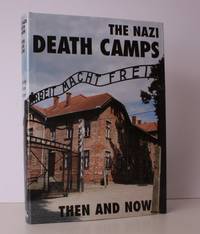
201641702After the Battle 2016. 8vo. with many hundreds and photographs and maps throughout; black cloth gilt back a near fine copy in unclipped dustwrapper. One of the latest titles in ATB's renowned 'now and then' series matching contemporary and modern photographs. After the Battle, hardcover
2001148454Dachau. Verlag Dachauer Hefte November 1989 bis November 2001. 10 Hefte. 283 Seiten; 239 Seiten; 212 Seiten; 215 Seiten; 242 Seiten; 251 Seiten; 212 Seiten; 272 Seiten; 226 Seiten u. 211 Seiten. Illustrierte Originalbroschuren. (Teils mit geringeren Gebrauchsspuren). 22x14x17 cm
2003Q-0884481875Tilbury House Publishers 2003-06-01. Paperback. New. In shrink wrap. Looks like an interesting title! Tilbury House Publishers paperback
2008300048South Africa: Hands-On Media 2008. Book. Very Good. Hardcover. 4to - over 9¾ - 12" tall. includes Good dustjacket. jacket edges creased and rubbed in places with a few small tears at joints. 152 pages. Hands-On Media Hardcover
2012009166Mannheim, Verlag Waldkirch, 2012. 192 S. Etwas größerer Orig.-Pappband. Ein schönes, gut erhaltenes Exemplar in einwandfreiem Zustand.
2015009386Berlin, Evangelische Kirche Berlin-Brandenburg, 2015. 180 S. Querformatige Orig.-Broschur. Ein schönes, gut erhaltenes Exemplar in einwandfreiem Zustand.
201025182Milano: Mondadori 2010. hardcover in dust jacket. 2 pages have a tiny nick. no other flaws or wear. clean. no markings. no bumps creases. strong binding.; italian text.; xii-294pp. numerous tables. detailed history of the transit camp for italian jews at fossoli. contains lists of deportees and the destinations. important reference work.; scarce title. First Edition. Hardcover. Near Fine Plus/Near Fine Plus. 8vo - over 7¾" - 9¾" tall. Mondadori Hardcover
2012C000038932Pittsburgh PA: The Holocaust Center of the United Jewish Federation of Pittsburgh 2012. Hardcover. Very Good /very good . Oblong 8vo black cloth in dust jacket. Illustrated in color and b&w. Mild shelfwear to book and unclipped jacket with contents clean bright and unmarked. Scarce. The Holocaust Center of the United Jewish Federation of Pittsburgh hardcover
2012C000038931Pittsburgh PA: The Holocaust Center of the United Jewish Federation of Pittsburgh 2012. Hardcover. Very Good/very good . Oblong 8vo black cloth in dust jacket. Illustrated in color and b&w. Book is VG- with light rubbing and discoloration to front and rear boards. Contents clean bright and unmarked. Minimal shelfwear to unclipped jacket. Scarce. The Holocaust Center of the United Jewish Federation of Pittsburgh hardcover
2007JUDA1873aWien, S.J. Zweig 2007. gr.-8°. 469 S., zahlr. Abb., OLn. mit OU., Umschlag randrissig, Buch in tadellosem Zustand. Als erstes Kleinkind durchschritt Stefan an der Hand des Vaters das Lagertor und als Letzter verließ er mit ihm Buchenwald. Die besonderen Umstände, die zur Befreiung des KZ Buchenwald und seiner Häftlinge geführt hatten, machten Buchenwald wie kaum ein anderes Lager zum Mittelpunkt zahlreicher Forschungsarbeiten von Eugen Kogon bis heute. Insbesondere die Rettung von fast 1000 jüdischen Kindern und Jugendlichen, die nur mit Hilfe der politischen Häftlinge Buchenwalds vor der Vernichtung bewahrt wurden, ist in die Geschichte eingegangen. Diese geretteten Jugendlichen blieben nach der Befreiung längere Zeit, sei es in der Schweiz oder in Frankreich zusammen, bevor sie sich auf alle Kontinente zerstreuten. Stefan Jerzy Zweig wurde mit seiner Geschichte als das Buchenwald-Kind bekannt. Erstmals meldet sich hier «der Junge von Buchenwald» in eigener Sache zu Wort
200645331ABAachen 2006-11. 3 Bände. Din A-4. 71; 95; 75 S. (Seiten = Blätter). Orig.-Karton mit Spiralbindung.
200735337BBWien, Eigenverlag S. J. Zweig, 2007. 2. Aufl. 24 cm. 469 S. zahlr. Ill. OLwd., mit Schutzumschl. Mit Widmung vom Autor, Su gering bestossen, sauber und schön erhalten. 2
2009BN152272Yad Vashem Pubns 2009. 2009. Dividing Hearts: The Removal of Jewish Children from Gentile Families in Poland in the Immediate Post Holocaust Years <br/><br/>Dividing Hearts: The Removal of Jewish Children from Gentile Families in Poland in the Immediate Post Holocaust Years Polen / Judaica / Israel / Holocaust / Antisemitismus - Nachmany Gafny Emunah Yad Vashem Pubns unknown
2005193780-1Jerusalem, Yad Vashem 1984-2005. Original-Pappband (16-29) u. Original-Kartonband (31-33).
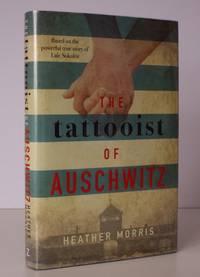
201843212Zaffre 2018. 8vo. First Edition First Issue with photographs full-page map and full-page plan in the text; black cloth backstrip lettered in silver red endpapers a near fine copy in unclipped dustwrapper. The first issue produced in a small print run without 'bestseller' blurb on dustwrapper front. VERY SCARCE ESPECIALLY IN THIS CONDITION. Zaffre, hardcover
2014193357-1Oxford, University Press 1986-2014. Mit Abb. Original-Kartonband
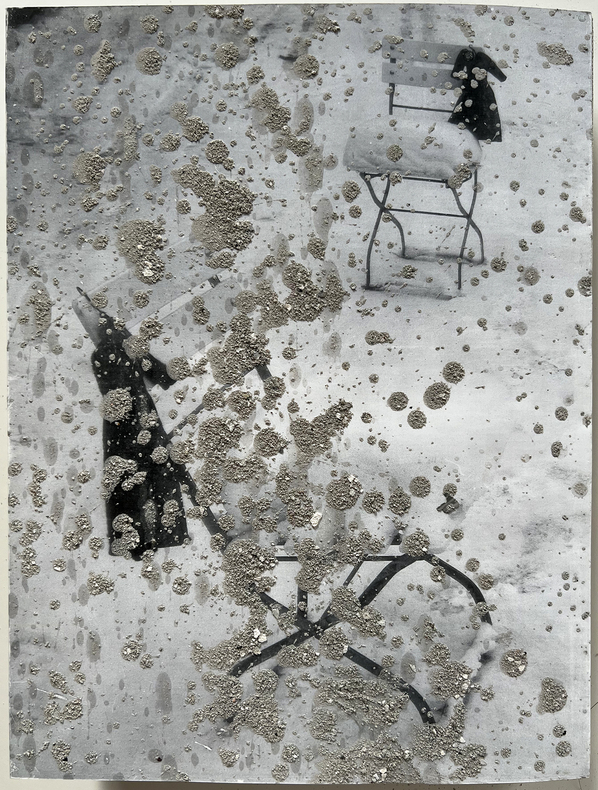
20022124Paris, Yvon Lambert, Coll. « Une rêverie émanée de mes loisirs, VIII », 2002. Un vol. in-4 (30,5 x 23 cm), broché, couverture illustrée, dos toilé titré, boîte d’acier brossé de l'éditeur. ÉDITION ORIGINALE. Collages de cendres et de plomb sur 18 photographies numériques par Anselm Kiefer. Chaque exemplaire composé à la main est sensiblement différent l’un de l’autre. Tirage à 150 exemplaires (N° 48/108 justifié et signé au crayon par l'artiste. Note : Les livres ne se contentent pas d'accompagner la création d'Anselm Kiefer, comme une production secondaire ou un commentaire. Ils y occupent une place centrale en constituant à la fois un lieu d'entrecroisement pour ses autres réalisations (installations et performances, sculptures et gravures, etc.), le creuset d'œuvres à venir ou l'aboutissement de réalisations antérieures. En tant que tels, ils sont un élément essentiel de son travail, un des plus significatifs et des plus fascinants. Bibliographie : Arasse, Anselm Kiefer, p. 47 ; […], Anselm Kiefer. L’alchimie du livre, BNF, 2015. Exemplaire bien signé à l’état de neuf, aucun défaut, les collages de cet exemplaire nominatif sont particulièrement soignés. — (ENGLISH DESCRIPTION) DIE UNGEBORENEN. (Paris, Yvon Lambert 2002). Anselm Kiefer's photographic book / multiple 'Die Ungeborenen': the complete illustrated portfolio of eighteen digital prints with ash and lead collage. Self-wrappered leporello with grey cloth spine, preserved in the original metal box prepared by Christian Chopinaud, with the colophon leaf mounted to the interior of the lid (as issued). Anselm Kiefer's photographic book / multiple 'Die Ungeborenen'. Edition: 150 ex. numbered and signed in pencil by Anselm Kiefer (with a further 20 hors commerce numbered I-XX, ten artist copies numbered 48/108 and signed with pencil by the artist, ten unnumbered nominatives copies, and ten copies from an édition de tête). Justification sheet is pasted to interior of lid. 305 x 230 mm. Printer: Eric Seydoux, Paris (Colophon) Fabricator: Emmanuel Ardant, Paris, Christian Chopinaud (Fabricator of Metal Case). - About the work: 'Die Ungeborenen' (The Unborn) has been a motif in Kiefer's work since the 1970s. Encompassing all of the artist's oeuvre, from painting to sculpture to books (as here), Kiefer has explored the idea of potential in all its forms: potential, i.e. unborn, people, ideas and creative possibilities. To this end, Kiefer has explored a vast mythos including German folklore, philosophy, literature, Jewish myth, Lilith, the first woman, characterised by patriarchy as a demoness and so on. As so often in Kiefer's work, he makes use of lead and ash in this book, applying them directly to his photographs. 'It’s the other aspect of the unborn, the desire of not wanting to be born. Cry of the prophets, the revolt of Job. It would have been better if you had never been born! Everything happens as if it would have been preferable to not be born. The retrograde movement of creation. Theodicy, the accident of creation, God’s regret to have fathered this ungrateful being, this outlaw, who does not abide to the contract.' (Anselm Kiefer). - About the artist: Anselm Kiefer (born in 1945) has established himself as one of the most important post-war German artists. In his works, paintings, sculptures, and installations Kiefer draws from German culture, making more or less explicit references to recent history, literature, philosophy and art. Kiefer’s Die Ungeborenen combines figurative motives with an abstract background. The artist uses narrative elements—the dresses, numbers, and branches—to evocate the demon Lilith, a figure from Jewish folklore, who was believed to kidnap newborn children. The dresses without bodies, and the adjacent numbers, are also a reminder of the Holocaust. In his work, Kiefer frequently offers a reading of recent history through mythological or classic figures, in this case Lilith. He uses the abstraction of the background not per se, but to demonstrate the universality of his approach; the unborn and the ones who lost their lives are like stars in the infinite sky, countless, yet always on our mind. (Literature: Daniel Arasse, Anselm Kiefer (New York: Harry N. Abrams, Inc., 2001), 16-17, 19, ill). More pictures on request.