Ray. PETITFRERELivre Rare Book

764 résultats
1965133002Delporte Mons, éditions Delporte 1965. Très fort et grand in-8 broché de 850 pages sous double étui. Photos hors- texte. Une chronologie (1725 à 1962) relatant les dates saillantes qui, de par le monde où vivent les hommes, jalonnèrent d'indélébiles façon les deux siècles de violence dans lesquels s'intègre la tragique histoire d'Adolf Hitler et de Benito Mussolini. Exemplaire truffé de 5 courriers datés et signés de l'auteur. Haut de l'étui abîmé. Peu courant.
1942R96628s.l., s.n. s.d. [1942] viii + 344pp., 34cm., blinde omslag, gestencild, goede staat, bijgevoegd: 1: gestencilde brief (24pp.) met aanvullingen gericht door auteur aan de Algemeene Synode der Nederlandsch Hervormde Kerk t.a.v. dominee Addink, 2: getypte en handgetekende brief (2pp.) van auteur gericht aan de bisschop van Haarlem, 3: gestencild katern (8pp.) die de "5e aanvulling" bevat, [uiterst zeldzaam religieus-filosofisch-politiek en bij wijlen esoterisch werk, met sterk getinte nazistische inslag, over het christendom], OCLC 69009624, R96628
193684053Bruxelles et Vienne, Gerechtigkeit, 1936, in-12, broché, 235p. Annotations sur la page de titre : l'ancien lecteur y précise que cet ouvrage est une prémonition, tout comme Le Dictateur de Chaplin, de la montée du national-socialisme et de l'antisémitisme. I. Harand est fondatrice en Autriche en 1933 du "Mouvement contre la haine raciale et contre la misère". Edition originale de la traduction (eo en Autriche 1935). Née en 1900, de confession catholique, Irene Harand est une militante autrichienne des Droits de l’Homme qui s’illustre particulièrement dans la lutte contre l’Allemagne nazie. Elle fonde dans son pays le Weltbewegung gegen Rassenhass und Menschennot (Mouvement mondial contre la haine raciale et la détresse humaine), une organisation de lutte contre la persécution antisémite dotée d’un organe, Gerechtigkeit (Justice). Elle multiplie brochures et réunions de propagande, et fait paraître, en 1935, Sein Kampf. Antwort an Hitler von Irene Harand (Son Combat. Une réponse d’Irene Harand à Hitler). Au moment de l’Anschluss, elle se trouve à Londres, ce qui lui vaut d’échapper aux nazis qui la recherchent activement.
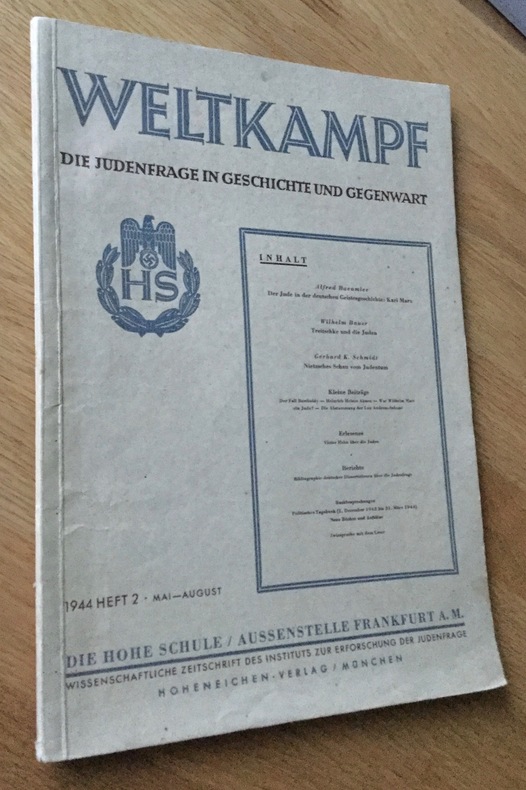
1944UUI-12371In-4 broché, paginé 255-326 + ill. hors-texte. Un peu frotté, jauni et piqué, mouillure sur certaines pages. Usure d’usage, bon état pour ce rare numéro de cette revue dirigée par Rosenberg. Poids 250 g. Envoi lettre verte. Frais d'envoi 6 euros sur la France, 12,90 euros pour l’étranger (tarifs de base hors envois suivis). Possibilité de remise en mains propres sur Paris, possibilité d’envoi MONDIAL RELAY, n'hésitez pas à me contacter avant de passer commande. Twitter : @Pontneuf06.
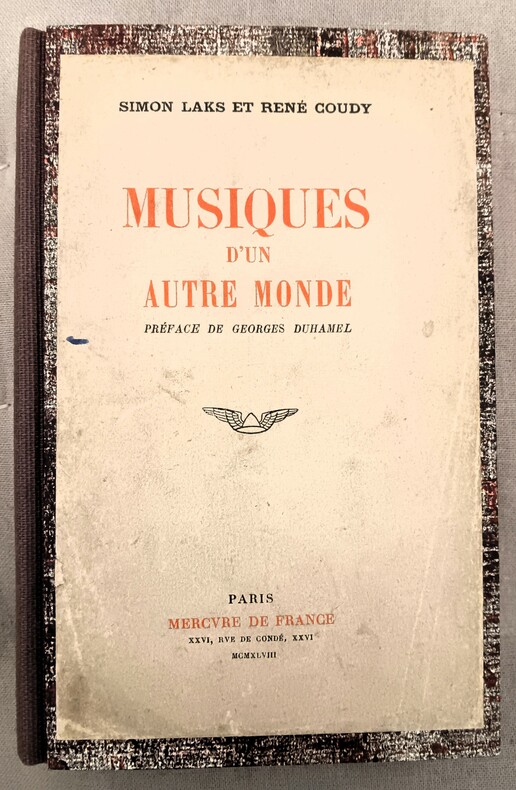
19481cb12in12 reliure toilée chocolat moderne. Plat papier contrecollé sur la reliure dos muet 189 pp Papier jauni
193787714München, Zentralverlag der NSDAP, Fritz Eher 1937 In-4. Reliure éditeur demi-chagrin rouge, dos à 2 nerfs avec report du titre or, premier plat orné au centre de l’aigle NS, 575 pp., abandomment illustré en noir et blanc. Bon exemplaire d’un ouvrage peu courant.
19331077311933 Editions Ferdinand Hirt - 1933 - Petit in-8, broché, couverture à rabats illustrée - 78 p. - Reproductions photographiques in-texte et pleine page en N&B
19371315<p>48 pp. bound typescript with manuscript corrections German language. 4to. Very good. Black paper wrappers with title texts and author in white ink. 1315</p><p><i>A fascinating original work perhaps by an advanced student or young teacher concerning the political pedagogy of Friedrich Ludwig Jahn founder of modern gymnastics and his importance for German ethno-nationalism's spiritual and athletic preoccupations. The text is a chilling demonstration of the links between the sport of gymnastics and ideas of physical perfection and the purification of bodies that Nazis advocated. We believe it was never published. No record in OCLC.</i></p>
193787717Dresden, G. Emmerich 1937 In-4. Cartonnage éditeur pleine toile havane, VII-476 pp., illustrations en noir & blanc dans et hors texte, 1 panorama replié in fine. Bon exemplaire. - Photographies de Heinrich HOFFMANN
1947G31300Nünrnberg, Internationaler Militär Gerichtshof 1947-'49 volumes 1 till 41, together +/- 24000pp. with some ills., in-8, text in german, puyblisher's hardcovers in blue cloth with gilt lettering (some covers are bit discoloured or have few stains, back of few vols.repaired, some corners bumped or used), foxing on some vols.'edges, good condition (interior/text VG), G31300
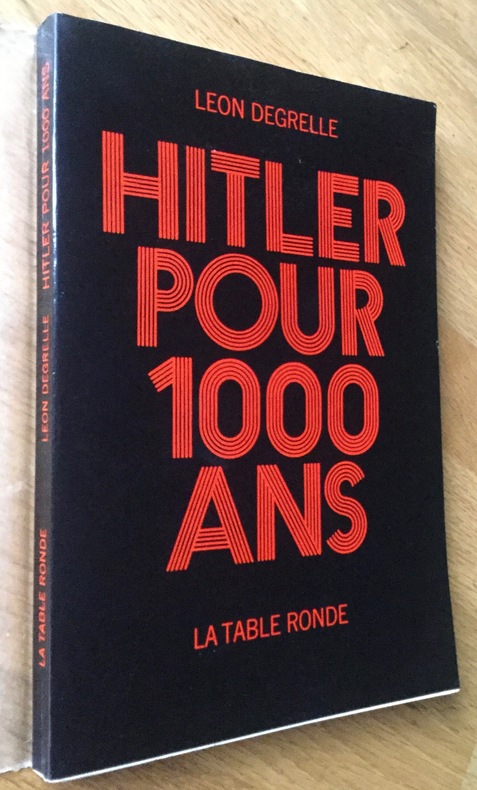
1969UUI-12652In-8 broché carré sous papier cristal d’origine (me semble-t-il), La Table ronde, 1969, 230 pp. Bon état général, bel exemplaire de cette édition originale rare d’un livre mythique, un des 25 sur vélin Périgord, seul grand papier avec quelques hors commerce. Poids 380 g. Envoi lettre verte. Frais d'envoi 6 euros sur la France, 12,90 euros pour l’étranger (tarifs de base hors envois suivis). Possibilité de remise en mains propres sur Paris, possibilité d’envoi MONDIAL RELAY, n'hésitez pas à me contacter avant de passer commande. Twitter : @Pontneuf06.
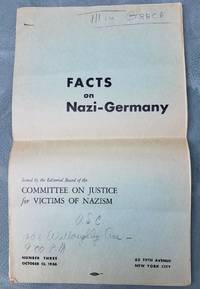
1936159271936. Committee on Justice for Victims of Nazism. Facts on Nazi Germany 1936 anti-Nazi report documenting early concentration camp discipline and political repression under the Third Reich issued to mobilize American awareness during a period of widespread isolationist sentiment in the United States. Produced three years before the outbreak of World War II the document records one of the earliest organized efforts by an American advocacy group to circulate evidence of Nazi violence specifically targeting the treatment of political prisoners in the initial concentration camp system established after 1933. The report identifies Esterwegen as a site of incarceration for political opponents and includes translated internal regulations that detail punitive discipline forced labor expectations and execution threats directed at prisoners categorized as political dissidents Jews and alleged enemies of the state.<br /> <br /> Editorial Board of the Committee on Justice for Victims of Nazism. Facts on Nazi Germany. Number Three. New York: Committee on Justice for Victims of Nazism October 15 1936. Mimeographed document. The publication consists of 11 mimeographed pages and includes contemporary marginalia and underlining in pencil indicating close reading by an early owner. The text opens with an editorial statement noting that the committee had obtained the material "a few days ago" followed by an appeal to American audiences: "By publishing this horrendous document we wish to bring to the consciousness of the American public the plight of the German people under barbarian Hitler rule.the vast majority of the German population looks to the world outside particularly America for moral support." The reprinted German directives emphasize coercion and ideological enforcement stating "Tolerance means weakness.ruthlessness will be exercised when the interests of the Fatherland are at stake." Detailed disciplinary measures include confinement on bread and water corporal punishment and execution for acts such as alleged mutiny or resistance. Specific infractions are enumerated including penalties for writing more than two letters monthly speaking disrespectfully to guards or minor breaches of barracks discipline demonstrating the totalizing regulatory system imposed within the camp.<br /> <br /> Issued during a period when U.S. public opinion remained divided over involvement in European affairs this document contributes to the study of early transnational anti-fascist networks exile politics and information dissemination prior to the consolidation of wartime alliances. Advocacy groups such as the Committee on Justice for Victims of Nazism attempted to counter limited press coverage and official reluctance to confront Nazi Germany by distributing translated materials that documented internal repression. The inclusion of Esterwegen regulations situates the publication within the early development of the concentration camp system before its later expansion and transformation during the war. Minor edge wear horizontal crease last page detached with toning and small losses at the fold and scattered pencil markings; overall good to very good. A scarce example of prewar American anti-Nazi advocacy in printed form with documented engagement by a contemporary reader. unknown
1974List3157St. Petersburg Florida: unpublished 1974. Ninety-four typed and photocopied pages measuring 8 ½ x 11 inches in a soft binding. Binding with wear; pages generally excellent to Near Fine. Overall excellent to Near Fine. Annemarie Bliwernitz 1905–2005 née Entz was born in Notzendorf East Prussia. In 1952 after surviving both World Wars she and her husband Bruno 1900–1992 immigrated first to Canada and then to the United States. Offered here is Annemarie’s unpublished memoir written between 1972 and 1974.<br /> <br /> Bliwernitz grew up in a wealthy land-owning country family which she remembers lived far west enough that they did not have to flee the Russians during World War I and was less affected by the postwar economic situation than were city residents. Most of the memoir is taken up by Bliwernitz’s remembrances of World War II and life leading up to it. Of Hitler’s rise she writes:<br /> <br /> “During these years conditions got worse in Germany . A new name came up ‘Adolf Hitler.’ – It was not hard for him to find followers now by the thousands and soon by the millions. He dared to stand up against the Communists with his brown uniformed S.A. men and a new wind seemed to blow over our illfated land. No wonder young people looked up to him and followed the new star nobody had much to lose. . Bruno and brother-in-law Willy after some meetings attended showed up in the new brown uniform also and farmers and laborers seemed to be united in that new idea. – It really changed Germany in a short time nobody could deny that unemployment ceased people got jobs again and housewives and mothers could buy the necessities of life for their families especially food. And it brought us to our feet again also.â€<br /> <br /> Though of course Bliwernitz maintains that the “Concentration Camps and what happened in them was not known to the German people" she mentions that Bruno quickly became an Arbeitsdienstführer—essentially a labor camp overseer—and remembers dissenters being disappeared:<br /> <br /> “As an example I will tell about Bruno’s oldest brother Alfred. He was all against Hitler from the beginning. One day he came home and picked up his neighbor’s paper at his frontdoor and wrote his ideas about Hitler and his lies down with pencil. This neighbor reported him they picked him up and that was the last his family saw of him. They were told ½ year later that he had died in Stuhm West Prussia a Concentration Camp. No explanation to his wife whatsoever. The same destiny happened to my co-worker a highly educated person at the Translation Office. She said in the lavatory where many ladies could hear: Hitler’s big picture in the office should be placed here in the toilet-rooms where it belongs. One of the ‘kind’ co-workers reported her and she came next day only to pick up her belongings and was not seen any more.â€<br /> <br /> While Bruno is sent to the Eastern Front Bliwernitz and their children flee the Russians trying to reach the Americans on the Western Front. Along the way they encounter deserting German soldiers and near Hamburg liberated camp inmates:<br /> <br /> “Shooting started close to us and we heard bombs exploding would we be hit We found out that the Concentration Camp near us had been opened and those freed inmates had shot their guardians. At daybreak we met the first one still in his black and white striped prison-suit kneeling on the ground by the chicken-coop and with his both hands feeding himself out of the bowl with the chicken food. . They came to us begging for a little bit of salt to cook the horse-meat they had cut out of the dead horses lying along the ditches . We talked to them and I remember one told me he was imprisoned because of his religion not to go to any war. He was from Elbing where I had gone to school as a young girl.â€<br /> <br /> The family are reunited with Bruno and shortly before they surrender to the Americans they destroy the evidence of their party involvement: “Bruno’s N.S.D.A.P. membership-card my certificate for the ‘mother’s cross’ the passports of Horst and Juergen showing that they had been students of the Nazi-school in Stuhm etc.†After the German surrender the family is sent back east where they struggle to avoid starvation then return west where they are sent to live in Hardegsen. They finally decide in 1951 to emigrate as life in postwar Germany is simply too difficult but make the mistake of being honest about their history:<br /> <br /> “Another big obstacle for us was that Bruno had been in a member in a Nazi-party though not an active one. But it was still a handicap in those days for any undertaking. We had not kept it secret in our immigration papers and they wanted a detailed description about our political involvement. That we did wrote a long letter in German didn’t have the money for an interpreter and never got an answer. . That was a bitter pill to swallow.â€<br /> <br /> After this they decide to try for Canada instead and this time savvily “didn’t mention any Nazi-party attachmentâ€. This is a success; the family moves to Winnipeg and eventually to St. Petersburg Florida where the narrative was written. Bliwernitz recalls working as a housekeeper which she contrasts with her previous life in which she and her family would not allow maids farm hands or tradesmen to eat at their table with them.<br /> <br /> Of interest to historians of the German civilian experience during the Second World War especially that of women and children. unpublished unknown
1944123391Signal 1944-1945 1 grand in 4 Pleine toile verte avec étiquette de titre en rouge 1 fort volume regroupant 15numéros se suivant de cette revue dans saversion italienne recouvrant les années 1944 et 1945 ( numéros rarissimes) jusqu'à la fin de la guerre. Reliure moderne en pleine toile verte avec étiquette de titre sur fond rouge - Importante documentation en reproduction jointe dans de nombreux numéros. Couvertures originales conservées