223 résultats
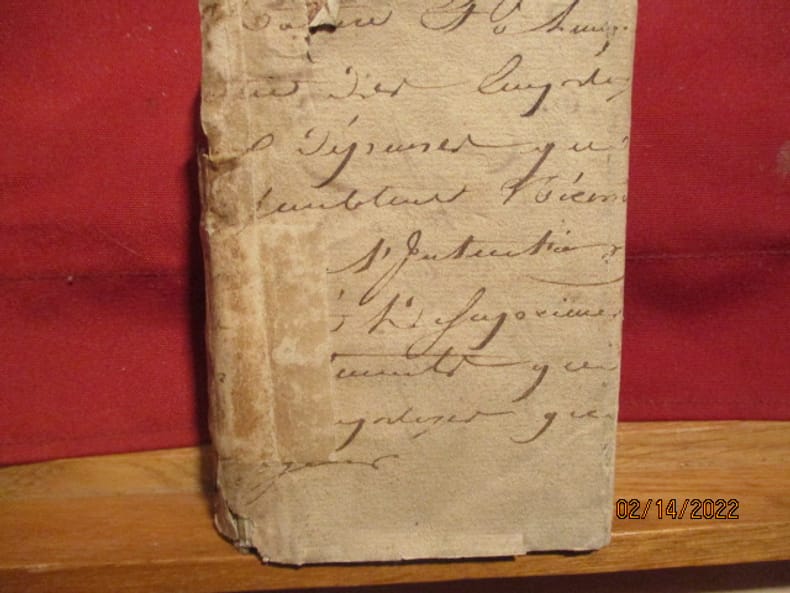
667022 leaves including some blanks or pages ruled in ink for entries. Agenda format 315 x 100 mm. stitched as issued uncut. Nuremberg: 1598. A fascinating document of a type that rarely survives: the manuscript account book for the spring 1598 Leipzig fair of Hans Straub I or the Elder 1541-1610 the prominent Nuremberg gold- and silversmith alderman and son-in-law of Wenzel Jamnitzer the best-known German goldsmith of his time. The first leaf bears Straub's hallmark interwined initials "HS" over an arrow pointing upward within a plain shield & also containing the inscription "No. 72". Our manuscript sheds important light on the business relations in the late 16th century between the Nuremberg goldsmiths and their trade at the Leipzig fairs. Our account book is a list of sales orders and expenditures of Nuremberg goldsmith Hans Straub the Elder during the Leipzig Easter fair held in May 1598. While Straub is not expressly named he can be identified by his hallmark on the first leaf. At the fair trade was done in goblets rings knife-sheaths cutlery jewelry gemstones etc. Several business partners are named including the Nuremberg goldsmiths Heinrich Hahn Haan David Lauer and Paulus Koch. As an example of a transaction we see that the council of Halle paid over 33 florins for a goblet. In 1596 Straub was elected Alderman of the Artisans the most elevated and honorable office to which a Nuremberg artisan could aspire. Straub retained this position until his death in 1610. In 1569 he married Anna daughter of the famous goldsmith Wenzel Jamnitzer. On his father-in-law's death in 1585 Straub inherited his casting molds and used them extensively in his own creations. Despite his long period of activity relatively few pieces made by Hans Straub have survived see Nürnberger Goldschmiedekunst 1541-1868 2007 ed. by Karin Tebbe et al. Vol. I p. 409. In fine condition. ❧ The mark is similar to Marc Rosenberg Der Goldschmiede Merkzeichen Frankfurt 1925 Vol. III no. 3969. unknown books
159866701598. 22 leaves including some blanks or pages ruled in ink for entries. Agenda format 315 x 100 mm. stitched as issued uncut. Nuremberg: 1598.<br/> <br/> A fascinating document of a type that rarely survives: the manuscript account book for the spring 1598 Leipzig fair of Hans Straub I or the Elder 1541-1610 the prominent Nuremberg gold- and silversmith alderman and son-in-law of Wenzel Jamnitzer the best-known German goldsmith of his time. The first leaf bears Straub’s hallmark interwined initials “HS†over an arrow pointing upward within a plain shield & also containing the inscription “No. 72â€. Our manuscript sheds important light on the business relations in the late 16th century between the Nuremberg goldsmiths and their trade at the Leipzig fairs.<br/> <br/> Our account book is a list of sales orders and expenditures of Nuremberg goldsmith Hans Straub the Elder during the Leipzig Easter fair held in May 1598. While Straub is not expressly named he can be identified by his hallmark on the first leaf. At the fair trade was done in goblets rings knife-sheaths cutlery jewelry gemstones etc. Several business partners are named including the Nuremberg goldsmiths Heinrich Hahn Haan David Lauer and Paulus Koch. As an example of a transaction we see that the council of Halle paid over 33 florins for a goblet.<br/> <br/> In 1596 Straub was elected Alderman of the Artisans the most elevated and honorable office to which a Nuremberg artisan could aspire. Straub retained this position until his death in 1610. In 1569 he married Anna daughter of the famous goldsmith Wenzel Jamnitzer. On his father-in-law’s death in 1585 Straub inherited his casting molds and used them extensively in his own creations. Despite his long period of activity relatively few pieces made by Hans Straub have survived see Nürnberger Goldschmiedekunst 1541-1868 2007 ed. by Karin Tebbe et al. Vol. I p. 409.<br/> <br/> In fine condition.<br/> <br/> ⧠The mark is similar to Marc Rosenberg Der Goldschmiede Merkzeichen Frankfurt 1925 Vol. III no. 3969. unknown
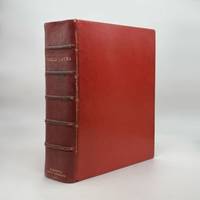
1482372091Nuremberg: Anton Koberger 1482. Eighth edition of the Bible printed by Koberger his first was 1475. Date from the colophon at end of text on fol. 427. Text in black letter two columns 53 lines. Red initials rubricated throughout. Foliation irregular. Bound without first and last blanks. 460 of 462 leaves. 1 vols. Folio. Twentieth century orange morocco by Zaehnsdorf preserving earlier gauffered and gilt edges. Spine darkened from smoke minor rubbing. First leaf remargined at foot; some traces of damp and stains from old marginal tabs internally clean overall closed tear in fol. 388. Very good plus. Eighth edition of the Bible printed by Koberger his first was 1475. Date from the colophon at end of text on fol. 427. Text in black letter two columns 53 lines. Red initials rubricated throughout. Foliation irregular. Bound without first and last blanks. 460 of 462 leaves. 1 vols. Folio. ISTC ib00575000; GW 4250; Goff B575. Provenance: George Livermore Harvard bookplate recording 1859 deposit with ink release dated 1894; General Theological Seminary gift of Cornelius Vanderbilt and Dean Augustus Hoffman bookplates and blindstamps Anton Koberger unknown
1522606091522. Nuremberg 1522. First edition. Nuremberg 1522. First edition. With a Full-Page Allegorical Frontispiece by Albrecht Durer Featuring Lady Justice Her First Appearance in a Book Nuremberg. Durer Albrecht 1471-1528. Reformacion der Stat Nuremberg. Nuremberg: Fridrichen Peypus 1522. xxxvi 30 208 ff. Folio 12" x 8" 30.5 x 20 cm. Contemporary panel-stamped reversed calf with traces of gilt stamping early repairs to spine ends clasps present and intact endpapers renewed at some point. Some rubbing to extremities chipping to head of spine a few scuffs and stains to boards small crack to front joint rear hinge cracked due to worming minor worming to fol. 208. Allegorical frontispiece by Durer featuring Lady Justice and a female figure representing charity attractive woodcut decorated initials throughout. Light toning to text some leaves lightly browned faint stains and foxing to a few leaves wide margins. "1522/ jahre" to title page in near-contemporary hand interior otherwise clean. $12500. First edition and only edition with Durer's frontispiece which includes an image of Lady Justice. This was the first time her image appeared in a book. Nuremberg was the center of the Renaissance in Germany and was its leading cultural and intellectual center until the end of the sixteenth century. These qualities are reflected in the contents and design of this volume. Enacted in 1479 the Reformacion or Reformed Civic Legal Code of Nuremberg is known for its humanistic orientation straightforward language and elegant production. It is also notable as the collection of German city laws to be issued in print. The 1522 issue by Peypus is notable for its splendid full-page frontispiece by the great Nuremberg artist Albrecht Durer which was originally issued as an independent print in 1521. The bottom half depicts two putti displaying the arms of the city and empire. The upper half depicts Lady Justice holding scales and a sword and a female figure representing charity who is pouring coins from a purse and opening her bodice to bear her heart which is represented by a flame. The woodcut initials are finely carved and possibly the work of Durer or his workshop. OCLC locates 4 copies in North America 1 in a law library Harvard. Verzeichnis der im Deutschen Sprachraum Erschienenen Drucke des 16. Jahrhunderts N2027. Meder Dure. unknown books
149325186Nuremberg: Anton Koberger for Sebald Screyer and Sebastian Kammermeister 1493. First Edition with the Latin text the bifolium with fine hand-colouring to the Venice view. This is one of the large double-page city-view woodcuts from the workshop of Mighael Wolgemut and Wilhelm Pleydenwurff beneith 24 lines of text. The view of Venice was adapted from the 1486 woodcut by Erhard Reuwich in the Sanctae Perigrinationes. It is handsomely and finely handcoloured in blues greens yellows reds grays etc. Double-page folio ca. 540 x 364 mm handsomely mounted framed and glazed. Leaves XLIII and XLIIII. In fine condition and very well preserved and presented. FROM THE FIRST EDITION OF THE NUREMBERG CHRONICLE ARGUABLY THE GREATEST ILLUSTRATED BOOK OF THE 15TH CENTURY. The artists Michael Wolgemut the well-known teacher of Albrecht Dürer and his stepson Wilhelm Pleydenwurff have been praised and admired for over five-hundred years for their contributions to one of the monuments of early printing. David Bland calls it "a marvelous book and a landmark in the history of illustration" and through the ages it has more than fulfilled Koberger's prophecy that it would be "the delight of the men of learning and of everyone who had any education at all."<br> HIGHLY IMPORTANT INCUNABLE the “Nuremberg Chronicle†is the most extensively illustrated book of the fifteenth century and after the Gutenberg Bible the most celebrated book printed in the fifteenth century. Its 1809 woodcut illustrations 1164 excluding repeats depict popes saints and other religious figures kings and emperors historical and biblical genealogies mythological and fanciful creatures natural phenomena and views of all the major cities of the known world as well as a brilliant creation sequence. In addition to the full-sheet maps of the world and of Europe twenty-nine city views such as this one span two pages and eight other cuts excluding the xylographic title page are full-page. The colophon explicitly acknowledges the contributions of the artists Michael Wolgemut and Wilhelm Pleydenwurff. Albrecht Dürer was at that time a pupil in Wolgemut's workshop and there is good evidence that he did many of the preliminary drawings for woodcuts and may even have cut some of them see Adrian Wilson THE MAKING OF THE NUREMBERG CHRONICLE. Anton Koberger, for Sebald Screyer and Sebastian Kammermeister unknown
149325185Nuremberg: Anton Koberger for Sebald Screyer and Sebastian Kammermeister 1493. First Edition with the German text. The bi-folium with fine hand-colouring to the Rome view. This is one of the large double-page city-view woodcuts from the workshop of Mighael Wolgemut and Wilhelm Pleydenwurff beneath 22 lines of text. It is handsomely and finely handcoloured in blues greens yellows reds grays etc. Double-page folio ca. 540 x 380 mm handsomely mounted framed and glazed. Leaves LVII and LVIII. In fine condition and very well preserved and presented. FROM THE FIRST EDITION OF THE NUREMBERG CHRONICLE ARGUABLY THE GREATEST ILLUSTRATED BOOK OF THE 15TH CENTURY. The artists Michael Wolgemut the well-known teacher of Albrecht Dürer and his stepson Wilhelm Pleydenwurff have been praised and admired for over five-hundred years for their contributions to one of the monuments of early printing. David Bland calls it "a marvelous book and a landmark in the history of illustration" and through the ages it has more than fulfilled Koberger's prophecy that it would be "the delight of the men of learning and of everyone who had any education at all."<br> A HIGHLY IMPORTANT INCUNABLE the “Nuremberg Chronicle†is the most extensively illustrated book of the fifteenth century and after the Gutenberg Bible the most celebrated book printed in the fifteenth century. Its 1809 woodcut illustrations 1164 excluding repeats depict popes saints and other religious figures kings and emperors historical and biblical genealogies mythological and fanciful creatures natural phenomena and views of all the major cities of the known world as well as a brilliant creation sequence. In addition to the full-sheet maps of the world and of Europe twenty-nine city views such as this one span two pages and eight other cuts excluding the xylographic title page are full-page. The colophon explicitly acknowledges the contributions of the artists Michael Wolgemut and Wilhelm Pleydenwurff. Albrecht Dürer was at that time a pupil in Wolgemut's workshop and there is good evidence that he did many of the preliminary drawings for woodcuts and may even have cut some of them see Adrian Wilson THE MAKING OF THE NUREMBERG CHRONICLE. Anton Koberger, for Sebald Screyer and Sebastian Kammermeister unknown
Signed and inscribed by author upon front free endpaper. 552 pages. Index. Black and white photographic plates. "One of the most important autobiographies of the post-war period, for there can be few personalities still alive who have been so intimately connected with the march of world events for so many years... His first great triumph was to rescue the German Mark from the inflation of 1921... As the Nazi avalanche swelled, Hitler persuaded him to occupy the Presidential chair at the Reichsbank... but (Schacht) soon saw that the Fuhrer was driving relentlessly towards war. A quarrel resulted and he left the Government, remaining under a cloud until he was arrested towards the close of the regime." - from dust jacket. Schact was aquitted of war crimes at Nuremberg. Moderate wear to book. Binding intact. Several patches and touch-ups to dust jacket which is now preserved in archival-grade Brodart. Kehr & Langmaid 1217, Aldcroft & Rodger p.83. Book
1564702761564. Nuremberg: Valentin Geiszler 1564. Nuremberg: Valentin Geiszler 1564. First Edition of the 1564 Nuremberg City Law Filled with Contemporary Annotations Nuremberg. Der Stat Nurmberg Verneute Reformation. Nuremberg: Valentin Geissler 1564. xlv 240 1 ff. Woodcut title page and allegorical leaf. Folding table of consanguinity lacking. 35 added leaves of manuscript notes the last dated 1620. Folio 12-1/4" x 8". Contemporary paneled pigskin stained brown rebacked in calf with raised bands and lettering piece recent metal bosses to corners of boards clasps lacking hinges reinforced. Light rubbing to boards restoration to edges of endleaves title page and final two added leaves of notes. Title page has a handsome elaborate woodcut architectural border main text preceded by handsome full-page woodcut allegorical leaf large woodcut initials. Light toning to text occasional faint dampstaining to foot of text block faint dampspotting in places minor tears to a few leaves. Extensive annotations in early hand in several places. $6500. First edition. Nuremberg was the center of the Renaissance in Germany and was its leading cultural and intellectual center until the end of the sixteenth century. These qualities are reflected in the contents and design of this volume. The Reformation or civic legal code of Nuremberg is known for its humanistic orientation clear straightforward language elegant typography and fine woodcuts. It revised the code enacted in 1498. The highly skilled engraver known today only by the monogram M.S. designed the title and following cut as allegories on the wealth and unity of Nuremberg. The title has a striking architectural border featuring Moses and the Holy Roman emperor and following leaf depicts God the city of Nuremberg and figures representing the city flanked by figures representing peace justice and generosity. Most of the annotations note amendments to the printed statutes the 35 manuscript leaves update the statutes to 1620. OCLC locates 15 copies in North America 4 of these in law libraries Harvard UC-Berkeley University of Michigan Yale. Verzeichnissen der im Deutschen Sprachraum Erschienenen Drucke des 16. Jahrhunderts N2029. unknown books
247 pages. Black and white photographic frontis portrait of author. "This is a book written by a German after a war which brought defeat to his country and a great civilized people to a condition of dependence and subordination... The German Inflation can only be understood as part of the general history of the time. May we all learn from the past and emerge from the destructive era of reciprocal hostility into a new constructive period of international well-being." - from Foreward. Chapters include: The Inflation of the War Period; From the Armistice to the Invasion of the Ruhr; From the Invasion of the Ruhr to the Stabilization of the Mark; The Stabilization of the Mark; From Rentenbank to Golddiskontbank; From Currency Crisis to Economic Crisis; The Dawes Plan; The Reconstruction of German Money and Capital Markets; Foreign Credits; International Co-operation. "(Schacht) became one of the directors of the Reichsbank in 1916 and in 1923 became currency commissioner for the Reich. After his economic policies helped reduce German inflation and stabilize the German mark, Schacht was appointed president of the Reichsbank. He collaborated with other prominent figures in economics to form the Young Plan to modify the way that war reparations were paid after Germany's economy was destabilizing under the Dawes Plan. Though on March 7, 1930, six months after the beginning of the Great Depression, he stepped down from the position of Reichsbank Chairman, but returned on March 17, 1933 after Hitler's rise to power." - from wikipedia dot org. Binding intact. Unmarked with average wear. Bright gilt lettering upon black cloth backstrip. Mild foxing to endpapers. A sound copy. Aldcroft & Rodger p.83, Peterson p.367. Book
1564WB18614Nuremberg: Valentin Geissler 1564. Hardcover. Very Good. Contemporary blind-tooled pigskin over wooden boards brass clasps catches bosses and bossed corner pieces one catch no longer present dated 1571; housed in a modern slipcase. 12 1/4 x 7 1/2 inches 30.75 x 10.5 cm; 288 ff.; historated woodcut title border and a full-page woodcut illustration of "Iusticia" "Pax" and "Liberalitas" with a small view of Nuremberg in the background both signed M.S. woodcut double-page tree of genealogical tree relations between 2P1 and 2. Binding somewhat worn two cornerpieces and one clasp lacking rebacked; internally somewhat shaken a few minor marginal tears and stains very extensively annotated in two or more hands. <br/><br/>This is the first edition of the revised 1564 Nuremberg city laws. These replacing a code previously enacted in 1498 are thematically organized into sections on court and procedural law; contracts right of distraint limitation law fishing law planning and building law; and the law of inheritance in which the folding table of genealogical relations frequently missing is placed. The extensive annotations address amendments to the statutes and interpretive aspects. BM/STC German p. 656; Stobbe II p. 304. Valentin Geissler hardcover
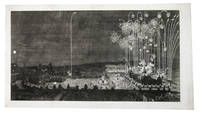
1750B4SB1E23SY47Nuremberg 1750. Ca. 39.5 x 71.5 cm. Kept in a white passe-partout. One large etching. Large etching with a spectacular night view of a fireworks display during the Nuremberg peace festival. This event took place in Nuremberg in July 1650 to celebrate the end of the Thirty Years' War 1618-1648 one of the most devastating conflicts in European history. The festival was intended as a sign of hope for a better future in Europe and particularly Germany. The present etching may have been printed to spread this message of peace.The Thirty Years' War started as a civil war within the Holy Roman Empire but eventually became a wider European affair. Primarily fought in present day Germany however it brought disease and starvation to the region and depopulated large areas. After five years of negotiation a peace treaty was finally signed in October 1648. Any remaining unresolved issues were negotiated during a major diplomatic congress held in Nuremberg between May 1649 and July 1650. When the negotiations were concluded a peace festival was held which included a large fireworks show. The present etching shows this spectacular display with the numerous skyrockets shot from all sides of the castle. Remarkable details are the burning statue in the middle and the men with flaming swords surrounding it.The image was engraved after designs by German artists Peter Troschel ca. 1620-after 1667 and Michael Herr 1591-1661. In was first printed in 1650 and included a title at the top and a legend at the bottom. The present version most likely dates from the middle of the 18th century but has been significantly enlarged especially lengthwise. These new proportions make the image even more spectacular.The work has been folded in the past the lower part of the left margin has been restored insect droppings in a small area on the left side of the head margin not affecting the etched image. Otherwise in good condition. unknown
185318762n.p. Nuremberg: n.p. Verlag Georg Maar 1853. First edition. Stiff card wraps. Very good. A single lithographed scene 6½ inches by approximately 275 inches nearly 26 feet. Individual leaves are pasted together accordion style. The Nuremberg Folk Festival began in 1826 and included a large parade. This 1853 Festival was no exception and was commemorated by the present lithograph reputedly executed by Leopold Itzel. A glorious example of lithography: The Herold der Stadt Nürnberg and Trompeter are followed by the Ehrenfahnenträgen für Bauern; Noris the Representation of Nuremberg follows in a Roman chariot; then trade representatives: artists plumbers armour carpenters locksmith a Flora and Pomona in chariots triumphal cart of Gartner a train of brewers Buttner and hosts and finally floats from rural communities Steinbuhl Mogeldorf and Rednizhembach the last as a canal boat. The captions along the bottom are in German. The first 8 panels are hand colored thereafter the lithograph is uncolored. Some light soiling some folds repaired occasionally trimmed closely; housed in original cardboard covers worn at edges with their ribbon ties replaced. In all 27 participants or groups on 19 panels. Rare to start with and hardly ever found complete. n.p. (Verlag Georg Maar) paperback books
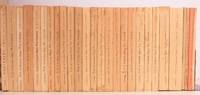
194646438HMSO 1946-1951. Together 27 vols. 8vo. First Edition with 2 large folding charts; original printed wrappers one or two backstrips scuffed at head and tail else a remarkably well-preserved bright clean set. The extended set comprises: Part 1: 20 Nov 1945 to 1 Dec 1945 1946; Part 2: 3 Dec 1945 to 14 Dec 1945 1946; Part 3: 17 Dec 1945 to 4 Jan 1946 1946; Part 4: 7 Jan 1946 to 19 Jan 1946 1946; Part 5: 21 Jan 1946 to 1 Feb 1946 1946; Part 6: 2 Feb 1946 to 13 Feb 1946 1947; Part 7: 14 Feb 1946 to 26 Feb 1946 1947; Part 8: 27 Feb 1946 to 11 March 1946 1947; Part 9: 12 March 1946 to 22 March 1946 1947; Part 10: 23 March 1946 to 3 April 1946 1947; Part 11: 4 April 1946 to 15 April 1946 1947; Part 12: 16 April 1946 to 1 May 1946 1947; Part 13: 2 May 1946 to 13 May 1946 1947; Part 14: 14 May 1946 to 24 May 1946 1947; Part 15: 27 May 1946 to 6 June 1946 1948; Part 16: 7 June 1946 to 19 June 1946 1948; Part 17: 20 June 1946 to 1 July 1946 1948; Part 18: 2 July 1946 to 15 July 1946 1948; Part 19: 16 July 1946 to 27 July 1946 1949; Part 20: 29 July 1946 to 8 August 1946 1949; Part 21: 9 August 1946 to 21 August 1946 1949; Part 22: 22 August 1946 to 31 August 1946; 30 Sept 1946 and 1 October 1946 1950; Part 23: Index 1951. WITH Opening Speeches of the Chief Prosecutors 1946; Speeches of the Prosecutors against the Indicted Organisations 1946; Speeches of the Chief Prosecutors against the Individual Defendants 1946; Judgement of the International Military Tribunal with the Dissenting Opinion of the Soviet Member 1946. Volume 1 includes the folding chart of the organisation of the NSDAP; Volume 3 contains the folding chart of the organisation of the SS. EXTENDED SETS ARE EXCEEDINGLY SCARCE. HMSO, unknown
Together 27 vols., 8vo., First Edition, with 2 large folding charts; original printed wrappers, one or two backstrips scuffed at head and tail else a remarkably well-preserved, bright, clean set. The extended set comprises: Part 1: 20 Nov 1945 to 1 Dec 1945 (1946); Part 2: 3 Dec 1945 to 14 Dec 1945 (1946); Part 3: 17 Dec 1945 to 4 Jan 1946 (1946); Part 4: 7 Jan 1946 to 19 Jan 1946 (1946); Part 5: 21 Jan 1946 to 1 Feb 1946 (1946); Part 6: 2 Feb 1946 to 13 Feb 1946 (1947); Part 7: 14 Feb 1946 to 26 Feb 1946 (1947); Part 8: 27 Feb 1946 to 11 March 1946 (1947); Part 9: 12 March 1946 to 22 March 1946 (1947); Part 10: 23 March 1946 to 3 April 1946 (1947); Part 11: 4 April 1946 to 15 April 1946 (1947); Part 12: 16 April 1946 to 1 May 1946 (1947); Part 13: 2 May 1946 to 13 May 1946 (1947); Part 14: 14 May 1946 to 24 May 1946 (1947); Part 15: 27 May 1946 to 6 June 1946 (1948); Part 16: 7 June 1946 to 19 June 1946 (1948); Part 17: 20 June 1946 to 1 July 1946 (1948); Part 18: 2 July 1946 to 15 July 1946 (1948); Part 19: 16 July 1946 to 27 July 1946 (1949); Part 20: 29 July 1946 to 8 August 1946 (1949); Part 21: 9 August 1946 to 21 August 1946 (1949); Part 22: 22 August 1946 to 31 August 1946; 30 Sept 1946 and 1 October 1946 (1950); Part 23: Index (1951). WITH Opening Speeches of the Chief Prosecutors (1946); Speeches of the Prosecutors against the Indicted Organisations (1946); Speeches of the Chief Prosecutors against the Individual Defendants (1946); Judgement of the International Military Tribunal (with the Dissenting Opinion of the Soviet Member) (1946). Volume 1 includes the folding chart of the organisation of the NSDAP; Volume 3 contains the folding chart of the organisation of the SS. EXTENDED SETS ARE EXCEEDINGLY SCARCE.
196858898Nurnberg Germany: Albrecht Durer Gesellschaft; Et Al. As New. 1968. Paperback. FREE UPGRADE to Courier/Priority Shipping Upon Request IN STOCK AND IMMEDIATELY AVAILABLE FOR SHIPMENT - AS NEW THE TEXT BLOCK IS PRISTINE CLEAN UNMARKED AND IN EXCELLENT CONDITION - - Text in German. 92 pp. With 53 ills. 3 col. . 20 x 20 cm. -- with a bonus offer-- . Albrecht Durer Gesellschaft; Et Al paperback
196758873Nuremberg Germany: Germanisches Nationalmuseum. As New. 1967. Paperback. FREE UPGRADE to Courier/Priority Shipping Upon Request IN STOCK AND IMMEDIATELY AVAILABLE FOR SHIPMENT - AS NEW THE TEXT BLOCK IS PRISTINE CLEAN UNMARKED AND IN EXCELLENT CONDITION - - Text in German. 100 pp. With 65 ills. 2 col. > 20 x 18 cm. -- with a bonus offer-- . Germanisches Nationalmuseum paperback
2014108762Hirmer Publishers. New. 2014. Paperback. 3777422185 . FREE UPGRADE to Courier/Priority Shipping Upon Request - IN STOCK AND IMMEDIATELY AVAILABLE FOR SHIPMENT - Flawless copy brand new pristine never opened - Text in English and German. -- with a bonus offer-- . Hirmer Publishers paperback
202Nüremberg, Secrétariat du Tribunal, 1947-1948 41 vol. in-8, bradel toile bleue (reliure de l'éditeur).
80 pages. Features: Magnificent cover illustration by William Winter depicts a quintessentially Canadian backyard skating rink; Household Finance (HFC) ad on page one features photo of Mr. J.B. Vaillancourt, manager of the Shawinigan Falls, Quebec office; Our Sham Defense Battle - Editorial; Krupp, Schacht and Rommel - Beverley Baxter reflects on what happened at the Castle Harben on October 1, 1946 in the wake of the Nuremberg Trials verdicts; William Stephenson - The Biggest Private Eye of All - he directed the most secret of all cloak-and-dagger operations of the Second World War - here, for the first time, is the story of the man who pulled the strings which spiked Hitler's guns in the western hemisphere - article with photo; Dr. Gordon M. Bell's School for Sobriety - The Shadow Brook Health Foundation for men and the Willowdale Hospital for Women, both located on the outskirts of Toronto; Karsh's Charlottetown (PEI) - The City That's One Big Farm - article with great Karsh photos, especially a large shot of Premier Walter Jones meeting voters to resolve their issue, and another of Dr. Roderick Macdonald at age 94; Maude Burbank and her Musical Moppets - she takes care of two musical bands of Moncton youngsters; Manitoulin Island - The Eden Isle of Evil Spirits - article with nice colour photos; What the Boyd Gang Fiasco Can Teach Us - the Mayor or Toronto, Allan Lamport assails conditions which helped the Boyd Gang terrorize his city; The Slide That Shook The West - A Maclean's Flashback article to the April 29, 1903 Frank Slide, in which part of Turtle Mountain crashed into Crowsnest Pass, destroying the town of Frank; The World's Most Ardent Birdwatcher - Peter Scott, the gifted son of Scott of the Antarctic will fly anywhere to gaze lovingly at rare wildfowl - article with photos; You Can't Stop a Woman Crying; Nice one-page colour ad for Stanfield's "Look-Alike" Balbriggan Pajamas with happy family scene; Gaines Meal dog food ad features illustration of Saint Bernard; Vintage Frigidaire ad includes lengthy Christmas message and suburban evening scene of appliances being delivered to happy homes; Cream of Wheat ad features Li'l Abner; Vintage colour ad for Christie's Premium Crackers; Colour centrefold ad for Ekco and their many kitchen products; Champion Spark Plug ad includes photos of 12 new members of the 100-mile-an-hour club at Indianapolis; Two-page colour ad for Revere Cookware - 'the world's finest'; Lightning Zipper ad shows irate wife fixing husband's trousers while he stands, semi-dressed, taking her abuse; and more. Unmarked with moderate wear. Two-inch opening to fore-edge of front cover and first two pages mended with archival tape. A sound copy of this very special issue. Book
1571486271571 (Lyon) Lugduni, Apud Ioan. Tornaesivm (Jean de Tournes), Typogr. Regium (Typographe royal). MDLXXI - 1571 - In-16, 12 x 8,5 x 3,8 cm - Edition Originale - Reliure vélin de récupération avec manque -Collationné complet des 110 gravures sur bois- 637 pagers + Index (3) manque pages d'index- fortes mouillures - Envoi rapide et soigné - Réf. 48627
1946716971946. Scarce Complete British Edition of the Nuremburg Trials Nuremberg Trials. International Military Tribunal. The Trial of German Major War Criminals: Proceedings of the International Military Tribunal Sitting at Nuremberg Germany. London: His Majesty's Stationary Office 1946-1951. Complete set; 23 parts in 23 books Part 23 an index. With Opening Speeches of the Chief Prosecutors for the United States of America The French Republic The United Kingdom of Great Britain and Northern Ireland And the Union of Soviet Socialist Republics. London: His Majesty's Stationary Office 1946. ii 173 pp. And Speeches of the Chief Prosecutors for the United States of America the French Republic The United Kingdom of Great Britain and Northern Ireland And the Union of Soviet Socialist Republics at the Close of the Case Against the Individual Defendants. London: His Majesty's Stationary Office 1946. ii 200 pp. And Speeches of the Prosecutors for the United States of America the French Republic The United Kingdom of Great Britain and Northern Ireland And the Union of Soviet Socialist Republics at the Close of the Case Against the Indicted Organisations. London: His Majesty's Stationary Office 1946. iv 142 1 pp. Original wrappers moderate shelfwear soiling and dampspotting fainst dampstaing to wrappers of a few volumes gouge to head of spine of Part 11 light toning to interiors. $1250. First British edition. Because this report was issued over a period of four years it is often difficult to find a complete set intact. Held at Nuremberg in 1945 and 1946 this famous tribunal indicted several Nazi leaders for war crimes. Twelve defendants were sentenced to death three to life imprisonment and four to twenty-year prison terms. Three were acquitted. The tribunal was significant because it affirmed the principle that both individuals and states could be held accountable for war crimes. The actual text of the proceedings contains a wealth of information on the crimes of the Nazi leadership as well as insight into the political and social background that facilitated the Nazi takeover of power. Added to our set are three of the six supplemental volumes issued by the HM Stationary office. The other three record the agreement to prosecute the indictments and the sentence. unknown books
vi, [2], 552 pages. Index. Black and white photographic plates. "One of the most important autobiographies of the post-war period, for there can be few personalities still alive who have been so intimately connected with the march of world events for so many years... His first great triumph was to rescue the German Mark from the inflation of 1921... As the Nazi avalanche swelled, Hitler persuaded him to occupy the Presidential chair at the Reichsbank... but (Schacht) soon saw that the Fuhrer was driving relentlessly towards war. A quarrel resulted and he left the Government, remaining under a cloud until he was arrested towards the close of the regime." - dust jacket. Schact was later aquitted of war crimes at Nuremberg. Average wear to unmarked book. Above-average wear and soiling to dust jacket which is now preserved in archival-grade Brodart. KEHR & LANGMAID 1217, ALDCROFT & RODGER p.83. Book
320 pages. Name index. Subject index. "A shortened version of the second edition (1957) of a work first published in Polish under the title 'Dziennik Hansa Franka' (Hans Frank's Diary). Frank was a Minister of the Third Reich and Governor General of those areas of Poland occupied by Nazi Germany which were not incorporated into the Reich. At the International Military Tribunal in Nuremberg for the first time in the history of the world thousands of secret documents were revealed belonging to a state in the grip of the imperialist idea of world conquest. Among those documents Hans Frank's Diary occupies one of the leading positions both on account of its contents and on account of its more than ordinary length: 11,000 typwritten pages in foolscap, making up 38 volumes. Any study of the history of the last war must include a reading of Hans Frank's Diary." - Preface. Author was a member of the Polish delegation to the International Military Tribunal at Nuremberg. Usual library markings. Above-average wear. Front hinge taped. Back hinge going. A worthy reading copy of this very important work. LASKA 316, KEHR & LANGMAID 5385. Book
16000Nuremburg Archive. Archive of 11 original press photos 1945-46 capturing key persons and locations associated with the opening years of the Nuremberg Trials major tribunal for prosecuting Nazi War Criminals. These photos cover the International Military Tribunal when the 24 most prominent leadership were brought to justice. In the end 12 were sentenced to death by hanging 10 were actually hanged 6 were acquitted and the remaining were transferred to Spandau prison to serve their sentence. Notably while the Nuremberg Trials were the instrument of justice for atrocities during WWII they also served as a lasting model for using the international law to answer crimes against humanity and peace. <br/><br/>The 11 original Press Photos include photos of Reichsmarshal Hermann Goering seating next to Deputy Führer Rudolf Hess minister of foreign affairs Joachim Von Ribbentrop and Field Marshal Wilhelm Keitel The highest-ranking officer of the Nazi Germany. In the back row Grand Admiral Karl Doenitz with dark glasses Grand Admiral Erich Raeder Baldur Von Schirach and Fritz Sauckel. Another photo shows newly appointed Chief Prosecutor Hartley Shawcross who set the tone for the trial to proceed under the rule of law rather than the more popular idea that the trials were vengeance in the spoils of victory. His two day long opening statement included the famous line: "There comes a point when a man must refuse to answer to his leader if he is also to answer to his own conscience". Also photo of is Telford Taylor succeeding as Chief Prosecutor in 1946; as well as witness Kurt Muller during the scene of uncovering the mass graves he helped identify near a concentration camp and defense attorneys for Papen and Hess. Photo of Dr Von Rohrscheid. A photo of RUDOLPH HESS. Photos vary in size from approximately 6"x8" to 8"x10". Most contain a byline verso. Condition good to very good with scattered creases and soiling to verso with some bylines damaged or removed. The photos themselves are clear and arresting testimony to the historic events they portray. Original press photos relating to the trials are rare. The Nuremberg Trials were instrumental in bringing the true extent of Nazi crimes to the public eye as well as set the standard for international justice in a legal setting. unknown books
elala3548Nuremberg: Sigmund Soldan’schen…August Zemsch 1896. oblong folio. title 16 photographs mounted on heavy card. loosely laid in original gilt-stamped cloth portfolio photo mounted on upper cover small tear to lower spine light foxing to edges of title Nuremberg: Sigmund Soldan’schen…August Zemsch, [1896] hardcover