WRIGHT Richard (jeunesse noire).Livre Rare Book

432 résultats
19472097Paris Gallimard, 1947 Traduit de l'américain par Marcel Duhamel en collaboration avec Andrée R. Picard. 224 pp. In-8 en pleine percaline noire, dos plat pièce de titre en maroquin rouge, relié avec sa couverture d'origine. Black boy raconte un épisode d'une histoire souvent vécue par les Noirs d'Amérique. "Les circonstances historiques ont fait de nous, les Noirs d'Amériques du Nord, un peuple de nomades, perpétuellement en mouvement, quittant sans cesse un lieu pour cherche la liberté ailleurs." Richard Wright, issu d'une famille blanche, noire et indienne, est à l'intersection contre la "doctrine de la Suprématie Blanche". Insaisissable et instable, il poursuit sans limite ses aspirations, en "courant après la liberté", pour la condition humaine, la condition de son époque pour les siens et pour les autres. Avant ce livre, son premier roman Native Son livre fut un succès, dynamitant les préjugés racistes. Orson Welles en fit une adaptation pour le théâtre en 1941.
190122331<p><b>RACISM. THEODORE ROOSEVELT.</b>Drawing. 1p 5 x 6¼ in. </p><b>Transcript</b><p><i>"To hear how Roosevelt is carrying on I would like to give him a swift kick & see him full of holes I wish the nation would make Alice marry Booker T Washington don't you"</i></p><p>Followed by drawing of Alice Roosevelt marrying Booker T. Washington.</p><p><b>Historical Background</b></p><p>In 1901 Roosevelt invited Washington to dine with him at the White House making him the first black man ever to do so. Whoever wrote this racist note and drawing apparently did not approve of the gesture suggesting that Roosevelt's eldest daughter Alice marry the Civil Rights pioneer.</p>
190122331<p><b>RACISM. THEODORE ROOSEVELT.</b>Drawing. 1p 5 x 6¼ in. </p><b>Transcript</b><p><i>"To hear how Roosevelt is carrying on I would like to give him a swift kick & see him full of holes I wish the nation would make Alice marry Booker T Washington don't you"</i></p><p>Followed by drawing of Alice Roosevelt marrying Booker T. Washington.</p><p><b>Historical Background</b></p><p>In 1901 Roosevelt invited Washington to dine with him at the White House making him the first black man ever to do so. Whoever wrote this racist note and drawing apparently did not approve of the gesture suggesting that Roosevelt's eldest daughter Alice marry the Civil Rights pioneer.</p> books
1930VBF24<p>Black Interest - Racist</p><p>COUSIN KEN: <i><b>The Ten Little Seaside Nigger Boys.</b></i></p><p>London: Renwick of Otley ca.1930s.</p><p>Publisher's address given as: 180 Fleet Street E.C.4 = London</p><p>16 leaves of ink page mock-up pre-production for the book</p><p>comprising manuscript text and illustrations 6 with color plate</p><p>separations plus 1 full ink British Production and watercolor design for the cover. Loose.</p><p>Some pages signed "Ken". </p><p><br /></p> Renwick of Otley books
193661085Washington D.C.: Associates in Negro Folk Education 1936. 8vo. 6 98 pp. Decorated tan softcovers Art Deco designs on front cover lettering in black gilt & red minor scuffing lower fore-edge front cover still a VG copy. First edition of this 4th installment in the storied “Bronze Booklet†series which quickly became a standard reference for teaching African-American history in the United States and Europe and addressed a number of racial conflicts and issues surrounding the impact of race on political and economic history. This important groundbreaking work by Bunche not only represented his most extended analysis of the issues of racism but also the role of race and racism in World economic and political conflicts Imperialism and inherent racism as well as the fact that race “has been used to whitewash some of the blackest pages in American history.†Bunche 1904-1971 was a leading African-American intellectual diplomat supporter of the US Civil Rights movement and would later be awarded the 1950 Nobel Peace Prize the first African=American so honored. Associates in Negro Folk Education, paperback
1916932Athol Ma 1916. Good plus. Broadside 16 x 5 inches. Previously folded. A couple of chips and small closed tears at edges. Even tanning. Rare broadside advertisement for a weekend engagement of D.W. Griffith's infamous silent epic The Birth of a Nation at Steinberg's Athol Opera House located in Athol Massachusetts. The broadside gives dates and times of screenings November 4-6 2:10 & 8:10 daily a list of cast and characters a lengthy discussion of Griffith's desire for historical accuracy in his work and a message about "the play's message of peace." To wit the broadside states that "If this graphic presentment serves no other purpose its message of universal peace marks it of great important. Morally and educationally it established the futility of armed conflict. But for the hatreds engendered in the Civil War the suffering of the Reconstruction period would never have been known." The film based on Thomas Dixon's 1905 novel The Clansman is often cited as the principal inspiration for the revival of the Ku Klux Klan in the 20th century. unknown books
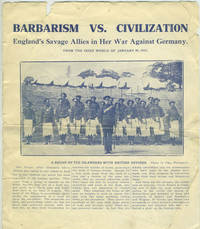
191526775New York 1915. Irish propaganda targeting the British during W.W.I. from the Irish World of January 30 1915. During W.W.I the struggle for Irish independence was suspended with the Nationalist forces splitting over support of the war. This handbill appears to be an effort to incite hatred of the British with racist descriptions of Fijian soldiers "the cannibals we may say" who fought for the British. There is a clear preference for Germany - "And these are the savages the cannibals we may say whom Britain is bringing over to fight the most enlightened nation of Melancthon and SchlegeL of Kant. of Mozart and Beethoven and Wagner of Goethe and Heine." <br /> <br /> The text characterized the Fijians as cannibals "dark copper colored have black eyes and bushy hair worn in the form of a mop" short stature protruding stomachs legs bowed and feet flat and usually nude. The photograph shows the Fijian soldiers standing at attention behind a British Officer photo by Paul Thompson. <br /> <br /> The text of the handbill is extracted from The Irish World and American Industrial Liberator published in New York between 1878-1951. Hand bill 9 x 7 3/4" printed in blue on cream paper verso blank. Creased with marginal tears and small margin loss. <br /> <br /> Unrecorded on OCLC although there is a W.W.I poster with the title "Civilization Vs. Barbarism" 1914 but associated with Red Cross Week. OCLC: 894257435. unknown
191563112New York: Grosset & Dunlap ca. 1915. 8vo. 8 374 pp. Photo frontisp. 7 photo illust. Red cloth white lettering minor shelfwear faint tidemark wicked into fore-edges of plates at the very fore-edge w/ d.j. cover art with KKK rider on horseback next to heroine minor chipping head & foot of spine minor closed tears edgewear still G/VG- copy. First Photoplay edition of the notorious movie starring Lilian Gish Henry B. Walthall Mae Marsh Miriam Cooper Ralph Lewis George Siemann and others which steeped in the Confederacy’s Lost Cause mythos which had heavily influenced the misguided Dunning School’s interpretation of Reconstruction and significantly influenced Dixon and Woodrow Wilson. Directed by D.W. Griffith the movie was very successful but the racist overtones and blatant support of the Ku Klux Klan triggered widespread protests and it was banned in several cities. Very much like 21st-Century media Birth of a Nation’s portrayal of African-Americans created a justification for prejudice and discrimination which undermined Civil Rights for decades and reactivated the largely quiescent Ku Klux Klan movement and was the first film ever screened at the White House for President Wilson. See: Petaja Photoplay Edition p. 53; The Influence of “The Birth of a Nation†Facing History & Ourselves March 14 2016. Grosset & Dunlap, hardcover
1970List922Richmond Virginia and Milton Massachusetts 1970. Various formats generally near fine with light normal wear. Near Fine. Throughout his career Martin Luther King Jr. had to defend himself repeatedly over allegations of Communist-related activities and sympathies. His associations with several alleged communistes led the FBI to open an investigation in 1962 and his appearance at the Highlander Folk School led to a proliferation of material from far-right groups alleging that he had attended a "Communist Training School" with billboards showing a picture of King at the school appearing during the Selma-Montgomery March. <br /> <br /> Julia Brown was an FBI agent who according to her own book and lectures spent several years undercover as a member of the Communist Party in Cleveland. She made a career in the 60s writing and lecturing on the subject and in particular trying to tie King to Communism in various ways. Her book on the subject still attracts some readers who maintain that King was secretly a violent Communist whose true intentions were to divide the country. <br /> <br /> Collected here are four ephemeral examples relating to Brown's and others' anti-King efforts mostly from Richmond Virginia as follows:<br /> <br /> Printed broadside 8 ½ x 5 ½ inches entitled Richmond is Indebted to Julia Brown advertising Brown as being responsible for King cancelling two trips to Richmond due to Brown's lectures and encouraging people to attend another by her likely published by the Richmond Area T A C T Committee; printed handbill 8 ½ x 11 inches folded entitled Martin Luther King Memorial Bridge - Never alleging King to be a communist and published by the Action-by-Citizens Committee mid 1970s; small card measuring 3 ¾ x 2 ½ inches advertising a speech by Brown on "The Frightening Background of Martin Luther King" March 28 1968 in Richmond published by the American Opinion Library of Richmond; and an anti Martin Luther King Day two-sided handbill published by the Council on Domestic Relations in Milton Massachusetts likely in 1971 using Brown's likeness and essays on King to argue against the establishment of a national holiday in his honor. unknown books
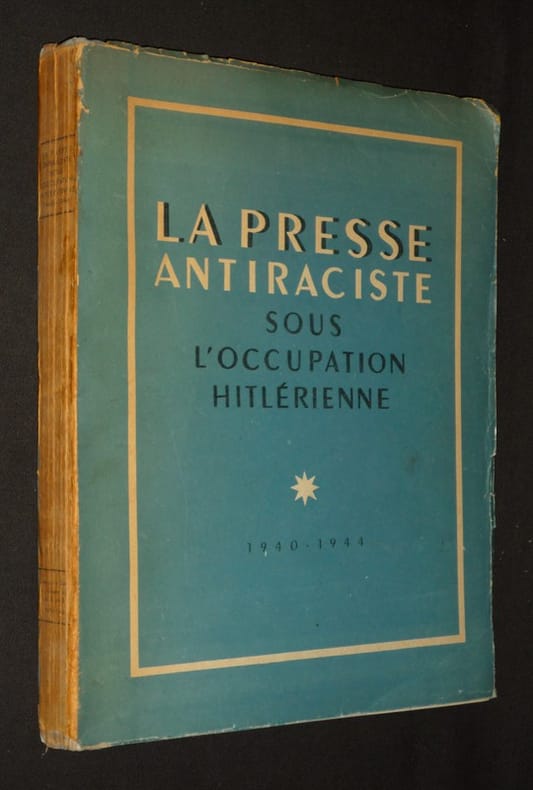
1946R200004115IMPRIMERIE NATIONALE. 1946. In-8. Broché. Etat d'usage, Couv. convenable, Coiffe en pied abîmée, Intérieur frais. 606 pages.. . . . Classification Dewey : 305.8-Racisme
1938wq852Essener Verlaganstalt Relié 1938 "Rare volume relié en toile (17 x 25cm) 732 pages numérotées, puis 4 pages non paginées de table des matières, suivie d'une carte dépliable de l'Europe de l'Est ; ouvrage abordant la ""question juive"", l'Allemagne nazie et les persécutions raciales et antisémites en Europe de l'Est à cette époque, illustrations, cartes et photos en noir et blanc ; reliure légèrement frottée et pliée au dos, quelques taches de rousseur, bon état général. Livraison a domicile (La Poste) ou en Mondial Relay sur simple demande."
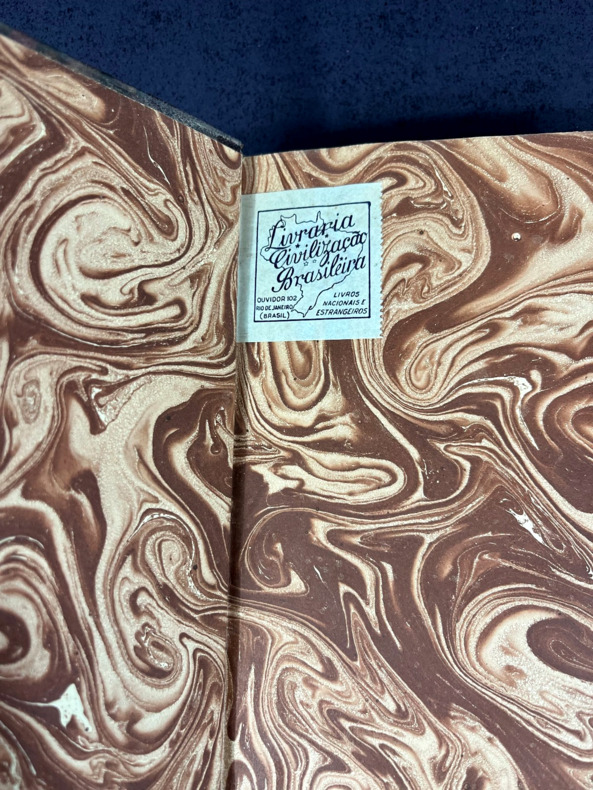
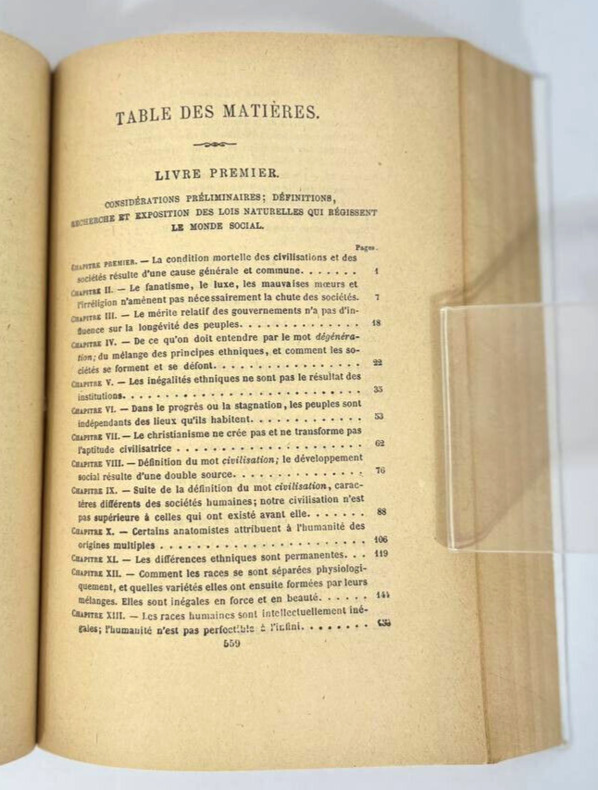
19300513Paris, Firmin-Didot et cie, sans date [circa 1930]. Deux volumes in-12 de 195 x 140 mm, (xxxi) 561 + 566 pp. Reliure demi-chagrin d'époque tabac, dos de style janséniste à 5 nerfs, nom d'auteur, titre et tomaison en caractères d'imprimerie frappés dorés, dépouillé de tout autre ornement. Plats et gardes marbrées. Couvertures conservées. Tranchefile. Ex-libris de l'éditeur Civilização Brasileira au premier volume. À noter le mot "INGRES" écrit en filigrane d'une page de garde blanche de ce même volume. Dos relié conservés à la fin de chaque volume. Dédicace, préface et biographie de Gobineau en tête du premier volume, table des matières à chaque fin de volume. "La chute des civilisations est le plus frappant et en même temps le plus obscur de tous les phénomènes de l'histoire. En effrayant l'esprit, ce malheur réserve quelque chose de si mystérieux et de si grandiose, que le penseur ne se lasse pas de le considérer, de l'étudier, de tourner autour de son secret. Quand, après un temps de force et de gloire, on s'aperçoit que toutes les sociétés humaines ont leur déclin et leur chute, toutes... alors on est contraint de constater que toute agglomération humaine, même protégée par la complication la plus ingénieuse de liens sociaux, contracte, au jour même où elle se forme, et caché parmi les éléments de sa vie, le principe d'une mort inévitable." C'est en s'interrogeant sur les raisons de la chute des civilisations que le comte Arthur de Gobineau s'intéressa aux différences anthropologies entre les différents groupes d'êtres humains. Précurseur, pétri d'un certain pessimisme romantique, Gobineau fut davantage un penseur et un essayiste qu'un scientifique, ce qui lui reprocheront des générations ultérieures de chercheurs tels que Francis Galton ou Georges Vacher de Lapouge. Cependant, et comme ce dernier le remarquait (L'Aryen, son rôle social, 1899), l'érudition et la pensée gobiniennes ont parfois pointé vers des conclusions ou des hypothèses qu'il était difficile d'avoir sans outils scientifiques. Un classique ("souvent cité, jamais lu") qui a souffert d'amalgames négatifs au XXe siècle et que le XXIe va très certainement redécouvrir. Souvent réédité jusqu'à la Seconde guerre mondiale mais plutôt peu courant. Très rare en reliure d'époque.
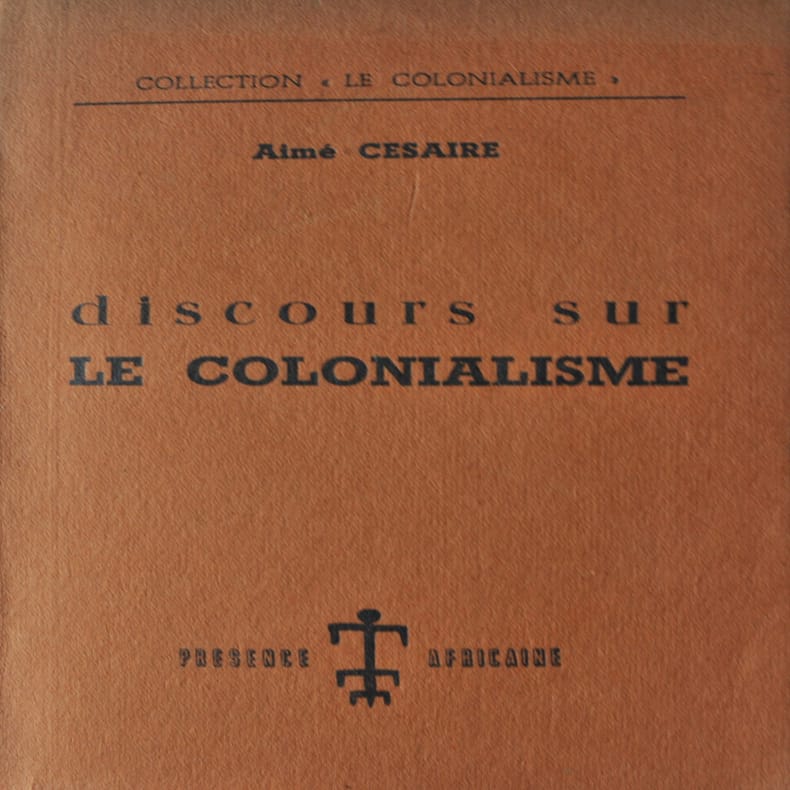
195546405617Paris, Présence Africaine, (1955) ; in-12, broché. 72 pp.Deuxième édition augmentée par l’auteur de ce célèbre pamphlet anticolonialiste qui avait paru pour la première fois aux éditions Réclame en 1950. “Le fait est que la civilisation dite “européenne”, la civilisation “occidentale” telle que l’ont façonnée deux siècles de régime bourgeois, est incapable de résoudre les deux problèmes majeurs auxquels son existence a donné naissance : le problème du prolétariat et le problème colonial.” Césaire insiste ici sur la parenté qui existe selon lui entre nazisme et colonialisme : “Oui, il vaudrait la peine d’étudier, cliniquement, dans le détail, les démarches d’Hitler et de l’hitlerisme et de révéler au très distingué, très humaniste, très chrétien bourgeois du XXe siècle qu’il porte en lui un Hitler qui s’ignore, qu’Hitler l’habite, qu’Hitler est son démon, que s’il vitupère, c’est par manque de logique et qu’au fond, ce qu’il ne pardonne pas à Hitler, ce n’est pas le crime en soi, le crime contre l’homme, ce n’est pas l’humiliation de l’homme en soi, c’est le crime contre l’homme blanc, c’est l’humiliation de l’homme blanc, et d’avoir appliqué à l’Europe des procédés colonialistes dont ne relevaient jusqu’ici que les Arabes d’Algérie, les Coolies de l’Inde et les nègres d’Afrique.” p. 13.
192863298CBBerlin-Neu-Finkenkrug, Paetel Verlag, 1928. 134 Seiten. 41 Tafeln. Original-Leinenband mit silberngeprägtem Rücken- und Deckeltitel. [4 Warenabbildungen]
19311253501931 Paris, Ateliers d'Impressions d'Art - MDCCCCXXXI (1931) - In-4, reliure pleine toile, dos lisse avec titre en doré, couverture d'origine conservée 131 pages - Ouvrage illustré de 50 planches hors texte en couleurs, d'illustrations en N&B et en couleurs dans le texte et d'ornements en N&B (bandeaux, lettrines, culs-de-lampe)
19331821<p>15 cm. 4ii vii11-621-36331-1653xii2pp. Most pages double-column with either side-by-side or facing English and Chinese text. Brown cloth stamped in gilt and white. Shelfworn with white almost entirely missing from spine characters; small stain to rear board.</p><p>An English conversation guide for Chinese speakers that covers the subject in three separately paginated parts -- Vocabulary Dialogues and Useful Sentences -- plus an Appendix. Numerous examples are provided throughout although often of such a specific nature that it is hard to imagine such a conversation taking place e.g. when the reader is provided with dialogue about the benefits of swimming in sea water versus river water or how to report to the police being robbed by four men with guns one of whom has a "double thumb" .</p><p>Interestingly all of the examples appear to take place in China and at times offer a sharp cultural critique of English-speaking foreigners. This is particularly true in a section in Dialogues on "Protests" in which a sample Chinese person defends himself against rudeness and racist comments by foreigners in different situations such as being mistreated by a clerk in a store when being involved in a traffic accident that was the foreigner's fault and on a tram car "The occasions of provocation are numerous and only a few are referred to here". An Editor's Note follows this section noting that while "it does a man good to get a genuine complaint out of his chest rather than to harbour it there" readers should always take the moral high ground: "the spirit underlying the protest should never be one of racial prejudice. A protest should be made with the best of intentions for the sake of the benefit of the offender as well as the scandalised onlookers. The protester should not fall into a passion for after all to err is human" p. 140-41.</p><p>Surprisingly not found in OCLC.</p> The World Book Co., Ltd. hardcover
1971154301971. Paris Imprimerie Le Souterrain Supplément à Révolution n°3 s.d. (1971) - Affiche 39 5 cm x 60 cm - Une pliure au milieu sinon bon état - Richard Deshayes perdit un oeil grace à un tir tendu d'un policier armé d'un lance-grenade Raymond Marcellin étant Ministre de l'Intérieur
1950xt680Centre de Documentation pour l'Union des Juifs pour la Résistance et l'Entr'aide (UJRE) Broché 1950 PEU COMMUN. In-4 (21,7 x 28,5 cm), broché, 328 pages ; volume inégalement bruni, pliures au dos, mors et bords des plats usés, marques d'usage sur les plats, état moyen. Livraison a domicile (La Poste) ou en Mondial Relay sur simple demande.
19400512Paris, Firmin-Didot et cie, 1940. Deux volumes in-12 de 187 x 132 mm, (xxxi) 561 + 566 pp. Reliure moderne pleine percaline rouge-mauve, charnières à la Bradel, plats muets, dos lisse avec nom d'auteur, titre et tomaison frappées or, soulignements dorés en coiffe et queue. Couvertures conservées. Tranchefile. Étiquette d'une librairie du boulevard Saint-Michel en page de garde du second volume. Dédicace, préface et biographie de Gobineau en tête du premier volume, table des matières à chaque fin de volume. "La chute des civilisations est le plus frappant et en même temps le plus obscur de tous les phénomènes de l'histoire. En effrayant l'esprit, ce malheur réserve quelque chose de si mystérieux et de si grandiose, que le penseur ne se lasse pas de le considérer, de l'étudier, de tourner autour de son secret. Quand, après un temps de force et de gloire, on s'aperçoit que toutes les sociétés humaines ont leur déclin et leur chute, toutes... alors on est contraint de constater que toute agglomération humaine, même protégée par la complication la plus ingénieuse de liens sociaux, contracte, au jour même où elle se forme, et caché parmi les éléments de sa vie, le principe d'une mort inévitable." C'est en s'interrogeant sur les raisons de la chute des civilisations que le comte Arthur de Gobineau s'intéressa aux différences anthropologies entre les différents groupes d'êtres humains. Précurseur, pétri d'un certain pessimisme romantique, Gobineau fut davantage un penseur et un essayiste qu'un scientifique, ce qui lui reprocheront des générations ultérieures de chercheurs tels que Francis Galton ou Georges Vacher de Lapouge. Cependant, et comme ce dernier le remarquait (L'Aryen, son rôle social, 1899), l'érudition et la pensée gobiniennes ont parfois pointé vers des conclusions ou des hypothèses qu'il était difficile d'avoir sans outils scientifiques. Un classique ("souvent cité, jamais lu") qui a souffert d'amalgames négatifs au XXe siècle et que le XXIe va très certainement redécouvrir. Souvent réédité jusqu'à la Seconde guerre mondiale mais plutôt peu courant.
19330497Paris, Firmin-Didot et cie, 1933. Deux volumes reliés en un, complet. Un fort in-12 de 18 x 12 cm, (xxxi) 561 + 566 pp. Reliure moderne pleine percaline bleu roi, charnières à la Bradel, plats muets, dos lisse avec nom d'auteur et titre en majuscules frappées or. Couvertures conservées. Dédicace, préface et biographie de Gobineau en tête du premier volume, table des matières à chaque fin de volume. "La chute des civilisations est le plus frappant et en même temps le plus obscur de tous les phénomènes de l'histoire. En effrayant l'esprit, ce malheur réserve quelque chose de si mystérieux et de si grandiose, que le penseur ne se lasse pas de le considérer, de l'étudier, de tourner autour de son secret. Quand, après un temps de force et de gloire, on s'aperçoit que toutes les sociétés humaines ont leur déclin et leur chute, toutes... alors on est contraint de constater que toute agglomération humaine, même protégée par la complication la plus ingénieuse de liens sociaux, contracte, au jour même où elle se forme, et caché parmi les éléments de sa vie, le principe d'une mort inévitable." C'est en s'interrogeant sur les raisons de la chute des civilisations que le comte Arthur de Gobineau s'intéressa aux différences anthropologies entre les différents groupes d'êtres humains. Précurseur, pétri d'un certain pessimisme romantique, Gobineau fut davantage un penseur et un essayiste qu'un scientifique, ce qui lui reprocheront des générations ultérieures de chercheurs tels que Francis Galton ou Georges Vacher de Lapouge. Cependant, et comme ce dernier le remarquait (L'Aryen, son rôle social, 1899), l'érudition et la pensée gobiniennes ont parfois pointé vers des conclusions ou des hypothèses qu'il était difficile d'avoir sans outils scientifiques. Un classique ("souvent cité, jamais lu") qui a souffert d'amalgames négatifs au XXe siècle et que le XXIe va très certainement redécouvrir. Souvent réédité jusqu'à la Seconde guerre mondiale mais plutôt peu courant.
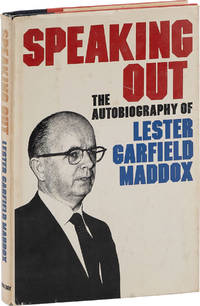
197580686Garden City NY: Doubleday & Company Inc 1975. First Edition. First Printing. Octavo 21.5cm; red paper-covered boards and navy blue cloth backstrip with titles stamped in white on spine; dustjacket; viii1831pp; illus. Inscribed by the author on the front endpaper to author and Georgia Democrat Robert M. Willingham: "Best wishes to Robert M. Willingham - Lester Maddox." Light wear to crown faint foxing to upper edge of textblock; Near Fine. Dustjacket is unclipped priced $6.95 gently spine-sunned showing modest shelfwear some dustiness and a few tiny nicks and tears; Very Good. Memoir by the racist former governor of Georgia 1967-71 a staunch segregationist who famously said he would rather close his family restaurants rather than serve African American customers - even after the passage of the Civil Rights Act. Doubleday & Company, Inc unknown
191135502423Wien & Leipzig, Wilhelm Braumuller, 1911 ; Fort in-8, Broché "XVI - 509 pp;"Ouvrage non coupé. Questions sur les races. 2° éditions fortement augmentée de ce traité qui concerne presque exclusivement les juifs. Références à Gobineau. Racisme - Antisémitisme
1965003265<p>Isle of Man: Britons - Times Longman 1965. Good original wraps with the Britons Publishing Company label pasted over original publisher VERY SCARCE Attacks Jews as being in control of Bolshevism etc. First Edition. Original Wraps. Good.</p> Britons - Times Longman paperback
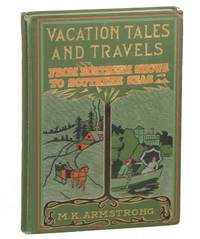
1903000011985St. Paul Minn: Pioneer Press Co 1903. First edition. Hardcover. Very Good. 8vo. 3 ii-iv 3 6-201 3 pp. Green publisher's cloth with the front board decorated with gilt lettering black green brown and blue decorations gold lettering on the spine. Illustrated with a frontispiece portrait of the author. The author's travel narrative covers the far north of the United States all the way to the southern region of the country. Armstrong includes a passage on attending a Black church in the North Carolina mountains and a thorough description of the service and hymns. He provides a quote from the Black deacon which gives a great deal of statistics on Black achievement education employment the number of libraries and schools in the country's Black communities. The next passage discusses southern law courts and includes a case against White supremacists who intimidated voters at polling places. There is offensive language in this passage but it demonstrates the brutal reality and hateful attitudes of racism in the south at this time. A visually attractive publisher's binding which paints a portrait of the segregated United States in the early twentieth century. One leaf with a dog-ear and a touch of rubbing to the corners of the cloth. Pioneer Press Co hardcover
1967yam1174Fort in-8 broché Coins émoussés sinon bon état de 411 pages éditions L'Age d'Homme