30 résultats
1900RO80176799NILSSON. 1900. In-12. Broché. Etat d'usage, Couv. défraîchie, Dos abîmé, Intérieur frais. 160 Pages. Nombreuses photos en couleur et en noir et blanc dans et hors texte. Plats désolidarisés. Inntérieur en bon état.. . . A l'italienne. Classification Dewey : 305.8-Racisme
186620537<p>Typical of the populist racism characterizing Democratic Party politics immediately after the Civil War this party ticket contains the names of local candidates for office including Brevet Brigadier General Benjamin Lefevre. A native Ohioan Lefevre served throughout the war entering politics when peace was declared but only after breaking an engagement with a Southern belle. He served as a congressman from Ohio throughout reconstruction.</p> <b>RECONSTRUCTION; RACISM.</b>Broadside. <i>"Democratic National Union - No Negro Suffrage"</i> Ohio 1866 3" x 11" 1 p. <br /> books
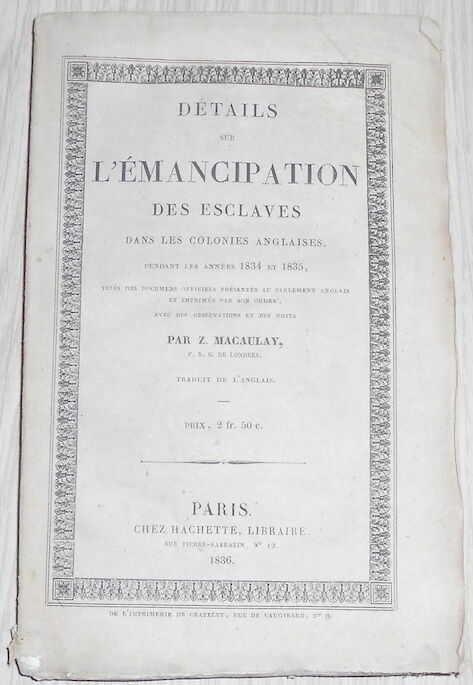
1836188661836. Paris chez Hachette Librairie 1836 - Broché 14 cm x 21 5 cm XIV+ 128 pages - Texte de Z. Macaulay - Bon état
1837153661837 Paris, Dessessart et Cie, 1837; 2 volumes in-8°,brochés,couvertures de l'époque, verte,imprimées, (4), 450, (2)pp.; 440, (1)pp. Frédéric - Pascal de Brotonne ( 1797-1865) fut employé à la Bibliothèque Sainte-Geneviève dont il devint le conservateur-administrateur ( Cf. Pierre Larousse).de l'édition originale
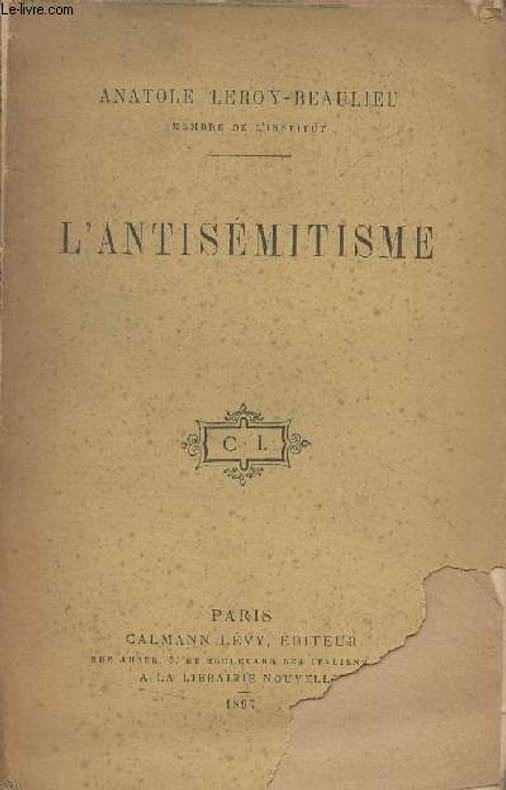
1897R300325722Calmann-Lévy. 1897. In-12. Broché. Etat d'usage, Couv. légèrement passée, Dos abîmé, Papier jauni. 78 pages. 1er plat détaché et déchiré. Dos manquant.. . . . Classification Dewey : 305.8-Racisme
1898188641898. Scancano Tipografia Editrice Degli Olmi 1898 - Broché 17 cm x 24 5 cm 18 pages - Texte en italien de Augusto Bosco - Bon état ; estratto della Rivista Italiana di Socologia Anno II Fasc. II Marzo 1898
1899728151899 Librairie Antisémite - 1899 - Petit in-8, broché - 152 pages - 1ère édition
188027705Couverture souple. 8 pages. 27 x 35 cm.
185972963Pagnerre - Libraire-Editeur à Paris Malicorne sur Sarthe, 72, Pays de la Loire, France 1859 Book condition, Etat : Bon relié, demi-chagrin à 4 faux-nerfs havane, pièce de titres noir In-12 1 vol. - 485 pages
18891113141889 A Paris, Librairie Victor Lecoffre - 1889 - In-8, broché - 274 p. (première partie seule)
1879R200004008PARIS ET LES DEPARTEMENTS. 1879. In-12. Broché. Bon état, Couv. convenable, Dos satisfaisant, Intérieur frais. 160 pages.. . . . Classification Dewey : 305.8-Racisme
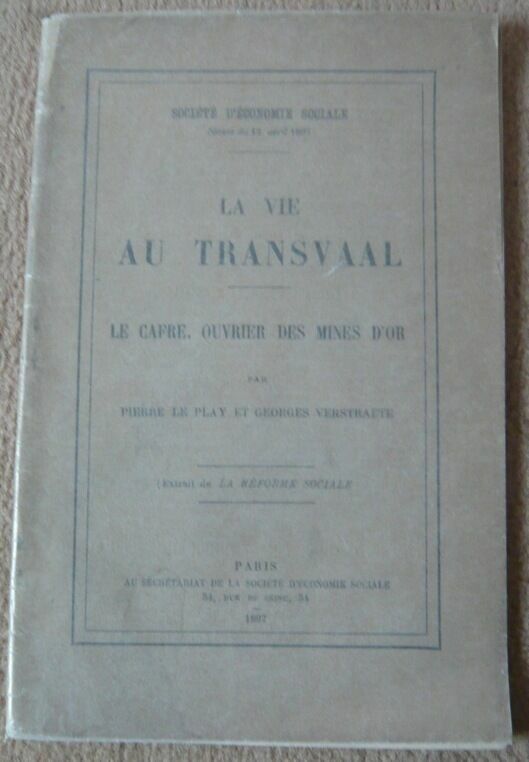
189759161897. Paris Société d'Economie Sociale extrait de La Réforme Sociale 1897 - Broché 16 cm x 24 cm 47 pages - Texte de Pierre Le Play et Georges Verstraete - Petit manque sur la couv. sinon bon état
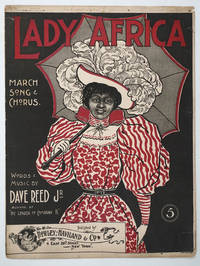
189728219New York: Howley Haviland & Co. 1897. Ephemera. Otherwise very good condition. Sheet music with a striking color cover image of an African American woman with parasol red and white dress with puff sleeves and hat decorated with feathers. Lyrics describe her as the "Queen of color'd high society" and uses stereotypical references and politically incorrect language. 10 1/8 x 14 1/8" 6pp pages detached but complete top and right edges slt ruffled. Cover art by Syd Davies. Howley, Haviland & Co. unknown
1892121723Couverture souple. Numéro complet. 8 pages.
1897GITc505Paris Librairie Antisémite 1897. In-12 broché XXXII 245pp. Couverture défraîchie.
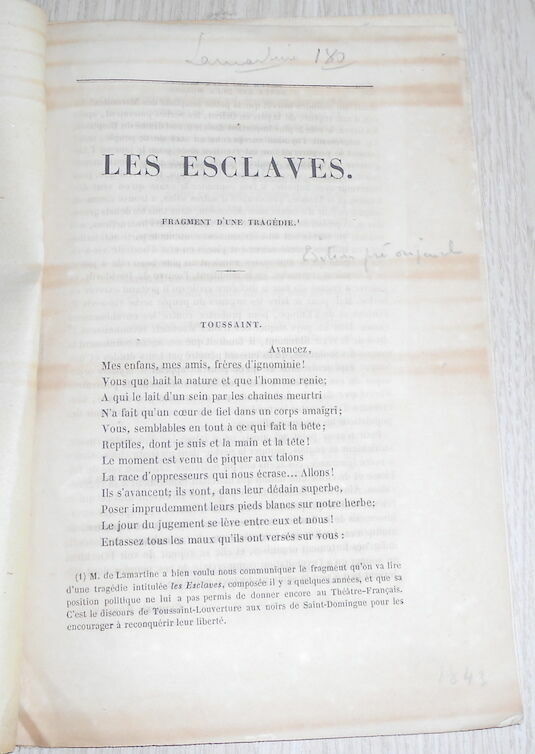
1843188631843. Paris Revue des Deux Mondes 1843 - Broché couv. factice muette 15 cm x 23 5 cm 5 pages - Extrait pré-original de la pièce intitulée « Les Esclaves » de Alphonse de Lamartine ; c'est le discours de Toussaint-Louverture aux noirs de Saint-Domingue - Bon état
1897GITc464Paris Librairie Antisémite 1897. In-12 broché couverture jaune imprimée 106pp. Petits manques sur le dos.
189462126Giard & Brière 1894 In-12, demi-basane, dos à nerfs, fleurons dorés, 280 pp. Reliure défraîchie, accrocs de papier sur les plats, moisissures int. en contreplats et in fine. En l’état.
186425614<p>The second in a series of four racist political cartoons published in 1864 by Bromley & Company which was closely affiliated with the Copperhead New York <i>World</i> newspaper. These prints sought to undermine Abraham Lincoln's chances for reelection by branding him as a "miscegenationist" and playing on white fears of "race-mixing." The cartoon scene pictures several interracial couples enjoying a day at the park eating ice cream discussing wedding plans and a woman's upcoming lecture. Two African American families have white employees a carriage driver and footmen and a babysitter.</p><p>The only other example traced at auction brought $7800 in 2010.</p> <b>ABRAHAM LINCOLN. RACISM.</b>Print. "Miscegenation or the Millennium of Abolitionism." Political Cartoon. New York: Bromley & Co. 1864. 1 p. 20¾ x 13â… in.<p><br /></p><p>American politics had long played on fears of sexual relationships between races. A powerful new word for "race-mixing" was coined in an anonymous December 1863 pamphlet entitled <i>Miscegenation: The Theory of the Blending of the Races Applied to the American White Man and Negro</i> published in New York. Purporting to advocate the virtues of the "blending of the white and black races on this continent" it was a literary forgery prepared by <i>The World</i> managing editor David Goodman Croly and reporter George Wakeman. The authors were unsuccessful in their attempt to trick President Lincoln into endorsing the work.</p><p>At the far left of the image Abraham Lincoln declares "<i>I shall be proud to number among my intimate friends any member of the Squash family especially the little Squashes.</i>" The African American woman to whom he is speaking replies "<i>I'se 'quainted wid Missus Linkum I is washed far her 'fore de hebenly Miscegenation times was cum. Dont do nuffin now but gallevant 'round wid de white gem'men! he-ah! he-ah! he-ah!</i>"</p><p>Senator Charles Sumner says "<i>Mr. President! Allow me the honor of introducing my very dear friend Miss Dinah Arabella Aramintha Squash.</i>" A white carriage driver complains in the background "<i>Gla-a-ang there 240t! White driver white footmen niggers inside my heys! I wanted a situation when I took this one</i>" while a black man in the carriage tells his companion "<i>Phillis de_ah dars Sumner. We must not cut him if he is walking.</i>" A black woman at a table tells a white man with her "<i>Ah! Horace its-its-its-bully 'specially de cream</i>" and he replies "<i>Ah! my dear Miss Snowball we have at last reached our political and social Paradise. Isn't it extatic</i>"</p><p>To the right are two couples embracing each a white woman and an African American man. The first white women tells her partner "<i>Oh! You dear creature. I am so agitated! Go and ask Pa</i>" to which he replies "<i>Lubly Julia Anna name de day when Brodder Beecher shall make us one!</i>" The second white woman says "<i>Adolphus now you'll be sure to come to my lecture to morrow night won't you</i>" to which he answers "<i>I'll be there Honey on de front seat sure!</i>" In the background are various immigrant minorities viewing the scene. One exclaims "<i>Most hextwadinary! Aw neva witnessed the like in all me life if I did dem me!</i>" and another adds "<i>Mine Got vat a guntry vat a beebles!</i>" An Irish girl complains "<i>And is it to drag nagur babies that I left old Ireland Bad luck to me.</i>"</p><p>Manton Marble the editor of <i>The World</i> collaborated with printmaker Bromley & Company to issue a series of four anti-Lincoln "Political Caricatures." The present example was the No. 2 in that series. No. 1 was "The Grave of the Union or Major Jack Downing's Dream"; No. 3 "The Abolition Catastrophe Or the November Smash-up"; and No. 4 "The Miscegenation Ball."</p><p>Republicans responded by trying to turn the "miscegenation" charge against the Democrats. A Republican print "The Political "Siamese" Twins: The Offspring of Chicago Miscegenation" pictures McClellan and Pendleton joined together despite their very different ideas on ending the war.</p><p>Although Abraham Lincoln won New York states' electoral votes in 1860 Stephen Douglas had carried New York City and its environs. Financial elites fearing that civil war would ruin business and recent immigrants fearing competition with free black labor supported Douglas. Lincoln's unpopularity in New York City during the Civil War was a factor in the deadly 1863 Draft Riots.</p><p>In 1864 Lincoln again won the states' electoral votes while New York City favored his Democratic opponent McClellan. In fact Lincoln's majority dropped from 50136 votes in 1860 to only 7373 votes in 1864 with approximately 50000 more total votes cast than in 1860.</p><p>Bromley and Company continued to sell the caricatures after the election as this January 1865 advertisement from an Ohio newspaper makes clear. Another advertisement assured purchasers that the set of four prints available for $1 were "sent on wooden rollers to insure safe carriage."</p><p><b><i>The World</i></b> 1860-1931 a daily independent newspaper was published in New York City. Alexander Cummings founded it as a religious Republican outlet in 1860. August Belmont and others purchased it in 1862 changing the editorial focus. With editor Manton Marble 1834-1917 <i>The World</i> soon became the country's leading Democratic newspaper. In 1864 Union authorities shut down <i>The World</i>and another paper for three days after they published forged documents purportedly written by Lincoln that were really part of a hoax to manipulate the price of gold. The paper actively supported George B. McClellan against Lincoln in 1864.</p><p><b>Condition</b></p><p>Fine for exhibit despite flaws. Cropped with loss of "Political Caricature No. 2" from top edge and part of printed pricing information from bottom edge publisher's name rubbed out from the copyright statement lacking ½" from lower left corners a few short tape repairs by the edges a 2" closed tear through the second dialogue bubble along the top edge and a 3" closed tear parallel to the right edge. Mount remnants on verso.</p>
186425614<p>The second in a series of four racist political cartoons published in 1864 by Bromley & Company which was closely affiliated with the Copperhead New York <i>World</i> newspaper. These prints sought to undermine Abraham Lincoln's chances for reelection by branding him as a "miscegenationist" and playing on white fears of "race-mixing." The cartoon scene pictures several interracial couples enjoying a day at the park eating ice cream discussing wedding plans and a woman's upcoming lecture. Two African American families have white employees a carriage driver and footmen and a babysitter.</p><p>The only other example traced at auction brought $7800 in 2010.</p> <b>ABRAHAM LINCOLN. RACISM.</b>Print. "Miscegenation or the Millennium of Abolitionism." Political Cartoon. New York: Bromley & Co. 1864. 1 p. 20¾ x 13â… in.<p><br /></p><p>American politics had long played on fears of sexual relationships between races. A powerful new word for "race-mixing" was coined in an anonymous December 1863 pamphlet entitled <i>Miscegenation: The Theory of the Blending of the Races Applied to the American White Man and Negro</i> published in New York. Purporting to advocate the virtues of the "blending of the white and black races on this continent" it was a literary forgery prepared by <i>The World</i> managing editor David Goodman Croly and reporter George Wakeman. The authors were unsuccessful in their attempt to trick President Lincoln into endorsing the work.</p><p>At the far left of the image Abraham Lincoln declares "<i>I shall be proud to number among my intimate friends any member of the Squash family especially the little Squashes.</i>" The African American woman to whom he is speaking replies "<i>I'se 'quainted wid Missus Linkum I is washed far her 'fore de hebenly Miscegenation times was cum. Dont do nuffin now but gallevant 'round wid de white gem'men! he-ah! he-ah! he-ah!</i>"</p><p>Senator Charles Sumner says "<i>Mr. President! Allow me the honor of introducing my very dear friend Miss Dinah Arabella Aramintha Squash.</i>" A white carriage driver complains in the background "<i>Gla-a-ang there 240t! White driver white footmen niggers inside my heys! I wanted a situation when I took this one</i>" while a black man in the carriage tells his companion "<i>Phillis de_ah dars Sumner. We must not cut him if he is walking.</i>" A black woman at a table tells a white man with her "<i>Ah! Horace its-its-its-bully 'specially de cream</i>" and he replies "<i>Ah! my dear Miss Snowball we have at last reached our political and social Paradise. Isn't it extatic</i>"</p><p>To the right are two couples embracing each a white woman and an African American man. The first white women tells her partner "<i>Oh! You dear creature. I am so agitated! Go and ask Pa</i>" to which he replies "<i>Lubly Julia Anna name de day when Brodder Beecher shall make us one!</i>" The second white woman says "<i>Adolphus now you'll be sure to come to my lecture to morrow night won't you</i>" to which he answers "<i>I'll be there Honey on de front seat sure!</i>" In the background are various immigrant minorities viewing the scene. One exclaims "<i>Most hextwadinary! Aw neva witnessed the like in all me life if I did dem me!</i>" and another adds "<i>Mine Got vat a guntry vat a beebles!</i>" An Irish girl complains "<i>And is it to drag nagur babies that I left old Ireland Bad luck to me.</i>"</p><p>Manton Marble the editor of <i>The World</i> collaborated with printmaker Bromley & Company to issue a series of four anti-Lincoln "Political Caricatures." The present example was the No. 2 in that series. No. 1 was "The Grave of the Union or Major Jack Downing's Dream"; No. 3 "The Abolition Catastrophe Or the November Smash-up"; and No. 4 "The Miscegenation Ball."</p><p>Republicans responded by trying to turn the "miscegenation" charge against the Democrats. A Republican print "The Political "Siamese" Twins: The Offspring of Chicago Miscegenation" pictures McClellan and Pendleton joined together despite their very different ideas on ending the war.</p><p>Although Abraham Lincoln won New York states' electoral votes in 1860 Stephen Douglas had carried New York City and its environs. Financial elites fearing that civil war would ruin business and recent immigrants fearing competition with free black labor supported Douglas. Lincoln's unpopularity in New York City during the Civil War was a factor in the deadly 1863 Draft Riots.</p><p>In 1864 Lincoln again won the states' electoral votes while New York City favored his Democratic opponent McClellan. In fact Lincoln's majority dropped from 50136 votes in 1860 to only 7373 votes in 1864 with approximately 50000 more total votes cast than in 1860.</p><p>Bromley and Company continued to sell the caricatures after the election as this January 1865 advertisement from an Ohio newspaper makes clear. Another advertisement assured purchasers that the set of four prints available for $1 were "sent on wooden rollers to insure safe carriage."</p><p><b><i>The World</i></b> 1860-1931 a daily independent newspaper was published in New York City. Alexander Cummings founded it as a religious Republican outlet in 1860. August Belmont and others purchased it in 1862 changing the editorial focus. With editor Manton Marble 1834-1917 <i>The World</i> soon became the country's leading Democratic newspaper. In 1864 Union authorities shut down <i>The World</i>and another paper for three days after they published forged documents purportedly written by Lincoln that were really part of a hoax to manipulate the price of gold. The paper actively supported George B. McClellan against Lincoln in 1864.</p><p><b>Condition</b></p><p>Fine for exhibit despite flaws. Cropped with loss of "Political Caricature No. 2" from top edge and part of printed pricing information from bottom edge publisher's name rubbed out from the copyright statement lacking ½" from lower left corners a few short tape repairs by the edges a 2" closed tear through the second dialogue bubble along the top edge and a 3" closed tear parallel to the right edge. Mount remnants on verso.</p> books
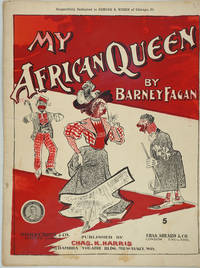
189728240Wisconsin: Chas. K. Harris 1897. Ephemera. Otherwise very good condition. Sheet music with a red black and white illustrated cover image of a woman and two men in fancy dress. The woman with red and white dress and hat decorated with feathers. Lyrics use stereotypical references and politically incorrect language. 10 1/4 x 14" 8pp cover detached spine edge slt ruffled. Chas. K. Harris unknown
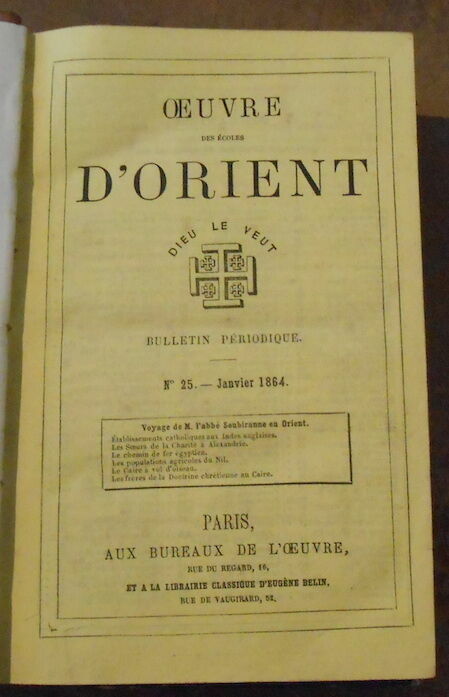
1864156611864. Paris Bureaux de l'Oeuvre du n°25 janvier 1864 au n°54 novembre 1868 soient 30 numéros - Relié demi-bradel couv. des n°s 25 et 54 conservées 13 5 cm x 20 5 cm 384+ 192 pages (pagination continue) - Textes de Fr. Louis-Marie Lion P. Soubiranne Mgr Alexandrian A. Dutau Favérial V. Guérin Soeur Gélas ... - Bon état
18969221Léon Chaillet 1896 In-16 demi-chagrin rouge, 195 pp. Illustrations en couleurs dans le texte et à pleine page
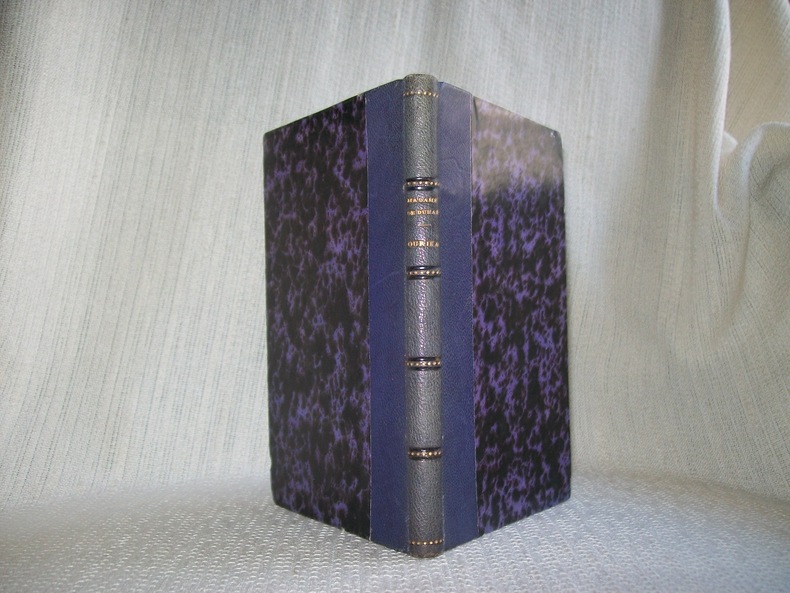
1878GITh521Paris Librairie des Bibliophiles 1878. In-16 2 feuillets non chiffrés II-XXIII 2-61pp 1 feuillet non chiffré. demi chagrin violet, dos lisse orné de filets perlés, reliure de l'époque. Titre imprimé en rouge et noir. Exemplaire bien relié, imprimé sur beau papier par D Jouaust pour la collection des "Petits Chefs d'Oeuvres".
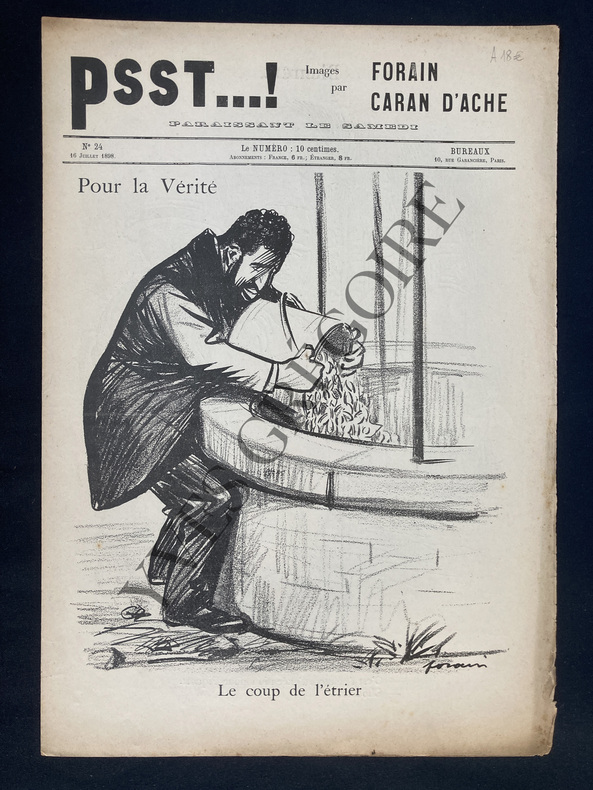
1898ABE-119562273544 PAGES FORMAT 28 CM X 40 CM-COUVERTURE PAR FORAIN "POUR LA VERITE LE COUP DE L'ETRIER",SEMITE VERSANT DES PIECES DANS UN PUITS-P2 CARAN D'ACHE "BIENTOT"C'EST L'PELOTON D'EXECUTION POUR PIQUART."-P3 CARAN D'ACHE "CONCERT SYMPHONIQUE (MUSIQUE ALLEMANDE)",QUETE POUR L'AURORE-P4 CARAN D'ACHE "A PROPOS DE NOBLES BLESSURES",ZOLA