Proudhon, Pierre JosephAntiquariat.de

970 résultats
184755431Darmstadt, Carl Wilhelm Leske, 1847. 8°. 2 Bll., XL, 401 S., 1 Bl.; LVI, 492 S., HLdr. d. Zt. m. Rückenverg., goldgepr. Rückentitel u. dreiseitig marmor. Schnitt.
a51949Paris 1846 first edition Guillaumin. In French. Hardcover. Octavo - original embossed dark blue boars with half pale lilac grey cloth with gilt spine lettering. 435p. Good Plus about ten pages have slight corner crease tips of cover are worn and backstrip lightly soiled. Binding secure; text clean. Volume 1 only. Pictures available on request. . hardcover
186533001Paris, Garnier Freres, 1865. Uncut in orig. printed yellow wrappers. Backstrip somewhat torn and worn. Wrappers slightly soiled. With the name of Emil Hannover on frontcover. The sewing loosening.
186533001Paris Garnier Freres 1865. Uncut in orig. printed yellow wrappers. Backstrip somewhat torn and worn. Wrappers slightly soiled. With the name of Emil Hannover on frontcover. The sewing loosening. <br/><br/><em>Scarce first edition in its original state. </em> unknown
18753712612A. Lacroix et Ce 1875. Volume 1-14. This is an ex-library book and may have the usual library/used-book markings inside.This book has hardback covers. In good all round condition. No dust jacket. Fourteen volumes 8vo in tan/orange library cloth bindings with gilt texts to spines. Original paperback covers bound in. All volumes are in good external condition and are securely bound. Pages are heavily foxed throughout and there are sporadic pen and pencil markings but pages are otherwise clean and text remains legible throughout. Please note the Image in this listing is a stock photo and may not match the covers of the actual item8250grams ISBN: A. Lacroix et Ce paperback
185764499Hannover, Carl Meyer, 1857. 8°. XXIII, 232 S., 1 weißes Bl., HLwd. d. Zt. m. goldgepr. Rückentitel.
5963PROUDHON ATTAQUE LAUTEUR DE LUNITIDE, PAULIN GAGNE, SUR LA FOI& M. Gagne, le candidat mystique, lauteur de lunitide et autres volumes mystagogiques et versifis a eu sa petite correspondance avec Proudhon ; il avait crit au philosophe quil avait eu une vision que le lui reprsentat comme devant tre un nouveau St Paul et le plus grand dfenseur de la religion... Proudhon lui rpondit : ... Monsieur Je ne puis qutre flatt des choses que vous me dites (...) ; mais la ferveur mme de votre foi, doit vous faire comprendre que ce nest pas sur de simples confidences dune me pieuse que je puis me dterminer. Mon action dpend daprs vous-mme, dun ordre suprieur. Or, de mme que St Paul, qui vous osez me comparer et dont vous me promettez lapostolat, ne pouvait, avant sa miraculeuse conversion, se dclarer pour le Christ et son glise, de mme je ne puis rien faire pour la foi tant que je me renferme dans mon rationalisme, et je nai pas encore reu ltincelle qui doit changer ma conviction et ma volont...Anticlrical, Proudhon souhaitait labolition de toutes les formes de penses et dorganisations ecclsiales. Etienne Paulin Gagne (1808-1876) est un avocat, journaliste et pote, auteur de L'Unitide, pome en 25000 vers dans lequel on rencontre la plus bizarre agglomration de noms fantastiques et de vers saugrenus que puisse inventer le cerveau humain . Il fut candidat universel, perptuel, surnaturel et inamovible toutes les lections, et figure parmi les fous littraires.
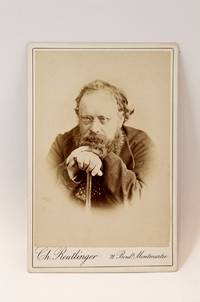
186471277Paris: Ch. Reutlinger 1864. Fine. Ch. Reutlinger Paris s. d. circa 1864 10.80 x 16.50 cm une photographie Original photograph of Pierre-Marie-Joseph Proudhon produced using the gelatin silver process mounted on cardboard from the Reutlinger studio in Paris. This photograph was taken in Charles Reutlinger's studio at the request of painter Gustave Courbet who was then creating a portrait of the philosopher now preserved at the Petit Palais museum in Paris. Proudhon died on January 20 1865 before posing for Courbet making this image one of the painter's only sources of inspiration for his posthumous portrait: ""go to Reutlinger and ask him on my behalf . for the large portrait he made of the philosopher according to my pose. I want to paint him at 146 rue Notre-Dame-des-Champs with his children his wife as befits the wise man of this time and the man of genius"" Letter to Jules Castagnary January 20 1865 cited in Chakè Matossian Saturne et le Sphinx : Proudhon Courbet et l'art justicier. Ch. Reutlinger unknown
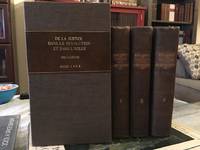
1858057<b>Original Publisher's dark brown cloth and gilt lettered spine. Volumes 3 rear hinge is slightly cracked otherwise a beautiful set in fresh condition. Housed in a cloth clamshell case with a morocco label. First Edition of Proudhon's Most Massive and Powerful Work - Completing and Fully Explicating His "Philosophy of the Revolution" - Seized and Suppressed by the Government Just Six Days After Publication Just six days after publication on April 22 1858 remaining copies of the book were confiscated on the grounds that it was "an attack upon public and religious morals." Proudhon was indicted convicted and sentenced to three years one month and fifteen days in jail and assessed a 4000 franc fine. He fled to Brussels to avoid incarceration and remained there for most of what was left of his life. An important work which has become difficult to find in the Publisher's cloth.</b> Librairie de Garnier Frères hardcover
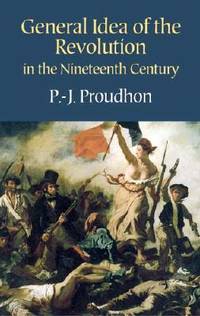
0486433978New. Brand new and still unused unknown
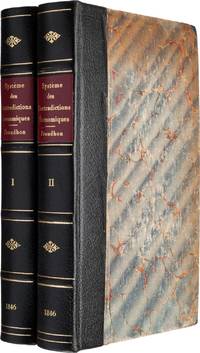
1846179<b>8vo. two volumes. Half-titles present in both volumes. 4 xliii 1 blank 435 1 Table; 4 531 1 Table pages. Rebacked in modern half blue levant morocco over contemporary marbled boards Spines stamped in gilt in compartments burgundy gilt morocco lettering labels five raised bands. Some minor rubbing to binding a bit of foxing in text with some marginal notations in pencil throughout. This is Proudhon's magnum opus his analysis of what he saw to be the economic contradictions of 19th-century capitalism which he felt would lead in time to an anarchist society. Proudhon the first self-proclaimed Anarchist coined the term "Property is Theft." Although a sometime correspondent with Karl Marx the two had a falling out after Marx vehemently criticized this work. </b> Chez Guilla umin et Cie hardcover
1848RLAVOIX00EC1848-1850. Very Good. Pierre Joseph Proudhon. French Newspapers February 1848 - November 1850 over 400 issues covering the 1848 Revolution 79 of Le Peuple and one Le Peuple de 1850 163 issues of Voix du la Peuple 130 of Le Temps 37 of La Constitution. NP: NP 1848-1850. Folio. Book condition: Bindings are fair with heavy rubbing and chipping. Hinges are weak and boards are loose. Backstrips are faded and scuffed with chipped ends and cracks along the joints. The newspapers within are in very good condition with occasional light soiling. Two volumes containing over 450 French newspapers from the tumultuous period of the 1848 Revolution 242 of which edited by Pierre Joseph Proudhon deemed the father of French anarchism. Dates range from February 26 1848 the day of the establishment of La Seconde Republique through November 30 1851. 17 different newspapers are represented with numerous supplements. In three places loose newspaper leaves are bound in. hardcover
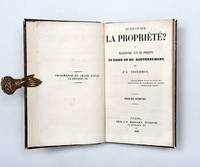
1840051<b>4 works in 1 volume Octavo. Contemporary quarter calf over marbled paper boards with decorative gilt motif on the spine & marbled endpapers. Half-titles present. a few minor interior blemishes but contents generally clean. A very good copy. Second edition of the French anarchist philosopher's notorious thesis together with the first editions of his two succeeding works the "deuxième" and "troisième" memoirs. Qu'est-ce que la propriété was first published in 1840 and shocked its readership with its famous assertion that "all property is theft" which remains widely cited among radical circles to this day. Proudhon himself referred to Qu'est-ce que la propriété as a "diabolical work which frightens even me" Correspondence I p. 296 and he was called to defend himself against insurrection charges at his local court immediately after its publication. The distinguished economist Blanqui 1805-1881 was appointed by the Minister of Justice to read Proudhon's inflammatory treatise and his review of it was partially reproduced by Le Moniteur on 7 September. Although he opposed the views that Proudhon adopted Blanqui's judgement was ultimately favorable because he believed Proudhon to be a philosopher and inquirer rather than a serious revolutionary. Blanqui's verdict helped to lessen the insurrection charges brought against Proudhon and it was only because of his support that Proudhon was permitted to keep his stipend. The second work in this volume is Proudhon's grateful response to Blanqui's review where he reacts to some of the reviewer's objections and offers some moderate revisions to his first work. Both works are scarce both institutionally and in commerce especially so bound together. Lastly the uncommon Explications Au Ministere Public 1842 is also bound in. Housed in a custom oatmeal colored cloth slipcase with chemise and leather label.</b> Librairie de Prévot hardcover
1848RLAVOIX00EC1848-1850. Very Good. Pierre Joseph Proudhon. French Newspapers February 1848 - November 1850 over 400 issues covering the 1848 Revolution 79 of Le Peuple and one Le Peuple de 1850 163 issues of Voix du la Peuple 130 of Le Temps 37 of La Constitution. NP: NP 1848-1850. Folio. Book condition: Bindings are fair with heavy rubbing and chipping. Hinges are weak and boards are loose. Backstrips are faded and scuffed with chipped ends and cracks along the joints. The newspapers within are in very good condition with occasional light soiling. Two volumes containing over 450 French newspapers from the tumultuous period of the 1848 Revolution 242 of which edited by Pierre Joseph Proudhon deemed the father of French anarchism. Dates range from February 26 1848 the day of the establishment of La Seconde Republique through November 30 1851. 17 different newspapers are represented with numerous supplements. In three places loose newspaper leaves are bound in. hardcover books
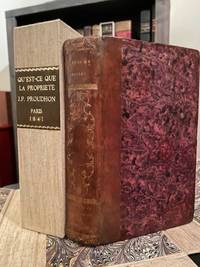
1841129328Paris: Librairie de Prévot 1841. All property is theft Second edition of the French anarchist philosopher's notorious thesis together with the first editions of his two succeeding works the "deuxième" and "troisième" memoirs. Qu'est-ce que la propriété was first published in 1840 and shocked its readership with its famous assertion that "all property is theft" which remains widely cited among radical circles to this day. Proudhon himself referred to Qu'est-ce que la propriété as a "diabolical work which frightens even me" Correspondance I p. 296 and he was called to defend himself against insurrection charges at his local court immediately after its publication. The distinguished economist Blanqui 1805-1881 was appointed by the Minister of Justice to read Proudhon's inflammatory treatise and his review of it was partially reproduced by Le Moniteur on 7 September. Although he opposed the views that Proudhon adopted Blanqui's judgement was ultimately favourable because he believed Proudhon to be a philosopher and inquirer rather than a serious revolutionary. Blanqui's verdict helped to lessen the insurrection charges brought against Proudhon and it was only because of his support that Proudhon was permitted to keep his stipend. The second work in this volume is Proudhon's grateful response to Blanqui's review where he reacts to some of the reviewer's objections and offers some moderate revisions to his first work. In the third work written in response to Victor Considérant's "Défense du Fourierisme" Proudhon warns property owners that the workers' revolution would soon come. Proudhon's pronouncement led to his home and printing office being raided and many copies of the book were seized. All three of the works are scarce both institutionally and in commerce and it is highly unusual to find all three bound together. Three works bound in a single vol. duodecimo 176 x 109 mm. Contemporary half calf rebacked red morocco label erroneous date of 1641 at base of spine marbled sides and endpapers. Half-titles present. Tips repaired with green calf a few minor interior blemishes but contents generally clean very light damp stain to last few leaves some pages short and opened a little crudely. A very good copy. unknown
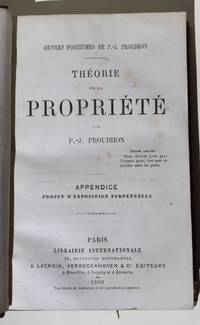
18661726Paris; Bruxelles etc.: Librairie Internationale; A. Lacroix Verboeckhoven & Cie 1866. First edition. In somewhat later half leather with gilt title on spine. Bookplate on pastedown. Slight rubbing at extremities lower corners bumped. Inside clean. Overall in fine condition. First edition. In somewhat later half leather with gilt title on spine. 4 iii 1 310 4 2 p. <p><br /> First edition of Proudhon posthumously published last essay.<br /> <p><p><br /> Proudhon’s last essay the "Théorie de la propriété" was posthumously published from an unfinished manuscript written around 1862 in the year of his death by friends. “What becomes clear from this work is that there is no significant change in Proudhon’s perspective on property and possession. The usual themes of his work are there such as the land as common property workers’ associations and the absolutist nature of property. His apparent new found support for ‘property’ is not for capitalist private property. Rather it is for property which combines ownership and use. As such rather than a conversion away from his previous ideas this work represented more a slight shift in his position. The vision expounded is the familiar Proudhonian one of and artisan peasant and workers co-operative based economy†McKay 2011. <br /> <p><p><br /> Bibl.: McKay I.: Property Is Theft! A Pierre-Joseph Proudhon Anthology. Edinburgh; Oakland CA: AK Press 2011. pp. 775–784.<br /> <p>. Librairie Internationale; A. Lacroix, Verboeckhoven & Cie unknown
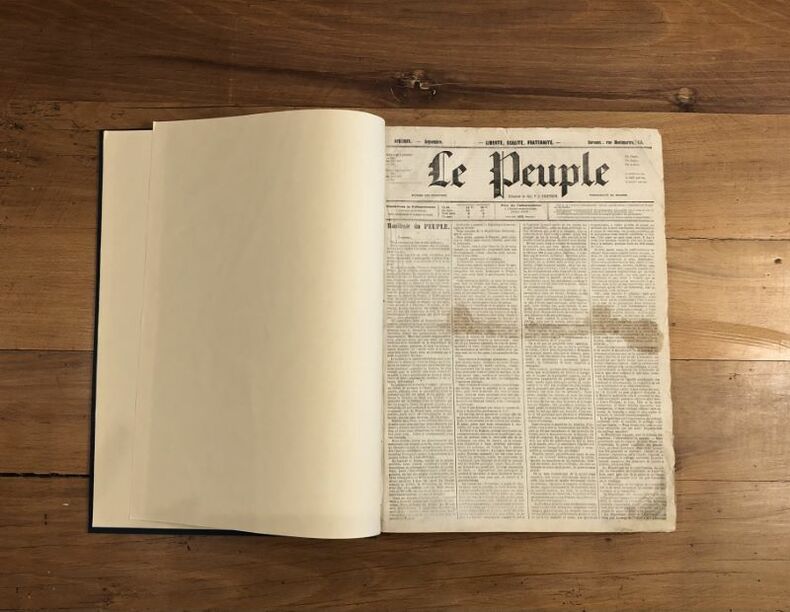
71Le Peuple. Collection complète, du numéro spécimen de septembre 1848 au numéro 206 de juin 1849. Paris, Imprimerie Boulé. 31 × 43 cm, 206 numéros de 4 pp. sur 4 colonnes, et 31 suppléments, reliure toilée bleu horizon. Bon état, quelques rousseurs et marques de restauration et de pliures. « Journal de la République démocratique et sociale » dirigé par Pierre-Joseph Proudhon. Hebdomadaire, puis quotidien à partir du no 6, Le Peuple publie des textes de George Sand, Louis Ménard, Auguste Blanqui ou encore Théophile Thoré-Bürger, avocat révolutionnaire et critique d’art.
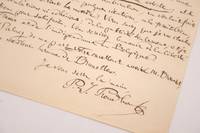
186289375Paris Passy : Alphonse Lebègue destinataire 1862. Fine. From Anarchism to Federalism Alphonse Lebègue destinataire Paris Passy 7 novembre 1862 13.9 x 21.1 cm Trois pages sur un bifeuillet Autograph letter by Pierre-Joseph-Marie Proudhon signed and dated 7 November 1862. 3 pages in black ink on a bifolium. Fold of the bifolium weakened without affecting the text. Not included in the correspondence published by Lacroix in 1875. Significant and likely unpublished letter from Proudhon to his publisher Alphonse Lebègue whom he considers ""the cause of liberty in France and independence in Belgium"" in these lines. Proudhon underscores the importance of his ideological struggle for federalism in Europe following the controversial publication of his pamphlet La Fédération et lunité en Italie and a few months before his political testament Du Principe fédératif. He fiercely criticizes his famous adversary Adolphe Thiers Histoire du Consulat et de lEmpire. Since his years in Brussels Proudhon had intended to write a book debunking the Napoleonic myth as promoted in Thiers' work. After permanently leaving Belgium two months earlier Proudhon was now facing reactions from the Belgians to his articles predicting the annexation of their country by Napoleon III - who would supposedly be influenced by the unification of Italy. Against centralized unification Proudhon opposes federalism which according to Jorge Cagiao y Conde is ""the constructive or positive aspect of a body of work that until the end of the 1850s had remained in a negative or critical phase. We must therefore take Proudhon's words seriously: after the demolisher there is indeed a builder. Proudhon's federal theory undoubtedly holds a prominent place in the history of the federal idea. Just as the United States Constitution of 1787 marks a before and after in the history of federalism we can also consider that there is a before and after Proudhon"". Determined to spread and defend his ideas Proudhon also talks of a new pamphlet project on federalism: ""The principle of federation that I have established is gaining ground and intelligent Belgians cannot fail to understand that their true safeguard lies there. . My pamphlet has stirred as much emotion as it did in Belgium: the masses enamoured with unity and Garibaldism are against me. But the clear-sighted are rallying with vigour the reaction is taking hold; already the tone of the newspapers has softened; it is becoming apparent that the matter must be re-examinedthe suspicion is spreading that the cause of liberty and of the Republic is being undermined by Garibaldian unitarism. One more pamphlet from me 30 or 40 pages at most and my idea will triumph I dare say on all accounts. Within three months Belgians will acknowledge that with this idea of federation on which I intend to base all internal and foreign policy the annexation of their country will become impossible. You know how quickly ideas travel in France: we are witnessing one of those turnarounds. It takes after all a timely and forcefully articulated contradiction aimed at men of authority!. Suppose instead of addressing Mazzini and Garibaldi I had targeted my argument at Mr. Grauquillot or Alphonse Peyrat editor of La Presse it would have achieved nothing I would have wasted my time and paper. This dear Mr. Lebègue is confidential and between us. Take note of the information I share if you deem it useful but do not quote me. In a fortnight you will receive my fourth article. LOffice in memory of my collaboration wishes to publish a short commentary and a few excerpts which I believe would benefit everyone. You know I seek neither praise nor approval; only publicity and with that I am content. You would be the cause of liberty in France and of independence in Belgium "" Proudhon's letter also contains an interesting passage on the fierce rivalry between him and Adolphe Thiers. As a politician Thiers had notably rejected outright Proudhon's well-k Alphonse Lebègue (destinataire) unknown
185168629Paris Prison de Sainte-Pélagie Paris 1851. Fine. ""I still appear to many people as only the pure and simple negation of what is."" Paris Prison de Sainte-Pélagie Paris 12 Novembre 1851 13 x 20.50 cm une feuille Autograph letter signed on four pages dated 12 November 1851. 124 lines in black ink. This letter is presented in a chemise and slipcase with paper boards decorated with abstract motifs green morocco spine green suede doublure slipcase with morocco spine and matching paper boards signed by Thomas Boichot. Unpublished autograph letter on progress signed by Pierre-Joseph-Marie Proudhon major figure in French social thought and the father of anarchy. The philosopher imprisoned since 1849 develops his socialist convictions in a virulent and combative style condemning the absolutisms of his time. Extraordinary declaration of philosophical political and social faith from a marginal thinker who influenced Karl Marx Emile Durkheim and Benjamin Tucker. This unpublished and densely written letter is a passionate reflection close to an essay entitled De lidée de progrès written around ten days later that Proudhon published with another De la Certitude et de son criterium in the work Philosophie du progrès. This set of texts was composed only two weeks before the coup of Louis-Napoléon Bonaparte which he immediately opposed. Once released from prison in 1852 Proudhon published the two letters at Lebègue in Brussels in order to escape censorship which had prohibited the sale of the booklet on French territory. Already having been detained for two years in the jails of the future French emperor Proudhon writes to Romain-Cornut from Sainte-Pélagie prison. Journalist Romain-Cornut had just finished a series of articles on Auguste Comtes positivism Études critiques sur le socialisme October-November 1851. This letter must be viewed as an admirable four-page plea or more a confession of his socialist vision of progress a social positivism which is based on the reconsideration of the ancient order: we withdraw in the face of an intellectual negation which is the sine qua non condition of further progress. During the course of the letter he establishes a balance between his polemical soul and his desire for legitimacy striving to be no longer viewed as a mere agitator but as a true philosopher. We are indeed reminded of his famous saying Property is theft! his sympathy for the 1848 uprisings as well as his acerbic pamphlets in Le Peuple that consecrated his radical reputation: I have been until this day so foolishly judged even by the socialists . Because I led the criticism of the old principles as far as it could go . I still appear to many people as only the pure and simple negation of what is. Proudhon however maintains his intention to leave the shields of criticism leaving the argument of circumstance for the moment in my new studies and thus implies the writing of a new deeper work published under the title La Philosophie du progrès 1853 dedicated to the same Romain-Cornut. Proudhon an anarchist in favour of the abolition of the State and the government violently criticizes the system which is by definition anti-progressive: Yet it is unquestionable from this progressive point of view that our society as a whole monarchists democrats Catholics philosophers is still absolutist: what everyone wants is a charter a constitution a system a fixed and definitive legislation finally. In addition to political systems Proudhon picks up this same idealism in the philosophical thinking of his elders and does not refrain from giving a violent condemnation: Like Pascal like the Germans we want the absolute! . Spinoza Malebranche Leibnitz etc. all of whom operating on the categories of substance causality eternity unity plurality etc. have arrived at politically and intellectually immobile systems at the absolute. He noted the harmful effects of the political regimes and of the ph hardcover
1840161495Paris: J.-F. Brocard 1840. A "diabolical work which frightens even me" Proudhon First edition one of 500 copies and correspondingly scarce in commerce of the French anarchist philosopher's notorious thesis which caused a scandal by equating all property with theft. In the wake of the social turmoil caused by the economic decline in France in 1839-40 and the July Monarchy's lapse into a "religion of property" Pierre-Joseph Proudhon 1809-1865 argued that - unlike freedom and equality - the right to property was not a natural right. Yet he also opposed collective ownership "as he was persuaded that only a society without government is able to establish social harmony. The First International was indeed destroyed in the great fight between those who supported a libertarian socialism of the kind Proudhon had advocated and those who followed the authoritarian pattern devised by Karl Marx. Kropotkin and Herzen were all his confessed disciples. Even Tolstoy sought him and borrowed the title and much of the theoretical background of his masterpiece War and Peace from Proudhon's book La guerre et la paix One can place Proudhon among the great socialist thinkers of the nineteenth century" Simons pp. 301-2. Proudhon himself referred to Qu'est-ce que la propriété as a "diabolical work which frightens even me" Correspondance I p. 296 and he was called to defend himself against insurrection charges at his local court immediately after its publication. Qu'est-ce que la propriété was followed in 1841 by his "Lettre à M. Blanqui sur la propriété Deuxieme mémoire" and "Avertissement aux propriétaires ou Lettre à M. Considérant sur une defénse de la propriété" often referred to as the "troisiéme mémoire". Duodecimo 168 x 105 mm. Binder's stamp Ateliers Laurenchet to front pastedown. Recent quarter calf marbled paper boards to style spine lettered gilt vellum tips sprinkled edges. Short marginal tear just entering text to page 93 repaired without loss pale marginal dampmark to head and foot final gathering with short marginal tear occasional light spotting withal a very good copy of a fragile publication. Not in Mattioli or Sraffa. See Correspondance de P.-J. Proudhon 1960-74; William Bradford Simons Private and Civil Law in the Russian Federation 2009. hardcover