237 résultats
36006N° 130 - 26e année - novembre-décembre 1973 - revue illustrée bimestrielle - illustrée - Broché
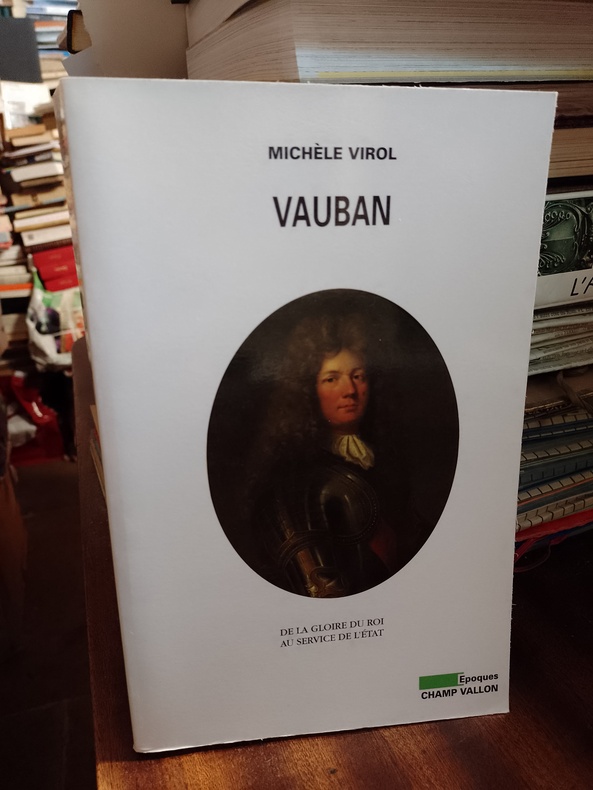
2003ARCHI11100000524Seyssel, Champ vallon, "Epoques", 2003, 15,5 x 24, 438 pages cousues sous couverture souple illustrée. "Le plus savant homme dans l'art des sièges et des fortifications, et le plus habile ménager de la vie des hommes ". Saint-Simon dresse ainsi le portrait de Sébastien Le Prestre de Vauban (1633-1707). II le présente non seulement comme le maître inégalé de la guerre de siège, mais encore, loin des fastes de Versailles, comme l'un des grands témoins du siècle de Louis XIV. Homme de plein vent, à pied, à cheval, en chaise à porteur, ou dans sa fameuse " basterne ", Vauban ne cessa de parcourir la France en tous sens pendant plus de quarante années. L'ingénieur perfectionne et innove dans les domaines militaires et techniques mais aussi administratifs et économiques. A partir des années 1680, le soldat longtemps fidèle à son roi se transforme en conseiller lucide : confronté au royaume " réel ", il brosse un tableau de plus en plus critique de la monarchie ; il analyse et conteste les décisions royales sur la question huguenote (révocation de l'édit de Nantes) et la politique étrangère (des guerres ruineuses pour le royaume) ; l'homme du pré-carré pense le pays comme un territoire dont chaque élément " aménagé " doit améliorer le sort des plus démunis et il voit dans la réforme de la fiscalité le principal remède pour faire face aux " années de misère " qui stigmatisent nombre de provinces à la fin du règne de Louis XIV. Entre l'âge classique et celui des grands philosophes des Lumières, la plume prolifique de Vauban initie une science nouvelle, appelée à un grand avenir : l'économie politique. Conçu comme une biographie intellectuelle, ce livre, écrit au plus près des archives inédites laissées par le maréchal-ingénieur, dévoile les aspects intimes d'un Vauban attachant et méconnu ; il replace l'œuvre écrite de l'auteur de la Dîme royale (1707) dans les courants de pensée qui annoncent les bouleversements à venir, au carrefour des sciences, du religieux, de la pensée administrative et d'une nouvelle conception de l'Etat, plus utilitaire, plus humaine aussi. Vauban qui dit " aimer sa Patrie à la folie étant persuadé que tout bon citoyen doit l'aimer et faire tout pour elle " fut l'un des premiers à vouloir faire passer les aspirations et les besoins de " vingt millions de français " avant l'intérêt du roi."
35601381, Paris, Maison de Commission en librairie, 1806; in-8, demi-basane brune de l'époque. "2 ff., 454 pp., (2 pp.).EDITION ORIGINALE RARE. Attribués au Comte de Vauban par Barbier, ces mémoires auraient été largement remaniés par Alphonse de Beauchamp, selon Quérard. Emigré en 1791, Vauban ( 1754-1816) se rendit d'abord à l'armée des princes ) Coblence, puis en Russie, enfin en Angleterre, d'où il partit avec l'armée des émigrés pour la désastreuse expédition de Quiberon, qui fait l'objet de l'essentiel de ses mémoires"". Fierro 1440.- Lemière p. 569. ""Après avoir rempli diverses missions pour son parti, Vauban rentra en France sous le Consulat et fut arrêté en 1806. Il fut longtemps retenu prisonnier au Temple. Parmi ses papiers on avait saisi le manuscrit de ses mémoires sur la Vendée, où il accusait avec amertume la plupart de ses compagnons d'armes à Quiberon et même les princes. Le gouvernement se hâta de publier ces Mémoires et le Cte de Vauban se vit dès lors en butte à la haine de son propre parti et fit de vains efforts pour rentrer en grâce sous la Restauration. Quoique réimprimé plusieurs fois, son ouvrage est devenu fort rare"" (Larousse du XIX e siècle). Accident au bas d'une charnière. Qq. rousseurs.
18068045Paris Maison de commission en librairie 1806 In-8 de 454 pp., demi bas. mouchetée, dos orné, coins vélin (reliure de l'époque). Léger défaut à un mors et à la coiffe supérieure. Bel ex libris.
23714P., Bossard (Collection des Chefs-d'Oeuvre Méconnus), 1924, in 8° broché, 139pp. ; non coupé ; qq. piqûres ; couverture fanée.
ORD-18347Paris. Barrois l'aîné. Magimel. Sans date, ca 1790. In-8 (130 x 204 mm) dos lisse basane racinée, pièce d'auteur rouge, de titre fauve, plats parchemin écru, XXXVI, 242 pages, bien complet des 29 planches rempliées en fin de volume. Dos passé mais solide, exemplaire assez marqué par des réparations maladroites au scotch qui a laissé des traces par ailleurs, sinon papier assez blanc, planches épargnées. Tel.
1708432421708 1708. 1 volume in-12, pleine basane mouchetée, dos à nerfs orné. XVI pp. ; 272 pp. ;
120919aafParis, Bernard Grasset, 1923, in-8vo, Frontispice-Portrait de Vauban + 4 ff. + 208 p., Ex. num. sur vergé, reliure en d.-cuir originale. Pièce de titre en maroquin brun au dos. Couverture de la brochure originale conservée. Jolie exemplaire
110558Paris, Editions Imprimerie Nationales 1992, 220x160mm, frontispice, 293pages, broché. Couverture à rabats. Inscriptions manuscrites sur la page de garde supérieure, autrement très bel exemplaire.
1924108986Paris Bossard, "Collection des chefs-d'oeuvre méconnus" 1924 1 vol. broché petit in-8, broché, 139 pp. (petit accroc au coin inférieur), portrait-frontispice. Tirage limité et numéroté. Bon état.
88982Paris, Editions Bossard 1924, 190x135mm, frontispice, 139pages, broché. Edition originale sur papier Bibliophile Inaltérable pur chiffon de Renage et d’Anonay, numérotée n.° 1421 / 2500. Bon état.
170816342sans lieu, sans nom, 1708. In-12 de [16 y compris le portrait]-272 pages, plein basane brune du temps, dos à nerfs orné de filets et fleurons dorés, un coin frotté. Exemplaire très légèrement coupé en «papillon». Signature ancienne au premier feuillet "Henry Bel de Vuillafans". Manque à la coiffe supérieure, un coin frotté, un autre tapé.
170720076sans lieu, sans nom, à la sphère, 1707. In-12 de VIII-268 pages, plein veau marron, dos à nerfs orné de filets et fleurons dorés, pièce de titre bordeaux, tranches rouges.
1968081785United States: The University Of Michigan Press 1968. Hard covers in tidy condition with a slightly rubbed dust jacket remains of a old price sticker page edges a little tanned. Hardcover. Good/Good. 8vo - over 7¾" - 9¾" tall. The University Of Michigan Press Hardcover
1016736940.Ghardcover. Good. Access codes and supplements are not guaranteed with used items. May be an ex-library book. hardcover
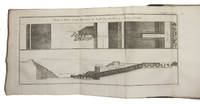
1737I4B9D9Y219J4The Hague: Pieter de Hondt 1737. Contemporary mottled calf richly gold-tooled spine. Large 4to 26.5 x 20.5 cm. Ad 1 with 36 folding engraved plates and ad 2 with 11 folding engraved plates. 2 works in 1 volume. With: 2 VAUBAN Sébastien le Prestre de. De l'attaque et de la defense des places. tome second. Contenant un traité pratique des mines. et une autre de la guerre en general.The Hague Pieter de Hondt 1742. First edition of Vauban's treatises on siegecraft and military mining. Of all the 17th- and 18th-century books "on military technology no works had greater influence or enjoyed greater prestige than those of Sebastien Le Prestre de Vauban the great military engineer of the reign of Louis XIV" Guerlac. Although a highly practical man and not a theoretician Vauban had written down the secrets of his success in the building and capturing of fortresses between 1669 and 1704. Vauban's strategic superiority could only remain if this information was kept secret so his texts circulated only within a very select circle. After Vauban's death they were leaked. "By the time the treatises became available Vauban's early readers must have been ready to believe that the text finally being made public did in fact contain incredible military secrets and have the power to make nations invincible. No other treatise of siegecraft had been surrounded by such secrecy" DeJean. The first volume contained Vauban's treatise on the attack of fortified places but the added part on defence was actually written by a colleague seigneur Deshoulières 1621-1693. A second volume published in 1742 contained Vauban's treatise on military mining and a general treatise on war.With library stamps. Binding slightly worn. Water stained throughout with some spots and a few small tears; otherwise still a good copy.l Dejean Literary fortifications pp. 34-36; Jähns pp. 1419-1420 1426-1429; Sloos Warfare 03045; STCN vol. 1: 4 copies; vol. 2: 5 copies; cf. Guerlac "Vauban" in: Paret ed. Makers of modern strategy pp. 64-90. Pieter de Hondt, unknown
2011916364.Gpaperback. Good. Access codes and supplements are not guaranteed with used items. May be an ex-library book. paperback
2329274610.Gpaperback. Good. Access codes and supplements are not guaranteed with used items. May be an ex-library book. paperback
170760967No place nor printer 1707. 8vo. In contemporary full calf with five raised bands and richly gilt spine. Edges of boards gilt. Title-label is either missing or have never been added. Small paper-label pasted on to top of spine. Stains and scratches to boards. Corners bumped. Internally nice and clean. VIII 268 pp. 3 folded tables. <br/><br/><em>One of the at least seven different issues of the 12mo edition published same year as the first edition in 4to in which Vauban proposed a comprehensive tax reform plan for France. The central idea was to replace the existing tax system which heavily burdened the lower classes while exempting the nobility and clergy with a single tax on income and property that would be fairly distributed among all citizens regardless of social status. Schumpeter called the work 'unsurpassed before or after in the neatness and cogency of the argument. Purposeful marshalling of all the available data was the essence of his analysis. Nobody ever understood better the true relation between facts and argument. It is this that makes him an economic classic in the eulogistic sense of the work and a forerunner of modern tendencies' Schumpeter History of Economic analysis p. 204. 'an erudite economic work much in advance of its time and distinguished both by accuracy of method and breadth of view' Palgrave 'creditable alike to the heart and the head of its illustrious author' McCulloch. 'Though the book was published anonymously and only a few copies issued for circulation among friends Vauban had to submit to the mortification of seeing it 'pilloried' by the parliament while he himself incurred the displeasure of the king Louis XIV.' Palgrave. </em> hardcover
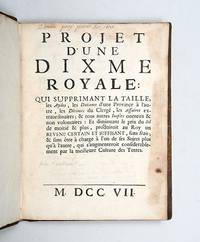
1707152921Rouen: no printer but for the author 1707. A CLASSIC OF PUBLIC FINANCE Very rare first edition first issue with B4 in uncancelled state: on p. 16 a setier is given as weighing 170 rather than 240 pounds of "an erudite economic work much in advance of its time and distinguished both by accuracy of method and breadth of view" Palgrave "creditable alike to the heart and the head of its illustrious author" McCulloch. Carpenter lists six other printings dated 1707 all in smaller format and eight subsequent editions before 1710 including the English translation A Project for a Royal Tythe 1708; reissued in 1710 as An Essay for a General Tax. "Though the book was published anonymously and only a few copies issued for circulation among friends Vauban had to submit to the mortification of seeing it 'pilloried' by the parliament while he himself incurred the displeasure of the king Louis XIV. A few weeks later he died" Palgrave. Although the renowned soldier-engineer Vauban 1633-1707 wrote on a very wide variety of subjects apart from economics - fortifications war naval matters religion agriculture population and colonization - the Projet d'une Dixme royale is an outstanding work in the field of public finance. Its two most notable features are its understanding of the central role of fiscal policy in economic reform - the result of an exceptionally comprehensive grasp of the economic process - and its use of detailed numerical data to substantiate conclusions. Schumpeter pronounced the work "unsurpassed before or after in the neatness and cogency of the argument. Purposeful marshalling of all the available data was the essence of his analysis. Nobody ever understood better the true relation between facts and argument. It is this that makes him an economic classic in the eulogistic sense of the word and a forerunner of modern tendencies" Schumpeter History of Economic Analysis p. 204. According to Boislisle the first edition was printed in Rouen in 1706 at the initiative of the Abbé de Beaumont who is credited with the authorship of the work by Boisguilbert. Vauban had the sheets bound by the widow of a certain Fétil and took great pains that the book had no public circulation. It was prohibited on 14 February 1707 but apparently the police could only seize two copies. To the police the binder declared she had had 264 copies in total 12 bound in morocco the rest in calf. The two copies seized at the Abbé de Beaumont's were described as in "veau fauve" and marbled parchment. See Arthur Michel de Boislisle "La Proscription du projet de Dime Royale et la mort de Vauban" Mémoire lu à l'Académie des sciences morales et politiques Paris 1875. In the Society of Jesus a professed house was a residence where - in a spirit of radical poverty - no member had a stable income. The Jesuit priests who lived there all of whom have made the profession of the four vows undertake their spiritual and pastoral ministry completely for free. With no revenues these houses were dependent on the generosity of benefactors even for their daily needs. Quarto 245 x 185 mm. Large folding table "Formulaire qui peut servir pour tout un pays" at page 192 additional tables in text woodcut vignettes and initials. Contemporary sprinkled calf spine ruled and decorated gilt in compartments red morocco label red edges. Spine ends and corners professionally repaired covers with a couple of small stains and slight surface abrasions. Ownership inscription of the Professed house of the Society of Jesus of Paris to head of title. Edges of first few leaves lightly tanned from turn-ins occasional spotting and the odd rust mark; a very good copy. Carpenter X 1; En français dans le texte 134; Goldsmiths' 4431; Kress 2583; McCulloch p. 342f; Masui p. 396; this edition not in Einaudi Hollander INED Massie or Sraffa. unknown
84122Rom Ed. Bizzarri 1968. Kl.8° XVI 199 S. Falttab. Priv.-Lwd. Stempel a. Innendeckel sonst tadellos. EA dieses Reprints der Ausgabe Brüssel 1708. = Ristampe anastatiche di opere antiche e rare Bd. 149. Text frz.; die neue Einl. ital. - «Sébastien Le Prestre Seigneur de Vauban auch Marquis de Vauban; 1. Mai oder 4. Mai 1633 in Saint-Léger-de-Foucheret heute Saint-Léger-Vauban Département Yonne Burgund - 30. März 1707 in Paris war ein französischer General Festungsbaumeister Ludwigs XIV. und Marschall von Frankreich. . Vaubans 1707 anonym publizierte Schrift Projet d’une dixme royale wurde zeitweise auch seinem Vetter Bois-Guillebert zugeschrieben. An der Schrift arbeitete er mit seinem Privatsekretär Vincent Ragot de Beaumont. Sie wurde gleich nach Erscheinen verboten und alle Exemplare deren man habhaft werden konnte wurden vernichtet. An Vauban selbst kam die Polizei aufgrund seiner hohen Stellung nicht heran seine Urheberschaft war aber allgemein bekannt» Wikipedia. 010 Rom, Ed. Bizzarri, 1968 unknown
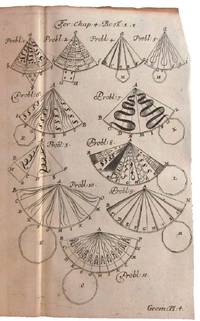
174824981<p><strong>1748 ENGLISH Vauban FORTS Military Engineering Fortifications Illustrated War</strong></p><p>SeÌbastien Le Prestre de Vauban was a 17th-century French engineer who after serving as the Marshal of France became known as the greatest engineer of his time. It was from his surveys and developments in fortifications that propelled him to engineering fame. In fact his fortification philosophies were used for nearly a century after his life. Vauban understood that at some point all forts would fall no matter how powerful. From this Vauban sought to improve fort designs to absorb as much of the attack force as possible even including house and structures to support fortification walls.</p><p>This 1748 <strong>English edition</strong> of Vauban's famous "<em>Method of Fortification" </em>contains each of the highly desirable 32 engravings – views of forts walls and common attack strategies. </p><p>Item number: #24981</p><p>Price: $750</p><p>VAUBAN Sebastien Le Prestre de </p><p><strong><em>The new method of fortification</em></strong></p><p>London: Printed for S. and E. Ballard 1748</p><p><u>Details</u>: </p><p><!-- if !supportLists-->· <!--endif-->Collation: Complete with all pages</p><p><!-- if !supportLists-->o <!--endif-->16 213 3</p><p><!-- if !supportLists-->o <!--endif-->32 plates including frontispiece</p><p><!-- if !supportLists-->· <!--endif-->Provenance: Handwritten – <em>R. Cooke</em></p><p><!-- if !supportLists-->· <!--endif-->Language: English</p><p><!-- if !supportLists-->· <!--endif-->Binding: Leather; tight and secure</p><p><!-- if !supportLists-->· <!--endif-->Size: ~8.25in X 5.25in 21cm x 13.5cm</p><p>Our Guarantee:</p><p>Very Fast. Very Safe. Free Shipping Worldwide.</p><p>Customer satisfaction is our priority! Notify us with 7 days of receiving and we will offer a full refund without reservation!</p><p>24981</p><p>Photos available upon request. </p> for S. and E. Ballard hardcover
174826250<p><strong>1748 ENGLISH Vauban FORTS Military Engineering Fortifications Illustrated War</strong></p><p>SeÌbastien Le Prestre de Vauban was a 17th-century French engineer who after serving as the Marshal of France became known as the greatest engineer of his time. It was from his surveys and developments in fortifications that propelled him to engineering fame. In fact his fortification philosophies were used for nearly a century after his life. Vauban understood that at some point all forts would fall no matter how powerful. From this Vauban sought to improve fort designs to absorb as much of the attack force as possible even including house and structures to support fortification walls.</p><p>This 1748 <strong>English edition</strong> of Vauban's famous "<em>Method of Fortification" </em>contains each of the highly desirable 31 engravings – views of forts walls and common attack strategies. </p><p>Item number: #26250</p><p>Price: $599</p><p>VAUBAN Sebastien Le Prestre de </p><p><strong><em>The new method of fortification</em></strong></p><p>London: Printed for S. and E. Ballard 1748</p><p><u>Details</u>: </p><p><!-- if !supportLists-->· <!--endif-->Collation </p><p><!-- if !supportLists-->o <!--endif-->16 213 3</p><p><!-- if !supportLists-->o <!--endif-->31 plates </p><p><!-- if !supportLists-->· <!--endif-->Language: English</p><p><!-- if !supportLists-->· <!--endif-->Binding: Leather; tight and secure</p><p><!-- if !supportLists-->· <!--endif-->Size: ~8in X 5.25in 20.5cm x 13cm</p><p>Our Guarantee:</p><p>Very Fast. Very Safe. Free Shipping Worldwide.</p><p>Customer satisfaction is our priority! Notify us with 7 days of receiving and we will offer a full refund without reservation!</p><p>26250</p><p>Photos available upon request. </p> for S. and E. Ballard hardcover
1691177262London: Abell Swall 1691. Pp. 1680last blank104 engraved pictorial title page and 32 folding plates; cr. 8vo; contemporary calf the spine with handwritten paper title label between raised bands boards with single rule border and corner ornaments in blind lightly worn; all edges sprinkled red; book label of David Levine Sydney on the upper pastedown with the earlier inked signature of the antiquary Sir Daniel Fleming on the upper free endpaper the signature of his son George Fleming on the blank preliminary and two tiny annotations 'Fortz' - referencing the subject or shelf arrangement in his library hinges tender a couple of the plates slightly creased at edges; Abel Swall London 1691. First edition in English. Wing L1116; ESTC R15758. The work is in two parts the first entitled A New Treatise of Geometry containing 8 plates numbered 1-8. The second part A New Treatise of Fortification contains 22 plates lettered A-I K-T V W X. Sebastien le Prestre de Vauban 1633-1707 revolutionized the art of siege craft and defensive fortification and is regarded as the greatest military engineer of his time. The translation from the French is by the bookseller Abel Swall. Sir Daniel Fleming 1633-1701 amassed a library of at least 1500 volumes many of which were annotated often by his son Sir George 1667-1747 the Bishop of Carlisle who probably hand wrote the spine label. Abell Swall unknown