299 résultats
19862091502135702849Buraku Liberation Institute 1986. Soft Cover. Fine. The book is in fine condition. Buraku Liberation Institute paperback
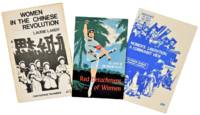
1974184491974. Chinese Women's Communist Revolution Archive of 2 item . "Women hold up half the sky" is the famous quote by Mao Zedong proclaiming the importance of women's role in upholding Chinese society. One of the primary goals of the People's Republic of China was to create a stronger nation which brought into light women's liberation as Chinese women were bound to patriarchal rule for centuries prior. While the PRK progressed women's status during the revolutionary era women were still seen as second class citizens. Women's equality is still a topic that amasses a wide variety of critique and theory. This archive includes 2 paperback pamphlets on women's liberation from a communist lens during the 1970's. The items are:<br /> <br /> -"Women in the Chinese Revolution". Laurie Landy. New York: International Socialists. 1974. Softcover 49 pages. Measures 8.5" x 5.5". Laurie Landy discusses the origins of women under imperialism through Communist China and adds her own criticisms. Minor soiling to edge of cover. Overall very good condition.<br /> <br /> -Women's Liberation: A Communist View. Chicago: October League Marxist-Leninist 1976. Softcover 16 pages. Measures 8.5" x 5.5". One photo depicts anti-imperialist International Women's Day march in New York City 1975. "In solidarity with the Third World struggles for independence demonstrators targeted imperialism as the enemy of women with the theme: IMPERIALISM-NOT-OVER-POPULATION--CAUSES HUNGER UNEMPLOYMENT WAR & INEQUALITY." Illustrated with black and white photos of Women's Day marches in China. Both items overall in very good condition. unknown
1974List3214Washington D.C.: Federal Bureau of Investigation 1974. Mailer measuring 8 x 15 ¾ inches folded in fours. Yellow tape to seal; else Fine. An FBI mailer soliciting information about Emily Harris and Patricia Hearst of the Symbionese Liberation Army SLA a left-wing militant group based in California and responsible for several killings and bank robberies between 1973 and 1975. Hearst the granddaughter of publishing tycoon William Randolph Hearst had been kidnapped by the SLA in February of 1974; in April she turned up on surveillance video robbing a San Francisco bank with other members of the SLA. Harris was involved in Hearst’s kidnapping and was at the time this mailer was distributed on the run with her husband William Harris and Hearst and wanted for firearms violations. The mailer describes the three as “armed and very dangerous.†<br /> <br /> The trio was arrested in San Francisco in 1975. The Harrises served eight years in prison but were re-arrested in 2002 for the murder of Myrna Opsahl during a 1975 bank robbery. Hearst served two years of a seven-year sentence; her sentence was commuted by Jimmy Carter and in 2001 she was pardoned by Bill Clinton. Federal Bureau of Investigation unknown
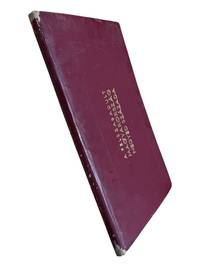
19709177Budapest 1970. First edition. 28x39cm 19 leaves laid loose in red padded leather portfolio. Table of contents introduction by Simon Peter and 17 etchings each signed in pencil by the respective artist. Tissue guards present plates in very bright near fine condition contents leaf and inner portfolio with some foxing. Rubbing to edges of folder otherwise a near fine set. <br /> <br /> Translated as "A Quarter Century of Liberated Hungary" this portfolio was issued in 1970 to commemorate 25 years since the end of World War II. The images in the Socialist-Realist style depict scenes such as the Provisional National Assembly in Debrecen cleaning rubble from the streets of Budapest following the war the birth of the Forint the working class voting during the 1947 parliamentary election in Borsod County factory nationalization and others. Artists include Gyula Hincz 1904-1986 Adam Würtz 1927-1994 Pásztor Gábor 1933–2012 Raszler Károly 1925–2005 and others. <br /> <br /> A scarce complete Cold War-era Hungarian graphic art portfolio with striking images from Nationalist artists. unknown
1970228751970. Lester Julius. Some Revolutionary Notes 1970 presents a critical intervention in Black liberation thought at the transition from the Civil Rights Movement to the era of Black Power and New Left fragmentation. Issued by the Institute for the Study of Nonviolence in Palo Alto the work supports research into African American political thought nonviolent philosophy and internal debates over strategy within late 1960s and early 1970s radical movements. Written in the aftermath of major political ruptures including the rise of the Black Panther Party and the killings of Fred Hampton and Mark Clark the essays examine the limits of both nonviolence and armed resistance within the struggle for Black liberation.<br /> <br /> Lester Julius. Some Revolutionary Notes. Palo Alto: Institute for the Study of Nonviolence 1970. First separate printing. Quarto. Side-stapled self-wrappers printed in black on white stock. The 13-page pamphlet compiles a series of essays originally published in Liberation magazine between late 1969 and early 1970. Opening with "To Recapture the Dream" Lester traces the trajectory of the Movement from the Montgomery bus boycott through the emergence of militant Black activism identifying generational and ideological divisions within the struggle. Subsequent essays dated January through March 1970 address the limitations of the anti-Vietnam War Moratorium the political implications of the deaths of Hampton and Clark and the philosophical tension between nonviolence and revolutionary violence. The text incorporates references to Gandhian principles of satyagraha arguing for a form of political transformation grounded in ethical and human development rather than retaliatory force. Graphic patterned borders frame each essay reinforcing the pamphlet's visual identity within radical print culture. Light handling wear with faint toning along edges and a small crease to lower front corner; otherwise clean and well preserved; overall near fine condition. Produced within a network of West Coast pacifist activism associated with figures such as Ira Sandperl and Joan Baez the pamphlet provides direct evidence of ideological reassessment within Black and multiracial movements offering a concise and historically grounded articulation of nonviolence as a contested but persistent framework in post-Civil Rights era political thought. unknown
1968930FAT'H 1968. First Edition. Wraps. Very good. VARIOUS Palestinian National Liberation Movement The Distinguished Ulemas of Islam are Asking the Muslims to Support Al Fat'H Comandos FAT'H 1968. 32pp 8vo. FIRST EDITION. <br /> <br />"On the occasion of Balfour Declaration and after issuing the decision of the Islamic World League at Mecca and the Conference of Islamic Research at Cairo which have asked for Jihad to save the Holy Land ." p. 32. Testimonials by various educators imams and political leaders. <br /> <br />CONDITION: Very good or better in stapled salmon-colored wraps. Light fading to cover. <br/><br/> FAT'H paperback
20002092902137401543Not Available 2000. Soft Cover. Fine. Number of books: 8 Not Available paperback
20002090202120101701Not Available 2000. Soft Cover. Fine. Volume: 1 Not Available paperback
20002090202120301700Not Available 2000. Soft Cover. Fine. Volume: 1 Not Available paperback
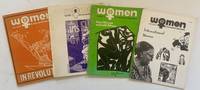
1970178751970. Women: A Journal of Liberation 1970 to 1975 documenting feminist cultural expression and ideological debate within the Women's Liberation Movement during the early second wave period. The material reflects feminist print culture illustrating themes of gender roles domestic life labor sexuality and global political struggle and offering insight into how activists writers and artists articulated women's experiences and demands for social transformation. It supports research into feminist media intersectional discourse and the evolution of women-centered publishing in the United States. Archive includes:<br /> <br /> 1 Women: A Journal of Liberation Vol. 1 No. 4. Summer 1970. Baltimore MD: Women: A Journal of Liberation Inc. 1970. This issue's theme is "In Revolution" and its cover bears an image of a shouting woman breaking through chains her chin lifted in determination. On the back wrapper is a photographic collage of feminists and a woman behind bars sweat dripping down her forehead. Articles discuss Vietnam the Russian Revolution Rosa Luxembourg and various current events relating to the women's movement.<br /> <br /> 2 Women: A Journal of Liberation Vol. 2 No. 1 Fall 1970. Baltimore MD: Women: A Journal of Liberation Inc. 1970. An issue on women in the arts with articles on female authors women in music and film children's literature focused on women female visual artists and women as muse. Cover features a purple print of a woman sitting in a chair and hiding her face from view captioned "model in art class".<br /> <br /> 3 Women: A Journal of Liberation Vol. 2 No. 2 Winter 1971. Baltimore MD: Women: A Journal of Liberation Inc. 1970. This issue is titled "How We Live and With Whom" and includes articles on family marriage and homelife. Many of these articles explore marital and familial issues affecting women in the 70s including the difficulties of divorce sex education for young girls and alternative lifestyles like communal living.<br /> <br /> 4 Women: A Journal of Liberation Vol. 3 No. 2 Winter 1972. Baltimore MD: Women: A Journal of Liberation Inc. 1972. Titled "Building a New Culture". An issue exploring the role of women in culture and the impact of popular culture on women including articles on women in music theater and sports as well as women's studies and sociology. Cover features a green print of five women dancing in a circle. <br /> <br /> 5 Women: A Journal of Liberation Vol. 3 No. 4. Baltimore MD: Women: A Journal of Liberation Inc. 1974. This issue is titled "International Women" and bears cover images of an older woman wearing a bandana and prints of Native women a Black woman and a Vietnamese woman holding artillery in one hand and a baby in another. Articles discuss Vietnam women in the Cuban Revolution Nisei women Chicana culture and various current events relating to the women's movement.<br /> <br /> 6 Women: A Journal of Liberation Vol. 4 No. 2 Spring 1975. Baltimore MD: Women: A Journal of Liberation Inc. 1975. Titled "The Cost of Living" this is issue centers around the relationship between women and money. Includes articles on women in the workforce welfare living in poverty and women supporting themselves independently. This topic would have been especially relevant in the mid-70s when the Equal Credit Opportunity Act opened up new financial opportunities for women in the US.<br /> <br /> Six issues spanning 1970 to 1975 each approximately 11 x 8.25 inches. This period coincides with significant developments in U.S. feminist organizing including expanded discourse on workplace equality reproductive rights and financial independence as well as increased attention to global and intersectional perspectives within the movement. The journal's combination of political analysis creative expression and visual design situates it within a broader network of feminist periodicals that shaped activist and intellectual exchange. Light handling wear covers and pages well-preserved with strong color and clarity; overall very good condition. A cohesive and visually distinctive grouping illustrating the breadth of feminist thought and cultural production in the early 1970s. unknown
19862090502113704439Not Available 1986. Soft Cover. Fine. The book is in fine condition. Not Available paperback
19942091202133213062Kaiho shubbansha 1994. Soft Cover. Fine. Number of books: 1 box Kaiho shubbansha paperback
19812091502135307732Meiji Map Publishing 1981. Soft Cover. Fine. Number of books: 13 Meiji Map Publishing paperback
19952092902140700954Kaiho shubbansha 1995. Soft Cover. Fine. Size: A5 Number of books: 4 books per box Kaiho shubbansha paperback
1970158618北京.Beijing.: No publication details. circa1970. Coloured Chinese Air Defence broken run of 5 posters. Each poster in this small collection is numbered. The collection is made up of poster numbers 10 11 12 13 and 16. <br> <br>The posters are in secondhand condition. Two are poorer condition than the others as there is loss along a margin of each although this loss does not affecting the images themselves. There is creasing and wear and tear particularly at edges and one poster is damp stained. There are some tape repairs on the reverse one Text in Chinese. Poster sheets measure appoximately 54 x 77.5 cm. Poster no. 10 shows 3 images which demonstrate the methods which could be used to fire at enemy aeroplanes. The images are accompanied by detailed instructions. The speed and size of the aeroplane and the angle from which the shot is taken and the distance from the target are all taken into consideration. A chart in the centre gives details of how to prepare in advance for shooting an enemy aircraft. The chart gives details of how to calculate the plane's length taking into account its size and distance to make sure of an accurate shot. <br> <br>Poster no. 11 shows 3 images which demonstrate methods to fire at enemy paratroopers again with detailed instructions of how to do this. A chart in the centre gives details of how to prepare in advance for shooting an enemy aircraft. The chart gives details of how to calculate the plane's length taking into account its size and distance to make sure of an accurate shot. <br> <br>Poster no. 12 depicts 5 images showing various anti-aircraft firing positions. They are: position for one person to lift and stabilise the rifle while the other person aims; position aided by fortification; position aided by tree branches; position aided by walls; and kneeling position. <br> <br>Poster no. 13 includes 5 images showing two squads rifle shooting squad and machine gun shooting squad who are in charge of the anti-aircraft placement and the three main targeted aircraft bomber military cargo aircraft and helicopter which these squads wish to shoot. <br> <br>Poster no. 16 includes 6 images showing plans and the actions required to rescue perform urgent repairs and maintain law and order. Each with detailed instructions. It suggests: to report to the relevant government agency and evacuate nearby civilians unexploded bombs are discovered; during air strikes lay down perimeters around shops to prevent from looting; to restore transportation by clearing roads immediately after air raids; to urgently repair damaged electric wires and water pipes; the major patrol sites: factories shops warehouses dams bridges and the power station and to arrest suspects if necessary; to put out fire immediately and to make sure the safety of the civilians are the most important. <br> <br>中國人民解放軍總參謀部動員部Mobilization Division of People's Liberation Army General Staff Department was first formed in 1954 and later joined with 中国人民解放军总参谋部军务部 Military Division of People's Liberation Army General Staff Department to form a joint division in 1969. The Division returned to its original name in 1975. . No publication details. unknown
19792110502151004808Meiji tosho 1979. Soft Cover. Fine. Number of books: 13 Meiji tosho paperback
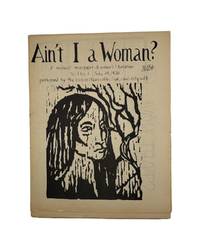
19702360iowa city: aiaw publications collective 1970. fifteen consecutive editions 1970-71. scarce.<br /> <br /> includes editions 3 though 17<br /> <br /> a collection of the famed midwestern lesbian-feminist newspaper published from 1970–74 in the shared home of a collective from the iowa city women’s liberation front. includes articles poetry cartoons and graphic art offering a midwestern perspective on women’s liberation sexual harassment gender roles gay and lesbian rights abortion access and workplace and campus organizing.<br /> <br /> further reading: "power to the printers: the alternative press in iowa city 1965-1985†the university of iowa libraries 2017. exhibition catalog.<br /> <br /> iowa city: aiaw publications collective. 11.85 x 9 inches. newspaper. unbound folded newsprint. all editions: toning with a few closed tears. very good. aiaw publications collective unknown
19832081402109700603Meiji Map Publishing 1983. Soft Cover. Fine. Size: B5 size Meiji Map Publishing paperback
1970158580北京.Beijing.: No publication details. circa1970. Coloured Chinese Air Defence poster incomplete set consisting of 9 posters each poster is numbered. The set includes poster numbers 4 8 10 11 12 13 14 15 and 16. These posters are in secondhand condition. The posters show some creasing with a number of small tears particularly at margins some mending on reverse with tape. Two posters are considerably torn at margin affecting the image slightly in one case. There is some browning and staining and there is considerable annotation on the reverse of poster number 8. Text in Chinese. Sheets measure appoximately 53.9 x 77.9cm. Poster no. 4 depicts 9 images of different types of simple air defence shelters trenches caves etc. Brief descriptions of each type of shelter are provided below the images. Three images in the lower section suggest that when selecting the site for air defence shelters one should not build too close to buildings flammables and electric wire. <br> <br>Poster no. 8 includes 9 images showing the alternative shelters when air raids happen and no nearby air defence shelter available. Alteratives suggested include basements beneath a bridge the corner of a wall and under solid staircases as good alternative shelters. <br> <br>Poster no. 10 shows 3 methods to use to fire at enemy aeroplanes each with detailed instructions. The speed and size of the aeroplane and shooting angles and distance are all taken into consideration. A chart in the centre gives the calculations required to be prepared in advance to successfully shoot down an aeroplane. The calculations require taking into account the plane's size and distance. <br> <br>Poster no. 11 includes 3 images to demonstrate methods to fire at enemy paratroopers with detailed instructions. A chart in the centre gives the calculations for advance preparation taking into account the person's height and distance from the invading paratroopers. <br> <br>Poster no. 12 depicts 5 images showing various anti-aircraft firing positions. They are: a position where a single person lifts and stabilises the rifle while the other person aims; position aided by fortification; position aided by tree branches; position aided by walls; and kneeling position. <br> <br>Poster no. 13 is illustrated with 5 images showing two squads rifle shooting squad and machine gun shooting squad who are in charge of the anti-aircraft placement and three main targeted aircrafts bomber military cargo aircraft and helicopter to shoot. <br> <br>Poster no. 14 shows 10 images of self-rescue and first aid for other people after air raids with detailed instructions. Self-rescue actions featured are emergency bleeding control and fire evacuation; first aid treatment introduced are treatment for bone rapture CPR and transport the wounded. <br> <br>Poster no. 15 depicts 5 images demonstrating methods to extinguish fire bombs. Methods include: burying or covering the burning objects with sand and soil; covering the burning objects with soaking wet quilts or sack bag; throwing the burning objects into water containers with iron shovel; and using a fire extinguisher extinguishing powder or carbon nitride. <br> <br>Poster no. 16 includes 6 images showing plans and actions of rescue urgent repair and maintance of law and order with detailed instructions. It suggests: to report to the relevant government agency and evacuate nearby civilians when unexploded bombs are discovered; during air strikes lay down perimeters around shops to prevent from looting; to restore transportation by clearing roads immediately after air raids; to urgently repair damaged electric wires and water pipes; it gives the major patrol sites as the factory shops warehouses dams bridges and power station and urges the viewer to arrest suspects if necessary; to put out fire immediately and to make sure the safety of the civilians is paramount. <br> <br>中國人民解放軍總參謀部動員部Mobilization Division of People's Liberation Army General Staff Department was first formed in 1954 and later joined with 中国人民解放军总参谋部军务部 Military Division of People's Liberation Army General Staff Department to form a joint division in 1969. The Division returned to its original name in 1975. . No publication details. unknown
1943277008Kamnik district Slovenia: Tehnika RK VI 1943. 30pp. 8vo mimeographed text with images original tan wrappers with mimeographed cover.<br/> <br/> This rare surviving pamphlet from World War II was produced by the Yugoslav Partisans the most accomplished armed resistance movement against the Axis occupation of Europe. Starting out as a guerilla group the Partisans soon created a complete underground society based on Communist principles including schools government and medical institutions financial systems and publishing presses. This pamphlet produced by one such press likely hidden in the mountains or forests of Slovenia addresses an emergent need in such a new clandestine society: that for maps. It proceeds in logical order: geographical vocabulary instructions for making field maps and later more sophisticated and symbolic drafting techniques. Within this technical know-how it also communicates tactical military advice that the Partisan guerillas employed in their battles with Axis armies. This tactical quality of the publication is most in evidence in the pamphlets many striking diagrams which demonstrate the importance of visual knowledge in situations of survival.<BR> <BR> This pamphlet was one of many Partisan publications designed to educate protect and encourage members of the movement. It is particularly fascinating for its simple means of production since the secrecy of Partisan operations limited them to mechanical methods such as mimeographs--in witness here--as well as heliotypes linocuts and typewriting. Given its fragility the pamphlet is in excellent condition with clean text. Slight stains and some very small tears in margins. As one of the few Partisan publications on cartography this pamphlet is a rare and fascinating record of the World War II resistance.<br/> <br/> Tehnika RK VI unknown
19561585031st Edition 2nd Printing. 1956. 1950s Chinese Nuclear Science Poster set incomplete 15 posters of 30 in colour. Each poster is numbered and depicts a detailed image for example a variety of types of nuclear weapons and defence construction with explanative notes. <br> <br>This broken set comprises poster numbers 6 8 9 10 11 12 13 14 15 21 22 23 24 25 and 26 of the 30 issued in this set. The posters in this group vary from being in reasonable secondhand condition to poor condition. Each shows signs of wear creasing closed tears and some with loss mainly on edges and corners. Most posters are torn with considerable loss at one corner and in two cases this has caused loss to the image. Many have been mended with tape on the reverse along some edges there is some marking mainly on reverse though in one case on the poster itself. On the reverse of poster 23 there is an amateur painting and some painted text. Text in Chinese. The poster sizes vary ranging approximately from approximately 55 x 77 to and 77 x 53cm. An interesting collection of posters which clearly shows that China was as deeply concerned about nuclear war during the Cold War as it's neighbours Russia and the United States across the Pacific. <br> <br>Poster no. 6 shows details of the lethality and destruction factors of the atomic explosion including shock weaves radiation and radioactive contamination. <br> <br>Poster no. 8 shows the materials to be used to build nuclear protection trenches as well as the construction methods. <br> <br>Poster no. 9 displays the images of the type of bomb shelter known "below chest-level bulletproof shelter" giving its floor plans with information on an estimated time to build and materials to use. <br> <br>Poster no. 10 shows images of the type of bomb shelter known "light bomb shelter" and a floor plan with information about its accommodation capacity 8-10 people estimated time to build 15 days and materials to use. Also it suggests every infantry platoon should install one of these shelters. <br> <br>Poster no. 11 shows images of the type of bomb shelter known "heavy bomb shelter" and a floor plan with information about an estimate time to build 35 days and materials to use. The heavy bomb shelter is used as a command office when needed. <br> <br>Poster no. 12 includes 9 images showing different nuclear protection bunkers built for various weapons and equipment such as 57 x 85cm cannon 122 x 152cm howitzer rocket artillery tank self-propelled artillery trucks and communication equipment. The poster also shows floor plans for each type of the bunkers an estimate time to build and materials to use. <br> <br>Poster no. 13 includes 8 images showing different nuclear protection field war warehouses to store materials and equipment such as ammunition mines explosives fuel barrels PT-10 and PT-25 fuel tanks and army provisions. The poster also shows floor plans with information about an estimate time to build and material to use. <br> <br>Poster no. 14 includes two images showing special squads for detecting radition levels on the upper section of the poster together with action plans below the images. A legend on the lower section shows correspondent names for the coloured routes. Detailed plans designed for searching nuclear contamination source and safe routes to take within the contamination zone. The routes are shown and numbered. Each squad consists of one squad leader. <br> <br>Poster no. 15 features an image of the special squad for detecting radiation level and very detailed information on their responsibility and action plans. An inset includes three images showing how to extract contaminated soil and a legend showing correspondent names for the coloured routes lower right section. <br> <br>Poster no. 21 includes 9 images showing different ways to remove radiative contamination on the roads and on battle field. Two blue charts in the middle section one chart showing different types of vehicles to remove contamination on the roads the other various warning signs according to radiation levels. <br> <br>Poster no. 22 shows images of different types of water supply wells cistern etc. and ways to protect the water supply from radioactive contamination. An image featured in the centre shows the layout of a water plant and how it processes contaminated water. The instruction above the image suggests that processed water shall be consumed only when no clean water is available. Four images with detailed instruction lower section show various water purifying methods distilling filtering and ion exchanging <br> <br>Poster no. 23 displays images of soldiers disinfecting radiation contaminated food with package or without and containers for food storage. <br> <br>Poster no. 24 features a Soviet Union made AN-1-A radiac set left section and two images right section of soldier measuring radiation level and soldier carrying the set. <br> <br>Poster no. 25 shows a circuit diagram of the AN-1-A radiac set with a legend showing different coloured current circuits. <br> <br>Poster no. 26 features another Soviet Union made AN-11-A radiac set. The parts of the set are highlighted upper section. Front view and back view of the set are shown lower section. A small image of the set in use upper right section. . unknown