Steinhem, Gloria [Signed]MareMagnum

1 124 résultats
Iconic preview issue of Ms. signed and inscribed by its co-founder, Gloria Steinem, upon front cover. This landmark feminist publication was "written for all women, everywhere, in every occupation and profession - women with deep, diverse ambitions, and those who have not yet had a chance to formulate ambition - women who are wives, mothers, and grandmothers, or none of these - women who want to be fully a female person and proud of it. In brief, women who want to humanize politics, business, education, the arts and sciences... in the home, the community , and the nation." - p113. Cover art by Miriam Wosk [1947-2010] depicts frantic eight-armed pregnant woman struggling to satisfy the many demands of her work, marriage and motherhood. 128 pages including such articles as: De-Sexing the English Language; Men's Cycles (They Have Them Too, You Know); Down With Sexist Upbringing; We Have Had Abortions; Why Women Fear Success; My Mother, The Dentist; How To Write Your Own Marriage Contract; The Black Family and Feminism - A Conversation with Eleanor Holmes Norton; The Sexual Revolution Wasn't Our War; Can Women Love Women; The Birth of Individual Architecture; and more. Interesting ads. Complete and unmarked with average wear. Signature and inscription appear more clearly than is indicated in our photos. A very special piece of American feminist history. Book
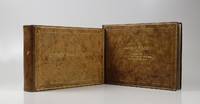
77190Paris Citroën 1915-1916. In two volumes. Oblong folio 31.5 x 43.7 cm. 71 original photographs 22.0 x 28.5-35.5 cm mounted on grey cardboard with printed captions 60; 11. Uniform full mottled calf. Boards with double gilt-rolled ornamental borders and gilt title. = A very rare set both volumes dealing with the Parisian factory founded by André-Gustave Citroën 1878-1935 renowned for its technologically advanced cars but also for its contributions to the French war industry during WWI and in particular the contributions women made as factory workers in the mass production of artillery shells. The first volume is entirely devoted to this subject showing the female munitions-workers at work. André Citroën played an essential part in French women's emancipation: once the women had left their traditional singular role as homemakers replacing the men who fought in the trenches there was no looking back and after the war their participation in the country's workforce became permanent. "World War I radically changed women's role in society as they stepped into the boots of men gone to fight for their countries. In cities across Europe women took on traditionally 'male' jobs - waiting on tables delivering the mail teaching in boys' schools or handling cash as bank clerks. 'Women rapidly became indispensable not only in the nursing and welfare services but in offices and factories and agriculture changing the whole balance of society in the process' says historian Michael Howard. As soon as war broke out in 1914 France's prime minister Rene Viviani called on women to 'replace in the workplace those who are on the battlefield'. . From 1915 onwards Europe's industry - devoted to the war effort - relied massively on the female workforce as did that of the United States from 1917. 'Without women victory will tarry' warned Britain's soon-to-be prime minister David Lloyd George in 1915. Some 400000 women were toiling in France's war factories by 1918 - a quarter of the workforce - handling some 2500 shells per exhausting 11-hour shifts" AFP. The second volume records the building and operational start of the factory itself. It shows the evolution of the works starting with a photo of the still-vacant lot save for gardens and sheds followed chronologically by views of all building developments including one with the famous Eiffel Tower in the distance. Groundwork started in March 1915 and by the 28 September the largely female workforce had already become fully active. The final photo shows the official ceremonial opening of the factory on 24 June 1916 revealing decorations given by General Gilinski on behalf of the Russian emperor. "As soon as war was declared in August 1914 André Citroën was mobilized as a lieutenant then as captain in the 2nd Grenoble Artillery Regiment. On the eastern front he was able to witness France's lack of artillery and ammunition to counter the German forces. Following the death of his brother Bernard on the front André Citroën was determined not only to do his duty but also to repel the enemy as far as possible. In January 1915 he proposed to General Louis Baquet director of artillery at the Ministry of War which was sorely lacking in ammunition to apply Fordism in a factory built in three months and capable of producing 5000 to 10000 artillery shells of Type 75 per day. Thanks to his savings those of his right-hand man Georges-Marie Haardt and especially financing from a rich diamond dealer of Armenian origin Atanik Eknayan who had already saved his fragile Mors 12 car business Citroën erected a huge ultramodern factory on 15 hectares of vacant land and vegetable gardens on the Quai de Javel. With some 13000 workers the factory produced 23 million shells at a rate of 10000 per day an unprecedented rate at the time. 'You have to produce quickly well and economically to put the products manufactured within the reach of the greatest possible number of consumers he said. The pace the factories imposed on workers was tiring and as a result André Citroën was sometimes considered a despot. Nevertheless he was one of the first manufacturers concerned about the well-being of his workers and avoided imposing repetitive tasks. André Citroën's ammunition business quickly gained a reputation and became a model of organization efficiency and social responsibility. Major personalities both civil and military visited the factory. Between 1917 and 1918 the government also charged Citroën with reorganizing supplies for the armaments industry the military postal services and with the distribution of bread ration tickets in the Paris region. When the war was over André Citroën decided to convert his factory on the Quai de Javel into a car manufacturing plan" taken from French Wikipedia. Boards a bit rubbed; a skilful repair to one joint one photograph with a brown spot in the top left corner; otherwise in an excellent state. hardcover
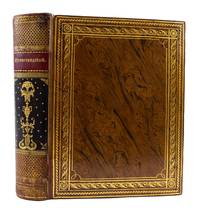
1817ST18762Halle and Berlin: Hallisches Waisenhaus 1817. 275 x 215 mm. 10 3/4 x 8 3/8". 210 leaves 18 pp. 4 leaves. <br/> REMARKABLY FINE CONTEMPORARY MARBLED CALF covers with complex gilt border composed of plain rules and decorative rolls smooth spine divided into compartments by gilt Greek key rolls top and bottom compartments with all-over gilt scallop design long central panel of black morocco with elaborate gilt vase and floral ornament surrounded by small gilt stars and with red morocco titling label above; FULL SPECKLED CALF DOUBLURES the front doublure with a painted lyre featuring gilt strings sword and wreath the rear with a monopteros with an eternal flame at the center upon a plinth superimposed upon which is an onlaid black morocco label framed in gilt and with gilt lettering "18. Oct. 1813" both doublures framed with red morocco supporting an elegant scrolling gilt band densely gilt turn-ins blue silk moiré endleaves all edges gilt an expert two-centimeter repair at head of spine. With frontispiece 21 portraits and 11 maps three folding one with flap all but one with inserted tissue guard. ◆Joints with slight flaking a hint of wear along tail edges as expected bottom spine compartment faintly rubbed with minor loss of gilt a little oxidation to the wreath on front doublure but A VERY HANDSOME BINDING with only minor condition issues. Light overall browning to plates because of paper content but virtually no foxing and only very occasional some quite faint spotting; THE TEXT itself IN NEARLY PRISTINE CONDITION extraordinarily clean bright and fresh with just one or two negligible imperfections.<br/> <br/> In a wonderful binding with unusual doublures this work commemorates the so-called "Wars of Liberation" that effectively ended French hegemony over Europe and that forced Napoleon into exile. Also known as the War of the Sixth Coalition the conflict took place between 1813-14 following Napoleon's retreat from Russia in 1812. Though the major battles primarily took place in German territory rulers of Russia Prussia Austria Spain Portugal the United Kingdom Sweden and many German States all banded together to oppose France. In March of 1814 the allies entered Paris prompting the French Senate to depose Napoleon and install Louis XVIII as the French sovereign. Although Napoleon would briefly return from his exile on Elba to stage a comeback in 1815 it was short lived and ended in his final defeat. The majority of the text here discusses the events of 1813 and 1814 during the height of the conflict and includes portraits of the major players and maps helping to illustrate the most important battles. This work is beautifully printed on thick white paper and is clearly meant to act as both a chronological record of the events and a memorial to those who liberated the German states from a tyrannical power. The lovely marbled calf binding opens to reveal two exceptional doublures painted in the manner of an antique vase with a lyre wreath and sheathed sword on the front doublure and on the rear a monopteros this latter circular colonnade with an eternal flame bearing a small morocco onlay emblazoned with the date 18 October 1813. This refers to the Battle of Leipzig also called the Battle of Nations fought from 16-19 October--by many accounts the single largest and bloodiest battle of the entire Napoleonic Era. It marked a decisive turning point in the Wars of Liberation and was an obvious source of pride for the German people. Given the momentous nature of the book's content the present grand and beautifully designed binding serves as a suitably striking vehicle of presentation. Hallisches Waisenhaus unknown
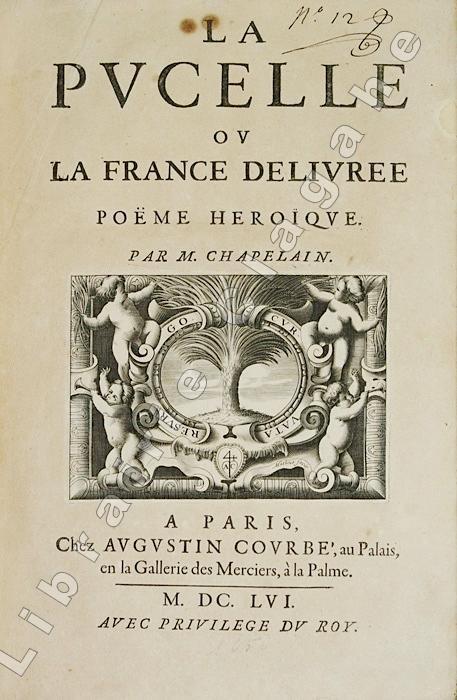
17788Paris, Augustin Courbé (imprimerie Jean Roger), 1656 ; in folio, basane havane, dos refait et plats d'époque conservés, fleurons dorés à l'ancienne ; 1blanc, frontispice, titre ; (6) ff. , portrait de l'auteur, (16) ff. , 522 pp. , (6) ff.
1951012905Paris Galerie Louise Leiris 1951 en feuilles, couverture rempliée illustrée, chemise et étui éditeur
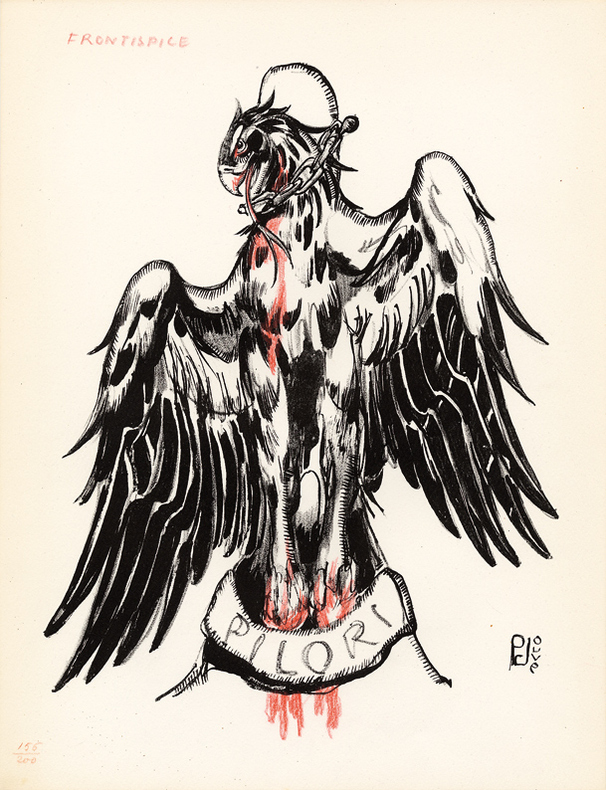
194514742Paris, La Lithographie, 1945 ; in-folio en ff., chemise caramel à rabats illustrée_; (4) pp. (texte de Jacques-Noir, poésie de René Fauchois et table) ; frontispice, couverture et 41 planches lithographiées sur vélin fort, numérotées à la main, la plupart avec titre manuscrit et signature autographe.
19561585031st Edition 2nd Printing. 1956. 1950s Chinese Nuclear Science Poster set incomplete 15 posters of 30 in colour. Each poster is numbered and depicts a detailed image for example a variety of types of nuclear weapons and defence construction with explanative notes. <br> <br>This broken set comprises poster numbers 6 8 9 10 11 12 13 14 15 21 22 23 24 25 and 26 of the 30 issued in this set. The posters in this group vary from being in reasonable secondhand condition to poor condition. Each shows signs of wear creasing closed tears and some with loss mainly on edges and corners. Most posters are torn with considerable loss at one corner and in two cases this has caused loss to the image. Many have been mended with tape on the reverse along some edges there is some marking mainly on reverse though in one case on the poster itself. On the reverse of poster 23 there is an amateur painting and some painted text. Text in Chinese. The poster sizes vary ranging approximately from approximately 55 x 77 to and 77 x 53cm. An interesting collection of posters which clearly shows that China was as deeply concerned about nuclear war during the Cold War as it's neighbours Russia and the United States across the Pacific. <br> <br>Poster no. 6 shows details of the lethality and destruction factors of the atomic explosion including shock weaves radiation and radioactive contamination. <br> <br>Poster no. 8 shows the materials to be used to build nuclear protection trenches as well as the construction methods. <br> <br>Poster no. 9 displays the images of the type of bomb shelter known "below chest-level bulletproof shelter" giving its floor plans with information on an estimated time to build and materials to use. <br> <br>Poster no. 10 shows images of the type of bomb shelter known "light bomb shelter" and a floor plan with information about its accommodation capacity 8-10 people estimated time to build 15 days and materials to use. Also it suggests every infantry platoon should install one of these shelters. <br> <br>Poster no. 11 shows images of the type of bomb shelter known "heavy bomb shelter" and a floor plan with information about an estimate time to build 35 days and materials to use. The heavy bomb shelter is used as a command office when needed. <br> <br>Poster no. 12 includes 9 images showing different nuclear protection bunkers built for various weapons and equipment such as 57 x 85cm cannon 122 x 152cm howitzer rocket artillery tank self-propelled artillery trucks and communication equipment. The poster also shows floor plans for each type of the bunkers an estimate time to build and materials to use. <br> <br>Poster no. 13 includes 8 images showing different nuclear protection field war warehouses to store materials and equipment such as ammunition mines explosives fuel barrels PT-10 and PT-25 fuel tanks and army provisions. The poster also shows floor plans with information about an estimate time to build and material to use. <br> <br>Poster no. 14 includes two images showing special squads for detecting radition levels on the upper section of the poster together with action plans below the images. A legend on the lower section shows correspondent names for the coloured routes. Detailed plans designed for searching nuclear contamination source and safe routes to take within the contamination zone. The routes are shown and numbered. Each squad consists of one squad leader. <br> <br>Poster no. 15 features an image of the special squad for detecting radiation level and very detailed information on their responsibility and action plans. An inset includes three images showing how to extract contaminated soil and a legend showing correspondent names for the coloured routes lower right section. <br> <br>Poster no. 21 includes 9 images showing different ways to remove radiative contamination on the roads and on battle field. Two blue charts in the middle section one chart showing different types of vehicles to remove contamination on the roads the other various warning signs according to radiation levels. <br> <br>Poster no. 22 shows images of different types of water supply wells cistern etc. and ways to protect the water supply from radioactive contamination. An image featured in the centre shows the layout of a water plant and how it processes contaminated water. The instruction above the image suggests that processed water shall be consumed only when no clean water is available. Four images with detailed instruction lower section show various water purifying methods distilling filtering and ion exchanging <br> <br>Poster no. 23 displays images of soldiers disinfecting radiation contaminated food with package or without and containers for food storage. <br> <br>Poster no. 24 features a Soviet Union made AN-1-A radiac set left section and two images right section of soldier measuring radiation level and soldier carrying the set. <br> <br>Poster no. 25 shows a circuit diagram of the AN-1-A radiac set with a legend showing different coloured current circuits. <br> <br>Poster no. 26 features another Soviet Union made AN-11-A radiac set. The parts of the set are highlighted upper section. Front view and back view of the set are shown lower section. A small image of the set in use upper right section. . unknown
1943277008Kamnik district Slovenia: Tehnika RK VI 1943. 30pp. 8vo mimeographed text with images original tan wrappers with mimeographed cover.<br/> <br/> This rare surviving pamphlet from World War II was produced by the Yugoslav Partisans the most accomplished armed resistance movement against the Axis occupation of Europe. Starting out as a guerilla group the Partisans soon created a complete underground society based on Communist principles including schools government and medical institutions financial systems and publishing presses. This pamphlet produced by one such press likely hidden in the mountains or forests of Slovenia addresses an emergent need in such a new clandestine society: that for maps. It proceeds in logical order: geographical vocabulary instructions for making field maps and later more sophisticated and symbolic drafting techniques. Within this technical know-how it also communicates tactical military advice that the Partisan guerillas employed in their battles with Axis armies. This tactical quality of the publication is most in evidence in the pamphlets many striking diagrams which demonstrate the importance of visual knowledge in situations of survival.<BR> <BR> This pamphlet was one of many Partisan publications designed to educate protect and encourage members of the movement. It is particularly fascinating for its simple means of production since the secrecy of Partisan operations limited them to mechanical methods such as mimeographs--in witness here--as well as heliotypes linocuts and typewriting. Given its fragility the pamphlet is in excellent condition with clean text. Slight stains and some very small tears in margins. As one of the few Partisan publications on cartography this pamphlet is a rare and fascinating record of the World War II resistance.<br/> <br/> Tehnika RK VI unknown
1970158580北京.Beijing.: No publication details. circa1970. Coloured Chinese Air Defence poster incomplete set consisting of 9 posters each poster is numbered. The set includes poster numbers 4 8 10 11 12 13 14 15 and 16. These posters are in secondhand condition. The posters show some creasing with a number of small tears particularly at margins some mending on reverse with tape. Two posters are considerably torn at margin affecting the image slightly in one case. There is some browning and staining and there is considerable annotation on the reverse of poster number 8. Text in Chinese. Sheets measure appoximately 53.9 x 77.9cm. Poster no. 4 depicts 9 images of different types of simple air defence shelters trenches caves etc. Brief descriptions of each type of shelter are provided below the images. Three images in the lower section suggest that when selecting the site for air defence shelters one should not build too close to buildings flammables and electric wire. <br> <br>Poster no. 8 includes 9 images showing the alternative shelters when air raids happen and no nearby air defence shelter available. Alteratives suggested include basements beneath a bridge the corner of a wall and under solid staircases as good alternative shelters. <br> <br>Poster no. 10 shows 3 methods to use to fire at enemy aeroplanes each with detailed instructions. The speed and size of the aeroplane and shooting angles and distance are all taken into consideration. A chart in the centre gives the calculations required to be prepared in advance to successfully shoot down an aeroplane. The calculations require taking into account the plane's size and distance. <br> <br>Poster no. 11 includes 3 images to demonstrate methods to fire at enemy paratroopers with detailed instructions. A chart in the centre gives the calculations for advance preparation taking into account the person's height and distance from the invading paratroopers. <br> <br>Poster no. 12 depicts 5 images showing various anti-aircraft firing positions. They are: a position where a single person lifts and stabilises the rifle while the other person aims; position aided by fortification; position aided by tree branches; position aided by walls; and kneeling position. <br> <br>Poster no. 13 is illustrated with 5 images showing two squads rifle shooting squad and machine gun shooting squad who are in charge of the anti-aircraft placement and three main targeted aircrafts bomber military cargo aircraft and helicopter to shoot. <br> <br>Poster no. 14 shows 10 images of self-rescue and first aid for other people after air raids with detailed instructions. Self-rescue actions featured are emergency bleeding control and fire evacuation; first aid treatment introduced are treatment for bone rapture CPR and transport the wounded. <br> <br>Poster no. 15 depicts 5 images demonstrating methods to extinguish fire bombs. Methods include: burying or covering the burning objects with sand and soil; covering the burning objects with soaking wet quilts or sack bag; throwing the burning objects into water containers with iron shovel; and using a fire extinguisher extinguishing powder or carbon nitride. <br> <br>Poster no. 16 includes 6 images showing plans and actions of rescue urgent repair and maintance of law and order with detailed instructions. It suggests: to report to the relevant government agency and evacuate nearby civilians when unexploded bombs are discovered; during air strikes lay down perimeters around shops to prevent from looting; to restore transportation by clearing roads immediately after air raids; to urgently repair damaged electric wires and water pipes; it gives the major patrol sites as the factory shops warehouses dams bridges and power station and urges the viewer to arrest suspects if necessary; to put out fire immediately and to make sure the safety of the civilians is paramount. <br> <br>中國人民解放軍總參謀部動員部Mobilization Division of People's Liberation Army General Staff Department was first formed in 1954 and later joined with 中国人民解放军总参谋部军务部 Military Division of People's Liberation Army General Staff Department to form a joint division in 1969. The Division returned to its original name in 1975. . No publication details. unknown
xxiv, 179 pages. Index, bibliography, references, glossary. Almost one hundred black and white reproductions of photos and documents. Two fold-out maps. "This study was exciting and personally rewarding to me. I treasure the many Dutch and Canadian friends who so patiently worked with me to reconstruct the events of half a century ago. I still think it highly important that the record of Canadian actions in helping to throw off the Nazi yoke in the Netherlands be accurately and fully told to Canadian and Dutch peoples before we have all passed on. But this publication is really devoted to the 363 killed and 1760 other casualties suffered by the South Saskatchewan Regiment in the Second World War, to the other units involved in the liberation of Kamp Westerbork, but most of all to the 876 prisoners, mainly Jewish, we helped to liberate in Kamp Westerbork, the 4000 or so who passed through this transit camp to hell, but lived, and to the more than 103,000 who did not." - Foreword. After serving in WWII Professor Law [1922-2011] moved on to a career at Queen's University where he established the Business School's microcomputer lab in the 1980s, where this bookseller had the opportunity to meet him. Clean and unmarked with light wear. A quality copy of this important and highly-detailed study. Book
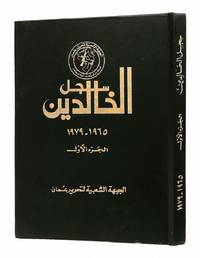
65629Issued by the Central Media Office of the Popular Front for the Liberation of Oman c.1979. 4to. 29 x 21 cm. pp.226. Publisher's original black rexine upper cover and spine lettered in gilt decorative patterned endpapers. Full-page map of Oman 12 full-page colour plates numerous black & white photographic portraits. The book comprises a list of martyr's names in chronological order of martyrdom from the first shot fired from the mountains of Dhofar on June 9 1965 under the leadership of the Popular Front for the Liberation of Oman until 1979. From the the Introduction: If the true measure of any revolution is determined by the achievements it has secured for its people then the Omani revolution since its inception has embodied this truth. The gains achieved on the Omani scene during the years of struggle in various fields are nothing but the product of the immense sacrifices made by the fighters of the June 9th Revolution whose goals reflected the aspirations of the Omani people from all walks of life. Freedom democracy national unity and liberation from the shackles of imperialist dependency are goals in which the Omani people believed which the Popular Front for the Liberation of Oman adopted and which it embodied throughout its historical journey. A national revolution with such goals struggling in a strategic region rich in natural resources is bound to face a number of enemies A simple look at the forces that have placed themselves among the enemies of our Omani people reveals an unholy alliance aimed at eradicating the national spirit among the Omani masses. This spirit was embodied in the armed struggle our people embraced as the highest form of resistance to liberate themselves from the injustice perpetrated by the Sultanate regime in Muscat and from subservience to global imperialist powers. For this reason over the years of struggle our people have faced the soldiers of British colonialism the soldiers of the treacherous Sadat regime the British colonial forces the soldiers of the Jordanian monarchy the forces of the defunct expansionist Shah's regime the soldiers of the treacherous Sadat regime and the forces of the puppet Sultanate regime in Muscat. The conflict between our people and their enemies was not limited to the regimes listed but also included other imperialist and reactionary Arab regimes that contributed to thwarting our people's aspirations by providing financial and political support to the existing sultanate in Muscat. However despite the multitude of enemies the June 9 1965 revolution led by the Popular Front for the Liberation of Oman remained monumental in its principles popular in its goals and steadfast in the optimism of its fighters. The martyrs who fell along the long historical path their pure blood staining the sacred Omani soil during the years of struggle are but beacons illuminating the way for our people who believe in the great slogan: "Struggle until the homeland is liberated and united." If this record contains only a small number of those torches this is due to the loss of some records and documents containing the exploits of these heroes which are still being searched for. This led us to name the first part of this historical record "The March of the Martyrs of the Ninth of June Revolution." This should not cause any confusion for our esteemed readers when other records are published in the coming periods containing the names of martyrs throughout the years of past heroic struggle in addition to those who will be added to the list of martyrs in the coming years on the long march of our heroic Omani people. Issued by the Central Media Office of the Popular Front for the Liberation of Oman, [c.1979]. unknown
197041387Sûreté du Québec En feuille 1970
172543857Claude-Gilles Lecamus Couverture souple Toulouse 1725
19832081402109700603Meiji Map Publishing 1983. Soft Cover. Fine. Size: B5 size Meiji Map Publishing paperback
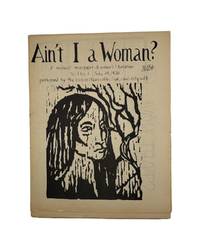
19702360iowa city: aiaw publications collective 1970. fifteen consecutive editions 1970-71. scarce.<br /> <br /> includes editions 3 though 17<br /> <br /> a collection of the famed midwestern lesbian-feminist newspaper published from 1970–74 in the shared home of a collective from the iowa city women’s liberation front. includes articles poetry cartoons and graphic art offering a midwestern perspective on women’s liberation sexual harassment gender roles gay and lesbian rights abortion access and workplace and campus organizing.<br /> <br /> further reading: "power to the printers: the alternative press in iowa city 1965-1985†the university of iowa libraries 2017. exhibition catalog.<br /> <br /> iowa city: aiaw publications collective. 11.85 x 9 inches. newspaper. unbound folded newsprint. all editions: toning with a few closed tears. very good. aiaw publications collective unknown
19792110502151004808Meiji tosho 1979. Soft Cover. Fine. Number of books: 13 Meiji tosho paperback
194764401947 Paris éditions Berger-Levrault 1947 In12 pleine percaline éditeur titre frappé en rouge et croix de lorraine sur le 1er plat 756 pages imprimées sur papier bible - très bon état
1970158618北京.Beijing.: No publication details. circa1970. Coloured Chinese Air Defence broken run of 5 posters. Each poster in this small collection is numbered. The collection is made up of poster numbers 10 11 12 13 and 16. <br> <br>The posters are in secondhand condition. Two are poorer condition than the others as there is loss along a margin of each although this loss does not affecting the images themselves. There is creasing and wear and tear particularly at edges and one poster is damp stained. There are some tape repairs on the reverse one Text in Chinese. Poster sheets measure appoximately 54 x 77.5 cm. Poster no. 10 shows 3 images which demonstrate the methods which could be used to fire at enemy aeroplanes. The images are accompanied by detailed instructions. The speed and size of the aeroplane and the angle from which the shot is taken and the distance from the target are all taken into consideration. A chart in the centre gives details of how to prepare in advance for shooting an enemy aircraft. The chart gives details of how to calculate the plane's length taking into account its size and distance to make sure of an accurate shot. <br> <br>Poster no. 11 shows 3 images which demonstrate methods to fire at enemy paratroopers again with detailed instructions of how to do this. A chart in the centre gives details of how to prepare in advance for shooting an enemy aircraft. The chart gives details of how to calculate the plane's length taking into account its size and distance to make sure of an accurate shot. <br> <br>Poster no. 12 depicts 5 images showing various anti-aircraft firing positions. They are: position for one person to lift and stabilise the rifle while the other person aims; position aided by fortification; position aided by tree branches; position aided by walls; and kneeling position. <br> <br>Poster no. 13 includes 5 images showing two squads rifle shooting squad and machine gun shooting squad who are in charge of the anti-aircraft placement and the three main targeted aircraft bomber military cargo aircraft and helicopter which these squads wish to shoot. <br> <br>Poster no. 16 includes 6 images showing plans and the actions required to rescue perform urgent repairs and maintain law and order. Each with detailed instructions. It suggests: to report to the relevant government agency and evacuate nearby civilians unexploded bombs are discovered; during air strikes lay down perimeters around shops to prevent from looting; to restore transportation by clearing roads immediately after air raids; to urgently repair damaged electric wires and water pipes; the major patrol sites: factories shops warehouses dams bridges and the power station and to arrest suspects if necessary; to put out fire immediately and to make sure the safety of the civilians are the most important. <br> <br>中國人民解放軍總參謀部動員部Mobilization Division of People's Liberation Army General Staff Department was first formed in 1954 and later joined with 中国人民解放军总参谋部军务部 Military Division of People's Liberation Army General Staff Department to form a joint division in 1969. The Division returned to its original name in 1975. . No publication details. unknown
34412Paris, sans date (1945), in 8°, reliure à spirale illustrée de l'éditeur, 1 feuillet d'Avant-propos (en français et en anglais) suivi de 36 feuillets de photographies (généralement, 2 phtographies par feuillet), chacun accompagné de sa serpente légendée en anglais et français.
19952092902140700954Kaiho shubbansha 1995. Soft Cover. Fine. Size: A5 Number of books: 4 books per box Kaiho shubbansha paperback
19862090502113704439Not Available 1986. Soft Cover. Fine. The book is in fine condition. Not Available paperback
19942091202133213062Kaiho shubbansha 1994. Soft Cover. Fine. Number of books: 1 box Kaiho shubbansha paperback
19812091502135307732Meiji Map Publishing 1981. Soft Cover. Fine. Number of books: 13 Meiji Map Publishing paperback
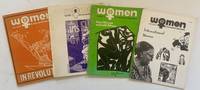
1970178751970. Women: A Journal of Liberation 1970 to 1975 documenting feminist cultural expression and ideological debate within the Women's Liberation Movement during the early second wave period. The material reflects feminist print culture illustrating themes of gender roles domestic life labor sexuality and global political struggle and offering insight into how activists writers and artists articulated women's experiences and demands for social transformation. It supports research into feminist media intersectional discourse and the evolution of women-centered publishing in the United States. Archive includes:<br /> <br /> 1 Women: A Journal of Liberation Vol. 1 No. 4. Summer 1970. Baltimore MD: Women: A Journal of Liberation Inc. 1970. This issue's theme is "In Revolution" and its cover bears an image of a shouting woman breaking through chains her chin lifted in determination. On the back wrapper is a photographic collage of feminists and a woman behind bars sweat dripping down her forehead. Articles discuss Vietnam the Russian Revolution Rosa Luxembourg and various current events relating to the women's movement.<br /> <br /> 2 Women: A Journal of Liberation Vol. 2 No. 1 Fall 1970. Baltimore MD: Women: A Journal of Liberation Inc. 1970. An issue on women in the arts with articles on female authors women in music and film children's literature focused on women female visual artists and women as muse. Cover features a purple print of a woman sitting in a chair and hiding her face from view captioned "model in art class".<br /> <br /> 3 Women: A Journal of Liberation Vol. 2 No. 2 Winter 1971. Baltimore MD: Women: A Journal of Liberation Inc. 1970. This issue is titled "How We Live and With Whom" and includes articles on family marriage and homelife. Many of these articles explore marital and familial issues affecting women in the 70s including the difficulties of divorce sex education for young girls and alternative lifestyles like communal living.<br /> <br /> 4 Women: A Journal of Liberation Vol. 3 No. 2 Winter 1972. Baltimore MD: Women: A Journal of Liberation Inc. 1972. Titled "Building a New Culture". An issue exploring the role of women in culture and the impact of popular culture on women including articles on women in music theater and sports as well as women's studies and sociology. Cover features a green print of five women dancing in a circle. <br /> <br /> 5 Women: A Journal of Liberation Vol. 3 No. 4. Baltimore MD: Women: A Journal of Liberation Inc. 1974. This issue is titled "International Women" and bears cover images of an older woman wearing a bandana and prints of Native women a Black woman and a Vietnamese woman holding artillery in one hand and a baby in another. Articles discuss Vietnam women in the Cuban Revolution Nisei women Chicana culture and various current events relating to the women's movement.<br /> <br /> 6 Women: A Journal of Liberation Vol. 4 No. 2 Spring 1975. Baltimore MD: Women: A Journal of Liberation Inc. 1975. Titled "The Cost of Living" this is issue centers around the relationship between women and money. Includes articles on women in the workforce welfare living in poverty and women supporting themselves independently. This topic would have been especially relevant in the mid-70s when the Equal Credit Opportunity Act opened up new financial opportunities for women in the US.<br /> <br /> Six issues spanning 1970 to 1975 each approximately 11 x 8.25 inches. This period coincides with significant developments in U.S. feminist organizing including expanded discourse on workplace equality reproductive rights and financial independence as well as increased attention to global and intersectional perspectives within the movement. The journal's combination of political analysis creative expression and visual design situates it within a broader network of feminist periodicals that shaped activist and intellectual exchange. Light handling wear covers and pages well-preserved with strong color and clarity; overall very good condition. A cohesive and visually distinctive grouping illustrating the breadth of feminist thought and cultural production in the early 1970s. unknown
20002090202120101701Not Available 2000. Soft Cover. Fine. Volume: 1 Not Available paperback