[PLAGUE]Biblio.com
[Plague Cemeteries] [Funerary Monuments] Christoph Friedrich Gugel; Johann Azelt [frontis]Biblio.com
Norischer Christen Freydhöfe Gedächtnis. Das ist: Richtige Vorstellung und Verzeichnis aller derjenigen Monumenten/ Epitaphien und Grabschrifften/ welche auf und in denen/ zur der H. freyen Reichsstadt Nürnberg gehörigen/ dreyen Kirchhöfen S. Johannis/ Rochi und der Vorstadt Wehrd/ wie auch derselben Kirchen und Capellen/ so wol in Metall oder Messing/ als auch im Stein eingehauen/ oder auf Holtz und aufgehengten Fahnen gemahlet/ befindlich. Mit sonderbarem Fleiß zusammen getragen und mitgetheilet von einem curieusen Liebhaber
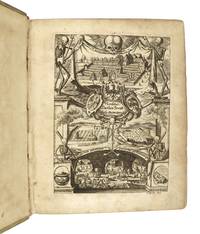
168247304Nürnberg Nuremburg: In Verlegung Leonhard Loschge / druckts Christian Sigmund Froberg 1682. Very Good. Nürnberg Nuremburg: Jn Verlegung Leonhard Loschge / druckts Christian Sigmund Froberg 1682. First Edition. Quarto 21cm; viii321i.e. 265xi188xiipp pp 217-272 omitted in pagination collated complete; engraved frontis by Johann Azelt with two vignette tailpieces and occasional typographic representations of more elaborate markers. Contemporary vellum boards with manuscript titling in ink on spine. Speckled page edges. Modern ownership signature of a Sigmund G. Haffner in red pen on front free endpaper. Split to vellum at top of front joint across spine with exposure but binding holding soundly; general soiling and smudging to surface with spine titling dulled. Brief tear along bottom gutter to frontis.Marginal note with in-text ink corrections on p. 308 of Johannis section else interior unmarked. <br /> <br /> Indexed record of monuments epitaphs and gravestones in Nuremberg's Johannisfriedhof St. John's and Rochusfriedhof St. Rochus cemeteries with an impressively skeletal frontis by Nuremberg engraver Johann Azelt.<br /> <br /> Both cemeteries were established outside the Old Town walls during plague outbreaks in the 1510s with St. John's expanded from the existing leper's cemetery dating back to the 13th century. One notable St. John's resident is painter and printmaker Albrecht Durer whose marker is typographically rendered on p. 95. St. Rochus established as a dedicated plague cemetery takes its name from the 14th century Majorcan confessor and patron saint of invalids and dogs who was said to have cured many plague victims throughout Italy with a Sign of the Cross and was said to have survived it himself. Gugel 1648-1706 son of nobleman and chief lower court assessor Christoph Hieronymus Gugel studied in Leiden and travelled before returning to Nuremberg busying himself with chronicling the monuments herein as well as a family history.<br /> <br /> Eighteen copies via OCLC at time of writing chiefly in Germany with two in the US at Harvard Divinity School and the Pennsylvania Office of Commonwealth Library and none in the UK.<br /> <br /> Full title translation: Memorial Cemetery of Noric Christians. That is: A correct presentation and list of all those monuments epitaphs and gravestones which are located on and in the three cemeteries belonging to the Holy Free Imperial City of Nuremberg-St. John's St. Roch's and the suburb of Wehrd-as well as in their churches and chapels whether carved in metal or brass or in stone or painted on wood and hanging banners. Compiled and presented with particular diligence by a curious enthusiast. In Verlegung Leonhard Loschge / druckts Christian Sigmund Froberg unknown
Capitol Hill Books, ABAA · États-Unis2 000,00 $US≈ 1 692,20 €