Hoffman AbbieMareMagnum

170 résultats
F.to: 13x20; pagg. 154; COL e BN; rileg. brossura. Editore: Vintage Books, New York, 1969.
199423091CBWien, Paul Zsolnay, 1994. 4°, 128 S. mit zahlreichen s/w- und Farbabbildungen, farbig illustr. original Kartonage (Paperback), deutsche Erstausgabe Einband minimal berieben, sonst schönes, sauberes Exemplar.
199122997CBAugsburg, Sonnentanz-Verlag, 1991. 8°, 237 S. mit s/w-Abbildungen und Notenbeispielen, farbig illustr. original Kartonage (Paperback), Erstausgabe Einband minimal berieben, sonst schönes, sauberes Exemplar.
42272ABLondon, Welbeck, 2020. 8°, 237 S. mit zahlr. Farb- und s/w-Abbildungen von Auftritten, Backstage-Aufnahmen, Porträts etc., toll bebildert!, Text: englisch, farbig illustr. original Pappband (Hardcover), Erstausgabe schönes, sauberes Exemplar.
419pp. 22 cm. Paperback Very good condition
A clean, unmarked book with a tight binding. Small tears and wear to cover. Yellowing paper. 10 3/4"w x 11 1/4"h. Approx. 60 pages. "Avant Garde was a magazine notable for graphic and logogram design by Herb Lubalin. The magazine had 14 issues and was published from January 1968 to July 1971.....While it could not be termed obscene, but it was filled with creative imagery often caustically critical of American society and government, sexual themes, and (for the time) crude language." [Wikipedia]
A clean, unmarked book with a tight binding. Small tears and wear to cover. Yellowing paper. 10 3/4"w x 11 1/4"h. Approx. 60 pages. "Avant Garde was a magazine notable for graphic and logogram design by Herb Lubalin. The magazine had 14 issues and was published from January 1968 to July 1971.....While it could not be termed obscene, but it was filled with creative imagery often caustically critical of American society and government, sexual themes, and (for the time) crude language." [Wikipedia]
198319210CBMünchen, Heyne (= Heyne-Lyrik Band 42), 1983. 8°, 143 S., farbig illustr. original Kartonage (Paperback), Taschenbuch-Erstausgabe Einband minimal berieben, Vorderdeckel mit Wasserrandspuren, obere Ecke des Rückdeckels mit Knickspur, Rückdeckel mit ca. 20cent großem Abriß der äußeren Einbandlaminierung, eine zarte Längsfalte auf Buchrücken, Schnitt und Seitenränder leicht nachgedunke
F.to: 13x20; pagg. 210; BN; rileg. brossura. Editore: City Light Books, San Francisco, 1971.
2008130697Bielefeld, Kerber, 2008. 120 unpag. S. Mit zahlreichen meist farbigen Abbildungen. 4°, ill. OLwd.
1998V34838Hamburg (Gruner + Jahr AG) [1998] (= wöchentliche Beilage zum Stern). 4°, illustrierter Originalumschlag ( Klammerheftung) 30 S., Abbildungen, 1
2014008093Münster, Edition Assemblage, 2014. -- Taschenbuch --
“In the last few years, Glide has intentionally gravitated toward cultural movements with major ramifications for the people—present and future. In the last year, the people who have caught Glide’s attention have been “the hippies”—as branded by the popular press. During the year the hippies have captured international interest—and have regularly confounded Glide. Glide believes that hippie developments in the Bay Area may have long range ramifications for everyone. As another step in making current trends and history self-conscious, we invited Bob Fitch to engage the new community and say in photos and text what he wants to say. His conclusion is that ‘hippie is necessary’.” — Testi: Fitch Bob. F.to: 22x29; pagg. 44; 28 BN; rileg. brossura. Editore: Glide Urban Center, San Francisco, 1967.
1969V1952Düsseldorf (Accidentia) 1969. Gr.-4°, Originalleinen mit Originalumschlag, Begleitheft
197026072New York, Funk and Wagnalls, (1970). Hippies, Yippies and others. 21,6/14,4 cm. 4,215,1 S. OPappband mit etwas beschädigtem Schutzumschlag (kleine Fehlstellen und Einrisse im Rand). Papier gering vergilbt, sonst schön. [2 Warenabbildungen]
Testi: Sellet Michael. F.to: 23x23; pagg. 96; BN; rileg. brossura. Editore: Aquarius Publisher, Amsterdam, 1970.
Testi: Schröder Peter. F.to: 27x36,5; pagg. 260; rileg. rigida. Editore: Uitgeverij Het Spectrum, Utrecht, 2003.
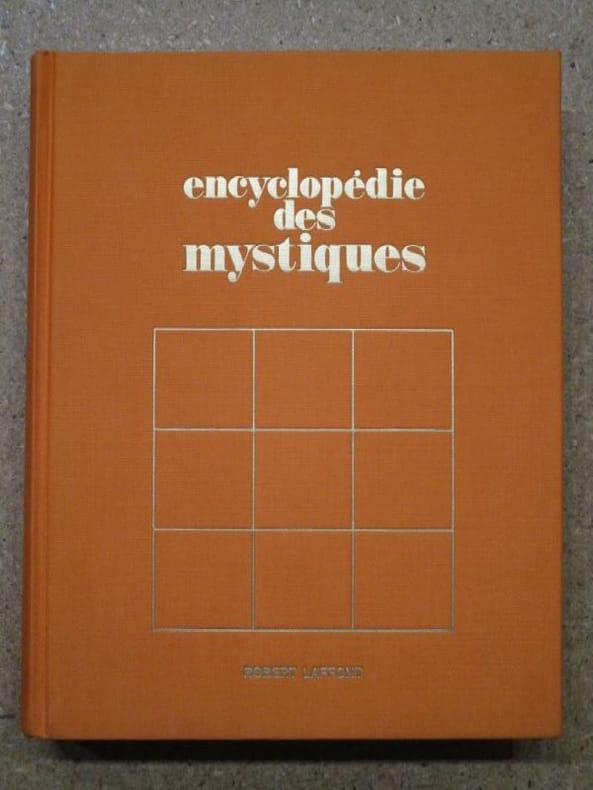
117311Robert Laffont 197 Robert Laffont, 1972, 529 p., cartonnage éditeur, sans jaquette, environ 28x22cm, bon état.
A clean, unmarked book with a tight binding. 338 pages.
<I>Hippie Modernism</I> examines the art, architecture and design of the counterculture of the 1960s and early 1970s. The catalogue surveys the radical experiments that challenged societal norms while proposing new kinds of technological, ecological and political utopia. It includes the counter-design proposals of Victor Papanek and the anti-design polemics of Global Tools; the radical architectural visions of Archigram, Superstudio, Haus-Rucker-Co and ONYX; the installations of Ken Isaacs, Joan Hills, Mark Boyle, Hélio Oiticica and Neville D'Almeida; the experimental films of Jordan Belson, Bruce Conner and John Whitney; posters and prints by Emory Douglas, Corita Kent and Victor Moscoso; documentation of performances by the Diggers and the Cockettes; publications such as <I>Oz</I> and <I>The Whole Earth Catalog</I>; books by Marshall McLuhan and Buckminster Fuller; and much more.<br>While the turbulent social history of the 1960s is well known, its cultural production remains comparatively under-examined. In this substantial volume, scholars explore a range of practices such as radical architectural and anti-design movements emerging in Europe and North America; the print revolution in the graphic design of books, posters and magazines; and new forms of cultural practice that merged street theater and radical politics. Through a profusion of illustrations, interviews with figures including Gerd Stern and Michael Callahan of USCO, Gunther Zamp Kelp of Haus-Rucker-Co, Ken Isaacs, Ron Williams and Woody Rainey of ONYX, Franco Raggi of Global Tools, Tony Martin, Clark Richert and Richard Kallweit of Drop City, and new scholarly writings, this book explores the conjunction of the countercultural ethos and the modernist desire to fuse art and life.
51FAYARD (1970), broché, 191 pages, très bon état
12971Paris, Fayard, 1970 15 x 21, 191 pp., broché, bon état
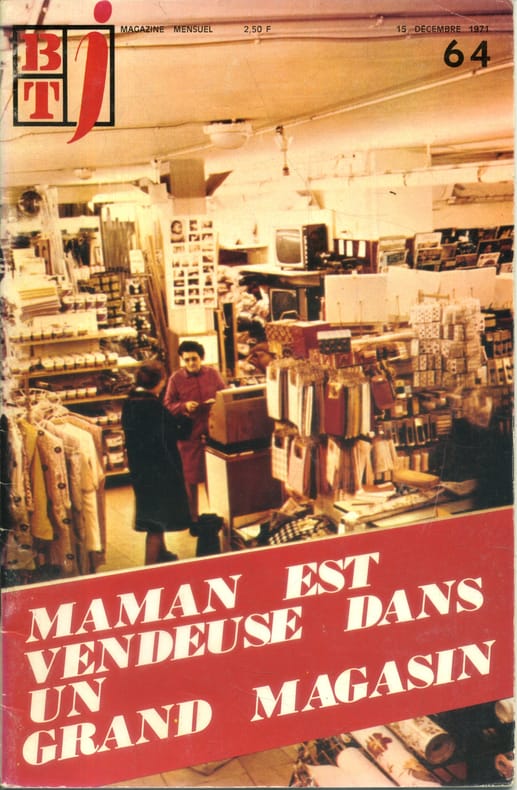
1971142053Couverture souple. Brochure de 32 pages.
Originally published in 1966, ‘Psychedelic Prayers after the Tao Te Ching’ by Timothy Leary is a work of textual interpretation, an exercise in creativity and an attempt to illuminate and guide the psychedelic experience through the lens of an ancient text. The cover drawing, a psychedelic, red horse motif, is illustrated by Michael Bowen. Having already published ‘The Psychedelic Experience: A manual based on the Tibetan Book of the Dead’ as an LSD guide book, Timothy Leary decided to look further East for his next inspiration. A fresh framework for exploring the “awareness-of-energy” and the “patterns of neurological signals which are usually censored from mental life.” The Tao Te Ching is an ancient Chinese text, containing 81 verses. It is thought to date from about the 6th century B.C.E, and tradition has it that it was written by Lao Tse, which means “old master”, although the authenticity of authorship and actual dates are still hotly debated. The style of the text is poetic and philosophical (in the broadest sense) and has been used as an inspiration for religions, artisans and in other systems of thought. There are numerous translations of the title, however its two root words are usually translated as “way” and “virtue”. It first became popularized in the West during the 19th century. Leary believed that the text must be reinterpreted for every new situation and this, for Leary, was especially true for the psychedelic experience. He took nine English translations of the text, read them all thoroughly and allowed the meaning to “slowly bubble up.” In his forward he wrote: “These translations from English to psychedelese were made while sitting under a bamboo tree on a grassy slope of the Kumaon Hills overlooking the snow peaks of the Himilayas.” In geography and text, he is overcoding the psychedelic space and reaching beyond Western culture for the substance but inevitably there is a merging of territories. For Leary, ‘Tao’ meant energy. His reading of the text, and its translation, tie into his 8-circuit (at the time 7-circuit) model of consciousness; specifically the cellular and molecular tiers, which, in his framework, LSD pertains to. It embeds the idea of consciousness being a Heraclitean flux, constantly in flow and in a permanent state of becoming. “Psychedelic poetry, like all psychedelic art, is crucially concerned with flow. Each psychedelic poem is carefully tailored for a certain time in the sequence of the session. Simplicity and diamond purity are important. Intellectual flourishes and verbal pyrotechnics are painfully obvious to the ‘turned on’ nervous system.” The book is structured into six parts; for preparation, the invoking of pure energy flow and different consciousness levels and the final section, which is the “Re-imprinting prayers”. The prayers, or poems, or hymns (as they are variously referred to) are a mixture of language; some poetic, some mystical and also some nods toward science. The use of innovative spacing and alignments create a rhythmic feel throughout and which lends itself very well to the spoken word. As a physical object, the book is a fascinating work in itself. The textured cover and the thick pages make it a delight to hold in your hands. The cover illustrations are beautiful, delicate and absorbing. The very ‘otherness’ of the psychedelic experience is invoked in the making of the prayer book. It contains the curiosity and the sensual multitude. There is a tradition of reinterpreting ancient texts, in the light of the psychedelic experience and it constitutes a major research area in psychedelic literature. ‘Psychedelic Prayers’ is one of the finest examples of this and still makes for a wonderful read in itself; as a curiosity, as a work of poetry and as an insight into the growth patterns of the psychedelic movement. — Testi: Leary Timothy. F.to: 18x22,5; rileg. brossura. Editore: The Poets Press Kerhonkson, New York, 1966.
A clean, unmarked book with a tight binding. Yellowing pages. Edge wear to dust jacket. 276 pages. Detailed practical information on all aspects of setting up a homestead.