Thomas HoodBiblio.com
4 771 résultats
1331681359.Gpaperback. Good. Access codes and supplements are not guaranteed with used items. May be an ex-library book. paperback
0260115304.Ghardcover. Good. Access codes and supplements are not guaranteed with used items. May be an ex-library book. hardcover
1331537037.Gpaperback. Good. Access codes and supplements are not guaranteed with used items. May be an ex-library book. paperback
1825ZB1325161London: Baldwin Cradock & Joy 1825. Price HAS BEEN REDUCED by 10% until Monday June 29 SALE item first edition; vii half-title title page address 136 pp. contemporary quarter leather & marbled boards covers worn masonic book plate to the front paste down some minor foxing else internally clean and tight. - If you are reading this this item is actually physically in our stock and ready for shipment once ordered. We are not bookjackers. Buyer is responsible for any additional duties taxes or fees required by recipient's country. Photos available upon request. London: Baldwin, Cradock, & Joy hardcover
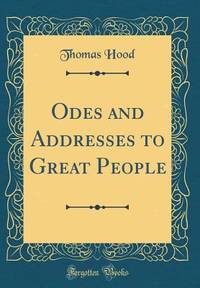
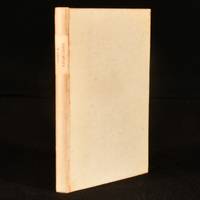
1825856F8London: Baldwin Cradock & Joy 1825 . First edition. Hardback. Very Good Indeed. 6.5" by 4.5". None. A bright copy of the first edition of Thomas Hood and John Hamilton Reynolds's collection of satirical odes to famous contemporary figures. The first edition of this work consisting of fifteen short addresses to noteworthy contemporary figures including Elizabeth Fry Joseph Grimaldi and Walter Scott.This was an anonymously published collaboration between the great comic poet Thomas Hood and his brother-in-law John Hamilton Reynolds a friend of Keats. It has been identified as the first published work by Hood.Retaining the original half title. Rebound in paper covered boards with endpapers renewed. Light discolouration to back strip and front joint otherwise externally excellent. Internally firmly bound. Pages clean and bright. Very Good Indeed Baldwin, Cradock, & Joy hardcover
0266174116.Ghardcover. Good. Access codes and supplements are not guaranteed with used items. May be an ex-library book. hardcover
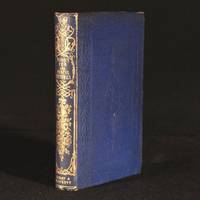
1857931T32London: Hurst and Blackett 1857. First edition. Cloth. Very Good. 8" by 5". Not Stated. A smart first edition of this collection of prose and non-fiction work from Thomas Hood illustrated throughout. First edition. Illustrated with a vignette title page and many in-text images. A collection of the essays short stories and poems of Tom Hood the Younger an English humorist playwright and author who was the son of the poet and author Thomas Hood. In the original full blue cloth binding. Externally smart with light rubbing and minor bumping to the extremities. Light fading to the spine. Front hinge just starting but remains firm. Internally firmly bound. Pages are very bright with the odd small spot further spotting to the first and last few pages. Very Good Hurst and Blackett hardcover
1857716P8London: Hurst and Blackett 1857. Leather. Very Good Indeed. 8" by 4.5". Not Stated. A beautifully bound edition of Tom Hood the younger's miscellany collection of prose and non-fiction work illustrated throughout. A collection of the essays short stories and poems of Tom Hood the Younger.Illustrated with a vignette title page and many in-text illustrations.Tom Hood was the son of the poet and author Thomas Hood. Tom Hood was a humorist and playwright the editor of 'Fun' and the founder of 'Tom Hood's Comic Annual'. In a half morocco binding with marbled paper to the boards. Externally generally smart with some light rubbing to the boards and spine. Internally firmly bound. Pages are bright and generally clean with the odd spot. Very Good Indeed Hurst and Blackett hardcover
1332787266.Gpaperback. Good. Access codes and supplements are not guaranteed with used items. May be an ex-library book. paperback
B9783382120931Hardback. New. hardcover
B9783382121471Hardback. New. hardcover
ria9783382120931_inpHardcover. New. New Book; Fast Shipping from UK; Not signed; Not First Edition; N/A hardcover
ria9783382121471_inpHardcover. New. New Book; Fast Shipping from UK; Not signed; Not First Edition; N/A hardcover
1860215082London: Edward Moxon & Co. Dover Street 1860. Twelfth Edition. Leather_bound. Very Good. 338p. A leatherbound hardcover book with gilt decorations. Corners rubbed; scratch on front cover. First and last few pages lightly foxed. Otherwise text clean and binding tight. A worn but attractive copy. Edward Moxon & Co., Dover Street unknown
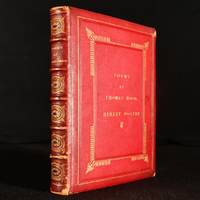
1872820D5London: E. Moxon Son & Co 1872. Cloth. Very Good. 11" by 8.5". Birket Foster. A wonderfully illustrated edition of Thomas Hood's poetry in the publisher's original cloth binding with drawings by Birket Foster. 1873 Ed in the original cloth binding bound by Leighton Son and Hodge. Illustrated with a frontispiece and twenty-one other illustrated plate engravings by Myles Birket Foster 1825-1899. Foster was a British illustrator watercolourist and engraver who provided drawings for works like 'Punch' magazine as well as poems by Henry Wadsworth Longfellow.This is a lovely collection of poetry by Thomas Hood 1799-1845 the English poet author and humorist. Hood wrote regularly for various magazine publications and even published his own magazine containing his own works. Contents include 'The Dream of Eugene Aram' 'Autumn' 'The Flower' 'The Lay of the Labourer' 'The Haunted House' and 'The Mermaid of Margate'. With four pages of publisher's adverts to the rear of text. Collated complete. In the publisher's original cloth binding. Externally very smart. Light bumping to the extremities and the head and tail of spine with fading to spine.Paste downs and endpapers have a few marks with bookbinder's label to rear paste down. Pencil marks to endpapers. Internally firmly bound. Pages are bright and clean throughout with age-toning to text and scattered light spotting to the text which increases to the first and last few pages. Tissue guard to frontispiece is torn. Very Good E. Moxon, Son & Co hardcover
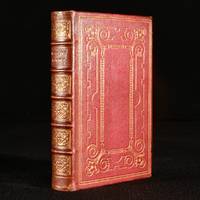
1846845B38London : Edward Moxon 1846. Leather. Very Good. 6.5" by 4". None. Two volumes smartly bound in one of the poems of Thomas Hood. A second edition copy of poems by Thomas Hood two volumes bound in one. Thomas Hood was an English author poet and humourist best known for his poems The Bridge of Sighs and The Song of the Shirt writing regularly for the London Magazine and Punch. The first volume contains The Dream of Eugene Aram and The Bridge of Sighs and volume two contains The Lee Shore and The Death-Bed amongst others. With a frontispiece to the first volume. In full calf. Externally very smart with some marks to the boards and spine. Previous owner bookplate to the front pastedown for Oliver Brett. Internally firmly bound with bright and clean pages. Very Good Edward Moxon hardcover
1859GEN28-C-26London : Edward Moxon 1859-1860. Cloth. Very Good. 7" by 4.5". None. Two uniformly-bound collections of the poetry of Thomas Hood. Containing Poems by Thomas Hood 1859 eleventh edition and Poems of Wit and Humour 1860 ninth edition. With a frontispiece to Poems and a publisher's catalogue to the start of Wit and Humour. Hood wrote humorously on many contemporary issues. One of the most important issues in his time was grave robbing and selling of corpses to anatomists see West Port murders. In green cloth bindings. Externally smart with just some bumping sunning to the spines and a few marks. Internally firmly bound. Pages are bright and clean. Bookseller's labels to front pastedowns. Very Good Edward Moxon hardcover
1871TH-RAM-71<p>A lyrical union of Victorian sentiment and fine bookbinding this 1871 edition of Poems by Thomas Hood pairs the poet's melancholic wit with 22 engraved illustrations by Birket Foster—each a pastoral vignette rendered with emotional delicacy. Bound by Ramage in full grain morocco the volume exudes tactile richness and visual drama. A collector's piece that speaks in gilt and ink.</p> E. Moxon, Son & Co., London hardcover
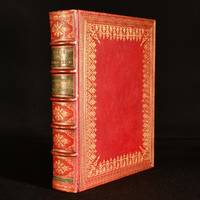
1872903F9London: E. Moxon Son & Co 1872 . Leather. Very Good. 11.5" by 9.5". Birket Foster. Two beautifully illustrated volumes of the poetry of Thomas Hood with plates by Birket Foster. In a beautiful signed binding by Sotheran. Two volumes bound in one being the first and second series of Birket's illustrated edition of Hood's works.With an individual title page and pagination to each volume.Volume I illustrated with twenty-two plates - sixteen of which have been neatly hand-coloured by a prior owner; volume II illustrated with twenty-two plates. Collated complete.A selection of poems by English poet and humourist Thomas Hood known for his contributions to popular magazines including London Magazine Athenaeum and Punch. This volume comprises some of his most beloved and well known works including 'Autumn' 'The Haunted House' and 'A Legend of Navarre.'With a contemporary inscription to the front free endpaper.Advertisement to rear of volume I.Beautifully bound in full morocco by Sotheran. In a full morocco signed binding with extensive gilt detailing to back strip and board perimeters. Externally striking. Head and tail of front and rear joints starting with boards firmly held. Inscription to front free endpaper. Internally firmly bound. Sixteen plates neatly hand coloured by a prior owner. Pages bright with light spotting throughout to text leaves. Very Good E. Moxon, Son & Co hardcover
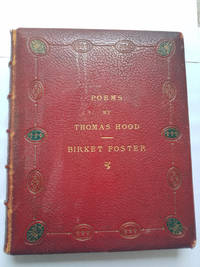
1872FB3509 /8<p>Full red leather with gilt title banding and decoration on the spine. Gilt decorative edging on the boards. All edges gilt. Illustrated by Myles Birkett Foster.</p><p>A very fine and sought-after copy</p><p><strong>Thomas Hood</strong> 23 May 1799 – 3 May 1845 was an English poet author and humourist best known for poems such as "The Bridge of Sighs" and "The Song of the Shirt". Hood wrote regularly for <em>The London Magazine</em> <em>Athenaeum</em> and <em>Punch</em>. He later published a magazine largely consisting of his own works. Hood never robust had lapsed into invalidism by the age of 41 and died at the age of 45. William Michael Rossetti in 1903 called him "the finest English poet" between the generations of Shelley and Tennyson. Hood was the father of the playwright and humourist Tom Hood 1835–1874 and the children's writer Frances Freeling Broderip 1830–1878. Thomas Hood was born to Thomas Hood and Elizabeth Sands in the Poultry Cheapside London above his father's bookshop. His father's family had been Scottish farmers from the village of Errol near Dundee. The elder Hood was a partner in the business of Vernor Hood and Sharp a member of the Associated Booksellers. Hood's son Tom Hood claimed that his grandfather had been the first to open up the book trade with America and had had great success with new editions of old books. "Next to being a citizen of the world" writes Thomas Hood in his <em>Literary Reminiscences</em> "it must be the best thing to be born a citizen of the world's greatest city." On the death of her husband in 1811 Hood's mother moved to Islington where he had a schoolmaster who in appreciating his talents "made him feel it impossible not to take an interest in learning while he seemed so interested in teaching." Under the care of this "decayed dominie" he earned a few guineas – his first literary fee – by revising for the press a new edition of the 1788 novel <em>Paul and Virginia</em>. Hood left his private schoolmaster at 14 years of age and was admitted soon after into the counting house of a friend of his family where he "turned his stool into a Pegasus on three legs every foot of course being a dactyl or a spondee." However the uncongenial profession affected his health which was never strong and he began to study engraving. The exact nature and course of his study is unclear: various sources tell different stories. Reid emphasizes his work under his maternal uncle Robert Sands but no deeds of apprenticeship exist and his letters show he studied with a Mr. Harris. Hood's daughter in her <em>Memorials</em> mentions her father's association with the Le Keux brothers who were successful engravers in the city. The labour of engraving was no better for his health than the counting house had been and Hood was sent to his father's relations at Dundee Scotland. There he stayed in the house of his maternal aunt Jean Keay for some months. Then on falling out with her he moved on to the boarding house of one of her friends Mrs. Butterworth where he lived for the rest of his time in Scotland. In Dundee Hood made a number of close friends with whom he continued to correspond for many years. He led a healthy outdoor life but also became a wide and indiscriminate reader. At the same time he began seriously to write poetry and he appeared in print for the first time with a letter to the editor of the <em>Dundee Advertiser</em>. Before long Hood was contributing humorous and poetical pieces to provincial newspapers and magazines. As a proof of his literary vocation he would write out his poems in printed characters believing that this process best enabled him to understand his own peculiarities and faults and probably unaware that Samuel Taylor Coleridge had recommended some such method of criticism when he said he thought "Print settles it." On his return to London in 1818 he applied himself to engraving which enabled him later to illustrate his various humours and fancies. In 1821 John Scott editor of <em>The London Magazine</em> was killed in a duel and the periodical passed into the hands of some friends of Hood who proposed to make him sub-editor. This post at once introduced him to the literary society of the time. He gradually developed his powers by becoming an associate of John Hamilton Reynolds Charles Lamb Henry Cary Thomas de Quincey Allan Cunningham Bryan Procter Serjeant Talfourd Hartley Coleridge the peasant-poet John Clare and other contributors. Hood married Jane Reynolds 1791–1846. on 5 May 1824. They settled at 2 Robert Street Adelphi London. Their first child died at birth but a daughter Frances Freeling Broderip 1830–1878 was born soon after they moved to Winchmore Hill and after they had then moved in 1832 to Lake House Wanstead a son Tom Hood 1835–1874 was also born. Both children took up in Hood's profession: Frances became a children's writer and Tom a humourist and playwright and they later collaborated in collecting and publishing their father's work. Although constantly worried about money and health the Hoods were a devoted affectionate family as <em>Memorials of Thomas Hood</em> 1860 based on his letters and compiled by his children testifies. <em>Odes and Addresses</em> – Hood's first volume – was written in conjunction with his brother-in-law John Hamilton Reynolds a friend of John Keats. Coleridge wrote to Lamb averring that the book must be the latter's work. Keats wrote two poems for Jane Reynolds: "O Sorrow!" October 1817 and "On a Leander Gem which Miss Reynolds my Kind Friend Gave Me" c. March 1817. Also from this period are <em>The Plea of the Midsummer Fairies</em> 1827 and a dramatic romance <em>Lamia</em> published later. <em>The Plea</em> was a book of serious verse but Hood was known as a humorist and the book was ignored almost entirely. Hood was fond of practical jokes which he was said to have enjoyed inflicting on members of his family. In the <em>Memorials</em> there is a story of Hood instructing his wife Jane to purchase some fish for the evening meal from a woman who regularly came to the door selling her husband's catch. But he warns her to watch for plaice that "has any appearance of red or orange spots as they are a sure sign of an advanced stage of decomposition." Mrs. Hood refused to purchase the fish-seller's plaice exclaiming "My good woman. I could not think of buying any plaice with those very unpleasant red spots!" The fish-seller was amazed at such ignorance of what plaice look like. The series of the <em>Comic Annual</em> dating from 1830 was a type of publication popular at the time which Hood undertook and continued almost unassisted for several years. He would cover all the leading events of the day in caricature without personal malice and with an undercurrent of sympathy. Readers were also treated to an incessant use of puns of which Hood had written in his own vindication "However critics may take offence /A double meaning has double sense" but as he gained experience as a writer his diction became simpler. In another annual called the <em>Gem</em> appeared the verse story of Eugene Aram. Hood started a magazine in his own name mainly sustained by his own activity. He did the work from a sick-bed from which he never rose and there also composed well-known poems such as "The Song of the Shirt" which appeared anonymously in the Christmas number of <em>Punch</em> 1843 and was immediately reprinted in <em>The Times</em> and other newspapers across Europe. It was dramatized by Mark Lemon as <em>The Sempstress</em> printed on broadsheets and cotton handkerchiefs and was highly praised by many of the literary establishment including Charles Dickens. Likewise "The Bridge of Sighs" and "The Song of the Labourer" which were also translated into German by Ferdinand Freiligrath. These are plain solemn pictures of the conditions of life which appeared shortly before Hood's death in May 1845. Hood was associated with the <em>Athenaeum</em> started in 1828 by James Silk Buckingham and was a regular contributor to it for the rest of his life. Prolonged illness brought straitened circumstances. Applications were made by a number of Hood's friends to the Prime Minister Sir Robert Peel to grant Hood a civil list pension with which the state rewarded literary men. Peel was known to be an admirer of Hood's work and in the last few months of Hood's life he gave Jane Hood the sum of £100 without her husband's knowledge to alleviate the family's debts. The pension that Peel's government bestowed on Hood was continued to his wife and family after his death. Jane Hood who also suffered from poor health had put tremendous energy into tending her husband in his last year and died only 18 months later. The pension then ceased but Peel's successor Lord John Russell grandfather of the philosopher Bertrand Russell made arrangements for a £50 pension for the maintenance of Hood's two children Frances and Tom. Nine years later a monument raised by public subscription in Kensal Green Cemetery was unveiled by Richard Monckton Milnes. The monument was originally surmounted by a bronze bust of Hood by the sculptor Matthew Noble and had circular inset bronze roundels on either side but all have been stolen. Thackeray a friend of Hood's gave this assessment of him: "Oh sad marvellous picture of courage of honesty of patient endurance of duty struggling against pain!. Here is one at least without guile without pretension without scheming of a pure life to his family and little modest circle of friends tenderly devoted." The house where Hood died No. 28 Finchley Road St John's Wood now has a blue plaque.</p> E Moxon & Son. hardcover
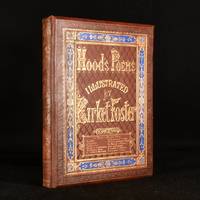
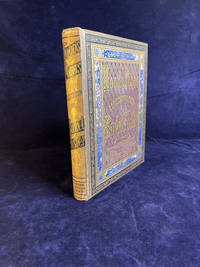
1872224London: Moxon Son and Co. 1872. Hardcover. Very Good. 280 x 220 mm. Birket Foster. FOSTER Birket. Poems by Thomas Hood Again Illustrated by Birket Foster. London: Moxon Son & Co. 1872.280 x 220 mm pp. 180 4 p. of publisher’s ads. Purple. cloth binding with ornate gilt and blue designs gilt title and contents on cover. Full gilt fore-edges. Full page black and white illustrations with ornamental head and tail pieces. Binder’s ticket “Bound by Leighton Son and Hodge.†Foxing throughout. Bumping to end bands some minor splitting to hinge of the fabric on spine. Rubbing to cover. Overall GOOD condition. MB224/B1Alternative title: Hood’s Poems Illustrated by Birket Foster. Moxon, Son, and Co. hardcover
1872224bLondon: Moxon Son and Co. 1872. Hardcover. Good. 280 x 220 mm. FOSTER Birket and Thomas HOOD. Poems by Thomas Hood Again Illustrated by Birket Foster. London: Moxon Son and Co. 1872.280 x 220 mm pp. 180 4 p. of publisher’s ads. Purple. cloth binding with ornate gilt and blue designs gilt title and contents on cover. Full gilt fore-edges. Full page black and white illustrations with ornamental head and tail pieces. Binder’s ticket “Bound by Leighton Son and Hodge.†Foxing throughout. Bumping to end bands some minor splitting to hinge of the fabric on spine. Rubbing to cover. Overall GOOD condition. MB224/B1Alternative title: Hood’s Poems Illustrated by Birket Foster. Moxon, Son, and Co. hardcover
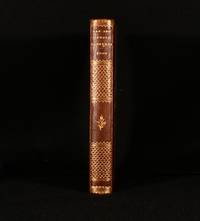
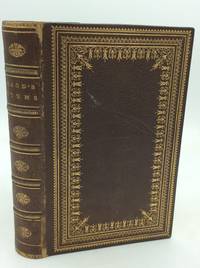
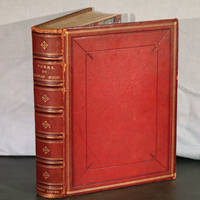
1854842F35London: Edward Moxon 1854 . Leather. Very Good Indeed. 7" by 4.5". Not Stated. A beautifully bound copy of the seventh edition of the poetry of Thomas Hood. The seventh edition of this work of poetry illustrated with a portrait frontispiece of hood.In a delightful full morocco binding with gilt detailing.A mid nineteenth century edition of the poetry of the literary figure that in 1903 William Michael Rossetti called "the finest English poet" between the generations of Shelley and Tennyson.Hood was particularly recognised for his humorous poetry as well as his regular contributions to The London Magazine and Athenaeum. In a full morocco binding with gilt detailing. A touch of rubbing to back strip tail otherwise externally lovely. Internally firmly bound. Pages bright and generally clean with only the odd spot. Very Good Indeed Edward Moxon hardcover
CA11B-00116Moxon. Collectible - Acceptable. London: E. Moxon Son & Co. 1872. 1st edition. 4to hardcover. vii180pp. Illustrations. Fair book. Hinges cracked. Backstrip detached from rear board. Poetry Literature Inquire if you need further information. NOT AVAILABLE FOR SHIPMENT OUTSIDE OF THE UNITED STATES. Moxon hardcover
1872846F48London: E. Moxon Son & Co 1872. Leather. Very Good. 11.5" by 9.5". Birket Foster. A beautifully bound copy of the poetry of Thomas Hood illustrated throughout with engravings by Birket Foster. In a full morocco binding with extensive gilt detailing.Illustrated with twenty-two engraved plates by British illustrator and watercolourist Myles Birket Foster each retaining the original tissue guard. Collated complete.A selection of poems by English poet and humourist Thomas Hood known for his contributions to popular magazines including London Magazine Athenaeum and Punch. This volume comprises some of his most beloved and well known works including 'Autumn' 'The Haunted House' and 'A Legend of Navarre.'With the bookplate of Andrew Buchanan Blackburn to the front pastedown and a gift inscription dated 1873 to a front blank. In a full morocco binding with gilt detailing. Discolouration to back strip with rubbing to board perimeters back strip head and tail and raised bands. Boards bright. Front hinge strained but firmly held. Bookplate to front pastedown with inscription to a front blank. Internally firmly bound. Pages bright and generally clean with the odd spot. Very Good E. Moxon, Son & Co hardcover